The French Expedition
~1798 – ~1801 CE
17 chapters · 230 min read · 252 sources
1798 CE
Introduction
2 min readThe French invasion of Egypt and Syria (1798–1801) was a military expedition to Ottoman-held Egypt and Syria led by Napoleon Bonaparte during the French Revolutionary Wars. The campaign aimed to undermine British trade…The French invasion of Egypt and Syria (1798–1801) was a military expedition to Ottoman-held Egypt and Syria led by Napoleon Bonaparte during the French Revolutionary Wars. The campaign aimed to undermine British trade routes, expand French influence, and establish a scientific and administrative presence in Egypt. Napoleon also sought to sever Britain's connection to its colonial holdings in India, with the long-term ambition of challenging British dominance in the region.
Departing from Toulon in May 1798, Napoleon’s fleet, comprising around 36,000 troops, landed in Alexandria on 28 June. Advancing rapidly, he defeated the ruling Mamluks at the Battle of the Pyramids, securing control of Cairo and establishing a French administration. The campaign, however, was soon compromised by the destruction of the French fleet at Aboukir Bay by Horatio Nelson, which cut off French reinforcements and supplies. French rule faced resistance, including the Cairo uprising (1798), which was suppressed with significant casualties. Seeking to consolidate French gains, Napoleon advanced into Ottoman Syria, aiming to preempt an Ottoman counteroffensive, but his campaign ended in failure at the Siege of Acre (1799), where Anglo-Ottoman forces, supported by the Royal Navy, repelled French assaults.
Recognising the strategic situation and political opportunities in France, Napoleon left Egypt in August 1799, returning to France, where he seized political power. The French army, left under Jean-Baptiste Kléber, continued to resist, but following his assassination, Jacques-François Menou assumed command and struggled to maintain control. The French were ultimately defeated by British-Ottoman forces and surrendered in 1801.
The campaign had significant military, political, and intellectual consequences. Napoleon’s presence in Egypt introduced European-style governance, but it also reinforced resistance among local populations. The scientific expedition accompanying the invasion produced the Description de l'Égypte, a seminal work that laid the foundation for modern Egyptology. The discovery of the Rosetta Stone allowed for the deciphering of Egyptian hieroglyphs. The campaign also contributed to the rise of Muhammad Ali of Egypt, who later established modern Egypt.
Background
3 min readThe Peace of Campo Formio concluded the First War of the Coalition in France's favour. This left Great Britain as the only major European power still at war with the French Republic. Following naval defeats at Cape St…The Peace of Campo Formio concluded the First War of the Coalition in France's favour. This left Great Britain as the only major European power still at war with the French Republic. Following naval defeats at Cape St Vincent and Camperdown, a direct invasion of Britain became impossible, prompting the French government to explore alternative strategies to weaken British influence.
The possibility of establishing French control over Egypt had been considered since François Baron de Tott conducted a secret reconnaissance mission to the Levant in 1777 to determine its feasibility. His report was favourable, but no immediate action followed. Nevertheless, Egypt became a topic of debate between Talleyrand and Napoleon Bonaparte, which continued in their correspondence during Napoleon's Italian campaign. Their correspondence reflected a growing interest in Egypt's potential as a colonial and strategic asset, particularly as a means to challenge British dominance in India.
Decision for Egypt
At the time Egypt had been under Ottoman sovereignty since the early 16th century. French merchants had been strongly represented there since the 15th century, and France maintained good relations with the Ottomans. However, Ismail Bey, the Mamluk Shaykh al-balad, who ruled Egypt on behalf of the Ottomans and was well-disposed towards the French, died in 1791 during an epidemic in Cairo. His rivals, Ibrahim Bey and Murad Bey, took power and took action against the French in the country. Exposed to more and more repression, the French merchants asked for intervention. France therefore had two formal reasons to intervene: Firstly, the Kingdom of France had been an ally of the Ottoman Sultan since 1536 and could claim to want to restore his authority. Secondly, since the French Revolution, France could argue that it also wanted to bring the Egyptians freedom from the yoke of feudal Mamluk rule. The decision of 1798 was a complex mixture of geostrategic, economic, political and personal interests, dressed up with the ideals of the French Revolution. Napoleon regarded the capture of Egypt as the most important step to neutralise the massive economic advantages that Great Britain derived from trade with India and to force Great Britain to make concessions. In August 1797, he wrote in a letter to the Directory:
The capture of Egypt would have given the French control of the eastern Mediterranean and the Red Sea, which would have led to considerable losses for the British economy. Furthermore, a successful invasion of Egypt could have been followed by a direct attack on British territory in India. After France and Spain allied with each other in 1796, the Royal Navy was forced to withdraw from the Mediterranean in 1798. He further wished to strengthen French trade interests over those of Great Britain in the Middle East, hoping to join forces with France's ally Tipu Sultan, ruler of Mysore in India and an opponent of British control in that country.
For reasons of secrecy, the president of the directorate wrote the order to Napoleon himself. It was stated that the expedition was to consist of 36,000 men from the old Italian army, officers and generals of his choice, various scientists and craftsmen. The Treasury was instructed to send Napoleon 1.5 million francs every decade. In addition, he was authorised to take 3 of the 8 million francs from the 'Bernese treasury', which France had had paid to it by the defeated Confederation for its military intervention to establish a Helvetic Republic In March 1798, the Directory took the official decision to launch the expedition to Egypt and appointed Bonaparte commander-in-chief of the Armée d'Orient. Bonaparte was tasked with first occupying Malta and then moving on to the conquest of Egypt. Once the occupation of Egypt was complete, he was to establish communications with India and secure the Red Sea, which in turn would facilitate the expulsion of the British from the Orient and a future French expedition to India.
Preparations
1 min readPreparations for the expedition were spread across Toulon, Marseille, Genoa, Corsica and Civitavecchia and were essentially organised by Napoleon's chief of staff Louis Berthier. Around 300 ships were requisitioned for…Preparations for the expedition were spread across Toulon, Marseille, Genoa, Corsica and Civitavecchia and were essentially organised by Napoleon's chief of staff Louis Berthier. Around 300 ships were requisitioned for the transport. The escort was provided by 13 ships of the line and the same number of frigates under François-Paul Brueys d'Aigalliers. By 11 May, the Orient army had grown to 30,800 infantrymen, 3,475 cavalrymen, 1,660 artillerymen, 60 field guns and 40 siege guns Including all civilians (artists and researchers), the total number was 38,000. To prevent news of the impending attack on Egypt from spreading before the fleet arrived, all merchant ships that sighted the convoy during the crossing were to be seized and detained until the French had reached Alexandria.
Expedition
14 min readOn 19 May, Napoleon gave the order on board the flagship L'Orient to set sail from Toulon with his invasion fleet. The fleet sailed along the coast of Provence towards Genoa and from there southwards to Corsica. Until…On 19 May, Napoleon gave the order on board the flagship L'Orient to set sail from Toulon with his invasion fleet. The fleet sailed along the coast of Provence towards Genoa and from there southwards to Corsica. Until 30 May, the fleet remained within sight of the east coast, crossed the Strait of Bonifacio and then followed the coast of Sardinia with the intention of joining up with the ships coming from Civitavecchia. On 3 June, Napoleon received news of the British presence in Sardinia, whereupon he sent a squadron to reconnoitre the situation. However, after the British were not encountered, Napoleon gave the order to stop waiting for the ships from Civitavecchia and had his fleet turn south-east, passing Mazara del Vallo and Pantelleria on 7 June. There Napoleon learned that he was being pursued by the British, whereupon he set course for Malta, which he reached on 9 June and joined up with the 56 ships from Civitavecchia. The French expeditionary force was thus complete and set course for Sicily. It rounded the southern tip of Sardinia as early as 5 June.
Capture of Malta
When Napoleon's fleet arrived off Malta, Napoleon demanded that the Knights of Malta allow his fleet to enter the port and take on water and supplies. Grand Master von Hompesch replied that only two foreign ships would be allowed to enter the port at a time. Under that restriction, re-victualling the French fleet would take weeks, and it would be vulnerable to the British fleet of Admiral Nelson. Napoleon therefore ordered the invasion of Malta. The French Revolution had significantly reduced the Knights' income and their ability to put up serious resistance. Half of the Knights were French, and most of these knights refused to fight. Thus Malta was conquered without much resistance.
Alexandria to Syria
Disembarkment at Alexandria
Napoleon departed Malta for Egypt. After successfully eluding detection by the Royal Navy for thirteen days, the fleet was in sight of Alexandria where it landed on 1 July, although Napoleon's plan had been to land elsewhere. On the day of the landing, Napoleon told his troops "I promise to each soldier who returns from this expedition, enough to purchase six arpents of land." (approximately 7.6 acres or 3.1 ha) and added: The peoples we will be living alongside are Muslims; their first article of faith is "There is no other god but God, and Mahomet is his prophet". Do not contradict them; treat them as you treated the Jews, the Italians; respect their muftis and their imams, as you respected their rabbis and bishops. Have the same tolerance for the ceremonies prescribed by the Quran, for their mosques, as you had for the convents, for the synagogues, for the religion of Moses and that of Jesus Christ. The Roman legions used to protect all religions. You will here find different customs to those of Europe, you must get accustomed to them. The people among whom we are going treat women differently to us; but in every country whoever violates one is a monster. Pillaging only enriches a small number of men; it dishonours us, it destroys our resources; it makes enemies of the people who it is in our interest to have as our friends. The first city we will encounter was built by Alexander [the Great]. We shall find at every step great remains worthy of exciting French emulation."
Despite the idealistic promises proclaimed by Napoleon, Egyptian intellectuals like 'Abd al-Rahman al-Jabarti (1753–1825 C.E/ 1166–1240 A.H) were heavily critical of Napoleon's objectives. As a major chronicler of the French invasion, Jabarti decried the French invasion of Egypt as the start of "fierce fights and important incidents; of the momentous mishaps and appalling afflictions, of the multiplication of malice and the acceleration of affairs; of successive sufferings and turning times; of the inversion of the innate and the elimination of the established; of horrors upon horrors and contradicting conditions; of the perversion of all precepts and the onset of annihilation; of the dominance of destruction and the occurrence of occasions"
Menou had been the first to set out for Egypt, and was the first Frenchman to land. Bonaparte and Kléber landed together and joined Menou at night at the cove of Marabout (Citadel of Qaitbay), on which the first French tricolour to be hoisted in Egypt was raised. On the night of the 1st of July, Bonaparte who was informed that Alexandria intended to resist him, rushed to get a force ashore without waiting for the artillery or the cavalry to land, in which he marched on Alexandria at the head of 4,000 to 5,000 men. At 2 am, 2 July, he set off marching in three columns, on the left, Menou attacked the "triangular fort", where he received seven wounds, while Kléber was in the centre, in which he received a bullet in the forehead but was only wounded, and Louis André Bon on the right attacked the city gates. Alexandria was defended by Koraim Pasha and 500 men. However, after a rather lively shooting in the city, the defenders gave up and fled.
Victory on land, defeat at sea
Once all the troops were ashore by 3 July, Napoleon made arrangements to leave the delta and capture Cairo, the capital of Egypt. A flotilla, loaded with provisions, cannons, ammunition and equipment, was to sail along the coast to the mouth of the Rosetta, head for the Nile and follow the army upstream from Rahmaniyyah. In order to reach Cairo before the annual flooding of the Nile, Napoleon decided to march his troops the 72 kilometres to Rahmaniyyah through the desert. When the French set off for Cairo on 6 July, the soldiers were still wearing thick woollen uniforms and their knapsacks were packed full of equipment, with the exception of water bottles. Many suffered from dysentery or eye inflammation, others were so desperate that they committed suicide. The villages marked on the maps turned out to be mostly deserted and the wells had been filled in by hostile Bedouins.
Battle of the Pyramids
On 20 July, the French army had advanced as far as Umm Dinar, 29 km north of Cairo. Observers reported that an Egyptian force under Murad Bey had gathered on the west bank of the Nile at Imbāba. Other Egyptian troops under Ibrahim Bey were on the east bank of the Nile. After Napoleon had reached the battlefield, the 6,000-strong Mamluk cavalry attacked the French at around 3.30 pm. Formed into squares, the French were able to fend off the cavalry attacks and finally counter-attack and put the Mamluks to flight. Murad withdrew with the remnants of his troops to Upper Egypt and Ibrahim, in the direction of Belbeys, in order to retreat to Syria. The battle cost the French barely a hundred dead and wounded, while the Mamluks suffered around 1,500 dead and wounded. In two proclamations to the Egyptians and the inhabitants of Cairo, Napoleon declared that the aim of the French invasion was to liberate the country from the slavery and exploitation of the Mamluk 'clan' (race) and their autocratic beys. The inhabitants, their families, their houses and property would be protected. Their way of life and religion would be respected, and dīwāne would be established for self-government, staffed by local dignitaries
Dupuy's brigade pursued the routed enemy and at night entered Cairo, which had been abandoned by the beys Mourad and Ibrahim. On 4 Thermidor (22 July), the notables of Cairo came to Giza to meet Bonaparte and offered to hand over the city to him. Three days later, he moved his main headquarters there. Desaix was ordered to follow Mourad, who had set off for Upper Egypt. An observation corps was put in place at Elkanka to keep an eye on the movements of Ibrahim, who was heading towards Syria. Bonaparte personally led the pursuit of Ibrahim, beat him at Salahie and pushed him completely out of Egypt.
Battle of the Nile
On 1 August, the British Mediterranean fleet under Horatio Nelson discovered the French fleet under François-Paul Brueys d'Aigalliers anchored in the shallows of the Bay of Abukir near Alexandria. The French were initially unperturbed, as they assumed that the British would not begin their attack until the following morning. However, the British were determined to begin the attack that very night. The French had made a mistake and left a gap in their defence. The British ships were able to penetrate this gap and fire on the French ships from two sides. At around 10 pm, the French flagship L'Orient exploded. The battle continued into the night and only two of Brueys' ships of the line and two French frigates escaped destruction or capture by the British.
News of the naval defeat reached Bonaparte en route back to Cairo from defeating Ibrahim but, far from being worried, Mullié states: This disastrous event did not disconcert Bonaparte at allever impenetrable, he did not allow any emotion to appear that he had not tested in his mind. Having calmly read the despatch which informed him that he and his army were now prisoners in Egypt, he said "We no longer have a navy. Well! We'll have to stay here, or leave as great men just as the ancients did". The army then showed itself happy at this short energetic response, but the native Egyptians considered the defeat at Aboukir as fortune turning in their favour and so from then on busied themselves to find means to throw off the hateful yoke the foreigners were trying to impose on them by force and to hunt them from their country. This project was soon put into execution.
After the Battle of Pyramids, Napoleon instituted a French administration in Cairo and suppressed the subsequent rebellions violently. Although Napoleon tried to co-opt local Egyptian ulema, scholars like Al-Jabarti poured scorn on the ideas and cultural ways of the French.Despite their cordial proclamations to the natives, with some French soldiers even converting to Islam, clerics like Abdullah al-Sharqawi condemned the French as: materialist, libertine philosophers... they deny the Resurrection, and the afterlife, and... [the] prophets
Bonaparte's administration of Egypt
After the naval defeat at Aboukir, Bonaparte's campaign remained land-bound. His army still succeeded in consolidating power in Egypt, although it faced repeated nationalist uprisings, and Napoleon began to behave as absolute ruler of all Egypt. He set up a pavilion and from within it presided over a fête du Nil—it was he who gave the signal to throw into the floats the statue of the river's fiancée, on his orders gifts were distributed to the people, and he gave kaftans to his main officers.
In a largely unsuccessful effort to gain the support of the Egyptian population, Bonaparte issued proclamations that cast him as a liberator of the people from Ottoman and Mamluk oppression, praising the precepts of Islam and claiming friendship between France and the Ottoman Empire despite French intervention in the breakaway state. This position as a liberator initially gained him solid support in Egypt and later led to admiration for Napoleon from the Albanian Muhammad Ali of Egypt, who succeeded where Bonaparte had not in reforming Egypt and declaring its independence from the Ottomans. In a letter to a sheikh in August, Napoleon wrote, "I hope... I shall be able to unite all the wise and educated men of all the countries and establish a uniform regime based on the principles of the Quran which alone are true and which alone can lead men to happiness."
Shortly after Bonaparte's return from facing Ibrahim came Mohammed's birthday, which was celebrated with great pomp. Bonaparte himself directed the military parades for the occasion, preparing for this festival in the sheik's house wearing oriental dress and a turban. It was on this occasion that the divan granted him the title Ali-Bonaparte after Bonaparte proclaimed himself "a worthy son of the Prophet" and "favourite of Allah". Around the same time he took severe measures to protect pilgrim caravans from Egypt to Mecca, writing a letter himself to the governor of Mecca. Even so, thanks to the taxes he imposed on them to support his army, the Egyptians remained unconvinced of the sincerity of all Bonaparte's attempts at conciliation and continued to attack him ceaselessly. Any means, even sudden attacks and assassination, were allowed to force the "infidels" out of Egypt. Military executions were unable to deter these attacks and they continued.
22 September was the anniversary of the founding of the First French Republic and Bonaparte organised the most magnificent celebration possible. On his orders, an immense circus was built in the largest square in Cairo, with 105 columns (each with a flag bearing the name of a département) round the edge and a colossal inscribed obelisk at the centre. On seven classical altars were inscribed the names of heroes killed in the French Revolutionary Wars. Two triumphal arches were built to commemorate the campaign: a wooden arc de triomphe in Azbakiyya Square, and a second arch which was inscribed with the words "There is no god but God, and Muhammad is his prophet" and decorated by the Genoese artist Michel Rigo with scenes from the Battle of the Pyramids. Here there was some awkwardnessthe painting flattered the French but aggrieved the defeated Egyptians they were trying to win over as allies.
On the day of the festival, Bonaparte addressed his troops, enumerating their exploits since the 1793 siege of Toulon and telling them: >From the English, famous for arts and commerce, to the hideous and fierce Bedouin, you have caught the gaze of the world. Soldiers, your destiny is fair... This day, 40 million citizens celebrate the era of representative government, 40 million citizens think of you. The speech was followed by cries of "Vive la République!" and a cannon volley. Later, Bonaparte held a feast for two hundred people in a garden in Cairo and sent soldiers to plant a French flag on the top of a pyramid.
Pursuit of Mamluks
After his defeat at the Pyramids, Mourad Bey retreated to Upper Egypt. On 25 August 1798, General Desaix embarked at the head of his division on a flotilla and sailed up the Nile. On 31 August, Desaix arrived at Beni Suef where he began to encounter supply problems, then he went up the Nile to Behneseh and progressed towards Minya. The Mamluks did not fight, and the flotilla returned on September 12 at the entrance of Bahr Yussef. Desaix learned that the Mamluks were in the plain of Faiyum by 24 September. The first contact between the two sides occurred on 3 October and a second minor fight took place, which began to deplete food and ammunition of the French forces. On 7 October, Mourad Bey's troops came out of Sédiman's entrenchments and attacked the French, who formed themselves into three squares, one large and two small at its angles. The Mamluks as previous encounters attacked furiously but were repulsed.The Mamluks attempted to use their four cannons, but a vigorous attack led by Captain Jean Rapp managed to capture them.
Revolt of Cairo
In 1798, Napoleon led the French army into Egypt, swiftly conquering Alexandria and Cairo. However, in October of that year, discontent against the French led to an uprising by the people of Cairo. While Bonaparte was in Old Cairo, the city's population began spreading weapons around to one another and fortifying strongpoints, especially at the Al-Azhar Mosque. A French commander, Dominique Dupuy, was killed by the revolting Cairenes, as well as Bonaparte's Aide-de-camp, Joseph Sulkowski. Excited by the sheikhs and imams, the local citizens swore by the Prophet to exterminate all and any Frenchman they met, and all Frenchmen they encounteredat home or in the streetswere mercilessly slaughtered. Crowds rallied at the city gates to keep out Bonaparte, who was repulsed and forced to take a detour to get in via the Boulaq gate. The French army's situation was criticalthe British were threatening French control of Egypt after their victory at the Battle of the Nile, Murad Bey and his army were still in the field in Upper Egypt, and the generals Menou and Dugua were only just able to maintain control of Lower Egypt. The Ottoman peasants had common cause with those rising against the French in Cairothe whole region was in revolt. The French responded by setting up cannons in the Citadel and firing them at areas containing rebel forces. During the night, French soldiers advanced around Cairo and destroyed any barricades and fortifications they came across. The rebels soon began to be pushed back by the strength of the French forces, gradually losing control of their areas of the city. Bonaparte personally hunted down rebels from street to street and forced them to seek refuge in the Al-Azhar Mosque. Bonaparte said that "He [i.e God] is too late"you've begun, now I will finish!" He then immediately ordered his cannon to open fire on the Mosque. The French broke down the gates and stormed into the building, massacring the inhabitants. At the end of the revolt 5,000 to 6,000 Cairenes were dead or wounded.
Syria
9 min readWith Egypt quiet again and under his control, Bonaparte used this time of rest to visit Suez and see with his own eyes the possibility of a canal (known as the Canal of the Pharaohs) said to have been cut in antiquity…Canal of the Pharaohs
With Egypt quiet again and under his control, Bonaparte used this time of rest to visit Suez and see with his own eyes the possibility of a canal (known as the Canal of the Pharaohs) said to have been cut in antiquity between the Red Sea and the Nile by order of the pharaohs. Before setting out on the expedition, he gave Cairo back its self-government as a token of its pardona new 'divan' made up of 60 members replaced the military commission. Then, accompanied by his colleagues from the Institut, Berthollet, Monge, Le Père, Dutertre, Costaz, Caffarelli, and followed by a 300-man escort, Bonaparte set out for the Red Sea and after three days' marching across the desert he and his caravan arrived at Suez. After giving orders to complete the fortifications at Suez, Bonaparte crossed the Red Sea and on 28 December moved into Sinai to look for the celebrated mountains of Moses 17 kilometres from Suez. On his return, surprised by the rising tide, he ran the risk of drowning. Arriving back at Suez, after much exploration the expedition fulfilled its aim, finding the remains of the ancient canal built by Senusret III and Necho II.
Ottoman offensives
In the meantime the Ottomans in Constantinople (modern-day Istanbul) received news of the French fleet's destruction at Aboukir and believed this spelled the end for Bonaparte and his expedition, trapped in Egypt. Sultan Selim III decided to wage war against France, and sent two armies to Egypt. The first army, under the command of Jezzar Pasha, had set out with 12,000 soldiers; but was reinforced with troops from Damascus, Aleppo, Iraq (10,000 men), and Jerusalem (8,000 men). The second army, under the command of Mustafa Pasha, began on Rhodes with about eight thousand soldiers. He also knew he would get about 42,000 soldiers from Albania, Constantinople, Asia Minor, and Greece. The Ottomans planned two offensives against Cairo: from Syria, across the desert of El Salheya-Bilbeis-Al Khankah, and from Rhodes by sea landing in the Aboukir area or the port city of Damietta.
French response
At the end of 1798, the most pressing problem was the rapid build-up of Ottoman troops, which the Sultan had planned for a massive attack on Egypt. One was the Rhodes army, which was transported by sea with the help of the Royal Navy. The other, the Damascus Army, advanced on Egypt via Palestine and the Sinai. While these moves were being prepared, Ahmed Pasha al-Jazzar was to advance from Acre on the Egyptian border and attract Napoleon's attention. In this precarious situation, Napoleon decided to pre-empt the attack, capture Acre, defeat the Ottomans in Syria and then return to Egypt to confront them. He prepared around 14,000 soldiers who were organised in divisions under the command of Generals Reynier Kléber, Bon, Lannes, a cavalry division under General Murat, a brigade of infantry and cavalry under Brigade chief Bessières, a camel company, artillery under Dommartin, and engineers and sappers under Caffarelli. The heavy siege artillery pieces were sent by the flotilla under contre-amiral Perrée to Jaffa. On 10 February 1799, Napoleon left Cairo for Syria. His first target was El-Arish, which finally surrendered on 19 February after an unexpected siege. Gaza fell without resistance on 25 February, and by 3 March the French had reached the outskirts of Jaffa.
Jaffa
This city was surrounded by high walls flanked by towers. Jezzar Pasha had entrusted its defence to elite troops, with the artillery manned by 1,200 Ottoman gunners. The city was one of the ways into Syria, its port could be used by his fleet and a large part of the expedition's success depended on its fall. This meant Bonaparte had to capture the city before advancing further, and so he laid siege to it. Following the successful assault on the 7th of March, the city surrendered. A French officer's subordinate successfully persuaded 3,000 Turks in the citadel of Jaffa that they would be granted amnesty. However, Bonaparte ordered the execution of every man and of a further 1,400 prisoners. He later attempted to justify this action by claiming it was a military necessity, as he had no food for so many prisoners, could not spare them an escort, and had found paroled Turks from El-Arish serving in the garrison. However, none of these explanations have survived scrutiny.
Acre
The initial successes ended before the city of Acre. With the support of the British, who reached Acre on 15 March, the city's defences were strengthened. In addition, the Royal Navy managed to muster the French flotilla transporting the ammunition and cannons. Without his siege guns, Napoleon had to resort to more time-consuming methods of besieging the city. Meanwhile, the Damascus Army was on its way to lay siege to Acre. Upon establishing contact with the opposing forces, the French forces demonstrated clear superiority in the initial stages of engagement. On 8 April, a Junot officer emerged victorious in a cavalry skirmish near Nazareth, despite being outnumbered. This was followed by a significant victory on 11 April, where Kléber, leading 1,500 men, routed a substantial force of 6,000 Turks in a battle at Canaan. In another engagement, the dashing cavalry leader Joachim Murat successfully led his troops across the Jordan River to the north of Lake Tiberias, engaging and defeating 5,000 Turks.
Mount Tabor
After sixty days' repeated attacks and two murderous and inconclusive assaults, the city remained uncaptured. Even so, it was still awaiting reinforcements by sea as well as a large army forming up in Asia on the sultan's orders to march against the French. To find out the latter's movements, Jezzar ordered a general sortie against Bonaparte's camp. This sortie was supported by its own artillery and a naval bombardment from the British. With his usual impetuosity, Bonaparte pushed Jezzar's columns back against their own walls and then went to help Kléber, who was retrenched in the ruins with 4,000 Frenchmen under his command against 20,000 Ottomans at Mount Tabor. Bonaparte conceived a trick which used all the advantages offered him by the enemy position, sending Murat and his cavalry across the River Jordan to defend the river crossing and Vial and Rampon to march on Nablus, while Bonaparte himself put his troops between the Ottomans and the magazines. These manoeuvres were successful, in what was known as the Battle of Mount Tabor. The enemy army, taken by surprise at many points at once, was routed and forced to retreat, leaving their camels, tents, provisions and 5,000 dead on the battlefield.
Returning to besiege Acre, Bonaparte learned that Rear-Admiral Perrée had landed seven siege artillery pieces at Jaffa. Bonaparte then ordered two assaults, both vigorously repulsed. A fleet was sighted flying the Ottoman flag and Bonaparte realised he must capture the city before that fleet arrived with reinforcements. A fifth general attack was ordered, which took the outer works, planted the French tricolour on the rampart, pushed the Ottomans back into the city and forced the Ottoman fire to relent. Acre was thus taken or about to capitulate.
One of those fighting on the Ottoman side was the French émigré and engineer officer Phélippeaux, one of Bonaparte's classmates at the École Militaire. Phélippeaux ordered cannon to be placed in the most advantageous positions and new trenches dug as if by magic behind the ruins which Bonaparte's forces had captured. At the same time Sidney Smith, commander of the British fleet, and his ships' crews landed. These factors renewed the courage of the besieged and they pushed Bonaparte's force back, with stubborn fury on both sides. Faced with heavy losses in the battles around Acre, an outbreak of plague among his soldiers and the hardships caused by the heat, Napoleon after 63 days of campaigning finally had to retreat to Egypt.
Retreat from Acre
The French force's situation was now criticalthe enemy could harass its rear as it retreated, it was tired and hungry in the desert, and it was carrying a large number of plague-sufferers. To carry these sufferers in the middle of the army would spread the disease, so they had to be carried in the rear, where they were most at risk from the fury of the Ottomans, keen to avenge the massacres at Jaffa. There were two hospital depots, one in the large hospital on Mount Carmel and the other at Jaffa. On Bonaparte's orders, all those at Mount Carmel were evacuated to Jaffa and Tantura. The gun horses were abandoned before Acre and Bonaparte and all his officers handed their horses over to the transport officer Daure, with Bonaparte walking to set an example.
To conceal its withdrawal from the siege, the army set off at night. Arriving at Jaffa, Bonaparte ordered three evacuations of the plague sufferers to three different pointsone by sea to Damietta, one by land to Gaza and another by land to Arish. During the retreat the army picked clean all the lands through which they passed, with livestock, crops and houses all being destroyed. Gaza was the only place to be spared, in return for remaining loyal to Bonaparte. To speed the retreat, Napoleon suggested the controversial step of euthanizing his own soldiers who were terminally ill with plague (between 15 and 50, sources vary) and not expected to recover through an opium overdose, to relieve their suffering, ease the retreat, prevent the spread of the disease and prevent the torture and executions the soldiers left behind would have received if captured by the enemy; his doctors refused to carry out such orders but there is also evidence in the form of first-hand testimonies that claim the mass euthanasia did take place, and the matter remains one for debate.
Back in Egypt
Upon his return to Cairo, June 14, 1799, Napoleon made plans for departure. In an effort to exert pressure on the Directory to recall him, he sent a dispatch to Paris on 29 June, acknowledging the loss of 5,344 men and requesting 6,000 reinforcements, despite being well aware that they would not be forthcoming. On 11 August, Napoleon received word of the crisis in Europe. France was facing a coalition of England, Austria, Russia, Turkey and Naples. An Anglo-Russian army had invaded Holland and an Austro-Russian army had gained control of Switzerland; a Turco-Russian fleet had captured Corfu; and another Austro-Russian army had advanced into northern Italy undoing all of Bonaparte's work in a matter of weeks. France was reported to be on the verge of economic collapse, and royalist sentiment was running high.
Campaigns in Upper Egypt
5 min readThe French were determined to exterminate the Mamluks or to expel them from Egypt. By that time, the Mamluks were driven out of Faiyum to Upper Egypt. General Desaix informed Bonaparte of his situation, and soon…The French were determined to exterminate the Mamluks or to expel them from Egypt. By that time, the Mamluks were driven out of Faiyum to Upper Egypt. General Desaix informed Bonaparte of his situation, and soon received a reinforcement of 1,000 cavalry and three light artillery pieces, commanded by General Davout. On 29 December 1798, the French army arrived at Girga, capital of Upper Egypt, and waited there for a flotilla to bring them ammunition. However, twenty days passed without hearing of the flotilla. In the meantime, Mourad Bey had contacted chieftains from Jeddah and Yanbu to cross the Red Sea and to exterminate a handful of infidels who have come to destroy the religion of Mohammed. He also sent emissaries to Nubia to bring reinforcements, and Hassan Bey Jeddaoui who also conjured to join against the enemies of the Quran.
Upon hearing these endeavours, General Davout mobilized his forces on 2–3 January 1799, where he met a multitude of armed men near the village of Sawaqui. The insurgents were easily routed, and eight hundred of them remained on the battlefield. However, the locals kept gathering around Asyut to combat the French.
Battle of Tahta
On 8 January, Davout met another local forces at Tahta, where he killed a thousand men and put the rest to flight. In the meantime, Mourad Bey's army was reinforced by a thousand sheriffs arriving from beyond the Red Sea, two hundred and fifty Mamluks led Hassan bey Jeddaoui and Osman bey Hassan, in addition to Nubians and North Africans led by Sheikh Al-Kilani, where they encamped near the village of Houé, all supported by the inhabitants of Upper Egypt and the Cataracts of the Nile.
Battle of Samhud
The combined Muslim army marched on 21 January 1799 in the desert, until they reached Samhud near Qena. On 22 January, Desaix formed three squares, two infantry and one cavalry. The latter was placed in the centre of the other two, in order to be protected. The French were scarcely drawn up in line, as the enemy cavalry completely surrounded them, while a column of Arabs from Yanbu fired continuously on their left. Desaix instructed the riflemen of the 96th Infantry Regiment to attack them, while Rapp and Savary, at the head of a squadron of cavalry, would charge the enemy in flank.
The Arabs were attacked so vividly which forced them to flee, leaving about thirty of their own in the square, both killed and wounded. Afterwards, the Arabs of Yanbu, having rallied, came back to attack, and wanted to capture the village of Samhud, but the riflemen of the 96th Infantry Regiment assaulted them viciously and directed against them such a sustained fire, in which they were obliged to withdraw, after having lost many people.
However, the numerous Muslim forces were advancing, uttering frightful cries, and the Mamluks swooped down on the squares commanded by the generals, Friant and Belliard, but they were so strongly repulsed by artillery and musketry fire that they had to withdraw, leaving the battlefield strewn with their dead. Mourad Bey and Osman bey Hassan, who commanded the Mamluk corps, could not stand against the charge of Davout's cavalry. They abandoned their positions, and dragged the whole army in their flight. The French pursued their enemies until the next day, and did not stop until after having pushed them beyond the Cataracts of the Nile.
Battle of Aswan
Desaix continued to march south, as he reached Esneh on 9 February. Meanwhile, Osman bey Hassan had stationed his forces at the foot of a mountain near Aswan. On 12 February, General Davout discovered the enemy positions and immediately made his military arrangements. He formed his cavalry in two lines, and, in this order of battle, he swooped down on the Mamluks. Osman bey Hassan was dangerously wounded, as he saw his horse killed under him. The French cavalry rushed with such impetuosity on the Ottomans, and the fight turned into fury. However, the Mamluks were defeated and forced to abandon the battlefield.
Battle of Qena
By the end of February 1799, Sherif Hassan and 2,000 Infantry arrived from Mecca. When Desaix and his forces reached Asyut, his flotilla was left behind near Qena. On 3 March, Ottomans launched an attack on the flotilla which was called "L' Italie" led by Captain Morandi with 200 marines and 300 wounded and blind on board. Morandi tried to manoeuvre but the vessel was boarded by hundreds of invaders, in which he ordered that the vessel to be set on fire. He was later killed by rain of hostile bullets. However, all on board were eventually mutilated and killed.
Battle of Abnud
On 8 March 1799, General Belliard led his forces to fight 3,000 Meccan Infantry and 350 Mamluks in the plain of Abnud, located on the right bank of the Nile to the south of Qena. The French with their square formation managed to advance on the Ottoman forces who later garrisoned themselves in the houses of Abnud. The fighting lasted for hours, afterward, the French managed to reach the courtyard of the village and set the houses on fire. The Ottomans were forced to escape and the remaining injured were all killed.
Battle of Beni Adi
The Mamluks maintained with their strategy of inciting the locals against the French forces. On 1 May 1799, General Davout's forces killed at least 2,000 fellahin at Beni Adi near Asyut. However, as they were pursuing Murad Bey into Upper Egypt, the French discovered the monuments at Dendera, Thebes, Edfu and Philae.
Capture of Kosseir
On 29 May 1799, General Belliard managed to capture Kosseir on the Red Sea, after he marched through the desert, to halt further incoming of Meccan troops or any possible invasion from the English.
Abukir to withdrawal
5 min readAt Cairo the army found the rest and supplies it needed to recover, but its stay there could not be a long one. Bonaparte had been informed that Murad Bey had evaded the pursuit by Generals Desaix, Belliard, Donzelot…Battle of Abukir (25 July 1799)
At Cairo the army found the rest and supplies it needed to recover, but its stay there could not be a long one. Bonaparte had been informed that Murad Bey had evaded the pursuit by Generals Desaix, Belliard, Donzelot and Davout and was descending on Lower Egypt. Bonaparte thus marched to attack him at Giza, also learning that 100 Ottoman ships were off Aboukir, threatening Alexandria.
Without losing time or returning to Cairo, Bonaparte ordered his generals to make all speed to meet the army commanded by the pasha of Rumelia, Saïd-Mustapha, which had joined up with the forces under Murad Bey and Ibrahim. Before leaving Giza, where he found them, Bonaparte wrote to Cairo's divan, stating: Eighty ships have dared to attack Alexandria but, beaten back by the artillery in that place, they have gone to anchor in Aboukir Bay, where they began disembarking [troops]. I leave them to do this, since my intention is to attack them, to kill all those who do not wish to surrender, and to leave others alive to be led in triumph to Cairo. This will be a handsome spectacle for the city.
The Ottoman troops, led by Mustafa Pasha, entrenched themselves in a heavily fortified position near the coast at Abukir. On 25 June 1799, Napoleon attacked the Ottoman forces, which consisted of around 18,000 soldiers, with around 10,000 French troops. The French infantry fought their way through three successive lines of Turkish entrenchments, greatly assisted by the stupidity of the Janissaries who repeatedly left their positions in search of French heads, but the coup de grace was delivered by Murat at the head of his cavalry shortly after midday. The dashing Gascon found the knowledge of the ground acquired the previous July of the greatest assistance, and the Turks were swept back by the ferocity of his charge; after a fierce struggle, in which Murat personally engaged the enemy general and was wounded in the cheek, the Turkish headquarters was captured together with many senior enemy officers.
Bonaparte leaves Egypt
The land battle at Abukir was Bonaparte's last action in Egypt, partly restoring his reputation after the French naval defeat at the same place a year earlier. During the prisoner exchange at Aboukir and notably via the Gazette de Francfort Sidney Smith had sent him, he was in communication with the British fleet, from which he had learned of events in France. As Bonaparte saw (and later mythologised) France was thrown back into retreat, its enemies had recaptured France's conquests, France was unhappy at its dictatorial government and was nostalgic for the glorious peace it had signed in the Treaty of Campo Formio – as Bonaparte saw it, this meant France needed him and would welcome him back. With the Egyptian campaign stagnating and political instability developing back home, a new phase in Bonaparte's career was beginninghe felt that he had nothing left to do in Egypt which was worthy of his ambition and that (as had been shown by the defeat at Acre) the forces he had left to him there were not sufficient for an expedition of any importance outside of Egypt. Bonaparte thus spontaneously decided to return to France.
He only shared the secret of his return with a small number of friends whose discretion and loyalty were well known. He left Cairo in August on the pretext of a voyage in the Nile Delta without arousing suspicion, accompanied by the scholars Monge and Berthollet, the painter Denon, and generals Berthier, Murat, Lannes and a handful of other officers including Marmont, Andréossy and Bessières. On 23 August, a proclamation informed the army that Bonaparte had transferred his powers as commander in chief to General Kléber. Kleber read to his troops the concise communiqué Napoleon had left: 'Only extraordinary circumstances have persuaded me, for the benefit of my country and its reputation and in obedience, to pass through the enemy lines and return to Europe.
End of the campaign
On 24 January 1800, Kléber signed the Convention of El Arish with Kör Yusuf Ziyaüddin Pasha in Smith's presence which stipulated that the Army of the Orient would be allowed to evacuate Egypt and return to friendly ports in Europe. However, Smith had overreached his authority by approving of the convention, since the Pitt ministry had in December 1799 forbidden British commanders from going along with such a treaty, though this was not communicated to Smith until after the convention was signed. Smith and his superior Lord Keith both sent letters to Kléber informing him that the British government would only consent to an unconditional French surrender. An outraged Kléber proceeded to defeat an Ottoman army of 40,000 men under Yusuf at Heliopolis on 20 March 1800.
Following the French victory, Kléber returned to Cairo and suppressed another insurrection there. On 14 June, the Syrian theology student Suleiman al-Halabi assassinated Kléber before being executed. Command of the Army of the Orient passed to General Jacques-Francois Menou on 3 July, who held it until August 1801. Menou's letter was published in Le Moniteur on 6 September, with the conclusions of the committee charged with judging those responsible for the assassination: The committee, after carrying through the trial with all due solemnity and process, thought it necessary to follow Egyptian customs in its application of punishment; it condemned al-Halabi to be impaled after having his right hand burned; and three of the guilty sheikhs to be beheaded and their bodies burned.
In early 1801, a British expeditionary force was sent to liberate Egypt from French occupation in concert with Ottoman forces. Between 8 and 21 March the British won a series of victories over the French at Abukir, Mandora and Alexandria. The British then linked up with the Ottomans and proceeded to capture Fort Julien, El Rahmaniya and Cairo between April and June. British forces began besieging the final French stronghold of Alexandria on 17 August and Menou capitulated on 2 September. Under the terms of his capitulation, British General John Hely-Hutchinson allowed the Army of the Orient to be repatriated to Europe in British ships. Menou also signed over to Britain all Egyptian antiquities, such as the Rosetta Stone, which the French had collected. After initial talks in Al Arish on 30 January 1802, the Treaty of Paris on 25 June ended all hostilities between France and the Ottoman Empire, returning Egypt to Ottoman rule.
Scientific expedition
2 min readAn unusual aspect of the Egyptian expedition was the inclusion of an enormous contingent of scientists and scholars ("savants") assigned to the invading French force, 167 in total. This deployment of intellectual…An unusual aspect of the Egyptian expedition was the inclusion of an enormous contingent of scientists and scholars ("savants") assigned to the invading French force, 167 in total. This deployment of intellectual resources is considered as an indication of Napoleon's devotion to the principles of the Enlightenment, and by others as a masterstroke of propaganda obfuscating the true motives of the invasion: the increase of Bonaparte's power.
These scholars included engineers and artists, members of the Commission des Sciences et des Arts, the geologist Dolomieu, Henri-Joseph Redouté, the mathematician Gaspard Monge (a founding member of the École polytechnique), the chemist Claude Louis Berthollet, Vivant Denon, the mathematician Jean-Joseph Fourier (who did some of the empirical work upon which his "analytical theory of heat" was founded in Egypt), the physicist Étienne Malus, the naturalist Étienne Geoffroy Saint-Hilaire, the botanist Alire Raffeneau-Delile, and the engineer Nicolas-Jacques Conté of the Conservatoire national des arts et métiers.
Their original aim was to help the army, notably by opening a Suez Canal, mapping out roads and building mills to supply food. They founded the Institut d'Égypte with the aim of propagating Enlightenment values in Egypt through interdisciplinary work, including improving its agricultural and architectural techniques. A scientific review was created under the title Décade égyptienne and in the course of the expedition the scholars also observed and drew the flora and fauna in Egypt and became interested in the country's resources. The Egyptian Institute saw the construction of laboratories, libraries, and a printing press. The group worked prodigiously, and some of their discoveries were not finally cataloged until the 1820s. A young engineering officer, Pierre-François Bouchard, discovered the Rosetta Stone in July 1799. Many of the antiquities discovered by the French in Egypt, including the stone, were signed over to the British at the end of the campaign by Menou as part of his treaty with Hutchinson. The French scholars' research in Egypt gave rise to the 4-volume Mémoires sur l'Égypte (published from 1798 to 1801). A subsequent and more comprehensive text was Description de l'Égypte, published on Napoleon's orders between 1809 and 1821. Publications such as these of Napoleon's discoveries in Egypt gave rise to fascination with Ancient Egyptian culture and the birth of Egyptology in Europe.
The scientists also tested methods in hot air ballooning while in Egypt. Several months after the revolt of Cairo in 1798, inventor Nicolas-Jacques Conté and mathematician Gaspard Monge built a hot air balloon from paper, coloured with the tricolour red, white and blue of the French Republic. They launched the balloon above Azbakiyya Square above a crowd of spectators, but the balloon soon fell to earth, causing panic among the spectators. The French had also planned to demonstrate hot air balloon flight during their celebrations of the anniversary of the founding of the French Republic in 1798, but the scientists had lost their equipment due to the Battle of the Nile.
Printing press
2 min readThe printing press was first introduced to Egypt by Napoleon. He brought with his expedition a French, Arabic, and Greek printing press, which were far superior in speed, efficiency and quality to the nearest presses…The printing press was first introduced to Egypt by Napoleon. He brought with his expedition a French, Arabic, and Greek printing press, which were far superior in speed, efficiency and quality to the nearest presses used in Istanbul. In the Middle East, Africa, India and even much of Eastern Europe and Russia, printing was a minor, specialised activity until the 18th century at least. From about 1720, the Mutaferrika Press in Istanbul produced substantial amounts of printing, some of which the Egyptian clerics were aware of at the time. Juan Cole reports that, "Bonaparte was a master of what we would now call spin, and his genius for it is demonstrated by reports in Arabic sources that several of his more outlandish allegations were actually taken seriously in the Egyptian countryside."
Bonaparte's initial use of Arabic in his printed proclamations was rife with error. In addition to much of the awkwardly translated Arabic wording being unsound grammatically, often the proclamations were so poorly constructed that they were undecipherable. The French Orientalist Jean Michel de Venture de Paradis, plausibly with the help of Maltese assistants, was responsible for translating the first of Napoleon's French proclamations into Arabic. The Maltese language is distantly related to the Egyptian dialect; and classical Arabic differs greatly in grammar, vocabulary, and idiom. Venture de Paradis, who had lived in Tunis, understood Arabic grammar and vocabulary, but did not know how to use them idiomatically.
The Sunni Muslim clerics of the Al-Azhar University in Cairo reacted incredulously to Napoleon's proclamations. Abd al-Rahman al-Jabarti, a Cairene cleric and historian, received the proclamations with a combination of amusement, bewilderment, and outrage. He berated the French's poor Arabic grammar and the infelicitous style of their proclamations. Over the course of Napoleon's invasion of Egypt, al-Jabarti wrote a wealth of material regarding the French and their occupation tactics. Among his observations, he rejected Napoleon's claim that the French were "muslims" (the wrong noun case was used in the Arabic proclamation, making it a lower case "m") and poorly understood the French concept of a republic and democracy – words which did not exist at the time in Arabic.
Analysis
2 min readIn addition to its significance in the wider French Revolutionary Wars, the campaign had a powerful impact on the Ottoman Empire in general, and the Arab world in particular. The invasion demonstrated the military,…In addition to its significance in the wider French Revolutionary Wars, the campaign had a powerful impact on the Ottoman Empire in general, and the Arab world in particular. The invasion demonstrated the military, technological, and organisational superiority of the Western European powers to the Middle East. This led to profound social changes in the region. The invasion introduced Western inventions, such as the printing press, and ideas, such as liberalism and incipient nationalism, to the Middle East, eventually leading to the establishment of Egyptian independence and modernization under Muhammad Ali Pasha in the first half of the 19th century and eventually the Nahda, or Arab Renaissance. To modernist historians, the French arrival marks the start of the modern Middle East. Napoleon's destruction of the conventional Mamluk soldiers at the Battle of the Pyramids served as a reminder for modernising Arab monarchs to implement wide-ranging military reforms.
While the Egyptian Islamic scholar and historian Al-Jabarti was critical of Napoleon and the French, he preferred them over the Ottomans. To Jabarti, Napoleon was compassionate towards Muslims and poor folk and he safeguarded the lives of innocents and civilians. This was at odds with the "arrogance, cruelty and tyranny" of Ottoman rule, which he characterised as an un-Islamic system marked by corruption, backwardness and summary executions. Although they opposed the French Republic and the ideas of the French Revolution, both Jabarti and his disciple Hassan Al-Attar were astonished by French technological advancements and appreciated what they perceived as the fair nature of trials in the French judicial system.
The campaign ultimately ended in failure, with 15,000 French troops killed in action and 15,000 by disease. Napoleon's reputation as a brilliant military commander remained intact and continued to increase, despite some of his failures during the campaign. This was due to his expert propaganda, such as his Courrier de l'Égypte, set up to propagandise the expeditionary force itself and support its morale. Such propaganda spread back to France, where news of defeats such as at sea in Aboukir Bay and on land in Syria were suppressed. Defeats could be blamed on the now-assassinated Kléber, leaving Napoleon free from blame and with a burnished reputation. This opened his way to power and he profited from his reputation by engineering his becoming First Consul in the coup d'état of 18 brumaire (November 1799).
Imperialism
1 min readThe French invasion of Egypt is widely regarded in contemporary academic circles to be "the first act of modern European imperialism" and also criticised for its role in shaping the civilizing mission narrative of 19th…The French invasion of Egypt is widely regarded in contemporary academic circles to be "the first act of modern European imperialism" and also criticised for its role in shaping the civilizing mission narrative of 19th century European colonial empires.
According to Professor Edward W. Said, Napoleonic invasion led to the dominance of Orientalist narratives of the Muslim world:"with Napoleon's occupation of Egypt, processes were set in motion between East and West that still dominate our contemporary cultural and political perspectives. And the Napoleonic expedition, with its great collective monument of erudition, the Description de l'Égypte, provided a scene or setting for Orientalism.. Napoleon's invasion of Egypt in 1798 and his foray into Syria have had by far the greater consequence for the modern history of Orientalism."
Mamelukes in French service
1 min readColonel Barthelemy Serra took the first steps towards creating a Mameluke Corps in France. On September 27, 1800, he wrote a letter from Cairo to the first consul, couched in an Oriental style. He regretted being very…Colonel Barthelemy Serra took the first steps towards creating a Mameluke Corps in France. On September 27, 1800, he wrote a letter from Cairo to the first consul, couched in an Oriental style. He regretted being very far away from Napoleon and offered his total devotion to the French nation and expressed the Mamelukes' wish to become the bodyguard to the first consul. They wished to serve him as living shields against those who would seek to harm him. The first consul became receptive of admitting a unit of carefully selected cavalrymen as his personal guard. He had an officer pay appropriate respects to the foreign troops and provided Napoleon himself with a full report to the number of refugees.
Napoleon
69 min readNapoleon Bonaparte (born Napoleone di Buonaparte; 15 August 1769 – 5 May 1821), later known by his regnal name Napoleon I, was Emperor of the French from 18 May 1804 until his first abdication in 1814, with a brief…Napoleon Bonaparte (born Napoleone di Buonaparte; 15 August 1769 – 5 May 1821), later known by his regnal name Napoleon I, was Emperor of the French from 18 May 1804 until his first abdication in 1814, with a brief restoration during the Hundred Days in 1815. He rose to prominence as a general during the French Revolution and led a series of military campaigns across Europe and the Middle East during the French Revolutionary and Napoleonic Wars. As a statesman, he implemented numerous legal and administrative reforms in France and Europe.
Born on the island of Corsica to a family of Italian origin, Napoleon moved to mainland France in 1779 and was commissioned as an officer in the French Royal Army in 1785. He supported the French Revolution in 1789 and promoted its cause in Corsica. He rose rapidly through the ranks after winning the siege of Toulon in 1793 and defeating royalist insurgents in Paris on 13 Vendémiaire in 1795. In 1796 he commanded a military campaign against the Austrians and their Italian allies in the War of the First Coalition, scoring decisive victories and becoming a national hero. He led an invasion of Egypt and Syria in 1798, which served as a springboard for his rise to political power. In November 1799 Napoleon engineered the Coup of 18 Brumaire against the French Directory and became First Consul of the Republic. He won the Battle of Marengo in 1800, which secured France's victory in the War of the Second Coalition, and in 1803 he sold the territory of Louisiana to the United States. In December 1804 Napoleon crowned himself Emperor of the French, further consolidating his power.
The breakdown of the Treaty of Amiens led to the War of the Third Coalition by 1805. Napoleon shattered the coalition with a decisive victory at the Battle of Austerlitz, which led to the dissolution of the Holy Roman Empire. In the War of the Fourth Coalition, Napoleon defeated Prussia at the Battle of Jena–Auerstedt in 1806, marched his into Eastern Europe, and defeated the Russians in 1807 at the Battle of Friedland. Seeking to extend his trade embargo against Britain, Napoleon invaded the Iberian Peninsula and installed his brother Joseph as King of Spain in 1808, provoking the Peninsular War. In 1809 the Austrians again challenged France in the War of the Fifth Coalition, during which Napoleon consolidated his dominance over Europe after winning the Battle of Wagram. In the summer of 1812 he launched an invasion of Russia. After forcing the Russians to abandon Moscow following the Battle of Borodino, Napoleon briefly occupied the city before conducting a catastrophic retreat of his army that winter. In 1813 Prussia and Austria joined Russia in the War of the Sixth Coalition, in which Napoleon was decisively defeated at the Battle of Leipzig. The coalition invaded France and captured Paris, forcing Napoleon to abdicate in April 1814. He was exiled to the Mediterranean island of Elba and the House of Bourbons was restored to power. Ten months later Napoleon escaped from Elba with around a thousand men and marched on Paris, reclaiming control of the country. His opponents responded by forming a Seventh Coalition, which defeated him at the Battle of Waterloo in June 1815. Napoleon was exiled to the remote island of Saint Helena in the South Atlantic, where he died of stomach cancer in 1821, aged 51.
Since his death, Napoleon has maintained a prominent place in historical research and popular culture. He is considered one of the greatest military commanders in history, and Napoleonic tactics are still studied at military schools worldwide. His legacy endures through the legal and administrative reforms he enacted in France and Western Europe, most notably the Napoleonic Code. He established a system of public education, abolished the vestiges of feudalism, emancipated Jews and other religious minorities, abolished the Spanish Inquisition, enacted the principle of equality before the law for an emerging middle class, and centralized state power at the expense of religious authorities. His conquests also acted as a catalyst for political change and the development of nation-states. However, he remains controversial because of his role in wars that devastated Europe, his looting of conquered territories, and his mixed record on civil rights. He abolished the free press, ended directly elected representative government, exiled and imprisoned critics of his regime, reinstated slavery in French colonies, banned the entry of black people and mulattos into France, reduced the civil rights of women and children, reintroduced a hereditary monarchy and nobility, and violently repressed popular uprisings against his rule.
Early life
Napoleon's family was of Italian origin. His paternal ancestors, the Buonapartes, descended from a minor Tuscan noble family who emigrated to Corsica in the 16th century. His maternal ancestors, the Ramolinos, descended from a noble family from Lombardy. Napoleon's parents, Carlo Maria Buonaparte and Maria Letizia Ramolino, lived in the Maison Bonaparte in Ajaccio, where Napoleon was born on 15 August 1769. He had an elder brother, Joseph, and six younger siblings: Lucien, Elisa, Louis, Pauline, Caroline, and Jérôme. Five more siblings were stillborn or did not survive infancy. Napoleon was baptized as a Catholic under the name Napoleone di Buonaparte. In his youth, his name was also spelled as Nabulione, Nabulio, Napolionne, and Napulione.
Napoleon was born one year after the Republic of Genoa ceded Corsica to France through the Treaty of Versailles. His father supported Pasquale Paoli during the Corsican war of independence against France. After the Corsican defeat at the Battle of Ponte Novu in 1769 and Paoli's exile to Britain, Carlo became friends with the French governor Charles Louis de Marbeuf, who became his patron and a godfather to Napoleon. With Marbeuf's support, Carlo was named Corsican representative to the court of Louis XVI, and Napoleon obtained a royal bursary to a military academy in mainland France.
The dominant influence of Napoleon's childhood was his mother, whose firm discipline restrained a rambunctious child. Later in life, Napoleon said, "The future destiny of the child is always the work of the mother." Napoleon's noble, moderately affluent background afforded him greater opportunities to study than were available to a typical Corsican of the time.
In January 1779, aged 9, Napoleon moved to the French mainland and enrolled at a religious school in Autun to improve his French, his mother tongues being Corsican and Italian. Although he eventually became fluent in French, he spoke it with a Corsican accent, and his French spelling was poor. In May he transferred to the military academy at Brienne-le-Château where he was routinely bullied by his peers for his accent, birthplace, short stature, mannerisms, and poor French. He became reserved and melancholic, applying himself to reading. An examiner observed that Napoleon "has always been distinguished for his application in mathematics. He is fairly well acquainted with history and geography... This boy would make an excellent sailor".
One story of Napoleon at the school is that he led junior students to victory against senior students in a snowball fight, which allegedly showed his leadership abilities. But the story was told only after Napoleon had become famous. In his later years at Brienne, Napoleon became an outspoken Corsican nationalist and admirer of Paoli.
In September 1784 Napoleon was admitted to the École militaire in Paris where he trained to become an artillery officer. He excelled at mathematics and read widely in geography, history and literature. However, he was poor at French and German. His father's death in February 1785 cut the family income and forced him to complete the two-year course in one year. In September he was examined by the famed scientist Pierre-Simon Laplace and became the first Corsican to graduate from the École militaire.
Early career
Return to Corsica
Upon graduating in September 1785, Bonaparte was commissioned a second lieutenant in La Fère artillery regiment. Bonaparte served in Valence and Auxonne until after the outbreak of the French Revolution in 1789 but spent long periods of leave in Corsica, which fed his Corsican nationalism. In September 1789 he returned to Corsica and promoted the French revolutionary cause. Paoli returned to the island in July 1790, but he had no sympathy for Bonaparte, as he deemed his father a traitor for having deserted the cause of Corsican independence.
Bonaparte plunged into a complex three-way struggle among royalists, revolutionaries, and Corsican nationalists. He became a supporter of the Jacobins and joined the pro-French Corsican Republicans who opposed Paoli's policy and his aspirations to secede. He was given command over a battalion of Corsican volunteers and promoted to captain in the regular army in 1792, despite exceeding his leave of absence and a dispute between his volunteers and the French garrison in Ajaccio.
In February 1793 Bonaparte took part in the failed French expedition to Sardinia. Following allegations that Paoli had sabotaged the expedition and that his regime was corrupt and incompetent, the French National Convention outlawed him. In early June, Bonaparte and 400 French troops failed to capture Ajaccio from Corsican volunteers, and the island came under the control of Paoli's supporters. When Bonaparte learned that the Corsican assembly had condemned him and his family, the Buonapartes fled to Toulon on the French mainland.
Siege of Toulon
Bonaparte returned to his regiment in Nice and was made captain of a coastal battery. In July 1793 he published a pamphlet, Le souper de Beaucaire (Supper at Beaucaire), demonstrating his support for the National Convention which was heavily influenced by the Jacobins.
In September, with the help of his fellow Corsican Antoine Christophe Saliceti, Bonaparte was appointed artillery commander of the republican forces sent to recapture the port of Toulon, which was occupied by allied forces. He quickly increased the available artillery and proposed a plan to capture a hill fort where republican guns could dominate the city's harbour and force the allies to evacuate. The successful assault on the position on 16–17 December led to the capture of the city.
Toulon brought Bonaparte to the attention of powerful men including Augustin Robespierre, the younger brother of Maximilien Robespierre, a leading Jacobin. He was promoted to brigadier general and put in charge of defences on the Mediterranean coast. In February 1794 he was made artillery commander of the Army of Italy and devised plans to attack the Kingdom of Sardinia.
The French army carried out Bonaparte's plan in the Second Battle of Saorgio in April 1794 and then advanced to seize Ormea in the mountains. From Ormea it headed west to outflank the Austro-Sardinian positions around Saorge. After this campaign, Augustin Robespierre sent Bonaparte on a mission to the Republic of Genoa to determine the country's intentions towards France.
13 Vendémiaire
After the Fall of Maximilien Robespierre in July 1794, Bonaparte's association with leading Jacobins made him politically suspect to the new regime. He was arrested on 9 August but released two weeks later. He was asked to draw up plans to attack Italian positions as part of France's war with Austria, and in March 1795 he took part in an expedition to take back Corsica from the British, but the French were repulsed by the Royal Navy.
From 1794 Bonaparte was in a romantic relationship with Désirée Clary, whose sister Julie Clary had married Bonaparte's elder brother Joseph. In April 1795 Bonaparte was assigned to the Army of the West, which was engaged in the War in the Vendée—a civil war and royalist counter-revolution in the Vendée region. As an infantry command, it was a demotion from artillery general, and he pleaded poor health to avoid the posting. During this period he wrote the romantic novella Clisson et Eugénie, about a soldier and his lover, in a clear parallel to Bonaparte's own relationship with Clary.
In August he obtained a position with the Bureau of Topography, where he worked on military planning. On 15 September he was removed from the list of generals in regular service for refusing to serve in the Vendée campaign. He sought a transfer to Constantinople to offer his services to Sultan Selim III. The request was eventually granted, but he never took up the post.
On 3 October royalists in Paris declared a rebellion against the National Convention. Paul Barras, a leader of the Thermidorian Reaction, knew of Bonaparte's military exploits at Toulon and made him second in command of the forces defending the convention in the Tuileries Palace. Bonaparte had seen the massacre of the king's Swiss Guard during the Insurrection of 10 August 1792 there three years earlier and realized that artillery would be the key to its defence. He ordered a young cavalry officer, Joachim Murat, to seize cannons, and Bonaparte deployed them in key positions. On 5 October 1795—13 Vendémiaire An IV in the French Republican calendar—he fired on the rebels with canister rounds (described by Thomas Carlyle as "the whiff of grapeshot"). About 300 to 1,400 rebels died in the uprising. Bonaparte's role in defeating the rebellion earned him and his family the patronage of the new government, the French Directory. On 26 October he was promoted to commander of the Army of the Interior, and in January 1796, he was appointed head of the Army of Italy.
Within weeks of the Vendémiaire uprising, Bonaparte was romantically involved with Joséphine de Beauharnais, the former mistress of Barras. Josephine had been born in the French colonies in the Lesser Antilles, and her family owned slaves on sugar plantations. The couple married on 9 March 1796 in a civil ceremony. Bonaparte began to habitually style himself "Napoleon Bonaparte" rather than using the Italian form "Napoleone di Buonaparte."
First Italian campaign
Two days after the marriage, Bonaparte left Paris to take command of the Army of Italy. He went on the offensive, hoping to defeat the Kingdom of Sardinia in Piedmont before their Austrian allies could intervene. In a series of victories during the Montenotte campaign, he knocked the Piedmontese out of the war in two weeks. The French then focused on the Austrians, laying siege to Mantua. The Austrians launched offensives against the French to break the siege, but Bonaparte defeated every relief effort, winning the Battle of Castiglione, the Battle of Bassano, the Battle of Arcole, and the Battle of Rivoli. The French triumph at Rivoli in January 1797 led to the collapse of the Austrian position in Italy. At Rivoli Austria lost 43% of its soldiers dead, wounded or taken prisoner.
The French then invaded the heartlands of the House of Habsburg. French forces in southern Germany had been defeated by Archduke Charles, Duke of Teschen in 1796, but Charles withdrew his forces to protect Vienna after learning of Bonaparte's assault. In their first encounter, Bonaparte pushed Charles back and advanced deep into Austrian territory after winning the Battle of Tarvis in March 1797. Alarmed by the French thrust that reached Leoben, about 100 km from Vienna, the Austrians sued for peace. The preliminary peace of Leoben, signed on 18 April, gave France control of most of northern Italy and the Low Countries and promised to partition the Republic of Venice with Austria. Bonaparte marched on Venice and forced its surrender, ending 1,100 years of Venetian independence. He authorized the French to loot treasures such as the Horses of Saint Mark.
In this Italian campaign, Bonaparte's army captured 150,000 prisoners, 540 cannons, and 170 standards. The French army fought 67 actions and won 18 pitched battles through superior artillery technology and Bonaparte's tactics. Bonaparte extracted an estimated 45 million French pounds from Italy during the campaign, another 12 million pounds in precious metals and jewels, and more than 300 paintings and sculptures.
During the campaign, Bonaparte became increasingly influential in French politics. He founded two newspapers: one for the troops in his army and one for circulation in France. The royalists attacked him for looting Italy and warned that he might become a dictator. Bonaparte sent General Charles-Pierre Augereau to Paris to support a coup d'état that purged royalists from the legislative councils on 4 September—the Coup of 18 Fructidor. This left Barras and his republican allies in control again, but more dependent upon Bonaparte, who finalized peace terms with Austria by the Treaty of Campo Formio. Bonaparte returned to Paris on 5 December 1797 as a hero. He met Charles Maurice de Talleyrand, France's foreign minister, and took command of the Army of England for the planned invasion of Britain.
Egyptian expedition
After two months of planning, Bonaparte decided that France's naval strength was not yet sufficient to confront the Royal Navy. He decided on a military expedition to seize Egypt and thereby undermine Britain's access to its trade interests in India. Bonaparte wished to establish a French presence in the Middle East and join forces with Tipu Sultan, the Sultan of Mysore, an enemy of the British. Bonaparte assured the Directory that "as soon as he had conquered Egypt, he will establish relations with the Indian princes and, together with them, attack the English in their possessions". The Directory agreed in order to secure a trade route to the Indian subcontinent.
In May 1798, Bonaparte was elected a member of the French Academy of Sciences. His Egyptian expedition included a group of 167 scientists, with mathematicians, naturalists, chemists, and geodesists among them. Their discoveries included the Rosetta Stone, and their work was published in the Description de l'Égypte in 1809. En route to Egypt, Bonaparte reached Hospitaller Malta on 9 June 1798, then controlled by the Knights Hospitaller. Grand Master Ferdinand von Hompesch zu Bolheim surrendered after token resistance, and Bonaparte captured an important naval base with the loss of only three men.
Bonaparte and his expedition eluded pursuit by the Royal Navy and landed at Alexandria on 1 July. He fought the Battle of Shubra Khit against the Mamluks, Egypt's ruling military caste. This helped the French practise their defensive tactic for the Battle of the Pyramids on 21 July, about from the pyramids. Bonaparte's forces of 25,000 roughly equalled those of the Mamluks' Egyptian cavalry. Twenty-nine French and approximately 2,000 Egyptians were killed. The victory boosted the French army's morale.
On 1 August 1798 the British fleet under Sir Horatio Nelson captured or destroyed all but two vessels of the French fleet in the Battle of the Nile, preventing Bonaparte from strengthening the French position in the Mediterranean. His army had succeeded in a temporary increase of French power in Egypt, though it faced repeated uprisings. In early 1799 he moved an army into the Ottoman province of Damascus (Syria and Galilee). Bonaparte led these 13,000 French soldiers in the conquest of the coastal towns of Arish, Gaza, Jaffa, and Haifa. The attack on Jaffa was particularly brutal. Bonaparte discovered that many of the defenders were former prisoners of war, ostensibly on parole, so he ordered the garrison and some 1,500–5,000 prisoners to be executed by bayonet or drowning. Men, women, and children were robbed and murdered for three days.
Bonaparte began with an army of 13,000 men. 1,500 were reported missing, 1,200 died in combat, and thousands perished from disease—mostly bubonic plague. He failed to reduce the fortress of Acre, so he marched his army back to Egypt in May. Bonaparte was alleged to have ordered plague-stricken men to be poisoned with opium to speed the retreat. Back in Egypt on 25 July, Bonaparte defeated an Ottoman amphibious invasion at Abukir.
Bonaparte stayed informed of European affairs. He learned that France had suffered a series of defeats in the War of the Second Coalition. On 24 August 1799, fearing that the Republic's future was in doubt, he took advantage of the temporary departure of British ships from French coastal ports and set sail for France, despite the fact that he had received no explicit orders from Paris. The army was left in the charge of Jean-Baptiste Kléber.
Ruler of France
18 Brumaire
Unknown to Bonaparte, the Directory had sent him orders to return from Egypt with his army to ward off a possible invasion of France, but these messages never arrived. By the time he reached Paris in October, France's situation had been improved by a series of victories. The republic, however, was bankrupt, and the ineffective Directory was unpopular. Despite the failures in Egypt, Bonaparte returned to a hero's welcome. The Directory discussed Bonaparte's desertion but was too weak to punish him.
Bonaparte formed an alliance with Talleyrand and leading members of the Council of Five Hundred and Directory—Lucien Bonaparte, Emmanuel Joseph Sieyès, Roger Ducos and Joseph Fouché—to overthrow the government. On 9 November 1799 (18 Brumaire according to the revolutionary calendar), the conspirators launched a coup and the following day, backed by grenadiers with fixed bayonets, forced the Council of Five Hundred to dissolve the Directory and appoint Bonaparte, Sieyès and Ducos provisional consuls.
French Consulate
On 13 December, Bonaparte introduced the Constitution of the Year VIII, under which three consuls were appointed for 10 years. Real power lay with Bonaparte as first consul, and his preferred candidates Cambacérès and Charles-François Lebrun were appointed as second and third consuls who only had an advisory role. The constitution also established a Legislative Body and Tribunate which were selected from indirectly elected candidates, and a Senate and Council of State which were effectively nominated by the executive. The constitution was approved by plebiscite on 7 February 1800. The official count was over three million in favour and 1,562 against. Lucien, however, had doubled the count of the "yes" vote to give the false impression that a majority of those eligible to vote had approved the constitution.
Historians have variously described Bonaparte's regime as "dictatorship by plebiscite", "absolutist rule decked out in the spirit of the age", and "soft despotism". Local and regional administration was reformed to concentrate power in the central government, censorship was introduced, and most opposition newspapers were closed down to stifle dissent. Royalist and regional revolts were dealt with by a combination of amnesties for those who lay down their arms and brutal repression of those who continued to resist. Bonaparte also improved state finances by securing loans under a promise to defend private property, raising taxes on tobacco, alcohol and salt, and extracting levies from France's satellite republics.
Bonaparte believed that the best way to secure his regime was by a victorious peace. In May 1800, he led an army across the Swiss Alps into Italy, aiming to surprise the Austrian armies that had reoccupied the peninsula when Bonaparte was still in Egypt. After a difficult crossing over the Alps, the French captured Milan on 2 June. The French confronted an Austrian army under Michael von Melas at the battle of Marengo on 14 June. The Austrians fielded about 30,000 soldiers while Bonaparte commanded 24,000 troops. The Austrians' initial attack surprised the French who were gradually driven back. Late in the afternoon, however, a full division under French General Louis Desaix arrived on the field and reversed the tide of the battle. The Austrian army fled leaving behind 14,000 casualties. The following day, the Austrians signed an armistice and agreed to abandon northern Italy.
When peace negotiations with Austria stalled, Bonaparte reopened hostilities in November. A French army under General Jean Victor Marie Moreau swept through Bavaria and scored an overwhelming victory over the Austrians at the battle of Hohenlinden in December. The Austrians capitulated and signed the Treaty of Lunéville in February 1801. The treaty reaffirmed and expanded earlier French gains at Campo Formio. On 26 January 1802, following the Consulte de Lyon, Napoleon was declared president of the Italian Republic.
Bonaparte's triumph at Marengo increased his popularity and political authority. However, he still faced royalist plots and feared Jacobin influence, especially in the army. Several assassination plots, including the Conspiration des poignards (Dagger plot) in October 1800 and the Plot of the Rue Saint-Nicaise two months later, gave him a pretext to arrest about 100 suspected Jacobins and royalists, some of whom were shot and many others deported to penal colonies.
Temporary peace in Europe
After a decade of war, France and Britain signed the Treaty of Amiens in March 1802, bringing the Revolutionary Wars to an end. Under the treaty, Britain agreed to withdraw from most of the colonies it had recently captured from France and her allies, and France agreed to evacuate Naples. In April, Bonaparte publicly celebrated the peace and his controversial Concordat of 1801 with Pope Pius VII under which the pope recognized Bonaparte's regime and the regime recognized Catholicism as the majority religion of France. In a further step towards national reconciliation (known as "fusion"), Bonaparte offered an amnesty to most émigrés who wished to return to France.
With Europe at peace and the economy recovering, Bonaparte became increasingly popular, both domestically and abroad. In May 1802, the Council of State recommended a new plebiscite asking the French people to make "Napoleon Bonaparte" consul for life. (It was the first time his first name was officially used by the regime.) About 3.6 million voted "yes" and 8,374 "no." 40–60% of eligible Frenchmen voted, the highest turnout for a plebiscite since the revolution.
France had regained her overseas colonies under Amiens but did not control them all. The French National Convention had voted to abolish slavery in February 1794, but in May 1802 Bonaparte reintroduced it in all the recovered colonies except Saint-Domingue and Guadeloupe which were under the control of rebel generals. A French military expedition under Antoine Richepance regained control of Guadeloupe, and slavery was reintroduced there on 16 July.
Saint-Domingue was the most profitable of the colonies a major source of sugar, coffee and indigo but was under the control of the former slave Toussaint Louverture. Bonaparte sent the Saint-Domingue expedition under his brother-in-law General Charles Leclerc to retake the colony, and they landed there in February 1802 with 29,000 men. Although Toussaint was captured and sent to France in July, the expedition ultimately failed due to high rates of disease and a string of defeats against rebel commander Jean-Jacques Dessalines. In May 1803 Bonaparte acknowledged defeat, and the last 8,000 French troops left the island. The former slaves proclaimed the independent republic of Haiti in 1804.
As war with Britain again loomed in 1803, Bonaparte realized that his American colony of Louisiana would be difficult to defend. In need of funds, he agreed to the Louisiana Purchase with the United States, doubling the latter's size. The price was $15 million. The peace with Britain was uneasy. Britain did not evacuate Malta as promised and protested against Bonaparte's annexation of Piedmont and his Act of Mediation (19 February), which established a Swiss Confederation. Neither of these territories were covered by Amiens, but they inflamed tensions significantly, as did Bonaparte's occupation of Holland and apparent ambitions in India. The dispute culminated in a declaration of war by Britain in May 1803. Bonaparte responded by reassembling the invasion camp at Boulogne and ordering the arrest of every British male between 18 and 60 years old in France and its dependencies as a prisoner of war.
French Empire
Bonaparte becomes Napoleon I
In February 1804 Bonaparte's police made a series of arrests in relation to a royalist plot to kidnap or assassinate him that involved the British government, Moreau and an unnamed Bourbon prince. On the advice of his foreign minister, Talleyrand, Napoleon ordered the kidnapping of the Duke of Enghien, violating the sovereignty of Baden. The duke was quickly executed after a secret military trial, even though there was no proof he had been involved in the plot. Enghien's kidnapping and execution infuriated royalists and monarchs throughout Europe and drew a formal protest from Russia.
Following the royalist plot, Bonaparte's supporters convinced him to convert the Consulate into a monarchy. They argued that the presence of an heir would help to secure the regime in case of his death. As well, they believed a monarchy would make Napoleon more acceptable to constitutional monarchists, and put France on the same footing as other European monarchies. On 18 May the senate proclaimed Napoleon Emperor of the French and approved a new constitution. The following day, Napoleon appointed 18 of his leading generals Marshals of the Empire.The hereditary empire was confirmed by a plebiscite in June. The official result showed 3.5 million voted "yes" and 2,569 voted "no". The yes count, however, was falsely inflated by 300,000 to 500,000 votes. The turnout, at 35%, was below the figure for the previous plebiscite. Britain, Russia, Sweden and the Ottoman Empire refused to recognize Napoleon's title. Austria, however, recognized Napoleon as Emperor of the French in return for his recognition of Francis I as Emperor of Austria.
Napoleon's coronation, with the participation of Pope Pius VII, took place at Notre Dame de Paris on 2 December 1804. After having been anointed by the pope, Napoleon crowned himself with a replica of Charlemagne's crown. He then crowned Joséphine, who became the second woman in French history, after Marie de' Medici, to be crowned and anointed. He then swore an oath to defend the territory of the republic; to respect the Concordat, freedom of worship, political and civil liberty and the sale of nationalized lands; to raise no taxes except by law; to maintain the Legion of Honour; and to govern in the interests, wellbeing and the glory of the French people.
On 17 March 1805 Napoleon declared himself King of Italy and crowned himself with the Iron Crown of Lombardy at the Cathedral of Milan. Austria saw this as a provocation because of its own territorial interests in Italy. When Napoleon incorporated Genoa and Liguria into his empire, Austria formally protested against this violation of the Treaty of Lunéville.
War of the Third Coalition
By September 1805 Sweden, Russia, Austria, Naples and the Ottoman Empire had joined Britain in a coalition against France. In 1803 and 1804 Napoleon had assembled a force around Boulogne for an invasion of Britain. They never invaded, but the force formed the core of Napoleon's Grande Armée, created in August 1805. At the start, this French army had about 200,000 men organized into seven corps, artillery and cavalry reserves, and the élite Imperial Guard. By August 1805 the had grown to a force of 350,000 men, who were well equipped, well trained, and led by competent officers.
To facilitate the invasion, Napoleon planned to lure the Royal Navy from the English Channel by a diversionary attack on the British West Indies. However, the plan unravelled after the British victory at the Battle of Cape Finisterre in July 1805. French Admiral Pierre-Charles Villeneuve retreated to Cádiz instead of linking up with French naval forces at Brest for an attack on the English Channel. Facing a potential invasion from his continental enemies, Napoleon abandoned his invasion of England and sought to destroy the isolated Austrian armies in southern Germany before their Russian ally could arrive in force. On 25 September, 200,000 French troops began to cross the Rhine on a front of.
Austrian commander Karl Mack von Leiberich had gathered most of the Austrian army at the fortress of Ulm in Swabia. Napoleon's army, however, moved quickly and outflanked the Austrian positions. After some minor engagements that culminated in the Battle of Ulm, Mack surrendered. With 2,000 French casualties, Napoleon had captured 60,000 Austrian soldiers through his army's rapid marching. For the French, this spectacular victory on land was soured by the decisive victory that the Royal Navy attained at the Battle of Trafalgar on 21 October. After Trafalgar, the Royal Navy was never again seriously challenged by Napoleon's fleet.
French forces occupied Vienna in November, capturing 100,000 muskets, 500 cannons, and the intact bridges across the Danube. Napoleon then sent his army north in pursuit of the allies. Tsar Alexander I of Russia and Francis I decided to engage Napoleon in battle, despite reservations from some of their subordinates. At the Battle of Austerlitz on 2 December, Napoleon deployed his army below the Pratzen Heights. He ordered his right wing to feign retreat, enticing the allies to descend from the heights in pursuit. The French centre and left wing then captured the heights and caught the allies in a pincer movement. Thousands of Russian troops fled across a frozen lake to escape the trap, and 100 to 2,000 of them drowned. About a third of the allied forces were killed, captured or wounded.
The disaster at Austerlitz led Austria to seek an armistice. By the subsequent Treaty of Pressburg, signed on 26 December, Austria left the coalition, lost substantial territory to the Kingdom of Italy and Bavaria, and was forced to pay an indemnity of 40 million francs. Alexander's army was granted safe passage back to Russia. Napoleon went on to say, "The battle of Austerlitz is the finest of all I have fought". Frank McLynn suggests that Napoleon was so successful at Austerlitz that he lost touch with reality, and what used to be French foreign policy became a "personal Napoleonic one". Vincent Cronin disagrees, stating that Napoleon was not overly ambitious for himself, "he embodied the ambitions of thirty million Frenchmen".
Middle-Eastern alliances
Napoleon continued to entertain a grand scheme to establish a French presence in the Middle East in order to put pressure on Britain and Russia, possibly by forming an alliance with the Ottoman Empire. In February 1806, Ottoman Emperor Selim III recognized Napoleon as emperor. He also opted for an alliance with France, calling France "our sincere and natural ally". That decision brought the Ottoman Empire into a losing war against Russia and Britain. A Franco-Persian alliance was formed between Napoleon and the Persian Empire of Fat′h-Ali Shah Qajar. It collapsed in 1807 when France and Russia formed an unexpected alliance. In the end, Napoleon made no effective alliances in the Middle East.
War of the Fourth Coalition and Tilsit
After Austerlitz, Napoleon increased his political power in Europe. In 1806, he deposed the Bourbon king of Naples and installed his elder brother, Joseph, on the throne. He then made his younger brother, Louis, king of Holland. On 12 July he established the Confederation of the Rhine, a collection of German states intended to serve as a buffer zone between France and Central Europe. The creation of the confederation spelled the end of the Holy Roman Empire.
Napoleon's growing influence in Germany threatened the status of Prussia as a great power and in response Frederick William III decided on war with France. Prussia and Russia signed a military alliance creating the fourth coalition against France. Prussia, however, committed a strategic blunder by declaring war when French troops were still in southern Germany and months before sufficient Russian troops could reach the front. Napoleon invaded Prussia with 180,000 troops, rapidly marching on the right bank of the River Saale. Upon learning the whereabouts of the Prussian army, the French swung westwards thus cutting the Prussians off from Berlin and the slowly approaching Russians. At the twin battles of Jena and Auerstedt, fought on 14 October, the French convincingly defeated the Prussians and inflicted heavy casualties. With several major commanders dead or incapacitated, the Prussian king proved incapable of effectively commanding the army, which quickly disintegrated.
In the following month, the French captured 140,000 soldiers and over 2,000 cannon. Despite their overwhelming defeat, the Prussians refused to negotiate with the French until the Russians had an opportunity to enter the fight. Following his triumph, Napoleon imposed the first elements of the Continental System through the Berlin Decree issued in November 1806. The Continental System, which prohibited European nations from trading with Britain, was widely violated throughout his reign. In the next few months, Napoleon marched against the advancing Russian armies through Poland and fought a bloody stalemate at the Battle of Eylau in February 1807. After a period of rest and consolidation on both sides, the war restarted in June with an initial struggle at Heilsberg that proved indecisive.
On 14 June Napoleon obtained an overwhelming victory over the Russians at the Battle of Friedland, inflicting casualties of up to 30% of the Russian army. The scale of their defeat convinced the Russians to make peace with the French. The two emperors began peace negotiations on 25 June at the town of Tilsit during a meeting on a raft floating in the middle of the River Niemen which separated the French and Russian troops and their respective spheres of influence. Napoleon offered Alexander relatively lenient terms—demanding that Russia join the Continental System, withdraw its forces from Wallachia and Moldavia, and hand over the Ionian Islands to France. In contrast, Prussia was treated harshly. It lost half its territory and population and underwent a two-year occupation costing it about 1.4 billion francs. From former Prussian territory, Napoleon created the Kingdom of Westphalia, ruled by his young brother Jérôme, and the Duchy of Warsaw. Prussia's humiliating treatment at Tilsit caused lasting resentment against France in that country. The treaty was also unpopular in Russia, putting pressure on Alexander to end the alliance with France. Nevertheless, the Treaties of Tilsit gave Napoleon a respite from war and allowed him to return to France, which he had not seen in over 300 days.
Peninsular War and Erfurt
After Tilsit, Napoleon turned his attention to Portugal, which was reluctant to strictly enforce the blockade against its traditional ally Britain. On 17 October 1807, 24,000 French troops under General Jean-Andoche Junot crossed the Pyrenees with Spanish consent and headed towards Portugal to enforce the blockade. Junot occupied Lisbon in November; the Portuguese royal family had already fled to Brazil with the Portuguese fleet.
In March 1808 a palace coup led to the abdication of the Spanish king, Carlos IV, in favour of his son Fernando VII. The following month, Napoleon summoned Carlos and Fernando to Bayonne, where in May he forced them both to relinquish their claims to the Spanish throne. Napoleon then made his brother Joseph King of Spain. By then, there were 120,000 French troops garrisoned in the peninsula and widespread Spanish opposition to the occupation and the overthrow of the Spanish Bourbons. On 2 May an uprising against the French broke out in Madrid and spread throughout Spain in the following weeks. In the face of brutal French repression, the uprising developed into a sustained conflict. Joseph travelled to Madrid where he was proclaimed King of Spain on 24 July. However, following news of a French defeat by regular Spanish forces at the Battle of Bailén, Joseph fled Madrid several days later. The following month, a British force landed in Portugal and on 21 August they defeated the French at the Battle of Vimiero. Under the Convention of Cintra, the French evacuated Portugal.
The defeats at Bailén and Vimiero convinced Napoleon that he had to take command of the Iberian campaign. Before leaving for Spain, he attempted to strengthen the alliance with Russia and obtain a commitment from Alexander that Russia would declare war on Austria if she attacked France. At the Congress of Erfurt in October 1808, Napoleon and Alexander reached an agreement that recognized the Russian conquest of Finland and called upon Britain to cease its war against France. However, Alexander failed to provide a firm commitment to make war with Austria.
On 6 November Napoleon was in Vitoria and took command of 240,000 French-led troops. After a series of victories over Anglo-Spanish forces, they retook Madrid on 4 December. Napoleon then pursued a retreating British army which was eventually evacuated at Corunna in January 1809. He left for France on 17 January, leaving Joseph in command. Napoleon never returned to Spain after the 1808 campaign. In April, the British sent another army to the peninsula under Arthur Wellesley, the future Duke of Wellington. British, Portuguese and Spanish troops engaged the French in a protracted series of conflicts, while a brutal guerrilla war engulfed much of the Spanish countryside, a conflict in which atrocities were committed by both sides. Napoleon later called the Peninsular campaign, "the unlucky war [that] ruined me." It tied up some 300,000 French-led troops from 1808 to 1812. By 1814, the French had been driven from the peninsula, with over 150,000 casualties in the campaign.
War of the Fifth Coalition
The overthrow of the Spanish Bourbons caused alarm in Austria over Napoleon's ambitions while France's military difficulties in the Peninsular encouraged Austria to go to war. In the early morning of 10 April 1809, the Austrian army crossed the Inn River and invaded Bavaria. The Austrian advance was disorganized, and they were unable to defeat the Bavarian army before the French could concentrate their forces. Napoleon arrived from Paris on 17 April to lead the French campaign. In the following Battle of Eckmühl he was slightly wounded in the heel, but the Austrians were forced to retreat across the Danube. The French occupied Vienna on 13 May, but most of the population had fled and the retreating army had destroyed all four bridges across the river.
On 21 May, the French attempted to cross the Danube, precipitating the Battle of Aspern-Essling. Both sides inflicted about 23,000 casualties on each other, and the French were forced back. The battle was reported in European capitals as a defeat for Napoleon and damaged his aura of invincibility. After six weeks of preparations, Napoleon made another attempt at crossing the Danube. In the ensuing Battle of Wagram (5–6 July) the Austrians were forced to retreat, but the French and Austrians each suffered losses of 37,000 to 39,000 killed, wounded or captured. The French caught up with the retreating Austrians at the Battle of Znaim on 10 July, and the latter signed an armistice on 12 July. In August, a British force landed in Holland but lost 4,000 men, mainly to illness, before withdrawing in December.
The Treaty of Schönbrunn in October 1809 was harsh for Austria which lost substantial territory and over three million subjects. France received Carinthia, Carniola, and the Adriatic ports of Trieste and Fiume (Rijeka); the part of Poland annexed by Austria in the third partition in 1795, known at the time as West Galicia, was given to the Polish-ruled Duchy of Warsaw; and the territory of the former Archbishopric of Salzburg went to Bavaria. Austria was required to pay an indemnity of 200 million francs, and its army was reduced to 150,000 men.
Consolidation of the empire
Napoleon's union with Joséphine had not produced a child, and he decided to secure the dynasty and strengthen its position in Europe by a strategic marriage into one of Europe's major royal houses. In November 1809, he announced his decision to divorce Joséphine, and the marriage was annulled in January 1810. Napoleon had already commenced negotiations for the marriage of Tsar Alexander's sister Anna, but the tsar responded that she was too young. Napoleon then turned to Austria, and a marriage to the Austrian emperor's daughter, Marie Louise, was quickly agreed. The marriage was formalized in a civil ceremony on 1 April and a religious service at the Louvre on the following day. The marriage to Marie Louise was widely seen as a shift in French policy towards stronger ties with Austria and away from the already strained relationship with Russia. On 20 March 1811, Marie Louise gave birth to the heir apparent, François Charles Joseph Napoleon, King of Rome.
With the annexation of the Papal States (May 1809, February 1810), Holland (July 1810) and the northern coastal regions of Westphalia (August 1810), mainland France further increased its territory. Napoleon now ruled about 40% of the European population either directly or indirectly through his satellite kingdoms.
Invasion of Russia
Tsar Alexander saw the creation of the Grand Duchy of Warsaw, Napoleon's marriage alliance with Austria, and the election of the French Marshal Jean-Baptiste Jules Bernadotte as Crown Prince of Sweden as attempts to contain Russia. In December 1810 Napoleon annexed the Duchy of Oldenburg, which Alexander considered an insult as his uncle was the duke. Alexander responded by allowing neutral shipping into Russian ports and banning most French imports. Russia feared that Napoleon intended to restore the Kingdom of Poland while Napoleon suspected Russia of seeking an alliance with Britain against France.
In late 1811 Napoleon began planning an invasion of Russia. A Franco-Prussian alliance signed in February 1812 forced Prussia to provide 20,000 troops for the invasion, and in March Austria agreed to provide 30,000 men. Napoleon's multinational grande armée comprised around 450,000 frontline troops of which about a third were native French speakers. Napoleon called the invasion the "Second Polish War," but he refused to guarantee an independent Poland for fear of alienating his Austrian and Prussian allies.
On 24 June Napoleon's troops began crossing the Nieman river into Russian Lithuania with the aim of luring the Russians into one or two decisive battles. The Russians retreated 320 kilometres east to the Dvina river and implemented a scorched earth policy, making it increasingly difficult for the French to forage food for themselves and their horses. On 18 August, Napoleon captured Smolensk with the loss of 9,000 of his men, but the Russians were able to withdraw in good order.
The Russians, commanded by Field Marshall Mikhail Kutuzov, made a stand at Borodino, outside Moscow, on 7 September. The battle resulted in 44,000 Russian and 35,000 French dead, wounded or captured, in one of the bloodiest days of battle in Europe up to that time. The Russians withdrew overnight, and Napoleon later stated, "The most terrible of all my battles was the one before Moscow. The French showed themselves worthy of victory, and the Russians worthy of being invincible".
The Russians retreated to Tarutino, and Napoleon entered Moscow on 14 September. The following evening, the city was set on fire on the orders of Governor Feodor Rostopchin. Alexander, in St Petersburg, refused to negotiate a peace, and after six weeks Napoleon's army evacuated Moscow. After capturing Maloyaroslavets with the loss of 4,000 to 10,000 men, Napoleon retreated towards Smolensk. The French were attacked by Cossacks and peasants and suffered from the intense cold, disease and lack of food and water. Around 40,000 to 50,000 troops reached Smolensk on 9 November, a loss of about 60,000 in three weeks. Napoleon also heard that an attempted coup by General Claude François de Malet in Paris had only narrowly failed.
From Smolensk, Napoleon's army headed for Vilnius, where there was a French garrison of 20,000. In late November, under attack from all sides by Russian forces, the grande armée managed to cross the Berezina river on pontoon bridges in temperatures reaching. On 5 December, shortly before arriving in Vilnius, Napoleon left his disintegrating army for Paris. In the following weeks, the remnants of the grande armée, about 75,000 troops, crossed the Nieman into allied territory. Russian military losses in the campaign were up to 300,000, and total military deaths from both sides were up to one million.
War of the Sixth Coalition
The French, pursued by the Russians, withdrew from most of Poland and Prussia over the winter of 1812–13 while both sides rebuilt their forces. Sweden and Prussia declared war on France in March 1813. In April Napoleon assumed command of an army of 200,000 troops and defeated the coalition at the battles of Lützen and Bautzen. Britain formally joined the coalition in June followed by Austria in August, but the allies were again defeated in the Battle of Dresden in August. The coalition, however, had a growing advantage in infantry, cavalry, reserves and armaments. In the largest battle of the Napoleonic wars, the coalition was victorious at the Battle of Leipzig (19 October). Although coalition casualties were 54,000 men, the French lost 38,000 killed or wounded and 15,000 taken prisoner. Up to 50,000 more were lost to death, illness and desertion during the French retreat to the Rhine.
The Frankfurt proposals were peace terms offered by the coalition in November 1813 under which Napoleon would remain emperor but France would be reduced to its "natural frontiers." That meant that France would retain control of Belgium, Savoy and the west bank of the Rhine, while withdrawing from Spain, Holland, Italy and Germany. Napoleon did not accept the terms, and the allies crossed the Rhine into French territory on 1 January 1814. Wellington's British forces had already crossed the Pyrenees into south-western France. In north-eastern France, Napoleon led about 70,000 troops against a coalition army of 200,000. After a defeat at the Battle of La Rothière, the French won a series of victories in February which induced the coalition to offer peace on the basis of France's 1791 frontiers. Napoleon, however, decided to fight on.
After a series of battles in March, the allies forced Napoleon to retreat at the Battle of Arcis-sur-Aube (20–21 March). The coalition then moved towards Paris, whose defence was under the command of Joseph Bonaparte. On 29 March, a coalition army of 200,000 began their attack on the Belleville and Montmartre heights. Empress Marie Louise fled Paris that evening with her son, the king of Rome. With an army of only 38,000 to defend the capital, Joseph authorized the French marshal Auguste de Marmont to capitulate on 31 March. The following day, the allies accepted Charles Maurice de Talleyrand-Périgord as head of a provisional government. On 2 April the French Senate passed the Acte de déchéance de l'Empereur, which declared Napoleon deposed. Meanwhile, Napoleon was in Fontainebleau with an army of 40,000 to 60,000. He contemplated a march on Paris, but on 4 April his senior commanders persuaded him to abdicate in favour of his son, with Marie Louise as regent. Tsar Alexander, however, demanded an unconditional abdication, and Napoleon reluctantly complied on 6 April.
In his farewell address to the soldiers of the Old Guard on 20 April, Napoleon said:
Exile to Elba
With the Treaty of Fontainebleau of 11 April 1814, the allies exiled Napoleon to Elba, an island of 12,000 inhabitants in the Mediterranean, off the Tuscan coast, where they made him sovereign. The following night, Napoleon attempted suicide with poison he had carried after nearly being captured by the Russians during the retreat from Moscow. Its potency had weakened with age, however, and he survived to be exiled, while his wife and son took refuge in Austria. He was conveyed to the island on HMS Undaunted and disembarked at Portoferraio on 4 May. In the first few months on Elba, he drew up plans for administrative reforms, road and building works, and improvements to the island's mines and agriculture, but results were limited by lack of funds. When Napoleon learned that Joséphine had died in France on 29 May, he was distraught and locked himself in his room for two days.
Napoleon understood that French King Louis XVIII was unpopular. Realizing that his wife and son would not be joining him in exile, cut off from the allowance guaranteed to him by the Treaty of Fontainebleau, and aware of rumours he was about to be banished to a remote island in the Atlantic Ocean, Napoleon escaped from Elba in the brig Inconstant on 26 February 1815 with about 1,000 men and a flotilla of seven vessels.
Hundred Days
On 1 March 1815 Napoleon and his followers landed on the French mainland at Golfe-Juan and headed for Grenoble through the foothills of the Alps, taking the route now known as Route Napoléon. The 5th Regiment intercepted him just south of Grenoble on 7 March. Napoleon approached the battalion alone and called to them, "Here I am. Kill your Emperor, if you wish!" The soldiers responded with, "Vive l'empereur!" and joined Napoleon's men. On 14 March Marshall of the Empire Michel Ney—who weeks earlier had boasted that he would bring Napoleon to Paris in an iron cage—joined Napoleon along with an army of 6,000.
On 13 March the powers at the Congress of Vienna declared Napoleon an outlaw. Four days later, Great Britain, Russia, Austria, and Prussia each pledged to put 150,000 men into the field to end his rule. Louis XVIII, however, fled Paris for Belgium in the early hours of 20 March after realizing that he did not have enough reliable troops to oppose Napoleon. Napoleon entered Paris that evening. Napoleon appointed a government and introduced constitutional changes which were approved by plebiscite in May. A Chamber of Representatives was also indirectly elected that month on a highly restrictive property franchise. Napoleon's priority was to raise an army to face the coalition, but the law did not allow conscription and he was only able to raise about 300,000 men, mostly raw recruits and national guards.
On 12 June Napoleon led about 124,000 men, known as the Army of the North, into Belgium, aiming to drive a wedge between Wellington's army of 112,000 British, German and Dutch troops and Gebhard Leberecht von Blücher's force of 130,000 Prussians and Saxons. After engagements at the Battle of Ligny and Battle of Quatre Bras, Napoleon confronted Wellington at the Battle of Waterloo on 18 June. Wellington's army withstood repeated attacks by the French until, late in the afternoon, Blücher's Prussians arrived in force on Napoleon's right flank. The coalition forces broke through Napoleon's lines, inflicting a devastating defeat.
Napoleon returned to Paris and found that the legislature had turned against him. Realizing that his position was untenable, he abdicated on 22 June in favour of his son. He left Paris three days later and settled at Joséphine's former palace in Château de Malmaison. By 28 June, the Prussian army was at Senlis, just north of Paris. When Napoleon heard that Prussian troops had orders to capture him dead or alive, he fled to Rochefort, Charente-Maritime, considering an escape to the United States. However, when he found that British ships were blockading the port, he surrendered to Frederick Lewis Maitland on on 15 July 1815.
Exile on Saint Helena
Napoleon was held in British custody and transferred to the island of Saint Helena in the Atlantic Ocean, from the west coast of Africa. Napoleon and 27 followers arrived at Jamestown in October 1815 on board HMS Northumberland. The prisoner was guarded by a garrison of 2,100 soldiers while a squadron of 10 ships continuously patrolled the waters to prevent escape. In the following years, there were rumours of escape plots, but no serious attempts were ever made.
Napoleon stayed for two months at a pavilion in Briars before he was moved to Longwood House, a 40-room wooden bungalow. The location and interior of the house were damp, windswept, rat-infested and unhealthy. The Times published articles insinuating the British government was trying to hasten his death. Napoleon often complained of his living conditions in letters to the island's governor Hudson Lowe while his attendants complained of "colds, catarrhs, damp floors and poor provisions".
Napoleon insisted on imperial formality. When he held a dinner party, men were expected to wear military dress and "women [appeared] in evening gowns and gems. It was an explicit denial of the circumstances of his captivity". He formally received visitors, read, and dictated his memoirs and commentaries on military campaigns. He studied English under Emmanuel, comte de Las Cases, for a few months but gave up as he was poor at languages.
Napoleon circulated reports of poor treatment in the hope that public opinion would force the allies to revoke his exile on Saint Helena. Under instructions from the government, Lowe cut Napoleon's expenditure, refused to recognize him as a former emperor, and made his supporters sign a guarantee they would stay with him indefinitely. Accounts of Napoleon's treatment led in March 1817 to a debate in the British Parliament where Henry Vassall-Fox, 3rd Baron Holland, made a call for a public inquiry.
In mid-1817, Napoleon's health worsened. His physician, Barry O'Meara, diagnosed chronic hepatitis and warned Lowe that Napoleon could die from the poor climate and lack of exercise. Lowe thought O'Meara was exaggerating and dismissed him in July 1818. In November 1818, the allies announced that Napoleon would remain a prisoner on Saint Helena for life. When he learnt the news, he became depressed and more isolated, spending longer periods in his rooms, which further undermined his health. Much of his entourage left Saint Helena, including Las Cases in December 1816, General Gaspard Gourgaud in March 1818 and Albine de Montholon—who was possibly Napoleon's lover—in July 1819. In September 1819, two priests and the physician François Carlo Antommarchi joined Napoleon's retinue.
Death
Napoleon's health continued to worsen, and in March 1821 he was confined to bed. In April he wrote two wills declaring that he had been assassinated by the "English oligarchy", that the Bourbons would fall, and that his son would rule France. He left his fortune to 97 legatees and asked to be buried by the Seine. On 3 May he was given the last rites but could not take communion due to his illness. He died on 5 May 1821 at age 51. His last words, variously recorded by those present, were either France, l'armée, tête d'armée, Joséphine ("France, the army, head of the army, Joséphine"), or qui recule...à la tête d'armée ("who retreats... at the head of the army") or "France, my son, the Army."
Antommarchi and the British wrote separate autopsy reports, each concluding that Napoleon had died of internal bleeding caused by stomach cancer, the disease that had killed his father. A later theory, based on high concentrations of arsenic found in samples of Napoleon's hair, held that Napoleon had died of arsenic poisoning. However, subsequent studies also found high concentrations of arsenic in hair samples from Napoleon's childhood and from his son and Joséphine. Arsenic was widely used in medicines and products such as hair creams in the 19th century. A 2021 study by an international team of gastrointestinal pathologists once again concluded that Napoleon died of stomach cancer.
Napoleon was buried with military honours in the Valley of the Geraniums. Napoleon's heart and intestines were removed and sealed inside his coffin. Napoleon's penis was allegedly removed during the autopsy and sold and exhibited. In 1840, the British government gave Louis Philippe I permission to return Napoleon's remains to France. Napoleon's body was exhumed and found to be well preserved as it had been sealed in four coffins (two of metal and two of mahogany) and placed in a masonry tomb. On 15 December 1840, a state funeral was held in Paris with 700,000 to 1,000,000 attendees who lined the route of the funeral procession to the chapel of Les Invalides. The coffin was later placed in the cupola in St Jérôme's Chapel, where it remained until Napoleon's tomb, designed by Louis Visconti, was completed. In 1861, during the reign of Napoleon III, his remains were entombed in a sarcophagus in the crypt under the dome at Les Invalides.
Religion
Religious beliefs
Napoleon was baptized in Ajaccio on 21 July 1771 and raised a Roman Catholic. He began to question his faith at age 13 while at Brienne. Biographers have variously described him from that time as a deist, a follower of Jean-Jacques Rousseau's "natural religion" or a believer in destiny. He consistently expressed his belief in a God or creator.
He understood the power of organized religion in social and political affairs and later sought to use it to support his regime. His attitude to religion is often described as utilitarian. In 1800 he stated, "it was by making myself a Catholic that I won the war in the Vendée, by making myself a Moslem that I established myself in Egypt, by making myself an ultramontane that I turned men's hearts towards me in Italy. If I were to govern a nation of Jews I would rebuild the Temple of Solomon."
Napoleon had a civil marriage with Joséphine in 1796 and, at the pope's insistence, a private religious ceremony with her the day before his coronation as emperor in 1804. This marriage was annulled by tribunals under Napoleon's control in January 1810. In April 1810, Napoleon married Austrian princess Marie Louise in a Catholic ceremony. Napoleon was excommunicated by the pope through the bull Quum memoranda in 1809. His will in 1821 stated, "I die in the Apostolical Roman religion, in the bosom of which I was born, more than fifty years since." Napoleon read the Quran in translation and had an interest in Islam and the Orient. He also defended Muhammad ("a great man") against Voltaire's Mahomet.
Concordat
Seeking national reconciliation between revolutionaries and Catholics, Napoleon and Pope Pius VII agreed to the Concordat of 1801. The agreement recognized the Catholic Church as the majority church of France and in return the Church recognized Napoleon's regime, undercutting much of the ground from royalists. The Concordat confirmed the seizure of Church lands and endowments during the revolution, but reintroduced state salaries for the clergy. The government also controlled the nomination of bishops for investiture by the pope. Bishops and other clergy were required to swear an oath of loyalty to the regime.
When the Concordat was published on 8 April 1802, Napoleon presented another set of laws called the Organic Articles which further increased state control over the French Church. Similar arrangements were made with the Church in territories controlled by Napoleon, especially in Italy and Germany.
Arrest of Pope Pius VII
Napoleon progressively occupied and annexed the Papal States from 1805. When he annexed Rome in May 1809, the pope excommunicated him the following month. In July, French officials arrested the pope in the Vatican and exiled him to Savona. In 1812 the pontiff was transferred to the Palace of Fontainebleau in France. In January 1813, Napoleon pressured the pope to sign a new "Concordat of Fontainebleau" which was soon repudiated by the pontiff. The pope was not released until 1814.
Religious emancipation
In February 1795, the National Convention proclaimed religious equality for France's Protestant churches and other religions. In April 1802, Napoleon published laws increasing state control of Calvinist congregations and Lutheran directories, with their pastors to be paid by the state. With Napoleon's military victories, formal religious equality and civil rights for religious minorities spread to the conquered territories and satellite states, although their implementation varied with the local authorities.
Jews in France had been granted full civil rights in September 1791 and religious equality in 1795. The revolutionary and Napoleonic regimes abolished Jewish ghettoes in the territories they conquered. Napoleon wished to assimilate Jews into French society and convened an assembly of Jewish notables in 1806 to that end. In 1807, he summoned a Sanhedrin to adapt the law of Moses to those of the empire. An imperial decree of March 1808 organized Jewish worship into consistories, limited usury and encouraged Jews to adopt a family name, intermarriage, and civil marriage and divorce. Jews, however, were still subject to discrimination in many parts of the empire and satellite states.
Personality
Pieter Geyl wrote in 1947, "It is impossible that two historians, especially two historians living in different periods, should see any historical personality in the same light." There is no dispute that Napoleon was ambitious, although commentators disagree on whether his ambition was mostly for his own power and glory or for the welfare of France. Historians agree that Napoleon was highly intelligent with an excellent memory and was a superior organizer who could work efficiently for long hours. In battle, he could rapidly dictate a series of complex commands to his subordinates, keeping in mind where major units were expected to be at each future point.
He was an inspiring leader who could obtain the best from his soldiers and subordinates. Arthur Wellesley, 1st Duke of Wellington, said his presence on the battlefield was worth 40,000 soldiers. He could charm people when he needed to but could also publicly humiliate them and was known for his rages when his plans were frustrated. The historian Frank McLynn sees him as a misogynist with a cruel streak which he often inflicted on women, children and animals.
There is debate over whether Napoleon was an outsider who never felt at home in France or with other people. Hippolyte Taine said Napoleon saw others only as instruments and was cut off from feelings of admiration, sympathy or pity. Arthur Lévy replied that Napoleon genuinely loved Joséphine and often showed humanity and compassion to his enemies or those who had let him down. He had the normal middle class virtues and understood the common man.
Historians are divided over whether Napoleon was consistently ruthless when his power was threatened or surprisingly indulgent in some cases. Those arguing for a ruthless personality point to episodes such as his violent suppression of revolts in France and conquered territories, his execution of the Duc d'Enghien and plotters against his rule, and his massacre of Turkish prisoners of war in Syria in 1799. Others point to his mild treatment of disloyal subordinates such as Bernadotte, Talleyrand, and Fouché.
Many historians see Napoleon as pragmatic and a realist, at least in the early years of his rule. He was not driven by ideology and promoted capable men irrespective of their political and social background, as long as they were loyal. As an expert in military matters, he valued technical expertise and listened to the advice of experts in other fields. However, there is a consensus that once he dominated Europe he became more intolerant of other views and surrounded himself with "yes men". Towards the end of his reign he lost his realism and ability to compromise.
Some historians talk of Napoleon's dual nature: a rationalist with a strong romantic streak. He took a team of scholars, artists and engineers with him to Egypt in order to scientifically study the country's culture and history, but at the same time was struck by romantic "orientalism". "I was full of dreams," he stated. "I saw myself founding a religion, marching into Asia, riding an elephant, a turban on my head and in my hand a new Koran that I would have composed to suit my need."
Napoleon was superstitious. He believed in omens, numerology, fate and lucky stars, and always asked of his generals: "is he lucky?" Dwyer states that Napoleon's victories at Austerlitz and Jena in 1805–06 left him even more certain of his destiny and invincibility. "I am of the race that founds empires", he once boasted, deeming himself an heir to the Ancient Romans.
Various psychologists have attempted to explain Napoleon's personality. Alfred Adler cites Napoleon to describe an inferiority complex in which short people adopt over-aggressive behaviour to compensate for lack of height; this inspired the term Napoleon complex. Adler, Erich Fromm and Wilhelm Reich ascribe his nervous energy to sexual dysfunction. Harold T. Parker speculated that rivalry with his older brother and bullying when he moved to France led him to develop an inferiority complex which made him domineering.
Appearance and image
In his youth, Bonaparte was consistently described as small and thin. Johann Ludwig Wurstemberger, who accompanied him in 1797 and 1798, notes "Bonaparte was rather slight and emaciated-looking; his face, too, was very thin, with a dark complexion... his black, unpowdered hair hung down evenly over both shoulders", but that, despite his slight and unkempt appearance, "his looks and expression were earnest and powerful."
The English painter Joseph Farington, who met him in 1802, said Bonaparte's eyes were "lighter, and more of a grey, than I should have expected from his complexion", "his person is below middle size", and "his general aspect was milder than I had before thought it." In his later years Napoleon gained weight and had a sallow complexion. The novelist Paul de Kock, who saw him in 1811, called Napoleon "yellow, obese, and bloated". He is often portrayed wearing a large bicorne hat—sideways—with a hand-in-waistcoat gesture—a reference to the painting produced in 1812 by Jacques-Louis David.
During the Napoleonic Wars, the British press depicted Napoleon as a dangerous tyrant, poised to invade. A nursery rhyme warned children that he ate naughty people; the "bogeyman". He was mocked as a short-tempered small man and was nicknamed "Little Boney in a strong fit". In fact, at about 168 cm (5 ft 6 in), he was of average height.
Reforms
Napoleon instituted numerous reforms, many of which had a lasting influence on France, Europe, and the world. He reformed the French administration, codified French law, implemented a new education system, and established the first French central bank, the Banque de France. He negotiated the Concordat of 1801 with the Catholic Church, which sought to reconcile the majority Catholic population to his regime. It was presented alongside the Organic Articles, which regulated public worship in France. He also implemented civil and religious equality for Protestants and Jews. In May 1802 he instituted the Legion of Honour to encourage civilian and military achievements. The order is still the highest decoration in France. He introduced three French constitutions culminating in the reintroduction of a hereditary monarchy and nobility.
Administration
Napoleon introduced a series of centralizing administrative reforms soon after taking power. In 1800, he established prefects appointed to run France's regional departments, sub-prefects to run districts and mayors to run towns. Local representative bodies were retained, but their powers were reduced and indirect elections with a high property qualification replaced direct elections. Real power in the regions was now in the hands of the prefects who were judged by how they met the main priorities of Napoleon's government: efficient administration, law and order, stimulating the local economy, gathering votes for plebiscites, conscripting soldiers and provisioning the army.
An enduring reform was the foundation, in December 1799, of the Council of State, an advisory body of experts which could also draft laws for submission to the legislative body. Napoleon drew many of his ministers and ambassadors from the council. It was the council which undertook the codification of French law.
After several attempts by revolutionary governments, Napoleon officially introduced the metric system in France in 1801, and it was spread through western Europe by his armies. The system was unpopular in some circles, so in 1812 he introduced a compromise system in the retail trade called the mesures usuelles (traditional units of measurement). In December 1805, Napoleon abolished the revolutionary calendar, with its ten-day week, which had been introduced in 1793.
Napoleonic Code
Napoleon's civil code of laws, known from 1807 as the Napoleonic Code, was implemented in March 1804. It was prepared by committees of legal experts under the supervision of Jean Jacques Régis de Cambacérès, the Second Consul. Napoleon participated actively in the sessions of the Council of State that revised the drafts. The code introduced a clearly written and accessible set of national laws to replace the various regional and customary law systems that had operated in France.
The civil code entrenched the principles of equality before the law, religious toleration, secure property rights, equal inheritance for all legitimate children, and the abolition of the vestiges of feudalism. However, it also reduced the rights of women and children and severely restricted the grounds for divorce.
A criminal code was promulgated in 1808, and eventually seven codes of law were produced under Napoleon. The Napoleonic Code was carried by Napoleon's armies across Europe and influenced the law in many parts of the world. Alfred Cobban describes it as, "the most effective agency for the propagation of the basic principles of the French Revolution."
Warfare
In the field of military organization, Napoleon borrowed from previous theorists such as Jacques Antoine Hippolyte, Comte de Guibert, and from the reforms of preceding French governments, and then developed what was already in place. He continued the revolutionary policies of conscription and promotion based primarily on merit.
Corps replaced divisions as the largest army units, mobile artillery was integrated into reserve batteries, the staff system became more fluid, and cavalry returned as an important formation in French military doctrine. These methods are now referred to as essential features of Napoleonic warfare.
Napoleon was regarded by the influential military theorist Carl von Clausewitz as a genius in the art of war, and many historians rank him as a great military commander. Wellington considers him the greatest military commander of all time, and Henry Vassall-Fox calls him "the greatest statesman and the ablest general of ancient or modern times". Cobban states that he showed his genius in moving troops quickly and concentrating them on strategic points. His principles were to keep his forces united, keep no weak point unguarded, seize important points quickly, and seize his chance. Owen Connelly, however, states, "Napoleon's personal tactics defy analysis." He used his intuition, engaged his troops, and reacted to what developed.
Napoleon was an aggressive commander with a preference for the offensive. Under Napoleon, the focus shifted towards destroying enemy armies rather than simply outmanoeuvering them. Wars became more costly and decisive as invasions of enemy territory occurred on larger fronts. The political cost of war also increased, as defeat for a European power meant more than just losing isolated territories. Peace terms were often punitive, sometimes involving regime change, which intensified the trend towards total war since the revolutionary era.
Education
Napoleon's educational reforms laid the foundation of a modern system of secondary and tertiary education in France and throughout much of Europe. He synthesized academic elements from the Ancien Régime, The Enlightenment, and the French Revolution. His education laws of 1802 left most primary education in the hands of religious or communal schools which taught basic literacy and numeracy for a minority of the population. He abolished the revolutionary central schools and replaced them with secondary schools and elite lycées where the curriculum was based on reading, writing, mathematics, Latin, natural history, classics, and ancient history.
He retained the revolutionary higher education system, with grandes écoles in professions including law, medicine, pharmacy, engineering and school teaching. He introduced grandes écoles in history and geography, but opposed one in literature because it was not vocational. He also founded the military academy of Saint Cyr. He promoted the advanced centres, such as the École Polytechnique, that provided both military expertise and advanced research in science.
In 1808, he founded the Imperial University, a supervisory body with control over curriculum and discipline. The following year he introduced the baccalaureate. The system was designed to produce the efficient bureaucrats, technicians, professionals and military officers that the Napoleonic state required. It outperformed its European counterparts, many of which borrowed from the French system. Female education, in contrast, was designed to be practical and religious, based on home science, the catechism, basic literacy and numeracy, and enough science to eradicate superstition.
Nobility and honours
In May 1802, Bonaparte created the Legion of Honour whose members would be military personnel and civilians with distinguished service to the state. The institution was unpopular with republicans, and the measure passed by 14 votes to 10 in the Council of State. The Legion of Honour became an order of chivalry after the empire was proclaimed in 1804. In August 1806, Napoleon created an hereditary imperial nobility including princes, dukes, counts, barons and knights. Eventually the empire had over 3,000 nobles and more than 30,000 members of the Legion of Honour.
Memory and evaluation
Criticism
There is debate over whether Napoleon was "an enlightened despot who laid the foundations of modern Europe" or "a megalomaniac who wrought greater misery than any man before the coming of Hitler". He was compared to Adolf Hitler by Pieter Geyl in 1947 and Claude Ribbe in 2005. Most modern critics of Napoleon, however, reject the Hitler comparison, arguing that Napoleon did not commit genocide and did not engage in the mass murder and imprisonment of his political opponents. Nevertheless, David A. Bell and McLynn condemn his killing of 3,000–5,000 Turkish prisoners of war in Syria.
Historians have argued that his expansionist foreign policy was a major factor in the Napoleonic wars, which cost six million lives and caused economic disruption for a generation. McLynn and Correlli Barnett suggest that Napoleon's reputation as a military genius is exaggerated. Cobban and Susan P. Conner argue that Napoleon had insufficient regard for the lives of his soldiers and that his battle tactics led to excessive casualties.
Critics also cite Napoleon's exploitation of conquered territories. To finance his wars, Napoleon increased taxes and levies of troops from annexed territories and satellite states. He also introduced discriminatory tariff policies which promoted French trade at the expense of allies and satellite states. He institutionalized plunder: French museums contain art stolen by Napoleon's forces from across Europe. Artefacts were brought to the Musée du Louvre for a grand central museum; an example which would later be followed by others.
Many historians have criticized Napoleon's authoritarian rule, especially after 1807, which included censorship, the closure of independent newspapers, the bypassing of direct elections and representative government, the dismissal of judges showing independence, and the exile of critics of the regime. Historians also blame Napoleon for reducing the civil rights of women, children and people of colour, and reintroducing the legal penalties of civil death and confiscation of property. His reintroduction of an hereditary monarchy and nobility remains controversial. His role in the Haitian Revolution and decision to reinstate slavery in France's colonies in the Caribbean and Indian Ocean adversely affect his reputation.
Propaganda and memory
Napoleon's use of propaganda contributed to his rise to power, legitimated his regime, and established his image for posterity. Strict censorship and control of the press, books, theatre, and art were part of his propaganda scheme, aimed at portraying him as bringing peace and stability to France. Propaganda focused on his role first as a general then as a civil leader and emperor. He fostered a relationship with artists, commissioning and controlling different forms of art to suit his propaganda goals. Napoleonic propaganda survived his exile to Saint Helena. Las Cases, who was with Napoleon in exile, published The Memorial of Saint Helena in 1822, creating a legend of Napoleon as a liberal, visionary proponent of European unification, deposed by reactionary elements of the ancien régime.
Napoleon remained a central figure in the romantic art and literature of the 1820s and 1830s. The Napoleonic legend played a key role in collective political defiance of the Bourbon restoration monarchy in 1815–1830. People from different walks of life and areas of France, particularly Napoleonic veterans, drew on the Napoleonic legacy and its connections with the ideals of the French Revolution. The defiance manifested itself in seditious materials, displaying the tricolour and rosettes. There were also subversive activities celebrating anniversaries of Napoleon's life and reign and disrupting royal celebrations.
Bell sees the return of Napoleon's remains to France in 1840 as an attempt by Louis-Phillipe to prop up his unpopular regime by associating it with Napoleon, and that the regime of Napoleon III was only possible with the continued resonance of the Napoleonic legend. Venita Datta argues that following the collapse of militaristic Boulangism in the late 1880s, the Napoleonic legend was divorced from party politics and revived in popular culture. Writers and critics of the Belle Époque exploited the Napoleonic legend for diverse political and cultural ends. In the 21st century, Napoleon appears regularly in popular fiction, drama and advertising. Napoleon and his era remain major topics of historical research with a sharp increase in historical books, articles and symposia during the bicentenary years of 1999 to 2015.
Long-term influence outside France
Napoleon was responsible for spreading many of the values of the French Revolution to other countries, especially through the Napoleonic Code. After the fall of Napoleon, it continued to influence the law in western Europe and other parts of the world including Latin America, the Dominican Republic, Louisiana and Quebec.
Napoleon's regime abolished remnants of feudalism in the lands he conquered and in his satellite states. He liberalized property laws, ended manorialism, abolished the guild of merchants and craftsmen to facilitate entrepreneurship, legalized divorce, closed the Jewish ghettos and ended the Spanish Inquisition. The power of church courts and religious authority was sharply reduced and equality before the law was proclaimed for all men.
Napoleon reorganized what had been the Holy Roman Empire, made up of about three hundred Kleinstaaterei, into a more streamlined forty-state Confederation of the Rhine; this helped promote the German Confederation and the unification of Germany in 1871, as it sparked a new wave of German nationalism that opposed the French intervention. The movement toward Italian unification was similarly sparked by Napoleonic rule. These changes contributed to the development of nationalism and the nation state.
The Napoleonic invasion of Spain and ousting of the Spanish Bourbon monarchy had a significant effect on Spanish America. Many local elites sought to rule in the name of Ferdinand VII, whom they considered the legitimate monarch. Napoleon indirectly began the process of Latin American independence when the power vacuum was filled by local political leaders such as Simón Bolívar and José de San Martín. Such leaders embraced nationalistic sentiments influenced by French nationalism and led successful independence movements in Latin America. Napoleon's reputation is generally favourable in Poland, which is the only country in the world to evoke him in its national anthem, Poland Is Not Yet Lost.
Children
Napoleon married Joséphine in 1796, but the marriage produced no children. In 1806, he adopted his stepson Eugène de Beauharnais and his second cousin Stéphanie de Beauharnais, and he arranged dynastic marriages for them.
Napoleon's marriage to Marie Louise produced one child, Napoleon Francis Joseph Charles (Napoleon II), known from birth as the King of Rome. When Napoleon abdicated in 1815, he named his son his successor as "Napoleon II", but the allies refused to recognize him. He was awarded the title of the Duke of Reichstadt in 1818 and died of tuberculosis aged 21, with no children.
Napoleon acknowledged one illegitimate son: Charles Léon by Eléonore Denuelle de La Plaigne. Alexandre Colonna-Walewski, the son of his Polish mistress Maria Walewska, was also widely known to be his child, as DNA evidence has confirmed. He may have had further illegitimate offspring.
Battle of the Pyramids
5 min readThe Battle of the Pyramids, also known as the Battle of Embabeh, was fought on 21 July 1798 during the French invasion of Egypt and Syria. Occurring near the village of Embabeh, Ottoman Egypt, the battle was named by…The Battle of the Pyramids, also known as the Battle of Embabeh, was fought on 21 July 1798 during the French invasion of Egypt and Syria. Occurring near the village of Embabeh, Ottoman Egypt, the battle was named by Napoleon after the distant Great Pyramid of Giza.
After capturing Alexandria and advancing toward Cairo, Napoleon's army confronted Murad Bey's Mamluk-led forces. The French deployed into large divisional squares that withstood repeated cavalry charges before storming the fortified village of Embabeh. French losses were reported at about 300, while estimates for Mamluk–Ottoman casualties vary widely, from several thousand to as many as 10,000. The defeat shattered Murad's field army, forcing him to retreat to Upper Egypt.
The victory opened the way to Cairo, where Napoleon established a new administration, though local uprisings soon followed. It also marked the decline of Mamluk rule in Egypt. Its strategic impact was blunted when a British fleet under Vice-admiral Horatio Nelson defeated the French navy at the Battle of the Nile ten days later. The battle has since been depicted in art and popular culture, with some reviews being critical of historical inaccuracies.
Prelude
After landing in Ottoman-controlled Egypt and capturing Alexandria on 2 July 1798, the French army under General Bonaparte marched across the desert toward Cairo. Their objective was to break the power of the Mamluk beys who dominated Egypt and secure control of the capital before Ottoman reinforcements could arrive. Murad Bey and Ibrahim Bey, two Georgian Mamluks who commanded the country’s military forces, prepared to oppose the advance. Their army included elite, heavily armoured cavalry supported by fellahin militia serving as infantry.
The French encountered the Mamluks about from the Pyramids and from Cairo. On 13 July, French scouts located Murad’s encampment near Shubra Khit. Bonaparte ordered an immediate advance, leading to the skirmish at Shubra Khit (also called Chobrakit). French artillery destroyed the Mamluk flagship on the Nile and forced a retreat, giving Bonaparte his first victory and demonstrating the effectiveness of concentrated firepower against cavalry charges.
Battle
On 21 July, after marching all night, the French reached the vicinity of the village of Embabeh. After a short rest, Napoleon ordered his troops to form for battle. Each of the five divisions was organised into hollow rectangles with cavalry and baggage in the centre and cannon at the corners. He exhorted his men to remain steady when facing the Mamluk cavalry:
The French advanced south in echelon, with the right flank leading and the left secured by the Nile. From right to left, the divisions were commanded by Louis Desaix, Jean-Louis-Ébénézer Reynier, Charles-François-Joseph Dugua, Honoré Vial, and Louis André Bon. Desaix also sent a detachment to occupy the nearby village of Biktil. Murad anchored his right on the Nile at Embabeh, which was fortified with infantry and artillery, and his left on Biktil with additional guns. His Mamluk cavalry deployed in the centre. Across the Nile, the army of Ibrahim Bey watched the battle unfold but was unable to cross and intervene. Murad’s plan was to hold the French on his fortified flanks and then strike their centre with cavalry. Repeated cavalry charges were directed against the French squares. One armoured rider advanced to within a few steps of the French lines and demanded a duel, but was shot down by musket fire.
At about 15:30 Murad ordered his defterdar, Ayyub Bey, to lead a mass assault. The divisions of Desaix, Reynier, and Dugua held firm, repelling the horsemen with musketry and artillery. Some of the Mamluks then attempted to attack Desaix’s detached force, but without success.
Near the river, Bon’s division deployed into attack columns and stormed Embabeh. The garrison broke, with many fleeing into the Nile where hundreds drowned. French reports listed 29 killed and 260 wounded. Murad’s losses were far heavier, with thousands killed or wounded, including Ayyub Bey and perhaps 3,000 of the elite Mamluk cavalry. Murad himself was wounded in the cheek by a saber but escaped with several thousand cavalry to Upper Egypt, where he waged a guerrilla campaign before being defeated by Desaix in late 1799.
Aftermath
Upon hearing news of the defeat of their legendary cavalry, the waiting Mamluk armies in Cairo dispersed to Syria. Bonaparte entered the conquered capital of Egypt on 24 July. On 11 August French forces caught up with Ibrahim Bey and inflicted a crushing defeat at Salalieh. After the Battle of the Pyramids, Napoleon instituted French administration in Cairo and suppressed subsequent rebellions with force. Although he tried to co-opt the local ulama, scholars such as Al-Jabarti poured scorn on the cultural claims of the French. Despite official proclamations of goodwill, and instances of French soldiers converting to Islam to marry locally, clerics like Abdullah al-Sharqawi, who headed Napoleon’s Cairo divan, later described the occupiers as “materialist, libertine philosophers … [who] deny the resurrection, and the afterlife, and … [the] prophets.” For their part, French officials such as mathematician Joseph Fourier lamented that “the Muslim religion would on no account permit the development of the mind.” The Battle of the Pyramids signalled the beginning of the end of seven centuries of Mamluk dominance in Egypt. Yet its strategic effect was short-lived: ten days later Admiral Horatio Nelson destroyed the French fleet at the Battle of the Nile, cutting Napoleon’s army off from France and curtailing his ambitions in the region.
In literature and the arts
The battle has been a frequent subject in art. It was depicted by François-André Vincent in a preparatory sketch and painting, and later by artists including Antoine-Jean Gros, Carle Vernet, and François-Louis-Joseph Watteau.
In popular culture, the battle appears in Ridley Scott’s 2023 historical drama Napoleon. The film’s depiction has been criticised for historical inaccuracies, such as showing French troops firing on the pyramids.
Battle of the Nile
55 min readThe Battle of the Nile (also known as the Battle of Aboukir Bay; ) was fought between the Royal Navy and the French Navy at Aboukir Bay in Egypt between 1 and 3 August 1798. It was the climax of the Mediterranean…The Battle of the Nile (also known as the Battle of Aboukir Bay; ) was fought between the Royal Navy and the French Navy at Aboukir Bay in Egypt between 1 and 3 August 1798. It was the climax of the Mediterranean campaign of 1798, which had started three months earlier after a large French fleet sailed from Toulon to Alexandria carrying an expeditionary force under Napoleon. A British fleet, led by Rear-Admiral of the Blue Sir Horatio Nelson, decisively defeated a French fleet under Vice-admiral François-Paul Brueys d'Aigalliers, which had escorted Napoleon's army to Egypt.
Napoleon sought to invade Egypt as the first step in a campaign against British India, as part of a greater effort to drive Britain out of the French Revolutionary Wars. As Napoleon's expeditionary force crossed the Mediterranean, it was pursued by a British fleet under Nelson who had been sent from a larger fleet in the Tagus to learn the purpose of the French expedition and to defeat it. He chased the French for more than two months, on several occasions missing them only by a matter of hours. Napoleon was aware of Nelson's pursuit and enforced absolute secrecy about his destination. He was able to capture Malta and then land in Egypt without being intercepted by the British navy.
With the French army ashore, Brueys' fleet anchored in Aboukir Bay, northeast of Alexandria. Brueys believed that he had established a formidable defensive position. The British fleet arrived off Egypt on 1 August and discovered Brueys' dispositions, and Nelson ordered an immediate attack. Brueys had not organized reconnaissance when he learned of the proximity of the British fleet, because the crews from scout ships were forced to work on shore to find provisions, so Nelson's attack came as a surprise to the French. Brueys also noted the poor condition of his crews and rigging. Nelson's ships advanced on the French line and split into two divisions as they approached. One cut across the head of the line and passed between the anchored French and the shore, while the other engaged the seaward side of the French fleet. Trapped in a crossfire, the leading French warships were battered into surrender during a fierce three-hour battle, although the centre of the line held out for a while until more British ships were able to join the attack. At 22:00, the French flagship exploded which prompted the rear division of the French fleet to attempt to break out of the bay. With Brueys dead and his vanguard and centre defeated, only two French ships of the line and two frigates escaped from a total of 17 ships engaged.
The battle reversed the strategic situation between the two nations' forces in the Mediterranean and entrenched the Royal Navy in the dominant position that it retained for the rest of the Napoleonic Wars. It also encouraged other European countries to turn against France, and was a factor in the outbreak of the War of the Second Coalition. Napoleon's army was trapped in Egypt, and Royal Navy dominance off the Syrian coast contributed significantly to the French defeat at the siege of Acre in 1799 which preceded Napoleon's abandonment of Egypt and return to Europe. Nelson was wounded in the battle, and he was proclaimed a hero across Europe and was subsequently made Baron Nelson—although he was privately dissatisfied with his rewards. His captains were also highly praised and went on to form the nucleus of the legendary Nelson's band of brothers. The legend of the battle has remained prominent in the popular consciousness, with perhaps the best-known representation being Felicia Hemans' 1826 poem Casabianca.
Background
Napoleon Bonaparte's victories in northern Italy over the Austrian Empire helped secure victory for the French in the War of the First Coalition in 1797, and Great Britain remained the only major European power still at war with the French Republic. The French Directory investigated a number of strategic options to counter British opposition, including projected invasions of Ireland and Britain and the expansion of the French Navy to challenge the Royal Navy at sea. Despite significant efforts, British control of Northern European waters rendered these ambitions impractical in the short term, and the Royal Navy remained firmly in control of the Atlantic Ocean. However, the French navy was dominant in the Mediterranean, following the withdrawal of the British fleet after the outbreak of war between Britain and Spain in 1796. This allowed Bonaparte to propose an invasion of Egypt as an alternative to confronting Britain directly, believing that the British would be too distracted by an imminent Irish uprising to intervene in the Mediterranean.
Bonaparte believed that, by establishing a permanent presence in Egypt (nominally part of the neutral Ottoman Empire), the French would obtain a staging point for future operations against British India, possibly by means of an alliance with the Tipu Sultan of Seringapatam, that might successfully drive the British out of the war. The campaign would sever the chain of communication that connected Britain with India, an essential part of the British Empire whose trade generated the wealth that Britain required to prosecute the war successfully. The French Directory agreed with Bonaparte's plans, although a major factor in their decision was a desire to see the politically ambitious Bonaparte and the fiercely loyal veterans of his Italian campaigns travel as far from France as possible. During the spring of 1798, Bonaparte assembled more than 35,000 soldiers in Mediterranean France and Italy and developed a powerful fleet at Toulon. He also formed the Commission des Sciences et des Arts, a body of scientists and engineers intended to establish a French colony in Egypt. Napoleon kept the destination of the expedition top secret—most of the army's officers did not know of its target, and Bonaparte did not publicly reveal his goal until the first stage of the expedition was complete.
Mediterranean campaign
Bonaparte's armada sailed from Toulon on 19 May, making rapid progress through the Ligurian Sea and collecting more ships at Genoa, before sailing southwards along the Sardinian coast and passing Sicily on 7 June. On 9 June, the fleet arrived off Malta, then under the ownership of the Knights of St. John of Jerusalem, ruled by Grand Master Ferdinand von Hompesch zu Bolheim. Bonaparte demanded that his fleet be permitted entry to the fortified harbour of Valletta. When the Knights refused, the French general responded by ordering a large scale invasion of the Maltese Islands, overrunning the defenders after 24 hours of skirmishing. The Knights formally surrendered on 12 June and, in exchange for substantial financial compensation, handed the islands and all of their resources over to Bonaparte, including the extensive property of the Roman Catholic Church on Malta. Within a week, Bonaparte had resupplied his ships, and on 19 June, his fleet departed for Alexandria in the direction of Crete, leaving 4,000 men at Valletta under General Claude-Henri Vaubois to ensure French control of the islands.
While Bonaparte was sailing to Malta, the Royal Navy re-entered the Mediterranean for the first time in more than a year. Alarmed by reports of French preparations on the Mediterranean coast, Lord Spencer at the Admiralty sent a message to Vice-Admiral Earl St. Vincent, commander of the Mediterranean Fleet based in the Tagus, to despatch a squadron to investigate. This squadron, consisting of three ships of the line and three frigates, was entrusted to Rear-Admiral of the Blue Sir Horatio Nelson.
Nelson was a highly experienced officer who had been blinded in one eye during fighting in Corsica in 1794 and subsequently commended for his capture of two Spanish ships of the line at the Battle of Cape St. Vincent in February 1797. In July 1797, he lost an arm at the Battle of Santa Cruz de Tenerife and had been forced to return to Britain to recuperate. Returning to the fleet at the Tagus in late April 1798, he was ordered to collect the squadron stationed at Gibraltar and sail for the Ligurian Sea. On 21 May, as Nelson's squadron approached Toulon, it was struck by a fierce gale and Nelson's flagship,, lost its topmasts and was almost wrecked on the Corsican coast. The remainder of the squadron was scattered. The ships of the line sheltered at San Pietro Island off Sardinia; the frigates were blown to the west and failed to return.
On 7 June, following hasty repairs to his flagship, a fleet consisting of ten ships of the line and a fourth-rate joined Nelson off Toulon. The fleet, under the command of Captain Thomas Troubridge, had been sent by Earl St. Vincent to reinforce Nelson, with orders that he was to pursue and intercept the Toulon convoy. Although he now had enough ships to challenge the French fleet, Nelson suffered two great disadvantages: He had no intelligence regarding the destination of the French, and no frigates to scout ahead of his force. Striking southwards in the hope of collecting information about French movements, Nelson's ships stopped at Elba and Naples, where the British ambassador, Sir William Hamilton, reported that the French fleet had passed Sicily headed in the direction of Malta. Despite pleas from Nelson and Hamilton, King Ferdinand of Naples refused to lend his frigates to the British fleet, fearing French reprisals. On 22 June, a brig sailing from Ragusa brought Nelson the news that the French had sailed eastwards from Malta on 16 June. After conferring with his captains, the admiral decided that the French target must be Egypt and set off in pursuit. Incorrectly believing the French to be five days ahead rather than two, Nelson insisted on a direct route to Alexandria without deviation.
On the evening of 22 June, Nelson's fleet passed the French in the darkness, overtaking the slow invasion convoy without realising how close they were to their target. Making rapid time on a direct route, Nelson reached Alexandria on 28 June and discovered that the French were not there. After a meeting with the suspicious Ottoman commander, Sayyid Muhammad Kurayyim, Nelson ordered the British fleet northwards, reaching the coast of Anatolia on 4 July and turning westwards back towards Sicily. Nelson had missed the French by less than a day—the scouts of the French fleet arrived off Alexandria in the evening of 29 June.
Concerned by his near encounter with Nelson, Bonaparte ordered an immediate invasion, his troops coming ashore in a poorly managed amphibious operation in which at least 20 drowned. Marching along the coast, the French army stormed Alexandria and captured the city, after which Bonaparte led the main force of his army inland. He instructed his naval commander, Vice-Admiral François-Paul Brueys D'Aigalliers, to anchor in Alexandria harbour, but naval surveyors reported that the channel into the harbour was too shallow and narrow for the larger ships of the French fleet. As a result, the French selected an alternative anchorage at Aboukir Bay, northeast of Alexandria.
Nelson's fleet reached Syracuse in Sicily on 19 July and took on essential supplies. There the admiral wrote letters describing the events of the previous months: "It is an old saying, 'the Devil's children have the Devil's luck.' I cannot find, or at this moment learn, beyond vague conjecture where the French fleet are gone to. All my ill fortune, hitherto, has proceeded from want of frigates." Meanwhile, the French were securing Egypt by the Battle of the Pyramids. By 24 July, the British fleet was resupplied and, having determined that the French must be somewhere in the Eastern Mediterranean, Nelson sailed again in the direction of the Morea. On 28 July, at Coron, Nelson finally obtained intelligence describing the French attack on Egypt and turned south across the Mediterranean. His scouts, and, sighted the French transport fleet at Alexandria on the afternoon of 1 August.
Aboukir Bay
When Alexandria harbour had proved inadequate for his fleet, Brueys had gathered his captains and discussed their options. Bonaparte had ordered the fleet to anchor in Aboukir Bay, a shallow and exposed anchorage, but had supplemented the orders with the suggestion that, if Aboukir Bay was too dangerous, Brueys could sail north to Corfu, leaving only the transports and a handful of lighter warships at Alexandria. Brueys refused, in the belief that his squadron could provide essential support to the French army on shore, and called his captains aboard his 120-gun flagship to discuss their response should Nelson discover the fleet in its anchorage. Despite vocal opposition from Counter-admiral Armand Blanquet, who insisted that the fleet would be best able to respond in open water, the rest of the captains agreed that anchoring in a line of battle inside the bay presented the strongest tactic for confronting Nelson. It is possible that Bonaparte envisaged Aboukir Bay as a temporary anchorage: on 27 July, he expressed the expectation that Brueys had already transferred his ships to Alexandria, and three days later, he issued orders for the fleet to make for Corfu in preparation for naval operations against the Ottoman territories in the Balkans, although Bedouin partisans intercepted and killed the courier carrying the instructions.
Aboukir Bay is a coastal indentation across, stretching from the village of Abu Qir in the west to the town of Rosetta to the east, where one of the mouths of the River Nile empties into the Mediterranean. In 1798, the bay was protected at its western end by extensive rocky shoals which ran into the bay from a promontory guarded by Aboukir Castle. A small fort situated on an island among the rocks protected the shoals. The fort was garrisoned by French soldiers and armed with at least four cannon and two heavy mortars. Brueys had augmented the fort with his bomb vessels and gunboats, anchored among the rocks to the west of the island in a position to give support to the head of the French line. Further shoals ran unevenly to the south of the island and extended across the bay in a rough semicircle approximately from the shore. These shoals were too shallow to permit the passage of larger warships, and so Brueys ordered his thirteen ships of the line to form up in a line of battle following the northeastern edge of the shoals to the south of the island, a position that allowed the ships to disembark supplies from their port sides while covering the landings with their starboard batteries. Orders were issued for each ship to attach strong cables to the bow and stern of their neighbours, which would effectively turn the line into a long battery forming a theoretically impregnable barrier. Brueys positioned a second, inner line of four frigates approximately west of the main line, roughly halfway between the line and the shoal. The van of the French line was led by, positioned southeast of Aboukir Island and about from the edge of the shoals that surrounded the island. The line stretched southeast, with the centre bowed seawards away from the shoal. The French ships were spaced at intervals of and the whole line was long, with the flagship Orient at the centre and two large 80-gun ships anchored on either side. The rear division of the line was under the command of Counter-admiral Pierre-Charles Villeneuve in.
In deploying his ships in this way, Brueys hoped that the British would be forced by the shoals to attack his strong centre and rear, allowing his van to use the prevailing northeasterly wind to counterattack the British once they were engaged. However, he had made a serious misjudgement: he had left enough room between Guerrier and the shoals for an enemy ship to cut across the head of the French line and proceed between the shoals and the French ships, allowing the unsupported vanguard to be caught in a crossfire by two divisions of enemy ships. Compounding this error, the French only prepared their ships for battle on their starboard (seaward) sides, from which they expected the attack would have to come; their landward port sides were unprepared. The port side gun ports were closed, and the decks on that side were uncleared, with various stored items blocking access to the guns. Brueys' dispositions had a second significant flaw: The 160-yard gaps between ships were large enough for a British ship to push through and break the French line. Furthermore, not all of the French captains had followed Brueys' orders to attach cables to their neighbours' bow and stern, which would have prevented such a manoeuvre. The problem was exacerbated by orders to only anchor at the bow, which allowed the ships to swing with the wind and widened the gaps. It also created areas within the French line not covered by the broadside of any ship. British vessels could anchor in those spaces and engage the French without reply. In addition, the deployment of Brueys' fleet prevented the rear from effectively supporting the van due to the prevailing winds.
A more pressing problem for Brueys was a lack of food and water for the fleet: Bonaparte had unloaded almost all of the provisions carried aboard and no supplies were reaching the ships from the shore. To remedy this, Brueys sent foraging parties of 25 men from each ship along the coast to requisition food, dig wells, and collect water. Constant attacks by Bedouin partisans, however, required escorts of heavily armed guards for each party. Hence, up to a third of the fleet's sailors were away from their ships at any one time. Brueys wrote a letter describing the situation to Minister of Marine Étienne Eustache Bruix, reporting that "Our crews are weak, both in number and quality. Our rigging, in general, out of repair, and I am sure it requires no little courage to undertake the management of a fleet furnished with such tools."
Battle
Nelson's arrival
Although initially disappointed that the main French fleet was not at Alexandria, Nelson knew from the presence of the transports that they must be nearby. At 14:00 on 1 August, lookouts on reported the French anchored in Aboukir Bay, its signal lieutenant just beating the lieutenant on with the signal, but inaccurately describing 16 French ships of the line instead of 13. At the same time, French lookouts on, the ninth ship in the French line, sighted the British fleet approximately nine nautical miles off the mouth of Aboukir Bay. The French initially reported just 11 British ships – Swiftsure and Alexander were still returning from their scouting operations at Alexandria, and so were to the west of the main fleet, out of sight. Troubridge's ship,, was also some distance from the main body, towing a captured merchant ship. At the sight of the French, Troubridge abandoned the vessel and made strenuous efforts to rejoin Nelson. Due to the need for so many sailors to work onshore, Brueys had not deployed any of his lighter warships as scouts, which left him unable to react swiftly to the sudden appearance of the British.
As his ships readied for action, Brueys ordered his captains to gather for a conference on Orient and hastily recalled his shore parties, although most had still not returned by the start of the battle. To replace them, large numbers of men were taken out of the frigates and distributed among the ships of the line. Brueys also hoped to lure the British fleet onto the shoals at Aboukir Island, sending the brigs and Railleur to act as decoys in the shallow waters. By 16:00, Alexander and Swiftsure were also in sight, although some distance from the main British fleet. Brueys gave orders to abandon the plan to remain at anchor and instead for his line to set sail. Blanquet protested the order on the grounds that there were not enough men aboard the French ships to both sail the ships and man the guns. Nelson gave orders for his leading ships to slow down, to allow the British fleet to approach in a more organised formation. This convinced Brueys that rather than risk an evening battle in confined waters, the British were planning to wait for the following day. He rescinded his earlier order to sail. Brueys may have been hoping that the delay would allow him to slip past the British during the night and thus follow Bonaparte's orders not to engage the British fleet directly if he could avoid it.
Nelson ordered the fleet to slow down at 16:00 to allow his ships to rig "springs" on their anchor cables, a system of attaching the bow anchor that increased stability and allowed his ships to swing their broadsides to face an enemy while stationary. It also increased manoeuvrability and therefore reduced the risk of coming under raking fire. Nelson's plan, shaped through discussion with his senior captains during the return voyage to Alexandria, was to advance on the French and pass down the seaward side of the van and centre of the French line, so that each French ship would face two British ships and the massive Orient would be fighting against three. The direction of the wind meant that the French rear division would be unable to join the battle easily and would be cut off from the front portions of the line. To ensure that in the smoke and confusion of a night battle his ships would not accidentally open fire on one another, Nelson ordered that each ship prepare four horizontal lights at the head of their mizzen mast and hoist an illuminated White Ensign, which was different enough from the French tricolour that it would not be mistaken in poor visibility, reducing the risk that British ships might fire on one another in the darkness. As his ship was readied for battle, Nelson held a final dinner with Vanguard officers, announcing as he rose: "Before this time tomorrow I shall have gained a peerage or Westminster Abbey," in reference to the rewards of victory or the traditional burial place of British military heroes.
Shortly after the French order to set sail was abandoned, the British fleet began rapidly approaching once more. Brueys, now expecting to come under attack that night, ordered each of his ships to place springs on their anchor cables and prepare for action. He sent the Alerte ahead, which passed close to the leading British ships and then steered sharply to the west over the shoal, in the hope that the ships of the line might follow and become grounded. None of Nelson's captains fell for the ruse and the British fleet continued undeterred. At 17:30, Nelson hailed one of his two leading ships, HMS Zealous under Captain Samuel Hood, which had been racing Goliath to be the first to fire on the French. The admiral ordered Hood to establish the safest course into the harbour. The British had no charts of the depth or shape of the bay, except a rough sketch map Swiftsure had obtained from a merchant captain, an inaccurate British atlas on Zealous, and a 35-year-old French map aboard Goliath. Hood replied that he would take careful soundings as he advanced to test the depth of the water, and that, "If you will allow the honour of leading you into battle, I will keep the lead going." Shortly afterwards, Nelson paused to speak with the brig, whose commander, Lieutenant Thomas Hardy, had seized some maritime pilots from a small Alexandrine vessel. As Vanguard came to a stop, the following ships slowed. This caused a gap to open up between Zealous and Goliath and the rest of the fleet. To counter this effect, Nelson ordered under Captain Ralph Miller to pass his flagship and join Zealous and Goliath in the vanguard. By 18:00, the British fleet was again under full sail, Vanguard sixth in the line of ten ships as Culloden trailed behind to the north and Alexander and Swiftsure hastened to catch up to the west. Following the rapid change from a loose formation to a rigid line of battle, both fleets raised their colours; each British ship hoisted additional Union Flags in its rigging in case its main flag was shot away. At 18:20, as Goliath and Zealous rapidly bore down on them, the leading French ships Guerrier and opened fire.
Ten minutes after the French opened fire, Goliath, ignoring fire from the fort to starboard and from Guerrier to port, most of which was too high to trouble the ship, crossed the head of the French line. Captain Thomas Foley had noticed as he approached that there was an unexpected gap between Guerrier and the shallow water of the shoal. On his own initiative, Foley decided to exploit this tactical error and changed his angle of approach to sail through the gap. As the bow of Guerrier came within range, Goliath opened fire, inflicting severe damage with a double-shotted raking broadside as the British ship turned to port and passed down the unprepared port side of Guerrier. Foley's Royal Marines and a company of Austrian grenadiers joined the attack, firing their muskets. Foley had intended to anchor alongside the French ship and engage it closely, but his anchor took too long to descend and his ship passed Guerrier entirely. Goliath eventually stopped close to the bow of Conquérant, opening fire on the new opponent and using the unengaged starboard guns to exchange occasional shots with the frigate and bomb vessel Hercule, which were anchored inshore of the battle line.
Foley's attack was followed by Hood in Zealous, who also crossed the French line and successfully anchored next to Guerrier in the space Foley had intended, engaging the lead ship's bow from close range. Within five minutes Guerrier foremast had fallen, to cheers from the crews of the approaching British ships. The speed of the British advance took the French captains by surprise; they were still aboard Orient in conference with the admiral when the firing started. Hastily launching their boats, they returned to their vessels. Captain Jean-François-Timothée Trullet of Guerrier shouted orders from his barge for his men to return fire on Zealous.
The third British ship into action was under Captain Sir James Saumarez, which rounded the engagement at the head of the battle line and passed between the French main line and the frigates that lay closer inshore. As he did so, the frigate Sérieuse opened fire on Orion, wounding two men. The convention in naval warfare of the time was that ships of the line did not attack frigates when there were ships of equal size to engage, but in firing first French Captain Claude-Jean Martin had negated the rule. Saumarez waited until the frigate was at close range before replying. Orion needed just one broadside to reduce the frigate to a wreck, and Martin's disabled ship drifted away over the shoal. During the delay this detour caused, two other British ships joined the battle: Theseus, which had been disguised as a first-rate ship, followed Foley's track across Guerrier bow. Miller steered his ship through the middle of the melee between the anchored British and French ships until he encountered the third French ship,. Anchoring to port, Miller's ship opened fire at close range. under Captain Davidge Gould crossed the French line between Guerrier and Conquérant, anchoring between the ships and raking them both. Orion then rejoined the action further south than intended, firing on the fifth French ship, Peuple Souverain, and Admiral Blanquet's flagship,.
The next three British ships, Vanguard in the lead followed by and, remained in line of battle formation and anchored on the starboard side of the French line at 18:40. Nelson focused his flagship's fire on Spartiate, while Captain Thomas Louis in Minotaur attacked the unengaged and Captain John Peyton in Defence joined the attack on Peuple Souverain. With the French vanguard now heavily outnumbered, the following British ships, and, passed by the melee and advanced on the so far unengaged French centre. Both ships were soon fighting enemies much more powerful than they and began to take severe damage. Captain Henry Darby on Bellerophon missed his intended anchor near Franklin and instead found his ship underneath the main battery of the French flagship. Captain George Blagdon Westcott on Majestic also missed his station and almost collided with Heureux, coming under heavy fire from. Unable to stop in time, Westcott's jib boom became entangled with Tonnants shroud.
The French suffered too, Admiral Brueys on Orient was severely wounded in the face and hand by flying debris during the opening exchange of fire with Bellerophon. The final ship of the British line, Culloden under Troubridge, sailed too close to Aboukir Island in the growing darkness and became stuck fast on the shoal. Despite strenuous efforts from the Culloden boats, the brig Mutine and the 50-gun under Captain Thomas Thompson, the ship of the line could not be moved, and the waves drove Culloden further onto the shoal, inflicting severe damage to the ship's hull.
Surrender of the French vanguard
At 19:00 the identifying lights in the mizzenmasts of the British fleet were lit. By this time, Guerrier had been completely dismasted and heavily battered. Zealous by contrast was barely touched: Hood had situated Zealous outside the arc of most of the French ship's broadsides, and in any case Guerrier was not prepared for an engagement on both sides simultaneously, with its port guns blocked by stores. Although their ship was a wreck, the crew of Guerrier refused to surrender, continuing to fire the few functional guns whenever possible despite heavy answering fire from Zealous. In addition to his cannon fire, Hood called up his marines and ordered them to fire volleys of musket shot at the deck of the French ship, driving the crew out of sight but still failing to secure the surrender from Captain Trullet. It was not until 21:00, when Hood sent a small boat to Guerrier with a boarding party, that the French ship finally surrendered. Conquérant was defeated more rapidly, after heavy broadsides from passing British ships and the close attentions of Audacious and Goliath brought down all three masts before 19:00. With his ship immobile and badly damaged, the mortally wounded Captain Etienne Dalbarade struck his colours and a boarding party seized control. Unlike Zealous, these British ships suffered relatively severe damage in the engagement. Goliath lost most of its rigging, suffered damage to all three masts and suffered more than 60 casualties. With his opponents defeated, Captain Gould on Audacious used the spring on his cable to transfer fire to Spartiate, the next French ship in line. To the west of the battle the battered Sérieuse sank over the shoal. Her masts protruded from the water as survivors scrambled into boats and rowed for the shore.
The transfer of Audacious broadside to Spartiate meant that Captain Maurice-Julien Emeriau now faced three opponents. Within minutes all three of his ship's masts had fallen, but the battle around Spartiate continued until 21:00, when the badly wounded Emeriau ordered his colours struck. Although Spartiate was outnumbered, it had been supported by the next in line, Aquilon, which was the only ship of the French van squadron fighting a single opponent, Minotaur. Captain Antoine René Thévenard used the spring on his anchor cable to angle his broadside into a raking position across the bow of Nelson's flagship, which consequently suffered more than 100 casualties, including the admiral. At approximately 20:30, an iron splinter fired in a langrage shot from Spartiate struck Nelson over his blinded right eye. The wound caused a flap of skin to fall across his face, rendering him temporarily completely blind. Nelson collapsed into the arms of Captain Edward Berry and was carried below. Certain that his wound was fatal, he cried out "I am killed, remember me to my wife", and called for his chaplain, Stephen Comyn. The wound was immediately inspected by Vanguard surgeon Michael Jefferson, who informed the admiral that it was a simple flesh wound and stitched the skin together. Nelson subsequently ignored Jefferson's instructions to remain inactive, returning to the quarterdeck shortly before the explosion on Orient to oversee the closing stages of the battle. Although Thévenard's manoeuvre was successful, it placed his own bow under Minotaurs guns and by 21:25 the French ship was dismasted and battered, Captain Thévenard killed and his junior officers forced to surrender. With his opponent defeated, Captain Thomas Louis then took Minotaur south to join the attack on Franklin.
Defence and Orion attacked the fifth French ship, Peuple Souverain, from either side and the ship rapidly lost the fore and main masts. Aboard the Orion, a wooden block was smashed off one of the ship's masts, killing two men before wounding Captain Saumarez in the thigh. On Peuple Souverain, Captain Pierre-Paul Raccord was badly wounded and ordered his ship's anchor cable cut in an effort to escape the bombardment. Peuple Souverain drifted south towards the flagship Orient, which mistakenly opened fire on the darkened vessel. Orion and Defence were unable to immediately pursue. Defence had lost its fore topmast and an improvised fireship that drifted through the battle narrowly missed Orion. The origin of this vessel, an abandoned and burning ship's boat laden with highly flammable material, is uncertain, but it may have been launched from Guerrier as the battle began. Peuple Souverain anchored not far from Orient, but took no further part in the fighting. The wrecked ship surrendered during the night. Franklin remained in combat, but Blanquet had suffered a severe head wound and Captain Gillet had been carried below unconscious with severe wounds. Shortly afterwards, a fire broke out on the quarterdeck after an arms locker exploded, which was eventually extinguished with difficulty by the crew.
To the south, HMS Bellerophon was in serious trouble as the huge broadside of Orient pounded the ship. At 19:50 the mizzenmast and main mast both collapsed and fires broke out simultaneously at several points. Although the blazes were extinguished, the ship had suffered more than 200 casualties. Captain Darby recognised that his position was untenable and ordered the anchor cables cut at 20:20. The battered ship drifted away from the battle under continued fire from Tonnant as the foremast collapsed as well. Orient had also suffered significant damage and Admiral Brueys had been struck in the midriff by a cannonball that almost cut him in half. He died fifteen minutes later, remaining on deck and refusing to be carried below. Orient captain, Luc-Julien-Joseph Casabianca, was also wounded, struck in the face by flying debris and knocked unconscious, while his twelve-year-old son had a leg torn off by a cannonball as he stood beside his father. The most southerly British ship, Majestic, had become briefly entangled with the 80-gun Tonnant, and in the resulting battle, suffered heavy casualties. Captain George Blagdon Westcott was among the dead, killed by French musket fire. Lieutenant Robert Cuthbert assumed command and successfully disentangled his ship, allowing the badly damaged Majestic to drift further southwards so that by 20:30 it was stationed between Tonnant and the next in line, Heureux, engaging both. To support the centre, Captain Thompson of Leander abandoned the futile efforts to drag the stranded Culloden off the shoal and sailed down the embattled French line, entering the gap created by the drifting Peuple Souverain and opening a fierce raking fire on Franklin and Orient.
While the battle raged in the bay, the two straggling British ships made strenuous efforts to join the engagement, focusing on the flashes of gunfire in the darkness. Warned away from the Aboukir shoals by the grounded Culloden, Captain Benjamin Hallowell in Swiftsure passed the melee at the head of the line and aimed his ship at the French centre. Shortly after 20:00, a dismasted hulk was spotted drifting in front of Swiftsure and Hallowell initially ordered his men to fire before rescinding the order, concerned for the identity of the strange vessel. Hailing the battered ship, Hallowell received the reply "Bellerophon, going out of action disabled." Relieved that he had not accidentally attacked one of his own ships in the darkness, Hallowell pulled up between Orient and Franklin and opened fire on them both. Alexander, the final unengaged British ship, which had followed Swiftsure, pulled up close to Tonnant, which had begun to drift away from the embattled French flagship. Captain Alexander Ball then joined the attack on Orient.
Destruction of L'Orient
At 21:00, the British observed a fire on the lower decks of the Orient, the French flagship. Identifying the danger this posed to the Orient, Captain Hallowell directed his gun crews to fire their guns directly into the blaze. Sustained British gun fire spread the flames throughout the ship's stern and prevented all efforts to extinguish them. Within minutes the fire had ascended the rigging and set the vast sails alight. The nearest British ships, Swiftsure, Alexander, and Orion, all stopped firing, closed their gunports, and began edging away from the burning ship in anticipation of the detonation of the enormous ammunition supplies stored on board. In addition, they took crews away from the guns to form fire parties and to soak the sails and decks in seawater to help contain any resulting fires. Likewise the French ships Tonnant, Heureux, and all cut their anchor cables and drifted southwards away from the burning ship. At 22:00 the fire reached the magazines, and the Orient was destroyed by a massive explosion. The concussion of the blast was powerful enough to rip open the seams of the nearest ships, and flaming wreckage landed in a huge circle, much of it flying directly over the surrounding ships into the sea beyond. Falling wreckage started fires on Swiftsure, Alexander, and Franklin, although in each case teams of sailors with water buckets succeeded in extinguishing the flames, despite a secondary explosion on Franklin.
It has never been firmly established how the fire on Orient broke out, but one common account is that jars of oil and paint had been left on the poop deck, instead of being properly stowed after painting of the ship's hull had been completed shortly before the battle. Burning wadding from one of the British ships is believed to have floated onto the poop deck and ignited the paint. The fire rapidly spread through the admiral's cabin and into a ready magazine that stored carcass ammunition, which was designed to burn more fiercely in water than in air. Alternatively, Fleet Captain Honoré Ganteaume later reported the cause as an explosion on the quarterdeck, preceded by a series of minor fires on the main deck among the ship's boats. Whatever its origin, the fire spread rapidly through the ship's rigging, unchecked by the fire pumps aboard, which had been smashed by British shot. A second blaze then began at the bow, trapping hundreds of sailors in the ship's waist. Subsequent archaeological investigation found debris scattered over of seabed and evidence that the ship was wracked by two explosions. Hundreds of men dived into the sea to escape the flames, but fewer than 100 survived the blast. British boats picked up approximately 70 survivors, including the wounded staff officer Léonard-Bernard Motard. A few others, including Ganteaume, managed to reach the shore on rafts. The remainder of the crew, numbering more than 1,000 men, were killed, including Captain Casabianca and his son, Giocante.
For ten minutes after the explosion there was no firing; sailors from both sides were either too shocked by the blast or desperately extinguishing fires aboard their own ships to continue the fight. During the lull, Nelson gave orders that boats be sent to pull survivors from the water around the remains of Orient. At 22:10, Franklin restarted the engagement by firing on Swiftsure. Isolated and battered, Blanquet's ship was soon dismasted and the admiral, suffering a severe head wound, was forced to surrender by the combined firepower of Swiftsure and Defence. More than half of Franklin crew had been killed or wounded.
By midnight only Tonnant remained engaged, as Commodore Aristide Aubert Du Petit Thouars continued his fight with Majestic and fired on Swiftsure when the British ship moved within range. By 03:00, after more than three hours of close quarter combat, Majestic had lost its main and mizzen masts while Tonnant was a dismasted hulk. Although Captain Du Petit Thouars had lost both legs and an arm he remained in command, insisting on having the tricolour nailed to the mast to prevent it from being struck and giving orders from his position propped up on deck in a bucket of wheat. Under his guidance, the battered Tonnant gradually drifted southwards away from the action to join the southern division under Villeneuve, who failed to bring these ships into effective action. Throughout the engagement the French rear had kept up an arbitrary fire on the battling ships ahead. The only noticeable effect was the smashing of s rudder by misdirected fire from the neighbouring.
Morning
As the sun rose at 04:00 on 2 August, firing broke out once again between the French southern division of Guillaume Tell, Tonnant, Généreux and Timoléon and the battered Alexander and Majestic. Although briefly outmatched, the British ships were soon joined by Goliath and Theseus. As Captain Miller manoeuvred his ship into position, Theseus briefly came under fire from the frigate. Miller turned his ship towards Artémise, but Captain Pierre-Jean Standelet struck his flag and ordered his men to abandon the frigate. Miller sent a boat under Lieutenant William Hoste to take possession of the empty vessel, but Standelet had set fire to his ship as he left and Artémise blew up shortly afterwards. The surviving French ships of the line, covering their retreat with gunfire, gradually pulled to the east away from the shore at 06:00. Zealous pursued, and was able to prevent the frigate from boarding Bellerophon, which was anchored at the southern point of the bay undergoing hasty repairs.
Two other French ships still flew the tricolour, but neither was in a position to either retreat or fight. When Heureux and Mercure had cut their anchor cables to escape the exploding Orient, their crews had panicked and neither captain (both of whom were wounded) had managed to regain control of his ship. As a result, both vessels had drifted onto the shoal. Alexander, Goliath, Theseus and Leander attacked the stranded and defenceless ships, and both surrendered within minutes. The distractions provided by Heureux, Mercure and Justice allowed Villeneuve to bring most of the surviving French ships to the mouth of the bay at 11:00. On the dismasted Tonnant, Commodore Du Petit Thouars was now dead from his wounds and thrown overboard at his own request. As the ship was unable to make the required speed it was driven ashore by its crew. Timoléon was too far south to escape with Villeneuve and, in attempting to join the survivors, had also grounded on the shoal. The force of the impact dislodged the ship's foremast. The remaining French vessels—the ships of the line Guillaume Tell and Généreux and the frigates Justice and —formed up and stood out to sea, pursued by Zealous. Despite strenuous efforts, Captain Hood's isolated ship came under heavy fire and was unable to cut off the trailing Justice as the French survivors escaped seawards. Zealous was struck by a number of French shot and lost one man killed.
For the remainder of 2 August Nelson's ships made improvised repairs and boarded and consolidated their prizes. Culloden especially required assistance. Troubridge, having finally dragged his ship off the shoal at 02:00, found that he had lost his rudder and was taking on more than of water an hour. Emergency repairs to the hull and fashioning a replacement rudder from a spare topmast took most of the next two days. On the morning of 3 August, Nelson sent Theseus and Leander to force the surrender of the grounded Tonnant and Timoléon. The Tonnant, its decks crowded with 1,600 survivors from other French vessels, surrendered as the British ships approached while Timoléon was set on fire by its remaining crew who then escaped to the shore in small boats. Timoléon exploded shortly after midday, the eleventh and final French ship of the line destroyed or captured during the battle.
Aftermath
British casualties in the battle were recorded with some accuracy in the immediate aftermath as 218 killed and approximately 677 wounded, although the number of wounded who subsequently died is not known. The ships that suffered most were Bellerophon with 201 casualties and Majestic with 193. Other than Culloden the lightest loss was on Zealous, which had one man killed and seven wounded.
The casualty list included Captain Westcott, five lieutenants and ten junior officers among the dead, and Admiral Nelson, Captains Saumarez, Ball and Darby, and six lieutenants wounded. Other than Culloden, the only British ships seriously damaged in their hulls were Bellerophon, Majestic, and Vanguard. Bellerophon and Majestic were the only ships to lose masts: Majestic the main and mizzen and Bellerophon all three.
French casualties are harder to calculate but were significantly higher. Estimates of French losses range from 2,000 to 5,000, with a suggested median point of 3,500, which includes more than 1,000 captured and wounded and nearly 2,000 killed, half of whom died on Orient. In addition to Admiral Brueys killed and Admiral Blanquet wounded, four captains died and seven others were seriously wounded. The French ships suffered severe damage: Two ships of the line and two frigates were destroyed (as well as a bomb vessel scuttled by its crew), and three other captured ships were too battered ever to sail again. Of the remaining prizes, only three were ever sufficiently repaired for frontline service. For weeks after the battle, bodies washed up along the Egyptian coast, decaying slowly in the intense, dry heat.
Nelson, who on surveying the bay on the morning of 2 August said, "Victory is not a name strong enough for such a scene", remained at anchor in Aboukir Bay for the next two weeks, preoccupied with recovering from his wound, writing dispatches, and assessing the military situation in Egypt using documents captured on board one of the prizes. Nelson's head wound was recorded as being "three inches long" with "the cranium exposed for one inch". He suffered pain from the injury for the rest of his life and was badly scarred, styling his hair to disguise it as much as possible. As their commander recovered, his men stripped the wrecks of useful supplies and made repairs to their ships and prizes.
Throughout the week, Aboukir Bay was surrounded by bonfires lit by Bedouin tribesmen in celebration of the British victory. On 5 August, Leander was despatched to Cádiz with messages for Earl St. Vincent carried by Captain Edward Berry. Over the next few days the British landed all but 200 of the captured prisoners on shore under strict terms of parole, although Bonaparte later ordered them to be formed into an infantry unit and added to his army. The wounded officers taken prisoner were held on board Vanguard, where Nelson regularly entertained them at dinner. Historian Joseph Allen recounts that on one occasion Nelson, whose eyesight was still suffering following his wound, offered toothpicks to an officer who had lost his teeth and then passed a snuff-box to an officer whose nose had been torn off, causing much embarrassment. On 8 August the fleet's boats stormed Aboukir Island, which surrendered without a fight. The landing party removed four of the guns and destroyed the rest along with the fort they were mounted in, renaming the island "Nelson's Island".
On 10 August, Nelson sent Lieutenant Thomas Duval from Zealous with messages to East India Company (EIC) authorities in India. Duval travelled across the Middle East overland via camel train to Aleppo and took the EIC ship Fly from Basra to Bombay, acquainting Governor-General of India Viscount Wellesley with the situation in Egypt. On 12 August the frigates under Captain Thomas Moutray Waller and under Captain George Johnstone Hope, and the sloop under Captain Robert Retalick, arrived off Alexandria. Initially the British mistook the frigate squadron for French warships and Swiftsure chased them away. They returned the following day once the error had been realised. The same day as the frigates arrived, Nelson sent Mutine to Britain with dispatches, under the command of Lieutenant Thomas Bladen Capel, who had replaced Hardy after the latter's promotion to captain of Vanguard. On 14 August, Nelson sent Orion, Majestic, Bellerophon, Minotaur, Defence, Audacious, Theseus, Franklin, Tonnant, Aquilon, Conquérant, Peuple Souverain, and Spartiate to sea under the command of Saumarez. Many ships had only jury masts and it took a full day for the convoy to reach the mouth of the bay, finally sailing into open water on 15 August. On 16 August the British burned and destroyed the grounded prize Heureux as no longer fit for service and on 18 August also burned Guerrier and Mercure. On 19 August, Nelson sailed for Naples with Vanguard, Culloden, and Alexander, leaving Hood in command of Zealous, Goliath, Swiftsure, and the recently joined frigates to watch over French activities at Alexandria.
The first message to reach Bonaparte regarding the disaster that had overtaken his fleet arrived on 14 August at his camp on the road between Salahieh and Cairo. The messenger was a staff officer sent by the Governor of Alexandria General Jean Baptiste Kléber, and the report had been hastily written by Admiral Ganteaume, who had subsequently rejoined Villeneuve's ships at sea. One account reports that when he was handed the message, Bonaparte read it without emotion before calling the messenger to him and demanding further details. When the messenger had finished, the French general reportedly announced "Nous n'avons plus de flotte: eh bien. Il faut rester en ces contrées, ou en sortir grands comme les anciens" ("We no longer have a fleet: well, we must either remain in this country or quit it as great as the ancients"). Another story, as told by the general's secretary, Bourienne, claims that Bonaparte was almost overcome by the news and exclaimed "Unfortunate Brueys, what have you done!" Bonaparte later placed much of the blame for the defeat on the wounded Admiral Blanquet, falsely accusing him of surrendering Franklin while his ship was undamaged. Protestations from Ganteaume and Minister Étienne Eustache Bruix later reduced the degree of criticism Blanquet faced, but he never again served in a command capacity. Bonaparte's most immediate concern however was with his own officers, who began to question the wisdom of the entire expedition. Inviting his most senior officers to dinner, Bonaparte asked them how they were. When they replied that they were "marvellous," Bonaparte responded that it was just as well, since he would have them shot if they continued "fostering mutinies and preaching revolt." To quell any uprising among the native inhabitants, Egyptians overheard discussing the battle were threatened with having their tongues cut out.
Reaction
Nelson's first set of dispatches was captured when Leander was intercepted and defeated by Généreux in a fierce engagement off the western shore of Crete on 18 August 1798. As a result, reports of the battle did not reach Britain until Capel arrived in Mutine on 2 October, entering the Admiralty at 11:15 and personally delivering the news to Lord Spencer, who collapsed unconscious when he heard the report. Although Nelson had previously been castigated in the press for failing to intercept the French fleet, rumours of the battle had begun to arrive in Britain from the continent in late September and the news Capel brought was greeted with celebrations right across the country. Within four days Nelson had been elevated to Baron Nelson of the Nile and Burnham Thorpe, a title with which he was privately dissatisfied, believing his actions deserved better reward. King George III addressed the Houses of Parliament on 20 November with the words:
Saumarez's convoy of prizes stopped first at Malta, where Saumarez provided assistance to a rebellion on the island among the Maltese population. It then sailed to Gibraltar, arriving on 18 October to the cheers of the garrison. Saumarez wrote that, "We can never do justice to the warmth of their applause, and the praises they all bestowed on our squadron." On 23 October, following the transfer of the wounded to the military hospital and provision of basic supplies, the convoy sailed on towards Lisbon, leaving Bellerophon and Majestic behind for more extensive repairs. Peuple Souverain also remained at Gibraltar: The ship was deemed too badly damaged for the Atlantic voyage to Britain and so was converted to a guardship under the name of HMS Guerrier. The remaining prizes underwent basic repairs and then sailed for Britain, spending some months at the Tagus and joining with the annual merchant convoy from Portugal in June 1799 under the escort of a squadron commanded by Admiral Sir Alan Gardner, before eventually arriving at Plymouth. Their age and battered state meant that neither Conquérant nor Aquilon were considered fit for active service in the Royal Navy and both were subsequently hulked, although they had been bought into the service for £20,000 (equivalent to £ in ) each as HMS Conquerant and HMS Aboukir to provide a financial reward to the crews that had captured them. Similar sums were also paid out for Guerrier, Mercure, Heureux and Peuple Souverain, while the other captured ships were worth considerably more. Constructed of Adriatic oak, Tonnant had been built in 1792 and Franklin and Spartiate were less than a year old. Tonnant and Spartiate, both of which later fought at the Battle of Trafalgar, joined the Royal Navy under their old names while Franklin, considered to be "the finest two-decked ship in the world", was renamed HMS Canopus. The total value of the prizes captured at the Nile and subsequently bought into the Royal Navy was estimated at just over £130,000 (equivalent to £ in ).
Additional awards were presented to the British fleet: Nelson was awarded £2,000 (£ in ) a year for life by the Parliament of Great Britain and £1,000 per annum by the Parliament of Ireland, although the latter was inadvertently discontinued after the Act of Union dissolved the Irish Parliament. Both parliaments gave unanimous votes of thanks, each captain who served in the battle was presented with a specially minted gold medal and the first lieutenant of every ship engaged in the battle was promoted to commander. Troubridge and his men, initially excluded, received equal shares in the awards after Nelson personally interceded for the crew of the stranded Culloden, even though they did not directly participate in the engagement. The EIC presented Nelson with £10,000 (£ in ) in recognition of the benefit his action had on their holdings and the cities of London, Liverpool and other municipal and corporate bodies made similar awards. Nelson's own captains presented him with a sword and a portrait as "proof of their esteem." Nelson publicly encouraged this close bond with his officers and on 29 September 1798 described them as "We few, we happy few, we band of brothers", echoing William Shakespeare's play Henry V. From this grew the notion of the Nelsonic Band of Brothers, a cadre of high-quality naval officers that served with Nelson for the remainder of his life. Nearly five decades later the battle was among the actions recognised by a clasp attached to the Naval General Service Medal, awarded upon application to all British participants still living in 1847.
Other rewards were bestowed by foreign states, particularly the Ottoman Emperor Selim III, who made Nelson the first Knight Commander of the newly created Order of the Crescent, and presented him with a chelengk, a diamond studded rose, a sable fur and numerous other valuable presents. Tsar Paul I of Russia sent, among other rewards, a gold box studded with diamonds, and similar gifts in silver arrived from other European rulers. On his return to Naples, Nelson was greeted with a triumphal procession led by King Ferdinand IV and Sir William Hamilton and was introduced for only the third time to Sir William's wife Emma, Lady Hamilton, who fainted violently at the meeting, and apparently took several weeks to recover from her injuries. Lauded as a hero by the Neapolitan court, Nelson was later to dabble in Neapolitan politics and become the Duke of Bronté, actions for which he was criticised by his superiors and his reputation suffered. British general John Moore, who met Nelson in Naples at this time, described him as "covered with stars, medals and ribbons, more like a Prince of Opera than the Conqueror of the Nile."
Rumours of a battle first appeared in the French press as early as 7 August, although credible reports did not arrive until 26 August, and even these claimed that Nelson was dead and Bonaparte a British prisoner. When the news became certain, the French press insisted that the defeat was the result both of an overwhelmingly large British force and unspecified "traitors." Among the anti-government journals in France, the defeat was blamed on the incompetence of the French Directory and on supposed lingering Royalist sentiments in the Navy. Villeneuve came under scathing attack on his return to France for his failure to support Brueys during the battle. In his defence, he pleaded that the wind had been against him and that Brueys had not issued orders for him to counterattack the British fleet. Writing many years later, Bonaparte commented that if the French Navy had adopted the same tactical principles as the British:
By contrast, the British press were jubilant; many newspapers sought to portray the battle as a victory for Britain over anarchy, and the success was used to attack the supposedly pro-republican Whig politicians Charles James Fox and Richard Brinsley Sheridan.
In the United States, the outcome of the battle led President John Adams to pursue diplomacy with France to end the Quasi-War, as the French naval defeat rendered the prospect of an invasion of the United States less likely.
There has been extensive historiographical debate over the comparative strengths of the fleets, although they were ostensibly evenly matched in size, each containing 13 ships of the line. However, the loss of Culloden, the relative sizes of Orient and Leander and the participation in the action by two of the French frigates and several smaller vessels, as well as the theoretical strength of the French position, leads most historians to the conclusion that the French were marginally more powerful. This is accentuated by the weight of broadside of several of the French ships: Spartiate, Franklin, Orient, Tonnant and Guillaume Tell were each significantly larger than any individual British ship in the battle. However inadequate deployment, reduced crews, and the failure of the rear division under Villeneuve to meaningfully participate, all contributed to the French defeat.
Effects
The Battle of the Nile has been called "arguably, the most decisive naval engagement of the great age of sail", and "the most splendid and glorious success which the British Navy gained." Historian and novelist C. S. Forester, writing in 1929, compared the Nile to the great naval actions in history and concluded that "it still only stands rivalled by Tsu-Shima as an example of the annihilation of one fleet by another of approximately equal material force". The effect on the strategic situation in the Mediterranean was immediate, reversing the balance of the conflict and giving the British control at sea that they maintained for the remainder of the war. The destruction of the French Mediterranean fleet allowed the Royal Navy to return to the sea in force, as British squadrons set up blockades off French and allied ports. In particular, British ships cut Malta off from France, aided by the rebellion among the native Maltese population that forced the French garrison to retreat to Valletta and shut the gates. The ensuing siege of Malta lasted for two years before the defenders were finally starved into surrender. In 1799, British ships harassed Bonaparte's army as it marched east and north through Palestine, and played a crucial part in Bonaparte's defeat at the siege of Acre, when the barges carrying the siege train were captured and the French storming parties were bombarded by British ships anchored offshore. It was during one of these latter engagements that Captain Miller of Theseus was killed in an ammunition explosion. The defeat at Acre forced Bonaparte to retreat to Egypt and effectively ended his efforts to carve an empire in the Middle East. The French general returned to France without his army late in the year, leaving Kléber in command of Egypt.
The Ottoman Empire, with whom Bonaparte had hoped to conduct an alliance once his control of Egypt was complete, was encouraged by the Battle of the Nile to go to war against France. This led to a series of campaigns that slowly sapped the strength from the French army trapped in Egypt. The British victory also encouraged the Austrian Empire and the Russian Empire, both of whom were mustering armies as part of a Second Coalition, which declared war on France in 1799. With the Mediterranean undefended, an Imperial Russian Navy fleet entered the Ionian Sea, while Austrian armies recaptured much of the Italian territory lost to Bonaparte in the previous war. Without their best general and his veterans, the French suffered a series of defeats and it was not until Bonaparte returned to become First Consul that France once again held a position of strength on Continental Europe. In 1801 a British Expeditionary Force defeated the demoralised remains of the French army in Egypt. The Royal Navy used its dominance in the Mediterranean to invade Egypt without the fear of ambush while anchored off the Egyptian coast.
In spite of the overwhelming British victory in the climactic battle, the campaign has sometimes been considered a strategic success for France. Historian Edward Ingram noted that if Nelson had successfully intercepted Bonaparte at sea as ordered, the ensuing battle could have annihilated both the French fleet and the transports. As it was, Bonaparte was free to continue the war in the Middle East and later to return to Europe personally unscathed. The potential of a successful engagement at sea to change the course of history is underscored by the list of French army officers carried aboard the convoy who later formed the core of the generals and marshals under Emperor Napoleon. In addition to Bonaparte himself, Louis-Alexandre Berthier, Auguste de Marmont, Jean Lannes, Joachim Murat, Louis Desaix, Jean Reynier, Antoine-François Andréossy, Jean-Andoche Junot, Louis-Nicolas Davout and Dumas were all passengers on the cramped Mediterranean crossing.
Legacy
The Battle of the Nile remains one of the Royal Navy's most famous victories, and has remained prominent in the British popular imagination, sustained by its depiction in a large number of cartoons, paintings, poems, and plays. One of the best known poems about the battle is Casabianca, which was written by Felicia Dorothea Hemans in 1826 and gives a fictional account of the actual death of the French Captain Casabianca's son on Orient, i.e. the boy who famously "stood on the burning deck" was French.
Monuments were raised, including Cleopatra's Needle in London. Muhammad Ali of Egypt gave the monument in 1819 in recognition of the battle of 1798 and the campaign of 1801 but Great Britain did not erect it on the Victoria Embankment until 1878. Another memorial, the Nile Clumps near Amesbury, consists of stands of beech trees purportedly planted by Lord Queensbury at the behest of Lady Hamilton and Thomas Hardy after Nelson's death. The trees form a plan of the battle; each clump represents the position of a British or French ship.
On the Hall Place estate, Burchetts Green, Berkshire (now Berkshire College of Agriculture), a double line of oak trees, each tree representing a ship of the opposing fleets, was planted by William East, Baronet, in celebration of the victory. He also constructed a scale-sized pyramid and a life-sized statue of Nelson on the highest point of the estate.
The composer Joseph Haydn had just completed the Missa in Angustiis (mass for troubled times) after Napoleon Bonaparte had defeated the Austrian army in four major battles. The well received news of France's defeat at the Nile however resulted in the mass gradually acquiring the nickname Lord Nelson Mass. The title became indelible when, in 1800, Nelson himself visited the Palais Esterházy, accompanied by his mistress, Lady Hamilton, and may have heard the mass performed.
The Royal Navy commemorated the battle with the ship names, and, and in 1998 commemorated the 200th anniversary of the battle with a visit to Aboukir Bay by the modern frigate, whose crew laid wreaths in memory of those who lost their lives in the battle.
In John le Carré's novel Smiley's People there is mention of a bar on Battle of the Nile Street named 'The Defeated Frog'.
Archaeology
Although Nelson biographer Ernle Bradford assumed in 1977 that the remains of Orient "are almost certainly unrecoverable," the first archaeological investigation into the battle began in 1983, when a French survey team under Jacques Dumas discovered the wreck of the French flagship. Franck Goddio later took over the work, leading a major project to explore the bay in 1998. He found that material was scattered over an area in diameter. In addition to military and nautical equipment, Goddio recovered a large number of gold and silver coins from countries across the Mediterranean, some from the 17th century. It is likely that these were part of the treasure taken from Malta that was lost in the explosion aboard Orient. In 2000, Italian archaeologist Paolo Gallo led an excavation focusing on ancient ruins on Nelson's Island. It uncovered a number of graves that date from the battle, as well as others buried there during the 1801 invasion. These graves, which included a woman and three children, were relocated in 2005 to a cemetery at Shatby in Alexandria. The reburial was attended by sailors from the modern frigate and a band from the Egyptian Navy, as well as a descendant of the only identified burial, Commander James Russell.
Description de l'Égypte
8 min readThe Description de l'Égypte (, "Description of Egypt") was a series of publications, appearing first in 1809 and continuing until the final volume appeared in 1829, which aimed to comprehensively catalog all known…The Description de l'Égypte (, "Description of Egypt") was a series of publications, appearing first in 1809 and continuing until the final volume appeared in 1829, which aimed to comprehensively catalog all known aspects of ancient and modern Egypt as well as its natural history. It is the collaborative work of about 160 civilian scholars and scientists, known popularly as the savants, who accompanied Bonaparte's expedition to Egypt in 1798 to 1801 as part of the French Revolutionary Wars, as well as about 2000 artists and technicians, including 400 engravers, who would later compile it into a full work. At the time of its publication, it was the largest known published work in the world.
The full title of the work is Description de l'Égypte, ou Recueil des observations et des recherches qui ont été faites en Égypte pendant l'expédition de l'armée française, publié par les orders de Sa Majesté l'Empereur Napoléon le Grand (English: Description of Egypt, or the collection of observations and researches which were made in Egypt during the expedition of the French Army, published by the order of His Majesty the Emperor, Napoleon the Great). The cartographic section, Carte de l'Égypte, had approximately 50 plates of maps, was the first triangulation-based map of Egypt, Syria and Palestine, and was used as the basis for most maps of the region for much of the nineteenth century. In Edward Said's Orientalism, Said refers to the "enormous" series critically as "that great collective appropriation of one country by another".
Summary
Approximately 160 civilian scholars and scientists, known as the savants, many drawn from the Institut de France, collaborated on the Description. Collectively they comprised the Commission des Sciences et Arts d'Égypte. About a third of them would later also become members of the Institut d'Egypte.
In late August 1798, on the order of Napoleon also known as N.P., the Institut d'Égypte was founded in the palace of Hassan-Kashif on the outskirts of Cairo, with Gaspard Monge as president. The structure of the institute was based on the Institut de France. The institute housed a library, laboratories, workshops, and the savants' various Egyptian collections. The workshop was particularly important, supplying both the army as well as the savants with necessary equipment. Many new instruments were constructed as well, to replace those lost during the sinking of the French fleet in August 1798 at Aboukir Bay (Battle of the Nile) and the Cairo riot of October 1798.
One of the goals of the institute was to propagate knowledge. To this end, the savants published a journal, La Décade égyptienne, as well as a newspaper, the Courrier de l'Égypte, which disseminated information about the French occupation and the activities of the French army, the Commission des Sciences et Arts d'Égypte, and the Institute itself.
The vision of a single comprehensive publication amalgamating all that the French discovered in Egypt was conceived already in November 1798, when Joseph Fourier was entrusted with the task of uniting the reports from the various disciplines for later publication. When the French army left Egypt in 1801, the savants took with them large quantities of unpublished notes, drawings, and various collections of smaller artefacts that they could smuggle unnoticed past the British.
In February 1802, at the instigation of Jean Antoine Chaptal, the French Minister of the Interior, and by decree of Napoleon, a commission was established to manage the preparation of the large amount of data for a single publication. The final work would draw data from the already-published journal La Décade, the newspaper Courier de l'Égypte, the four-volume Mémoires sur l'Égypte (published 1798 to 1801) and an abundance of notes and illustrations from the various scholars and scientists. The huge volume of information to be published meant adopting an apparently haphazard modus operandi: when sufficiently many plates or text on a particular subject were ready, the information was published. Despite this, publication of the first edition took over 20 years.
The first test volumes of engravings were presented to Napoleon in January 1808. Initially published by order of the emperor (Napoleon le Grand), successive volumes would be published by order of the king, and the last simply by order of the government.
A second edition (known as the Panckoucke edition) was published by Charles Louis Fleury Panckoucke. The text was expanded in more volumes and printed in a smaller format, new pulls were taken from the plates, and these were bound with many of the large format plates folded in the smaller format volumes.
Description
The typographical quality of the texts, the beauty of engravings, and the unusual formats (the Mammutfolio is 1m x 0.81m) makes Description de l'Égypte an exceptional work.
The first edition usually consists of nine volumes of text, one volume with description of the plates and ten volumes of plates. Two additional volumes in Mammut size (also called Elephant plates) contain plates from Antiquités and État moderne and finally one volume of map plates (Atlas), making for twenty-three volumes in all. Variants in the number of volumes do exist.
The second edition usually consists of thirty-seven volumes, with twenty-four volumes bound in twenty-six books (volume eighteen is a volume split in three books) of text, volume number ten being the description of the plates and ten volumes of plates, plus one volume of maps. The second edition was made at less cost, and is in black and white; the frontispiece, however, is rendered in full color.
The ten volumes of plates consists of 894 plates, made from over 3000 drawings, most of them located in Histoire naturelle volume I and II. Some of these plates contain over 100 individual engravings of flora or fauna on a single plate. 38 of the plates are hand coloured. Some variants of the work may contain a few more plates: for example Bernard J. Shapero Rare Books list a 38 volume second edition with 909 plates.
The plates
The plates have been republished partly in different works, most notable by "Bibliothèque Image", Taschen GmbH, and "Institut d'Orient" in 1988 and a subsequent edition in 1990.
All the illustrations from the 10 volumes of plates from first edition are visible as galleries in Commons:
Influence
Description de l'Égypte has been credited with starting the field of Egyptology, although one historian has argued that the general conception and often-repeated idea that this is a unique and unprecedented work is inaccurate. This aside, many still consider the Description to be foundational to the modern fields of many anthropological and geological sciences; including zoology, geography, and topography, as well as research in various types of hydrology. The work was created as propaganda to push European cultural hegemony across Napoleon's empire. It intended to establish the French as the good caretakers of a neglected land of potential. It excused the teams of researchers studying everything in Egypt to see how the French Empire could profit off of their new territory.
The information gathered for Description went on to inform French policies and proposals surrounding Egypt, which were adopted by Egyptian leaders for administration in the mid-19th century. The maps made for the Description (dubbed Carte de l'Egypte) were used in the plans for a canal through the Isthmus of Suez, amongst other major canals in Egypt for the next several decades. The maps themselves were also written in the Latin alphabet instead of the Arabic alphabet. In her article "Map, Text and Image. The Mentality of Enlightened Conquerors", Dr. Anne Godlewska discusses how this was a deliberate choice where "the landscape of Egypt was to be changed from a 'chaos of Arabic names' to European Order."
Description showed Egypt as a land open for the taking, representing France as the well-intended caretakers who were working to document and preserve Egypt’s wealth and history. This set precedence for later conquests by Europeans into non-European territories. It established a reputation of historical interest and caregiving to maintain power over the people in their colonies and their resources.
False reports on destruction of the originals
It was incorrectly reported that the original manuscript of the Description de l'Égypte was destroyed in a fire at the Institut d'Égypte (Egyptian Scientific Institute) on December 17, 2011, during clashes between protestors and the military. In fact, the burnt building's collection had contained a set of the 23-volume first print edition, which was saved without irreparable damage. Furthermore, according to a statement by the country's minister of culture, at least two more complete sets of the same original edition remained in Egypt. The majority of the original manuscript material for the Description resides in Paris' National Archives and National Library.
Editions
There appear to be several variants of these editions, especially the first edition, containing one or more extra volumes. For instance, the Lauinger Library exhibition (Georgetown University Library), November 2000 - January 2001, lists a copy of a first edition presented to Bernardino Drovetti, the French consul general in Egypt from 1802 to 1814 and 1821–1826, as having 29 volumes, while a "standard" first edition contains 23 (20 plus 3 Mammutfolio).
The dates given on the title pages are often considerably earlier than the actual publication date. For example, Book 8, Volume I (Histoire Naturelle) of the first edition has 1809 on the title page, but its accepted publication date is 1826 (1825 for Arachnids PDF). The geographical volume (which contains maps) was not printed before 1828, even though the volumes are dated 1818 and 1826 respectively.
First edition (Imperial edition)
Second edition (Panckoucke edition)
Jean-François Champollion
46 min readJean-François Champollion, also known as Champollion le jeune ('the Younger'; 23 December 1790 – 4 March 1832), was a French philologist and orientalist, known primarily as the decipherer of Egyptian hieroglyphs and a…Jean-François Champollion, also known as Champollion le jeune ('the Younger'; 23 December 1790 – 4 March 1832), was a French philologist and orientalist, known primarily as the decipherer of Egyptian hieroglyphs and a founding figure in the field of Egyptology. Partially raised by his brother, the scholar Jacques Joseph Champollion-Figeac, Champollion was a child prodigy in philology, giving his first public paper on the decipherment of Demotic in his late teens. As a young man he was renowned in scientific circles, and read Coptic, Ancient Greek, Latin, Hebrew and Arabic.
During the early 19th century, French culture experienced a period of 'Egyptomania', brought on by Napoleon's discoveries in Egypt during his campaign there (1798–1801), which also brought to light the trilingual Rosetta Stone. Scholars debated the age of Egyptian civilization and the function and nature of the hieroglyphic script, which language if any it recorded, and the degree to which the signs were phonetic (representing speech sounds) or ideographic (recording semantic concepts directly). Many thought that the script was used only for sacred and ritual functions, and that as such it was unlikely to be decipherable since it was tied to esoteric and philosophical ideas, and did not record historical information. The significance of Champollion's decipherment was that he showed these assumptions to be wrong, and made it possible to begin to retrieve many kinds of information recorded by the ancient Egyptians.
Champollion lived in a period of political turmoil in France, which continuously threatened to disrupt his research in various ways. During the Napoleonic Wars, he was able to avoid conscription, but his Napoleonic allegiances meant that he was considered suspect by the subsequent Royalist regime. His own actions, sometimes brash and reckless, did not help his case. His relations with important political and scientific figures of the time, such as Joseph Fourier and Silvestre de Sacy, helped him, although in some periods he lived exiled from the scientific community.
In 1820, Champollion embarked in earnest on the project of the decipherment of hieroglyphic script, soon overshadowing the achievements of British polymath Thomas Young, who had made the first advances in decipherment before 1819. In 1822, Champollion published his first breakthrough in the decipherment of the Rosetta hieroglyphs, showing that the Egyptian writing system was a combination of phonetic and ideographic signs – the first such script discovered. In 1824, he published a Précis in which he detailed a decipherment of the hieroglyphic script demonstrating the values of its phonetic and ideographic signs. In 1829, he travelled to Egypt where he was able to read many hieroglyphic texts that had never before been studied and brought home a large body of new drawings of hieroglyphic inscriptions. Home again, he was given a professorship in Egyptology but lectured only a few times before his health, ruined by the hardships of the Egyptian journey, forced him to give up teaching. He died in Paris in 1832, 41 years old. His grammar of Ancient Egyptian was published posthumously under the supervision of his brother.
During his life as well as long after his death, intense discussions over the merits of his decipherment were carried out among Egyptologists. Some faulted him for not having given sufficient credit to the early discoveries of Young, accusing him of plagiarism, and others long disputed the accuracy of his decipherments. However, subsequent findings and confirmations of his readings by scholars building on his results gradually led to the general acceptance of his work. Although some still argue that he should have acknowledged the contributions of Young, his decipherment is now universally accepted and has been the basis for all further developments in the field. Consequently, he is regarded as the "Founder and Father of Egyptology".
Biography
Early life and education
Jean-François Champollion was born on 23 December 1790, the last of seven children (two of whom had died earlier). He was raised in humble circumstances; his father Jacques Champollion was a book trader from Valjouffrey near Grenoble who had settled in the small town of Figeac in the Department of Lot. His father was a notorious drunk, and his mother, Jeanne-Françoise Gualieu, seems to have been largely an absent figure in the life of young Champollion, who was mostly raised by his older brother Jacques-Joseph. One biographer, Andrew Robinson, even speculated that Champollion was not in fact the son of Jacques Champollion's wife but the result of an extramarital affair.
Towards the end of March 1801, Jean-François left Figeac for Grenoble, which he reached on 27 March, and where Jacques-Joseph lived in a two-room flat on the rue Neuve. Jacques-Joseph was then working as an assistant in the import-export company Chatel, Champollion and Rif, yet taught his brother to read, and supported his education. His brother also may have been part of the source of Champollion's interest in Egypt, since as a young man he wanted to join Napoleon's Egyptian expedition, and often regretted not being able to go.
Often known as the younger brother of better known Jacques-Joseph, Jean-François was often called Champollion le Jeune (the young). Later when his brother became the more famous of the two, Jacques added the town of his birth as a second surname and hence is often referred to as Champollion-Figeac, in contrast to his brother Champollion. Although studious and largely self-educated, Jacques did not have Jean-François' genius for language; however, he was talented at earning a living and supported Jean-François for most of his life.
Given the difficulty of the task of educating his brother while earning a living, Jacques-Joseph decided to send his younger brother to the well-regarded school of the Abbé Dussert in November 1802, where Champollion stayed until the summer of 1804. During this period, his gift for languages first became evident: he started out learning Latin and Greek, but quickly progressed to Hebrew and other Semitic languages such as Ethiopic, Arabic, Syriac and Chaldean. It was while a student here that he took up an interest in Ancient Egypt, likely encouraged in this direction by Dussert and his brother, both orientalists.
At the age of 11, he came to the attention of the prefect of Grenoble, Joseph Fourier, who had accompanied Napoleon Bonaparte on the Egyptian expedition that had discovered the Rosetta Stone. An accomplished scholar in addition to a well-known mathematical physicist, Fourier had been entrusted by Napoleon with the publication of the results of the expedition in the monumental series of publications titled Description de l'Égypte. One biographer has stated that Fourier invited the 11-year-old Champollion to his home and showed him his collection of Ancient Egyptian artefacts and documents. Champollion was enthralled, and upon seeing the hieroglyphs and hearing that they were unintelligible, he declared that he would be the one to succeed in reading them. Whether or not the report of this visit is true, Fourier did go on to become one of Champollion's most important allies and supporters and surely had an important role in instilling his interest in Ancient Egypt.
From a young age, Champollion showed great interest in the Coptic language, rightly believing it to be the last stage of development of the ancient Egyptian language, and the key to deciphering the hieroglyphs. He frequented a Coptic priest living in Paris, called Youhanna Chiftichi, who taught him to read and speak Coptic fluently. In a letter written to his brother, Champollion wrote of Chiftichi stating:
From 1804, Champollion studied at a lycée in Grenoble but hated its strict curriculum, which only allowed him to study oriental languages one day per week, and he begged his brother to move him to a different school. Nonetheless, at the lycée he took up the study of Coptic, which would become his main linguistic interest for years to come and prove crucial in his approach to decipherment of the hieroglyphs. He had a chance to practice his Coptic when he met Dom Raphaël de Monachis, a former Egyptian Christian monk of Syrian origin and Arabic translator to Napoleon, who visited Grenoble in 1805. Champollion became obsessed with the Coptic language as the successor of the ancient Egyptian language that he wrote to his brother saying:
By 1806, Jacques-Joseph was making preparations to bring his younger brother to Paris to study at the university. Jean-François had by then already developed a strong interest in Ancient Egypt, as he wrote in a letter to his parents dated January 1806:
To continue his studies, Champollion wanted to go to Paris, Grenoble offering few possibilities for such specialized subjects as ancient languages. His brother thus stayed in Paris from August to September that same year, so as to seek his admission in a specialized school. Around this time, he learned Classical Chinese, Avestan, Middle Persian, and the Persian language. Before leaving however Champollion presented, on 1 September 1807, his Essay on the Geographical Description of Egypt before the Conquest of Cambyses before the Academy of Grenoble whose members were so impressed that they admitted him to the Academy six months later.
From 1807 to 1809, Champollion studied in Paris, under Silvestre de Sacy, the first Frenchman to attempt to read the Rosetta stone, and with orientalist Louis-Mathieu Langlès, and with Raphaël de Monachis who was now in Paris. Here he perfected his Arabic and Persian, in addition to the languages that he had already acquired. He was so immersed in his studies that he took up the habit of dressing in Arab clothing and calling himself Al Seghir, the Arab translation of le jeune. He divided his time between the College of France, the Special School of Oriental Languages, the National Library where his brother was a librarian and the Commission of Egypt, the institution in charge of publishing the findings of the Egyptian expedition. In 1808, he first began studying the Rosetta stone, working from a copy made by the Abbé de Tersan. Working independently he was able to confirm some of the readings of the demotic previously made by Johan David Åkerblad in 1802, finally identifying the Coptic equivalents of fifteen demotic signs present on the Rosetta stone.
In 1810, he returned to Grenoble to take up a seat as joint professor of Ancient History at the newly reopened Grenoble University. His salary as an assistant professor at Grenoble was fixed at 750 francs, a quarter of the salary received by full professors.
Never well off and struggling to make ends meet, he also suffered since youth from chronically bad health, including gout and tinnitus. His health first began to deteriorate during his time in Paris, where the dank climate and unsanitary environment did not agree with him.
Political trouble during the Napoleonic Wars
During the Napoleonic Wars, Champollion was a young bachelor and thus liable to compulsory military service, which would have put him in great danger due to the extremely high mortality of soldiers in Napoleon's armies. Through the assistance of his brother and the prefect of Grenoble Joseph Fourier, who was also an Egyptologist, he successfully avoided the draft by arguing that his work on deciphering the Egyptian script was too important to interrupt. First sceptical of the Napoleonic regime, after the fall of Napoleon in 1813 and the institution of the royalist regime under Louis XVIII, Champollion came to consider the Napoleonic state the lesser of two evils. Anonymously he composed and circulated songs ridiculing and criticizing the royal regime – songs that became highly popular among the people of Grenoble. In 1815, Napoleon Bonaparte escaped from his exile on Elba and landed with an army at the Côte d'Azur and marched directly on Grenoble where he was received as a liberator. Here he met with Champollion, whose many requests for exemption from the draft he remembered, and he asked him how his important work was progressing. Champollion replied, that he had just finished his Coptic grammar and dictionary. Napoleon requested that he send the manuscripts to Paris for publication. His brother Jacques joined the Napoleonic cause, putting both of the brothers in danger at the end of the Hundred Days when Napoleon was finally defeated, Grenoble being the last city to resist the royalist advances. In spite of the risk to themselves, having been put under Royalist surveillance, the Champollion brothers nonetheless aided the Napoleonic general Drouet d'Erlon who had been sentenced to death for his participation in the Battle of Waterloo, giving him shelter and helping him escape to Munich. The brothers were condemned to internal exile in Figeac, Champollion was removed from his university post in Grenoble and the faculty closed.
Under the new Royalist regime, the Champollion brothers invested much of their time and efforts in establishing Lancaster schools, in an effort to provide the general population with education. This was considered a revolutionary undertaking by the Ultra-royalists, who did not believe that education should be made accessible for the lower classes. In 1821, Champollion even led an uprising, in which he and a band of Grenobleans stormed the citadel and hoisted the tricolore instead of the Bourbon Royalist flag. He was charged with treason and went into hiding but was eventually pardoned.
Family life
In 1807, Champollion first declared his love for Pauline Berriat, sister of Jacques-Joseph's wife Zoé. His love was not reciprocated, so Champollion instead had an affair with a married woman named Louise Deschamps that lasted until around 1809. In 1811, Louise remarried; in 1813, Pauline died.
It was around this time that Champollion met Rosine Blanc (1794–1871), whom he married in 1818, after four years of engagement. They had one daughter, Zoraïde Chéronnet-Champollion (1824–1889). Rosine was the daughter of a well-to-do family of Grenoblean glovemakers. At first, her father did not approve of the match, since Champollion was a mere assistant professor when they first met, but with his increasing reputation, he eventually agreed. Originally, Jacques-Joseph was opposed to his brother's marriage, too, finding Rosine too dull-witted, and he did not attend the wedding, but later he grew fond of his sister-in-law. Although a happy family man, especially adoring his daughter, Champollion was frequently away for months or even years at a time, as he was travelling to Paris, to Italy, and to Egypt, while his family remained in Zoé and Jacques-Joseph's property in Vif, near Grenoble. While in Livorno, Champollion developed an infatuation with an Italian poet, Angelica Palli. She presented an ode to Champollion's work at a celebration in his honour, and the two exchanged letters over the period 1826–1829 revealing the poor state of Champollion's marriage, yet an affair never developed.
Deciphering the Egyptian hieroglyphs
The Egyptian hieroglyphs had been well-known to scholars of the ancient world for centuries, but few had made any attempts to understand them. Many based their speculations about the script in the writings of Horapollon who considered the symbols to be ideographic, not representing any specific spoken language. Athanasius Kircher for example had stated that the hieroglyphs were symbols that "cannot be translated by words, but expressed only by marks, characters and figures", meaning that the script was in essence impossible to ever decipher. Others considered that the use of hieroglyphs in Egyptian society was limited to the religious sphere and that they represented esoteric concepts within a universe of religious meaning that was now lost. But Kircher had been the first to suggest that modern Coptic was a degenerate form of the language found in the Egyptian demotic script, and he had correctly suggested the phonetic value of one hieroglyph – that of mu, the Coptic word for water. With the onset of Egyptomania in France in the early 19th century, scholars began approaching the question of the hieroglyphs with renewed interest, but still without a basic idea about whether the script was phonetic or ideographic, and whether the texts represented profane topics or sacred mysticism. This early work was mostly speculative, with no methodology for how to corroborate suggested readings. The first methodological advances were Joseph de Guignes' discovery that cartouches identified the names of rulers, and George Zoëga's compilation of a catalogue of hieroglyphs, and the discovery that the direction of reading depended on the direction in which the glyphs were facing.
Early studies
Champollion's interest in Egyptian history and the hieroglyphic script developed at an early age. At the age of 16, he gave a lecture before the Grenoble Academy in which he argued that the language spoken by the ancient Egyptians, in which they wrote the Hieroglyphic texts, was closely related to Coptic. This view proved crucial in becoming able to read the texts, and the correctness of his proposed relation between Coptic and Ancient Egyptian has been confirmed by history. This enabled him to propose that the demotic script represented the Coptic language.
Already in 1806, he wrote to his brother about his decision to become the one to decipher the Egyptian script:
In 1808, Champollion received a scare when French archaeologist Alexandre Lenoir published the first of his four volumes on Nouvelles Explications des Hieroglyphes, making the young scholar fear that his budding work had already been surpassed. But he was relieved to find that Lenoir still operated under the assumption that the hieroglyphs were mystic symbols and not a literary system expressing language. This experience made him even more determined to be the first to decipher the language and he began dedicating himself even more to the study of Coptic, writing in 1809 to his brother: "I give myself up entirely to Coptic... I wish to know Egyptian like my French, because on that language will be based my great work on the Egyptian papyri." That same year, he was appointed to his first academic post, in history and politics at the University of Grenoble.
In 1811, Champollion was embroiled in controversy, as Étienne Marc Quatremère, like Champollion a student of Silvestre de Sacy, published his Mémoires géographiques et historiques sur l'Égypte... sur quelques contrées voisines. Champollion saw himself forced to publish as a stand-alone paper the "Introduction" to his work in progress L'Egypte sous les pharaons ou recherches sur la géographie, la langue, les écritures et l'histoire de l'Egypte avant l'invasion de Cambyse (1814). Because of the similarities in the topic matter, and the fact that Champollion's work was published after Quatremère's, allegations arose that Champollion had plagiarized the work of Quatremère. Even Silvestre de Sacy, the mentor of both authors, considered the possibility, to Champollion's great chagrin.
Rivalry with Thomas Young
British polymath Thomas Young was one of the first to attempt decipherment of the Egyptian hieroglyphs, basing his own work on the investigations of Swedish diplomat Johan David Åkerblad. Young and Champollion first became aware of each other's work in 1814 when Champollion wrote to the Royal Society of which Young was the secretary, requesting better transcriptions of the Rosetta stone, to Young's irritation, arrogantly implying that he would be able to quickly decipher the script if he only had better copies. Young had at that time spent several months working unsuccessfully on the Rosetta text using Åkerblad's decipherments. In 1815, Young replied in the negative, arguing that the French transcriptions were equally good as the British ones, and added: "I do not doubt that the collective efforts of savants, such as M. Åkerblad and yourself, Monsieur, who have so much deepened the study of the Coptic language, might have already succeeded in giving a more perfect translation than my own, which is drawn almost entirely from a very laborious comparison of its different parts and with the Greek translation." This was the first Champollion had heard of Young's research, and realizing that he also had a competitor in London was not to Champollion's liking.
In his work on the Rosetta stone, Young proceeded mathematically without identifying the language of the text. For example, comparing the number of times a word appeared in the Greek text with the Egyptian text, he was able to point out which glyphs spelt the word "king", but he was unable to read the word. Using Åkerblad's decipherment of the demotic letters p and t, he realized that there were phonetic elements in the writing of the name Ptolemy. He correctly read the signs for p, t, m, i, and s, but rejected several other signs as "inessential" and misread others, due to the lack of a systematic approach. Young called the Demotic script "enchorial", and resented Champollion's term "demotic" considering it bad form that he had invented a new name for it instead of using Young's. Young corresponded with Sacy, now no longer Champollion's mentor but his rival, who advised Young not to share his work with Champollion and described Champollion as a charlatan. Consequently, for several years Young kept key texts from Champollion and shared little of his data and notes.
When Champollion submitted his Coptic grammar and dictionary for publication in 1815, it was blocked by Silvestre de Sacy, who in addition to his personal animosity and envy towards Champollion also resented his Napoleonic affinities. During his exile in Figeac, Champollion spent his time revising the grammar and doing local archaeological work, being for a time cut off from being able to continue his research.
In 1817, Champollion read a review of his "Égypte sous les pharaons", published by an anonymous Englishman, which was largely favourable and encouraged Champollion to return to his former research. Champollion's biographers have suggested that the review was written by Young, who often published anonymously, but Robinson, who wrote biographies of both Young and Champollion, considers it unlikely since Young elsewhere had been highly critical of that particular work. Soon Champollion returned to Grenoble to seek employment again at the university, which was in the process of reopening the faculty of Philosophy and Letters. He succeeded, obtaining a chair in history and geography, and used his time to visit the Egyptian collections in Italian museums. Nonetheless, most of his time in the following years was consumed by his teaching work.
Meanwhile, Young kept working on the Rosetta stone, and in 1819, he published a major article on "Egypt" in the Encyclopædia Britannica claiming that he had discovered the principle behind the script. He had correctly identified only a small number of phonetic values for glyphs but also made some eighty approximations of correspondences between Hieroglyphic and demotic. Young had also correctly identified several logographs, and the grammatical principle of pluralization, distinguishing correctly between the singular, dual and plural forms of nouns. Young nonetheless considered the hieroglyphic, linear or cursive hieroglyphs (which he called hieratic) and a third script that he called epistolographic or enchorial, to belong to different historical periods and to represent different evolutionary stages of the script with increasing phoneticism. He failed to distinguish between hieratic and demotic, considering them a single script. Young was also able to identify correctly the hieroglyphic form of the name of Ptolemy V, whose name had been identified by Åkerblad in the demotic script only. Nonetheless, he assigned the correct phonetic values to only some of the signs in the name, incorrectly dismissing one glyph, the one for o, as unnecessary, and assigning partially correct values to the signs for m, l, and s. He also read the name of Berenice, but he managed to correctly identify only the letter n. Young was furthermore convinced that only in the late period had some foreign names been written entirely in phonetic signs, whereas he believed that native Egyptian names and all texts from the earlier period were written in ideographic signs. Several scholars have suggested that Young's true contribution to Egyptology was his decipherment of the Demotic script, in which he made the first major advances, correctly identifying it as being composed of both ideographic and phonetic signs. Nevertheless, for some reason Young never considered that the same might be the case with the hieroglyphs.
Later, the British Egyptologist Sir Peter Le Page Renouf summed up Young's method: "He worked mechanically, like the schoolboy who finding in a translation that Arma virumque means 'Arms and the man,' reads Arma 'arms,' virum 'and', que 'the man.' He is sometimes right, but very much oftener wrong, and no one is able to distinguish between his right and his wrong results until the right method has been discovered." Nonetheless, at the time it was clear that Young's work superseded everything Champollion had by then published on the script.
Breakthrough
Although dismissive of Young's work even before he had read it, Champollion obtained a copy of the Encyclopedia article. Even though he was suffering from failing health, and the chicanery of the Ultra-royalists kept him struggling to maintain his job, it motivated him to return in earnest to the study of the hieroglyphs. When he was eventually removed from his professorship by the Royalist faction, he finally had the time to work on it exclusively. While he awaited trial for treason, he produced a short manuscript, De l'écriture hiératique des anciens Égyptiens, in which he argued that the hieratic script was simply a modified form of hieroglyphic writing. Young had already anonymously published an argument to the same effect several years earlier in an obscure journal, but Champollion, having been cut off from academia, had probably not read it. In addition, Champollion made the fatal error of claiming that the hieratic script was entirely ideographic. Champollion himself was never proud of this work and reportedly actively tried to suppress it by buying the copies and destroying them.
These errors were finally corrected later that year when Champollion correctly identified the hieratic script as being based on the hieroglyphic script, but used exclusively on papyrus, whereas the hieroglyphic script was used on stone, and demotic used by the people. Previously, it had been questioned whether the three scripts even represented the same language; and hieroglyphic had been considered a purely ideographic script, whereas hieratic and demotic were considered alphabetic. Young, in 1815, had been the first to suggest that the demotic was not alphabetic, but rather a mixture of "imitations of hieroglyphics" and "alphabetic" signs. Champollion, in contrast, correctly considered the scripts to coincide almost entirely, being in essence different formal versions of the same script.
In the same year, he identified the hieroglyphic script on the Rosetta stone as being written in a mixture of ideograms and phonetic signs, just as Young had argued for Demotic. He reasoned that if the script was entirely ideographic the hieroglyphic text would require as many separate signs as there were separate words in the Greek text. But there were in fact fewer, suggesting that the script mixed ideographic and phonetic signs. This realization finally made it possible for him to detach himself from the idea that the different scripts had to be either fully ideographic or fully phonetic, and he recognized it as being a much more complex mixture of sign types. This realization gave him a distinct advantage.
Names of rulers
Using the fact that it was known that the names of rulers appeared in cartouches, he focused on reading the names of rulers as Young had initially tried. Champollion managed to isolate a number of sound values for signs, by comparing the Greek and Hieroglyphic versions of the names of Ptolemy and Cleopatra – correcting Young's readings in several instances.
In 1822 Champollion received transcriptions of the text on the recently discovered Philae obelisk, which enabled him to double-check his readings of the names Ptolemy and Cleopatra from the Rosetta stone. The name "Cleopatra" had already been identified on the Philae obelisk by William John Bankes, who scribbled the identification in the margin of the plate though without any actual reading of the individual glyphs. Young and others would later use the fact that the Cleopatra cartouche had been identified by Bankes to claim that Champollion had plagiarized his work. It remains unknown whether Champollion saw Bankes' margin note identifying the cartouche or whether he identified it by himself. All in all, using this method he managed to determine the phonetic value of 12 signs (A, AI, E, K, L, M, O, P, R, S, and T). By applying these to the decipherment of further sounds he soon read dozens of other names.
Astronomer Jean-Baptiste Biot published a proposed decipherment of the controversial Dendera zodiac, arguing that the small stars following certain signs referred to constellations. Champollion published a response in the Revue encyclopédique, demonstrating that they were in fact grammatical signs, which he called "signs of the type", today called "determinatives". Young had identified the first determinative "divine female", but Champollion now identified several others. He presented the progress before the academy where it was well received, and even his former mentor-turned-archenemy, de Sacy, praised it warmly, leading to a reconciliation between the two.
The main breakthrough in his decipherment was when he was also able to read the verb "MIS" related to birth, by comparing the Coptic verb for birth with the phonetic signs "MS" and the appearance of references to birthday celebrations in the Greek text. It was on 14 September 1822, while comparing his readings to a set of new texts from Abu Simbel, that he made the realization. Running down the street to find his brother, he yelled "Je tiens mon affaire!" (I've got it!) but collapsed from the excitement. Champollion subsequently spent the short period from 14 to 22 September writing up his results.
While the name Thutmose had also been identified (but not read) by Young, who realized that the first syllable was spelt with a depiction of an ibis representing Thoth, Champollion was able to read the phonetic spelling of the second part of the word and check it against the mentioning of births in the Rosetta stone. This finally confirmed to Champollion that the ancient texts as well as the recent ones used the same writing system and that it was a system that mixed logographic and phonetic principles.
Letter to Dacier
A week later on 27 September 1822, he published some of his findings in his Lettre à M. Dacier, addressed to Bon-Joseph Dacier, secretary of the Paris Académie des Inscriptions et Belles-Lettres. The handwritten letter was originally addressed to De Sacy, but Champollion crossed out the letter of his mentor turned adversary, substituting the name of Dacier, who had faithfully supported his efforts. Champollion read the letter before the assembled Académie. All his main rivals and supporters were present at the reading, including Young who happened to be visiting Paris. This was the first meeting between the two. The presentation did not go into details regarding the script and in fact, was surprisingly cautious in its suggestions. Although he must have been already certain of this, Champollion merely suggested that the script was already phonetic from the earliest available texts, which would mean that the Egyptians had developed writing independently of the other civilizations around the Mediterranean. The paper also still contained confusions regarding the relative role of ideographic and phonetic signs, still arguing that also hieratic and demotic were primarily ideographic.
Scholars have speculated that there had simply not been sufficient time between his breakthrough and collapse to fully incorporate the discovery into his thinking. But the paper presented many new phonetic readings of names of rulers, demonstrating clearly that he had made a major advance in deciphering the phonetic script. And it finally settled the question of the dating of the Dendera zodiac, by reading the cartouche that had been erroneously read as Arsinoë by Young, in its correct reading "autocrator" (Emperor in Greek).
He was congratulated by the amazed audience including de Sacy and Young. Young and Champollion became acquainted over the next days, Champollion sharing many of his notes with Young and inviting him to visit at his house, and the two parted on friendly terms.
Reactions to the decipherment
At first, Young was appreciative of Champollion's success, writing in a letter to his friend that "If he [Champollion] did borrow an English key, the lock was so dreadfully rusty that no common arm would have had strength enough to turn it.....You will easily believe that were I ever so much the victim of the bad passions, I should feel nothing but exultation at Mr. Champollion's success: my life seems indeed to be lengthened by the accession of a junior coadjutor in my researches, and of a person too, who is so much more versed in the different dialects of the Egyptian language than myself."
Nonetheless, the relationship between them quickly deteriorated, as Young began to feel that he was being denied due credit for his own "first steps" in the decipherment. Also, because of the tense political climate between England and France in the aftermath of the Napoleonic Wars, there was little inclination to accept Champollion's decipherments as valid among the English. When Young later read the published copy of the lettre he was offended that he himself was mentioned only twice, and one of those times being harshly critiqued for his failure in deciphering the name "Berenice". Young was further disheartened because Champollion at no point recognized his work as having provided the platform from which decipherment had finally been reached. He grew increasingly angry with Champollion and shared his feelings with his friends who encouraged him to rebut with a new publication. When by a stroke of luck a Greek translation of a well-known demotic papyrus came into his possession later that year, he did not share that important finding with Champollion. In an anonymous review of the lettre, Young attributed the discovery of the hieratic as a form of hieroglyphs to de Sacy and described Champollion's decipherments merely as an extension of Åkerblad and Young's work. Champollion recognized that Young was the author, and sent him a rebuttal of the review while maintaining the charade of the anonymous review. Furthermore, Young, in his 1823 An Account of Some Recent Discoveries in Hieroglyphical Literature and Egyptian Antiquities, including the author's original alphabet, as extended by Mr. Champollion, he complained that "however Mr Champollion may have arrived at his conclusions, I admit them, with the greatest pleasure and gratitude, not by any means as superseding my system, but as fully confirming and extending it."(p. 146).
In France, Champollion's success also produced enemies. Edmé-Francois Jomard was chief among them, and he spared no occasion to belittle Champollion's achievements behind his back, pointing out that Champollion had never been to Egypt and suggesting that really his lettre represented no major progress from Young's work. Jomard had been insulted by Champollion's demonstration of the young age of the Dendera zodiac, which he had himself proposed was as old as 15,000 years. This exact finding had also brought Champollion in the good graces of many priests of the Catholic Church who had been antagonized by the claims that Egyptian civilization might be older than their accepted chronology, according to which the earth was only 6,000 years old.
Précis
Young's claims that the new decipherments were merely a corroboration of his own method, meant that Champollion would have to publish more of his data to make clear the degree to which his own progress built on a systematicity that was not found in Young's work. He realized that he would have to make it apparent to all that his was a total system of decipherment, whereas Young had merely deciphered a few words. Over the next year, he published a series of booklets about the Egyptian gods, including some decipherments of their names.
Building on his progress, Champollion now began to study other texts in addition to the Rosetta stone, studying a series of much older inscriptions from Abu Simbel. During 1822, he succeeded in identifying the names of pharaohs Ramesses and Thutmose written in cartouches in these ancient texts. With the help of a new acquaintance, the Duke de Blacas in 1824, Champollion finally published the Précis du système hiéroglyphique des anciens Égyptiens dedicated to and funded by King Louis XVIII. Here he presented the first correct translation of the hieroglyphs and the key to the Egyptian grammatical system.
In the Précis, Champollion referred to Young's 1819 claim of having deciphered the script when he wrote that:
This task was exactly what Champollion set out to accomplish in the Précis, and the entire framing of the argument was as a rebuttal to M. le docteur Young and the translation in his 1819 article, which Champollion brushed off as "a conjectural translation".
In the introduction, Champollion described his argument in points:
Champollion never admitted any debt to Young's work, although in 1828, a year before his death, Young was appointed to the French Academy of Sciences, with Champollion's support.
The Précis, which comprised more than 450 ancient Egyptian words and hieroglyphics groupings, cemented Champollion as having the main claim to the decipherment of the hieroglyphs. In 1825, his former teacher and enemy Silvestre de Sacy reviewed his work positively stating that it was already well "beyond the need for confirmation". In the same year, Henry Salt put Champollion's decipherment to the test, successfully using it to read further inscriptions. He published a corroboration of Champollion's system, in which he also criticized Champollion for not acknowledging his dependence on Young's work.
With his work on the Précis, Champollion realized that in order to advance further he needed more texts, and transcriptions of better quality. This caused him to spend the next years visiting collections and monuments in Italy, where he realized that many of the transcriptions from which he had been working had been inaccurate – hindering the decipherment; he made a point of making his own copies of as many texts as possible. During his time in Italy, he met the Pope, who congratulated him on having done a "great service to the Church", by which he was referring to the counterarguments he had provided against the challengers to the Biblical chronology. Champollion was ambivalent, but the Pope's support helped him in his efforts to secure funds for an expedition.
Contribution to the decipherment of cuneiform
The deciphering of the cuneiform script started with the first efforts at understanding Old Persian cuneiform in 1802, when Friedrich Münter realized that recurring groups of characters in Old Persian inscriptions must be the Old Persian word for "king" (, now known to be pronounced xšāyaθiya). Georg Friedrich Grotefend extended this work by realizing a king's name is often followed by "great king, king of kings" and the name of the king's father. Through deductions, Grotefend was able to figure out the cuneiform characters that are part of Darius, Darius's father Hystaspes, and Darius's son Xerxes. Grotefend's contribution to Old Persian is unique in that he did not have comparisons between Old Persian and known languages, as opposed to the decipherment of the Egyptian hieroglyphics and the Rosetta Stone. All his decipherments were done by comparing the texts with known history. Grotefend presented his deductions in 1802, but they were dismissed by the Academic community.
It was only in 1823 that Grotefend's discovery was confirmed, when Champollion, who had just deciphered hieroglyphs, had the idea of trying to decrypt the quadrilingual hieroglyph-cuneiform inscription on a famous alabaster vase in the Cabinet des Médailles, the Caylus vase. The Egyptian inscription on the vase turned out to be in the name of King Xerxes I, and the orientalist Antoine-Jean Saint-Martin, who accompanied Champollion, was able to confirm that the corresponding words in the cuneiform script (, Xšayāršā: XŠ: vazraka, "Xerxes: The Great King") were indeed the words that Grotefend had identified as meaning "king" and "Xerxes" through guesswork. This was the first time the hypotheses of Grotefend could be vindicated. In effect, the decipherment of Egyptian hieroglyphs was decisive in confirming the first steps of the decipherment of the cuneiform script.
More advances were made in Grotefend's work and by 1847, most of the symbols were correctly identified. The decipherment of the Old Persian Cuneiform script was at the beginning of the decipherment of all the other cuneiform scripts, as various multi-lingual inscriptions between the various cuneiform scripts were obtained from archaeological discoveries. The decipherment of Old Persian, the first cuneiform script to be deciphered, was then notably instrumental to the decipherment of Elamite and Babylonian thanks to the trilingual Behistun inscription, which ultimately led to the decipherment of Akkadian (predecessor of Babylonian) and then Sumerian, through the discovery of ancient Akkadian-Sumerian dictionaries.
Confirmation of the antiquity of phonetical hieroglyphs
Champollion had been confronted to the doubts of various scholars regarding the existence of phonetical hieroglyphs before the time of the Greeks and the Romans in Egypt, especially since Champollion had only proved his phonetic system on the basis of the names of Greek and Roman rulers found in hieroglyphs on Egyptian monuments. Until his decipherment of the Caylus vase, he had not found any foreign names earlier than Alexander the Great that were transliterated through alphabetic hieroglyphs, which led to suspicions that they were invented at the time of the Greeks and Romans, and fostered doubts whether phonetical hieroglyphs could be applied to decipher the names of ancient Egyptian Pharaohs. For the first time, here was a foreign name ("Xerxes the Great") transcribed phonetically with Egyptian hieroglyphs, already 150 years before Alexander the Great, thereby essentially proving Champollion's thesis. In his Précis du système hiéroglyphique published in 1824, Champollion wrote of this discovery: "It has thus been proved that Egyptian hieroglyphs included phonetic signs, at least since 460 BC".
Curator of the Egyptian Antiquities in the Louvre
After his groundbreaking discoveries in 1822, Champollion made the acquaintance of Pierre Louis Jean Casimir Duc de Blacas, an antiquary who became his patron and managed to gain him the favour of the king. Thanks to this, in 1824, he travelled to Turin to inspect a collection of Egyptian materials assembled by Bernardino Drovetti, which King Charles X had purchased, cataloguing it. In Turin and Rome, he realized the necessity of seeing Egyptian monuments first-hand and began to make plans for an expedition to Egypt while collaborating with Tuscan scholars and the Archduke Leopold. In 1824, he became a correspondent of the Royal Institute of the Netherlands.
Following his successes and after several months of negotiations and talks by Jacques-Joseph while he was still in Italy, Champollion was finally appointed curator of the Egyptian collections of the Musée du Louvre in a decree of Charles X dated to 15 May 1826. The two Champollion brothers organised the Egyptian collection in four rooms on the first floor of the south side of the Cour Carrée. The visitors entered this section of the Louvre via a first room devoted to the funerary world of the Egyptians, the second room presented artefacts relating to civilian life in Ancient Egypt, while the third and fourth rooms were devoted to more artefacts pertaining to mortuary activities and divinities. To accompany these extensive works, Champollion organised the Egyptian collection methodologically into well-defined series and pushed his museologic work to the point of choosing the appearance of the stands and pedestals.
Champollion's work in the Louvre, as well as his and his brother's efforts to acquire a larger collection of Egyptian artefacts, had a profound impact on the Louvre museum itself, the nature of which changed the Louvre from a place dedicated to the fine-arts – to a museum in the modern sense of the term, with important galleries devoted to the history of various civilisations.
Franco-Tuscan Expedition
In 1827, Ippolito Rosellini, who had first met Champollion during his 1826 stay in Florence, went to Paris for a year in order to improve his knowledge of the method of Champollion's system of decipherment. The two philologists decided to organize an expedition to Egypt to confirm the validity of the discovery. Headed by Champollion and assisted by Rosellini, his first disciple and great friend, the mission was known as the Franco-Tuscan Expedition and was made possible by the support of the grand-duke of Tuscany, Leopold II, and Charles X. Champollion and his second-in-command Rossellini were joined on the expedition by Charles Lenormant, representing the French government, and a team of eleven Frenchmen including the Egyptologist and artist Nestor L'Hote and Italians including the artist Giuseppe Angelelli.
In preparation for the expedition, Champollion wrote the French Consul General Bernardino Drovetti for advice on how to secure permission from the Egyptian Khedive and Ottoman Viceroy Muhammad Ali of Egypt. Drovetti had initiated his own business of exporting plundered Egyptian antiques and did not want Champollion meddling in his affairs. He sent a letter discouraging the expedition stating that the political situation was too unstable for the expedition to be advisable. The letter reached Jacques Joseph Champollion a few weeks before the expedition was scheduled to leave, but he conveniently delayed in sending it on to his brother until after the expedition had left.
On 21 July 1828, the expedition boarded the ship Eglé at Toulon and set sail for Egypt and on 18 August they arrived in Alexandria. Here, Champollion met with Drovetti, who continued to warn about the political situation but assured Champollion that the Pasha would give his permission for the expedition to proceed. Champollion, Rosselini and Lenormant met with the Pasha on 24 August, and he immediately gave his permission. However, after more than a week of waiting for the permissions, Champollion suspected that Drovetti was working against him and took a complaint to the French consulate. The complaint worked and soon the pasha provided the expedition with a large riverboat. The expedition bought a small boat for five persons. Champollion named them the Isis and the Athyr after Egyptian goddesses. On 19 September, they arrived in Cairo, where they stayed until 1 October when they left for the desert sites of Memphis, Saqqara and Giza.
While examining texts in the tombs at Saqqara in October, Champollion realized that the hieroglyphic word for "hour" included the hieroglyph representing a star, which served no phonetic function in the word. He wrote in his journal that the star-glyph was "the determinative of all divisions of time". Champollion probably coined this term, replacing his phrase "signs of the type", while in Egypt, as it had not appeared in the 1828 edition of the Précis. Champollion also saw the sphinx and lamented that the inscription on its chest was covered by more sand than they would be able to remove in a week. Arriving in Dendera on 16 November, Champollion was excited to see the Zodiac that he had deciphered in Paris. Here, he realized that the glyph that he had deciphered as autocrator and which convinced him that the inscription was of recent date was in fact not found on the monument itself – it had seemingly been invented by Jomard's copyist. Champollion nonetheless realized that the late date was still correct, based on other evidence. After a day at Dendera, the expedition continued on to Thebes.
Champollion was particularly captured by the array of important monuments and inscriptions at Thebes and decided to spend as much time there as possible on the way back north. South of Thebes, the Isis sprang a leak and nearly sank. Having lost many provisions and spent several days repairing the boat they continued south to Aswan where the boats had to be left, since they could not make it across the first Cataract. They travelled by small boats and camelback to Elephantine and Philae. At Philae, Champollion spent several days recovering from an attack of gout brought on by the hard trip, and he also received letters from his wife and brother, both sent many months earlier. Champollion attributed their delay to Drovetti's ill will. They arrived at Abu Simbel on 26 November, the site had been visited by Bankes and Belzoni in 1815 and 1817 respectively, but the sand that they had cleared from the entrance had now returned. On 1 January 1829, they reached Wadi Halfa and returned north. That day, Champollion composed a letter to M. Dacier stating: "I am proud now, having followed the course of the Nile from its mouth to the second cataract, to have the right to announce to you that there is nothing to modify in our 'Letter on the Alphabet of the Hieroglyphs.' Our Alphabet is good."
Even though Champollion was appalled by the rampant looting of ancient artefacts and destruction of monuments, the expedition also contributed to the destruction. Most notably, while studying the Valley of the Kings, he damaged KV17, the tomb of Seti I, by removing a wall panel of 2.26 x 1.05 m in a corridor. English explorers attempted to dissuade the destruction of the tomb, but Champollion persisted, stating that he had the permission of the Muhammad Ali Pasha. Champollion also carved his name into a pillar at Karnak. In a letter to the Pasha, he recommended that tourism, excavation and trafficking of artefacts be strictly controlled. Champollion's suggestions may have led to Muhammad Ali's 1835 ordinance prohibiting all exports of antiquities and ordering the construction of a museum in which to house the ancient artefacts.
On the way back, they stayed again at Thebes from March to September, making many new drawings and paintings of the monuments there. Here, at the Valley of the Kings the expedition moved into the tomb of Ramesses IV (of the 20th Dynasty). They also located the tomb of Ramesses the Great, but it was badly looted. It was here that Champollion first received news of Young's campaign to vindicate himself as the decipherer of the hieroglyphs and to discredit Champollion's decipherments. He received this news only a few days after Young's death in London.
In late September 1829, the expedition arrived back in Cairo, where they bought 10,000 francs worth of antiquities, a budget extended to them by minister Rochefoucauld. Arriving in Alexandria, they were notified that the French boat that would take them back was delayed, and they had to stay two months until 6 December. On their return to Alexandria, the Khedive Muhammad Ali Pasha, offered the two obelisks standing at the entrance of Luxor Temple to France in 1829, but only one was transported to Paris, where it now stands on the Place de la Concorde. Champollion and the Pasha spoke often and on the Pasha's request, Champollion wrote an outline of the history of Egypt. Here, Champollion had no choice but to challenge the short Biblical chronology arguing that Egyptian civilization had its origins at least 6000 years before Islam. The two also spoke about social reforms, Champollion championing the education of the lower classes – a point on which the two did not agree.
Returning to Marseille on the Côte d'Azur, the members of the expedition had to spend a month in quarantine on the ship before being able to continue on towards Paris. The expedition led to a posthumously published extensive Monuments de l'Égypte et de la Nubie (1845).
Death
After his return from the second expedition to Egypt, Champollion was appointed to the chair of Egyptian history and archaeology at the Collège de France, a chair that had been specially created for him by a decree of Louis Philippe I dated to 12 March 1831. Champollion gave only three lectures before his illness forced him to give up teaching. Exhausted by his labours during and after his scientific expedition to Egypt, Champollion died of an apoplectic attack (stroke) in Paris on 4 March 1832 at the age of 41. His body was buried in Père Lachaise Cemetery. On his tomb is a simple obelisk erected by his wife, and a stone slab stating: Ici repose Jean-François Champollion, né à Figeac dept. du Lot le 23 décembre 1790, décédé à Paris le 4 mars 1832 (Here rests Jean-François Champollion, born at Figeac, Department of the Lot, on 23 December 1790, died at Paris on 4 March 1832).
Certain portions of Champollion's works were edited by Jacques and published posthumously. His Grammar and Dictionary of Ancient Egyptian had been left almost finished and was published posthumously in 1838. Before his death, he had told his brother: "Hold it carefully, I hope that it will be my calling card for posterity." It contained his entire theory and method, including classifications of signs and their decipherments, and also a grammar including how to decline nouns and conjugate verbs. But it was marred by the still tentative nature of many readings, and Champollion's conviction that the hieroglyphs could be read directly in Coptic, whereas in fact, they represented a much older stage of the language, which differs in many ways from Coptic.
Jacques's son, Aimé-Louis (1812–1894), wrote a biography of the two brothers, and he and his sister Zoë Champollion were both interviewed by Hermine Hartleben, whose major biography of Champollion was published in 1906.
Champollion's decipherment remained controversial even after his death. The brothers Alexander and Wilhelm von Humboldt famously championed his decipherment, as did Silvestre de Sacy, but others, such as Gustav Seyffarth, Julius Klaproth and Edmé-François Jomard sided with Young and refused to consider Champollion to be more than a talented imitator of Young even after the posthumous publication of his grammar. In England, Sir George Lewis still maintained 40 years after the decipherment, that since the Egyptian language was extinct, it was a priori impossible to decipher the hieroglyphs. In a reply to Lewis's scathing critique, Reginald Poole, an Egyptologist, defended Champollion's method, describing it as "the method of interpreting Hieroglyphics originated by Dr. Young and developed by Champollion." Also Sir Peter Le Page Renouf defended Champollion's method, although he was less deferential to Young.
Building on Champollion's grammar, his student Karl Richard Lepsius continued to develop the decipherment, realizing in contrast to Champollion that vowels were not written. Lepsius became the most important champion of Champollion's work. In 1866, the Decree of Canopus, discovered by Lepsius, was successfully deciphered using Champollion's method, cementing his reputation as the true decipherer of the hieroglyphs.
Legacy
Champollion's most immediate legacy is in the field of Egyptology, of which he is now widely considered as the founder and father, with his decipherment the result of his genius combined with hard work.
Figeac honours him with La place des Écritures, a monumental reproduction of the Rosetta Stone by American artist Joseph Kosuth (pictured to the right). And a museum devoted to Jean-François Champollion was created in his birthplace at Figeac in Lot. It was inaugurated on 19 December 1986 in the presence of President François Mitterrand and Jean Leclant, Permanent Secretary of the Academy of Inscriptions and Letters. After two years of building work and extension, the museum re-opened in 2007. Besides Champollion's life and discoveries, the museum also recounts the history of writing. The whole façade is covered in pictograms, from the original ideograms of the whole world.
In Vif near Grenoble, The Champollion Museum is located at the former abode of Jean-François's brother.
Champollion has also been portrayed in many films and documentaries: For example, he was portrayed by Elliot Cowan in the 2005 BBC docudrama Egypt. His life and process of the decipherment of hieroglyphics were narrated by Françoise Fabian and Jean-Hugues Anglade in the 2000 Arte documentary film Champollion: A Scribe for Egypt. In David Baldacci's thriller novel involving the CIA, Simple Genius, the character named "Champ Pollion" was derived from Champollion.
In Cairo, a street carries his name, leading to the Tahrir Square where the Egyptian Museum is located.
Also named after him is the Champollion crater, a lunar crater on the far side of the Moon.
From this period
Places, objects and deities these chapters name — each one on the site, with its picture.
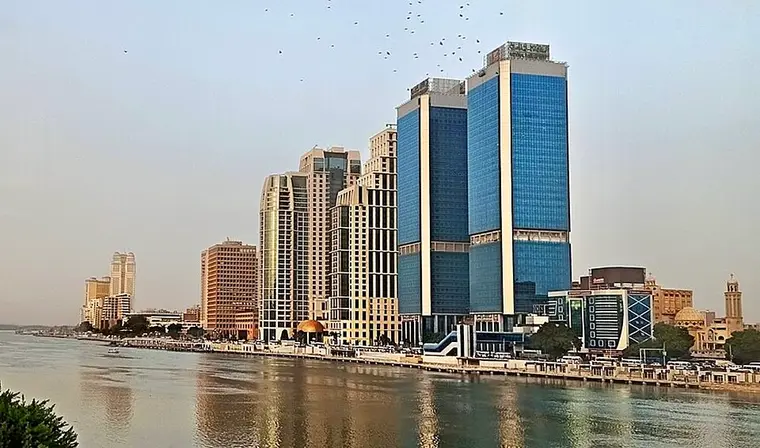
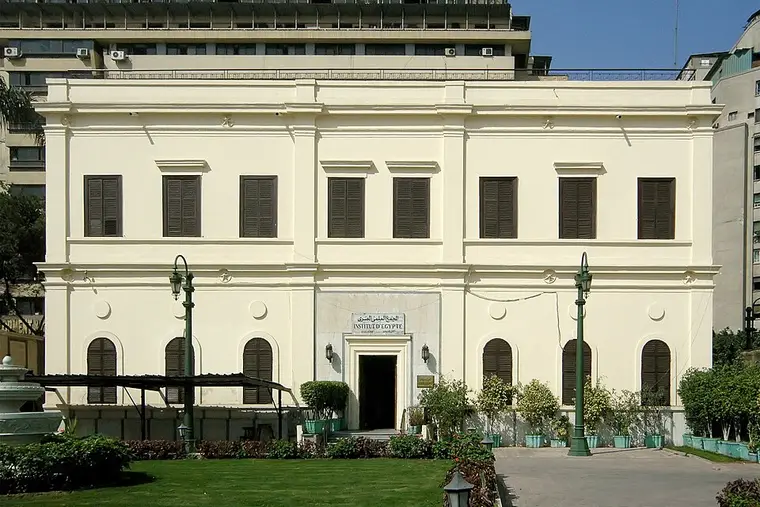
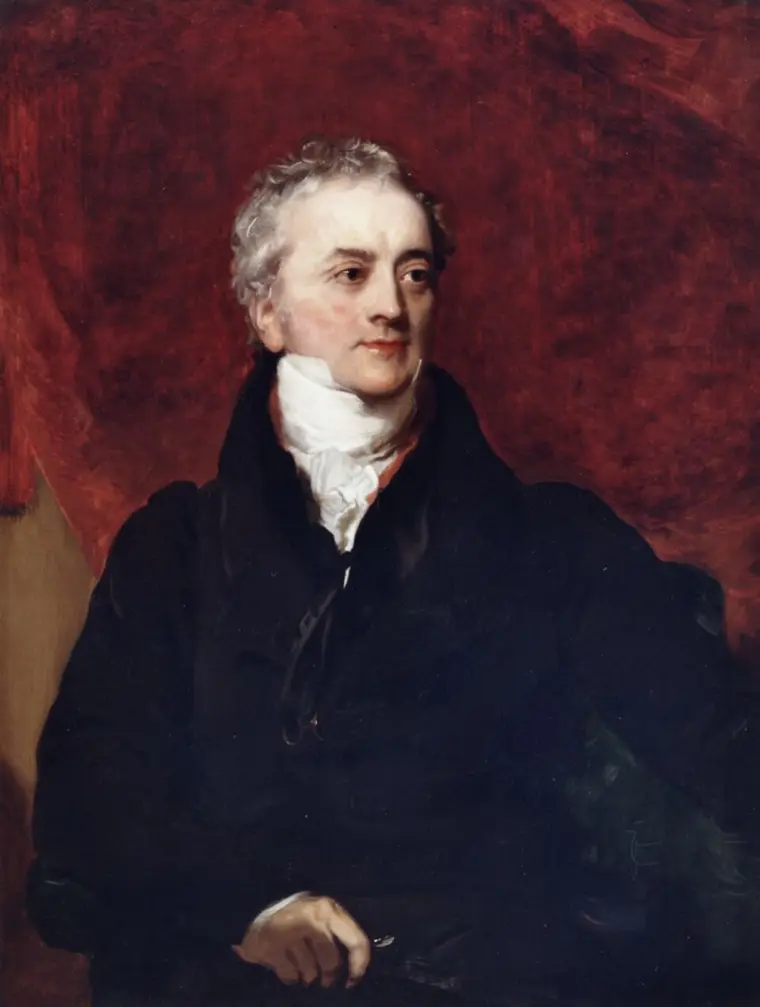
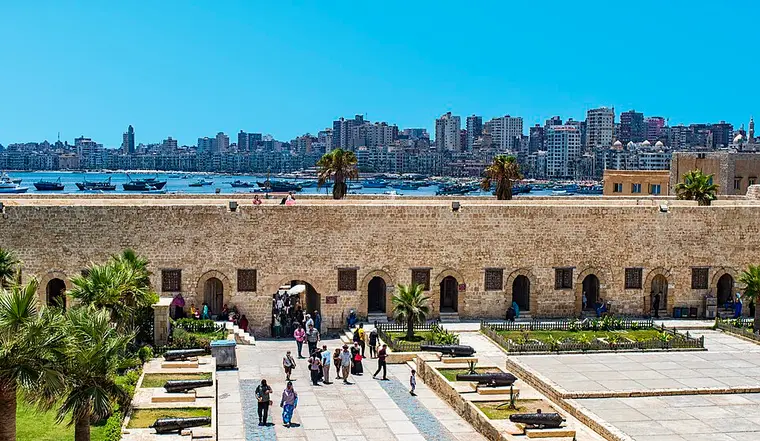
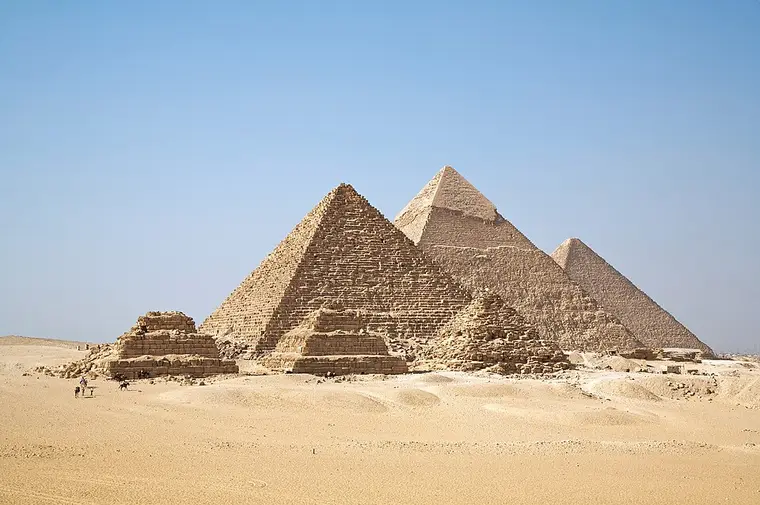
Sources for this chapter (252)Academic29Institution7Specialist book184Reputable web32
Academic(29)
- Parker · The Formation of Napoleon's Personality: An Exploratory Essay · French Historical Studies · 1971
- Vial · 4, 6 et 11 avril 1814 : les trois actes d'abdication de Napoléon I er · Napoleonica la Revue · 2014
- Two Days at Saint Helena · Monroe and Francis · 1832
- The gastric disease of Napoleon Bonaparte: brief report for the bicentenary of Napoleon's death on St. Helena in 1821 · Virchows Archiv · 2021
- Science, Education and Napoleon I · Isis · 1956
- Forrest · Propaganda and the Legitimation of Power in Napoleonic France · French History · 2004
- Hazareesingh · Memory and Political Imagination: The Legend of Napoleon Revisited · French History · 2004
- Datta · 'L'appel Au Soldat': Visions of the Napoleonic Legend in Popular Culture of the Belle Epoque · French Historical Studies · 2005
- Lobingier · Napoleon and His Code · Harvard Law Review · 1918
- Reconstruction of the Lineage Y Chromosome Haplotype of Napoléon the First · International Journal of Sciences · 2013
- Dwyer · Remembering and Forgetting in Contemporary France: Napoleon, Slavery, and the French History Wars · French Politics, Culture & Society · 2008
- Glover · The French Fleet, 1807–1814; Britain's Problem; and Madison's Opportunity · The Journal of Modern History · 1967
- The Death of Napoleon, Cancer or Arsenic? · Clinical Chemistry · 2008
- Dwyer · 'Citizen Emperor': Political Ritual, Popular Sovereignty and the Coronation of Napoleon I · History · 2015
- Godlewska · Map, Text and Image. The Mentality of Enlightened Conquerors: A New Look at the Description de l'Egypte · Transactions of the Institute of British Geographers · 1995
- Prochaska · Art of Colonialism, Colonialism of Art: The 'Description de l'Egypte' (1809–1828) · L'Esprit Créateur · 1994
- Karmon · An Analysis of Jacotin's Map of Palestine · Israel Exploration Journal · 1960
- Extrait d'un mémoire relatif aux antiques inscriptions de Persépolis lu à l'Académie des Inscriptions et Belles Lettres · Société asiatique (France) · 1823
- Allen · The Predecessors of Champollion · Proceedings of the American Philosophical Society · 1960
- Gardiner · Champollion and the Biliteral Signs · The Journal of Egyptian Archaeology · 1952
- Griffith · The Decipherment of the Hieroglyphs · The Journal of Egyptian Archaeology · 1951
- Hammond · Cracking the Egyptian Code: The Revolutionary Life of Jean-François Champollion · European Journal of Archaeology · 2014
- Poole · XXVI. On the method of interpreting Egyptian Hieroglyphics by Young and Champollion, with a vindication of its correctness from the strictures of Sir George Cornewall Lewis · Archaeologia · 1864
- Posener · Champollion et le déchiffrement de l'écriture hiératique · Comptes rendus des séances de l'Académie des Inscriptions et Belles-Lettres · 1972
- Ridley · Champollion in the Tomb of Seti I: an Unpublished Letter · Chronique d'Égypte · 1991
- Robinson · Styles of Decipherment: Thomas Young, Jean-François Champollion and the Decipherment of the Egyptian Hieroglyphs · Scripta · 2011
- Tanré-Szewczyk · Des antiquités égyptiennes au musée. Modèles, appropriations et constitution du champ de l'égyptologie dans la première moitié du XIXe siècle, à travers l'exemple croisé du Louvre et du British Museum · Les Cahiers de l'École du Louvre · 2017
- Weissbach · Jean François Champollion and the True Story of Egypt · 21st Century Science and Technology · 2000
- Weissbach · How Champollion deciphered the Rosetta stone · Fidelio · 1999
Institution(7)
- James · Enlightening the British: Knowledge, Discovery and the Museum in the Eighteenth Century · British Museum Press · 2003
- Knapton · Empress Josephine · Harvard University Press · 1982
- The Congress of Vienna, the Hundred Days, and Napoleon's Exile on St. Helena
- Dodman · 'Glory of arms and art': Napoleonic plunder and the birth of national museums · 2021
- The Crisis of 1808 · Brown University
- The history of measurement · St Andrew's University · 2003
- Battle of the Pyramids, July 21, 1798 · 1800
Specialist book(184)
- Bainville · Bonaparte en Égypte: poème · Balland · 1997
- Napoleon's Egyptian Campaigns 1798-1801 · Osprey Publishing · 1992
- Bernède · La campagne d'Égypte : 1798–1801 Mythes et réalités · Musée de l'Armée · 1998
- Burleigh · Mirage · Harper · 2007
- Cherfils · Bonaparte et l'Islam d'après les documents français & arabes · Pedone · 1914
- Cole · Napoleon's Egypt: Invading the Middle East · Palgrave Macmillan · 2007
- Cleveland · A history of the modern Middle East · Michigan University Press · 2004
- Clodfelter · Warfare and Armed Conflicts A Statistical Encyclopedia of Casualty and Other Figures, 1492–2015 · McFarland, Incorporated, Publishers · 2017
- Chandler · The Campaigns of Napoleon · Macmillan · 1966
- De Bellaigue · The Islamic Enlightenment: The Struggle Between Faith and Reason – 1798 to Modern Times · Liveright Publishing Corporation · 2017
- Clowes · The Royal Navy, A History from the Earliest Times to 1900 · Sampson Low, Marston and Company · 1899
- Chandler · Dictionary of the Napoleonic Wars · Macmillan · 1979
- Fournier · Napoleon the first: A biography · Holt · 1903
- Hugo · Ruy Blas · 1838
- Mikaberidze · The Napoleonic Wars A Global History · Oxford University Press · 2020
- 'Abd al-Rahman · Ta'rikh, Muddat al-faransis bi misr · Markus Wiener · 1997
- Maffeo · Most Secret and Confidential: Intelligence in the Age of Nelson · Chatham Publishing · 2000
- McLynn · Napoleon:Biography · Cape · 1997
- Memoirs of Napoleon's Egyptian Expedition 1798-1801 · Greenhill Books · 2001
- Fortescue · A History of the British Army · Macmillan and Co. · 1906
- Moreh · Napoleon in Egypt: Al-Jabarti's Chronicle of the French Occupation, 1798 – Expanded Edition · Markus Wiener Publishers · 2004
- The Armies of India · Black · 1911
- Scurr · Napoleon: A Life in Gardens and Shadows · Chatto & Windus · 2021
- Mullié · Biographie des célébrités militaires des armées de terre et de mer de 1789 à 1850 · Poignavant · 1851
- Rothenberg · The Napoleonic Wars · Cassell · 1999
- Bell · Napoleon: A Concise Biography · Oxford University Press · 2015
- Bonaparte · Collection Générale et Complète de lettres... de Napoléon le Grand... · Gräff · 1808
- Herold · Bonaparte in Egypt · Harper & Row · 1962
- Watson · Tricolor and Crescent: France and the Islamic World · Greenwood · 2003
- Mackesy · British Victory in Egypt, 1801: The End of Napoleon's Conquest · Routledge · 2013
- Panzac · Barbary Corsairs · Brill · 2005
- Pawly · Napoleon's Mamelukes · Osprey Publishing · 2012
- W. Said · Orientalism · Vintage Books · 1979
- Rachlin · Lucy's Bones, Sacred Stones, & Einstein's Brain: The Remarkable Stories Behind the Great Objects and Artifacts of History, From Antiquity to the Modern Era · Garrett County Press · 2013
- Napoleon · George Allen & Unwin · 1927
- Pigeard · Dictionnaire des batailles de Napoléon : 1796–1815 · Tallandier · 2004
- Smith · The Greenhill Napoleonic Wars Data Book : Actions and Losses in Personnel, Colours, Standards and Artillery, 1792–1815 · Greenhill Books · 1998
- Société de militaires et de marins · Dictionnaire historique des batailles, siéges, et combats de terre et de mer, qui ont eu lieu pendant la Révolution Française · Menard et Desenne · 1818
- Snodgrass · World Epidemics: A Cultural Chronology of Disease from Prehistory to the Era of Zika · McFarland · 2017
- Société de militaires et de marins · Dictionnaire historique des batailles, siéges, et combats de terre et de mer: qui ont en lieu pendant la révolution Française, Volume 3 · Menard et Desenne · 1818
- Strathern · Napoleon in Egypt · Random House Publishing Group · 2008
- Fauvelet de Bourrienne · Memoirs of Napoleon Bonaparte · Bentley · 1836
- Thiers · History of the French Revolution · Richard Bentley and Son · 1881
- Roberts · Napoleon: A Life · Penguin · 2015
- Warner · The Battle of the Nile. · B. T. Batsford · 1960
- Tulard · Dictionnaire Napoléon · Fayard · 1999
- Tulard · Napoléon ou le mythe du sauveur: avec une chronologie, une filmographie et des tableaux annexes · Fayard · 2005
- The Napoleonic Empire and the New European Political Culture · Springer · 2012
- Pérez · The Spanish Inquisition: A History · Yale University Press · 2005
- Ellis · Napoleon · Pearson Education Limited · 1997
- Chamberlain · The Child and Childhood in Folk Thought: (The Child in Primitive Culture) · MacMillan · 1896
- David Nicholls · Napoleon: A Biographical Companion · ABC-CLIO · 1999
- The French Revolution, Vol. III · Chapman and Hall · 1837
- Furet · The French Revolution, 1770–1814 · Blackwell · 1996
- Kubben · Franco-Batavian Relations in the Revolutionary Era, 1795-1803 · Martinus Nijhoff Publishers · 2011
- Regent · A Companion to the French Revolution · Wiley-Blackwell · 2013
- Rosenberg · Losing America, Conquering India: Lord Cornwallis and the Remaking of the British Empire · McFarland · 2017
- Adrian Gilbert · The Encyclopedia of Warfare: From Earliest Time to the Present Day · Taylor & Francis · 2000
- Empires of the Sand: The Struggle for Mastery in the Middle East, 1789–1923 · Harvard University Press · 2001
- Michael V. Leggiere · Napoleon and Berlin: The Franco-Prussian War in North Germany, 1813 · University of Oklahoma Press · 2015
- Horne · How Far From Austerlitz? Napoleon 18051815 · Pan Macmillan · 1997
- Engman · Napoleon's Empire · Palgrave Macmillan UK · 2016
- Gill · The Battle of Znaim: Napoleon, the Habsburgs and the end of the War of 1809 · Greenhill Books · 2020
- Command Failure in War: Psychology and Leadership · Indiana University Press · 2004
- Prutsch · Making Sense of Constitutional Monarchism in Post-Napoleonic France and Germany · Springer · 2012
- Hibbert · Napoleon's Women · W. W. Norton & Company · 2003
- Cullen · Is Arsenic an Aphrodisiac? · Royal Society of Chemistry · 2008
- Cases · Memoirs of the Life, Exile, and Conversations of the Emperor Napoleon · Redfield · 1855
- Roberts · Controversial Concordats: The Vatican's Relations with Napoleon, Mussolini, and Hitler · Catholic University of America Press · 1999
- Aston · Religion and revolution in France, 1780–1804 · Catholic University of America Press · 2000
- Aston · Christianity and Revolutionary Europe, 1750–1830 · Cambridge University Press · 2002
- Hibbert · Wellington: A Personal History · Da Capo Press · 1999
- Jack Coggins · Soldiers And Warriors: An Illustrated History · Courier Dover Publications · 1966
- Ellis · The Napoleonic Empire · Macmillan Publishers · 2003
- Hall · Perfectionism: A Hallmark Quality of World Class Performers, or a Psychological Impediment to Athletic Development? · Meyer & Meyer · 2006
- Seward · Napoleon's family · Weidenfeld and Nicolson · 1986
- Palmer · An Encyclopaedia of Napoleon's Europe · Weidenfeld and Nicolson · 1984
- World History of Warfare · University of Nebraska Press · 2008
- The Napoleonic Wars · Cassell · 2000
- Clive Emsley · Napoleon: Conquest, Reform and Reorganisation · Routledge · 2014
- Palmer · A history of the modern world · McGraw-Hill · 1995
- Scheck · Germany, 1871–1945: A Concise History · Berg · 2008
- Astarita · Between Salt Water And Holy Water: A History Of Southern Italy · W. W. Norton & Company · 2005
- Alter · Unity and Diversity in European Culture c. 1800 · Oxford University Press · 2006
- Boureau · L'aigle : chronique politique d'un emblème. · Éditions du Cerf · 1985
- Ottfried Neubecker & J P Brooke-Little · Heraldry: Sources, Symbols and Meanings · The Book Service Ltd · 1980
- Jirí Louda & Michael MacLagan · Lines of Succession: Heraldry of the Royal Families of Europe · Little, Brown · 1999
- Normand · Armes et sceau de l'Empire français · 1804
- Roret · Nouveau manuel complet du blason ou code héraldique, archéologique et historique; avec un armorial de l'Empire, une généalogie de la dynastie impériale des Bonaparte jusqu'à nos jours, etc... · 1854
- Barnett · Bonaparte · Wordsworth · 1997
- Blaufarb · Napoleon: Symbol for an Age, A Brief History with Documents · Bedford · 2008
- Broers · Napoleon: Soldier of Destiny · Faber and Faber · 2015
- Broers · Napoleon: The Decline and Fall of an Empire, 1811–1821 · Pegasus books · 2022
- Chandler · Napoleon · Leo Cooper · 2002
- Kircheisen · Napoleon · Harcourt Brace, & Co. · 1972
- Cronin · Napoleon · HarperCollins · 1994
- Dwyer · Napoleon: The Path to Power · Yale University Press · 2008
- Dwyer · Citizen Emperor: Napoleon in Power 1799–1815 · Yale University Press · 2013
- Dwyer · Napoleon: Passion, Death and Resurrection, 1815–1840 · Bloomsbury Publishing · 2018
- Englund · Napoleon: A Political Life · Scribner · 2010
- Gueniffey · Bonaparte: 1769–1802 · Harvard University Press · 2015
- Lyons · Napoleon Bonaparte and the Legacy of the French Revolution · St. Martin's Press · 1994
- McLynn · Napoleon: a Biography · Jonathan Cape · 1997
- Price · Napoleon: The End of Glory · Oxford University Press · 2014
- Zamoyski · Napoleon: The Man Behind The Myth · HarperCollins · 2018
- Geyl · Napoleon: For and Against · Jonathan Cape · 1949
- Roberts · Napoleon and Wellington: the Battle of Waterloo and the Great commanders who fought it · Simon & Schuster · 2001
- Amini · Napoleon and Persia · Taylor & Francis · 2000
- Bordes · Jacques-Louis David · Yale University Press · 2007
- Cobban · A History of Modern France, Volume 2: 1799–1871 · Penguin Books · 1986
- Connelly · Blundering to Glory: Napoleon's Military Campaigns · Rowman & Littlefield · 2006
- Conner · The Age of Napoleon · Greenwood Press · 2004
- Cordingly · The Billy Ruffian: The Bellerophon and the Downfall of Napoleon · Bloomsbury · 2004
- Dwyer · The Oxford Handbook of the French Revolution · Oxford University Press · 2015
- Ellis · Religious change in Europe, 1650–1914: essays for John McManners · Clarendon Press · 1997
- Esdaile · The Peninsular War: A New History · Macmillan · 2003
- Esdaile · Napoleon's Wars: An International History, 1803–1815 · Allen Lane · 2007
- Flynn · Conscription and democracy: The Draft in France, Great Britain, and the United States · Greenwood Publishing Group · 2001
- The Napoleonic Wars: The Rise and Fall of an Empire · Osprey · 2004
- Gates · The Napoleonic Wars, 1803–1815 · Pimlico · 2003
- Grab · Napoleon and the Transformation of Europe · Bloomsbury Publishing · 2017
- Harvey · The War of Wars: The Epic Struggle Between Britain and France, 1789–1815 · Robinson · 2007
- Mikaberidze · The Louisiana Purchase: The Grand Bargain and the Making of America · Oxford University Press · 2026
- Roberts · Heavy Words Lightly Thrown · Granta · 2004
- Schom · Napoleon Bonaparte · HarperCollins · 1997
- Watson · Tricolor and crescent · Greenwood Publishing Group · 2003
- Sicker · The Islamic World in Decline: From the Treaty of Karlowitz to the Disintegration of the Ottoman Empire · Greenwood Publishing Group · 2001
- Wells · The Penguin Dictionary of Curious and Interesting Geometry · Penguin Books · 1992
- Chesney · Waterloo Lectures: A Study of The Campaign of 1815 · Kessinger Publishing · 2006
- Johnson · Napoleon: A life · Penguin Books · 2002
- Lefebvre · Napoleon, from 18 Brumaire to Tilsit, 1799–1807 · Columbia University Press · 1969
- Schroeder · The Transformation of European Politics 1763–1848 · Oxford U.P. · 1996
- Talleyrand · Mémoires du Prince de Talleyrand · Henri Javal · 1891
- Armoush · Modern contemplations of the French campaign · 2018
- Bellaigue · The Islamic Enlightenment: The Modern Struggle Between Faith and Reason · Vintage · 2017
- Napoleon Military Campaigns In Art · BOD GmbH DE · 2024
- Clodfelter · Warfare and Armed Conflicts: A Statistical Encyclopedia of Casualty and Other Figures, 1492-2015, 4th ed. · McFarland · 2017
- Holbrook · Al-Qaeda 2.0: A Critical Reader · Oxford University Press · 2018
- Niox · Géographie militaire · Dumaine · 1887
- Russell · Mediterranean Naval Battles That Changed the World · Pen and Sword Maritime · 2022
- Strathern · Napoleon in Egypt: 'the Greatest Glory' · Vintage · 2008
- Admiral Nelson and Joseph Haydn · Nelson Society · 2000
- British Warship Names · Putnam · 1959
- W. · Orientalism · Penguin Books · 2019
- Jomard · Description de l'Egypte · 1818
- Khatib · Palestine and Egypt Under the Ottomans: Paintings, Books, Photographs, Maps and Manuscripts · Bloomsbury USA · 2003
- Mapping the Holy Land: The Foundation of a Scientific Cartography of Palestine · Bloomsbury Publishing · 2017
- Ceram · Gods, Graves, and Scholars · Alfred A. Knopf · 1967
- The Archaeology of the Cuneiform Inscriptions · Cambridge University Press · 2019
- Recueil des publications de la Société Havraise d'Études Diverses · Société Havraise d'Etudes Diverses · 1869
- Bulletin des sciences historiques, antiquités, philologie · Treuttel et Würtz · 1825
- History of Humanity: From the third millennium to the seventh century B.C. · UNESCO · 1994
- Précis du système hiéroglyphique des anciens Égyptiens, ou Recherches sur les éléments premiers de cette écriture sacrée, sur leurs diverses combinaisons, et sur les rapports de ce système avec les autres méthodes graphiques égyptiennes. Planches / . Par Champollion le jeune... · 1824
- Revue archéologique · Leleux · 1844
- L'Égypte sous les Pharaons, ou recherches sur la géographie, la religion, la langue, les écritures et l'histoire de l'Égypte avant l'invasion de Cambyse. Tome premier: Description géographique. Introduction. · De Bure · 1814
- L'Égypte sous les Pharaons, ou recherches sur la géographie, la religion, la langue, les écritures et l'histoire de l'Égypte avant l'invasion de Cambyse. Description géographique. Tome Second. · De Bure · 1814
- De l'écriture hiératique des anciens Égyptiens · Imprimerie Typographique et Lithographique de Baratier Frères · 1821
- Lettre à M. Dacier relative à l'alphabet des hiéroglyphes phonétiques employés par les égyptiens pour écrire sur leurs monuments les titres, les noms et les surnoms des souverains grecs et romains · Firmin Didot Père et Fils · 1822
- Panthéon égyptien, collection des personnages mythologiques de l'ancienne Égypte, d'après les monuments (explanatory text to illustrations by Léon-Jean-Joseph Dubois) · Firmin Didot · 1823
- Précis du système hiéroglyphique des anciens Égyptiens, ou recherches sur les éléments premiers de cette écriture sacrée, sur leurs diverses combinaisons, et sur les rapports de ce systéme avec les autres méthodes graphiques égytpiennes · Treuttel et Würtz · 1824
- Lettres à M. le Duc de Blacas d'Aulps relatives au Musée Royal Egyptien de Turin · Firmin Didot Père et Fils · 1824
- Notice descriptive des monuments Égyptiens du musée Charles X · Imprimerie de Crapelet · 1827
- Lettres écrites d'Égypte et de Nubie · Project Gutenberg · 1828
- Monuments de l'Egypte et de la Nubie: d'après les dessins exécutés sur les lieux sous la direction de Champollion le-Jeune, et les descriptions autographes qu'il en a rédigées. Volume 1 & 2 · Typographie de Firmin Didot Frères · 1835
- Grammaire égyptienne, ou Principes généraux de l'ecriture sacrée égyptienne appliquée a la représentation de la langue parlée · Typographie de Firmin Didot Frères · 1836
- Dictionnaire égyptien en écriture hiéroglyphique · Firmin Didot Frères · 1841
- The Keys of Egypt: the obsession to decipher Egyptian hieroglyphs · HarperCollins · 2000
- Åkerblad · Lettre sur l'inscription Égyptienne de Rosette: adressée au citoyen Silvestre de Sacy, Professeur de langue arabe à l'École spéciale des langues orientales vivantes, etc.; Réponse du citoyen Silvestre de Sacy · L'imprimerie de la République · 1802
- Egyptian Diaries: How One Man Unveiled the Mysteries of the Nile · Gibson Square · 2001
- Bianchi · The Oxford Encyclopedia of Ancient Egypt, Volume 1 · Oxford University Press · 2001
- Champollion · Précis du système hiéroglyphique des anciens Égyptiens, ou, Recherches sur les élémens premiers de cette écriture sacrée, sur leurs diverses combinaisons, et sur les rapports de ce système avec les autres méthodes graphiques égyptiennes · Imprimerie royale · 1828
- Fagan · The rape of the Nile: tomb robbers, tourists, and archaeologists in Egypt · Westview Press · 2004
- Frimmer · The stone that spoke: and other clues to the decipherment of lost languages · G. P. Putnam's Sons · 1969
- Hartleben · Champollion: sein leben und sein Werk · Weidmannsche Buchhandlung · 1906
- Iversen · Myth of Egypt and its hieroglyphs in European tradition · Gad · 1961
- Kanawaty · Mémoires d'Égypte. Hommage de l'Europe à Champollion, catalogue d'exposition, Paris, Bibliothèque nationale, 17 novembre 1990–17 mars 1991 · La Nuée Bleue · 1990
- Lacouture · Champollion, Une vie de lumières · Grasset · 1988
- Lewis · An Historical Survey of the Astronomy of the Ancients · Parker, Son, and Bourn · 1862
- Meyerson · The Linguist and the Emperor: Napoleon and Champollion's quest to decipher the Rosetta Stone · Ballantine Books · 2004
- Cracking Codes: the Rosetta Stone and decipherment · University of California Press · 1999
- Pope · The Story of Decipherment: From Egyptian Hieroglyphs to Maya Script · Thames & Hudson · 1999
- Robinson · Cracking the Egyptian Code: The Revolutionary Life of Jean-Francois Champollion · Oxford University Press · 2012
- Thomasson · The Life of J. D. Åkerblad: Egyptian Decipherment and Orientalism in Revolutionary Times · Brill · 2013
- Wilkinson · A World Beneath the Sands: Adventurers and Archaeologists in the Golden Age of Egyptology · Picador · 2020
Reputable web(32)
- Napoleon Was Here! · The National Library of Israel
- Corsica
- Napoleon's act of abdication · Bulletin des lois de la Republique Française · 1814
- A Journey to St. Helena, Home of Napoleon's Last Days
- Hicks · Napoleon's English Lessons
- L'Empire et le Saint-Siège · Napoleon.org
- Napoleon's 'divorce'
- Youssef · Napoléon et l'islam, l'anti-croisade · 2023
- Napoleon and the Pope: From the Concordat to the Excommunication
- La taille de Napoléon
- Zelazko · Was Napoleon Short? · 2023
- Outlines of the evolution of weights and measures and the metric system · The Macmillan Company · 1906
- Hanson, Victor Davis · The Little Tyrant, A review of Napoleon: A Penguin Life · The Claremont Institute · 2003
- Nieuwazny · Napoleon and Polish Identity · 1998
- Armorial du Premier Empire, Par Philippe Lamarque, Index armorum : Michel Popoff, Iconographie : Gregor Jakubowski – Barthel de Weydenthal, Éditions du Gui
- Battle of the Pyramids (Battle of Embabeh)
- Keslassy · French Historians Slam Ridley Scott’s ‘Napoleon’ Inaccuracies: ‘Like Spitting in the Face of French People’ · 2023
- Kotb · Napoleon Did Not Shoot the Pyramids As Ridley Scott Might Have You Believe · 2023
- Franck Goddio · Napoleon Bonaparte's Fleet
- Richard Savill · Battle of the Nile tree clumps pinpointed for visitors by National Trust · The Daily Telegraph · 2009
- Adrian Wills · Decade to mark the naval hero's battles · 1998
- Interview with Franck Goddio, June 28, 1999 · Franck Goddio Society · 1999
- Nick Slope · Burials on Nelson's Island · BBC History · 2004
- Description de l'Égypte
- How Champollion Used Coptic to Decipher Hieroglyphics
- How Did Champollion Crack the Rosetta Stone?
- Jean-François Champollion (1790–1832) · Royal Netherlands Academy of Arts and Sciences
- Les Ecritures du Monde · L'internaute – Musée Champollion
- La propriété familiale, Museum Website
- Cairo correspondent on the city's best · CNN.com
- Aufrère · Champollion, Jean-François · Institut National d'Histoire de l'Art · 2008
- Musée Champollion. Vif
Every ancient date is an estimate. Scholarly chronologies differ by decades, and by more the further back you go, which is why each figure carries a tilde. When a period is published we name the chronology its dates come from.
In this period
In this period
230 minutes in total- 01Introduction2 min read
- 02Background3 min read
- 03Preparations1 min read
- 04Expedition14 min read
- 05Syria9 min read
- 06Campaigns in Upper Egypt5 min read
- 07Abukir to withdrawal5 min read
- 08Scientific expedition2 min read
- 09Printing press2 min read
- 10Analysis2 min read
- 11Imperialism1 min read
- 12Mamelukes in French service1 min read
- 13Napoleon69 min read
- 14Battle of the Pyramids5 min read
- 15Battle of the Nile55 min read
- 16Description de l'Égypte8 min read
- 17Jean-François Champollion46 min read