The Ayyubid Dynasty
~1171 – ~1250 CE
12 chapters · 165 min read · 145 sources
1171 CE
Introduction
2 min readThe Ayyubid dynasty, also known as the Ayyubid Sultanate, was a Sunni Muslim dynasty of Kurdish origin that founded the medieval Sultanate of Egypt, which was established by Saladin in 1171, following his abolition of…The Ayyubid dynasty, also known as the Ayyubid Sultanate, was a Sunni Muslim dynasty of Kurdish origin that founded the medieval Sultanate of Egypt, which was established by Saladin in 1171, following his abolition of the Fatimid Caliphate. Saladin had originally served the Zengid ruler Nur al-Din, leading the latter's army against the Crusaders in Fatimid Egypt, where he was made vizier. Following the death of his Zengid suzerain Nur al-Din in 1174, Saladin was proclaimed as the first Sultan of Egypt by the Abbasid Caliphate, and rapidly expanded the new sultanate beyond Egypt to encompass most of Syria, in addition to Hejaz, Yemen, northern Nubia, Tripolitania and Upper Mesopotamia. Saladin's military campaigns set the general borders and sphere of influence of the sultanate of Egypt for the almost 350 years of its existence. Most of the Crusader states fell to Saladin after his victory at the Battle of Hattin in 1187, but the Crusaders reconquered the Syrian coastlands in the 1190s.
After Saladin's death in 1193, his sons contested control of the sultanate, but Saladin's brother al-Adil ultimately became sultan in 1200. All of the later Ayyubid sultans of Egypt were his descendants. In the 1230s, the emirs of Syria attempted to assert their independence from Egypt and the Ayyubid realm remained divided until Sultan as-Salih Ayyub restored its unity by subduing most of Syria, except Aleppo, by 1247. By then, local Muslim dynasties had driven out the Ayyubids from Yemen, the Hejaz, and parts of Mesopotamia. After his death in 1249, as-Salih Ayyub was succeeded in Egypt by his son al-Mu'azzam Turanshah. However, the latter was soon overthrown by his Mamluk generals who had repelled a Crusader invasion of the Nile Delta. This effectively ended Ayyubid power in Egypt. Attempts by the emirs of Syria, led by an-Nasir Yusuf of Aleppo, to wrest back Egypt failed. In 1260, the Mongols sacked Aleppo and conquered the Ayyubids' remaining territories soon after. The Mamluks, who expelled the Mongols, maintained the Ayyubid principality of Hama until deposing its last ruler in 1341.
Despite their relatively short tenure, the Ayyubid dynasty had a transformative effect on the region, particularly Egypt. Under the Ayyubids, Egypt, which had previously been a formally Shia caliphate, became the dominant Sunni political and military force, and the economic and cultural centre of the region, a status that it would retain until it was conquered by the Ottomans in 1517. Throughout the sultanate, Ayyubid rule ushered in an era of economic prosperity, and the facilities and patronage provided by the Ayyubids led to a resurgence in intellectual activity in the Islamic world. This period was also marked by an Ayyubid process of vigorously strengthening Sunni Muslim dominance in the region by constructing numerous madrasas (Islamic schools of law) in their major cities.
Name
1 min readIn medieval Islamic sources, the Ayyubids were referred to as the "Kurdish regime/dynasty", the "dynasty/regime of the Kurds", or as the "Kurdish Kingdom". For example, Muhammad ibn Ibrahim al-Khazraji, a writer at the…In medieval Islamic sources, the Ayyubids were referred to as the "Kurdish regime/dynasty", the "dynasty/regime of the Kurds", or as the "Kurdish Kingdom". For example, Muhammad ibn Ibrahim al-Khazraji, a writer at the end of the Ayyubid period, wrote a history entitled, which translates as "The History of the State of the Kurds and of the Turks". The "Kurds" refer to the Ayyubids while the "Turks" refer to the Mamluks who succeeded them in 1250. The dynasty is also referred to as the "Ayyubid Kurds" and "Kurdish rulers of Egypt".
History
38 min readThe progenitor of the Ayyubid dynasty, Najm ad-Din Ayyub ibn Shadhi, belonged to the Kurdish Rawadiya tribe, itself a branch of the large Hadhabani tribe. The Rawadiya were of originally Arab origin but became…Origins
The progenitor of the Ayyubid dynasty, Najm ad-Din Ayyub ibn Shadhi, belonged to the Kurdish Rawadiya tribe, itself a branch of the large Hadhabani tribe. The Rawadiya were of originally Arab origin but became Kurdicized over time. In later periods, members of the Ayyubid dynasty sponsored genealogies showing that they were not Kurds, but rather descended from noble Arab lineages, including the Banu Umayya. While these genealogies are generally regarded as politically motivated constructions, the historian Vladimir Minorsky argued that they reflect an underlying historical reality. He suggested the Rawadiya Kurds to be descendants of the Arab general Rawwād al-Azdī, who governed Tabriz in the early 9th century, and whose lineage became Kurdicized in Azerbaijan. These groups later emerged as a principal clan within the Hadhabani confederation, with one branch eventually settling in Dvin. According to this view, the later Arab genealogies of the Ayyubids preserve a genuine, though distant, memory of Arab origins.
According to Yasser Tabbaa, an anthropologist specializing in medieval Islamic culture, the Ayyubid rulers who reigned in the late 12th-century were far removed from their Kurdish origins, and unlike their Seljuq predecessors and their Mamluk successors, they were firmly "Arabized". Arabic culture and language formed the main component of their identity instead of their Kurdish heritage.
Ayyub's ancestors settled in the town of Dvin, in northern Armenia. The Rawadiya were part of the political-military elite of the town. Circumstances became unfavorable in Dvin when Turks seized the town. Shadhi left with his two sons Ayyub and Asad ad-Din Shirkuh. His friend Mujahid ad-Din Bihruz—the military governor of northern Mesopotamia under the Seljuks—welcomed him and appointed him governor of Tikrit. After Shadhi's death, Ayyub succeeded him in governance of the city with the assistance of his brother Shirkuh. Together they managed the affairs of the city well, gaining them popularity from the local inhabitants. In the meantime, Imad ad-Din Zangi, the ruler of Mosul, was defeated by the Abbasids under Caliph al-Mustarshid and Bihruz. In his bid to escape the battlefield to Mosul via Tikrit, Zangi took shelter with Ayyub and sought his assistance in this task. Ayyub complied and provided Zangi and his companions boats to cross the Tigris River and safely reach Mosul.
As a consequence for assisting Zangi, the Abbasid authorities sought punitive measures against Ayyub. Simultaneously, in a separate incident, Shirkuh killed a close confidant of Bihruz on charges that he had sexually assaulted a woman in Tikrit. The Abbasid court issued arrest warrants for both Ayyub and Shirkuh, but before the brothers could be arrested, they departed Tikrit for Mosul in 1138. When they arrived in Mosul, Zangi provided them with all the facilities they needed and he recruited the two brothers into his service. Ayyub was made commander of Ba'albek and Shirkuh entered the service of Zangi's son, Nur ad-Din. According to historian Abdul Ali, it was under the care and patronage of Zangi that the Ayyubid family rose to prominence.
Establishment in Egypt
In 1164, Nur al-Din dispatched Shirkuh to lead an expeditionary force to prevent the Crusaders from establishing a strong presence in an increasingly anarchic Egypt. Shirkuh enlisted Ayyub's son, Saladin, as an officer under his command. They successfully drove out Dirgham, the vizier of Egypt, and reinstated his predecessor Shawar. After being reinstated, Shawar ordered Shirkuh to withdraw his forces from Egypt, but Shirkuh refused, claiming it was Nur al-Din's will that he remain. Over the course of several years, Shirkuh and Saladin defeated the combined forces of the Crusaders and Shawar's troops, first at Bilbais, then at a site near Giza, and in Alexandria, where Saladin would stay to protect while Shirkuh pursued Crusader forces in Lower Egypt.
Shawar died in 1169 and Shirkuh became vizier, but he too died later that year. After Shirkuh's death, Saladin was appointed vizier by the Fatimid caliph al-Adid because there was "no one weaker or younger" than Saladin, and "not one of the emirs obeyed him or served him", according to medieval Muslim chronicler Ibn al-Athir. Saladin soon found himself more independent than ever before in his career, much to the dismay of Nur al-Din who attempted to influence events in Egypt. He permitted Saladin's elder brother, Turan-Shah, to supervise Saladin in a bid to cause dissension within the Ayyubid family and thus undermining its position in Egypt. Nur al-Din satisfied Saladin's request that he be joined by his father Ayyub. However, Ayyub was sent primarily to ensure that Abbasid suzerainty was proclaimed in Egypt, which Saladin was reluctant to undertake due to his position as the vizier of the Fatimids. Although Nur al-Din failed to provoke the Ayyubids into rivalry, the extended Ayyubid family, particularly a number of local governors in Syria, did not entirely back Saladin.
Saladin consolidated his control in Egypt after ordering Turan-Shah to put down a revolt in Cairo staged by the Fatimid army's 50,000-strong Nubian regiments. After this success, Saladin began granting his family members high-ranking positions in the country and increased Sunni Muslim influence in Shia Muslim-dominated Cairo by ordering the construction of a college for the Maliki school of jurisprudence of Sunni Islam in the city, and another for the Shafi'i school, to which he belonged, in al-Fustat. In 1171, al-Adid died and Saladin took advantage of this power vacuum, effectively taking control of the country. Upon seizing power, he switched Egypt's allegiance to the Baghdad-based Abbasid Caliphate which adhered to Sunni Islam.
Expansion
Conquest of North Africa and Nubia
Saladin went to Alexandria in 1171–72 and found himself facing the dilemma of having many supporters in the city, but little money. A family council was held there by the Ayyubid emirs of Egypt where it was decided that al-Muzaffar Taqi al-Din Umar, Saladin's nephew, would launch an expedition against the coastal region of Barqa (Cyrenaica) west of Egypt with a force of 500 cavalry. To justify the raid, a letter was sent to the Bedouin tribes of Barqa, rebuking them for their robberies of travelers and ordering them to pay the alms-tax (zakat). The latter was to be collected from their livestock.
In late 1172, Aswan was besieged by former Fatimid soldiers from Nubia and the governor of the city, Kanz al-Dawla—a former Fatimid loyalist—requested reinforcements from Saladin who complied. The reinforcements had come after the Nubians had already departed Aswan, but Ayyubid forces led by Turan-Shah advanced and conquered northern Nubia after capturing the town of Ibrim. Turan-Shah and his Kurdish soldiers temporarily lodged there. From Ibrim, they raided the surrounding region, halting their operations after being presented with an armistice proposal from the Makurian king. Although Turan-Shah's initial response was hawkish, he later sent an envoy to Dongola, who upon returning, described the poverty of the city and of Nubia in general to Turan-Shah. Consequently, the Ayyubids, like their Fatimid predecessors, were discouraged from further southward expansion into Nubia due to the poverty of the region, but required Nubia to guarantee the protection of Aswan and Upper Egypt. The Ayyubid garrison in Ibrim withdrew to Egypt in 1175.
Throughout the 1170s, the Ayyubids continued to push west as well. Sharaf al-Din Qaraqush, a commander under al-Muzaffar Taqi al-Din Umar, led most of these expeditions on the frontier. He captured Siwa in 1172 and conquered Cyrenaica before 1174. He subsequently conquered Tripoli with an army of Turks and Kurds, joined by Arab troops from some of the region's Bedouin tribes. The exact date of Tripoli's capture is uncertain, but happened sometime in the 1170s or early 1180s. While some Ayyubid forces fought the Crusaders in the Levant, Qaraqush's forces went on to capture most of Ifriqiya (present-day Tunisia) from the Almohads by 1185–1186. By this point, Qaraqush had also entered into alliance with the Banu Ghaniya, led by Ali ibn Ghaniya, another enemy of the Almohads. The Almohad caliph Yaqub al-Mansur reconquered Ifriqiya from 1187 to 1188, defeating both of them. The Ayyubids made no further attempts to intervene in the Maghreb after this.
Conquest of Arabia
In 1173, Saladin sent Turan-Shah to conquer Yemen and the Hejaz. Muslim writers Ibn al-Athir and later al-Maqrizi wrote that the reasoning behind the conquest of Yemen was an Ayyubid fear that should Egypt fall to Nur al-Din, they could seek refuge in a faraway territory. In May 1174, Turan-Shah conquered Zabid and later that year captured Aden. Aden became the principal maritime port of the dynasty in the Indian Ocean and the principal city of Yemen, although the official capital of Ayyubid Yemen was Ta'iz. The advent of the Ayyubids marked the beginning of a period of renewed prosperity in the city which saw the improvement of its commercial infrastructure, the establishment of new institutions, and the minting of its own coins. Following this prosperity, the Ayyubids implemented a new tax which was collected by galleys.
Turan-Shah drove out the remaining Hamdanid rulers of Sanaa, conquering the mountainous city in 1175. With the conquest of Yemen, the Ayyubids developed a coastal fleet, al-asakir al-bahriyya, which they used to guard the sea coasts under their control and protect them from pirate raids. The conquest held great significance for Yemen because the Ayyubids managed to unite the previous three independent states (Zabid, Aden, and Sanaa) under a single power. However, when Turan-Shah was transferred from his governorship in Yemen in 1176, uprisings broke out in the territory and were not quelled until 1182 when Saladin assigned his other brother Tughtekin Sayf al-Islam as governor of Yemen. The Ayyubid na'ib (deputy governor) of Yemen, Uthman al-Zandjili, conquered the greater part of Hadramaut in 1180, upon Turan-Shah's return to Yemen.
From Yemen, as from Egypt, the Ayyubids aimed to dominate the Red Sea trade routes which Egypt depended on and so sought to tighten their grip over the Hejaz, where an important trade stop, Yanbu, was located. To favor trade in the direction of the Red Sea, the Ayyubids built facilities along the Red Sea-Indian Ocean trade routes to accompany merchants. The Ayyubids also aspired to back their claims of legitimacy within the Caliphate by having sovereignty over the Islamic holy cities of Mecca and Medina. The conquests and economic advancements undertaken by Saladin effectively established Egypt's hegemony in the region.
Conquest of Syria and Upper Mesopotamia
Although still nominally a vassal of Nur al-Din, Saladin adopted an increasingly independent foreign policy. This independence became more publicly pronounced after Nur al-Din's death in 1174. Thereafter, Saladin set out to conquer Syria from the Zengids; and on November 23 he was welcomed in Damascus by the governor of the city. By 1175, he had taken control of Hama and Homs but failed to take Aleppo after besieging it. Control of Homs was handed to the descendants of Shirkuh in 1179 and Hama was given to Saladin's nephew, al-Muzaffar Umar. Saladin's successes alarmed Emir Saif al-Din of Mosul, the head of the Zengids at the time, who regarded Syria as his family's estate and was angered that it was being usurped by a former servant of Nur al-Din. He mustered an army to confront Saladin near Hama. Although heavily outnumbered, Saladin and his veteran soldiers decisively defeated the Zengids. After his victory, Saladin proclaimed himself king and suppressed the name of as-Salih Ismail al-Malik (Nur al-Din's adolescent son) in Friday prayers and Islamic coinage, replacing it with his own name. The Abbasid caliph, al-Mustadi, graciously welcomed Saladin's assumption of power and gave him the title of "Sultan of Egypt and Syria".
In the spring of 1176, another major confrontation occurred between the Zengids and the Ayyubids, this time at the Sultan's Mound, from Aleppo. Saladin again emerged victorious, but Saif al-Din managed to narrowly escape. The Ayyubids proceeded to conquer other Syrian cities in the north, namely Ma'arat al-Numan, A'zaz, Buza'a, and Manbij, but failed to capture Aleppo during a second siege. An agreement was laid out, however, whereby Gumushtigin, the governor of Aleppo, and his allies at Hisn Kayfa and Mardin, would recognize Saladin as the sovereign of the Ayyubids' possessions in Syria, while Saladin allowed for Gumushtigin and as-Salih al-Malik to continue their rule over Aleppo.
While Saladin was in Syria, his brother al-Adil governed Egypt, and in 1174–75, Kanz al-Dawla of Aswan revolted against the Ayyubids with the intention of restoring Fatimid rule. His main backers were the local Bedouin tribes and the Nubians, but he also enjoyed the support of a multitude of other groups, including the Armenians. Coincidental or possibly in coordination, was an uprising by Abbas ibn Shadi who overran Qus along the Nile River in central Egypt. Both rebellions were crushed by al-Adil. For the rest of that year and throughout early 1176, Qaraqush continued his raids in western North Africa, bringing the Ayyubids into conflict with the Almohads who ruled the Maghreb.
In 1177, Saladin led a force of some 26,000 soldiers, according to Crusader chronicler William of Tyre, into southern Palestine after hearing that most of the Kingdom of Jerusalem's soldiers were besieging Harem, Syria west of Aleppo. Suddenly attacked by the Templars under Baldwin IV of Jerusalem near Ramla, the Ayyubid army was defeated at the Battle of Montgisard, with the majority of its troops killed. Saladin encamped at Homs the following year and a number of skirmishes between his forces, commanded by Farrukh Shah, and the Crusaders occurred. Undeterred, Saladin invaded the Crusader states from the west and defeated Baldwin at the Battle of Marj Ayyun in 1179. The following year, he destroyed the newly built Crusader castle of Chastellet at the Battle of Jacob's Ford. In the campaign of 1182, he sparred with Baldwin again in the inconclusive Battle of Belvoir Castle in Kawkab al-Hawa.
In May 1182, Saladin captured Aleppo after a brief siege; the new governor of the city, Imad al-Din Zangi II, had been unpopular with his subjects and surrendered Aleppo after Saladin agreed to restore Zangi II's previous control over Sinjar, Raqqa, and Nusaybin, which would thereafter serve as vassal territories of the Ayyubids. Aleppo formally entered Ayyubid hands on 12 June. The day after, Saladin marched to Harim, near the Crusader-held Antioch and captured the city when its garrison forced out their leader, Surhak, who was then briefly detained and released by al-Muzaffar Umar. The surrender of Aleppo and Saladin's allegiance with Zangi II had left Izz al-Din al-Mas'ud of Mosul the only major Muslim rival of the Ayyubids. Mosul had been subjected to a short siege in the autumn of 1182, but after mediation by the Abbasid caliph an-Nasir, Saladin withdrew his forces. Mas'ud attempted to align himself with the Artuqids of Mardin, but they became allies of Saladin instead. In 1183, Irbil too switched allegiance to the Ayyubids. Mas'ud then sought the support of Pahlawan ibn Muhammad, the governor of Azerbaijan, and although he did not usually intervene in the region, the possibility of Pahlawan's intervention made Saladin cautious about launching further attacks against Mosul.
An arrangement was negotiated whereby al-Adil was to administer Aleppo in the name of Saladin's son al-Afdal, while Egypt would be governed by al-Muzaffar Umar in the name of Saladin's other son Uthman. When the two sons were to come of age they would assume power in the two territories, but if any died, one of Saladin's brothers would take their place. In the summer of 1183, after ravaging eastern Galilee, Saladin's raids there culminated in the Battle of al-Fule in the Jezreel Valley between him and the Crusaders under Guy of Lusignan. The mostly hand-to-hand fighting ended indecisively. The two armies withdrew to a mile from each other and while the Crusaders discussed internal matters, Saladin captured the Golan Plateau, cutting the Crusaders off from their main supplies source. In October 1183 and then on 13 August 1184, Saladin and al-Adil besieged Crusader-held Karak, but were unable to capture it. Afterward, the Ayyubids raided Samaria, burning down Nablus. Saladin returned to Damascus in September 1184 and a relative peace between the Crusader states and the Ayyubid empire subsequently ensued in 1184–1185.
Saladin launched his last offensive against Mosul in late 1185, hoping for an easy victory over a presumably demoralized Mas'ud, but failed due to the city's unexpectedly stiff resistance and a serious illness which caused Saladin to withdraw to Harran. Upon Abbasid encouragement, Saladin and Mas'ud negotiated a treaty in March 1186 that left the Zengids in control of Mosul, but had to cede the eastern region beyond lesser Zab to Shahrizor to direct Ayyubid control, and under the obligation to supply the Ayyubids with military support when requested.
Conquest of Palestine and Transjordan
Saladin besieged Tiberias in the eastern Galilee on 3 July 1187 and the Crusader army attempted to attack the Ayyubids by way of Kafr Kanna. After hearing of the Crusaders' march, Saladin led his guard back to their main camp at Kafr Sabt, leaving a small detachment at Tiberias. With a clear view of the Crusader army, Saladin ordered al-Muzaffar Umar to block the Crusaders' entry from Hattin by taking a position near Lubya, while Gökböri and his troops were stationed at a hill near al-Shajara. On 4 July the Crusaders advanced toward the Horns of Hattin and charged against the Muslim forces, but were overwhelmed and defeated decisively. Four days after the battle, Saladin invited al-Adil to join him in the reconquest of Palestine, Galilee and Lebanese coast. On 8 July the Crusader stronghold of Acre was captured by Saladin, while his forces seized Nazareth and Saffuriya; other brigades took Haifa, Caesarea, Sebastia and Nablus, while al-Adil conquered Mirabel and Jaffa. On 26 July, Saladin returned to the coast and received the surrender of Sarepta, Sidon, Beirut, and Jableh. In August, the Ayyubids conquered Ramla, Darum, Gaza, Bayt Jibrin, and Latrun. Ascalon was taken on 4 September. In September–October 1187, the Ayyubids besieged Jerusalem, taking possession of it on 2 October, after negotiations with Balian of Ibelin.
Karak and Mont Real in Transjordan soon fell, followed by Safad in the northeastern Galilee. By the end of 1187 the Ayyubids were in control of virtually the entire Crusader kingdom in the Levant with the exception of Tyre, which held out under Conrad of Montferrat. In December 1187, an Ayyubid army consisting of the garrisons of Saladin and his brothers from Aleppo, Hama, and Egypt besieged Tyre. Half of the Muslim naval fleet was seized by Conrad's forces on 29 December, followed by an Ayyubid defeat on the shoreline of the city. On 1 January 1188, Saladin held a war council where a withdrawal from Tripoli was agreed.
Third Crusade
Pope Gregory VIII called for a Third Crusade against the Muslims in early 1189. Frederick Barbarossa of the Holy Roman Empire, Philip Augustus of France, and Richard the Lionheart of England formed an alliance to reconquer Jerusalem. Meanwhile, the Crusaders and the Ayyubids fought near Acre that year and were joined by the reinforcements from Europe. From 1189 to 1191, Acre was besieged by the Crusaders, and despite initial Muslim successes, it fell to Crusader forces. A massacre of 2,700 Muslim prisoners of war ensued, and the Crusaders then made plans to take Ascalon in the south.
As the Ayyubids faced a Crusader naval blockade in Acre and a steady flow of Crusader reinforcements arriving by sea, Saladin sought assistance from the Almohads, who had one of the largest navies in the Mediterranean. In 1189–1190, he sent letters to Yaqub al-Mansur requesting naval support in Palestine, which the Almohad caliph declined. Various explanations for this refusal have been suggest by historians, including the Almohads' focus on al-Andalus, ideological differences between the two Muslim states, and the distrust caused by Qaraqush's invasion of Ifriqiya.
The Crusaders, now under the unified command of Richard, defeated Saladin at the Battle of Arsuf, allowing for the Crusader conquest of Jaffa and much of coastal Palestine, but they were unable to recover the interior regions. Instead, Richard signed a treaty with Saladin in 1192, restoring the Kingdom of Jerusalem to a coastal strip between Jaffa and Beirut. It was the last major war effort of Saladin's career, as he died the next year, in 1193.
Quarrels over the sultanate
Rather than establishing a centralized empire, Saladin had established hereditary ownership throughout his lands, dividing his empire among his kinsmen, with family members presiding over semi-autonomous fiefs and principalities. Although these princes (emirs) owed allegiance to the Ayyubid sultan, they maintained relative independence in their own territories. Upon Saladin's death, az-Zahir took Aleppo from al-Adil per the arrangement and al-Aziz Uthman held Cairo, while his eldest son, al-Afdal retained Damascus, which also included Palestine and much of Mount Lebanon. Al-Adil then acquired al-Jazira (Upper Mesopotamia), where he held the Zengids of Mosul at bay. In 1193, Mas'ud of Mosul joined forces with Zangi II of Sinjar and together the Zengid coalition moved to conquer al-Jazira. However, before any major results could be achieved, Mas'ud fell ill and returned to Mosul, and al-Adil then compelled Zangi to make a quick peace before the Zengids suffered territorial losses at the hands of the Ayyubids. Al-Adil's son al-Mu'azzam took possession of Karak and Transjordan.
Soon, however, Saladin's sons squabbled over the division of the empire. Saladin had appointed al-Afdal to the governorship of Damascus with the intention that his son should continue to see the city as his principal place of residence to emphasize the primacy of the jihad (struggle) against the Crusader states. Al-Afdal, however, found that his attachment to Damascus contributed to his undoing. Several of his father's subordinate emirs left the city for Cairo to lobby Uthman to oust him on claims he was inexperienced and intended to oust the Ayyubid old guard. Al-Adil further encouraged Uthman to act in order prevent al-Afdal's incompetence putting the Ayyubid empire in jeopardy. Thus, in 1194, Uthman openly demanded the sultanate. Uthman's claim to the throne was settled in a series of assaults on Damascus in 1196, forcing al-Afdal to leave for a lesser post at Salkhad. Al-Adil established himself in Damascus as a lieutenant of Uthman, but wielded great influence within the empire.
When Uthman died in a hunting accident near Cairo, al-Afdal was again made sultan (although Uthman's son al-Mansur was the nominal ruler of Egypt), al-Adil having been absent in a campaign in the northeast. Al-Adil returned and managed to occupy the Citadel of Damascus, but then faced a strong assault from the combined forces of al-Afdal and his brother az-Zahir of Aleppo. These forces disintegrated under al-Afdal's leadership and in 1200, al-Adil resumed his offensive. Upon Uthman's death, two clans of mamluks (slave soldiers) entered into conflict. They were the Asadiyya and Salahiyya, both of which Shirkuh and Saladin had purchased. The Salahiyya backed al-Adil in his struggles against al-Afdal. With their support, al-Adil conquered Cairo in 1200, and forced al-Afdal to accept internal banishment. He proclaimed himself Sultan of Egypt and Syria afterward and entrusted the governance of Damascus to al-Mu'azzam and al-Jazira to his other son al-Kamil. Also around 1200, a sharif (tribal head related to the Islamic prophet Muhammad), Qatada ibn Idris, seized power in Mecca and was recognized as the emir of the city by al-Adil.
Al-Afdal attempted unsuccessfully to take Damascus his final time. Al-Adil entered the city in triumph in 1201. Thereafter, al-Adil's line, rather than Saladin's line, dominated the next 50 years of Ayyubid rule. However, az-Zahir still held Aleppo and al-Afdal was given Samosata in Anatolia. Al-Adil redistributed his possessions between his sons: al-Kamil was to succeed him in Egypt, al-Ashraf received al-Jazira, and al-Awhad was given Diyar Bakr, but the latter territory shifted to al-Ashraf's domain after al-Awhad died.
Al-Adil aroused open hostility from the Hanbali lobby in Damascus for largely ignoring the Crusaders, having launched only one campaign against them. Al-Adil believed that the Crusader army could not be defeated in a direct fight. Prolonged campaigns also involved the difficulties of maintaining a coherent Muslim coalition. The trend under al-Adil was the steady growth of the empire, mainly through the expansion of Ayyubid authority in al-Jazira and incorporation of Shah-Armen domains (in eastern Anatolia). The Abbasids eventually recognized al-Adil's role as sultan in 1207.
By 1208 Kingdom of Georgia challenged Ayyubid rule in eastern Anatolia and besieged Khilat (possessions of al-Awhad). In response al-Adil assembled and personally led large Muslim army that included the emirs of Homs, Hama and Baalbek as well as contingents from other Ayyubid principalities to support al-Awhad. During the siege, Georgian general Ivane Mkhargrdzeli accidentally fell into the hands of the al-Awhad on the outskirts of Khilat and was released in 1210, only after the Georgians agreed to sign a Thirty Years' Truce. The truce ended the Georgian menace to Ayyubid Armenia, leaving the Lake Van region to the Ayyubids of Damascus.
A Crusader military campaign was launched on 3 November 1217, beginning with an offensive towards Transjordan. Al-Mu'azzam urged al-Adil to launch a counter-attack, but he rejected his son's proposal. In 1218, the fortress of Damietta in the Nile Delta was besieged by the Crusaders. After two failed attempts, the fortress eventually capitulated on 25 August. Six days later al-Adil died of apparent shock at Damietta's loss.
Al-Kamil proclaimed himself sultan in Cairo, while his brother al-Mu'azzam claimed the throne in Damascus. Al-Kamil attempted to retake Damietta, but was forced back by John of Brienne. After learning of a conspiracy against him, he fled, leaving the Egyptian army leaderless. Panic ensued, but with the help of al-Mu'azzam, al-Kamil regrouped his forces. By then, however, the Crusaders had seized his camp. The Ayyubids offered to negotiate for a withdrawal from Damietta, offering the restoration of Palestine to the Kingdom of Jerusalem, with the exception of the forts of Mont Real and Karak. This was refused by the leader of the Fifth Crusade, Pelagius of Albano, and in 1221, the Crusaders were driven out of the Nile Delta after the Ayyubid victory at Mansura.
Disintegration
Loss of territories and ceding of Jerusalem
In the east, the Khwarazmian Empire under Jalal al-Din Mangburni captured the town of Khilat from al-Ashraf, while the traditionally loyalist Rasulids began to encroach on Ayyubid holdings in Arabia. In 1222 the Ayyubids appointed the Rasulid leader Ali ibn Rasul as governor of Mecca. Ayyubid rule in Yemen and the Hejaz was declining and the Ayyubid governor of Yemen, Mas'ud ibn Kamil, was forced to leave for Egypt in 1223. He appointed Nur ad-Din Umar as his deputy governor while he was absent. In 1224 a local dynasty gained control of Hadramaut from the Ayyubids, whose control of it had been weakened due to their troubled situation in Yemen proper. Following Mas'ud ibn Kamil's death in 1229, Nur ad-Din Umar declared his independence and discontinued the annual tribute payment to the Ayyubids in Egypt.
Under Frederick II, a Sixth Crusade was launched, capitalizing on the ongoing strife between al-Kamil of Egypt and al-Mu'azzam of Syria. Subsequently, al-Kamil offered Jerusalem to Frederick to help prevent a Syrian invasion of Egypt, but Frederick refused. Al-Kamil's position was strengthened when al-Mu'azzam died in 1227 and was succeeded by his son an-Nasir Dawud. Al-Kamil continued negotiations with Frederick in Acre in 1228, leading to a truce signed in February 1229. The agreement gave the Crusaders control over an unfortified Jerusalem for over ten years, but also guaranteed Muslim control over Islamic holy places in the city. Although the treaty held little military significance, an-Nasir Dawud used it as a pretext to provoke the sentiments of Syria's inhabitants. A Friday sermon by a popular preacher at the Umayyad Mosque "reduced the crowd to violent sobbing and tears".
The settlement with the Crusaders was accompanied by a proposed redistribution of the Ayyubid principalities whereby Damascus and its territories would by governed by al-Ashraf, who recognized al-Kamil's sovereignty. An-Nasir Dawud resisted, incensed by the Ayyubid-Crusader truce. Al-Kamil's forces reached Damascus to enforce the proposed agreement in May 1229. The ensuing siege levied significant pressure on the inhabitants, but they rallied to an-Nasir Dawud, having been supportive of his father's stable rule and angered at the treaty with Frederick. After one month, an-Nasir Dawud sued for peace and was granted a new principality, centered around Karak, while al-Ashraf, the governor of Diyar Bakr, assumed the governorship of Damascus.
Meanwhile, the Seljuks were advancing towards al-Jazira. The descendants of Qatada ibn Idris challenged Ayyubid rule in Mecca. The Rasulids took advantage of this to end Ayyubid suzerainty in the Hejaz and bring the region under their control, which they accomplished in 1238 when Nur al-Din Umar captured Mecca.
Syro-Egyptian divide
Al-Ashraf's rule in Damascus was stable, but he and the other emirs of Syria sought to assert their independence from Cairo. Amid these tensions, al-Ashraf died in August 1237 after a four-month illness and was succeeded by his brother as-Salih Ismail. Two months later, al-Kamil's Egyptian army arrived and besieged Damascus, but as-Salih Ismail had destroyed the suburbs of the city to deny al-Kamil's forces shelter. In 1232, al-Kamil installed his eldest son as-Salih Ayyub to govern Hisn Kayfa, but upon al-Kamil's death in 1238, as-Salih Ayyub disputed the proclamation of younger brother al-Adil II as sultan in Cairo. As-Salih Ayyub eventually occupied Damascus in December 1238, but his uncle Ismail retrieved the city in September 1239. Ismail's cousin an-Nasir Dawud had Ismail detained in Karak in a move to prevent the latter's arrest by al-Adil II. Ismail entered into an alliance with Dawud who released him the following year, allowing him to proclaim himself sultan in place of al-Adil II in May 1240.
Throughout the early 1240s, as-Salih Ayyub carried out reprisals against those who supported al-Adil II, and he then quarreled with an-Nasir Dawud who had reconciled with as-Salih Ismail of Damascus. The rival sultans as-Salih Ayyub and Ismail attempted to ally with the Crusaders against the other. In 1244, the breakaway Ayyubids of Syria allied with the Crusaders and confronted the coalition of as-Salih Ayyub and the Khwarizmids at Hirbiya, near Gaza. A large battle ensued, resulting in a major victory for as-Salih Ayyub and the virtual collapse of the Kingdom of Jerusalem.
Restoration of unity
In 1244–1245, as-Salih Ayyub had seized the area approximate to the modern-day West Bank from an-Nasir Dawud; he gained possession of Jerusalem, then marched on to take Damascus, which fell with relative ease in October 1245. Shortly afterward, Sayf al-Din Ali surrendered his exposed principality of Ajlun and its fortress to as-Salih Ayyub. The rupture of the alliance between the Khwarizmids and as-Salih Ayyub ended with the virtual destruction of the former by al-Mansur Ibrahim, the Ayyubid emir of Homs, in October 1246. With the Khwarizimid defeat, as-Salih Ayyub was able to complete the conquest of southern Syria. His general Fakhr ad-Din went on to subdue an-Nasir Dawud's territories. He sacked the lower town of Karak, then besieged its fortress. A stalemate followed with neither an-Nasir Dawud or Fakhr ad-Din strong enough to dislodge the other's forces. A settlement was eventually reached whereby an-Nasir Dawud would retain the fortress, but cede the remainder of his principality to as-Salih Ayyub. Having settled the situation in Palestine and Transjordan, Fakhr ad-Din moved north and marched to Bosra, the last place still held by Ismail. During the siege, Fakhr ad-Din fell ill, but his commanders continued the assault against the city, which fell in December 1246.
By May 1247, as-Salih Ayyub was master of Syria south of Lake Homs, having gained control over Banyas and Salkhad. With his fellow Ayyubid opponents subdued, except for Aleppo under an-Nasir Yusuf, as-Salih Ayyub undertook a limited offensive against the Crusaders, sending Fakhr ad-Din to move against their territories in the Galilee. Tiberias fell on 16 June, followed by Mount Tabor and Kawkab al-Hawa soon thereafter. Safad with its Templar fortress seemed out of reach, so the Ayyubids marched south to Ascalon. Facing stubborn resistance from the Crusader garrison, an Egyptian flotilla was sent by as-Salih Ayyub to support the siege and on 24 October, Fakhr ad-Din's troops stormed through a breach in the walls and killed or captured the entire garrison. The city was razed and left deserted.
As-Salih Ayyub returned to Damascus to keep an eye on developments in northern Syria. Al-Ashraf Musa of Homs had ceded the important stronghold of Salamiyah to as-Salih Ayyub the previous winter, perhaps to underline their patron-client relationship. This troubled the Ayyubids of Aleppo who feared it would be used as a base for a military take-over of their city. An-Nasir Yusuf found this intolerable and decided to annex Homs in the winter of 1248. The city surrendered in August and an-Nasir Yusuf's terms forced al-Ashraf Musa to hand over Homs, but he was allowed to retain nearby Palmyra and Tell Bashir in the Syrian Desert. As-Salih Ayyub sent Fakhr ad-Din to recapture Homs, but Aleppo countered by sending an army to Kafr Tab, south of the city. An-Nasir Dawud left Karak for Aleppo to support an-Nasir Yusuf, but in his absence, his brothers al-Amjad Hasan and az-Zahir Shadhi detained his heir al-Mu'azzam Isa and then personally went to as-Salih Ayyub's camp at al-Mansourah in Egypt to offer him control of Karak in return for holdings in Egypt. As-Salih Ayyub agreed and sent the eunuch Badr al-Din Sawabi to act as his governor in Karak.
Fall
Rise of the Mamluks and fall of Egypt
In 1248, a Crusader fleet of 1,800 boats and ships arrived in Cyprus with the intent of launching a Seventh Crusade against the Muslims by conquering Egypt. Their commander, Louis IX, attempted to enlist the Mongols to launch a coordinated attack on Egypt, but when this failed to materialize, the Crusader force sailed to Damietta and the local population there fled as soon as they landed. When as-Salih Ayyub, who was in Syria at the time, heard of this, he rushed back to Egypt, avoiding Damietta, instead reaching Mansurah. There, he organized an army and raised a commando force which harassed the Crusaders.
As-Salih Ayyub was ill and his health deteriorated further due to the mounting pressure from the Crusader offensive. His wife Shajar al-Durr called a meeting of all the war generals and thus became commander-in-chief of the Egyptian forces. She ordered the fortification of Mansurah and then stored large quantities of provisions and concentrated her forces there. She also organized a fleet of war galleys and scattered them at various strategic points along the Nile River. Crusader attempts to capture Mansurah were thwarted and King Louis found himself in a critical position. He managed to cross the Nile to launch a surprise attack against Mansurah. Meanwhile, as-Salih Ayyub died, but Shajar al-Durr and as-Salih Ayyub's Bahri Mamluk generals, including Rukn al-Din Baybars and Aybak, countered the assault and inflicted heavy losses on the Crusaders. Simultaneously, Egyptian forces cut off the Crusader's line of supply from Damietta, preventing the arrival of reinforcements. As-Salih Ayyub's son and the newly proclaimed Ayyubid sultan al-Mu'azzam Turan-Shah reached Mansurah at this point and intensified the battle against the Crusaders. The latter ultimately surrendered at the Battle of Fariskur, and King Louis and his companions were arrested.
Al-Mu'azzam Turan-Shah alienated the Mamluks soon after their victory at Mansurah and constantly threatened them and Shajar al-Durr. Fearing for their positions of power, the Bahri Mamluks revolted against the sultan and killed him in April 1250. Aybak married Shajar al-Durr and subsequently took over the government in Egypt in the name of al-Ashraf II who became sultan, but only nominally.
Dominance of Aleppo
Intent on restoring the supremacy of Saladin's direct descendants within the Ayyubid family, an-Nasir Yusuf was eventually able to enlist the backing of all of the Syria-based Ayyubid emirs in a common cause against Mamluk-dominated Egypt. By 1250, he took Damascus with relative ease and except for Hama and Transjordan, an-Nasir Yusuf's direct authority stood unbroken from the Khabur River in northern Mesopotamia to the Sinai Peninsula. In December 1250, he attacked Egypt after hearing of al-Mu'azzam Turan-Shah's death and the ascension of Shajar al-Durr. An-Nasir Yusuf's army was much larger and better-equipped than that of the Egyptian army, consisting of the forces of Aleppo, Homs, Hama, and those of Saladin's only surviving sons, Nusrat ad-Din and Turan-Shah ibn Salah ad-Din. Nonetheless, it suffered a major defeat at the hands of Aybak's forces. An-Nasir Yusuf subsequently returned to Syria, which was slowly slipping out of his control.
The Mamluks forged an alliance with the Crusaders in March 1252 and agreed to jointly launch a campaign against an-Nasir Yusuf. King Louis, who had been released after al-Mu'azzam Turan-Shah's murder, led his army to Jaffa, while Aybak intended to send his forces to Gaza. Upon hearing of the alliance, an-Nasir Yusuf immediately dispatched a force to Tell al-Ajjul, just outside Gaza, to prevent the junction of the Mamluk and Crusader armies. Meanwhile, the rest of the Ayyubid army was stationed in the Jordan Valley. Realizing that a war between them would greatly benefit the Crusaders, Aybak and an-Nasir Yusuf accepted Abbasid mediation via Najm ad-Din al-Badhirai. In April 1253, a treaty was signed whereby the Mamluks would retain control over all of Egypt and Palestine up to, but not including, Nablus, while an-Nasir Yusuf would be confirmed as the ruler of Muslim Syria. Thus, Ayyubid rule was officially ended in Egypt. After conflict arose between the Mamluks and the Ayyubids reignited, al-Badhirai arranged another treaty, this time giving an-Nasir Yusuf control of the Mamluks' territories in Palestine and al-Arish in Sinai. Instead of placing Ayyubids in charge, however, an-Nasir Yusuf handed Jerusalem to a Mamluk named Kutuk while Nablus and Jenin were given to Baibars.
For over a year after the settlement with the Mamluks, calm settled over an-Nasir Yusuf's reign, but on 11 December 1256 he sent two envoys to the Abbasids in Baghdad seeking formal investiture from the caliph, al-Musta'sim, for his role as "Sultan". This request was connected to an-Nasir's rivalry with Aybak, as the title would be useful in future disputes with the Mamluks. However, the Mamluks had sent their envoys to Baghdad previously to precisely ensure that an-Nasir Yusuf would not gain the title, putting al-Musta'sim in a difficult position.
In early 1257, Aybak was killed in a conspiracy, and was succeeded by his 15-year-old son, al-Mansur Ali, while Saif ad-Din Qutuz held an influential position. Soon after al-Mansur Ali's ascendancy rumors of another conspiracy to which an-Nasir Yusuf had an alleged connection emerged. The accused conspirator, al-Mansur Ali's vizier, Sharaf ad-Din al-Fa'izi, was strangled by Egyptian authorities. The Bahri Mamluks in Syria led by Baibars pressured an-Nasir Yusuf to intervene by invading Egypt, but he would not act, fearing the Bahri dynasty would usurp his throne if they gained Egypt.
Karak asserts independence
Relations between an-Nasir Yusuf and the Bahri Mamluks grew tense after the former refused to invade Egypt. In October 1257, Baibars and his fellow Mamluks left Damascus or were expelled from the city and together they moved south to Jerusalem. When the governor Kutuk refused to aid them against an-Nasir Yusuf, Baibars deposed him and had al-Mugith Umar, the emir of Karak, pronounced in the khutba at the al-Aqsa Mosque; over the years, al-Mugith Umar had allowed the political dissidents of Cairo and Damascus, who sought protection from either the Mamluk and Ayyubid authorities, a safe haven within his territory.
Soon after gaining Jerusalem, Baibars conquered Gaza and an-Nasir Yusuf sent his army to Nablus in response. A battle ensued and the Mamluks ultimately fled across the Jordan River to the Balqa area. From there they reached Zughar at the southern tip of the Dead Sea where they sent their submission to Karak. Al-Mughith Umar's new relationship with Baibars solidified his independence from an-Nasir Yusuf's Syria. To ensure his independence, al-Mughith Umar began to distribute the territories of Palestine and Transjordan among the Bahri Mamluks. The new allies assembled a small army and headed for Egypt. In spite of initial gains in Palestine and al-Arish, they withdrew after seeing how overwhelmingly outnumbered they were by the Egyptian army. Al-Mughith Umar and Baibars were not discouraged, however, and launched an army 1,500 regular cavalry to Sinai at the beginning of 1258, but again were defeated by the Mamluks of Egypt.
Mongol invasion and collapse of the empire
The Ayyubids had been under the nominal sovereignty of the Mongol Empire after a Mongol force targeted Ayyubid territories in Anatolia in 1244. An-Nasir Yusuf sent an embassy to the Mongol capital Karakorum in 1250, shortly after assuming power. These understandings did not last, however, and the Mongol Great Khan, Möngke, issued a directive to his brother Hulagu to extend the realms of the empire to the Nile River. The latter raised an army of 120,000 and in 1258, sacked Baghdad and slaughtered its inhabitants, including Caliph al-Musta'sim and most of his family after the Ayyubids failed to assemble an army to protect the city. That same year the Ayyubids lost Diyar Bakr to the Mongols.
An-Nasir Yusuf sent a delegation to Hulagu afterward, repeating his protestations to submission. Hulagu refused to accept the terms and so an-Nasir Yusuf called on Cairo for aid. This plea coincided with a successful coup by the Cairo-based Mamluks against the remaining symbolic Ayyubid leadership in Egypt, with strongman Qutuz officially taking power. Meanwhile, an Ayyubid army was assembled at Birzeh, just north of Damascus to defend the city against the Mongols who were now marching towards northern Syria. Aleppo was soon besieged within a week and in January 1260 it fell to the Mongols. The Great Mosque and the Citadel of Aleppo were razed and most of the inhabitants were killed or sold into slavery. The destruction of Aleppo caused panic in Muslim Syria; The Ayyubid emir of Homs, al-Ashraf Musa, offered to ally with Mongols at the approach of their army and was allowed to continue governance of the city by Hulagu. Hama also capitulated without resisting, but did not join forces with the Mongols. An-Nasir Yusuf opted to flee Damascus to seek protection in Gaza.
Hulagu departed for Karakorum and left Kitbuqa, a Nestorian Christian general, to continue the Mongol conquest. Damascus capitulated after the arrival of the Mongol army, but was not sacked like other captured Muslim cities. However, from Gaza, an-Nasir Yusuf managed to rally the small garrison he left in the Citadel of Damascus to rebel against the Mongol occupation. The Mongols retaliated by launching a massive artillery assault on the citadel and when it became apparent that an-Nasir Yusuf was unable to relieve the city with a newly assembled army, the garrison surrendered.
The Mongols proceeded by conquering Samaria, killing most of the Ayyubid garrison in Nablus, and then advanced south, as far as Gaza, unhindered. An-Nasir Yusuf was soon captured by the Mongols and used to persuade the garrison at Ajlun to capitulate. Afterward, the junior Ayyubid governor of Banyas allied with the Mongols, who had now gained control of most of Syria and al-Jazira, effectively ending Ayyubid power in the region. On 3 September 1260, the Egypt-based Mamluk army led by Qutuz and Baibars challenged Mongol authority and decisively defeated their forces in the Battle of Ain Jalut, outside Zir'in in the Jezreel Valley. Five days later, the Mamluks took Damascus and within a month, most of Syria was in Bahri Mamluk hands. Meanwhile, an-Nasir Yusuf was killed in captivity.
Remnants of the dynasty
Many of the Ayyubid emirs of Syria were discredited by Qutuz for collaborating with the Mongols, but since al-Ashraf Musa defected and fought alongside the Mamluks at Ain Jalut, he was allowed to continue his rule over Homs. Al-Mansur of Hama had fought alongside the Mamluks from the start of their conquest and because of this, Hama continued to be ruled by the Ayyubid descendants of al-Muzaffar Umar. After al-Ashraf Musa's death in 1262, the new Mamluk sultan, Baibars, annexed Homs. The next year, al-Mughith Umar was tricked into surrendering Karak to Baibars and was executed soon after for having previously sided with the Mongols.
The last Ayyubid ruler of Hama died in 1299 and Hama briefly passed through direct Mamluk suzerainty. However, in 1310, under the patronage of the Mamluk sultan al-Nasir Muhammad, Hama was restored to the Ayyubids under the well-known geographer and author Abu al-Fida. The latter died in 1331 and was succeeded by his son al-Afdal Muhammad, who eventually lost the favor of his Mamluk overlords. He was removed from his post in 1341 and Hama was formally placed under Mamluk rule.
In southeastern Anatolia, the Ayyubids continued to rule the principality of Hisn Kayfa and managed to remain an autonomous entity, independent of the Mongol Ilkhanate, which ruled northern Mesopotamia until the 1330s. After the breakup of the Ilkhanate, their former vassals in the area, the Artuqids, waged war against the Ayyubids of Hisn Kayfa in 1334, but were decisively defeated, with the Ayyubids gaining the Artuqids' possessions on the left bank of the Tigris River. In the 14th century, the Ayyubids rebuilt the castle of Hisn Kayfa which served as their stronghold. The Ayyubids of Hisn Kayfa were vassals of the Mamluks and later the Dulkadirids until being supplanted by the Ottoman Empire in the early 16th century.
Military
2 min readFundamentally, Saladin's army, which grew out of Nur ad-Din's army, was mainly based on Kurdo-Turkic troops, alongside some Fatimid and Arab tribal contingents. Kurds made up one-third of Saladin's army and were mostly…Fundamentally, Saladin's army, which grew out of Nur ad-Din's army, was mainly based on Kurdo-Turkic troops, alongside some Fatimid and Arab tribal contingents. Kurds made up one-third of Saladin's army and were mostly organized in tribal units and corps, such as al-Hakkariyya, al-Mehraniyya (branch of Hadhbāni), al-Humaydiyya and al-Zarzariyya. In 1181, Saladin's Egyptian army was composed of 111 amirs, 6,976 tawashi (cavalrymen) and 1,153 qara-ghulams (second grade cavalrymen). In addition to the dominant contribution of Egypt, each urban centre in the Levant and the Jazira maintained contingents depending on its resources, which were called by Saladin when needed. The estimated total of 16,000 regular cavalry were directly subject to Saladin's command, in addition to 4000 troops which the Zengids of Mosul and the other Zengid principalities supplied. It was with the large bulk of this army, some 12,000 cavalrymen, that Saladin defeated the Crusader forces at Hattin and achieved his later victories.
Not much is known about how the Ayyubids graded their officer corps. A number of military titles appear in inscriptions on some Ayyubid buildings, including amir, amir al-kabir, supasalar and amir supasalar. These might refer to different ranks.
The Ayyubid army largely consisted of free-born soldiers, but the sultan, princes and amirs also acquired their own personal Mamluk contingents. These included, for instance, the Asadiyya (named after Asad ad-Din Shirkuh), the Salahiyya (after Saladin), the Adiliyya (after Adil I), the Kamiliyya (after al-Kamil), and others. The lack of unity and the rivalries between these contingents eventually weakened the Ayyubid army. Furthermore, a few traces of ethnic hostility may have existed between Kurds, who were free-born, and Turks who generally made up the Mamluk contingents. Although the army was paid by a monthly salary called jāmakiyya, the amirs were often assigned an iqta (fiefdom) by the sultan or other rulers. From the income of these iqta, they were required to provide a specific number of fully equipped and trained cavalrymen when the sultan called them to arms.
Government
5 min readSaladin structured the Ayyubid empire around the concept of collective sovereignty i.e. a confederation of principalities held together by the idea of family rule. Under this arrangement there existed numerous "petty…Structure
Saladin structured the Ayyubid empire around the concept of collective sovereignty i.e. a confederation of principalities held together by the idea of family rule. Under this arrangement there existed numerous "petty sultans" while one family member, as-Sultan al-Mu'azzam, reigned supreme. After the death of Saladin, this coveted position became open to whoever was strong enough to seize it. Subsequent rivalry between the Ayyubids of Syria and Egypt reached a point where the rulers of each territory would at times collude with Crusaders against the other. Ayyubid rule differed in these two regions. In Syria, each major city was ruled as a relatively independent principality under an Ayyubid family member, while in Egypt the long tradition of centralized rule enabled the Ayyubids to maintain direct control over the province from Cairo. It was Baghdad, seat of the Caliphate, however, that exercised cultural and political hegemony over the Ayyubid territories, particularly those in Southwest Asia. For instance, the qadi ("chief justice") of Damascus was still appointed by the Abbasids during Ayyubid rule.
Political power was concentrated in the Ayyubid household which was not necessarily characterized only by blood relation; slaves and intimates could acquire great, and even supreme power within it. It was a common occurrence for the mothers of young Ayyubid rulers to act as independent powers or in a few cases, rulers in their own right. Eunuchs exercised substantial power under the Ayyubids, serving as attendants and atabegs within the household or as emirs, governors, and army commanders outside the household. One of Saladin's most important supporters was the eunuch Baha ad-Din ibn Shaddad who helped him depose the Fatimids, dispossess their properties, and construct the wall of Cairo's citadel. Following the death of al-Aziz Uthman, he became the regent of his son al-Mansur and effectively ruled over Egypt for a short time before the arrival of al-Adil. Later sultans appointed eunuchs as deputy sultans and even awarded them sovereignty over certain cities, such as Shams al-Din Sawab who was given the Jaziran cities of Amid and Diyar Bakr in 1239.
The Ayyubids had three principal means of recruiting the educated elites whom they needed to administer their cities and towns. Some of these local leaders, known as shaykhs, entered the service of an Ayyubid ruling household and thus their bids for power were supported from Ayyubid household revenues and influence. Others were paid directly out of revenues made from the diwan, a high governmental body of the state. The third method was assignment to the shaykhs of the revenues of charitable endowments, known as waqfs. The Ayyubids, like their various predecessors in the region, had relatively few state agencies by which they could penetrate their cities and towns. To link themselves with the educated elite of their cities, they relied on the political usage of patronage practices. The assignment of waqf revenue to this elite was similar to the assignment of fiefs (iqta'at) to the commanders and generals of the army. In both cases, it enabled the Ayyubids to recruit a dependent, but not administratively subordinate elite.
Following their conquest of Jerusalem in 1187, the Ayyubids under Saladin may have been the first to establish the position of amir al-hajj (commander of the pilgrimage) to protect the annual Hajj caravans leaving Damascus for Mecca with the appointment of Tughtakin ibn Ayyub to the office.
Seat of government
The seat of Ayyubid government from Saladin's rule from the 1170s up to al-Adil's reign in 1218 had been Damascus. The city provided a strategic advantage in the constant war with the Crusaders and allowed the sultan to keep an eye on his relatively ambitious vassals in Syria and al-Jazira. Cairo was too remote to serve as a base of operations, but had always served as the economic foundation of the empire. This rendered the city a critical constituent in the repertoire of the Ayyubid possessions. When Saladin was proclaimed sultan in Cairo in 1171, he chose the Fatimid-built Lesser Western Palace (part of a larger palace complex in Cairo isolated from the urban sprawl) as the seat of government. Saladin himself resided in the former Fatimid vizier palace, Turan-Shah took up a former Fatimid prince's living quarter, and their father occupied the Pearl Pavilion which was situated outside Cairo overlooking the city's canal. The successive Ayyubid sultans of Egypt would live in the Lesser Western Palace.
After al-Adil I seized the throne in Cairo and with it the sultanate of the Ayyubid oligarchy, the period of rivalry between Damascus and Cairo to become capital of the Ayyubid empire commenced. Under al-Adil and al-Kamil, Damascus continued as an autonomous province whose ruler reserved the right to designate his own heir, but during as-Salih Ayyub's rule, military campaigns against Syria reduced Damascus to a vassal of Cairo. In addition, Ayyub established new rules both in administration and government to centralize his regime; he conferred the most prominent positions of the state to his close confidants, instead of his Ayyubid relatives. His wife Shajar al-Durr, for example, managed the affairs of Egypt while he was in Syria. Ayyub officially delegated his authority to his dead son Khalil and made al-Durr act formally on Khalil's behalf.
Iqta' system
Saladin established the iqta system that remained in practice until the end of Ayyubid rule. The iqta system of the Ayyubids was modeled after the Seljuk system, but was more centralized. An Ayyubid fief holder had two different kinds of fiefs: a special one (khassa), for his own personal needs, and another one called iqta, for the maintenance of his troops. Ayyubid feudalism in Egypt differed from the feudal system in the other parts of the sultanate (Syria and Al-Jazirah), as the Ayyubid feudal lords in Syria had more power and independence than their Egyptian counterparts. The iqta was held mainly by Ayyubid dynasty members, Kurds or Mamluks. The Kurdish fief holders consisted of four tribes, the al-Hakkariyya, al-Humaydiyya, al-Mihraniyya and al-Zarzariyya. However, during the reign of al-Salih Ayyub, the al-Qaymariyya became the dominant Kurdish tribe within the Ayyubid military oligarchy.
Demographics
8 min readBy the 12th century, Islam was the dominant religion in the Middle East. It is not certain, however, if it was the religion of the majority outside the Arabian Peninsula. Arabic was the language of high culture and of…Religion, ethnicity and language
By the 12th century, Islam was the dominant religion in the Middle East. It is not certain, however, if it was the religion of the majority outside the Arabian Peninsula. Arabic was the language of high culture and of the urban population, although other languages dating to pre-Islamic rule were still being used to a certain extent. Most Egyptians were speaking Arabic by the time the Ayyubids took power there.
Kurdish was the mother tongue of the Ayyubids, at the time of their departure from Dvin. Sultan Saladin spoke both Arabic and Kurdish, and likely Turkish as well. There was a strong ethnic consciousness between the Ayyubids and other Kurds. According to the historian R. Stephen Humphreys, Saladin obtained the Fatimid vizierate partly on the strength of it. Kurdish ethnic consciousness was reinforced by the existence of ethnic friction. After Shirkuh's death, Saladin's close associate Diya' al-Din Isa al-Hakkari, a Kurd, visited the leaders of each faction contending for power to try to win them over to the election of Saladin, and to one Kurdish emir, Qutb al-Din Khusrau ibn al-Talal, he used the following argument: "Verily, everybody is for Saladin except you and al-Yaruqi [a Turkmen amir from the north Syrian Yürük tribe]. What is needed now, above all, is an understanding between you and Saladin, especially because of his Kurdish origin, so that the command does not go from him to the Turks." Within a few months of Saladin's election, all the Turkish amirs had returned to Syria to save the Turks, although no conflict happened.
The Ayyubid period represents the climax of Kurdish integration in Egypt and Syria, to the extent that the Ayyubid dynasty appeared as Kurdish dynasty par excellence. The Ayyubids acted as a Kurdish dynasty, functioning as a tribal catalyst. Kurds from various tribes and social status occupied high positions within the Ayyubid realm, from military to religious elites. The Ayyubids reinforced the nexus between the Sultanate and their Kurdish kinsmen, while the Kurds maintained their tribal ethos, solidarities and link to their original homeland. While the Ayyubid military was very ethnically diverse, elite units were dominated by Kurds, and Saladin's personal guard was generally reserved for Kurds. Ibn Fadlallah al-Umari wrote that many Lurs had migrated from Luristan to the Levant and Egypt and had a significant presence there, although Saladin saw them as a potential challenge to his elite Kurdish troops and eventually ordered the massacre of all Lurs, after which the Luri population in the Levant and Egypt had vanished.
Arabic surnames were much more prevalent among the Ayyubids, a tribe that had already been partially assimilated into the Arabic-speaking world before its members came to power, than non-Arabic names. However, the Ayyubids continued their connection with their original homeland, that is Iranic culture. As it is evident that Al-Adil along with his son and successor, Al-Mu'azzam Isa spoke Kurdish and maybe even Persian. As Al-Mu'azzam Isa ordered the translation of Shahnameh into Arabic, the translation was completed in 1224 by the well-known writer Fath ibn Ali al-Bundari. Some Iranic romanticism can be detected in names such as Shahan-Shah, Bahram-Shah, farrukh-Shah and Turan-Shah. Under the Ayyubids, many scholars note that Kurdish gained a privileged status but admit that there is a paucity of evidence due to the lack of written documents in Kurdish from the Ayyubid period. The Ayyubid Military class often spoke Kurdish and Turkish rather than Arabic. Most of the Ayyubid rulers spoke fluent Arabic and a number of them, such as az-Zahir Ghazi, al-Mu'azzam Isa and the minor emirs of Hama, composed Arabic poetry. Al-Salih Ayyub, however, did not write poetry, but was a patron of two great Arab poets, Baha al-Din Zuhayr and Ibn Matrouh.
Kurds and free-born Kurdish mercenaries dominated the cavalry and nomadic Turcomans and Arabs filled the ranks of the infantry. These groups typically settled in the pastoral areas outside the cities, the centers of cultural life, and as such they were relatively isolated from the Arabic-dominant urban environment. This isolation allowed them to preserve their traditions. Like their Fatimid predecessors, the Ayyubid rulers of Egypt maintained a substantial force of mamluks (military slaves). By the first half of the 13th century mamluks were mostly drawn from Kipchak Turks and Circassians and there is strong evidence that these forces continued to speak Kipchak Turkish.
In Egypt, there were large communities of Coptic Christians, Melkites, Turks, Armenians, and Black Africans. Coptic Christians, who had formed the majority of Egypt's population during the early Islamic period, remained a substantial minority. The native Coptic language had by this point largely ceased to be spoken but continued as a literary and liturgical language. The translation of Coptic literature into Arabic, which had begun in preceding centuries, also accelerated during the 13th century, engendering a "Coptic Renaissance" that enabled Coptic identity to be preserved within a wider Arabic cultural environment.
Under the Fatimids, non-Muslims in Egypt generally prospered, with the exception of Caliph al-Hakim's reign. However, with Shirkuh's ascendancy to the vizier position, a number edicts were enacted against the non-Muslim population. With the advent of the Syrian expeditionary force (consisting of Oghuz Turks and Kurds) into Egypt, waves of maltreatment of minorities occurred, irrespective of religion. These incidents occurred while Shirkuh and Saladin were viziers to the Fatimid caliph.
At the beginning of Saladin's reign as sultan in Egypt, upon the encouragement of his adviser, Qadi al-Fadil, Christians were prohibited from employment in the fiscal administration, but various Ayyubid emirs continued to allow Christians to serve in their posts. A number of other regulations were imposed, including the bans on alcohol consumption, religious processions, and the ringing of church bells. Conversion of formerly high-ranking Christians and their families to Islam took place throughout the early period of Ayyubid rule. According to historian Yaakov Lev, the persecution of non-Muslims had some permanent effects on them, but nonetheless, the effects were local and contained. To manage Mediterranean trade, the Ayyubids permitted Europeans—mainly Italians, but also French and Catalans—to settle in Alexandria in large numbers. However, in the aftermath of the Fifth Crusade, 3,000 merchants from the area were arrested or expelled.
The majority of Syria's population in the 12th century consisted of Sunni Muslims, typically from Arab or Kurdish backgrounds. There were also sizable Muslim communities of Twelver Shias, Druzes, and Alawites. The Ismaili presence was small and most were of Persian origin, having migrated from Alamut. They mostly resided in the mountainous area near the northern Syrian coastline. Large Christian communities existed in northern Syria, Palestine, Transjordan and Upper Mesopotamia. They were Aramaic-speaking and indigenous to the area, mostly belonging to the Syriac Orthodox Church. They lived in villages of Christian or mixed Christian and Muslim population, monasteries, and in small towns where they appear to have been on friendly terms with their Muslim neighbors. Ideologically, they were led by the Patriarch of Antioch.
In Yemen and Hadramaut, much of the population adhered to Shia Islam in its Zaydi form. The inhabitants of Upper Mesopotamia were made up of Sunni Muslim Kurds and Turks, although there was a significant Yazidi minority in that region as well. Jews were spread throughout the Islamic world and most Ayyubid cities had Jewish communities due to the important roles Jews played in trade, manufacture, finance, and medicine. In Yemen and some parts of Syria, Jews also lived in rural towns. The Ayyubid emir of Yemen in 1197–1202, al-Malik Mu'izz Isma'il, attempted to forcibly convert the Jews of Aden, but this process ceased after his death in 1202. Within the Jewish community, particularly in Egypt and Palestine, there existed a minority of Karaites.
The Ayyubids generally employed Kurds, Turks, and people from the Caucasus for the higher-ranking posts of the military and bureaucratic fields. Not much is known about the foot soldiers of the Ayyubid army, but the numbers of cavalrymen are known to have fluctuated between 8,500 and 12,000. The cavalry was largely composed of free-born Kurds and Turks whom Ayyubid emirs and sultans purchased as military slaves or mamluks; in the early days of the Ayyubids, there was also a large contingent of Turkomans. In addition, there existed Arab auxiliaries, former Fatimid units such as the Nubians, and separate Arab contingents—notably from the Kinaniyya tribe, who were largely devoted to the defense of Egypt. Rivalry between Kurdish and Turkish troops occurred occasionally when leading positions were at stake and towards the end of Ayyubid rule, Turks outnumbered Kurds in the army. Despite their Kurdish background, the sultans remained impartial to both groups.
Population
There is no accurate figure for the population of the various territories under Ayyubid rule. Colin McEvedy and Richard Jones suggest that in the 12th century, Syria had a population of 2.7 million, Palestine and Transjordan had 500,000 inhabitants, and Egypt had a population of under 5 million. Josiah C. Russel states that in this same period there were 2.4 million people in Syria living in 8,300 villages, leaving a population of 230,000–300,000 living in ten cities, eight of which were Muslim cities under Ayyubid control. The largest were Edessa (pop. 24,000), Damascus (pop. 15,000), Aleppo (pop. 14,000), and Jerusalem (pop. 10,000). Smaller cities included Homs, Hama, Gaza, and Hebron.
Russel estimated the Egyptian village population to be 3.3 million in 2,300 villages, a high density for rural populations in the time period. He attributes it to the high productivity of Egyptian soil which allowed for increased agricultural growth. The urban population was much lower, 233,100, consisting of 5.7% of the total Egyptian population. The largest cities were Cairo (pop. 60,000), Alexandria (pop. 30,000), Qus (pop. 25,000), Damietta (pop. 18,000), Fayyum (pop. 13,000), and Bilbeis (pop. 10,000). Numerous smaller cities dotted the Nile River. Among the latter were Damanhur, Asyut, and Tanta. Cities in Egypt were also densely populated, mainly because of greater urbanization and industrialization than elsewhere.
Economy
4 min readHaving pushed the Crusaders out of most of Syria, the Ayyubids generally adopted a policy of peace with them. The war with the Crusaders did not prevent Muslims under Ayyubid governance from developing good commercial…Having pushed the Crusaders out of most of Syria, the Ayyubids generally adopted a policy of peace with them. The war with the Crusaders did not prevent Muslims under Ayyubid governance from developing good commercial relations with European states. This led to fruitful interaction between both sides in different fields of economic activity, particularly in agriculture and trade.
Numerous measures were undertaken by the Ayyubids to increase agricultural production. Canals were dug to facilitate the irrigation of agricultural lands throughout the empire. Cultivation of sugarcane was officially encouraged to meet the great demand of it by both the local inhabitants and the Europeans. Meanwhile, as a result of the Crusades, several new plants were introduced to Europe, including sesame, carob, millet, rice, lemons, melons, apricots, and shallots.
The main factor which boosted industry and trade under the Ayyubids was the new interests Europeans developed when they came into contact with the Muslims. Commodities included incense, scents, fragrant oils, and aromatic plants from Arabia and India, as well as ginger, alum, and aloes. Likewise, Europeans developed new tastes in the matter of fashions, clothing, and home furnishing. Rugs, carpets, and tapestries manufactured in the Middle East and Central Asia were introduced to the West through Crusader-Ayyubid interaction. Christian pilgrims visiting Jerusalem returned with Arab reliquaries for the keeping of relics. In addition, eastern works of art in glass, pottery, gold, silver, etc., were highly prized in Europe.
The European demand for agricultural products and industrial commodities stimulated maritime activity and international trade to an unprecedented extent. The Ayyubids played a leading role in this as they controlled sea-trade routes which passed through the ports of Yemen and Egypt via the Red Sea. The trade policy of the Ayyubids placed them in a position of great advantage; although they cooperated with the Genoans and Venetians in the Mediterranean Sea, they prevented them from having access to the Red Sea. Thus, they kept the trade of the Indian Ocean exclusively in their hands. In the Mediterranean trade, the Ayyubids also profited through taxes and commissions levied upon Italian merchants.
Upon the development of international trade, the elementary principles of credit and banking were developed. Both Jewish and Italian merchants had regular banking agents in Syria, who transacted business on behalf of their masters. Bills of exchange were also used by them in their dealings with one another and money was deposited in various banking centers throughout Syria. The encouragement of trade and industry provided the Ayyubid sultans with the funds needed for military expenditure as well as for developmental and everyday lifestyle works. Special attention was made to the economic state of the empire under al-Adil and al-Kamil. The latter maintained a strict control over expenditure; it is said that on his death he left a treasury which was equivalent to the budget of one full year.
Education
Being well-educated themselves, the Ayyubid rulers became munificent patrons of learning and educational activity. Different madrasa-type schools were built by them throughout the empire, not only for education, but also to popularize knowledge of Sunni Islam. According to Ibn Jubayr, under Saladin, Damascus had 30 schools, 100 baths, and a large number of Sufi dervish monasteries. He also built several schools in Aleppo, Jerusalem, Cairo, Alexandria, and in various cities in the Hejaz. Similarly, many schools were built by his successors also. Their wives and daughters, commanders, and nobles established and financed numerous educational institutions as well.
Although the Ayyubids were from the Shafi'i denomination, they built schools for imparting instruction in all four of the Sunni systems of religious-juridical thought. Before the Ayyubid takeover, there were no schools for the Hanbali and Maliki denominations in Syria, but the Ayyubids founded separate schools for them. In the mid-13th century, Ibn Shaddad counted in Damascus 40 Shafi'i, 34 Hanafi, 10 Hanbali, and three Maliki schools.
When Saladin restored Sunni orthodoxy in Egypt, 10 madrasas were established in Cairo during his reign, and an additional 25 during the entire Ayyubid period of rule. Each of their locations had religious, political, and economic significance, in particular those in al-Fustat. Most of the schools were dedicated to the Shafi'i denomination, but others belonged to the Maliki and Hanafi madhabs. The madrasas built near the tomb of Imam al-Shafi'i were located adjacent to the important centers of pilgrimage and were a major focus of Sunni devotion.
About 26 schools were built in Egypt, Jerusalem and Damascus by high-ranking government officials, and unusual for the time, commoners also founded in Egypt about 18 schools, including two medical institutions. Most schools were residential whereby both teachers and students resided as a rule. The teachers appointed were jurists, theologians, and traditionalists who received their salary from endowments to the institutions they taught in. Each student was offered a lodging where he would resort, a teacher to instruct him in whatever art he requested, and regular grants to cover all his needs. Madrasas were considered prestigious institutions in society. Under the Ayyubids, it was not possible to obtain a job in the government without receiving an education from a madrasa.
Science and medicine
1 min readThe facilities and patronage provided by the Ayyubids led to a resurgence in intellectual activity in different branches of knowledge and learning throughout the territories they controlled. They took special interest…The facilities and patronage provided by the Ayyubids led to a resurgence in intellectual activity in different branches of knowledge and learning throughout the territories they controlled. They took special interest in the fields of medicine, pharmacology, and botany. Saladin built and maintained two hospitals in Cairo emulating the well-known Nuri Hospital in Damascus which not only treated patients, but also provided medical schooling. Many scientists and physicians flourished in this period in Egypt, Syria, and Iraq. Among them were Maimonides, Ibn Jami, Abdul Latif al-Baghdadi, al-Dakhwar, Rashidun al-Suri, and Ibn al-Baitar. Some of these scholars served the Ayyubid household directly, becoming the personal physicians of sultans.
Architecture
5 min readMilitary architecture was the supreme expression of the Ayyubid period, as well as an eagerness to fortify the restoration of Sunni Islam, especially in a previously Shia-dominated Egypt by constructing Sunni madrasas.…Military architecture was the supreme expression of the Ayyubid period, as well as an eagerness to fortify the restoration of Sunni Islam, especially in a previously Shia-dominated Egypt by constructing Sunni madrasas. The most radical change Saladin implemented in Egypt was the enclosure of Cairo and al-Fustat within one city wall. Some of the techniques of fortification were learned from the Crusaders, such as curtain walls following the natural topography. Many were also inherited from the Fatimids like machicolations and round towers, while other techniques were developed simultaneously by the Ayyubids, particularly concentric planning.
Muslim women, particularly those from the Ayyubid family, the families of local governors, and the families of the ulema ("religious scholars") took an active role in Ayyubid architecture. Damascus witnessed the most sustained patronage of religious architecture by women. They were responsible for the construction of 15 madrasas, six Sufi hospices, and 26 religious and charitable institutions. In Aleppo, the Firdaws Madrasa, known as the most impressive Ayyubid building in Syria, had regent queen Dayfa Khatun as its patron.
In September 1176, construction of the Cairo Citadel began under Saladin's orders. According to al-Maqrizi, Saladin chose the Muqattam Hills to build the citadel because the air there was fresher than anywhere else in the city, but its construction was not so much determined by the salubrious atmosphere; rather it was out of defensive necessity and example of existing fortresses and citadels in Syria. The walls and towers of the northern section of the citadel are largely the works of Saladin and al-Kamil. Al-Kamil completed the citadel; he strengthened and enlarged some of the existing towers (such as two of Saladin's towers that were enlarged by totally encasing them in semi-circular units), and also added a number of square towers which served as self-contained keeps. According to Richard Yeomans, the most impressive of al-Kamil's structures was the series of massive rectangular keeps which straddled the walls of the northern enclosure. All of al-Kamil's fortifications can be identified by their embossed, rusticated masonry, whereas Saladin's towers have smooth dressed stones. This heavier rustic style became a common feature in other Ayyubid fortifications, and can be seen in the Citadel of Damascus and that of Bosra in Syria.
In religious architecture, the Ayyubid period of Egypt marked a new focus on the construction of Sunni madrasas. This was partly motivated by a desire to counter the presence of Shia Islam from the previous two centuries of Fatimid rule. The first madrasa of this kind in Egypt was founded next to the Mausoleum of Imam al-Shafi'i by Salah ad-Din. The mausoleum itself, a large square building covered by a dome, was built in its current form by al-Kamil in 1211 (though the present dome was reconstructed at a later period). The first madrasas seem to have employed a hypostyle design similar to mosques, but later madrasas began to use iwans (vaulted halls open on one side to a courtyard). The earliest known example of the latter is the Madrasa of al-Kamil, founded in 1225.
Decorative techniques and forms in Egypt developed in large part from those of earlier Fatimid architecture, with frequent use of blind and fluted keel-shaped arches on façades, inclusion of carved stucco decoration, and the further development of muqarnas (also known as "stalactite" sculpting). Minarets developed a distinct character, with a square (cuboid) lower shaft and an octagonal upper shaft topped by a lantern-like summit known as mabkhara. Arabic inscriptions in architecture began to shift from the traditional Kufic script to the newer cursive or Naskhi style.
The end of the Ayyubid period was marked by the creation of the first multi-purpose funerary complexes in Cairo. The last Ayyubid sultan, al-Salih Ayyub, founded the Madrasa al-Salihiyya in 1242. His wife, Shajar ad-Durr, added his mausoleum to it after his death in 1249, and then built her own mausoleum and madrasa complex in 1250 at another location south of the Citadel. These two complexes were the first in Cairo to combine a founder's mausoleum with a religious and charitable complex, which would come to characterize the nature of later Mamluk royal foundations.
Aleppo underwent major transformations in the Ayyubid period, specifically during the reign of az-Zahir Ghazi. Ayyubid architectural achievements focused on four areas: the citadel, the waterworks, fortifications, and the extramural developments. The total rebuilding of the city enclosure began when az-Zahir Ghazi removed the vallum of Nur ad-Din—which by then outlived its temporary need—and rebuilt the northern and northwestern walls—the most susceptible to outside attack—from Bab al-Jinan to Bab al-Nasr. He parceled out the building of the towers on this stretch of the wall to his princes and military officers; each tower was identified with a particular prince who inscribed his name into it. Later, az-Zahir Ghazi extended the eastern wall to the south and east, reflecting his desire to incorporate a dilapidated fortress, Qala'at al-Sharif, outside the city into Aleppo's enclosure. Bab Qinnasrin was completely rebuilt by an-Nasir Yusuf in 1256. This gate stands today as a masterpiece of medieval Syrian military architecture. Cumulatively, Ayyubid architecture left a lasting impression in Aleppo. The citadel was rebuilt, the water network was expanded, and streets and quarters were provided fountains and baths. In addition, dozens of shrines, mosques, madrasas, and mausoleums were built throughout the city.
The Ayyubid period in Jerusalem following its conquest by Saladin was marked by a huge investment in the construction of houses, markets, public bathes, and pilgrim hostels. Numerous works were undertaken at the Temple Mount. Saladin ordered all the inner walls and pillars of the Dome of the Rock to be covered in marble and he initiated the renovation of the mosaics on the dome's drum. The mihrab of the al-Aqsa Mosque was repaired and in 1217, al-Mu'azzam Isa built the northern porch of the mosque with three gates. The Dome of the Ascension was also built and restoration work was done to the existing free-standing domes of the Temple Mount.
Battle of Hattin
15 min readThe Battle of Hattin took place on 4 July 1187, between the Crusader states of the Levant and the forces of the Ayyubid Sultanate of Egypt, led by Sultan Saladin. It is also known as the Battle of the Horns of Hattin,…The Battle of Hattin took place on 4 July 1187, between the Crusader states of the Levant and the forces of the Ayyubid Sultanate of Egypt, led by Sultan Saladin. It is also known as the Battle of the Horns of Hattin, due to the shape of the nearby extinct volcano of that name.
The Muslim armies under Saladin captured or killed the vast majority of the Crusader forces, removing their capability to wage war. As a direct result of the battle, Muslims once again became the pre-eminent military power in the Holy Land, re-capturing Jerusalem and most of the other Crusader-held cities and castles. These Christian defeats prompted the Third Crusade, which began two years after the Battle of Hattin.
Location
The battle took place near Tiberias in present-day Israel. The battlefield, near the village of Hittin, had as its chief geographic feature a double hill (the "Horns of Hattin") beside a pass through the northern mountains between Tiberias and the road from Acre to the east. The Roman road, known to the Arabs as Darb al-Hawarnah, served as the main east–west passage between the Jordan fords, the Sea of Galilee and the Mediterranean coast.
Background
Guy of Lusignan became king of Jerusalem in 1186, in right of his wife, Sibylla, after the death of her son Baldwin V. The Kingdom of Jerusalem was divided between the "court faction" of Guy, consisting of Sibylla and relative newcomers to the kingdom such as Raynald of Châtillon, Gerard of Ridefort and the Knights Templar; versus the "nobles' faction", led by Raymond III of Tripoli, who had been a regent for the child-king Baldwin V and had opposed Guy's succession. Raymond III of Tripoli had supported the claim of Sibylla's half-sister Isabella and Isabella's husband, Humphrey IV of Toron, and led the rival faction to the court party. Open warfare was prevented only by Humphrey of Toron swearing allegiance to Guy, which ended the succession dispute. The Muslim chronicler Ali ibn al-Athir claimed that Raymond was in a "state of open rebellion" against Guy.
In the background of those divisions, Saladin had become vizier of Egypt in 1169 and had taken Damascus in 1174 and Aleppo in 1183. He controlled the entire southern and eastern flanks of the crusader states and united his subjects under Sunni Islam, convincing them that he would wage holy war to push the Christian Franks from Jerusalem. Saladin often made strategic truces with the Franks when he needed to deal with political problems in the Muslim world, and one such truce was made in 1185.
It was rumoured by the Franks that Raymond III of Tripoli had made an agreement with Saladin under which Saladin would make him King of Jerusalem in return for peace. That rumour was echoed by Ibn al Athir, whether that was true is unclear. Raymond III was certainly reluctant to engage in battle with Saladin.
In 1187 Raynald of Châtillon raided a Muslim Hajj caravan while the truce with Saladin was still in place. Saladin swore that he would kill Raynald for violating the truce, and he sent his son Al-Afdal and the emir Gökböri to raid the Frankish lands surrounding Acre. Gerard de Ridefort and the Templars engaged Gökböri in the Battle of Cresson in May 1187 and were heavily defeated. The Templars lost around 150 knights and 300 foot-soldiers, who had made up a great part of the military of Jerusalem. Jonathan Phillips states that "the damage to Frankish morale and the scale of the losses should not be underestimated in contributing towards the defeat at Hattin".
In July, Saladin laid siege to Tiberias, where Raymond III's wife, Eschiva of Bures, was trapped. In spite of that, Raymond argued that Guy should not engage Saladin in battle and that Saladin could not hold Tiberias because his troops would not stand to be away from their families for so long. The Knights Hospitaller also advised Guy not to provoke Saladin.
Gerard de Ridefort however advised Guy to advance against Saladin, and Guy took his advice. Norman Housley suggests that that was because "the minds of both men had been so poisoned by the political conflict 1180-1187 that they could only see Raymond's advice as designed to bring them personal ruin" and also because he had spent Henry II of England's donations in calling the army and was reluctant to disband it without a battle. That was a gamble on Guy's part, as he had left only a few knights to defend the city of Jerusalem.
Siege of Tiberias
In late May, Saladin assembled the largest army he had ever commanded on the Golan Heights, around 40,000 men, including about 12,000 regular cavalry. He inspected his forces at Tell-Ashtara before crossing the River Jordan on 30 June. Saladin had unexpectedly gained the alliance of the Druze community based in Sarahmul led by Jamal ad-Din Hajji, whose father, Karama, was a longtime ally of Nur ad-Din Zangi. The city of Sarahmul had been sacked by the Crusaders on various occasions and according to Jamal ad-Din Hajji the Crusaders had even manipulated the Assassins into killing his three elder brothers. Saladin's army was organised as a centre and two wings: Gökböri commanded the left of the army, Saladin himself commanded the centre and his nephew, Al-Muzaffar Umar (Taki ad-Din), the right.
The opposing Crusader army gathered at La Saphorie, a well-watered position with a small castle, which had previously served as a mustering point in the event of Muslim intrusion from the east. On this occasion, the Crusader force consisted of around 18,000–20,000 men, including 1,200 knights from Jerusalem and Tripoli and 50 from Antioch. Though the army was smaller than Saladin's, it was still larger than those usually mustered by the Crusaders. The levy of those who owed feudal service was extended, on this occasion of extreme threat, to include a call to arms of all able-bodied men in the kingdom.
After reconciling, Raymond and Guy met at Acre with the bulk of the Crusader army. According to some European sources, aside from the knights there were a greater number of lighter cavalry and perhaps 10,000 foot soldiers, supplemented by crossbowmen from the Italian merchant fleet, and a large number of mercenaries (including indigenous Turcopoles) hired with money donated to the kingdom by Henry II, King of England. The army's standard was the relic of the True Cross, carried by the Bishop of Acre, who was sent on behalf of the ailing Patriarch Heraclius.
Saladin decided to lure Guy into moving his field army away from his secure fortified encampment, located by the springs at La Saphorie (an important local source of water). He calculated the Crusaders could be defeated more easily in a field battle than by besieging their fortifications. On 2 July Saladin personally led an assault on Raymond's fortress of Tiberias, while the main Muslim army remained at Kafr Sabt. The garrison at Tiberias tried to bribe Saladin to leave the castle undisturbed, but he refused, later stating that "when the people realized they had an opponent who could not be tricked and would not be contented with tribute, they were afraid lest war might eat them up and they asked for quarter... but the servant gave the sword dominion over them." Within a day, one of the fortress' towers was mined and collapsed. Saladin's troops stormed the breach, killing some of the opposing force and taking prisoners. Raymond's wife Eschiva of Bures held out with the surviving Frankish troops in the citadel.
As the Muslim troops began to construct a second mine to attack the citadel on 3 July, Saladin received news that Guy was moving the Frankish army east. The Crusaders had taken the bait. Guy's decision to leave La Saphorie was the result of a Crusader war council held on the night of 2 July. Records of this meeting are biased due to personal feuds among the Franks, but it seems Raymond argued that a march from Acre to Tiberias was exactly what Saladin wanted, while La Saphorie was a strong position for the Crusaders to defend. Raymond also claimed Guy should not worry about Tiberias, which Raymond held personally and was willing to give up for the safety of the kingdom. In response to this argument, and despite their reconciliation (internal court politics remaining strong), Raymond was accused of cowardice by Gerard and Raynald. This led Guy to resolve on an immediate counter-attack against Saladin at Tiberias.
Battle
On 3 July the Frankish army started out towards Tiberias, harassed constantly by Muslim archers. They passed the Springs of Turan, which were entirely insufficient to provide the army with water. At midday, Raymond of Tripoli decided that the army would not reach Tiberias by nightfall, and he and Guy agreed to change the course of the march and veer to the left in the direction of the Springs of Kafr Hattin, only 6 miles (9.7 km) away. From there they could march down to Tiberias the following day. The Muslims positioned themselves between the Frankish army and the water so that the Franks were forced to pitch camp overnight on the arid plateau near the village of Meskenah. The Muslims surrounded the camp so closely that "a cat could not have escaped". According to Ibn al Athir, the Franks were "despondent, tormented by thirst" whilst Saladin's men were jubilant in anticipation of their victory.
Throughout the night, the Muslims further demoralized the crusaders by praying, singing, beating drums, showing symbols, and chanting. They set fire to the dry grass, making the crusaders' throats even drier. The Crusaders were thirsty, demoralized and exhausted. The Muslim army, by contrast, had a caravan of camels bring goatskins of water up from Lake Tiberias (now known as the Sea of Galilee).
On the morning of 4 July the crusaders were blinded by smoke from the fires set by Saladin's forces. The Franks came under fire from Muslim mounted archers from the division commanded by Gökböri, who had been resupplied with 400 loads of arrows that had been brought up during the night. Gerard and Raynald advised Guy to form battle lines and attack, which was done by Guy's brother Amalric. Raymond led the first division with Raymond of Antioch, the son of Bohemund III of Antioch, while Balian and Joscelin III of Edessa formed the rearguard.
Thirsty and demoralized, the crusaders broke camp and changed direction for the springs of Hattin, but their ragged approach was attacked by Saladin's army, which blocked the route forward and any possible retreat. Count Raymond launched two charges in an attempt to break through to the water supply at Lake Tiberias. The second of these enabled him to reach the lake and make his way to Tyre.
After Raymond escaped, Guy's position was now even more desperate. Most of the Christian infantry had effectively deserted by fleeing en masse onto the Horns of Hattin, where they played no further part in the battle. Overwhelmed by thirst and wounds, many of Guy's soldiers were killed on the spot without resistance while the remainder were taken prisoner. Their plight was such that five of Raymond's knights went over to the Muslim leaders to beg that they be mercifully put to death. Guy attempted to pitch the tents again to block the Muslim cavalry. The Christian knights and mounted serjeants were disorganized, but still fought on.
Now the crusaders were surrounded and, despite three desperate charges on Saladin's position, were broken up and defeated. An eyewitness account of this is given by Saladin's 17-year-old son, al-Afdal. It is quoted by Muslim chronicler Ibn al-Athir:
When the king of the Franks [Guy] was on the hill with that band, they made a formidable charge against the Muslims facing them, so that they drove them back to my father [Saladin]. I looked towards him and he was overcome by grief and his complexion pale. He took hold of his beard and advanced, crying out "Give the lie to the Devil!" The Muslims rallied, returned to the fight, and climbed the hill. When I saw that the Franks withdrew, pursued by the Muslims, I shouted for joy, "We have beaten them!" But the Franks rallied and charged again like the first time and drove the Muslims back to my father. He acted as he had done on the first occasion and the Muslims turned upon the Franks and drove them back to the hill. I again shouted, "We have beaten them!" but my father rounded on me and said, "Be quiet! We have not beaten them until that tent [Guy's] falls." As he was speaking to me, the tent fell. The sultan dismounted, prostrated himself in thanks to God Almighty, and wept for joy.
Surrender of crusaders
Prisoners after the battle included Guy, his brother Amalric II, Raynald de Chatillon, William V of Montferrat, Gerard de Ridefort, Humphrey IV of Toron, Hugh of Jabala, Plivain of Botron, Hugh III Embriaco, and other barons of the Kingdom of Jerusalem.
Guy of Lusignan and Raynald of Chatillon were brought to Saladin's tent. Saladin offered Guy water, which was a sign in Muslim culture that the prisoner would be spared, but Guy was unaware of that. Guy passed the goblet to Raynald, but Saladin struck it from his hands and said, "I did not ask this evil man to drink, and he would not save his life by doing so". He then charged Raynald with breaking the truce.
Some reports, such as that of Baha al-Din, claim that Saladin himself then executed Raynald with a single stroke of his sword. Others record that Saladin struck Raynald as a sign to his bodyguards to behead him. Guy assumed that he would also be beheaded, but Saladin assured him that "kings do not kill kings."
Aftermath
Crusader battle losses
The True Cross was supposedly fixed upside down on a lance and sent to Damascus.
The Crusader king, Guy of Lusignan, was taken to Damascus as a prisoner and granted release in 1188, while the other noble captives were eventually ransomed.
After executing Raynald of Chatillon, Saladin ordered that the other captive barons be spared and treated humanely. All 200 of the Templar and Hospitaller Knights taken prisoner were executed on Saladin's orders, with the exception of the Grand Master of the Temple. The executions were by decapitation. Saint Nicasius, a Knight Hospitaller later venerated as a Roman Catholic martyr, is said to have been one of the victims. Imad ed-Din, Saladin's secretary, wrote: Saladin ordered that they should be beheaded, choosing to have them dead rather than in prison. With him was a whole band of scholars and sufis and a certain number of devout men and ascetics; each begged to be allowed to kill one of them, and drew his sword and rolled back his sleeve. Saladin, his face joyful, was sitting on his dais; the unbelievers showed black despair.
Captured turcopoles (locally recruited mounted archers employed by the crusader states) were also executed on Saladin's orders. Though the prisoners claimed to be Christians by heritage, Saladin believed the turcopoles to be Christian converts from Islam, which was punishable by death under the form of Islamic jurisprudence followed by the Ayyubid state. Modern historians have corroborated Saladin's belief that the turcopoles in the Ayyubid–Crusader wars were mostly recruited from converted Turks and Arabs.
The rest of the captured knights and soldiers were sold into slavery, and one was reportedly bought in Damascus in exchange for some sandals. The high-ranking Frankish barons captured were held in Damascus and treated well. Some of Saladin's men left the army after the battle, taking lower-ranking Frankish prisoners with them as slaves.
Crusader kingdom falls to Saladin
On Sunday 5 July Saladin marched the six miles (10km) to Tiberias, and Countess Eschiva surrendered the citadel of the fortress. She was allowed to leave for Tripoli with all of her family, followers, and possessions. Raymond of Tripoli, having escaped the battle, died of pleurisy later in 1187.
In fielding an army of 20,000 men, the Crusaders had reduced the garrisons of their castles and fortified settlements. The heavy defeat at Hattin meant there was little reserve with which to defend against Saladin's forces. Only some 200 knights escaped the battle. The importance of the defeat is demonstrated by the fact that in its aftermath, fifty-two towns and fortifications were captured by Saladin's forces. By mid-September, Saladin had taken Acre, Nablus, Jaffa, Toron, Sidon, Beirut, and Ascalon. Tyre was saved by the arrival of Conrad of Montferrat, resulting in Saladin's siege of Tyre being repulsed with heavy losses. Jerusalem was defended by Queen Sibylla, Latin Patriarch Heraclius of Jerusalem, and Balian, who subsequently negotiated its surrender to Saladin on 2 October.
Significance in crusading history
According to the chronicler Ernoul, news of the defeat brought to Rome by Joscius, Archbishop of Tyre caused Pope Urban III to die of shock. Urban's successor, Pope Gregory VIII, issued the bull Audita tremendi calling for a new crusade within days of his election. In England and France, the Saladin tithe was enacted to raise funds for the new crusade. The subsequent Third Crusade did not get underway until 1189, but was a very successful military operation through which many Christian holdings were restored. Nonetheless, Christian control over territories in the Holy Land remained vulnerable for decades until the Battle of La Forbie of 1244, 57 years after the Battle of Hattin, which marked the final collapse of Crusader military power in Outremer.
1176 CE
Citadel of Cairo
29 min readThe Citadel of Cairo or Citadel of Saladin is a medieval Islamic-era fortification in Cairo, Egypt. Its construction was begun by Salah ad-Din (Saladin) in 1176 and continued by subsequent Egyptian rulers. It was the…The Citadel of Cairo or Citadel of Saladin is a medieval Islamic-era fortification in Cairo, Egypt. Its construction was begun by Salah ad-Din (Saladin) in 1176 and continued by subsequent Egyptian rulers. It was the seat of government in Egypt and the residence of its rulers for nearly 700 years from the 13th century until the construction of Abdeen Palace in the 19th century. Its location on a promontory of the Mokattam hills near the center of Cairo commands a strategic position overlooking the city and dominating its skyline. When it was constructed it was among the most impressive and ambitious military fortification projects of its time. It is now a preserved historic site, including mosques and museums.
In addition to the initial Ayyubid-era construction begun by Saladin, the Citadel underwent major development during the Mamluk Sultanate that followed, culminating with the construction projects of Sultan al-Nasir Muhammad in the 14th century. In the first half of the 19th century Muhammad Ali Pasha demolished many of the older buildings and built new palaces and monuments all across the site, giving it much of its present form. In the 20th century it was used as a military garrison by the British occupation and then by the Egyptian Army until being opened to the public in 1983. In 1979, it was proclaimed by UNESCO as a part of the World Heritage Site Historic Cairo (Islamic Cairo) which was "the new centre of the Islamic world, reaching its golden age in the 14th century."
History
Overview
The Citadel was built on a promontory beneath the Muqattam Hills, a setting that made it difficult to attack. The efficacy of the Citadel's location is further demonstrated by the fact that it remained the heart of Egyptian government until the 19th century. During this long period, the layout and structure of the Citadel was repeatedly altered and adapted to suit the designs of new rulers and new regimes, which makes it difficult to reconstitute its original plan or even its plan in subsequent periods. There have been three major construction periods leading to the Citadel's current form: 12th-century Ayyubid (starting with Saladin), 14th-century Mamluk (under al-Nasir Muhammad), and in the 19th century under Muhammad Ali. The Citadel stopped being the seat of government when Egypt's ruler, Khedive Ismail, moved to his newly built Abdin Palace in the new downtown Cairo in 1874. Despite its elaborate defenses, the Citadel never ended up being subjected to a true siege, though it was involved on various occasions in the political conflicts within Cairo or Egypt.
General layout
In general, the fortress complex is divided into two parts: the Northern Enclosure (where the National Military Museum is located today), and the Southern Enclosure (where the Mosque of Muhammad Ali is located today). The Northern Enclosure was historically reserved for military garrisons, while the Southern Enclosure was developed as the residence of the sultan. There is also a lower, western enclosure which was historically the site of the royal stables of the Mamluks. However, these functional distinctions were largely erased in the 19th century under Muhammad Ali Pasha, who overhauled the entire site and constructed buildings of various functions throughout the Citadel.
To the west and southwest of the Citadel was a long open field frequently referred to as the "hippodrome" by historians or as the Maydan ("plaza" or "square"). For centuries this was maintained as a training ground (especially for horsemanship) and as a military parade ground. Its outline is still visible in the layout of the roads (mainly Salah ad-Din Street) on this side of the Citadel.
At the northern end of this hippodrome was another square or plaza known as Rumayla Square (Maydan/Midan Rumayla), today known as Salah al-Din Square (Midan Salah ad-Din) or Citadel Square (Midan al-Qal'a). This was used as a horse market (due to its adjacency to the royal stables), but also as an official square for royal and religious ceremonies. It is occupied today by a large roundabout next to which are the massive mosques of Sultan Hassan and al-Rifa'i.
Ayyubid foundation and construction: 12th–13th centuries
Saladin's original construction
The Citadel was begun by the Kurdish Ayyubid ruler Salah al-Din (Saladin) between 1176 and 1183 CE in order to protect Cairo from potential Crusader attacks and to provide a secure center of government for his new regime (only a few years after he had dismantled the Fatimid Caliphate). This also emulated a feature of many Syrian cities, such as Damascus and Aleppo, which had walled citadels that acted as the seat of power and which Saladin was familiar with. Saladin also set out to build a wall, around 20 kilometres long, that would surround both Cairo and Fustat (the nearby former capital), and is recorded as saying: "With a wall I will make the two [cities of Cairo and Fustat] into a unique whole, so that one army may defend them both; and I believe it is good to encircle them with a single wall from the bank of the Nile to the bank of the Nile." The Citadel would be the centerpiece of the wall. While the Citadel was initially completed in 1183–1184, the wall Saladin had envisioned was still under construction in 1238, long after his death. It does not appear to have ever been fully completed after this, though long segments were built.
Saladin charged his chief eunuch and close confidant, Baha al-Din Qaraqush, with overseeing the construction of the new fortifications. Most of the structure was built with limestone quarried from the surrounding Muqattam Hills; however, Qaraqush also quarried a number of minor pyramids at Giza and even as far away as Abusir in order to obtain further materials. He also made use of labour provided by Christian prisoners of war captured in Saladin's victories against the Crusaders. The initial fortress built in Saladin's time consisted essentially of what is today's Northern Enclosure, although not all elements of the Northern Enclosure's current walls are original. The southeast and northeast sections of these walls are likely the closest to their original forms. Also from Saladin's time is the so-called Yusuf's Well, a deep well accessed through a spiral staircase which provided water for the fortress. The original southwestern section of Saladin's enclosure has disappeared but is likely to have extended around this well and around the current site of al-Nasir Muhammad's mosque (making the original enclosure slightly bigger than the existing Northern Enclosure today). The carved image of a double-headed eagle, found near the top of one of the towers of the western walls (near the Police Museum), is a curious feature which is popularly attributed to Salah ad-Din's reign. It was probably located elsewhere originally and then moved here at some point when the walls were rebuilt in Muhammad Ali's time. The eagle's heads are missing today, but their original appearance was noted by chroniclers.
Only one original gate, Bab al-Mudarraj, has survived to the present day. It is located along the walls of the Northern Enclosure, nowadays between the Harem Palace (National Military Museum) and the newer Bab al-Jadid gate. It was originally the main gate of the Citadel, but today it is obscured by later constructions from Muhammad Ali's time, including the Bab al-Jadid ("New Gate"). Its name was derived from the carved stone steps (darraj) which led up to it from the path that connected the Citadel to the city below. Like other gateways in Ayyubid military architecture, it had a bent entrance. Today, the inside of the gate's dome-vault is covered in plaster with painted inscriptions belonging to Sultan al-Nasir Muhammad and dated to 1310. It was also on this gate that a foundation inscription was discovered which dates the completion of the Citadel to 1183–1184. Nonetheless, construction of one kind or another almost certainly continued under Saladin's Ayyubid successors.
Construction under Saladin's successors
Construction of the Ayyubid Citadel appears to have continued under Sultan al-'Adil (1200–1218), Saladin's brother and later successor, and was probably finished under the reign of al-Kamil (1218–1238). Al-'Adil had already supervised some of the construction under Saladin, while al-Kamil in turn probably worked on the Citadel during al-'Adil's reign when the latter gave him the viceroyship of Egypt in 1200 (a prelude to becoming sultan later). The rounded towers in the outer walls of the Northern Enclosure date from Saladin's initial construction while the large rectangular towers date to al-Adil's reign. The two large round towers in the far northeastern corner of the enclosure, known as Burj al-Ramla ("Tower of Sand") and Burj al-Hadid ("Tower of Iron") are towers from Saladin's time which al-Kamil subsequently reinforced in 1207.
More significantly, al-Kamil built or completed the palaces in the southern section of the Citadel, and became the first ruler to actually move there in 1206. In addition to the palaces, a number of other structures were built, including a mosque, a royal library, and a "hall of justice". In 1213 al-Kamil also established a horse market on what became Rumayla Square (the square between the Citadel and Sultan Hasan's mosque today), as well as a maydan, a long open square or "hippodrome", to the west and south of the Citadel which was used for equestrian training and military parades. This was on the same site that Ahmad Ibn Tulun established a similar hippodrome in the 9th century. This work established the overall plan of the Citadel area for centuries to come: the northern part of the citadel was devoted to military functions, the southern part to the sultan's private residence and the state administration, and outside, at the southwestern foot of the Citadel, was the parade ground which remained for centuries. Al-Kamil was likely also responsible for building or completing the first water aqueduct which ran along the top of Saladin's city walls to the southwest and brought water from the Nile to the Citadel.
Sultan al-Salih (r. 1240–1249) subsequently moved away from the Citadel again and built himself a new fortified enclosure on Roda Island (which also became the barracks of the Bahri Mamluks who took power after him). Only under the Mamluks, who ruled from 1250 to 1517, did the Citadel finally become the permanent residence of the sultans.
Mamluk period: 13th–16th centuries
Early Bahri Mamluk period
Under the early Bahri Mamluks, the Citadel was continuously developed and the Southern Enclosure in particular was expanded and became the site of important monumental structures. Al-Zahir Baybars, al-Mansur Qalawun, al-Ashraf Khalil and al-Nasir Muhammad each built or rebuilt the audience hall (throne hall), the main mosque, the palaces, or other structures. Unlike the earlier Ayyubid buildings, the Mamluk buildings were increasingly designed to be visible from afar and to dominate the city's skyline. Many of these structures have not survived, with few exceptions.
Baybars (1260–1277) was the first one to split the Citadel into two areas by building the Bab al-Qulla, the gate and wall which today separates the Southern and Northern Enclosures of the Citadel. It was named after a keep tower which he built nearby and which was later torn down by Qalawun. The gate itself was rebuilt again by al-Nasir Muhammad in 1320. The gate was intended to control access to the newly delimited Southern Enclosure which Baybars then developed into a more elaborate and more exclusive royal complex. A part of the Southern Enclosure became reserved for the harem, the private and domestic area of the sultan and his family, while another part became the site of more monumental structures whose functions were more public, ceremonial, or administrative. Among the structures he built here was one called the Dar al-Dhahab ("the Hall of Gold"), which he seems to have used as his private reception hall and which may have been located in the area of the present Police Museum. Another important structure he built in the area is referred to as the Qubba al-Zahiriyya ("the Dome of al-Zahir"), a monumental and richly decorated hall with a central dome which acted as an audience hall or throne hall. It may have been a new structure or an addition to an existing Ayyubid structure, and it was probably the predecessor of al-Nasir Muhammad's "Great Iwan". Baybars also built the Tower of the Lions (Burj al Siba), a round tower which featured a stone-carved frieze of lions (Baybars' emblem) along its upper parts. The tower was obscured by later construction but its remains, including the lion carvings, were rediscovered in the late 20th century and are now visible on the northwestern side of the Police Museum.
Sultan al-Mansur Qalawun (1279–1290) either built or significantly renovated a structure known as the Dar al-Niyaba which served as the palace of the sultan's vice-regent. He also demolished Baybars' Qubba al-Zahiriyya and replaced it with his own domed structure, the Qubba al-Mansuriyya. More significantly in the long run, Qalawun was the first to create elite regiments of mamluks (soldiers of slave origin) who resided in the various towers of the Citadel, which earned them the name "Burji" Mamluks (Mamluks of the Tower). It was these cohorts of mamluks who would eventually dominate the sultanate during the Burji Mamluk period.Sultan al-Ashraf Khalil built a qa'a (reception hall) in 1291–1292, referred to as the Qa'a al-Ashrafiyya. Its remains were excavated in the late 20th century and are still visible today, just west of the present-day gate called Bab al-'Alam (Gate of the Flag), across the terrace from the current Police Museum. The remains indicate that the walls of the hall were decorated with multi-coloured marble paneling along the lower walls (a dado), above which was a small frieze of marble mosaics with mother-of-pearl and other marble reliefs, and above all this were panels of glass mosaics with scenes of trees and palaces which are reminiscent of the mosaics of the Umayyad Mosque and Mausoleum of Baybars in Damascus. (During excavations the mosaics were removed for study and restoration.) The hall also had a central octagonal fountain of marble and the floor was paved with marble mosaics arranged in geometric patterns. It was one of the few structures in this area which al-Nasir Muhammad did not destroy but instead re-used for various purposes, and in the Burji Mamluk period it seems to have replaced the Dar al-Niyaba as the palace of the vice-regent. Al-Ashraf also, once again, demolished the qubba or domed throne hall of his father Qalawun and replaced it with his own structure, the Iwan al-Ashrafiyya (the word "iwan" seems to have been used from then on for this particular type of building). This new throne hall differed from previous incarnations in one notable respect: it was painted with pictures of al-Ashraf's amirs (commanders), each with their rank inscribed above his head.
The reign of Sultan al-Nasir Muhammad
The greatest builder of the Citadel during the Mamluk period was al-Nasir Muhammad, another son of Qalawun, who was sultan three times over a period of nearly fifty years between 1293 and 1341. It was most likely under his reign that the borders of the Southern Enclosure expanded to their current outline, in order to accommodate the new palaces and structures he built. He is responsible for several major works in the Citadel, though unfortunately most of them fell into ruin during the Ottoman period and were finally demolished by Muhammad Ali in the 19th century. In addition to his official palaces and his semi-public monuments in the Southern Enclosure, al-Nasir reserved the southeastern corner of the enclosure (the location of the al-Gawhara Palace today) for the palaces, private courtyard, and garden devoted to his harem (wives and concubines), probably as Baybars had done, called al-Qusur al-Jawwaniyya. He also commissioned new palaces outside the Citadel but nearby for his favourite amirs, and his projects encouraged the development of areas near the Citadel, such as al-Darb al-Ahmar.
In 1312 al-Nasir also ordered the renovation of the water aqueduct which brought water from the Nile to the Citadel. His predecessor, al-Ashraf, is responsible for building an octagonal water intake tower on the shores of the Nile, from which water was raised and transferred along the aqueduct, but al-Nasir completed the project. This improvement of the infrastructure allowed him in turn to embark on more ambitious projects within the Citadel.
The Ablaq Palace (Qasr al-Ablaq)
Among the most important constructions was the Ablaq Palace (Qasr al-Ablaq; sometimes translated as the "Striped Palace"), built in 1313–1314. Its name derived from the red-and-black ablaq masonry that marked its exterior. It may have been partly inspired by the palace of the same name that Sultan Baybars had built in Damascus in 1264 and in which al-Nasir resided when he visited that city. The palace was used for regular receptions and private ceremonies. It was connected to the Great Iwan (see below) by a private passage or corridor which led to the sultan's entrance in the back wall of the Iwan. The walls of the palace itself formed a part of the new outer boundary of the Citadel's enclosure: it was located on an escarpment overlooking the city below, and the escarpment, along with the foundation walls of the palace, acted as the effective outer wall of the Citadel at its western corner. Because of this, al-Nasir was able to build a loggia on the side of the palace from which he could freely observe the activities in the stables and in the maydan (hippodrome) at the foot of the Citadel below, as well as a private door and staircase which gave him direct access between the palace and the hippodrome.
The Great Iwan (al-Iwan al-Kabir)
Al-Nasir demolished, yet again, the Iwan al-Ashrafiyya (throne hall) of his brother al-Ashraf in 1311, and replaced it with his own structure known as the Great Iwan (al-Iwan al-Kabir). This may have been out of a desire to make it appear even more prominent and monumental, as well as to perhaps accommodate larger ceremonies. In any case, he demolished it (either entirely or in part) and rebuilt it yet again in 1333, and it is this incarnation of the Great Iwan which survived up until the 19th century (when it was destroyed during Muhammad Ali's constructions). It was frequently cited by chroniclers as the most impressive structure in Cairo, more monumental than almost any of the Mamluk mosques. It served as the sultan's public and ceremonial throne room and continued to be used (albeit less consistently) by Mamluk sultans after him.
Al-Nasir Muhammad's Mosque
Lastly, al-Nasir's other most notable contribution, and the only major structure of his reign still preserved at the Citadel, was the Mosque of al-Nasir, also situated in the Southern Enclosure. This was built in 1318 on the site of an earlier Ayyubid main mosque which he demolished in order to serve as the new grand mosque of the Citadel. Al-Nasir renovated his mosque again in 1335. Some of its huge columns were also re-used from Pharaonic-era buildings, much like the columns of the Great Iwan. While its structure is well preserved, most of its rich marble paneling decoration was stripped away and shipped to Istanbul by the Ottoman sultan Selim I after his conquest of Egypt.
Later Mamluk period
Subsequent sultans continued to build or add to the palaces and administrative buildings inside the Citadel, though rarely with the same ambition as al-Nasir Muhammad. Sultan al-Salih Isma'il (a son of al-Nasir who reigned from 1342 to 1345) built a richly decorated palace or hall known as al-Duhaysha (the "little wonder") which was inaugurated in February 1344. Likewise, Sultan Hasan (another son of al-Nasir) built a lavish domed palace known as the Qa'a al-Baysariyya, which was completed in 1360. It was over 50 metres tall and, in addition to a main hall covered by a dome, it also had a tower with an apartment for the sultan which was decorated with ivory and ebony. Other private apartments also had domes, while paintings and portraits decorated the walls. Both Isma'il and Hasan were sons of al-Nasir Muhammad. Sultan Hasan also built his massive madrasa-mosque just northwest of the Citadel, off Rumayla Square, in the 1350s and early 1360s (and still standing today). It was so large and tall that in later years it was reportedly used by rebels as a platform from which to bombard the Citadel on more than one occasion.
The Burji Mamluk period saw little construction in the Citadel by comparison with the earlier Mamluk period. The private harem courtyard in the southeastern corner of the Southern Enclosure, known as the hosh, became increasingly used to build new reception halls and other structures with slightly more public functions. The late Burji sultans Qaytbay and al-Ghuri built palaces in this part of the Citadel, on the site of what is now the 19th-century al-Gawhara Palace. Al-Ghuri also restored many other structures in and around the Citadel, including a major restoration/reconstruction of the Citadel's Nile aqueduct. He also restored or reconfigured the Mamluk hippodrome at the southwestern foot of the Citadel, where he installed a vast pool which received water from the restored aqueduct.
Ottoman period: 16th–18th centuries
Egypt was conquered by the Ottoman Empire in 1517 and remained under Ottoman rule for centuries. Sultan Selim I stripped the monumental Mamluk buildings of their precious materials, especially their marble panels and decoration, and shipped them to Istanbul for use in his own building projects.
During this period the Citadel was neglected and many Mamluk structures fell into ruin, although some of the Citadel walls were rebuilt or extended in the 16th–17th centuries. Due to rivalries between different military corps in the Ottoman forces, the Citadel was divided into three areas to house three different elements of the Ottoman garrison: the Northern Enclosure housed the barracks of the Janissaries, the Southern Enclosure was used by the Ottoman pasha (governor) and his own troops, and another lower western enclosure, which contained the stables, housed the 'Azaban (or Azap) corps. Each section had its own mosque and facilities. In between them was a virtual no-man's-land where some of the former grand Mamluk buildings stood abandoned or under-used. This included the Great Iwan of al-Nasir Muhammad, whose large dome collapsed in 1521 and was never rebuilt. The Ablaq Palace was used more productively as a manufacturing center for weaving the Kiswah, the rich cloth covering the Kaaba in Mecca, which continued to come from Cairo until the 20th century.
Some notable structures were still created during this period. The huge round tower near the visitor entrance today, standing at the corner of the Southern and Northern Enclosures, was built by Ibrahim Pasha (the later Grand Vizier under Suleiman the Magnificent) in 1525 and is known as the Burj al-Muqattam ("Tower of the Muqattam Hills"). The round tower at the other corner of the two enclosures (between Bab al-Qulla and Bab al-Wastani), known now as Burj al-Wastani ("Middle Tower"), may also date from this time. The first mosque built in the Citadel after the Mamluk period was the Mosque of Sulayman Pasha in the Northern Enclosure, built by the Ottoman governor in 1528 for use by the Janissaries. It is one of the few mosques in Cairo that represents something close to the classical Ottoman architectural style.
The lower, western enclosure which can be seen today below the Mosque of Muhammad Ali was historically the area which housed the stables of the Citadel. It's not clear when walls were first built around it, though they were likely already enclosed in Mamluk times. This enclosure was occupied by the 'Azaban soldiers, and contains the Mosque of al-'Azab which was built by Ahmad Katkhuda in 1697. (It is possible that Ahmad Katkhuda merely renovated an existing early Burji Mamluk mosque and added the present-day Ottoman-style minaret to it.) The rest of the area is presently occupied by various 19th-century buildings, including storehouses and old factories. The lower enclosure was accessed from the west through the monumental gate called Bab al-'Azab, which was built by Radwan Katkhuda al-Julfi in 1754, probably on the site of an earlier Mamluk gate known as Bab al-Istabl (Gate of the Stables). The gate was modeled on the old Fatimid gate of Bab al-Futuh in the north of Cairo, but its interior facade was later remodeled into a neo-Gothic style during the Khedival period.
The present-dat visitor entrance goes through the small western gate called Bab al-Jabal ("Gate of the Mountain") which was built by the Ottoman governor Yakan Pasha in 1785 when he rearranged the area to build a new palace. Yakan also rebuilt a small stretch of the adjoining wall south of here.
Muhammad Ali: 19th-century
Muhammad Ali was a pasha of Albanian origin who was appointed by the Ottoman sultan in 1805 to restore order after the French occupation of Egypt (1798–1801). However, he subsequently established himself as de facto independent ruler of the country. He consolidated power through a famous and violent coup in 1811 which eliminated the remaining Mamluk class that still formed the country's elites. One of the most pivotal events of this coup took place in the Citadel. Muhammad Ali invited the Mamluk leaders to a celebration banquet in the Citadel, and as they were leaving and passing along the road leading from the upper Citadel to Bab al-Azab, regiments of his Albanian gunmen opened fire from above and massacred all of them.
The Citadel is sometimes referred to as the "Citadel of Muhammad Ali". It contains the Mosque of Muhammad Ali, which he built between 1828 and 1848, perched on the summit of the citadel. This Ottoman-style mosque was built in memory of Tusun Pasha, Muhammad Ali's second son who died in 1816. However, it also represents Muhammad Ali's efforts to erase symbols of the Mamluk legacy that he sought to replace. Many of the former Mamluk structures, including the Great Iwan and the Ablaq Palace of al-Nasir Muhammad, were demolished in 1825 to make way for his new mosque and its renovated surroundings. Muhammad Ali himself was eventually buried in the mosque. His mosque also replaced the nearby Mosque of al-Nasir Muhammad as the Citadel's official main mosque. Muhammad Ali's mosque, with its large dome and tall pencil-like Ottoman minarets, is one of the most prominent monuments on Cairo's skyline to this day.
Another obvious change that Muhammad Ali enacted pertained to the uses of the Citadel's northern and southern enclosures: during the Mamluk period the Southern Enclosure was the royal residential area and the Northern Enclosure was mostly military, but Muhammad Ali built his Harem Palace (which now houses the National Military Museum) in the Northern Enclosure, erasing the old functional division between the two sections of the Citadel. He also built or rebuilt some of the walls. Notably, he rebuilt the Bab al-Qulla gate and the surrounding wall which separated the Northern and Southern enclosures from each other, giving it its current look. The gate's form today once again emulates the appearance of Bab al-Futuh but introduces some Turkish elements. In 1825 he also built the gate known as Bab al-Jadid (the "New Gate") at the point where a new carriage road entered the Citadel from the north. Around the same time he built the Bab al-Wastani (or Bab al-Wustani) ("Middle Gate") where the same road continues into the Southern Enclosure (just north of the Bab al-Qulla).
The Citadel eventually ceased to act as the residence of Egypt's ruler after Khedive Isma'il (Muhammad Ali's grandson) moved the court to the new 'Abdin Palace, located in the newly created districts of downtown Cairo, in 1874.
20th century and present day
For many years up to the late 20th century, the Citadel was closed to the public and used as a military garrison and base; at first by the British Army during the British occupation and afterward up to 1946, and since then by the Egyptian military. In 1983, the Egyptian government opened a large part of the Citadel to the public and initiated refurbishment programs to convert some of its old buildings into museums, though the military retains a presence. It is now a major tourist site for both Egyptians and foreigners alike.
Water supply system
Yusuf's Well (Salah ad-Din's Well)
To supply water to the Citadel, Saladin built an well known as the Well of Joseph (or Bir Yusuf), so-called because Saladin's birth name, Yūsif, is the Arabic equivalent of Joseph. His chief eunuch and confidant, Qaraqush, who oversaw construction of the Citadel, was also responsible for digging the well. The well is considered a masterpiece of medieval engineering and still exists today. Its shaft was divided into two sections, almost all of which is cut out of the rock itself. The upper part has a wider shaft which is surrounded by a long spiral staircase, separated from the main shaft only by a thin wall of rock. For this reason, the well is also known as the Spiral Well (Bir al-Halazon). The stairs could be covered with earth to make it into a ramp for oxen to travel down to its bottom. The lower part of the well was another shaft descending to the level of underground water seeping in from the Nile. At the bottom of the upper section, two oxen turned a waterwheel that brought the water up from the bottom of the well, while another waterwheel at the top of the well, also powered by oxen, brought the water up the rest of the way.
The Mamluk Aqueduct
During the reign of al-Nasir Muhammad, Saladin's well was insufficient to produce enough water for the Citadel's growing population and for al-Nasir's envisioned construction projects. To increase the volume of water, al-Nasir renovated an Ayyubid aqueduct system (probably originally completed by al-Kamil) and extended it with a new aqueduct system. This system consisted of a number of water wheels on the Nile which raised water to the top of an hexagonal tower (built by his predecessor al-Ashraf Khalil), from which the water was then transported along a series of raised aqueducts to the base of the Citadel. From the foot of the Citadel, the water was then carried up to the palaces via another system of waterwheels. However, since this water supply could not be guaranteed in the event of a siege, Saladin's well was still an essential water source.
The Cistern of Ya'qub Shah al-Mihmandar
This small domed building just outside the Citadel to the east was built in 1495–96 by an amir called Ya'qub Shah al-Mihmandar, a man originally from Erzincan (Turkey) who joined the Mamluk ranks under Sultan Qaytbay. Because of its dome, the building has the look of a mausoleum but it is actually a structure covering access to a cistern. It has an inscription that memorializes the victory of Sultan Qaytbay's army over Ottoman forces at Adana in a battle in 1486. Today it is cut off from the Citadel and stands stranded between two highways (Salah Salem road and Kobri al-Ebageah) which pass right next to the Citadel on its eastern side.
Mosques
There are four main mosques in the Citadel today, some of which are open to visitors:
Mosque of Muhammad Ali
The mosque was built between 1830 and 1848, although not completed until the reign of Said Pasha in 1857. It is located in the Southern Enclosure and is open to the public today. The architect was Yusuf Bushnak from Istanbul and its model was the Sultan Ahmed Mosque in that city. Muhammad Ali Pasha was buried in a tomb carved from Carrara marble, in the courtyard of the mosque. His body was transferred here from Hawsh al-Basha in 1857.
Al-Nasir Muhammad Mosque
Built in 1318, during the early Bahri Mamluk period, as the royal mosque of the Citadel where the sultans of Cairo performed their Friday prayers, today this hypostyle mosque is still similar to how it looked in the 1300s though many repairs have been made and only some of its original decoration has been restored. The parts of the building relying on plastered walls have been reinforced. There have also been attempts to restore the light-blue color of the ceiling. It is located in the Southern Enclosure and is open to the public.
Mosque of Sulayman Pasha
Built in 1528, it was first of the Citadel's Ottoman-style mosques and is one of the few structures in Cairo closely resembling the "classical" Ottoman style of the 16th century. It is located in the Northern Enclosure, just northeast of the Harim Palace (Military Museum). It was built on the ruins of the earlier Mosque of Sidi Sariyya built by Abu-Mansur Qasta, an amir in the Fatimid era (predating the Citadel). Qasta's tomb, dated to 1140 CE, still exists in the mosque today.
Mosque of al-'Azab
This lesser-known mosque is situated right behind the main western gate, Bab al-'Azab. Both are named after the Ottoman military regiments known as 'Azaban (or Azaps) who were housed in this part of the Citadel during the Ottoman period. The mosque was built by the Mamluk amir Ahmad Katkhuda in 1697, but it has been argued that it incorporates, or was a renovation of, an earlier Mamluk mosque or religious structure. Although not publicly accessible, it can be spotted by its pointed Ottoman-style minaret.
Museums
The Citadel also contains several museums:
Egyptian Military museum
The official museum of the Egyptian Army. The museum was established in 1937 at the old building of the Egyptian Ministry of War in downtown Cairo. It was later moved to a temporary location in the Garden City district of Cairo. In November 1949 the museum was moved to the Harem Palace at the Cairo citadel. It has been renovated several times since, in 1982 and 1993.
Al-Gawhara Palace Museum
Also known as Bijou Palace, is a palace and museum commissioned by Muhammad Ali Pasha in 1814. The palace was designed and constructed by artisans contracted from a variety of countries, including Greeks, Turks, Bulgarians and Albanians. Muhammad Ali's official divan or audience hall, where the pasha received guests, contains a 1,000 kg chandelier sent to him by Louis Philippe I of France. The palace also contains the throne of Muhammad Ali Pasha that was a gift from the King of Italy.
Carriage Museum
Inaugurated in 1983, it houses a collection of unique Royal Carriages attributed to different historical periods, from the reign of Khedive Ismail until the reign of King Farouk, in addition to other collection of unique antiques related to the carriages.
Police Museum
The museum (also sometimes referred to as the Prison Museum) is just north of the gate known as Bab al-'Alam, on a terrace commanding sweeping views of the city below. It is housed in the Citadel's former prison and contains exhibits on topics such as famous political assassinations and displays of the murder weapon used.
1193 CE
Saladin
55 min readSalah ad-Din Yusuf ibn Ayyub ( – 4 March 1193), commonly known as Saladin, was a Kurdish commander and political leader. He was the founder of the Ayyubid dynasty and the first sultan of both Egypt and Syria. An…Salah ad-Din Yusuf ibn Ayyub ( – 4 March 1193), commonly known as Saladin, was a Kurdish commander and political leader. He was the founder of the Ayyubid dynasty and the first sultan of both Egypt and Syria. An important figure of the Third Crusade, he spearheaded the Muslim military effort against the Crusader states in the Levant. At the height of his power, the Ayyubid realm spanned Egypt, Syria, Upper Mesopotamia, the Hejaz, Yemen, and Nubia.
Alongside his uncle Shirkuh, a Kurdish mercenary commander in service of the Zengid dynasty, Saladin was sent to Fatimid Egypt in 1164, on the orders of the Zengid ruler Nur ad-Din. With their original purpose being to help restore Shawar as the vizier to the teenage Fatimid caliph al-Adid, a power struggle ensued between Shirkuh and Shawar after the latter was reinstated. Saladin, meanwhile, climbed the ranks of the Fatimid government by virtue of his military successes against Crusader assaults and his personal closeness to al-Adid. After Shawar was assassinated and Shirkuh died in 1169, al-Adid appointed Saladin as vizier. During his tenure, Saladin, a Sunni Muslim, began to undermine the Fatimid establishment; following al-Adid's death in 1171, he abolished the Cairo-based Fatimid Caliphate who was an Isma'ili (a branch within Shia Islam), and realigned Egypt with the Baghdad-based Sunni Abbasid Caliphate.
In the following years, Saladin led forays against the Crusaders in Palestine, commissioned the successful conquest of Yemen, and staved off pro-Fatimid rebellions in Egypt. Not long after Nur ad-Din died in 1174, Saladin launched his conquest of Syria, peacefully entering Damascus at the request of its governor. By mid-1175, Saladin had conquered Hama and Homs, inviting the animosity of other Zengid lords, who were the official rulers of Syria's principalities; he subsequently defeated the Zengids at the Battle of the Horns of Hama in 1175 and was thereafter proclaimed the Sultan of Egypt and Syria by the Abbasid caliph al-Mustadi. Saladin launched further conquests in northern Syria and Upper Mesopotamia, escaping two attempts on his life by the Order of Assassins before returning to Egypt in 1177 to address local issues there. By 1182, Saladin had completed the conquest of Syria after capturing Aleppo but failed to take over the Zengid stronghold of Mosul.
Under Saladin's command, the Ayyubid army defeated the Crusaders at the decisive Battle of Hattin in 1187, capturing Jerusalem and re-establishing Muslim military dominance in the Levant. Although the Crusaders' Kingdom of Jerusalem persisted until the late 13th century, the defeat in 1187 marked a turning point in the Christian military effort against Muslim powers in the region. Saladin died in Damascus in 1193, having given away much of his personal wealth to his subjects; he is buried in a mausoleum adjacent to the Umayyad Mosque. Alongside his significance to Muslim culture, Saladin is revered prominently in Kurdish, Turkic, Arab and even Western culture. He has frequently been described as the most famous Kurdish figure in history.
Early life
Saladin was born in Tikrit in present-day Iraq. His personal name was "Yusuf"; "Salah ad-Din" is a laqab, an honorific epithet, meaning "Righteousness of the Faith". His parents were of Kurdish ancestry, and had originated from the village of Ajdanakan near the city of Dvin in central Armenia. He was the son of a Kurdish mercenary Najm ad-Din Ayyub. The Rawadiya tribe from which his family hailed were originally of Arab descent but later became Kurdicized.
In Saladin's era, no scholar had more influence than sheikh Abdul Qadir Gilani, and Saladin was strongly influenced and aided by him and his pupils. In 1132, the defeated army of Zengi, Atabeg of Mosul, found their retreat blocked by the Tigris River opposite the fortress of Tikrit, where Saladin's father, Najm ad-Din Ayyub served as the warden. Ayyub provided ferries for the army and gave them refuge in Tikrit. Mujahid ad-Din Bihruz, a former Greek slave who had been appointed as the military governor of northern Mesopotamia for his service to the Seljuks, reprimanded Ayyub for giving Zengi refuge, and in 1137 banished Ayyub from Tikrit after his brother Asad ad-Din Shirkuh killed a friend of Bihruz. According to Baha ad-Din ibn Shaddad, Saladin was born the same night his family left Tikrit. In 1139, Ayyub and his family moved to Mosul, where Imad ad-Din Zengi acknowledged his debt and appointed Ayyub commander of his fortress in Baalbek. After the death of Zengi in 1146, his son, Nur ad-Din, became the regent of Aleppo and the leader of the Zengids.
Saladin, who now lived in Damascus, was reportedly fond of the city, but information on his early childhood is scarce. About education, Saladin wrote, "Children are brought up in the way in which their elders were brought up". According to his biographers, Anne-Marie Eddé and al-Wahrani, Saladin was able to answer questions on Euclid, the Almagest, arithmetic, and law, but this was an academic ideal. It was his knowledge of the Qur'an and the "sciences of religion" that linked him to his contemporaries; several sources claim that during his studies, he was more interested in religious studies than joining the military. Another factor which may have affected his interest in religion was that, during the First Crusade, Jerusalem was taken by the Christians. In addition to Islam, Saladin knew the genealogies, biographies, and histories of the Arabs, as well as the bloodlines of Arabian horses. More significantly, he knew the Hamasah of Abu Tammam by heart. He spoke Kurdish and Arabic, and knew Turkish and Persian.
Personality and religious leanings
According to Baha ad-Din ibn Shaddad (one of Saladin's contemporary biographers), Saladin was a pious Muslim—he loved hearing Qur'an recitals, prayed punctually, and "hated the philosophers, those that denied God's attributes, the materialists and those who stubbornly rejected the Holy Law." He was also a supporter of Sufism and a patron of khanqahs (Sufi hostels) in Egypt and Syria, in addition to madrasas that provided orthodox Sunni teachings. Above all else he was a devotee of jihad:
In 1174, Saladin ordered the arrest of a Sufi mystic, Qadid al-Qaffas, in Alexandria. In 1191, he ordered his son to execute the Sufi philosopher Yahya al-Suhrawardi, the founder of the Illuminationist current in Muslim philosophy, in Aleppo. Ibn Shaddad, who describes this event as part of his chapter on the sultan's piety, states that Al-Suhrawardi was said to have "rejected the Holy Law and declared it invalid." After consulting with some of the ulama (religious scholars), Saladin ordered al-Suhrawardi's execution. Saladin also opposed the Order of Assassins, an extremist Isma'ili Shi'i sect in Iran and Syria, seeing them as heretics and as being too close with the Crusaders.
Saladin welcomed Asiatic Sufis to Egypt, and he and his followers founded and endowed many khanqahs and zawiyas of which al-Maqrizi gives a long list. However, it is not yet clear what Saladin's interests in the khanqah actually were and why he specifically wanted Sufis from outside Egypt. The answers to these questions lie in the kinds of Sufis he wished to attract. In addition to requiring that the Sufis come from outside Egypt, the waqfiyya seems to have specified that they be of a very particular type:
Early expeditions
Saladin's military career began under the tutelage of his paternal uncle Shirkuh, a prominent military commander under Nur ad-Din, the Zengid emir of Damascus and Aleppo and the most influential teacher of Saladin. In 1163, Shawar, the vizier to al-Adid, who was the Fatimid caliph at the time, had been driven out of Egypt by his rival Dirgham, a member of the powerful Banu Ruzzaik tribe. He asked for military backing from Nur ad-Din, who complied, and in 1164, sent Shirkuh to aid Shawar in his expedition against Dirgham. Saladin, at age 26, went along with them. After Shawar was successfully reinstated as vizier, he demanded that Shirkuh withdraw his army from Egypt for a sum of 30,000 gold dinars, but he refused, insisting it was Nur ad-Din's will that he remain. Saladin's role in this expedition was minor, and it is known that he was ordered by Shirkuh to collect stores from Bilbais prior to its siege by a combined force of Crusaders and Shawar's troops.
After the sacking of Bilbais, the Crusader–Egyptian force and Shirkuh's army were to engage in the Battle of al-Babein on the desert border of the Nile, just west of Giza. Saladin played a major role, commanding the right wing of the Zengid army, while a force of Kurds commanded the left, and Shirkuh was stationed in the centre. Muslim sources at the time, however, put Saladin in the "baggage of the centre" with orders to lure the enemy into a trap by staging a feigned retreat. The Crusader force enjoyed early success against Shirkuh's troops, but the terrain was too steep and sandy for their horses, and commander Hugh of Caesarea was captured while attacking Saladin's unit. After scattered fighting in little valleys to the south of the main position, the Zengid central force returned to the offensive; Saladin joined in from the rear.
The battle ended in a Zengid victory, and Saladin is credited with having helped Shirkuh in one of the "most remarkable victories in recorded history" according to Ibn al-Athir, although more of Shirkuh's men were killed and the battle is considered by most sources as not a total victory. Saladin and Shirkuh moved towards Alexandria where they were welcomed, given money and arms, and provided a base. Faced by a superior Crusader–Egyptian force attempting to besiege the city, Shirkuh split his army. He and the bulk of his force withdrew from Alexandria, while Saladin was left with the task of guarding the city, where he was besieged.
In Egypt
Vizier of Egypt
Shirkuh was in a power struggle over Egypt with Shawar and Amalric I of Jerusalem in which Shawar requested Amalric's assistance. In 1169, Shawar was reportedly assassinated by Saladin, and Shirkuh died later that year. Following his death, a number of candidates were considered for the role of vizier to al-Adid, most of whom were ethnic Kurds. Their ethnic solidarity came to shape the Ayyubid family's actions in their political career. Saladin and his close associates were wary of Turkish influence. On one occasion, Isa al-Hakkari, a Kurdish lieutenant of Saladin, urged a candidate for the viziership, Emir Qutb ad-Din al-Hadhbani, to step aside by arguing that "both you and Saladin are Kurds and you will not let the power pass into the hands of the Turks". Nur ad-Din chose a successor for Shirkuh, but al-Adid appointed Saladin to replace Shawar as vizier.
The reasoning behind the Shia caliph al-Adid's selection of Saladin, a Sunni, varies. Ibn al-Athir claims that the caliph chose him after being told by his advisers that "there is no one weaker or younger" than Saladin, and "not one of the emirs [commanders] obeyed him or served him". However, according to this version, after some bargaining, he was eventually accepted by the majority of the emirs. Al-Adid's advisers were also suspected of promoting Saladin in an attempt to split the Syria-based Zengids. Al-Wahrani wrote that Saladin was selected because of the reputation of his family in their "generosity and military prowess". Imad ad-Din wrote that after the brief mourning period for Shirkuh, during which "opinions differed", the Zengid emirs decided upon Saladin and forced the caliph to "invest him as vizier". Although positions were complicated by rival Muslim leaders, the bulk of the Syrian commanders supported Saladin because of his role in the Egyptian expedition, in which he gained a record of military qualifications.
Inaugurated as vizier on 26 March, Saladin repented "wine-drinking and turned from frivolity to assume the dress of religion", according to Arabic sources of the time. Having gained more power and independence than ever before in his career, he still faced the issue of ultimate loyalty between al-Adid and Nur ad-Din. Later in the year, a group of Egyptian soldiers and emirs attempted to assassinate Saladin, but having already known of their intentions thanks to his intelligence chief Ali ibn Safyan, he had the chief conspirator, Naji, Mu'tamin al-Khilafa—the civilian controller of the Fatimid Palace—arrested and killed. The day after, 50,000 Black African soldiers from the regiments of the Fatimid army opposed to Saladin's rule, along with Egyptian emirs and commoners, staged a revolt. By 23 August, Saladin had decisively quelled the uprising, and never again had to face a military challenge from Cairo.
Towards the end of 1169, Saladin, with reinforcements from Nur ad-Din, defeated a massive Crusader-Byzantine force near Damietta. Afterwards, in the spring of 1170, Nur ad-Din sent Saladin's father to Egypt in compliance with Saladin's request, as well as encouragement from the Baghdad-based Abbasid caliph, al-Mustanjid, who aimed to pressure Saladin in deposing his rival caliph, al-Ad. Saladin himself had been strengthening his hold on Egypt and widening his support base there. He began granting his family members high-ranking positions in the region; he ordered the construction of a college for the Maliki branch of Sunni Islam in the city, as well as one for the Shafi'i denomination to which he belonged in al-Fustat.
After establishing himself in Egypt, Saladin launched a campaign against the Crusaders, besieging Darum in 1170. Amalric withdrew his Knights Templar garrison from Gaza to assist him in defending Darum, but Saladin evaded their force and captured Gaza in 1187. In 1191 Saladin destroyed the fortifications in Gaza built by King Baldwin III for the Knights Templar. It is unclear exactly when, but during that same year, he attacked and captured the Crusader castle of Eilat, built on an island off the head of the Gulf of Aqaba. It did not pose a threat to the passage of the Muslim navy but could harass smaller parties of Muslim ships, and Saladin decided to clear it from his path.
Sultan of Egypt
According to Imad ad-Din, Nur ad-Din wrote to Saladin in June 1171, telling him to reestablish the Abbasid caliphate in Egypt, which Saladin coordinated two months later after additional encouragement by Najm ad-Din al-Khabushani, the Shafi'i faqih, who vehemently opposed Shia rule in the country. Several Egyptian emirs were thus killed, but al-Adid was told that they were killed for rebelling against him. He then fell ill or was poisoned according to one account. While ill, he asked Saladin to pay him a visit to request that he take care of his young children, but Saladin refused, fearing treachery against the Abbasids, and is said to have regretted his action after realizing what al-Adid had wanted. He died on 13 September, and five days later, the Abbasid khutba was pronounced in Cairo and al-Fustat, proclaiming al-Mustadi as caliph.
On 25 September, Saladin left Cairo to take part in a joint attack on Kerak and Montréal, the desert castles of the Kingdom of Jerusalem, with Nur ad-Din who would attack from Syria. Prior to arriving at Montreal, Saladin however withdrew back to Cairo as he received the reports that in his absence the Crusader leaders had increased their support to the traitors inside Egypt to attack Saladin from within and lessen his power, especially the Fatimid who started plotting to restore their past glory. Because of this, Nur ad-Din went on alone.
During the summer of 1173, a Nubian army along with a contingent of Armenian former Fatimid troops were reported on the Egyptian border, preparing for a siege against Aswan. The emir of the city had requested Saladin's assistance and was given reinforcements under Turan-Shah, Saladin's brother. Consequently, the Nubians departed; but returned in 1173 and were again driven off. This time, Egyptian forces advanced from Aswan and captured the Nubian town of Ibrim. Saladin sent a gift to Nur ad-Din, who had been his friend and teacher, 60,000 dinars, "wonderful manufactured goods", some jewels, and an elephant. While transporting these goods to Damascus, Saladin took the opportunity to ravage the Crusader countryside. He did not press an attack against the desert castles, but attempted to drive out the Muslim Bedouins who lived in Crusader territory with the aim of depriving the Franks of guides.
On 31 July 1173, Saladin's father Ayyub was wounded in a horse-riding accident, ultimately causing his death on 9 August. In 1174, Saladin sent Turan-Shah to conquer Yemen to allocate it and its port Aden to the territories of the Ayyubid Dynasty.
Conquest of Syria
Conquest of Damascus
In the early summer of 1174, Nur ad-Din was mustering an army, sending summons to Mosul, Diyar Bakr, and the Jazira in an apparent preparation of an attack against Saladin's Egypt. The Ayyubids held a council upon the revelation of these preparations to discuss the possible threat, and Saladin collected his own troops outside Cairo. On 15 May, Nur ad-Din died after falling ill the previous week and his power was handed to his eleven-year-old son as-Salih Ismail al-Malik. His death left Saladin with political independence and in a letter to as-Salih, he promised to "act as a sword" against his enemies and referred to the death of his father as an "earthquake shock".
In the wake of Nur ad-Din's death, Saladin faced a difficult decision; he could move his army against the Crusaders from Egypt or wait until invited by as-Salih in Syria to come to his aid and launch a war from there. He could also take it upon himself to annex Syria before it could possibly fall into the hands of a rival, but he feared that attacking a land that formerly belonged to his master—forbidden in the Muslim principles in which he believed—could portray him as hypocritical, thus making him unsuitable for leading the war against the Crusaders. Saladin saw that in order to acquire Syria, he needed either an invitation from as-Salih or to warn him that potential anarchy could give rise to danger from the Crusaders.
When as-Salih was removed to Aleppo in August, Gumushtigin, the emir of the city and a captain of Nur ad-Din's veterans assumed guardianship over him. The emir prepared to unseat all his rivals in Syria and the Jazira, beginning with Damascus. In this emergency, the emir of Damascus appealed to Saif ad-Din of Mosul (a cousin of Gumushtigin) for assistance against Aleppo, but he refused, forcing the Syrians to request the aid of Saladin, who complied. Saladin rode across the desert with 700 picked horsemen, passing through al-Kerak then reaching Bosra. According to his own account, was joined by "emirs, soldiers, and Bedouins—the emotions of their hearts to be seen on their faces." On 23 November, he arrived in Damascus amid general acclamation and rested at his father's old home there, until the gates of the Citadel of Damascus, whose commander Raihan initially refused to surrender, were opened to Saladin four days later, after a brief siege by his brother Tughtakin ibn Ayyub. He installed himself in the castle and received the praise of the inhabitants.
Further conquests in Syria
Leaving his brother Tughtakin ibn Ayyub as Governor of Damascus, Saladin proceeded to reduce other cities that had belonged to Nur ad-Din, but were now practically independent. His army conquered Hama with relative ease, but avoided attacking Homs because of the strength of its citadel. Saladin moved north towards Aleppo, besieging it on 30 December after Gumushtigin refused to abdicate his throne. As-Salih, fearing capture by Saladin, came out of his palace and appealed to the inhabitants not to surrender him and the city to the invading force. One of Saladin's chroniclers claimed "the people came under his spell".
Gumushtigin requested Rashid ad-Din Sinan, chief da'i of the Order of Assassins of Syria, who were already at odds with Saladin since he replaced the Fatimids of Egypt, to assassinate Saladin in his camp. On 11 May 1175, a group of thirteen Assassins easily gained admission into Saladin's camp, but were detected immediately before they carried out their attack by Nasih ad-Din Khumartekin of Abu Qubays. One was killed by one of Saladin's generals and the others were slain while trying to escape. To deter Saladin's progress, Raymond of Tripoli gathered his forces by Nahr al-Kabir, where they were well placed for an attack on Muslim territory. Saladin later moved toward Homs instead, but retreated after being told a relief force was being sent to the city by Saif ad-Din.
Meanwhile, Saladin's rivals in Syria and Jazira waged a propaganda war against him, claiming he had "forgotten his own condition [servant of Nur ad-Din]" and showed no gratitude for his old master by besieging his son, rising "in rebellion against his Lord". Saladin aimed to counter this propaganda by ending the siege, claiming that he was defending Islam from the Crusaders; his army returned to Hama to engage a Crusader force there. The Crusaders withdrew beforehand and Saladin proclaimed it "a victory opening the gates of men's hearts". Soon after, Saladin entered Homs and captured its citadel in March 1175, after stubborn resistance from its defenders.
Saladin's successes alarmed Saif ad-Din. As head of the Zengids, including Gumushtigin, he regarded Syria and Mesopotamia as his family estate and was angered when Saladin attempted to usurp his dynasty's holdings. Saif ad-Din mustered a large army and dispatched it to Aleppo, whose defenders anxiously had awaited them. The combined forces of Mosul and Aleppo marched against Saladin in Hama. Heavily outnumbered, Saladin initially attempted to make terms with the Zengids by abandoning all conquests north of the Damascus province, but they refused, insisting he return to Egypt. Seeing that confrontation was unavoidable, Saladin prepared for battle, taking up a superior position at the Horns of Hama, hills by the gorge of the Orontes River. On 13 April 1175, the Zengid troops marched to attack his forces, but soon found themselves surrounded by Saladin's Ayyubid veterans, who crushed them. The battle ended in a decisive victory for Saladin, who pursued the Zengid fugitives to the gates of Aleppo, forcing as-Salih's advisers to recognize Saladin's control of the provinces of Damascus, Homs, and Hama, as well as a number of towns outside Aleppo such as Ma'arat al-Numan.
After his victory against the Zengids, Saladin proclaimed himself king, and suppressed the name of as-Salih in Friday prayers and Muslim coinage. From then on, he ordered prayers in all the mosques of Syria and Egypt as the sovereign king and he issued at the Cairo mint gold coins bearing his official title—al-Malik an-Nasir Yusuf Ayyub, ala ghaya "the King Strong to Aid, Joseph son of Job; exalted be the standard." The Abbasid caliph in Baghdad graciously welcomed Saladin's assumption of power and declared him "Sultan of Egypt and Syria". The Battle of Hama did not end the contest for power between the Ayyubids and the Zengids, with the final confrontation occurring in the spring of 1176. Saladin had gathered massive reinforcements from Egypt while Saif ad-Din was levying troops among the minor states of Diyarbakir and al-Jazira. When Saladin crossed the Orontes, leaving Hama, the sun was eclipsed. He viewed this as an omen, but he continued his march north. He reached the Sultan's Mound, roughly from Aleppo, where his forces encountered Saif ad-Din's army. A hand-to-hand fight ensued and the Zengids managed to plough Saladin's left-wing, driving it before him when Saladin himself charged at the head of the Zengid guard. The Zengid forces panicked and most of Saif ad-Din's officers ended up being killed or captured—Saif ad-Din narrowly escaped. The Zengid army's camp, horses, baggage, tents, and stores were seized by the Ayyubids. The Zengid prisoners of war, however, were given gifts and freed. All of the booty from the Ayyubid victory was accorded to the army, Saladin not keeping anything himself.
He continued towards Aleppo, which still closed its gates to him, halting before the city. On the way, his army took Buza'a and then captured Manbij. From there, they headed west to besiege the fortress of A'zaz on 15 May. Several days later, while Saladin was resting in one of his captain's tents, an Assassin rushed forward at him and struck at his head with a knife. The cap of his head armour was not penetrated and he managed to grip the Assassin's hand—the dagger only slashing his gambeson—and the assailant was soon killed. Saladin was unnerved at the attempt on his life, which he accused Gumushtugin and the Assassins of plotting, and so increased his efforts in the siege.
A'zaz capitulated on 21 June, and Saladin then hurried his forces to Aleppo to punish Gumushtigin. His assaults were again resisted, but he managed to secure not only a truce, but a mutual alliance with Aleppo, in which Gumushtigin and as-Salih were allowed to continue their hold on the city, and in return, they recognized Saladin as the sovereign over all of the dominions he conquered. The emirs of Mardin and Keyfa, the Muslim allies of Aleppo, also recognised Saladin as the King of Syria. When the treaty was concluded, the younger sister of as-Salih came to Saladin and requested the return of the Fortress of A'zaz; he complied and escorted her back to the gates of Aleppo with numerous presents.
Campaign against the Assassins
Saladin had by now agreed to truces with his Zengid rivals and the Kingdom of Jerusalem (the latter occurred in the summer of 1175), but faced a threat from the Order of Assassins, led by Rashid ad-Din Sinan. Based in the an-Nusayriyah Mountains, they commanded nine fortresses, all built on high elevations. As soon as he dispatched the bulk of his troops to Egypt, Saladin led his army into the an-Nusayriyah range in August 1176. He retreated the same month, after laying waste to the countryside, but failing to conquer any of the forts. Most Muslim historians claim that Saladin's uncle, the governor of Hama, mediated a peace agreement between him and Sinan.
Saladin had his guards supplied with link lights and had chalk and cinders strewed around his tent outside Masyaf—which he was besieging—to detect any footsteps by the Assassins. According to this version, one night Saladin's guards noticed a spark glowing down the hill of Masyaf and then vanishing among the Ayyubid tents. Presently, Saladin awoke to find a figure leaving the tent. He saw that the lamps were displaced and beside his bed laid hot scones of the shape peculiar to the Assassins with a note at the top pinned by a poisoned dagger. The note threatened that he would be killed if he did not withdraw from his assault. Saladin gave a loud cry, exclaiming that Sinan himself was the figure that had left the tent.
Another version claims that Saladin hastily withdrew his troops from Masyaf because they were urgently needed to fend off a Crusader force in the vicinity of Mount Lebanon. In reality, Saladin sought to form an alliance with Sinan and his Assassins, consequently depriving the Crusaders of a potent ally against him. Viewing the expulsion of the Crusaders as a mutual benefit and priority, Saladin and Sinan maintained cooperative relations afterwards, the latter dispatching contingents of his forces to bolster Saladin's army in a number of decisive subsequent battlefronts.
Return to Cairo and forays in Palestine
After leaving the an-Nusayriyah Mountains, Saladin returned to Damascus, and had his Syrian soldiers return home. He left Turan Shah in command of Syria and left for Egypt with only his personal followers, reaching Cairo on 22 September. Having been absent for roughly two years, he had much to organize and supervise in Egypt, namely fortifying and reconstructing Cairo. The city walls were repaired and their extensions laid out, while the construction of the Cairo Citadel was commenced. The deep Bir Yusuf ("Joseph's Well") was built on Saladin's orders. The chief public work he commissioned outside of Cairo was the large bridge at Giza, which was intended to form an outwork of defence against a potential Moorish invasion.
Saladin remained in Cairo supervising its improvements, building colleges such as the Madrasa of the Sword Makers and ordering the internal administration of the country. In November 1177, he set out upon a raid into Palestine; the Crusaders had recently forayed into the territory of Damascus, so Saladin saw the truce as no longer worth preserving. The Christians sent a large portion of their army to besiege the fortress of Harim north of Aleppo, so southern Palestine bore few defenders. Saladin found the situation ripe and marched to Ascalon, which he referred to as the "Bride of Syria". William of Tyre recorded that the Ayyubid army consisted of soldiers, of which 8,000 were elite forces and were black soldiers from Sudan. This army proceeded to raid the countryside, sack Ramla and Lod, and disperse themselves as far as the Gates of Jerusalem.
Battles and truce with Baldwin
The Ayyubids allowed Baldwin IV of Jerusalem to enter Ascalon with his Gaza-based Knights Templar without taking any precautions against a sudden attack. Although the Crusader force consisted of only 375 knights, Saladin hesitated to ambush them because of the presence of highly skilled templar generals. On 25 November, while the greater part of the Ayyubid army was absent, Saladin and his men were surprised near Ramla in the battle of Montgisard (possibly at Gezer, also known as Tell Jezar). Before they could form up, the Templar force hacked the soldiers of the Ayyubid army down by sword. Initially, Saladin attempted to organize his men into battle order, but as his bodyguards were being killed, he saw that defeat was inevitable and retreated to Egypt on a swift camel with a small remnant of his troops.
Not discouraged by his defeat at Montgisard, Saladin was prepared to fight the Crusaders once again. In the spring of 1178, he was encamped under the walls of Homs, and a few skirmishes occurred between his generals and the Crusader army. His forces in Hama won a victory over their enemy and brought the spoils, together with many prisoners of war, to Saladin who ordered the captives to be beheaded for "plundering and laying waste the lands of the Faithful". He spent the rest of the year in Syria without a confrontation with his enemies.
Saladin's intelligence services reported to him that the Crusaders were planning a raid into Syria. He ordered one of his generals, Farrukh-Shah, to guard the Damascus frontier with a thousand of his men to watch for an attack, then to retire, avoiding battle, and to light warning beacons on the hills, after which Saladin would march out. In April 1179, the Crusaders and Templars led by King Baldwin expected no resistance and waited to launch a surprise attack on Muslim herders grazing their herds and flocks east of the Golan Heights. Baldwin advanced too rashly in pursuit of Farrukh-Shah's force, which was concentrated southeast of Quneitra and was subsequently defeated by the Ayyubids. With this victory, Saladin decided to call in more troops from Egypt; he requested al-Adil to dispatch 1,500 horsemen.
In the summer of 1179, King Baldwin had set up an outpost on the road to Damascus and aimed to fortify a passage over the Jordan River, known as Jacob's Ford, that commanded the approach to the Banias plain (the plain was divided by the Muslims and the Christians). Saladin had offered 100,000 gold pieces to Baldwin to abandon the project, which was particularly offensive to the Muslims, but to no avail. He then resolved to destroy the fortress, called "Chastellet" and defended by the Templar knights, moving his headquarters to Banias. As the Crusaders hurried down to attack the Muslim forces, they fell into disorder, with the infantry falling behind. Despite early success, they pursued the Muslims far enough to become scattered, and Saladin took advantage by rallying his troops and charging at the Crusaders. The engagement ended in a decisive Ayyubid victory, and many high-ranking knights were captured. Saladin then moved to besiege the fortress, which fell on 30 August 1179.
In the spring of 1180, while Saladin was in the area of Safad, anxious to commence a vigorous campaign against the Kingdom of Jerusalem, King Baldwin sent messengers to him with proposals of peace. Because droughts and bad harvests hampered his commissariat, Saladin agreed to a truce. Raymond of Tripoli denounced the truce but was compelled to accept after an Ayyubid raid on his territory in May and upon the appearance of Saladin's naval fleet off the port of Tartus.
Domestic affairs
In June 1180, Saladin hosted a reception for Nur ad-Din Muhammad, the Artuqid emir of Keyfa, at Geuk Su, in which he presented him and his brother Abu Bakr with gifts, valued at over 100,000 dinars according to Imad ad-Din. This was intended to cement an alliance with the Artuqids and to impress other emirs in Mesopotamia and Anatolia. Previously, Saladin offered to mediate relations between Nur ad-Din and Kilij Arslan II—the Seljuk sultan of Rûm—after the two came into conflict. The latter demanded that Nur ad-Din return the lands given to him as a dowry for marrying his daughter when he received reports that she was being abused and used to gain Seljuk territory. Nur ad-Din asked Saladin to mediate the issue, but Arslan refused.
After Nur ad-Din and Saladin met at Geuk Su, the top Seljuk emir, Ikhtiyar ad-Din al-Hasan, confirmed Arslan's submission, after which an agreement was drawn up. Saladin was later enraged when he received a message from Arslan accusing Nur ad-Din of more abuses against his daughter. He threatened to attack the city of Malatya, saying, "it is two days march for me and I shall not dismount [my horse] until I am in the city." Alarmed at the threat, the Seljuks pushed for negotiations. Saladin felt that Arslan was correct to care for his daughter, but Nur ad-Din had taken refuge with him, and therefore he could not betray his trust. It was finally agreed that Arslan's daughter would be sent away for a year, and if Nur ad-Din failed to comply, Saladin would move to abandon his support for him.
Leaving Farrukh-Shah in charge of Syria, Saladin returned to Cairo at the beginning of 1181. According to Abu Shama, he intended to spend the fast of Ramadan in Egypt and then make the hajj pilgrimage to Mecca in the summer. For an unknown reason, he apparently changed his plans regarding the pilgrimage and was seen inspecting the Nile River banks in June. He was again embroiled with the Bedouin; he removed two-thirds of their fiefs to use as compensation for the fief-holders at Fayyum. The Bedouin were also accused of trading with the Crusaders and, consequently, their grain was confiscated and they were forced to migrate westward. Later, Ayyubid warships were deployed against Bedouin river pirates, who were plundering the shores of Lake Tanis.
In the summer of 1181, Saladin's former palace administrator Baha ad-Din Qaraqush led a force to arrest Majd ad-Din—a former deputy of Turan-Shah in the Yemeni town of Zabid—while he was entertaining Imad ad-Din al-Ishfahani at his estate in Cairo. Saladin's intimates accused Majd ad-Din of misappropriating the revenues of Zabid, but Saladin himself believed there was no evidence to back the allegations. He had Majd ad-Din released in return for a payment of 80,000 dinars. In addition, other sums were to be paid to Saladin's brothers al-Adil and Taj al-Muluk Buri. The controversial detainment of Majd ad-Din was a part of the larger discontent associated with the aftermath of Turan-Shah's departure from Yemen. Although his deputies continued to send him revenues from the province, centralized authority was lacking and an internal quarrel arose between Izz ad-Din Uthman of Aden and Hittan of Zabid. Saladin wrote in a letter to al-Adil: "this Yemen is a treasure house... We conquered it, but up to this day we have had no return and no advantage from it. There have been only innumerable expenses, the sending out of troops... and expectations which did not produce what was hoped for in the end."
Imperial expansions
Campaign against the Franks and War with the Zengids
Saif ad-Din had died earlier in June 1181 and his brother Izz ad-Din inherited leadership of Mosul. On 4 December, the crown prince of the Zengids, as-Salih, died in Aleppo. Prior to his death, he had his chief officers swear an oath of loyalty to Izz ad-Din, as he was the only Zengid ruler strong enough to oppose Saladin. Izz ad-Din was welcomed in Aleppo, but possessing it and Mosul put too great of a strain on his abilities. He thus handed Aleppo to his brother Imad ad-Din Zangi, in exchange for Sinjar. Saladin offered no opposition to these transactions in order to respect the treaty he previously made with the Zengids.
On 11 May 1182, Saladin, along with half of the Egyptian Ayyubid army and numerous non-combatants, left Cairo for Syria. On the evening before he departed, he sat with his companions and the tutor of one of his sons quoted a line of poetry: "enjoy the scent of the ox-eye plant of Najd, for after this evening it will come no more". Saladin took this as an evil omen and he never saw Egypt again. Knowing that Crusader forces were massed upon the frontier to intercept him, he took the desert route across the Sinai Peninsula to Ailah at the head of the Gulf of Aqaba. Meeting no opposition, Saladin ravaged the countryside of Montreal, whilst Baldwin's forces watched on, refusing to intervene. He arrived in Damascus in June to learn that Farrukh-Shah had attacked the Galilee, sacking Daburiyya and capturing Habis Jaldek, a fortress of great importance to the Crusaders. In July, Saladin led his army across the Jordan and into Galilee, where he marched south to sack Bethsan. He was met by a substantial Crusader force in an inconclusive battle near Belvoir Castle; he was unable to destroy the Christian army, and could not logistically sustain his own army any longer, so he withdrew across the river. In August, he passed through the Beqaa Valley to Beirut, where he rendezvoused with the Egyptian fleet and laid siege to the city. Failing to make any headway, he withdrew after a few days to deal with matters in Mesopotamia.
Kukbary (Muzaffar ad-Din Gökböri), the emir of Harran, invited Saladin to occupy the Jazira region, making up northern Mesopotamia. He complied and the truce between him and the Zengids officially ended in September 1182. Prior to his march to Jazira, tensions had grown between the Zengid rulers of the region, primarily concerning their unwillingness to pay deference to Mosul. Before he crossed the Euphrates, Saladin besieged Aleppo for three days, signaling that the truce was over.
Once he reached Bira, near the river, he was joined by Kukbary and Nur ad-Din of Hisn Kayfa and the combined forces captured the cities of Jazira, one after the other. First, Edessa fell, followed by Saruj, then Raqqa, Qirqesiya and Nusaybin. Raqqa was an important crossing point and held by Qutb ad-Din Inal, who had lost Manbij to Saladin in 1176. Upon seeing the large size of Saladin's army, he made little effort to resist and surrendered on the condition that he would retain his property. Saladin promptly impressed the inhabitants of the town by publishing a decree that ordered a number of taxes to be canceled and erased all mention of them from treasury records, stating "the most miserable rulers are those whose purses are fat and their people thin". From Raqqa, he moved to conquer al-Fudain, al-Husain, Maksim, Durain, 'Araban, and Khabur—all of which swore allegiance to him.
Saladin proceeded to take Nusaybin which offered no resistance. A medium-sized town, Nusaybin was not of great importance, but it was located in a strategic position between Mardin and Mosul and within easy reach of Diyarbakir. In the midst of these victories, Saladin received word that the Crusaders were raiding the villages of Damascus. He replied, "Let them... whilst they knock down villages, we are taking cities; when we come back, we shall have all the more strength to fight them." Meanwhile, in Aleppo, the emir of the city Zangi raided Saladin's cities to the north and east, such as Balis, Manbij, Saruj, Buza'a, al-Karzain. He also destroyed his own citadel at A'zaz to prevent it from being used by the Ayyubids if they were to conquer it.
Fight for Mosul
As Saladin approached Mosul, he faced the issue of taking over a large city and justifying the action. The Zengids of Mosul appealed to an-Nasir, the Abbasid caliph at Baghdad whose vizier favored them. An-Nasir sent Badr al-Badr (a high-ranking religious figure) to mediate between the two sides. Saladin arrived at the city on 10 November 1182. Izz ad-Din would not accept his terms because he considered them disingenuous and extensive, and Saladin immediately laid siege to the heavily fortified city.
After several minor skirmishes and a stalemate in the siege that was initiated by the caliph, Saladin intended to find a way to withdraw without damage to his reputation while still keeping up some military pressure. He decided to attack Sinjar, which was held by Izz ad-Din's brother Sharaf ad-Din. It fell after a 15-day siege on 30 December. Saladin's soldiers broke their discipline, plundering the city; Saladin managed to protect the governor and his officers only by sending them to Mosul. After establishing a garrison at Sinjar, he awaited a coalition assembled by Izz ad-Din consisting of his forces, those from Aleppo, Mardin, and Armenia. Saladin and his army met the coalition at Harran in February 1183, but on hearing of his approach, the latter sent messengers to Saladin asking for peace. Each force returned to their cities and al-Fadil wrote: "They [Izz ad-Din's coalition] advanced like men, like women they vanished."
On 2 March, al-Adil from Egypt wrote to Saladin that the Crusaders had struck the "heart of Islam". Raynald de Châtillon had sent ships to the Gulf of Aqaba to raid towns and villages off the coast of the Red Sea. It was not an attempt to extend the Crusader influence into that sea or to capture its trade routes, but merely a piratical move. Nonetheless, Imad ad-Din writes the raid was alarming to the Muslims because they were not accustomed to attacks on that sea, and Ibn al-Athir adds that the inhabitants had no experience with the Crusaders either as fighters or traders.
Ibn Jubair was told that sixteen Muslim ships were burnt by the Crusaders, who then captured a pilgrim ship and caravan at Aidab. He also reported that they intended to attack Medina and remove Muhammad's body. Al-Maqrizi added to the rumor by claiming Muhammad's tomb was going to be relocated to Crusader territory so Muslims would make pilgrimages there. Al-Adil had his warships moved from Fustat and Alexandria to the Red Sea under the command of an Armenian mercenary Lu'lu. They broke the Crusader blockade, destroyed most of their ships, and pursued and captured those who anchored and fled into the desert. The surviving Crusaders, numbered at 170, were ordered to be killed by Saladin in various Muslim cities.
From the point of view of Saladin, in terms of territory, the war against Mosul was going well, but he still failed to achieve his objectives and his army was shrinking; Taqi ad-Din took his men back to Hama, while Nasir ad-Din Muhammad and his forces had left. This encouraged Izz ad-Din and his allies to take the offensive. The previous coalition regrouped at Harzam some 140 km from Harran. In early April, without waiting for Nasir ad-Din, Saladin and Taqi ad-Din commenced their advance against the coalition, marching eastward to Ras al-Ein unhindered. By late April, after three days of "actual fighting", according to Saladin, the Ayyubids had captured Amid. He handed the city to Nur ad-Din Muhammad together with its stores, which consisted of 80,000 candles, a tower full of arrowheads, and 1,040,000 books. In return for a diploma—granting him the city, Nur ad-Din swore allegiance to Saladin, promising to follow him in every expedition in the war against the Crusaders, and repairing the damage done to the city. The fall of Amid, in addition to territory, convinced Il-Ghazi of Mardin to enter the service of Saladin, weakening Izz ad-Din's coalition.
Saladin attempted to gain the Caliph an-Nasir's support against Izz ad-Din by sending him a letter requesting a document that would give him legal justification for taking over Mosul and its territories. Saladin aimed to persuade the caliph claiming that while he conquered Egypt and Yemen under the flag of the Abbasids, the Zengids of Mosul openly supported the Seljuks (rivals of the caliphate) and only came to the caliph when in need. He also accused Izz ad-Din's forces of disrupting the Muslim "Holy War" against the Crusaders, stating "they are not content not to fight, but they prevent those who can". Saladin defended his own conduct claiming that he had come to Syria to fight the Crusaders, end the heresy of the Assassins, and stop the wrong-doing of the Muslims. He also promised that if Mosul was given to him, it would lead to the capture of Jerusalem, Constantinople, Georgia, and the lands of the Almohads in the Maghreb, "until the word of God is supreme and the Abbasid caliphate has wiped the world clean, turning the churches into mosques". Saladin stressed that all this would happen by the will of God, and instead of asking for financial or military support from the caliph, he would capture and give the caliph the territories of Tikrit, Daquq, Khuzestan, Kish Island, and Oman.
Possession of Aleppo
Saladin turned his attention from Mosul to Aleppo, sending his brother Taj al-Muluk Buri to capture Tell Khalid, 130 km northeast of the city. A siege was set, but the governor of Tell Khalid surrendered upon the arrival of Saladin himself on 17 May before a siege could take place. According to Imad ad-Din, after Tell Khalid, Saladin took a detour northwards to Aintab, but he gained possession of it when his army turned towards it, allowing him to quickly move backward another c. 100 km towards Aleppo. On 21 May, he camped outside the city, positioning himself east of the Citadel of Aleppo, while his forces encircled the suburb of Banaqusa to the northeast and Bab Janan to the west. He stationed his men dangerously close to the city, hoping for an early success.
Zangi did not offer long resistance. He was unpopular with his subjects and wished to return to his Sinjar, the city he governed previously. An exchange was negotiated where Zangi would hand over Aleppo to Saladin in return for the restoration of his control of Sinjar, Nusaybin, and Raqqa. Zangi would hold these territories as Saladin's vassals in terms of military service. On 12 June, Aleppo was formally placed in Ayyubid hands. The people of Aleppo had not known about these negotiations and were taken by surprise when Saladin's standard was hoisted over the citadel. Two emirs, including an old friend of Saladin, Izz ad-Din Jurduk, welcomed and pledged their service to him. Saladin replaced the Hanafi courts with Shafi'i administration, despite a promise that he would not interfere in the religious leadership of the city. Although he was short of money, Saladin also allowed the departing Zangi to take all the stores of the citadel that he could travel with and to sell the remainder—which Saladin purchased himself. In spite of his earlier hesitation to go through with the exchange, he had no doubts about his success, stating that Aleppo was "the key to the lands" and "this city is the eye of Syria and the citadel is its pupil". For Saladin, the capture of the city marked the end of over eight years of waiting since he told Farrukh-Shah that "we have only to do the milking and Aleppo will be ours".
After spending one night in Aleppo's citadel, Saladin marched to Harim, near the Crusader-held Antioch. The city was held by Surhak, a "minor mamluk". Saladin offered him the city of Busra and property in Damascus in exchange for Harim, but when Surhak asked for more, his own garrison in Harim forced him out. He was arrested by Saladin's deputy Taqi ad-Din on allegations that he was planning to cede Harim to Bohemond III of Antioch. When Saladin received its surrender, he proceeded to arrange the defense of Harim from the Crusaders. He reported to the caliph and his own subordinates in Yemen and Baalbek that he was going to attack the Armenians. Before he could move, however, there were a number of administrative details to be settled. Saladin agreed to a truce with Bohemond in return for Muslim prisoners being held by him and then he gave A'zaz to Alam ad-Din Suleiman and Aleppo to Saif ad-Din al-Yazkuj—the former was an emir of Aleppo who joined Saladin and the latter was a former mamluk of Shirkuh who helped rescue him from the assassination attempt at A'zaz.
Wars against Crusaders
Crusader attacks provoked further responses by Saladin. Raynald of Châtillon, in particular, harassed Muslim trading and pilgrimage routes with a fleet on the Red Sea, a water route that Saladin needed to keep open. Raynald threatened to attack the holy cities of Mecca and Medina. On 29 September 1183, Saladin crossed the Jordan River to attack Beisan, which was found to be empty. The next day his forces sacked and burned the town and moved westwards. They intercepted Crusader reinforcements from Karak and Shaubak along the Nablus road and took prisoners. Meanwhile, the main Crusader force under Guy of Lusignan moved from Sepphoris to al-Fula. Saladin sent out 500 skirmishers to harass their forces, and he himself marched to Ain Jalut. When the Crusader force—reckoned to be the largest the kingdom ever produced from its own resources, but still outmatched by the Muslims—advanced, the Ayyubids unexpectedly moved down the stream of Ain Jalut. After a few Ayyubid raids—including attacks on Zir'in, Forbelet, and Mount Tabor—the Crusaders still were not tempted to attack their main force, and Saladin led his men back across the river once provisions and supplies ran low. Saladin still had to exact retribution on Raynald, so he twice besieged Kerak, Raynald's fortress in Oultrejordain. The first time was in 1183, following his unsuccessful campaign into Galilee, but a relief force caused him to withdraw. He opened his campaign of 1184 with a second siege of Kerak, hoping this time to draw the Crusader army into battle on open ground, but they outmaneuvered him and successfully relieved the fortress.
Following the failure of his Kerak sieges, Saladin temporarily turned his attention back to another long-term project and resumed attacks on the territory of Izz ad-Din (Mas'ud ibn Mawdud ibn Zangi), around Mosul, which he had begun with some success in 1182. However, since then, Masʻūd had allied himself with the powerful governor of Azerbaijan and Jibal, who in 1185 began moving his troops across the Zagros Mountains, causing Saladin to hesitate in his attacks. The defenders of Mosul, when they became aware that help was on the way, increased their efforts, and Saladin subsequently fell ill, so in March 1186 a peace treaty was signed. On hearing of the attack, Saladin vowed that he would personally slay Raynald for breaking the truce, a vow he would keep. The outrage also led Saladin to resolve to dispense with half-measures to rein in the unruly lord of Kerak, and to instead topple the entire edifice of the Christian Kingdom of Jerusalem, thus precipitating the invasion of the summer of 1187.
On 4 July 1187, Saladin faced the combined forces of Guy of Lusignan, King Consort of Jerusalem, and Raymond III of Tripoli at the Battle of Hattin. In this battle alone the Crusader force was largely annihilated by Saladin's determined army. It was a major disaster for the Crusaders and a turning point in the history of the Crusades. Saladin captured Raynald and was personally responsible for his execution in retaliation for his attacks against Muslim caravans. The members of these caravans had, in vain, besought his mercy by reciting the truce between the Muslims and the Crusaders, but Raynald ignored this and insulted Muhammad the Muslim prophet, before murdering and torturing some of them. Upon hearing this, Saladin swore an oath to personally execute Raynald. Guy of Lusignan was also captured. Seeing the execution of Raynald, he feared he would be next. However, his life was spared by Saladin, who said of Raynald, "[i]t is not the wont of kings, to kill kings; but that man had transgressed all bounds, and therefore did I treat him thus."
Capture of Jerusalem
Saladin had captured almost every Crusader city. Saladin preferred to take Jerusalem without bloodshed and offered generous terms, but those inside refused to leave their holy city, vowing to destroy it in a fight to the death rather than see it handed over peacefully. Jerusalem capitulated to his forces on Friday, 2 October 1187, after a siege. When the siege had started, Saladin was unwilling to promise terms of quarter to the Frankish inhabitants of Jerusalem. Balian of Ibelin threatened to kill every Muslim hostage, estimated at 5,000, and to destroy Islam's holy shrines of the Dome of the Rock and the al-Aqsa Mosque if such quarter were not provided. Saladin consulted his council and the terms were accepted. The agreement was read out through the streets of Jerusalem so that everyone might within forty days provide for himself and pay to Saladin the agreed tribute for his freedom. An unusually low ransom was to be paid for each Frank in the city, whether man, woman, or child, but Saladin, against the wishes of his treasurers, allowed many families who could not afford the ransom to leave. Patriarch Heraclius of Jerusalem organised and contributed to a collection that paid the ransoms for about 18,000 of the poorer citizens, leaving another 15,000 to be enslaved. Saladin's brother al-Adil "asked Saladin for a thousand of them for his own use and then released them on the spot." Most of the foot soldiers were sold into slavery. Upon the capture of Jerusalem, Saladin summoned the Jews and permitted them to resettle in the city. In particular, the residents of Ascalon, a large Jewish settlement, responded to his request.
Tyre, on the coast of modern-day Lebanon, was the last major Crusader city that was not captured by Muslim forces. Strategically, it would have made more sense for Saladin to capture Tyre before Jerusalem; Saladin, however, chose to pursue Jerusalem first because of the importance of the city to Islam. Tyre was commanded by Conrad of Montferrat, who strengthened its defences and withstood two sieges by Saladin. In 1188, at Tortosa, Saladin released Guy of Lusignan and returned him to his wife Sibylla of Jerusalem. They went first to Tripoli, then to Antioch. In 1189, they sought to reclaim Tyre for their kingdom but were refused admission by Conrad, who did not recognize Guy as king. Guy then set about besieging Acre.
Saladin was on friendly terms with Queen Tamar of Georgia. Saladin's biographer Baha ad-Din ibn Shaddad reports that, after Saladin's conquest of Jerusalem, the Georgian Queen sent envoys to the sultan to request the return of confiscated possessions of the Georgian monasteries in Jerusalem. Saladin's response is not recorded, but the queen's efforts seem to have been successful as Jacques de Vitry, the Bishop of Acre, reports the Georgians were, in contrast to the other Christian pilgrims, allowed a free passage into the city with their banners unfurled. Ibn Šaddād furthermore claims that Queen Tamar outbid the Byzantine emperor in her efforts to obtain the relics of the True Cross, offering 200,000 gold pieces to Saladin who had taken the relics as booty at the battle of Hattin, but to no avail.
According to Baha ad-Din in al-Nawādir al-Sultaniyya, after these victories, Saladin mused of invading Europe, saying: "I think that when God grants me victory over the rest of the coast [of Palestine], I shall divide my territories, make a will stating my wishes, then set sail on this sea for their far-off lands in and pursue the Franks there, so as to free the earth of anyone who does not believe in God, or die in the attempt."
Third Crusade
Hattin and the fall of Jerusalem prompted the Third Crusade (1189–1192), which was partially financed by a special "Saladin tithe" in 1188. King Richard I led Guy's siege of Acre, conquered the city and executed almost 3,000 Muslim prisoners of war. Baha ad-Din wrote:
The armies of Saladin engaged in combat with the army of King Richard at the Battle of Arsuf on 7 September 1191, at which Saladin's forces suffered heavy losses and were forced to withdraw. After the battle of Arsuf, Richard occupied Jaffa, restoring the city's fortifications. Meanwhile, Saladin moved south, where he dismantled the fortifications of Ascalon to prevent this strategically important city, which lay at the junction between Egypt and Palestine, from falling into Crusader hands.
In October 1191, Richard began restoring the inland castles on the coastal plain beyond Jaffa in preparation for an advance on Jerusalem. During this period, Richard and Saladin passed envoys back and forth, negotiating the possibility of a truce. Richard proposed that his sister Joan should marry Saladin's brother and that Jerusalem could be their wedding gift. However, Saladin rejected this idea when Richard insisted that Saladin's brother convert to Christianity. Richard suggested that his niece Eleanor, Fair Maid of Brittany be the bride instead, an idea that Saladin also rejected.
In January 1192, Richard's army occupied Beit Nuba, just twelve miles from Jerusalem, but withdrew without attacking the Holy City. Instead, Richard advanced south on Ascalon, where he restored the fortifications. In July 1192, Saladin tried to threaten Richard's command of the coast by attacking Jaffa. The city was besieged, and Saladin very nearly captured it; however, Richard arrived a few days later and defeated Saladin's army in a battle outside the city.
The Battle of Jaffa (1192) proved to be the last military engagement of the Third Crusade. After Richard reoccupied Jaffa and restored its fortifications, he and Saladin again discussed terms. At last Richard agreed to demolish the fortifications of Ascalon, while Saladin agreed to recognize Crusader control of the Palestinian coast from Tyre to Jaffa. The Christians would be allowed to travel as unarmed pilgrims to Jerusalem, and Saladin's kingdom would be at peace with the Crusader states for the following three years.
Death
Saladin died of a fever on 4 March 1193 at Damascus, not long after King Richard's departure. In Saladin's possession at the time of his death were one piece of gold and forty pieces of silver. He had given away his great wealth to his poor subjects, leaving nothing to pay for his funeral. He was buried in a mausoleum in the garden outside the Umayyad Mosque in Damascus, Syria. Originally the tomb was part of a complex which also included a school, Madrassah al-Aziziah, of which little remains except a few columns and an internal arch. Seven centuries later, Emperor Wilhelm II of Germany donated a new marble sarcophagus to the mausoleum. However, the original sarcophagus was not replaced; instead, the mausoleum, which is open to visitors, now has two sarcophagi: the marble one placed on the side and the original wooden one, which covers Saladin's tomb.
Family
Imad ad-Din al-Isfahani compiled a list of Saladin's sons along with their dates of birth, according to information provided by Saladin late in his reign. Notable members of Saladin's progeny, as listed by Imad, include:
The sons listed by Imad number fifteen, but elsewhere he writes that Saladin was survived by seventeen sons and one daughter. Saladin's daughter is said to have married her cousin al-Kamil Muhammad ibn Adil. Saladin may also have had other children who died before him. One son, Al-Zahir Dawud, whom Imad listed eighth, is recorded as being Saladin's twelfth son in a letter written by his minister.
Not much is known of Saladin's wives or slave-women. He married Ismat ad-Din Khatun, the widow of Nur ad-Din Zengi, in 1176. She did not have children. One of his wives, Shamsah, is buried with her son al-Aziz in the tomb of al-Shafi'i.
Recognition and legacy
Muslim world
Saladin has become a prominent figure in Muslim, Arab, Turkish and Kurdish culture, and he has been described as the most famous Kurd in history. Historian ibn Munqidh mentioned him as the person who revived the reign of Rashidun Caliphs. The Turkish writer Mehmet Akif Ersoy called him the most beloved sultan of the Orient.
In 1898, Wilhelm II, the German emperor, visited Saladin's tomb to pay his respects. The visit, coupled with anti-imperialist sentiments, encouraged the image in the Arab world of Saladin as a hero of the struggle against the West, building on the romantic one created by Walter Scott and other Europeans in the West at the time. Saladin's reputation had previously been largely forgotten in the Muslim world, eclipsed by more successful figures, such as Baybars of Egypt.
Modern Arab states have sought to commemorate Saladin through various measures, often based on the image created of him in the 19th-century west. A governorate centered around Tikrit and Samarra in modern-day Iraq is named after him, as is Salahaddin University in Erbil, the largest city of Iraqi Kurdistan. A suburban community of Erbil, Masif Salahaddin, is also named after him.
Few structures associated with Saladin survive within modern cities. Saladin first fortified the Citadel of Cairo (1175–1183), which had been a domed pleasure pavilion with a fine view in more peaceful times. In Syria, even the smallest city is centred on a defensible citadel, and Saladin introduced this essential feature to Egypt.
Although the Ayyubid dynasty that he founded would outlive him by only 57 years, the legacy of Saladin within the Arab world continues to this day. With the rise of Arab nationalism in the 20th century, particularly with regard to the Arab–Israeli conflict, Saladin's heroism and leadership gained a new significance. Saladin's recapture of Palestine from the European Crusaders is considered an inspiration for modern-day Arabs' opposition to Zionism. Moreover, the glory and comparative unity of the Arab world under Saladin was seen as the perfect symbol for the new unity sought by Arab nationalists, such as Gamal Abdel Nasser. For this reason, the Eagle of Saladin became the symbol of revolutionary Egypt, and was subsequently adopted by several other Arab states (the United Arab Republic, Iraq, Libya, the State of Palestine, and Yemen).
Among Egyptian Shias, Saladin is dubbed as "Kharab ad-Din", the destroyer of religion—a derisive play on the name "Saladin."
Western world
Saladin was widely renowned in medieval Europe as a model of kingship, and in particular of the courtly virtue of regal generosity. As early as 1202/03, Walther von der Vogelweide urged the German King Philip of Swabia to be more like Saladin, who believed that a king's hands should have holes to let the gold fall through. By the 1270s, Jans der Enikel was spreading the fictitious but approving story of Saladin's table, which presented him as both pious and wise to religious diversity. In The Divine Comedy (1308–1320), Dante mentions him as one of the virtuous non-Christians in limbo, and he is also depicted favorably in Boccaccio's The Decameron (1438–53).
Although Saladin faded into history after the Middle Ages, he appears in a sympathetic light in modern literature, first in Lessing's play Nathan the Wise (1779), which transfers the central idea of "Saladin's table" to the post-medieval world. He is a central character in Sir Walter Scott's novel The Talisman (1825), which more than any other single text influenced the romantic view of Saladin. Scott presented Saladin as a "modern [19th-century] liberal European gentlemen, beside whom medieval Westerners would always have made a poor showing". 20th-century French author Albert Champdor described him as "Le plus pur héros de l'Islam". Despite the Crusaders' slaughter when they originally conquered Jerusalem in 1099, Saladin granted amnesty and free passage to all common Catholics and even to the defeated Christian army, as long as they were able to pay the aforementioned ransom (the Greek Orthodox Christians were treated even better because they often opposed the western Crusaders).
Notwithstanding the differences in beliefs, the Muslim Saladin was respected by Christian lords, Richard especially. Richard once praised Saladin as a great prince, saying that he was, without doubt, the greatest and most powerful leader in the Muslim world. Saladin, in turn, stated that there was not a more honorable Christian lord than Richard. After the treaty, Saladin and Richard sent each other many gifts as tokens of respect but never met face to face. In April 1191, a Frankish woman's three-month-old baby had been stolen from her camp and sold on the market. The Franks urged her to approach Saladin herself with her grievance. According to Ibn Shaddad, Saladin used his own money to buy the child back:
Mark Cartwright, the publishing director of World History Encyclopedia, writes: "Indeed, it is somewhat ironic that the Muslim leader became one of the great exemplars of chivalry in 13th century European literature. Much has been written about the sultan during his own lifetime and since, but the fact that an appreciation for his diplomacy and leadership skills can be found in both contemporary Muslim and Christian sources would suggest that Saladin is indeed worthy of his position as one of the great medieval leaders."
From this period
Places, objects and deities these chapters name — each one on the site, with its picture.
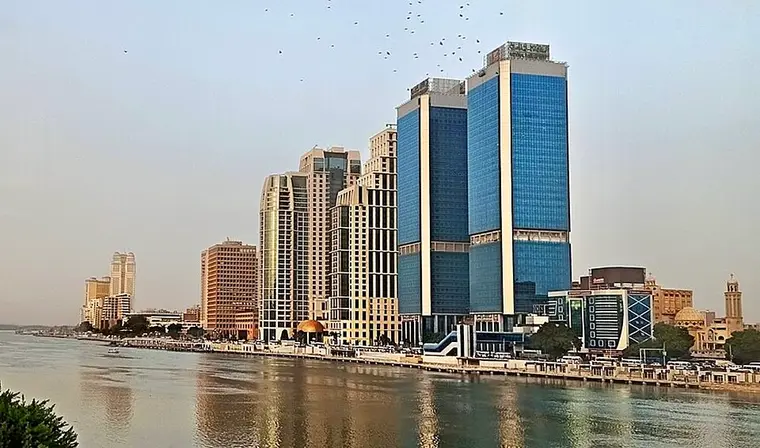
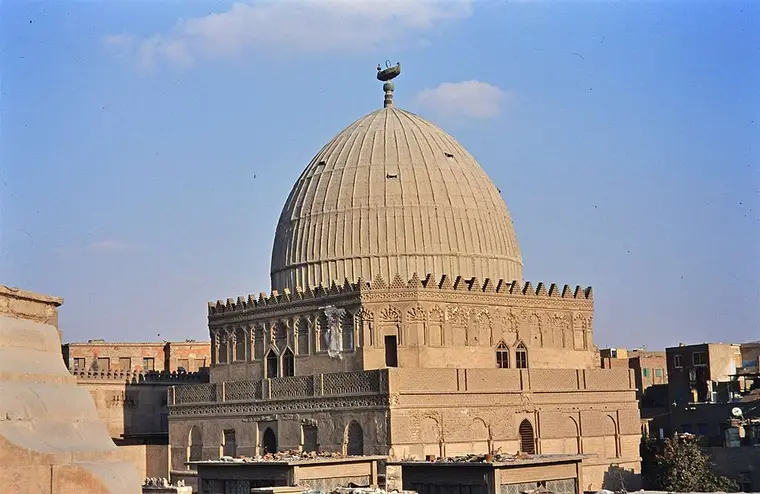
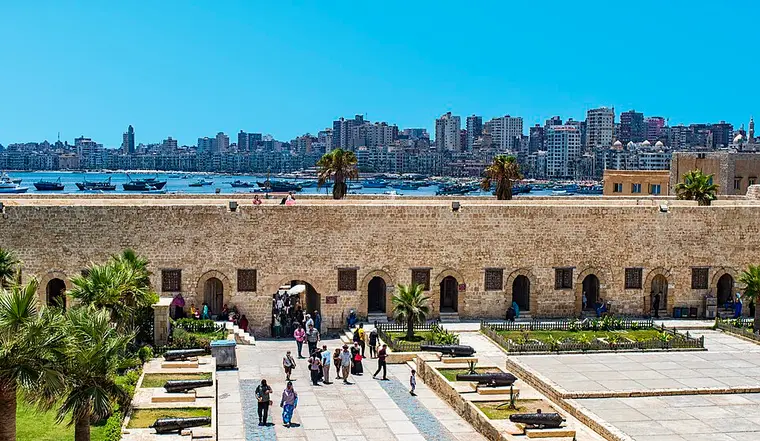
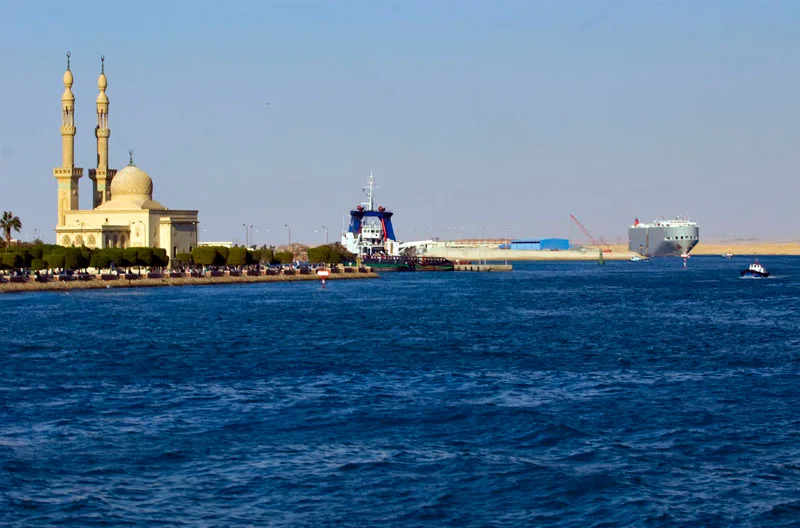
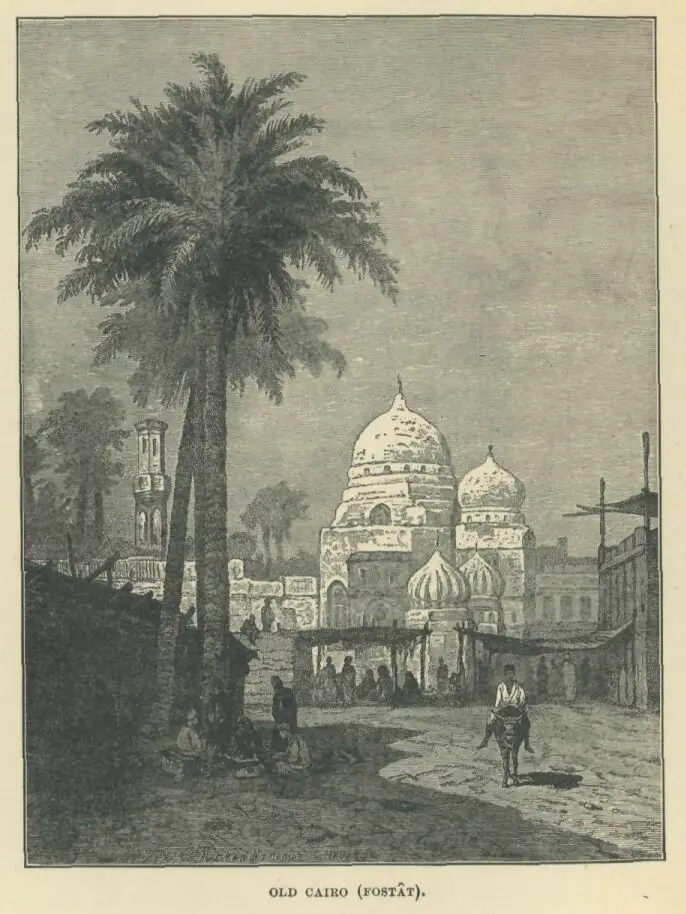
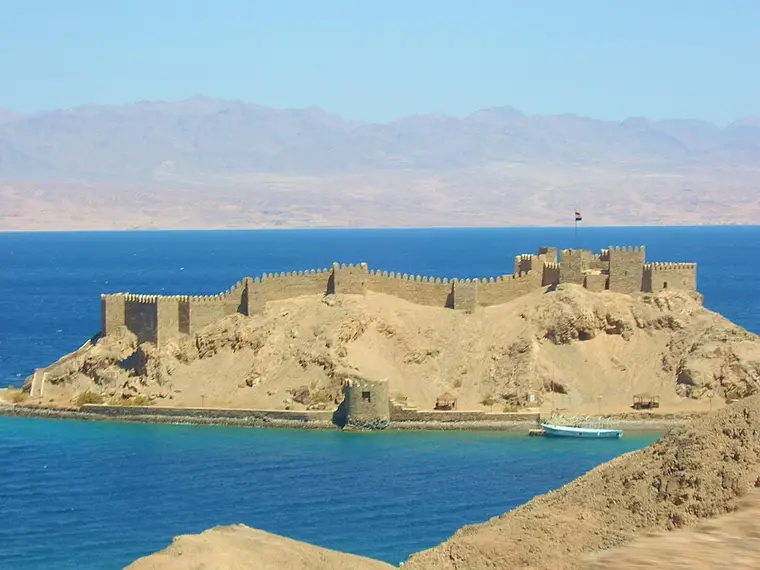
Sources for this chapter (145)Academic9Institution12Specialist book105Reputable web19
Academic(9)
- Painting in the Fatimid Period: A Reconsideration · Journal of the Royal Asiatic Society · 2022
- The Iconography of a Military Elite (Part II) · Mamluk Studies Review · 2016
- Parker · Coptic Language and Identity in Ayyūbid Egypt · Al-Masāq · 2013
- Taagepera · Expansion and Contraction Patterns of Large Polities: Context for Russia · International Studies Quarterly · 1997
- The Aghānī Miniatures and Religious Painting in Islam · The Burlington Magazine · 1953
- Briggs · The Architecture of Saladin and the Influence of the Crusades (A.D. 1171–1250) · The Burlington Magazine for Connoisseurs · 1921
- Kahil · The Architect/s of the Sultan Ḥasan Complex in Cairo · Artibus Asiae · 2006
- Al-Harithy · The Complex of Sultan Hasan in Cairo: Reading between the Lines · Muqarnas · 1996
- Cazel · The Tax of 1185 in Aid of the Holy Land · Speculum · 1955
Institution(12)
- Ayyubid dynasty battle scene · British Museum
- Poetry on Enamelled Glass: The Palmer Cup in the British Museum.' In: Ward, R, (ed.), Gilded and Enamelled Glass from the Middle East · British Museum Press · 1998
- Text and Image on Middle Eastern Objects: The Palmer Cup in Context (in A Rothschild Renaissance: A New Look at the Waddesdon Bequest in the British Museum) · British Museum Research Publications · 2017
- Bassin au nom du sultan al-'Adil II Abu Bakr · Louvre Museum · 1238
- Basin
- Saladin coin British Museum
- Pen-box British Museum
- 'Saladin' (in full, 'Salah ad-din yusuf ibn ayyub,' meaning 'righteousness of the faith, Joseph, son of Job') (c. 1137–1193) · Brown University
- Torky · Aqueduct · 2019
- Egypt Military Museum in the Citadel · Ask-aladdin
- Pen and Parchment: Drawing in the Middle Ages – Exhibition Images » Saladin's Capture of the True Cross · Metropolitan Museum of Art
- (PDF) Saladin's Christian hostages and prisoners | Filippo Donvito - Academia.edu
Specialist book(105)
- The Oxford Handbook of Islamic Law · Oxford University Press · 2018
- The Oxford World History of Empire: Volume One: The Imperial Experience · Oxford University Press · 2020
- Empires and Communities in the Post-Roman and Islamic World, C. 400–1000 CE · Oxford University Press · 2021
- Cahen · La Syrie du nord à l'époque des croisades et la principauté franque d'Antioche · P. Geuthner · 1940
- Radpey · Towards an Independent Kurdistan: Self-Determination in International Law · Taylor & Francis · 2023
- Satō · State and Rural Society in Medieval Islam: Sultans, Muqtaʻs, and Fallahun · Brill · 1997
- The Coinage of the Ayyubids · Royal Numismatic Society · 1980
- Men-at-arms series 171 – Saladin and the saracens · Osprey publishing · 1997
- The atlas of the Crusades · New York : Facts on File · 1991
- Les périples de Kalila et Dimna: quand les fables voyagent dans la littérature et les arts du monde islamique · Brill
- Arab Painting: Text and Image in Illustrated Arabic Manuscripts · Brill · 2010
- Dress and Dress Code in Medieval Cairo: A Mamluk Obsession · 2024
- Minorsky · Studies in Caucasian History: I. New Light on the Shaddadids of Ganja II. The Shaddadids of Ani III. Prehistory of Saladin · CUP Archive · 1953
- Arab painting · New York : Rizzoli · 1977
- The Cambridge History of Africa · Cambridge University Press · 1975
- Sato · State and Rural Society in Medieval Islam: Sultans, Muqta's and Fallahun · BRILL · 2021
- The Life of Saladin · Committee of the Palestine Exploration Fund · 2014
- Hillenbrand · The Crusades: Islamic Perspectives · Psychology Press · 1999
- Werthmuller · Coptic Identity and Ayyubid Politics in Egypt, 1218–1250 · American Univ in Cairo Press · 2010
- Korn · Encyclopaedia of Islam, Three · Brill · 2007
- Ruggles · Tree of pearls: The extraordinary architectural patronage of the 13th-century Egyptian slave-queen Shajar al-Durr · Oxford University Press · 2020
- Behrens-Abouseif · Cairo of the Mamluks: A History of Architecture and its Culture · The American University in Cairo Press · 2007
- Abun-Nasr · A history of the Maghrib in the Islamic period · Cambridge University Press · 1987
- Baadj · Saladin, the Almohads and the Banū Ghāniya: The Contest for North Africa (12th and 13th centuries) · Brill · 2015
- Studies in Kurdish History: Empire, Ethnicity and Identity · Taylor & Francis · 2017
- Öpengin · The Cambridge History of the Kurds · Cambridge University Press · 2021
- Saladin · Bloomsbury Publishing · 2011
- Rabbat · The Citadel of Cairo: A New Interpretation of Royal Mamluk Architecture · Brill · 1995
- Raymond · Cairo · Harvard University Press · 2000
- Williams · Islamic Monuments in Cairo: The Practical Guide · The American University in Cairo Press · 2018
- The House of War: The Struggle between Christendom and the Caliphate · Bloomsbury Publishing · 2024
- Humphreys · From Saladin to the Mongols: The Ayyubids of Damascus, 1193–1260 · State University of New York Press · 1977
- Morton · The Crusader States and Their Neighbours: A Military History, 1099–1187 · Oxford University Press · 2020
- Minorsky · Studies in Caucasian History · Cambridge University Press · 1953
- Michael Haag · The Tragedy of the Templars: The Rise and Fall of the Crusader States · Profile Books · 2012
- Arab Historians of the Crusades · University of California Press · 1984
- Caldwell Ames · Medieval Heresies · Cambridge University Press · 2015
- J. Spencer Trimingham · The Sufi Orders in Islam · Oxford University Press · 1998
- Nathan Hofer · The Popularisation of Sufism in Ayyubid and Mamluk Egypt, 1173–1325 · Edinburgh University Press · 2015
- The life and legend of the Sultan Saladin · 2019
- Saladin and the fall of the Kingdom of Jerusalem · Рипол Классик · 1903
- E. J. Brill's First Encyclopaedia of Islam, 1913–1936 · Brill · 1993
- Gabrieli · Arab Historians of the Crusades · University of California Press · 1984
- Richards · The Rare and Excellent History of Saladin or al-Nawadir al-Sultaniyya wa'l-Mahasin al-Yusufiyya by Baha' al-Din Ibn Shaddad · Taylor & Francis · 2002
- Anecdotes et Beaux Traits de la Vie du Sultan Youssof, Recueil des Historiens des Croisades, Orientaux Tome III · les Soins de l'Académie des Inscriptions et Belles-Lettres Historiens · 1884
- Tyerman · God's War · Harvard University Press · 2006
- Madden · The New Concise History of the Crusades · Rowman and Littlefield Publishers · 2006
- Bishop · The Middle Ages · Houghton Mifflin Harcourt · 2001
- Queens, Eunuchs and Concubines in Islamic History, 661-1257 · Edinburgh University Press · 2019
- Kitāb al-rawḍatayn fī akhbār al-dawlatayn · Maṭbaʻat Wādī al-Nīl · 1871
- The art and architecture of Islamic Cairo · Garnet · 2006
- Gunter, Michael M. · Historical Dictionary of the Kurds · Scarecrow Press · 2010
- Hillenbrand, Carole · The Crusades: Islamic Perspectives · Psychology Press · 1999
- Catherwood, Christopher · Making War in the Name of God · Kensington Publishing Corp. · 2008
- Dunnigan, James F. · A Quick & Dirty Guide to War: Briefings on Present and Potential Wars · Quill/W. Morrow · 1991
- Introduction to the History of the Muslim East: A Bibliographical Guide · University of California Press · 1965
- Baha ad-Din ibn Shaddad · The Rare and Excellent History of Saladin · Ashgate · 2002
- Imad ad-Din al-Isfahani · Conquête de la Syrie et de la Palestine par Salâh ed-dîn · Brill · 1888
- Dictionary of World Biography: The Middle Ages · Routledge · 1998
- Dunphy · History as Literature: German World Chronicles of the Thirteenth Century in Verse · 2003
- Eddé · Saladin · Harvard University Press · 2011
- Ehrenkreutz · Saladin · State University of New York Press · 1972
- Gillingham · Richard I · Yale University Press · 1999
- Grousset · The epic of the Crusades · Orion Press · 1970
- Master Narratives of Islamist Extremism · Palgrave Macmillan · 2011
- Lane-Poole · Saladin and the Fall of the Kingdom of Jerusalem · G. P. Putnam's Sons · 1906
- Saladin: The Politics of the Holy War · Cambridge University Press · 1982
- Pringle · The Churches of the Crusader Kingdom of Jerusalem: A–K (excluding Acre and Jerusalem) · Cambridge University Press · 1993
- The Crusades: A History · Yale University Press · 2005
- The Crusades, Christianity and Islam · Columbia · 2008
- Rossoff · Where heaven touches earth: Jewish life in Jerusalem from medieval times to the present · Guardian · 2001
- Runciman · A History of the Crusades: The Kingdom of Jerusalem and the Frankish East 1100–1187 · Penguin · 1990
- Chronicle of Jewish history: from the patriarchs to the 21st century · KTAV Pub. House · 1997
- Spevack · The Archetypal Sunni Scholar: Law, Theology, and Mysticism in the Synthesis of Al-Bajuri · State University of New York Press · 2014
- Constructions of Power and Piety in Medieval Aleppo · Pennsylvania State University Press · 1997
- Wapnewski · Walther von der Vogelweide. Gedichte. · Fischer · 1962
- Willey · The Castles of the Assassins · Craven Street Books · 2001
- Duval · Saladin the Strategist: How the Crusaders Lost the Holy Land · Byzantine Emporia, LLC · 2022
- Gibb · The Life of Saladin: From the Works of Imad ad-Din and Baha ad-Din · Clarendon Press · 1973
- Husain · Muslim heroes of the crusades: Salahuddin and Nuruddin · Ta-Ha · 1998
- Reston · Warriors of God: Richard the Lionheart and Saladin in the Third Crusade · Anchor Books · 2001
- Hindley · Saladin: Hero of Islam · Pen & Sword · 2007
- Phillips · The Life and Legend of the Sultan Saladin · Yale University Press · 2019
- Raymond · Le Caire · Fayard · 1993
- Goldschmidt · Historical Dictionary of Egypt · Scarecrow Press · 2013
- Ades · A Traveller's History of Egypt · Arris Publishing Ltd. · 2007
- Behrens-Absouseif · Islamic Architecture in Cairo: An Introduction · Brill · 1989
- Levanoni · A Turning Point in Mamluk History: The Third Reign of al-Nasir Muhammad Ibn Qalawun (1310-1341) · E.J. Brill · 1995
- Lyster · The Citadel of Cairo: A History and Guide · The Palm Press · 1993
- Lonely Planet: Egypt · Lonely Planet · 2018
- Cairo · Harvard University Press · 2000
- Behren-Abouseif · Cairo of the Mamluks: A History of its Architecture and its Culture · The American University in Cairo Press · 2007
- Blue Guide Egypt · A & C Black · 1988
- Egyptian Palaces and Villas · Abrams · 2006
- Nicolle · Hattin 1187. Saladin's greatest victory · Bloomsbury USA · 1993
- Payne · The Crusades · Wordsworth Editions · 1998
- Nicholson · The Knights Templar · Sutton Pub. · 2004
- France · Hattin: Great Battles Series · Oxford University Press · 2015
- Hamilton · The Leper King and His Heirs: Baldwin IV and the Crusader Kingdom of Jerusalem · Cambridge University Press · 2000
- Ibn Khallikan · Kitab wafayat ala'yan - Ibn Khallikan's Biographical Dictionary · 1843
- Mayer, Hans Eberhard · The Crusades · Oxford University Press · 1988
- God's Warriors: Knights Templar, Saracens and the Battle for Jerusalem · Osprey Publishing · 2006
- Richard · The Crusades, c. 1071-c. 1291 · Cambridge University Press · 1999
- Tibble · The Crusader Armies, 1099–1187 · Yale University Press · 2018
- Hosler · The Siege of Acre, 1189–1191: Saladin, Richard the Lionheart, and the Battle that Decided the Third Crusade · Yale University Press · 2018
Reputable web(19)
- Kalam · 1987
- Peacock · Rawwadids · 2017
- Humphreys · Ayyubids · 2017
- RAWWADIDS
- 'Abd al-Qadir al-Jilani · Futuh al-Ghayb ("Revelations of the Unseen") · 2019
- Who2 Biography: Saladin, Sultan / Military Leader · Answers.com
- acsearch.info – Auction research
- Copper alloy dirham of Saladin, Nisibin, 578 H. · American Numismatic Society
- Mausoleum of Saladin
- The Book of Saladin
- Ghazi Salahuddin (1939)
- Civilization IV: Civilizations · Civilization Fanatics Center · 2009
- Civilization VI: Saladin Leads Arabia
- Into the Renaissance | Scenarios – Sid Meier's Civilization V – Gods & Kings Game Guide · 2016
- GREAT NEGOTIATORS PACK · 2K
- Salah al-Din Yusuf - Paradox Interactive
- The Mosque of Muhammad Ali (history)
- Saladin's Triumph: The Battle of Hattin, 1187 - History Today
- San Nicasio Camuto de Burgio Patrono e Protettore della Città di Caccamo Cavaliere dell'Ordine
Every ancient date is an estimate. Scholarly chronologies differ by decades, and by more the further back you go, which is why each figure carries a tilde. When a period is published we name the chronology its dates come from.