British Occupation and the 1919 Revolution
~1882 – ~1922 CE
14 chapters · 97 min read · 119 sources
1882 CE
Introduction
2 min readThe history of Egypt under the British lasted from 1882, when it was occupied by British forces during the Anglo-Egyptian War, until 22 February 1922 when Unilateral Declaration was issued because, according to the…The history of Egypt under the British lasted from 1882, when it was occupied by British forces during the Anglo-Egyptian War, until 22 February 1922 when Unilateral Declaration was issued because, according to the official British archives, Egypt became an independent state after the issuance of the Declaration of February 28, 1922, thus ending exactly 40 years of British occupation of Egypt.
Despite containing four reservations, the Unilateral Declaration was an important step, as Egypt was the first Arab country to gain official recognition of its independence from European colonialism.
On 18 June 1956, the last British forces withdrew in accordance with the Anglo-Egyptian evacuation agreement of 1954. The first period of British rule (1882–1914) is often called the "veiled protectorate". During this time the Khedivate of Egypt remained an autonomous province of the Ottoman Empire, and the British occupation had no legal basis but constituted a de facto protectorate over the country. Egypt was thus not part of the British Empire. This state of affairs lasted until 1914 when the Ottoman Empire joined World War I on the side of the Central Powers and Britain declared a protectorate over Egypt. The ruling khedive, Abbas II, was deposed and his successor, Hussein Kamel, compelled to declare himself Sultan of Egypt independent of the Ottomans in December 1914.
The formal protectorate over Egypt outlasted the war for only a short period. It was brought to an end when the British government issued the Unilateral Declaration of Egyptian Independence on 28 February 1922. Shortly afterwards, Sultan Fuad I declared himself King of Egypt, but the British occupation continued, in accordance with several reserve clauses in the declaration of independence. The situation was normalised in the Anglo-Egyptian treaty of 1936, which granted Britain the right to station troops in Egypt for the defence of the Suez Canal, its link with India. Britain also continued to control the training of the Egyptian Army. During World War II (1939–1945), Egypt came under attack from Italian Libya on account of the British presence there, although Egypt itself remained neutral until late in the war.
After the war, Egypt sought to modify the treaty, but it was abrogated in its entirety by an anti-British government in October 1951. After the 1952 Egyptian revolution, King Farouk was overthrown and, after a brief interregnum of his infant son Fuad II, the monarchy was abolished and replaced by the Republic of Egypt, under the leadership of Gamal Nasser and Muhammad Naguib. The British agreed with Nasser to withdraw their troops, and by June 1956 had done so. Britain went to war against Egypt over the Suez Canal in late 1956, alongside France and Israel, but with insufficient international support was forced to back down.
Background
4 min readAfter 1837, overland travel from Britain to British India was popularised, with stopovers in Egypt gaining appeal. After 1840, steam ships were used to facilitate travel on both sides of Egypt, and from the 1850s,…After 1837, overland travel from Britain to British India was popularised, with stopovers in Egypt gaining appeal. After 1840, steam ships were used to facilitate travel on both sides of Egypt, and from the 1850s, railways were constructed along the route; the usefulness of this new route was on display during the Indian Rebellion of 1857, with 5,000 British troops having arrived through Egypt. The 1869 completion of the Suez Canal, which enabled a faster maritime journey between Britain and India, was the next major milestone in Britain-India access.
Veiled protectorate (1882–1913)
Throughout the 19th century, the ruling dynasty of Egypt had borrowed and spent vast sums of money on its own luxury and on the infrastructural development of Egypt. The dynasty's economic development was almost wholly oriented toward military dual-use goals. Consequently, despite vast sums of European capital, actual economic production and resulting revenues were insufficient to repay the loans. Eventually, the country teetered toward economic dissolution and implosion. In turn, a European commission led by Britain and France took control of the treasury of Egypt, forgave debt in return for taking control of the Suez Canal, and reoriented economic development toward capital gain.
By 1882, Islamic and Arab nationalist opposition to European influence led to growing tension amongst notable natives, especially in Egypt which was then the most powerful, populous, and influential of Arab countries. The most dangerous opposition during this period came from the Egyptian army, which saw the reorientation of economic development away from their control as a threat to their privileges.
The Urabi revolt, a large military demonstration in September 1881, forced the Khedive Tewfiq to dismiss his Prime Minister and rule by decree. Many of the Europeans retreated to specially designed quarters suited for defense or heavily European-settled cities such as Alexandria.
Consequently, in April 1882, France and Great Britain sent warships to Alexandria to bolster the Khedive amidst a turbulent climate and protect European lives and property. In turn, Egyptian nationalists spread fear of invasion throughout the country to bolster Islamic and Arabian revolutionary action. Tawfiq moved to Alexandria for fear of his own safety as army officers led by Ahmed Urabi began to take control of the government. By June, Egypt was in the hands of nationalists as opposed to European domination of the country and the new revolutionary government began nationalizing all assets in Egypt.
Anti-European violence broke out in Alexandria, prompting a British naval bombardment of the city. Fearing the intervention of outside powers or the seizure of the canal by the Egyptians, in conjunction with an Islamic revolution in the Empire of India, the British led an Anglo-Indian expeditionary force at both ends of the Suez Canal in August 1882. Simultaneously, French forces landed in Alexandria and the northern end of the canal. Both joined and maneuvered to meet the Egyptian army. The combined Anglo-French-Indian army easily defeated the Egyptian Army at Tel El Kebir in September and took control of the country putting Tawfiq back in control.
The purpose of the invasion had been to restore political stability to Egypt under a government of the Khedive and international controls that were in place to streamline Egyptian financing since 1876. It is unlikely that the British expected a long-term occupation from the outset; however, Lord Cromer, Britain's Chief Representative in Egypt at the time, viewed Egypt's financial reforms as part of a long-term objective. Cromer took the view that political stability needed financial stability and embarked on a programme of long-term investment in Egypt's agricultural revenue sources, the largest of which was cotton. To accomplish this, Cromer worked to improve the Nile's irrigation system through multiple large projects, such as the construction of the Aswan Dam, the Nile Barrage, and an increase in canals available to agriculturally focused lands.
Egyptian Fundamental Ordinance of 1882, a constitution, followed an abortive attempt to promulgate a constitution in 1879. The document was limited in scope and was effectively more of an organic law of the Consultative Council to the khedive than an actual constitution.
In 1906, the Denshawai incident provoked questioning of British rule in Egypt. This was exploited in turn by the German Empire which began re-organising, funding, and expanding anti-British revolutionary nationalist movements. For the first quarter of the 20th century, Britain's main goal in Egypt was penetrating these groups, neutralising them, and attempting to form more pro-British nationalist groups with which to hand further control. However, after the end of World War I, British colonial authorities attempted to legitimise their less radical opponents with entrance into the League of Nations including the peace treaty of Versailles. Thus, the Wafd Party was invited and promised full independence in the years ahead. British occupation ended nominally with the UK's 1922 declaration of Egyptian independence, but British military domination of Egypt lasted until 1936.
During British occupation and later control, Egypt developed into a regional commercial and trading destination. Entrepreneurs including Greeks, Jews, and Armenians began to flow into Egypt. The number of foreigners in the country rose from 10,000 in the 1840s to around 90,000 in the 1880s, and more than 1.5 million by the 1930s.
Formal occupation (1914–1922)
2 min readIn 1914 as a result of the declaration of war with the Ottoman Empire, of which Egypt was nominally a part, Britain declared a Protectorate over Egypt and deposed the Khedive, replacing him with a family member who was…In 1914 as a result of the declaration of war with the Ottoman Empire, of which Egypt was nominally a part, Britain declared a Protectorate over Egypt and deposed the Khedive, replacing him with a family member who was made Sultan of Egypt by the British. A group known as the Wafd Delegation attended the Paris Peace Conference of 1919 to demand Egypt's independence.
In the aftermath of World War I, the large British Imperial Army in Egypt which was the centre of operations against the Ottoman Empire was quickly reduced with demobilisation and restructuring of garrisons. Free of the large British military presence, the incipient German backed revolutionary movements were able to more effectively launch their operations.
Consequently, from March to April 1919, there were mass demonstrations that became uprisings. This is known in Egypt as the 1919 Revolution. Almost daily demonstrations and unrest continued throughout Egypt for the remainder of the Spring. To the surprise of the British authorities, Egyptian women also demonstrated, led by Huda Sha'rawi (1879–1947), who would become the leading feminist voice in Egypt in the first half of the twentieth century. The first women's demonstration was held on Sunday, 16 March 1919, and was followed by yet another one on Thursday, 20 March 1919. Egyptian women would continue to play an important and increasingly public nationalist role throughout the spring and summer of 1919 and beyond. The anticolonial riots and British suppression of them led to the death of some 800 people.
In November 1919, the Milner Commission was sent to Egypt by the British to attempt to resolve the situation. In 1920, Lord Milner submitted his report to Lord Curzon, the British Foreign Secretary, recommending that the protectorate should be replaced by a treaty of alliance. As a result, Curzon agreed to receive an Egyptian mission headed by Zaghlul and Adli Pasha to discuss the proposals. The mission arrived in London in June 1920 and the agreement was concluded in August 1920. In February 1921, the British Parliament approved the agreement and Egypt was asked to send another mission to London with full powers to conclude a definitive treaty. Adli Pasha led this mission, which arrived in June 1921. However, the Dominion delegates at the 1921 Imperial Conference had stressed the importance of maintaining control over the Suez Canal Zone and Curzon could not persuade his Cabinet colleagues to agree to any terms that Adli Pasha was prepared to accept. The mission returned to Egypt in disgust.
Independent monarchy (1922–1952)
2 min readIn December 1921, the British authorities in Cairo imposed martial law and once again deported Zaghlul. Demonstrations again led to violence. In deference to the growing nationalism and at the suggestion of the High…Continued occupation (1922–1936)
In December 1921, the British authorities in Cairo imposed martial law and once again deported Zaghlul. Demonstrations again led to violence. In deference to the growing nationalism and at the suggestion of the High Commissioner, Lord Allenby, the UK unilaterally declared Egyptian independence on 28 February 1922, abolishing the protectorate and establishing an independent Kingdom of Egypt. Sarwat Pasha became prime minister. British influence continued to dominate Egypt's political life and fostered fiscal, administrative, and governmental reforms. Britain retained control of the Canal Zone, Sudan and Egypt's external protection; protection of foreigners and separate courts for foreigners; the police forces, the army, the railways and the communications. British troops were stationed in cities and towns.
Continued influence (1936–1952)
King Fuad I died in 1936 and Farouk inherited the throne at the age of 16. Alarmed by Italy's recent invasion of Ethiopia, he signed the Anglo-Egyptian Treaty, requiring Britain to withdraw all troops from Egypt, except at the Suez Canal (which would be re-examined after 20 years). The treaty ended Britain's influence in Egypt's domestic policy but retaining influence in the defense and foreign policies of Egypt. Britain maintained significant unofficial influence upon the Egyptian monarchy.
During World War II, British troops used Egypt as a base for Allied operations throughout the region.
British troops were withdrawn to the Suez Canal area in 1947, but nationalist, anti-British feelings continued to grow after the war. Egypt took part in the 1948 Arab-Israeli War, which proved to be disastrous for Egypt and its allies, furtherly increasing the unpopularity of the monarchy. In 1951, the Wafdist government led by Mustafa Al Nahhas abrogated the 1936 treaty, banned food and services from British bases along the Suez, boycotted British goods and sponsored guerrilla attacks by Egyptian Nationalists on British troops, culminating in the Suez Emergency.
Revolution and Suez Crisis
The 1952 revolution overthrew Farouk and replaced him with his infant son Fuad II, effectively handing over control of the country to military strongmen Gamal Nasser and Mohamed Naguib. The monarchy was formerly abolished in 1953 and replaced by the autocratic and socialist Republic of Egypt. The last British troops left Egypt in June 1956 as per the 1954 Anglo-Egyptian Agreement. The 1954 agreement was signed due to Britain's heavy military casualties caused by the Suez Emergency which resulted in over 450 deaths for the British military and in an attempt to mend relations with Egypt under the new military dictatorship.
The UK, France and Israel invaded Egypt a few months later to restore their control over the Suez Canal, but the action was met with so much international and domestic backlash that the three countries were forced to halt military operations and withdraw. The Egyptian authorities harassed British, French and Jewish communities and were affected by expulsions.
Languages
1 min readFrom the beginning of his reign in 1805, Muhammad Ali Pasha set about modernising Egypt along Western European lines, being particularly influenced by France. In addition to French military and scientific prowess, the…From the beginning of his reign in 1805, Muhammad Ali Pasha set about modernising Egypt along Western European lines, being particularly influenced by France. In addition to French military and scientific prowess, the French language was the language of international relations. Consequently, French attained an esteemed status in Egypt throughout the rule of the Muhammad Ali dynasty, emerging as a lingua franca in the country well into the second half of the 20th century. In addition to its use at the Khedival court, French was the formal language used among foreigners, and between foreigners and Egyptians.
By the reign of Muhammad Ali's grandson, Isma'il the Magnificent, all government decrees, publications, or other documents (such as passports) in the Arabic language that required a foreign language version would also be issued in French, and French appeared alongside Arabic on road signs, train timetables, taxi stands, and other every day signage, such as "Entrance" and "Exit" signs in public buildings. The French civil law legal system also became the basis of the modern Egyptian legal system (which would in turn become the basis for the legal systems of numerous other Arab states).
The privileged position of the French language in Egypt, second only to Arabic, persisted even during the decades of the United Kingdom's occupation of the country, with French rather than English being the foreign language of choice of both the Egyptian government, and the Egyptian elites. Despite efforts from British legal personnel, English was never adopted as a language of the Egyptian civil courts during the period of British influence.
Anglo-Egyptian War
12 min readThe British conquest of Egypt, also known as the 2nd Anglo-Egyptian War, occurred in 1882 between mostly Egyptian and Sudanese forces under Ahmed ‘Urabi and the United Kingdom.The British conquest of Egypt, also known as the 2nd Anglo-Egyptian War, occurred in 1882 between mostly Egyptian and Sudanese forces under Ahmed ‘Urabi and the United Kingdom.
Egypt was a country under growing foreign influence from global powers during the 19th century. In the early 1880s, the situation became explosive following the revolt of an army officer, Ahmed 'Urabi, against Tewfik Pasha, alongside the growth of anarchist numbers in the country. The British intervened with the support of other colonial powers to colonise Egypt and succeeded in crushing the Egyptian-Sudanese forces. The anarchists who attempted to join the revolt were cut off from the insurgent troops and were unable to do so.
Ultimately, the war ended with a significant British takeover and occupation, the trial and exile of 'Urabi, the firm entry of Egypt into the British colonial empire, and the crushing of the anarchist movement in Egypt for at least two decades. It established firm British influence over Egypt at the expense of the Egyptians, the French, and the Ottoman Empire, whose already weak authority became nominal.
History
General background
In 1881, an Egyptian army officer, Ahmed ‘Urabi (then known in English as Arabi Pasha), mutinied and initiated a coup against Tewfik Pasha, the Khedive of Egypt and Sudan, in order to end British and French influence over the country. In January 1882 the British and French governments sent a "Joint Note" to the Egyptian government, declaring their recognition of the Khedive's authority. On 20 May, British and French warships arrived off the coast of Alexandria. On 11 June, an anti-European riot occurred in Alexandria that killed 50 Europeans. Colonel ‘Urabi ordered his forces to put down the riot, but Europeans fled the city and ‘Urabi's army began fortifying the town. The French fleet was recalled to France. The British ultimatum was rejected, and the Egyptian forces began to wait for retaliation.
In parallel with these developments, there was a growing community of anarchists in the country, mostly drawn from Italian settlers. Despite their colonial roots, they viewed European colonisation with a very unfavourable eye, and one of their representatives traveled to the London Congress (1881) on behalf of Egypt, subscribing there to the programme backed by the famous anarchist Errico Malatesta, who supported founding a Black International and launching insurrections and revolts to spread the anarchist movement and carry out the social revolution. On the eve of the war, however, they were still divided into two opposing factions in Egypt.
Invasion and war
British bombardment and ‘Urabi's response
The British fleet bombarded Alexandria from 11 to 13 July and then occupied it with marines. The British did not lose a single ship, but much of the city was destroyed by fires caused by explosive shells and, according to contemporary British sources, by ‘Urabists seeking to ruin the city that the British were taking over. Tewfik Pasha, who had moved his court to Alexandria during the unrest, declared ‘Urabi a rebel and formally deposed him from his positions within the government.
After this bombardment, the two anarchist factions reunited; the faction of Andrea Costa, who had left Egypt in June, returned to the country. Meanwhile, ‘Urabi then reacted by obtaining a fatwa from Al Azhar shaykhs which condemned Tewfik as a traitor to both his country and religion, absolving those who fought against him. ‘Urabi also declared war on the United Kingdom and initiated conscription.
First attacks and arrival of anarchists
The British Army launched a probing attack at Kafr El Dawwar in an attempt to see if it was possible to reach Cairo through Alexandria. Afterwards, they determined it would not be possible to reach Cairo from this direction as Egyptian defences were too strong. In August, a British army of over 40,000, commanded by Garnet Wolseley, invaded the Suez Canal Zone. He was authorised to destroy 'Urabi's forces and clear the country of all other rebels.
The engineer troops had left England for Egypt in July and August 1882. The engineers included pontoon, railway and telegraph troops. Meanwhile, a group of at least six armed anarchists, composed of Malatesta, Cesare Ceccarelli, Gaetano Marocco (disputed relative of Alessandro ), and the Greek Apostolo Paolides, traveled to the country to activate Italian networks in support of the revolt and also to join forces with 'Urabi. Their goal was to reach him in Damanhur and either to convince him to become an anarchist so he could guide the revolt in that direction or to launch an anarchist revolt themselves. They tried to do so in the next month, intenting on several occasions and points to cross the British lines separating them from 'Urabi's troops and provide support, without success.
Wolseley saw the campaign as a logistical challenge as he did not believe the Egyptians would put up much resistance.
Battle of Kafr El Dawwar
This battle took place on 5 August 1882 between an Egyptian army under Ahmed 'Urabi and British forces headed by Sir Archibald Alison. To ascertain the strength of the Egyptian's Kafr El Dawwar position, and to test local rumours that the Egyptians were retreating, Alison ordered a probing attack on the evening of the 5th. This action was reported by 'Urabi as a battle, and Cairo was full of the news that the advancing British had been repulsed; however most historians describe the action as a reconnaissance-in-force that was never intended to seriously assault Egyptian lines. Regardless, the British abandoned the idea of reaching Cairo from the north, and shifted their base of operations to Ismailia.
Wolseley arrived at Alexandria on 15 August and immediately began to move troops to and through the Suez Canal, to Ismailia, which was occupied on 20 August without resistance.
Battle of Tell El Kebir
Ismailia was quickly reinforced with 9,000 troops, with the engineers put to work repairing the railway line from Suez. A small force was pushed along the Sweet Water Canal to the Kassassin lock arriving on 26 August. There they met the enemy. Heavily outnumbered, the two battalions with four guns held their ground until some heavy cavalry arrived when the force went onto the offensive, forcing ‘Urabi to fall back with heavy casualties.
The main body of the army started to move up to Kassassin and planning for the battle at Tell El Kebir was undertaken. Skirmishing took place but did not interfere with the build-up. On 12 September, all was ready and during that night the army marched to battle.
On 13 September, ‘Urabi redeployed to defend Cairo against Wolseley. His main force dug in at Tell El Kebir, north of the railway and the Sweet Water Canal, both of which linked Cairo to Ismailia on the canal. The defences were hastily prepared as there was little time to arrange them. ‘Urabi's forces possessed 60 pieces of artillery and breech loading rifles. Wolseley made several personal reconnaissances, and determined that the Egyptians did not man outposts in front of their main defences at night, which made it possible for an attacking force to approach the defences under cover of darkness. Wolseley sent his force to approach the position by night and attacked frontally at dawn.
Surprise was not achieved; rifle fire and artillery from redoubts opened up when the range was. Continuing the advance, the defending troops were hampered by the smoke from their weapons blocking their vision of the advancing British. The three battalions arrived in the enemy trenches all together and with little loss, resulting in a decisive victory for the British.
The British Army lost 900 troops while killing approximately two thousand Egyptians. Some British troops captured by Egyptians were brutally tortured to death. The ‘Urabi forces were routed, and British cavalry pursued them and captured Cairo, which was undefended.
Power was then restored to the Khedive, the war was at an end and the majority of the British army went to Alexandria and took ship for home, leaving, from November, just an army of occupation.
Lieutenant William Mordaunt Marsh Edwards was awarded a Victoria Cross for his gallantry during the battle.
Aftermath
‘Urabi's trial and repression of anarchists
Prime Minister Gladstone initially sought to put ‘Urabi on trial and execute him, portraying him as "a self-seeking tyrant whose oppression of the Egyptian people still left him enough time, in his capacity as a latter-day Saladin, to massacre Christians." After glancing through his captured diaries and various other evidence, there was little with which to "demonize" ‘Urabi in a public trial. His charges were downgraded, after which he admitted to rebellion and was sent into exile.
The revolt had a grim outcome for the anarchist movement in Egypt, the repression targeting them was accelerated by the British, and many were forced into exile. Historian Costantino Paonessa wrote that this war:Marked [the end] of the first two decades of the history of Italian working-class associationism in Egypt. It would not be until the end of the century that a true resurgence of the labor movement would occur among Italian, European, and Egyptian workers in the country.
British occupation
British troops then occupied Egypt until the Unilateral Declaration of Egyptian Independence of 1922 and Anglo-Egyptian treaty of 1936, giving gradual control back to the government of Egypt.
Hopkins argues that Britain continued its occupation of Egypt after 1882 in order to guarantee British investments: "Britain had important interests to defend in Egypt and she was prepared to withdraw only if conditions guaranteeing the security of those interests were met—and they never were." Consistent with this view, investment in Egypt increased during the British occupation, interest rates fell, and bond prices rose.
The 1936 treaty was abrogated by the Wafdist government in 1951 and sponsored guerrilla attacks by Egyptian Nationalists of British troops in the Suez Canal Zone. That started the Suez Emergency which resulted in 450 military deaths for the British and pressured them to sign the 1954 Anglo-Egyptian evacuation agreement which led to the final withdrawal of all British troops from Egypt, ending the British occupation of Egypt.
Legacy
Historiographical debates for the invasion
The reasons why the British government sent a fleet of ships to the coast of Alexandria is a point of historical debate. In their 1961 essay Africa and the Victorians, Ronald Robinson and John Gallagher argue that the British invasion was ordered to quell the perceived anarchy of the ‘Urabi Revolt, as well as to protect British control over the Suez Canal in order to maintain its shipping route to the Indian Ocean.
A.G. Hopkins rejected Robinson and Gallagher's argument, citing original documents to claim that there was no perceived danger to the Suez Canal from the ‘Urabi movement, and that ‘Urabi and his forces were not chaotic "anarchists", but rather maintained law and order. He alternatively argues that British Prime Minister William Gladstone's cabinet was motivated by protecting the interests of British bondholders with investments in Egypt as well as by pursuit of domestic political popularity. Hopkins cites the British investments in Egypt that grew massively leading into the 1880s, partially as a result of the Khedive's debt from construction of the Suez Canal, as well as the close links that existed between the British government and the economic sector. He writes that Britain's economic interests occurred simultaneously with a desire within one element of the ruling Liberal Party for a militant foreign policy in order to gain the domestic political popularity that enabled it to compete with the Conservative Party. Hopkins cites a letter from Edward Malet, the British consul general in Egypt at the time, to a member of the Gladstone cabinet offering his congratulations on the invasion: "You have fought the battle of all Christendom and history will acknowledge it. May I also venture to say that it has given the Liberal Party a new lease of popularity and power."
John Galbraith and Afaf Lutfi al-Sayyid-Marsot make a similar argument to Hopkins, though their argument focuses on how individuals within the British government bureaucracy used their positions to make the invasion appear as a more favourable option. First, they describe a plot by Malet in which he portrayed the Egyptian government as unstable to his superiors in the cabinet. On Galbraith and al-Sayyid-Marsot's reading, Malet naïvely expected he could convince the British to intimidate Egypt with a show of force without considering a full invasion or occupation as a possibility. They also dwell on Admiral Beauchamp Seymour, who they claim hastened the start of the bombardment by exaggerating the danger posed to his ships by ‘Urabi's forces in his telegrams back to the British government.
British military innovations
Railway
During the buildup to the battle at Tell El Kebir the specially raised 8th Railway Company RE operated trains carrying stores and troops, as well as repairing track. On the day of the battle (13 September) they ran a train into Tell El Kebir station between 8 and 9 am and "found it completely blocked with trains, full of the enemy's ammunition: the line strewn with dead and wounded, and our own soldiers swarming over the place almost mad for want of water" (extract from Captain Sidney Smith's diary). Once the station was cleared they began to ferry the wounded, prisoners and troops with stores to other destinations.
Telegraph
In the wake of the advancing columns, telegraph lines were laid on either side of the Sweet Water canal. At 2 am on 13 September, Wolseley successfully sent a message to the Major General Sir Herbert Macpherson on the extreme left with the Indian Contingent and the Naval Brigade. At Tell El Kebir a field telegraph office was established in a saloon carriage, which Arabi Pasha had travelled in the day before. At 8:30 am on 13 September, after the victory at the battle of Tell El Kebir, Wolseley used the telegram to send messages of his victory to queen Victoria; he received a reply from her at 9.15 am the same day. Once they had got connected to the permanent line, the Section also worked the Theiber sounder and the telephone.
Army Post Office Corps
The forerunners of Royal Engineers (Postal Section) made their debut on this campaign. They were specially raised from the 24th Middlesex Rifle Volunteers (Post Office Rifles) and for the first time in British military history, post office clerks trained as soldiers provided a dedicated postal service to an army in the field. During the battle of Kassassin they became the first Volunteers to come under enemy fire.
Urabi revolt
9 min readThe ʻUrabi revolt, also known as the ʻUrabi Revolution, was a nationalist uprising in the Khedivate of Egypt from 1879 to 1882. It was led by and named for Colonel Ahmed Urabi and sought to depose the khedive, Tewfik…The ʻUrabi revolt, also known as the ʻUrabi Revolution, was a nationalist uprising in the Khedivate of Egypt from 1879 to 1882. It was led by and named for Colonel Ahmed Urabi and sought to depose the khedive, Tewfik Pasha, and end British and French influence over the country.
The uprising was ended by the Anglo-Egyptian War and the British takeover of the country, beginning the history of Egypt under the British.
Prologue
Egypt in the 1870s was under foreign influence, corruption, misgovernment, and in a state of financial ruin. Huge debts rung up by its ruler Ismaʻil Pasha could no longer be repaid, and under pressure from the European banks that held the debt, the country's finances were being controlled by representatives of France and Britain via the Caisse de la Dette Publique. When Ismaʻil tried to rouse the Egyptian people against this foreign intervention, he was deposed by the British and replaced by his more pliable son Tewfik Pasha.
The upper ranks of the civil service, the army and the business world had become dominated by Europeans, who were paid more than native Egyptians. Within Egypt, a parallel legal system for suing Europeans separately from the natives was set up. This angered educated and ambitious Egyptians in the military and civil service who felt that the European domination of top positions was preventing their own advancement. The heavily taxed Egyptian peasants were also discontented by their taxes going to Europeans who lived in relative wealth.
Egyptians resented not only Western European domination but also the Turks, Circassians and Albanians, who controlled most other elite positions in the government and military. Albanian troops had come to Egypt along with Muhammad Ali and helped him to take control of the country and were highly favoured by the Khedive. Ottoman Turkish was still the official language of the army and Turks were more likely to be promoted. In the ruling cabinet under Khedive Tewfiq, every member was a Turco-Circassian. The growing fiscal crisis in the country forced the Khedive to drastically cut the army. From a height of 94,000 troops in 1874, its strength was cut to 36,000 in 1879, with plans to shrink it even more. This created a large class of unemployed and disaffected army officers within the country. The disastrous war with the Ethiopian Empire of 1875–1876 also angered the officers, who felt that the government had sent them unwisely into the conflict.
A public consciousness was developing in Egypt during this period, literacy was spreading, and more periodicals were being published in the 1870s and 1880s, such as the influential magazine Abu Naddara ( 'guy with the glasses'). Published by Yaʿqūb Ṣanūʿ, a Jew of Italian and Egyptian origins, this Paris-based publication was a political satire magazine that often mocked the establishment under European control, and it increasingly irritated the ruling powers as well as the Europeans as it favoured reform and revolutionary movements, and Ṣanūʿ is credited with having coined and introduced the anti-colonial slogan "Egypt for the Egyptians". Abu Naddara had a wide reach since, unlike many other publications, Abu Naddara was written in Egyptian Arabic rather than Modern Standard Arabic, making its satire and political pieces understandable to the masses, not just the educated elite. Yaʿqūb Ṣanūʿ claimed that his magazine reached a circulation of 10,000, which was a huge number in those days.
During this time, Ahmed ʻUrabi, a native non-European army officer, had risen to the rank of colonel. Because of his peasant upbringing and traditional training, he came to be viewed by many as the authentic voice of the people of Egypt. To them, he represented a peasant population frustrated with tax-exempt foreigners and wealthy local landlords. ʻUrabi commanded the respect and support of not only the peasantry but also a large portion of the Egyptian army.
ʻUrabi's seizure of power
Tension built over the summer of 1881 as both the Khedive and the Egyptian officers, now led by ʻUrabi, searched for supporters and gathered allies. In September the Khedive ordered ʻUrabi's regiment to leave Cairo. He refused and ordered the dismissal of the Turco-Circassian generals and the creation of an elected government. Unable to oppose the revolt, Tewfik agreed and a new chamber of deputies and government were established containing a number of ʻUrabi's allies.
Foreign intervention
On January 8, 1882, the French and British sent a joint note that asserted the primacy of the Khedive's authority. The note infuriated the parliamentarians and ʻUrabi. The government collapsed; a new one with ʻUrabi as Minister of War was created. This new government threatened the positions of Europeans in the government and also began laying off large numbers of Turco-Circassian officers.
This broad effort at reform was opposed by European interests, many of the large landowners, the Turkish and Circassian elite, the high-ranking ulama (Muslim clergy), Syrian Christians, and most of the wealthiest members of society. In contrast, it had the support of most of the population, including lower-level ulama, the officer corps, and local leaders.
Copts were divided: their close affiliation with Europeans angered many and sometimes made them a target, but the deep rivalry between Coptic and Syrian Christians led many to align with rebels. The Coptic Patriarch lent his support to the revolt when it was at its peak, but later claimed that he was pressured into doing so. ʻUrabi and other leaders of the revolt acknowledged the Copts as potential allies and worked to prevent any targeting of the minority by nationalist Muslims, but were not always successful.
An effort to court the Ottoman Sultan Abdul Hamid II began. Tewfik Pasha called on the sultan to quell the revolt, but the Sublime Porte hesitated to employ troops against Muslims who opposed foreign colonial rule. ʻUrabi asked the Sultan to depose Tewfiq, but again the Sultan hesitated.
British invasion
On the afternoon of June 11, 1882 the political turmoil exploded into violence on the streets of Alexandria. Rioters attacked Greek, Maltese and Italian businesses and battles broke out in the streets. About fifty Europeans and 250 Egyptians were killed. The exact cause of the revolt is uncertain; both the Khedive and ʻUrabi have been blamed for starting it, but there is no proof of either allegation.
As the city's garrison was maintaining the coastal defence batteries, an ultimatum was sent demanding the batteries be dismantled under threat of bombardment. The ultimatum was ignored, and the British fleet off Alexandria under Admiral Beauchamp Seymour, 1st Baron Alcester bombarded the city. The coastal batteries returned fire. The French fleet, also at Alexandria, refused to participate. A large British naval force then tried to capture the city. Despite encountering heavy resistance, the British forces succeeded, forcing the Egyptians to withdraw.
As revolts spread across Egypt, the British House of Commons voted in favour of a larger intervention. The British army launched a probing/scouting attack at the Battle of Kafr El Dawwar to determine whether or not Cairo could be advanced on from Alexandria, However the British concluded that the Egyptian defences were too strong, so in September of that year a British army was landed in the Canal Zone. The motivation for the British intervention is still disputed. The British were especially concerned that ʻUrabi would default on Egypt's massive debt and that he might try to gain control of the Suez Canal. On September 13, 1882, the British forces defeated ʻUrabi's army at the Battle of Tell El Kebir. ʻUrabi was captured and eventually exiled to the British colony of Ceylon (now Sri Lanka).
Aftermath
While the British intervention was meant to be short-term, it persisted until 1956. Egypt was effectively made a colony until 1952. Both the British and the Khedival government did their best to discredit ʻUrabi's name and the revolution, although among the common people ʻUrabi remained a popular figure. The government used the state media and educational system to denounce him as a traitor, and the revolution as merely a military mutiny. Egyptian historian Mohammed Rif'at was one of the first to call the events a thawrah, or "revolution," but he claimed that it lacked popular support. Other historians in Egypt supported this thesis, and even expanded on it, sometimes suffering government censure. During the last years of the monarchy, authors became more critical of the old establishment and especially of the British, and ʻUrabi is sometimes portrayed as a hero of freedom and constitutionalism.
ʻUrabi's Revolt had a long-lasting significance as the first instance of Egyptian anti-colonial nationalism, which would later play a major role in Egyptian history. Especially under Gamal Abdel Nasser, the revolt would be regarded as a "glorious struggle" against foreign occupation. The ʻUrabi Revolution was seen by the Free Officers movement as a precursor to the 1952 revolution, and both Nasser and Muhammad Neguib were likened to ʻUrabi. Nasserist textbooks called the ʻUrabi Revolt a "national revolution," but ʻUrabi was seen as making great strategic mistakes and not being as much of a man of the people as Nasser. During Nasser's experiment with Arab socialism, the ʻUrabi revolt was also sometimes put in a Marxist context. Also during President Anwar Sadat's infitah (economic liberalisation) period, in which there was growing, controlled, economic liberalization and growing ties with the Western European bloc, the government played up the desire of the ʻUrabists to draft a constitution and have democratic elections. After the 1952 revolution, the image of ʻUrabi, at least officially, has generally improved, with a number of streets and a square in Cairo bearing his name, indicating the honored position he has in the official history.
Views of historians
Historians have in general been divided, with one group seeing the revolt as a push for liberalism and freedom on the model of the French Revolution and others arguing that it was little more than a military coup, similar to those made about the 1952 movement. Among Western European historians, especially British, there was a traditional view that the ʻUrabi revolution was nothing more than a "revolt" or "insurrection" and not a real social revolution. By far the most influential Englishman in Egypt, Lord Cromer, wrote a scathing assessment of the ʻUrabists in his Modern Egypt. While this view is still held by many, there has been a growing trend to call the ʻUrabi uprising a real revolution, especially amongst newer historians who tend to emphasize social and economic history and to examine native, rather than European, sources.
The earliest published work of Augusta, Lady Gregory—later to embrace Irish nationalism and have an important role in the cultural life of Ireland—was Arabi and His Household (1882), a pamphlet (originally a letter to The Times newspaper) in support of Ahmed ʻUrabi and his revolt.
Historians have also been divided over the reasons for the British invasion, with some arguing that it was to protect the Suez Canal and prevent "anarchy", while others argue that it was to protect the interests of British investors with assets in Egypt (see Anglo-Egyptian War).
Saad Zaghloul
5 min readSaad Zaghloul Pasha ( / ; also Sa'd Zaghloul Pasha ibn Ibrahim) (July 1857 – 23 August 1927) was an Egyptian revolutionary and statesman. He was the leader of Egypt's nationalist Wafd Party.Saad Zaghloul Pasha ( / ; also Sa'd Zaghloul Pasha ibn Ibrahim) (July 1857 – 23 August 1927) was an Egyptian revolutionary and statesman. He was the leader of Egypt's nationalist Wafd Party.
He led a civil disobedience campaign with the goal of achieving independence for Egypt (and Sudan) from British rule. He played a key role in the Egyptian Revolution of 1919, as well as played a role in prompting the British Unilateral Declaration of Egyptian Independence in 1922. He served as Prime Minister of Egypt from 26 January 1924 to 24 November 1924.
Education, activism and exile
Zaghloul was born in Ibyanah village in the Kafr el-Sheikh Governorate of Egypt's Nile Delta. For his post-secondary education, he attended Al-Azhar University and a French law school in Cairo. By working as a Europeanized lawyer, Zaghloul gained both wealth and status in a traditional framework of upward mobility. Despite this, Zaghloul's success can equally be attributed to his familiarity with the Egyptian countryside and its many idioms. He was part of the Egyptian freemason lodge. In 1918, he became politically active, as the founding leader of the Wafd Party, for which he was later arrested.
Rise in the bureaucracy
Upon his release from prison, he practiced law and distinguished himself; amassed some independent means, which enabled him to participate in Egyptian politics, then dominated by the struggle of moderate and extremist against British occupation; and effected useful, permanent links with different factions of Egyptian nationalists. He became close to Princess Nazli Fazl, and his contacts with the Egyptian upper class led to his marriage to the daughter of the Egyptian prime minister Mustafa Fahmi Pasha, whose friendship with Evelyn Baring, 1st Earl of Cromer, then the effective British ruler of Egypt, accounts in part for the eventual acceptability of Zaghloul to the British occupation. In succession, Zaghloul was appointed judge, minister of education (1906–1908), minister of justice (1910–1912); and in 1913 he became vice-president of the Legislative Assembly.
In all his ministerial positions, Zaghloul undertook certain measures of reform that were acceptable to both Egyptian nationalists and the British occupation. Throughout this period, he kept himself outside extreme Egyptian nationalist factions, and although acceptable to the British occupation, he was not thereby compromised in the eyes of his Egyptian compatriots. The relationship between Britain and Egypt continued to deteriorate during and after the Great War.
Exile
Zaghloul became increasingly active in nationalist movements, and in 1919 he led an official Egyptian delegation (or wafd, the name of the political party he would later form) to the Paris Peace Conference demanding that the United Kingdom formally recognize the independence and unity of Egypt and Sudan (which had been united as one country under Muhammad Ali Pasha). Other members of the delegation were Hamad Mahmoud El Bassel Pasha and Abdel Latif Mikabbaty. Britain had occupied the country in 1882, and declared it a protectorate at the outbreak of the First World War. Though Egypt and Sudan had its own Sultan, parliament and armed forces, it had effectively been under British rule for the duration of the occupation.
The British in turn demanded that Zaghloul end his political agitation. When he refused, they exiled him to Malta, and later to the Seychelles. In 1922, he was moved from the Seychelles and was taken to Gibraltar due to ill health arriving there on board HMS Curlew and he was released in 1923. They had employed a similar tactic against Egyptian nationalist leader Ahmed Orabi in 1882, whom they exiled to Ceylon. At the time of Zaghloul's arrival in the Seychelles, a number of other prominent anti-imperialist leaders were also exiled there, including Mohamoud Ali Shire, the 26th Sultan of the Warsangali, with whom Zaghloul would soon develop a rapport. In order to avoid engendering anti-colonial sentiments, the colonial government imposed edicts which censored letters that exiled individuals sent to their family and compatriots back home. Zaghloul regularly found a way around these controls. He and other prominent exiles employed letter-writing as major non-violent political tools of communication, through which they were able to describe their time in exile beyond the Seychelles.
Political history
Zaghloul's absence caused disturbances in Egypt, ultimately leading to the Egyptian Revolution of 1919.
Upon his return from exile, Zaghloul led the Egyptian nationalist forces. He began to formulate a strong base amid his return which led to the elections of 12 January 1924 giving the Wafd Party an overwhelming majority, and two weeks later, led to Zaghloul forming the first Wafdist government. As P. J. Vatikiotis writes in The History of Modern Egypt (4th ed., pp. 279 ff.):
Following the assassination on 19 November 1924 of Sir Lee Stack, the Sirdar and Governor-General of the Sudan, and subsequent British demands which Zaghloul felt to be unacceptable, Zaghloul resigned. Yet he returned to active politics two years later and, though he never again held the Prime Ministership, he remained an extremely influential figure until his death in 1927.
Family
Zaghloul's wife, Safiya Khānūm, was the daughter of Mustafa Fahmi Pasha, the Egyptian cabinet minister and two-time prime minister of Egypt. A feminist and revolutionary, she was also active in politics.
Zaghloul's brother, Ahmad Fathy Zaghlul was a lawyer and politician. He had several administrative and government posts, and at one point was Deputy Minister of Justice. In 1906 he was amongst the Egyptian judges at the summary trial for the Denshawai Incident.
He is buried with his wife in their mausoleum Beit El-Umma in Cairo.
Timeline
Education: Attended the Al-Azhar in Cairo, as well as at the Egyptian School of Law. — Partakes in the establishment of Hizbu l-Ummah, which was a moderate group in a time when more and more Egyptians claimed to revive their independence from the British. — Zaghloul returns to Egypt, and is welcomed as a national hero. — Zaghloul experiences that not even he is able to stop demonstrations and riots among Egyptians. — November: After that the British commander in chief over the Egyptian army is killed, Zaghloul is forced to leave office.
Ahmed Orabi
9 min readAhmed Urabi (; Arabic: ; 31 March 1841 – 21 September 1911), also known as Ahmed Orabi, Ahmed Arabi or Orabi Pasha, was an Egyptian military officer. He was the first political and military leader in Egypt to rise from…Ahmed Urabi (; Arabic: ; 31 March 1841 – 21 September 1911), also known as Ahmed Orabi, Ahmed Arabi or Orabi Pasha, was an Egyptian military officer. He was the first political and military leader in Egypt to rise from the fellahin (peasantry). Urabi participated in an 1879 mutiny that developed into the ʻUrabi revolt against the administration of Khedive Tewfik, which was under the influence of an Anglo-French consortium. He was promoted to Tewfik's cabinet and began reforms of Egypt's military and civil administrations, but the demonstrations in Alexandria of 1882 prompted a British bombardment and invasion which led to the capture of ʻUrabi and his allies and the imposition of British control in Egypt. ʻUrabi and his allies were sentenced by Tewfik into exile far away in British Ceylon, as a form of punishment.
Early life
He was born in 1841 in the village of Hirriyat Razna near Zagazig in the Sharqia Governorate, approximately 80 kilometres to the north of Cairo. ʻUrabi was the son of a village leader and one of the wealthier members of the community, which allowed him to receive a decent education. After completing elementary education in his home village, he enrolled at Al-Azhar University to complete his schooling in 1849. He entered the army and moved up quickly through the ranks, reaching lieutenant colonel by age 20. The modern education and military service of ʻUrabi, from a fellah, or peasant background, would not have been possible without the modernising reforms of Khedive Isma'il, who had done much to eliminate the barriers between the bulk of the Egyptian populace and the ruling elite, who were drawn largely from the military castes that had ruled Egypt for centuries. Isma'il abolished the exclusive access to the Egyptian and Sudanese military ranks by Egyptians of Balkan, Circassian, and Turkish origin. Isma'il conscripted soldiers and recruited students from throughout Egypt and Sudan regardless of class and ethnic backgrounds in order to form a "modern" and "national" Egyptian military and bureaucratic elite class. Without these reforms, ʻUrabi's rise through the ranks of the military would likely have been far more restricted.
ʻUrabi served during the Ethiopian-Egyptian War (1874-1876) in a support role on the Egyptian Army's lines of communication. He is said to have returned from the war - which Egypt lost - "incensed at the way in which it had been mismanaged", and the experience turned him towards politics and decisively against the Khedive.
Protest against Tewfik
He was a galvanizing speaker. Because of his peasant origins, he was at the time, and is still today, viewed as an authentic voice of the Egyptian people. Indeed, he was known by his followers as 'El Wahid' (the Only One), and when the British poet and explorer Wilfrid Blunt went to meet him, he found the entrance of ʻUrabi's house was blocked with supplicants. When Khedive Tewfik issued a new law preventing peasants from becoming officers, ʻUrabi led the group protesting the preference shown to aristocratic officers (again, largely Egyptians of foreign descent). ʻUrabi repeatedly condemned severe prevalent racial discrimination of ethnic Egyptians in the army. He and his followers, who included most of the army, were successful and the law was repealed. In 1879 they formed the Egyptian Nationalist Party in the hopes of fostering a stronger national identity.
He and his allies in the army joined with the reformers in February 1882 to demand change. This revolt, also known as the ʻUrabi revolt, was primarily inspired by his desire for social justice for the Egyptians based on equal standing before the law. With the support of the peasants as well, he launched a broader effort to try to wrest Egypt and Sudan from foreign control, and also to end the absolutist regime of the Khedive, who was himself subject to European influence under the rules of the Caisse de la Dette Publique. The Arab-Egyptian deputies demanded a constitution that granted the state parliamentary power. The revolt then spread to express resentment of the undue influence of foreigners, including the predominantly Turko-Circassian aristocracy from other parts of the Ottoman Empire.
Parliament planning
ʻUrabi was first promoted to Bey, then made under-secretary of war, and ultimately a member of the cabinet. Plans were developed to create a parliamentary assembly. During the last months of the revolt (July to September 1882), it was claimed that ʻUrabi held the office of Prime Minister of the hastily created common law government based on popular sovereignty. Feeling threatened, Khedive Tewfik requested assistance against ʻUrabi from the Ottoman Sultan, to whom Egypt and Sudan still owed technical fealty. The Sublime Porte hesitated in responding to the request.
British intervention
The British were especially concerned that ʻUrabi would default on Egypt's massive debt and that he might try to gain control of the Suez Canal. Therefore, they and the French dispatched warships to Egypt to prevent such an eventuality from occurring. Tewfik fled to their protection, moving his court to Alexandria. The strong naval presence spurred fears of an imminent invasion (as had been the case in Tunisia in 1881) causing anti-Christian riots to break out in Alexandria on 12 June 1882. The French fleet was recalled to France, while the Royal Navy warships in the harbor opened fire on the city's artillery emplacements after the Egyptians ignored an ultimatum from Admiral Seymour to remove them.
The Battle of Kassassin was fought at the Sweet Water Canal, when on August 28, 1882, the British force was attacked by the Egyptians, led by 'Urabi. They needed to carve a passage through Ismailia and the cultivated Delta. Both attacks were repulsed. The Household Cavalry under the command of General Drury Drury-Lowe led the "Moonlight Charge", consisting of the Royal Horse Guards and 7th Dragoon Guards galloping at full tilt into enemy rifle fire. Their ranks were whittled down from the saddle, but still they charged headlong, ever forward. Sir Baker Russell commanded 7th on the right; whereas the Household was led by Colonel Ewart, commanding officer of the Life Guards. They captured 11 Egyptian guns. Despite only half a dozen casualties, Wolseley was so concerned about the quality of his men that he wrote Cambridge for reforms to recruiting. Nonetheless, these were the elite of the British army and, these skirmishes were costly. Legend and a poem "At Kassassin", say the battle began as it was getting dark.
On September 9, ʻUrabi seized what he considered his last chance to attack the British position. A fierce battle ensued on the railway line at 7 am. General Willis sallied out from emplacements to drive back the Egyptians, who at 12 pm returned to their trenches. Thereupon Sir Garnet Wolseley arrived with the main force, while the Household Cavalry guarded his flank from a force at Salanieh. A total force of 634 officers and 16,767 NCOs and men were stationed at Kassassin before they marched on September 13, 1882, towards the main objective at Tell El Kebir where another battle was fought, the Battle of Tell El Kebir.
In September a British army landed in Alexandria but failed to reach Cairo after being checked at the Battle of Kafr El Dawwar. Another army, led by Sir Garnet Wolseley, landed in the Canal Zone and on 13 September 1882 they defeated ʻUrabi's army at the Battle of Tell El Kebir. From there, the British force advanced on Cairo which surrendered without a shot being fired, as did ʻUrabi and the other nationalist leaders.
Exile and return
ʻUrabi was tried by the restored Khedivate for rebellion on 3 December 1882. He was defended by British solicitor Richard Eve and Alexander Meyrick Broadley. According to Elizabeth Thompson, ʻUrabi's defense stressed the idea that despite the fact that he had been illegally incarcerated by Riyad Pasha and the Khedive Tewfik he had still responded in a manner allowed under Egyptian law and with the hopes that the khedivate remain after his intervention, thus demonstrating loyalty to the Egyptian people as required by his duties. In accordance with an understanding made with the British representative, Lord Dufferin, ʻUrabi pleaded guilty and was sentenced to death, but the sentence was immediately commuted to one of banishment for life. He left Egypt on 28 December 1882 for Ceylon (now Sri Lanka). His home in Halloluwa Road, Kandy (formerly owned by Mudaliyar Jeronis de Soysa) is now the Orabi Pasha Cultural Center. During his time in Ceylon, ʻUrabi worked to improve the quality of education amongst the Muslims in the country. Hameed Al Husseinie College, Sri Lanka's first school for Muslims was established on 15 November 1884 and after eight years Zahira College, was established on 22 August 1892 under his patronage. In May 1901, Khedive Abbas II, Tewfik's son and successor permitted ʻUrabi to return to Egypt. Abbas was a nationalist in the vein of his grandfather, Khedive Isma'il the Magnificent, and remained deeply opposed to British influence in Egypt. ʻUrabi returned on 1 October 1901, and remained in Egypt until his death on 21 September 1911.
Legacy
While the British intervention was meant to be a temporary state of affairs, British forces continued to occupy Egypt for decades afterwards. In 1914, fearing that the nationalist Khedive Abbas II would form an alliance with the Ottoman Empire against the United Kingdom during the First World War, the British administration in Egypt deposed him in favour of his uncle, Hussein Kamel. The legal fiction of Ottoman sovereignty was terminated, and the Sultanate of Egypt that had been destroyed by the Ottomans in 1517 was re-established, with Hussein Kamel as Sultan. No longer an Ottoman vassal state, Egypt was declared a British protectorate. Five years later, nationalist opposition to the United Kingdom's continued dominance of Egyptian affairs sparked the Egyptian Revolution of 1919, prompting the British to formally recognise Egypt as an independent sovereign state in 1922.
ʻUrabi's revolt had a profound and long-lasting impact on Egypt, surpassing even the efforts of resistance hero Omar Makram in its significance as an expression of nationalistic sentiments in Egypt. It would later play a very important role in Egyptian history, with some historians noting that the 1881-1882 revolution laid the foundation for mass politics in Egypt. In July 1952, when Mohamed Naguib, one of the two principal leaders of the Egyptian Revolution of 1952, addressed crowds of supporters in Cairo's Ismailia Square on the toppling of King Farouk, he consciously linked this 20th century revolution to 'Urabi's revolt against the Egyptian monarch seven decades earlier, reciting 'Urabi's words to Khedive Tewfik that the people of Egypt were "no longer inheritable" by any ruler. The new revolutionary government mimicked 'Urabi in declaring that Ismailia Square, the main public plaza in Cairo, henceforth be Tahrir Square (Liberation Square). During the tenure of Gamal Abdel Nasser, who led the Revolution with Naguib and succeeded him as Prime Minister and later President, ʻUrabi would be hailed as an Egyptian patriot and a national hero. He also inspired political activists living in Ceylon.
Mustafa Kamil Pasha
23 min readKamil was born in Cairo in 1874. His father was an engineer who first worked for the Egyptian army and then for the civil institutions. He was a graduate of the Khidiwiyya high school in Cairo. He was trained as a…Early life and education
Kamil was born in Cairo in 1874. His father was an engineer who first worked for the Egyptian army and then for the civil institutions. He was a graduate of the Khidiwiyya high school in Cairo. He was trained as a lawyer at the French law school in Cairo and at the Toulouse School of Law in France. In January 1893, as a university student Kamil first became famous when he led a group of students who destroyed the offices of the newspaper Al Muqattam which supported the British occupation of Egypt. As a passionate nationalist, he supported Egypt's khedive, Abbas Hilmi II, who strongly opposed the British occupation. A protegee of Abbas Hilmi, whom he first met in 1892, it was the khedive who paid for Kamil to be educated in Toulouse. The American historian Michael Laffan described Kamil as "...a spellbinding orator, tireless traveller, prolific writer and charismatic personality". Kamil befriended the French Orientalist François Deloncle who promised to introduce him to French politicians, but instead gave him the job as his secretary, causing him to quit in disgust.
Francophile
Kamil first came to widespread attention outside Egypt when he presented a petition to the French Chamber of Deputies in Paris in June 1895 asking the French government to pressure Britain to leave Egypt. Kamil at the same time paid for a poster to be printed which shows him presenting a petition to Marianne in the "Temple of Reason" asking her to free Egypt, with the miserable-looking Egyptian masses standing behind him while the British lion together with a British soldier hold a half-naked woman symbolizing Egypt in chains. To the right of Marianne stand Uncle Sam and other symbolic characters for the other nations of the world, who were all standing upright and look happy, showing what Kamil hopes that Marianne will make Egypt like. Kamil's poster with its symbolic representation of Egypt's status was very popular, and was reprinted in many European and American newspapers in 1895. In a speech delivered in French in Toulouse on 4 July 1895, Kamil accused Lord Cromer of "purposively appointing incapable, indifferent or traitorous men at the head of Egyptian government ministries and other administrative positions. In this manner he not only manipulates these men like an instrument under his control but he uses the incompetence of these men to attempt and prove to Europe that our country lacks a governing managerial class." In the same speech, Kamil called for French help, saying: "Yes gentlemen, it is France's duty..to interfere and save us...France which has generously awakened Egypt from its profound sleep and has always treated us like its dearest offspring, earning in the process our eternal respect, emanating from the depths of our hearts and souls."
Upon returning to Egypt, Kamil wrote and published a pamphlet in French (the language of Egypt's elite) whose title Le peril anglais: Conséquence de l'occupation de l'Egypte par l'Angleterre gave away its thesis. From 1895 to 1907, Kamil visited France every year, always giving speeches and writing newspaper articles criticizing British rule in Egypt. Kamil's friendship with the French writer Pierre Loti and the feminist Juliette Adam led to him being introduced to much of the French intelligentsia, who were impressed by the charismatic and intelligent young Egyptian who spoke and wrote fluent French. However, Kamil's Francophile rhetoric was calculated as he told Abbas Hilmis's secretary in a letter in September 1895: "Like any realistic person knows, nations only cater to their best interests. The French, just like the English; regardless of how they pretend to be loyal to us, will do whatever is in their best political interests. Therefore through our rapprochement and our amicability toward them we are merely employing a purposeful political maneuver to gain their trust and perhaps, even if it is temporary, we can benefit from them politically." Kamil sometimes exaggerated the Francophilia of Egypt to win French support, as in a speech in Paris on 18 June 1899 when he said: "The war which your neighbors from across the English-Channel have been waging against your cultural influence and prestige on the banks of the Nile is without a name. English hate has especially targeted the French Language, for they have been zealously and tirelessly attempting to replace their language for yours." Despite Kamil's claims, French remained one of the official languages of Egypt until the 1952 revolution.
He also sought co-operation with France and the Ottoman Empire, but later he gradually grew more independent of outside backers, and appealed mainly to the Egyptian people to demand the end of the British occupation. Kamil often worked as an unofficial diplomat, touring the capitals of Europe on behalf of the Khedive, seeking support to end the British occupation of Egypt.
Ideology
Kamil had what was described as a "complicated loyalties" owing to Egypt's status as an Ottoman vilayet (province) that was self-governing under the descendants of Mohammad Ali of Egypt that had been occupied by Britain in 1882. Like most Egyptians of his generation, Kamil saw the Khedives as the legitimate rulers of Egypt, who in turn owned their loyalty to the Ottoman Sultan-Caliph in Constantinople. He also called on Khedive Abbas II to grant constitutional government to his subjects. Realizing that Egypt could not expel the British by force, Kamil confided his efforts to public relations, writing: "The wise among the British have realized the danger of their occupation of Egypt. What they need to know is the true feelings of the Egyptian nation, its fears, hopes, and the truth. This would force their government to evacuate the Nile Valley. The best thing that we Egyptians can do now is to advertise the truth to Europe with as many languages as possible, especially in English and French."
In 1900, Kamil founded the newspaper Al Liwa ("The Standard") as a platform for his views and utilized his skill as both a journalist and lawyer. He also founded a boys' school open to Egyptian Muslims, Christians, and Jews. A Francophile, Kamil was much influenced by French republican values of Liberté, Égalité, Fraternité, seeing France as the embodiment of the values of progress, prosperity, and freedom. Kamil's writing help to redefine loyalty to al-watan ("the homeland") in terms stressing the importance of education, nizam (order), and love of al-watan, implicitly criticizing the state created by Mohammad Ali the Great, which was run on militarist lines. Like many other Egyptian nationalists of the early 20th century, Kamil took pride in the achievements of the ancient Egyptian civilization, which for him showed that Egypt had a history of statehood going back thousands of years, which set the Egyptians apart from other peoples.
Greatly influenced by the French philosopher Ernest Renan who argued that what defined a nation was "Le désir d'être ensemble" ("a will to live together"), Kamil maintained that the Egyptians had for millennia had wanted to live together in a single state. Kamil's argument that the unification of Upper and Lower Egypt around about 3100 BC was the birth of Egypt as a state based his sense of Egyptian nationalism on loyalty to Egypt as a state and geographic entity, and contradicted the standard Islamic teaching that all of Egypt's history prior to the Muslim conquest of 639-642 AD was a period of jahiliyyah ("barbarous ignorance"). Like many other Egyptian nationalists of the 19th century, Kamil took great pride in the discoveries of archaeologists who uncovered the ruins of ancient Egypt, and he presented Egyptian history from the time of the Pharaohs to the present as one that all Egyptians should be proud of. Somewhat misunderstanding Mohammad Ali the Great's intentions, Kamil claimed that Mohammad Ali had only restored Egypt back to its status as a great power, which originated with the days of the Pharaohs. Proud of his fallah (peasant) origins, Kamil saw himself as an Egyptian first and a subject of the Ottoman empire a distant second. Kamil's position on the role of Islam in Egyptian life was quite elastic as at various times depending on his audience he asserted that Islam was the cornerstone of Egyptian national identity and at other times asserted that it was love of al-watan which defined being Egyptian, a position that implicitly accepted the Copts and Egyptian Jews as equals of the Muslims. Kamil tended to see Egyptian wataniya (patriotism) as being boosted by Islam instead of being based on Islam. Through Kamil was not willing to reject publicly the pan-Islamic message of the Ottoman Sultan Abdul Hamid II aka "Abdul Hamid the Damned", his writings tended to imply that the Muslims of the Egyptian al-watan had more in common with each other than they did with Muslims from other lands, and Islam was presented by him more as a means for unifying the Egyptian people than the end. Kamil supported Abdul Hamid's pan-Islamic campaign as the best way of bringing the Ottoman empire onto Egypt's side, hoping that the Sultan might persuade the British to leave Egypt, but he did not want Egypt to be occupied by the Ottomans again.
Relations with Britain
Lord Cromer usually described Kamil in his dispatches to London as "the incapable nationalist demagogue", and in one dispatch described a conversation with a nationalist Egyptian intellectual who was almost certainly Kamil: "I had to explain to the young Gallicised Egyptian that the principles of an ultra Republican Government were not applicable in their entirety to the existing phase of Egyptian society, and that, when we speak of the rights of man, some distinction has necessarily to be made in practice between a European sprouting nonsense through the medium of a fifth-rate newspaper in his own country, and man in the person of a ragged Egyptian fellah [peasant], possessed of a sole garment, and who is unable to read a newspaper in any language whatsoever." Kamil disagreed passionately with Lord Cromer's frequent claims that "Orientals" did not have the same capacity for reason that the Europeans did, and much of his writings were concerned with showing that the Egyptians did have the capacity for reason and intelligent thought. Kamil also assailed Cromer in a speech for trying "to bring an end to French influence, which is still very extensive and overly dominant." Kamil charged that the Egyptian educational system was once the place of "loyal and scholarly, Egyptians and French teachers, is now the meeting place of the most ignorant and the most egotistical British adventurers...The British are trying to create for our children a purely gallophobe and anglophile school. You would not believe the lessons of hate given daily against France and Turkey."
Kamil frequently excoriated Cromer for neglecting the Egyptian educational system, charging if he had been concerned with educating every Egyptian instead of paying off the debts run up by Ismail the Magnificent by exploiting Egypt, then he would have seen that the Egyptians did have the capacity for reason that he denied that they possessed. In a speech to the Société de Géographie de Paris, Kamil protested that insinuations that "Egyptians are not fit to govern their own country is a calumny, which any reasonable person must refute." When writing for European, usually French audiences, Kamil often attacked Cromer's claim that the average Egyptian Muslim was a bloodthirsty "fanatic" looking for any chance to murder Christians. In one newspaper article, Kamil wrote:"the English committed an injustice after an injustice, but they have convinced Europe that we are a fanatic people, hostile to all Christians. This is the biggest of all lies! We are not fanatics, or hostile to Christians. We are a wise and hospitable people and the proof is incontestable... For the last century, we were in direct contact with Europe and especially France, and we were never hostile to anyone. On the contrary, the entire world finds in Egypt the most generous hospitality. If our enemies claim that we are religious fanatics, it is time to put an end to their legendary deceits." Kamil tended to portray relations between the Muslim majority and the Coptic Christian minority in Egypt as ideal, arguing Egypt was a tolerant nation and not at all like Lord Cromer's picture of a "fanatical" Muslim nation that trampled down the Copts. To counter Cromer's "fanaticism" argument, Kamil coined the slogan "Libre chez nous, hospitaliers pour tous" ("Free in our country, hospitable to all"), which become his motto.
Much of Kamil's writings anticipated later Third World nationalism as he gave extensive coverage in Al-Liwa to independence movements in India (modern India, Pakistan, and Bangladesh) and the Netherlands East Indies (modern Indonesia), suggesting that independence activists in both places shared a common predicament with people like himself, as all were members of an oppressed "East" dominated by the West. In 1900, Kamil who had hoped that France might intervene in the Boer War on behalf of the Transvaal Republic and the Orange Free State wrote: "What a lesson for us who counted on Europe!"
The Rising Sun
After the Entente Cordial of 1904 and the Russian-Japanese war of 1904-05, Kamil became an ardent Japanophile, praising the Japanese as an "Eastern" people who had modernized and as a role model for Egypt. Under the terms of the Entente Cordial, France recognized Egypt as being in the British sphere of influence in exchange for which Britain recognized Morocco in the French sphere of influence. Kamil gave the Russo-Japanese War extensive coverage in Al-Liwa and praised the Japanese for having modernized without losing their Japanese identity. Viewing the Ottoman Sultan Abdul Hamid II as a reformer, at the same time, Kamil constantly covered reforming efforts in the Ottoman Empire and expressed the hope that Abdul Hamid would be a great reformer like the Meiji Emperor of Japan. Much of Kamil's writings in Al-Liwa urged Abdul Hamid to be more like the Meiji Emperor in giving the Ottoman empire "vigor" in embracing modernizing reforms. On 28 March 1904, Kamil wrote to a French friend, Juliette Adam, that he was writing a book on Japan "so as to explain to the people how to rise, and to encourage them by the current striving of the Japanese". In June 1904, Kamil wrote to Adam that he had finished his book on Japan, saying: "I have just finished the first volume of my book on Japan. The chief reason which has pushed me to do it is to profit by the current of great sympathy that my compatriots have for the Japanese to tell them that those people are so strong only because they are patriotic. I believe that it will have a ringing effect. I have never tired myself so much as these last days".
In his 1904 book The Rising Sun, Kamil wrote: "If the Europeans had been genuine in their propaganda and speech that they wanted to civilize all human kind and that they did not enter countries except to take their people into their hands to mobilise them on the path to civilisation, then they would have been pleased in their anticipation of the progress of the yellow race and its development and reckoned Japan the greatest of civilised factors. However the truth and reality is that rivalry remains the general rule in mankind. It is ordained that everyone works for the disappointment and disadvantage of his opponent. The Europeans do not wish for the advancement of the Orientals and the Orientals do not desire the permanence of European sovereignty". In another article in September 1904, Kamil wrote that the Japanese victories against Russia were "a glory for every Easterner". When Kamil learned that his French friend Pierre Loti who was supporting Russia against Japan had ended their friendship over the issue, a disappointed Kamil wrote to Adam on 9 June 1905:"I am extremely sorry to learn that Loti has changed towards me... If I have spoken of my enthusiasm for Japan before him, it is that I cannot hide my opinion and my sentiments;... You are astonished that I am for the Japanese; all my people agree with me. Pray examine the thing from the Egyptian and Mussulman [Muslim] point of view. Of the two combatants, Japan has done no harm to Egypt nor to Islam; on the other hand Russia has done to Egypt, at the time of its greatness under Mehmet Ali [Mohammad Ali the Great], the greatest evil in burning its fleet, in concert with England, always treacherous, and France, always deceived [Kamil was referring to the 1827 Battle of Navarino when a Anglo-Franco-Russian fleet destroyed the Ottoman-Egyptian fleet off the coast of Greece]. And in giving to Mehmet Ali the most serious opposition, she has done to Islam and the Mussulman peoples the blackest of evils. She is enemy No. 1 [sic]. In the second place, it is not the alliance of England with Japan which ruins the independence of my country but the entente of treacherous England with France. Why then should I be anti-Japanese? I, who adore the patriots [sic] and find amongst the Japanese the finest example of patriotism? The Japanese people is not the sole Oriental people which has put Europe in its proper place. How should I not love them? I understand very well your grief and chagrin, you who have prepared the Russian alliance for other ends. But I would have shared this grief and chagrin if France had remained for us France". Much of The Rising Sun is concerned with the Meiji Restoration with the Meiji Emperor cast a hero who had modernized Japan by ending the Tokugawa bakufu, which an Egyptian audience understood as a call for the Khedive Abbas II to modernize Egypt by ending the British occupation. The message was made explicit when Kamil compared the late Tokugawa bakufu, unable to stand up to foreign powers who pushed Japan around, with the present state of Islamic world, likewise unable to stand up to foreigners, and expressed the hope that both Abdul Hamid II and Abbas II would be able to emulate the Meiji Emperor.
Description of Japan
Reflecting his view of Islam, in The Rising Sun, Kamil presented Shinto simply as a means for the Japanese state to unify the Japanese people around a common loyalty to the Emperor rather than a faith in its own right. Kamil wrote he did not believe that the Emperors of Japan were gods, but he felt having the Japanese people worship their emperor as a living god was very useful towards uniting the Japanese people as one, arguing that the Japanese were never divided in the way that the Egyptians were because almost all Japanese regarded their emperor as a god who could not be disobeyed. Kamil did not understand the distinction between State Shinto which gloried the Emperors of Japan as living gods vs. folk Shinto which had existed in Japan for thousands of years, seeing all Shinto as State Shinto. The Japanese always used the term Mikado ("high gate") to refer to the Emperor as his title and name were considered to be too sacred to be uttered by ordinary people, and Kamil did not understand the term Mikado was only a metonym for the Japanese monarchy. Kamil wrote that it was terrible for Shinto to decline as Shinto had "glorified the Mikados forefathers and ancestors and respected the sacred Japanese origin, was scorned by the daimyo and was replaced by Buddhism and Confucianism to kill indigenous sentiments and wipe out patriotic affection in the soul". Kamil wrote with admiration how State Shinto unified the Japanese people into one, declaring: "The spirit of change and national pride crept among all [the Japanese], after which the individual who had believed that his village was the whole country began to realise that the entire kingdom was a country for everyone; and that no matter how remote its parts or isolated its regions, any foreign intervention in the meanest of its villages would disturb its peace and likewise hurt them".
Kamil praised the Meiji reforms for giving Japan a legal system based on the French legal system that made all Japanese equal before the law and a constitution, both reforms which he implied that the Khedive should emulate in Egypt. The chapter in The Rising Sun praising the bakufu in the 16th and 17th centuries for stamping out Christianity in Japan as Christianity was a "foreign faith" that undermined the unity of the Japanese people frightened Egypt's Coptic minority. In the same way, Kamil praised those samurai who had "restored" the Meiji emperor in 1867, even through the reforms of the Meiji era ended the special status and way of life of the samurai, as patriots who put the greater good of Japan ahead of their own interests. Kamil's message was that the Egyptian Turco-Circassian aristocracy needed to be more like the Japanese elite in pursuing reforms that would end their special status for the greater good of Egypt. What attracted Kamil the most to the Japanese system was its authoritarianism as he wrote approving how the Japanese people worshiped their emperor as a living god and untiringly sought to unconditionally obey his commands, even unto death, which he regarded as the key to how Japan had successfully modernized. At the same time, Kamil who had never visited Japan himself, painted Japanese society in a very rosy light, declaring that Japan did not have censorship, its French-style legal system treated everyone as an equal, and the Japanese state ensured universal education for all, with the obvious inference that Egypt would benefit if only it were more like Japan.
Critique
Kamil presented Japanese imperialism in a favorable light, arguing the Japanese, unlike the British (who Kamil claimed were only interesting in economically exploiting their colonies) were practicing in Korea an Asian version of the French mission civilisatrice ("civilizing mission"), arguing that the Japanese only conquered other people's countries to improve the lot of the ordinary people. Kamil in The Rising Sun drew a contrast between the "evil" of the Russian empire, "enriched by every colonialism" vs. the "rightful" anger of the Japanese at being "cheated" out of their conquests from the First Sino-Japanese war in 1894-95. Laffan wrote Kamil seemed to have taken it for granted that Japan's imperialistic policies towards Korea and China were justified, and noted that he never seems to have considered the viewpoint that the Koreans and the Chinese resented being under Japanese control in the same way that he resented Egypt being under the control of Great Britain. He also noted that Kamil would have been dismayed to learn that the model for Japanese rule of Korea during the years 1905-10 when Korea was a Japanese protectorate was Lord Cromer's administration of Egypt, as the Japanese saw Cromer's "veiled protectorate" of Egypt a perfect example of what they were seeking to do in Korea.
Sudan
Despite his anti-imperialist views towards the British occupation, Kamil held imperialist views towards the Sudan, writing that Egypt was the rightful ruler of the Sudan "by right of conquest" and stated he could never accept the view that the Sudan should be independent of Egypt. Like many Egyptians of his generation, Kamil believed that Egypt had the right to control the sources of both the Blue Nile and White Nile. Kamil also held racist views towards people in sub-Saharan Africa, writing about his belief that Black people were inferior to Egyptians and expressed his approval for the attempt of Ismail the Magnificent to expand Egypt's empire in the Sudan by trying to conquer the Great Lakes region of Africa and Ethiopia. In his writings, Kamil expressed anger at the British for, in his view, lumping the Egyptians in with the population of sub-Saharan Africa, instead of giving them separate treatment.
Denshawai incident
Kamil's cause was strengthened by the Denshawai incident on 13 June 1906 in which four peasants were hastily tried and hanged for having assaulted British Army officers who were hunting pigeons in their village. The Denshawai incident galvanized the Egyptian nationalist movement, and Kamil used the case of an Egyptian farmer being killed by British troops after he attempted to help a British officer who died of sunstroke together with the hanging of four Egyptian farmers for supposedly instigating the alleged murder of the officer to rouse nationalist anger, becoming the spokesman of the Egyptian nationalist movement. In an article in Le Figaro on 11 July 1906, Kamil wrote: "A tragic affair took place in the Egyptian delta village of Dinshaway, which has managed to emotionally touch humanity in its entirety." Kamil's article in Le Figaro first brought international attention to the Denshawai incident, and on 15 July 1906, Kamil visited London. Kamil translated his article into English and mailed it to every member of Parliament, where giving speeches all over Britain recounting the Denshawai affair.
On 26 July 1906 Kamil gave a speech at the Carlton Hotel in London, which began with highlighting the history of the Coptic minority in Egypt to counter Cromer's "fanaticism" argument before attacking Cromer for his neglect of the Egyptian educational system, charging that entire generations of Egyptians had gone uneducated since he had taken charge of the Egyptian finances. Kamil then turned to the Denshawai incident, saying: "Lord Cromer established this special tribunal in Dinshaway which has revolted everyone... a tribunal which follows no legal code and no laws.... Its existence was an outrage against the humanity and civil rights of the Egyptian people and a blemish on the honor of British civilization.". Afterwards, Kamil visited 10 Downing Street to meet the Prime Minister, Henry Campbell-Bannerman. Campbell-Bannermann asked Kamil for a list of Egyptians capable of being ministers, leading him to write down 32 names, several of whom were appointed to the Egyptian cabinet. The Denshawai incident led to Lord Cromer's resignation in March 1907, and in his resignation letter, Cromer for the first time referred to Kamil by name, writing: "If I were younger I should rather enjoy fighting the Khedive, Mustafa Kamil and their English allies, and moreover, I think I should beat them".
He was supported strongly by Mohammad Farid, a prominent member of Egypt and Sudan's aristocracy. With Farid's assistance, Kamil founded the National Party in December 1907, two months before his death.
Death and legacy
His funeral was the occasion for a massive demonstration of popular grief, being attended by hundreds of thousands who saw Kamil as their champion. Mohammad Farid, who spent his last penny supporting the country's national liberation movement, became the leader of the National Party after Kamil's death.
Mustafa Kamil's mausoleum (built between 1949–53 in neo-Mamluk style), close to Cairo's Citadel, is open to the public as a museum: the Mostafa Kamel Museum. It holds in a side room a display of memorabilia related to him.
Fazlur Rahman Malik argues that even though he was necessarily secular, his nationalism was inspired by an Islamic past. This appears to be the natural conclusion as Egypt had remained under the Islamic Caliphate system for centuries before. The British often accused him of advocating pan-Islamism, and it is well known that he supported the Ottoman Sultan against the Egyptian Government and the British authorities in Egypt in the dispute over Taba in May 1906, even though later in his life he moved away from supporting Egypt as a part of an all-encompassing Islamic world, and more as a unique territorial entity.
Kamil is remembered as a fervent Egyptian nationalist, and an articulate advocate of Egyptian independence. The current Egyptian national anthem (Bilady, Bilady, Bilady) is thought to have been inspired by one of Mustafa Kamil's speeches:
1899 CE
Aswan Low Dam
3 min readThe Aswan Low Dam or Old Aswan Dam is a gravity masonry buttress dam on the Nile River in Aswan, Egypt. The dam was built by the British at the former first cataract of the Nile, and is located about 1000 km up-river…The Aswan Low Dam or Old Aswan Dam is a gravity masonry buttress dam on the Nile River in Aswan, Egypt. The dam was built by the British at the former first cataract of the Nile, and is located about 1000 km up-river and 690 km (direct distance) south-southeast of Cairo. When initially constructed between 1899 and 1902, nothing of its scale had ever been attempted; on completion, it was the largest masonry dam in the world. The dam was designed to provide storage of annual floodwater and augment dry season flows to support greater irrigation development and population growth in the lower Nile. The dam, originally limited in height by conservation concerns, worked as designed, but provided inadequate storage capacity for planned development and was raised twice: between 1907 and 1912 and again between 1929 and 1933. These heightenings still did not meet irrigation demands and in 1946 it was nearly over-topped in an effort to maximize pool elevation. This led to the investigation and construction of the Aswan High Dam upstream.
Background
The earliest recorded attempt to build a dam near Aswan was in the 11th century, when the Arab polymath and engineer Ibn al-Haytham (known as Alhazen in the West) was summoned to Egypt by the Fatimid Caliph, Al-Hakim bi-Amr Allah, to regulate the flooding of the Nile. After his field work convinced him of the impracticality of this scheme, and fearing the Caliph's anger, he feigned madness. He was kept under house arrest from 1011 until al-Hakim's death in 1021, during which time he wrote his influential Book of Optics.
Construction
Constructing the dam at Aswan was known to result in the flooding of Philae. Public Works Department engineers were instructed to go ahead with the project even if a different site could not be found. Following their 1882 victory of the Anglo-Egyptian War leading to the occupation of Egypt, the British began construction of the first dam across the Nile in 1898. Construction lasted until 1902, and it was opened on 10 December 1902, by Prince Arthur, Duke of Connaught and Strathearn. The project was designed by Sir William Willcocks and involved several eminent engineers of the time, including Sir Benjamin Baker and Sir John Aird, whose firm, John Aird & Co., was the main contractor. Capital and financing were furnished by Ernest Cassel.
The Old Aswan Dam was designed as a gravity-buttress dam; the buttress sections accommodate numerous gates, which were opened yearly to pass the flood and its nutrient-rich sediments, but without retaining any yearly storage. The dam was constructed of rubble masonry and faced with red ashlar granite. When constructed, the Old Aswan Dam was the largest masonry dam in the world. The design also included a navigation lock of similar construction on the western bank, which allowed shipping to pass upstream as far as the second cataract, whereas a portage overland was previously required. At the time of its construction, nothing of such scale had ever been attempted.
Heightening
Initial limitations were imposed on the dam's height, due to concern for the Philae Temple. The initial construction was found to be inadequate for development needs, and the height of the dam was raised in two phases: between 1907 and 1912 and between 1929 and 1933. Generation of electricity was added. The first phase was supervised by Sir Benjamin Baker, but much of the detailed work was undertaken by Murdoch MacDonald.
With its final raising (designed and supervised by MacDonald's firm, Sir M MacDonald & Partners), the dam is in length, with a crest level above the original riverbed; the dam provides the main route for traffic between the city and the airport. With the construction of the High Dam upstream, the Old Dam's ability to pass the flood's sediments was lost, as was the serviceability provided by the locks. The previous Old Dam reservoir level was also lowered and now provides control of tailwater for the High Dam.
1906 CE
Denshawai incident
7 min readThe Denshawai incident is the name given to a dispute which occurred in 1906 between five British Army officers and Egyptian villagers in Denshawai which played a major role in opposition to the British occupation of…The Denshawai incident is the name given to a dispute which occurred in 1906 between five British Army officers and Egyptian villagers in Denshawai which played a major role in opposition to the British occupation of Egypt. It is considered by some historians, such as Peter Mansfield who wrote The British in Egypt (1971), to mark a turning point in the history of Egypt under the British. Though it was fairly minor in terms of the number of casualties and injuries, the British authorities' response to the incident and the significant consequences led to it having a lasting impact. The incident has been commemorated by the establishment of the Denshway Museum.
Background
There were many tensions that led up to the Denshawai incident. The Egyptian public had had a growing sense of nationalism long before the British occupation of Egypt in 1882 and the Urabi revolt. The revolt, led by and named after Ahmad Urabi, was motivated by a desire to liberate Egypt from the Khedival regime of Tewfik Pasha; it led to the Anglo-Egyptian War. The Egyptian government was taken over and directed by the British official Evelyn Baring, 1st Earl of Cromer. He was in charge of economic reforms and worked to eliminate the debt caused by the Khedival regime primarily during the reign Ismail Pasha. The success of these reforms was mainly enjoyed by the Egyptian upper classes. Since the end of the Khedival regime, the upper classes, who were mostly ethnic Turks, were the primary beneficiaries of British rule. The Egyptian middle class, on the hand, did not benefit from the new regime and believed that Britain did not take enough measures to deal with the Khedival regime's corruption. Positions in the Egyptian government were filled by Britons, and Egyptian nationalists argued that those positions could have been easily filled by capable, educated Egyptians and further increased their opposition to British rule.
Incident
The incident was reported in The Egyptian Gazette, which was under a British editor, Rowland Snelling. Cromer, the Consul-General of Egypt, actively influenced the reporting and publication of news articles in the newspaper.
At 1 pm, on 13 June 1906, five British Army officers, Captain Bull, Lieutenant Smithwick, Captain Bostock, Lieutenant Porter and Major Pine-Coffin, set off to hunt pigeons at the village of Denshawai. Pine-Coffin had hunted in the area before without incident. Along the way, they were met by Egyptian villagers who warned them in Arabic not to hunt pigeons in the area, though the five officers ignored them. After the officers started hunting, the villagers became angered as the pigeons were cultivated by them as a source of food. A fire broke out, which the Egyptians accused the officers of starting through negligent discharge of their firearms. The villagers became increasingly aggressive towards the five Britons and eventually a scuffle broke out; one of the officers' guns went off after the villagers attempted to seize it, wounding four Egyptians.
One of the British officers managed to escape from the scene and fled back on foot towards his camp in the intense noontime heat. He later collapsed outside the camp and died, most likely of heatstroke. An Egyptian villager who found him there tried to assist the officer, but when other soldiers from the camp saw the villager alongside the body of the dead officer, they assumed that he had murdered the officer, and killed him in turn.
The trial
Once Cromer heard of the incident, he decided to use it to "as a way of teaching the locals to respect British authority and teach the fellaheen (Egyptian peasants) a lesson." Additionally, Major-General Bullock, the Commanding Officer of the Army of Occupation, requested that the accused be tried under Khedival Decree rather than the reformed Egyptian penal code introduced by the British. The decree was established in 1895 to "deal very swiftly and summarily" with crimes by Egyptians against British officials and servicemen, and allowed more severe punishments than was possible under the new penal code. On 14 June, Egyptian police arrested 52 men in the village identified as being involved in the scuffle. Five judges were assigned to adjudicate: Egyptian Minister of Justice Boutros Ghali, Ahmad Fathy Zaghlul, William Hayter, Lieutenant-Colonel Ludlow, and Mr. Bond.
The trial was ten days later on 24 June; no minutes were taken. The defendants were indicted under charges of pre-meditated murder and robbery with violence. All 52 defendants testified for a total of 34 minutes, barely enough time to state their names and alibis. Hassan Aly Mahfouz (the owner of the pigeons), Youssef Hussein Selim, El Sayed Issa Salem, and Mohamed Darweesh Zahran, were convicted of pre-meditated murder of the officer who had died of heatstroke, with the claim that their actions had put him in that deadly position. It was necessary to convict them with pre-mediated murder in order to sentence them to death. It was reported in the Al Muqattam at the time that gallows were erected in Denshawai before the trial was concluded. 12 other defendants were found guilty and sentenced to various prison terms; eight defendants were sentenced to be whipped 50 times.
Hassan was hanged in front of his own house and family, which was uncharacteristic of the usual protocol in capital punishment. This decision sparked outrage among the Egyptian public and was described by the nationalist press as being especially cruel and an "outright symbol of tyranny". Darweesh's last words from the gallows were: "May God compensate us well for this world of meanness, for this world of injustice, for this world of cruelty".
Aftermath
Some Egyptian leaders later affirmed that the incident, and the British response to it, led them to suppose that co-operation with the British Empire was "totally unacceptable" and impossible. The belief that co-operation was impossible increased their concerns about British pressure to widen the franchise in Egypt, and caused them to push harder for the removal of British forces from Egypt. On 20 February 1910, Ghali, one of the five judges in the trial, was shot by Ibrahim Nassif al-Wardani, a twenty-three-year-old pharmacology graduate who had just returned from Britain. Ghali was leaving the ministry of foreign affairs when Wardani fired five shots, three of which lodged in the premier's body. Ghali died the next day, on 21 February. Wardani's motives included the Denshawai incident, in which he accused Ghali of favouring the British. The assassination of Ghali was the first public assassination of a senior statesman in Egypt in more than a century (since Jean-Baptiste Kléber), and also the first of a series of assassinations that continued until 1915.
By 1919, Egypt was ripe for revolt. The Allies organized the Versailles Conference to remake a post-war arrangement. The Egyptian delegation, known as the Wafd, was denied attendance to the conference. This denial led to the resignation of most of the Egyptian government and mass demonstrations and riots. These events provided the Egyptian nationalists with a wider base of support than was hitherto achieved in the prewar decades. This decision was used by national and anti-foreign elements to inflame public opinion in Egypt. Britons who called the tribunal and its legality into question, were accused of being unpatriotic and supporting the "venal agitators" in Egypt. Guy Aldred, who in 1907 compared the execution of Madan Lal Dhingra with the immunity given to the British officers in this incident, was sentenced to twelve months' hard labour for publishing The Indian Sociologist.
George Bernard Shaw, in the preface to his play John Bull's Other Island, gave the public more of his view of the incident. In a passage more noted for its picturesque description than for its literal accuracy, he stated:
He then went on in the same vein:
Fifty years later, the Egyptian journalist Mohamed Hassanein Heikal said "the pigeons of Denshawai have come home to roost", to describe the aftermath of the Suez Crisis in 1956. "The Hanging of Zahran" is a poem by Salah Abdel Sabour about the incident. Nagui Riad made the film Friend of Life, based on the poem. "27 June 1906, 2:00 pm" is a related poem by Constantine P. Cavafy, that starts: "When the Christians took and hanged/ the innocent boy of seventeen/ his mother who there beside the scaffold/ had dragged herself..." The incident is mentioned in Ken Follett's 1980 spy novel The Key to Rebecca, and in The Falcon at the Portal by Elizabeth Peters, both set in Egypt.
1908 CE
Egyptian University
8 min readCairo University is a public university in Giza, Egypt. Founded on 21 December 1908, the university is the second oldest institution of higher education in Egypt after Al-Azhar University, notwithstanding the…Cairo University is a public university in Giza, Egypt. Founded on 21 December 1908, the university is the second oldest institution of higher education in Egypt after Al-Azhar University, notwithstanding the pre-existing higher professional schools that later became constituent colleges of the university.
The university was known as the Egyptian University from 1908 to 1940, and King Fuad I University and Fu'ād al-Awwal University from 1940 to 1952. The main campus is in Giza, immediately across the Nile from Cairo. After being housed in various parts of Cairo, its faculties, beginning with the Faculty of Arts, were established on its current main campus in Giza in October 1929.
The university was founded and funded as the Egyptian University by a committee of private citizens with royal patronage in 1908 and became a state institution under King Fuad I in 1925. In 1940, four years following his death, the university was renamed King Fuad I University in his honor. It was renamed a second time after the 1952 Egyptian revolution. The university currently enrolls approximately 155,000 students in 20 faculties and 3 institutions. It counts three Nobel Laureates among its graduates and is one of the 50 largest institutions of higher education in the world by enrollment.
History
Before he retired in 1907, the British representative in Egypt, Lord Cromer, was opposed to establishing a higher education institution in the country for fear that it would foment unrest. The university opened as a small private institution in 1908. Its early founding and location made it a model for later universities throughout the Arab world. It was taken over as a state university in 1925 and became Cairo University in 1954.
The university was founded on 21 December 1908, as the result of an effort to establish a national center for higher education. Several constituent colleges preceded the establishment of the university including the College of Engineering in 1816, which was shut down by the Khedive of Egypt and Sudan, Sa'id Pasha, in 1854. Cairo University was founded as a European-inspired civil university, in contrast to the religious university of Al Azhar, and became the prime indigenous model for other state universities. In 1928, the first group of female students enrolled at the university.
On 27 January 2020, Egypt's High Administrative Court approved Cairo University's decision to ban its professors from wearing the niqab or face veil which was introduced in 2015.
Foundation
At the turn of the century, Egyptian intellectuals and public figures began making calls to establish an Egyptian institute of higher education to provide a modern, professional education to Egyptians. Armenian bureaucrat Yaqub Artin made the first known published reference to establishing an Egyptian university in 1894. In a report, he suggested "the existing higher professional schools could well provide the basis for a university." These higher schools included the School of Management and Languages, established in 1868 (which became the School of Law in 1886), the School of Irrigation and Construction (known as the School of Engineering) in 1866, Dar al-Ulum in 1872, the School of Agriculture in 1867 and the School of Antiquities 1869.
Syrian journalist Jurji Zaydan called for an "Egyptian college school" (madrasa ) in 1900 in his monthly magazine Al-Hilal. He provided two models for this institute of higher education: the Muhammadan Anglo-Oriental College at Aligarh, India, which delivered a Western-style education in the English language, or the Syrian Protestant College (now the American University of Beirut) in Beirut, run by American missionaries. The new school would provide an alternative to the student missions to Europe begun under Muhammad Ali. Controversy surrounding Zaydan's publications would later prevent him from taking a teaching post at the university. A number of other prominent Egyptians played a role in the university's foundation. A collection of large landowners, bureaucrats, members of the royal family, and journalists, lawyers, and school teachers including Mustafa Kamil, disciples of Muhammad Abduh such as Qasim Amin and Saad Zaghlul, and eventually Khedive Abbas II and Prince Ahmad Fu’ad I became involved. As Donald M. Reid writes, "Royalist partisans stressed Fu'ad's founding role, Watanists (supporters of the National Party) pointed out Mustafa Kamil's call for a university, and Wafdists emphasized the contributions of Saad Zaghlul, Muhammad Abduh, and Qasim Amin."
Wealthy Egyptians began to independently pledge funds to the establishment of a university as early as 1905. Significant contributions were made by Princess Fatma Ismail. In the early 1900s, she donated land to the university as a part of her fundraising campaign for the establishment of Egypt's first formal university. Following the Denshawai incident, Mustafa Kamil al-Ghamrawi, a wealthy notable from Beni Suef, pledged 500 Egyptian pounds towards a university in September 1906. Mustafa Kamil published a call for supplementary funds, while Saad Zaghlul and Qasim Amin arranged a meeting attended by Muhammad Farid and 23 other prominent Egyptians. The members of the meeting founded a committee with Zaghlul as vice-president and Amin as secretary, and all but three pledged at least 100 Egyptian pounds towards the university. However, splinters quickly emerged between the Watanists, the disciples of Abduh and the Royalists, leaving the project in the hands of the Palace. By the time of its establishment in 1908, Prince Fuad I was the rector, and only one of the men who had met in 1906 remained on the committee.
Concerning the faculty of engineering In 2006, the college began implementing the credit hour system by launching the following programs: construction engineering, computer and telecommunications engineering.
In 2007 programs that were developed: mechanical design engineering, architecture engineering and construction technology and petrochemical engineering.
In 2008, it introduced a program: Construction Engineering.
In 2009, it introduced the Water and Environmental Engineering Program.
Challenges to foundation
The British colonial government, particularly Lord Cromer, had long opposed the establishment of such a university. Only a year after his departure from Egypt, under Sir Eldon Gorst, was the Egyptian University finally established. The Egyptian educational system remained neglected by the colonial government under the direction of Lord Cromer. Two decades after the establishment of British rule, education received less than 1 percent of the state budget. Cromer publicly stated that free public education was not an appropriate policy for a nation such as Egypt, although the funds were found to refurbish the law school in Cairo so Egyptians did not have to go abroad to obtain legal degrees during Sir John Scott's time as Judicial Advisor to the Khedive. Donald M. Reid speculates that this was due to fear that European-style education would foment political unrest or nationalistic sentiments. Cromer also opposed providing financial aid to the university after the private committee began to pursue the matter independently of the colonial government.
In its early years, the university did not have a campus but rather advertised lectures in the press. Lectures would be held in various palaces and conference halls. After a grand opening ceremony in 1908, it remained on financial insecure footing for a number of years, nearly collapsing during World War I. Upon its founding in 1908, the Egyptian University had a women's section but this was closed in 1912. Women were first readmitted to the arts faculty in 1928.
Problems during this period also included a lack of professional faculty to fulfill the founders' educational vision. There were simply no Egyptians with doctoral degrees, the ability to teach in Arabic and a familiarity with Western literature in their fields with whom to fill professorial posts. Thus European Orientalists who lectured in classical Arabic filled many posts until the 1930s. The university also sent its own students on educational missions to obtain the necessary training. First, the university hired Italians Carlo Nallino, David Santillana and Ignazio Guidi, due to King Fuad I's connections with Italy. Following the departure of the Italians after the invasion of Libya, French orientalists Gaston Wiet and Louis Massignon took up posts on the faculty. The Germans and British were less represented.
In 1925, the university was re-founded and expanded as a state institution under Fuad I. The liberal arts college (kulliyat al-adab) of 1908 was joined with the schools of law and medicine, and a new faculty of science was added. Ahmed Lutfi al-Sayyid became the first president.
Ranking
Cairo University is usually ranked among the best universities in Egypt, and one of the top universities in Africa.
In QS ranking 2021, Cairo University was ranked the 2nd in Egypt and the 6th across Africa, and it was rated 561-570 worldwide.
In the ARWU 2020 ranking, the university was ranked 1st in Egypt. It was rated 401-500 worldwide.
According to the Center for World University Rankings (CWUR) 2020–21, the university was ranked 1st in Egypt, and the 558th worldwide.
Structure
Cairo University includes a School of Law and a School of Medicine. The Medical School, also known as Kasr Alaini (, Qasr-el-'Ayni), was one of the first medical schools in Africa and the Middle East. Its first building was donated by Alaini Pasha. It has since undergone extensive expansion. The first president of Cairo University, then known as the Egyptian University, was Professor Ahmed Lutfi el-Sayed, who served from 1925 to 1941.
After the Egyptian University's establishment in 1908, all Institutions of higher education that were in Egypt at the time became a part of the university (except Al-Azhar), like Kasr Alainy (Medical School), Muhandess Khana (School of Engineering), Dar Al-Uloom (House of Science) and others that were established by Muhammad Ali Pasha. They became Faculties of the university after joining (e.g. the Faculty of Medicine or Faculty of Engineering). Other Faculties were later founded by the university after the eight schools joined.
1919 CE
Egyptian revolution of 1919
10 min readThe 1919 Egyptian revolution (, Thawra 1919) was a nation-wide revolution in the Sultanate of Egypt against British occupation that lasted from November 1918 to July 1919. Occurring right after the end of World War I,…The 1919 Egyptian revolution (, Thawra 1919) was a nation-wide revolution in the Sultanate of Egypt against British occupation that lasted from November 1918 to July 1919. Occurring right after the end of World War I, the revolution served as the culmination of successive decades of opposition by Egyptian nationalists to occupation, and was directly sparked by the British-ordered exile of Wafd Party leader Saad Zaghloul and several other party members.
The revolution was successfully countered by British forces. However, Britain's High Commissioner for Egypt nevertheless felt negotiations were needed to quell the crisis. Ultimately, the United Kingdom would grant subsequent recognition of Egyptian independence in 1922 as the Kingdom of Egypt, and the implementation of a new Egyptian constitution in 1923. The British government, however, retained significant levels of influence in Egypt and refused to recognize full Egyptian sovereignty over Sudan or to withdraw British forces from the Suez Canal. These factors that would continue to sour Egypt–United Kingdom relations in the decades leading up to the Egyptian revolution of 1952.
Background
The Ottoman Empire had nominal sovereignty over Egypt Eyalet since the 1500s, but in practice Egypt became quite autonomous, especially after the rise to power of Muhammad Ali in 1803–1807 which saw Ottoman influence largely severed. Ottoman influence continued to be nominal at best after the 1882 Anglo-Egyptian War and the subsequent British occupation and influence on the region. From 1883 to 1914, the Khedive of Egypt and Sudan under the nominal Ottoman Sultan remained the official ruler of the country, but ultimate power was exercised by the British Consul-General.
During the reign of Muhammad Ali, Egypt industrialized significantly, becoming considerably more secular in the process. One result of this was the expansion of literacy to groups of women who had otherwise been isolated from ideas of secularism and political self-determination. Over a number of years dubbed "The Women's Awakening" literacy rates as well as the number of publications that read and directed towards women increased dramatically. Many of these publications carried heavy feminist themes and would contribute considerably to the involvement of women in the 1919 Revolution.
When the Caucasus campaign of World War I broke out between the Russian Empire and the Ottoman Empire, the British authorities in Egypt declared martial law and implemented several policies which led to the Egyptian economy being harnessed to the British war effort. On 14 December 1914, the Khedivate of Egypt was elevated to a separate level of Sultanate of Egypt, and declared as a British protectorate, thus terminating definitively the legal fiction of Ottoman sovereignty over its province of Egypt. The terms of the protectorate led Egyptian nationalists to believe that it was a temporary arrangement that would be changed after the end of the war through bilateral agreement with the British.
Causes
Before World War I, nationalist agitation in Egypt was limited to the educated elite. The outbreak of the conflict caused several issues with the political landscape of Egypt. The British authorities attempted to form a Legislative Assembly that would've better represented native Egyptian interests, albeit with limited political power. Due to the outbreak of the war, the assembly would be disregarded. Many Egyptians were also frustrated with the rule of Fuad I who had in 1917 ascended to the title of Sultan of Egypt following the death of his predecessor, Hussein Kamel I. Their issues with his rule stemmed from his refusal to support any reforms and his acceptance of the British protectorate.
The religious and economic conditions of many Egyptian people had also begun to deteriorate after the outbreak of the war. Living costs were only raised by the conflict and the distribution of cocaine and heroin amongst the population skyrocketed. In addition to this many of the religious needs of Egyptian Muslims were completely ignored by Western companies in Egypt, who often disregarded requests of leave for the Hajj, among other slights against the Islamic faith. The British authorities had also requisitioned 3.5 million pound sterling from the Egyptian treasury to support the British war efforts.
During the war, dissatisfaction with the British occupation spread among all classes of the population, a result of Egypt's increasing involvement in the war despite Britain's promise to shoulder the entire burden alone. This was most noticeable with the creation of the Egyptian Labour Corps (ELC), which consisted largely of Egyptian agricultural workers and performed manual labour during the Middle Eastern theatre of World War I. Many were sent to labor camps hundreds of miles away from their own home, and were often mistreated by their overseers who heavily restricted the workers' freedoms. A total of around one and a half million Egyptians would be a part of the Labour Corps. The treatment of the members of the ELC's would contribute greatly to rhetoric used by Egyptian revolutionaries in 1919, who dubbed their treatment as a form of slavery.
During the war, the British government stationed thousands of imperial troops in Egypt, conscripted over one and a half million Egyptians into the Labour Corps, and requisitioned buildings, supplies and animals fight on different fronts for use in the war effort. In addition, because of Allied promises during the war (such as U.S. President Woodrow Wilson's "Fourteen Points"), Egyptian political classes prepared for self-government.
Events
Shortly after the First World War armistice on 11 November was concluded on the Western Front in Europe, a delegation of Egyptian nationalist activists led by Saad Zaghlul made a request to High Commissioner Reginald Wingate to end the British Protectorate in Egypt and Sudan, and gain Egyptian representation at the planned peace conference in Paris. The delegation also included 'Ali Sha'rawi Pasha, Abd al-Aziz Fahmi Bey, Muhammad 'Ali Bey, 'Abd al-Latif al-Makabati Bey, Muhammad Mahmud Pasha, Sinut Hanna Bey, Hamd Pasha al-Basil, George Khayyat Bey, Mahmud Abu al-Nasr Bey, Mustafa al-Nahhas Bey and Dr. Hafiz 'Afifi Bey. There they hoped to push for full Egyptian independence.
Meanwhile, a mass movement for the full independence of Egypt and Sudan was being organised at a grassroots level, using the tactics of civil disobedience. By then, Zaghlul and the Wafd Party enjoyed massive support among the Egyptian people. Wafdist emissaries went into towns and villages to collect signatures authorizing the movement's leaders to petition for the complete independence of the country.
Since the beginning of the war, the British authorities had declared martial law in Egypt and still held considerable powers after the conflict's end. Seeing the popular support that the Wafd Party leaders enjoyed, and fearing social unrest, the British administration proceeded to arrest Zaghlul on 8 March 1919 and exiled him with two other party leaders to Malta. In the course of widespread disturbances which followed between 15 and 31 March, at least 800 people were killed, numerous villages were burnt down, large landed properties plundered and railways destroyed by angered Egyptian mobs. "The result [of the arrest] was revolution," according to noted professor of Egyptian history, James Jankowski.
For several weeks until April, demonstrations and strikes across Egypt by students, elite, civil servants, merchants, peasants, workers, and religious leaders became such a daily occurrence that normal life was brought to a halt. This mass movement was characterized by the participation of both men and women, and by spanning the religious divide between Muslim and Christian Egyptians. The uprising in the Egyptian countryside was more violent, involving attacks on British military installations, civilian facilities, and personnel. During this period, some Egyptian cities declared independence in rejection of the British occupation, such as Mit Ghamr. The Egyptian Expeditionary Force, a British imperial formation stationed in the region, engaged in mass repression to restore order. The initial response to the revolution was by the Egyptian police force in Cairo, although control was handed off to Major-General H. D. Watson and his military forces in the city within a few days. By 25 July 1919, 800 Egyptians were killed, and 1,600 others were wounded. Heavy-handed police suppression of the riots were often justified by claims that the police were only putting down Egyptian "rabble" who engaged not in genuine political protest but rather in shortsighted rioting and looting. This claim is not widely accepted by most modern scholars.
On April 7, 1919, Saad Zaghlul and his allies were released from exile and allowed to return to Egypt. This caused a number of demonstrations that celebrated his return, although British authorities again cracked down on them, with the result that several more deaths occurred. Upon returning, Zaghlul helped to develop an underground network of spies that supported the revolution, consisting of agents in the British administration as well as the Sultan's Palace and more. Dubbed the Intelligence Department, this organization headed by Abd al-Rahman Fahmi would also help organize protests against anti-Wafd newspapers.
Forces led by General Bulfin and General Allenby would successfully manage to quell the revolution. However, Allenby, who would succeed Wingate as High Commissioner for Egypt, favored negotiations.
The British government under Prime Minister David Lloyd George, sent a commission of inquiry, known as the Milner Commission, to Egypt in December 1919, to determine the causes of the disorder, and to make a recommendation about the political future of the country. The commission was concluded in May 1920 after facing a large number of protestors. Lord Milner's report to Lloyd George, the Cabinet and King George V, published in February 1921, recommended that the protectorate status of Egypt was not satisfactory and should be abandoned.
Despite having been allowed to return to Egypt since 1919 Saad Zaghlul would return on April 4, 1921. He rejected any attempts at resolving the conflict made by the government, demanding several conditions for the independence of the Egyptian state. The vast majority of protests were completely on Zaghlul's side. British authorities would offer him the position of Egyptian Sultan with the caveat of British oversight and he resoundingly rejected it. Because of this the British again exiled him, this time to Ceylon.
The revolts forced London to undertake the Milner Mission, which would lead to a unilateral declaration of Egyptian independence on 28 February 1922.
Aftermath
In March 1920, the Italian Regency of Carnaro sent 250,000 rifles to Egyptian nationalists, as part of the Regencies project of the League of Fiume.
The revolts eventually forced London to issue a declaration of Egyptian independence on 28 February 1922. After this Fuad I declared his own declaration of Egyptian independence and established himself as King of Egypt despite public apathy. A large amount of the Egyptian public was still outraged over the continued exile of Saad Zaghlul, who had not been allowed to return despite this new supposed independence. Despite the British government recognizing Egypt as an independent sovereign state, it held on to these powers: the security of the communications of the British Empire in Egypt; defending Egypt against foreign aggression; and protecting foreign interests in Egypt and the Sudan. This caused public support in the new "independent" Kingdom of Egypt to remain considerably low.
The Wafd Party drafted a new constitution in 1923 based on a parliamentary representative system. Egyptian independence at this stage was nominal, as British forces continued to be physically present on Egyptian soil. Moreover, Britain's recognition of Egyptian independence directly excluded Sudan, which continued to be administered as an Anglo-Egyptian condominium. However following the creation of the new constitution, British authorities allowed for the release of Saad Zaghlul from exile. He would return on September 17, 1923, and go on to be elected Prime Minister of Egypt in 1924.
Although the revolution in 1919 failed to expel British influence from the nation, many Egyptians celebrated it as a significant step towards their own self-determination. Yet trust in the Egyptian monarchy would struggle to recover and the following decades would find more hardships for Egypt, culminating in the Free Officers movement and Egyptian revolution of 1952.
From this period
Places, objects and deities these chapters name — each one on the site, with its picture.
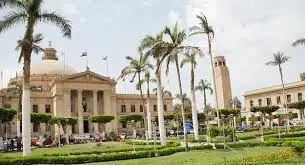
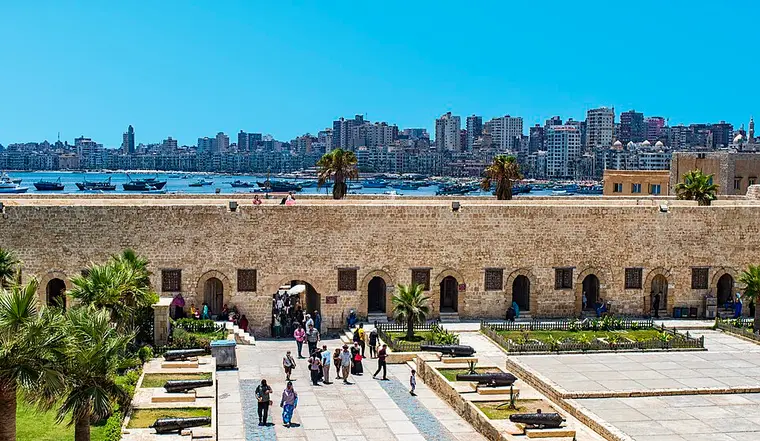
Sources for this chapter (119)Academic27Institution7Specialist book58Reputable web27
Academic(27)
- Kropotkin · Le Congrès International de Londres · Le Révolté · 1881
- The Victorians and Africa: A Reconsideration of the Occupation of Egypt, 1882 · The Journal of African History · 1986
- Galbraith · The British Occupation of Egypt: Another View · International Journal of Middle East Studies · 1978
- Ramdani · Women In The 1919 Egyptian Revolution: From Feminist Awakening To Nationalist Political Activism · Journal of International Women's Studies · 2013
- Berridge · Object Lessons in Violence: The Rationalities and Irrationalities of Urban Struggle During the Egyptian Revolution of 1919 · Journal of Colonialism and Colonial History · 2011
- Kitchen · Violence in Defence of Empire: The British Army and the 1919 Egyptian Revolution · Journal of Modern European History / Zeitschrift für moderne europäische Geschichte / Revue d'histoire européenne contemporaine · 2015
- Goldberg · Peasants in Revolt — Egypt 1919 · International Journal of Middle East Studies · 1992
- Manela · The Wilsonian moment and the rise of Anticolonial nationalism: The case of Egypt · Diplomacy & Statecraft · 2001
- Özden · The Egyptian Revolution from Protectorate to Partial Freedom (1919–1922) · The International History Review · 2025
- Tignor · The Egyptian Revolution of 1919: New Directions in the Egyptian Economy · Middle Eastern Studies · 1976
- Chirol · The Egyptian Question · Journal of the British Institute of International Affairs · 1922
- Karim Wissa · Freemasonry in Egypt 1798-1921: A Study in Cultural and Political Encounters · Bulletin (British Society for Middle Eastern Studies) · 1989
- Contesting colonial rule: Politics of exile in the Indian Ocean Author links open overlay panel · Geoforum · 2012
- Bowen · The Conflict of East and West in Egypt. II · Political Science Quarterly · 1886
- Buzpinar · The Repercussions of the British Occupation of Egypt on Syria, 1882–83 · Middle Eastern Studies
- The Armed Forces and the Democratic Process in Egypt · Third World Quarterly · 1988
- Pinfari · The Unmaking of a Patriot: Anti-Arab Prejudice in the British Attitude Towards the Urabi Revolt (1882) · Arab Studies Quarterly · 2012
- Order or Justice: The Denshawai Incident and British Imperialism · History Compass · 2007
- Reid · Political Assassination in Egypt, 1910-1954 · The International Journal of African Historical Studies · 1982
- Donald M. Reid · Turn-of-the-Century Egyptian School Days · Comparative Education Review · 1983
- Francophone Egyptian Nationalists, Anti-British Discourse, and European Public Opinion, 1885-1910: The Case of Mustafa Kamil and Ya'qub Sannu' · Comparative Studies of South Asia, Africa and the Middle East · 2008
- Laffan · Mustafa and the Mikado: A Francophile Egyptian's turn to Meiji Japan · Japanese Studies · 1999
- Nationalismus und Islam bei Mustafa Kamil: Ein Beitrag zur Ideengeschichte der ägyptischen Nationalbewegung · Brill · 1956
- Cuno · Review of Cairo University and the Making of Modern Egypt · History of Education Quarterly · 1991
- Mariz Tudros · Unity in diversity · Al Ahram Weekly · 1999
- Andersen · The Philae Controversy—Muscular Modernization and Paternalistic Preservation in Aswan and London · History and Anthropology · 2011
- Novokshshenov · Laboratory studies of the stone masonry in the Old Aswan Dam · Materials and Structures · 1993
Institution(7)
- Fiorillo · Alexandria Bombardment of 1882 Photograph Album · American University in Cairo Rare Books and Special Collections Library
- Slight · After the First World War: the 1919 Egyptian Revolution · Open.edu · 2019
- The Battle of Kassassin, Egyptian War
- Faculties of Cairo University
- Cairo University Presidents · Cairo University
- 2003 Honorary Degree
- The First Aswan Dam · University of Michigan
Specialist book(58)
- Tel El-Kebir 1882 · Osprey Publishing · 1993
- A Tidy Little War: The British Invasion of Egypt, 1882 · Spellmount · 2009
- Mayer · The Changing Past: Egyptian Historiography of the ʻUrabi Revolt, 1882-1983 · University of Florida Press · 1988
- Cahm · Kropotkin and the rise of revolutionary anarchism, 1872-1886 · Cambridge University Press · 1989
- Spiers · Intervention in Egypt · Manchester University Press · 2018
- Kochanski · Sir Garnet Wolseley: Victorian Hero · A&C Black · 1999
- Porter · History of the Corps of Royal Engineers · The Institution of Royal Engineers · 1889
- Robinson · Africa and the Victorians: The Official Mind of Imperialism · Macmillan · 1961
- Porter · History of the Corps of Royal Engineers, Vol. II · Longmans, Green and Co. · 1889
- Wells · Mailshot – A History of the Forces Postal Services · Defence Postal & Courier Services · 1987
- Al-Rafei · The Revolution of 1919, National History of Egypt from 1914 to 1921 · Knowledge House · 1987
- Anderson · Egyptian Labor Corps: Logistical Laborers in World War I and the 1919 Egyptian Revolution · 2017
- Gerges · The New Middle East: Protest and Revolution in the Arab World · Cambridge University Press · 2013
- Schulze · A Modern History of the Islamic World · I.B.Tauris · 2002
- Brugger · Australians and Egypt, 1914-1919 · Melbourne University Press · 1980
- Amin · The Forbidden Book: Secrets of the 1919 Revolution · Today News Corporation · 1991
- Ledeen · The First Duce · The Johns Hopkins University Press · 1977
- Anis · Peasantry and national integration · El Colegio de México · 1981
- Workers on the Nile: Nationalism, Communism, Islam, and the Egyptian Working Class, 1882-1954 · Princeton University Press · 1987
- Botman · Egypt from Independence to Revolution, 1919-1952 · Syracuse University Press · 1991
- Deeb · Party Politics in Egypt: the Wafd & Its Rivals 1919–1939 · Ithaca Press · 1979
- Fahmy · Ordinary Egyptians: Creating the Modern Nation Through Popular Culture · Stanford University Press · 2011
- Gifford · Britain in Egypt: Egyptian Nationalism and Imperial Strategy, 1919-1931 · I.B. Tauris · 2021
- The Egyptian Revolution of 1919: Legacies and Consequences of the Fight for Indepdence · I.B. Tauris · 2023
- Heshmat · Egypt 1919: The Revolution in Literature and Film · Edinbur · 2020
- Hussain · British Policy and the Nationalist Movement in Egypt, 1914-1924: A Political Study · De Gruyter · 2020
- Jankowski · Egypt, Islam, and the Arabs: The Search for Egyptian Nationhood, 1900-1930 · Oxford University Press · 1986
- Long · British Pro-Consuls in Egypt, 1914-1929 : The Challenge of Nationalism · RoutledgeCurzon · 2005
- The Cambridge History of Egypt · Cambridge University Press · 1998
- Quraishi · Liberal Nationalism in Egypt: Rise and Fall of the Wafd Party · Kitab Mahal · 1967
- Safran · Egypt in Search of Political Community; an Analysis of the Intellectual and Political Evolution of Egypt, 1804-1952 · Harvard University Press · 1961
- Terry · The Wafd: Cornerstone of Egyptian Political Power · Publisher: Third World Centre for Research and Publishing · 1982
- Vatikiotis · The History of Modern Egypt: From Muhammad Ali to Mubarak · Johns Hopkins University Press · 1992
- Zayid · Egypt's Struggle for Independence · Khayat's · 1965
- Elkins · Legacy of Violence: A History of the British Empire · Knopf Doubleday · 2022
- A History of the Modern Middle East · 2016
- To be a nation: being the third part of The history of Seychelles, 1920–1976 · Pristine Books · 2008
- Steven A. Cook · The Struggle for Egypt: From Nasser to Tahrir Square · Oxford University Press · 2011
- N. Khan · Egyptian-Indian Nationalist Collaboration and the British Empire · Palgrave Macmillan US · 2011
- سعد زغلول: سيرة وتحية · Maṭbaʿat Ḥiǧāzī · 1936
- Britain in Egypt: Egyptian Nationalism and Imperial Strategy, 1919-1931 · I.B. Tauris · 2019
- سعد زغلول ودوره في السياسة المصرية · مكتبة مدبولي · 1975
- Marsot · Egypt’s Liberal Experiment: 1922–1936 · University of California Press · 1977
- Vatikiotis · The History of Modern Egypt · Johns Hopkins University Press · 1991
- Royle · The Egyptian Campaigns (1882–1885) · Hurst and Blackett, Ltd. · 1900
- Blunt · The Secret History of the English Occupation in Egypt · Alfred A. Knopf · 1922
- The story of the Household Cavalry · London,: A. Constable · 1909
- A History of the British Cavalry 1816-1919: Volume 3: 1872-1898, Volume 3 · Pen and Sword · 1993
- Modern Egypt · Macmillan · 1908
- de Soysa · The Desoyas of Alfred House · Karunaratne & Sons
- Baring · Modern Egypt: Volume 1 · Adamant Media Corporation · 2000
- Marilyn Booth · Asian Punches · Springer · 2013
- Cleveland · A history of the modern Middle East · Michigan University Press · 2004
- Biographical Dictionary of Modern Egypt · Lynne Rienner · 2000
- Rahman Malik · Islam & Modernity · University Of Chicago Press · 1984
- Islamic Monuments in Cairo · AUC Press · 2008
- "Universitas Aegyptiaca Fouad I": vide imaginem nostram
- El Meligui · عبد الخالق ثروت ودوره في السياسة المصرية · الهيئة المصرية العامة للكتاب · 1989
Reputable web(27)
- STATEMENT BY THE PRIME MINISTER. (Hansard, 28 February 1922)
- مئوية استقلال مصر.. ما أول دولة عربية استقلت رسميا عن المحتل الأوروبي عقب الحرب العالمية الأولى؟ - بوابة الشروق
- Legacy of the British empire · 2003
- Parry · Suez canal: what the 'ditch' meant to the British empire in the 19th century · 2021
- Adams · The British in India offers a rich and nuanced social history of empire · 2018
- Un Vecchio, L'Anarchismo in Egitto · La Protesta Umana · 1903
- The Bombardment of Alexandria (1882) · Old Mersey Times
- CEP · PAOLIDES ou PAOLIS, Apostolos ou Apostol : Né au XIXe siècle en Grèce — Participant à la guerre anglo-égyptienne du côté des insurgé·e·s — Grèce, Roumanie (?), Paris, Bruxelles, Suisse, Égypte
- CEP · PAOLIDES ou PAOLIS, Apostolos ou Apostol
- Egyptian Uprising 1919
- 800 NATIVES DEAD IN EGYPT'S RISING; 1,600 WOUNDED; Harmsworth Tells the Commons of Casualties in the Recent Outbreak. DEATH SENTENCES FOR 39 More Than 2,000 Imprisoned-- British, Army Sustained Loss of 143. ALLENBY'S CONTROL FIRM Disorders Ended in April--Mahomed Said Pasha Co-operating as Premier. · 1919
- 1919 The People of Egypt Revolution
- ʿUrābī Pasha
- Dinshaway Incident | British Occupation of Egypt 1906 | Britannica
- Why Haditha Reminds This Historian of an Awful Chapter in British History · History News Network · 2006
- Kamil, Mustafa · 2005
- Egypt's High Administrative Court approves Cairo University decision to ban niqab · 2020
- Egypt Bans Niqab for Cairo University Teaching Staff
- Egypt court backs niqab ban on Cairo University staff · 2020
- ShanghaiRanking's Academic Ranking of World Universities: Cairo University
- CWTS Leiden Ranking
- QS World University Rankings 2024: Cairo University
- World University Rankings: Cairo University · Times Higher Education · 2021
- World University Rankings 2022-23
- 2022 Best Universities in the World
- Rizk · Al-Ahram Weekly | Chronicles | Lady lawyer
- Aswan Dam (1,2) Electric Hydro Power Plant · Egypt Ministry of Energy and Electricity
Every ancient date is an estimate. Scholarly chronologies differ by decades, and by more the further back you go, which is why each figure carries a tilde. When a period is published we name the chronology its dates come from.
In this period
In this period
97 minutes in total- 01Introduction2 min read
- 02Background4 min read
- 03Formal occupation (1914–1922)2 min read
- 04Independent monarchy (1922–1952)2 min read
- 05Languages1 min read
- 06Anglo-Egyptian War12 min read
- 07Urabi revolt9 min read
- 08Saad Zaghloul5 min read
- 09Ahmed Orabi9 min read
- 10Mustafa Kamil Pasha23 min read
- 11Aswan Low Dam3 min read
- 12Denshawai incident7 min read
- 13Egyptian University8 min read
- 14Egyptian revolution of 191910 min read