The Middle Kingdom
~2055 – ~1650 BCEDynasties 11–12
12 chapters · 89 min read · 181 sources
~2055 BCE
Introduction
1 min readThe Middle Kingdom of Egypt (also known as The Period of Reunification) is the period in the history of ancient Egypt following a period of political division known as the First Intermediate Period. The Middle Kingdom…The Middle Kingdom of Egypt (also known as The Period of Reunification) is the period in the history of ancient Egypt following a period of political division known as the First Intermediate Period. The Middle Kingdom lasted from approximately 2040 to 1782 or 1700 BC (depending on the definition), stretching from the reunification of Egypt under the reign of Mentuhotep II in the Eleventh Dynasty to the end of the Twelfth Dynasty or the mid Thirteenth Dynasty. The kings of the Eleventh Dynasty ruled from Thebes and the kings of the Twelfth and Thirteenth Dynasties ruled from el-Lisht.
The concept of the Middle Kingdom as one of three golden ages was coined in 1845 by German Egyptologist Baron von Bunsen, and its definition evolved significantly throughout the 19th and 20th centuries. Some scholars also include the Thirteenth Dynasty of Egypt wholly into this period, in which case the Middle Kingdom would end around 1650 BC, while others only include it until Merneferre Ay around 1700 BC, last king of this dynasty to be attested in both Upper and Lower Egypt. During the Middle Kingdom period, Osiris became the most important deity in popular religion. The Middle Kingdom was followed by the Second Intermediate Period of Egypt, another period of division that involved foreign rule of Lower Egypt by the Hyksos of West Asia.
Political history
12 min readAfter the collapse of the Old Kingdom, Egypt entered a period of weak pharaonic power and decentralization called the First Intermediate Period. Towards the end of this period, two rival dynasties, known in Egyptology…Periods of ancient Egypt
Reunification under the Eleventh Dynasty
After the collapse of the Old Kingdom, Egypt entered a period of weak pharaonic power and decentralization called the First Intermediate Period. Towards the end of this period, two rival dynasties, known in Egyptology as the Tenth and Eleventh, fought for control of the entire country. The Theban Eleventh Dynasty only ruled southern Egypt from the First Cataract to the Tenth Nome of Upper Egypt. To the north, Lower Egypt was ruled by the rival Tenth Dynasty from Herakleopolis. The struggle was to be concluded by Mentuhotep II, who ascended the Theban throne in 2055 BC. During Mentuhotep II's fourteenth regnal year, he took advantage of a revolt in the Thinite Nome to launch an attack on Herakleopolis, which met little resistance. After toppling the last rulers of the Tenth Dynasty, Mentuhotep began consolidating his power over all of Egypt, a process that he finished by his 39th regnal year. For this reason, Mentuhotep II is regarded as the founder of the Middle Kingdom.
Mentuhotep II commanded petty campaigns as far south as the Second Cataract in Nubia, which had gained its independence during the First Intermediate Period. He also restored Egyptian hegemony over the Sinai region, which had been lost to Egypt since the end of the Old Kingdom. To consolidate his authority, he restored the cult of the ruler, depicting himself as a god in his own lifetime, wearing the headdresses of Amun and Min. He died after a reign of 51 years and passed the throne to his son, Mentuhotep III.
Mentuhotep III reigned for only twelve years, during which he continued consolidating Theban rule over the whole of Egypt, building a series of forts in the eastern Delta region to secure Egypt against threats from Asia. He also sent the first expedition to Punt during the Middle Kingdom, using ships constructed at the end of Wadi Hammamat, on the Red Sea. Mentuhotep III was succeeded by Mentuhotep IV, whose name, significantly, is omitted from all ancient Egyptian king lists. The Turin King List claims that after Mentuhotep III came "seven kingless years". Despite this absence, his reign is attested from a few inscriptions in Wadi Hammamat that record expeditions to the Red Sea coast and to quarry stone for the royal monuments. The leader of this expedition was his vizier Amenemhat, who is widely assumed to be the future pharaoh Amenemhet I, the first king of the Twelfth Dynasty.
Mentuhotep IV's absence from the king lists has prompted the theory that Amenemhet I usurped his throne. While there are no contemporary accounts of this struggle, certain circumstantial evidence may point to the existence of a civil war at the end of the 11th Dynasty. Inscriptions left by one Nehry, the Haty-a of Hermopolis, suggest that he was attacked at a place called Shedyet-sha by the forces of the reigning king, but his forces prevailed. Khnumhotep I, an official under Amenemhet I, claims to have participated in a flotilla of twenty ships sent to pacify Upper Egypt. Donald Redford has suggested these events should be interpreted as evidence of open war between two dynastic claimants. What is certain is that, however he came to power, Amenemhet I was not of royal birth.
Twelfth Dynasty
Early Twelfth Dynasty
In the view of Egyptologist Frank J. Yurco,
"The XIIth Dynasty (1991-1786 BC) originated from the Aswan region. As expected, strong Nubian features and dark coloring are seen in their sculpture and relief work. This dynasty ranks as among the greatest, whose fame far outlived its actual tenure on the throne."
From the Twelfth Dynasty onwards, pharaohs often kept well-trained standing armies, which included Nubian contingents. These formed the basis of larger forces that were raised for defense against invasion, or expeditions up the Nile or across the Sinai. However, the Middle Kingdom was basically defensive in its military strategy, with fortifications built at the First Cataract of the Nile, in the Delta and across the Sinai Isthmus.
Early in his reign, Amenemhet I was compelled to campaign in the Delta region, which had not received as much attention as Upper Egypt during the 11th Dynasty. Also, he strengthened defenses between Egypt and Asia, building the Walls of the Ruler in the East Delta region. Perhaps in response to this perpetual unrest, Amenemhat I built a new capital for Egypt in the north, known as Amenemhet It Tawy, or Amenemhet, Seizer of the Two Lands. The location of this capital is unknown, but is presumably near the city's necropolis, the present-day el-Lisht. Like Mentuhotep II, Amenemhet bolstered his claim to authority with propaganda. In particular, the Prophecy of Neferty dates to about this time, which purports to be an oracle of an Old Kingdom priest, who predicts a king, Amenemhet I, arising from the far south of Egypt to restore the kingdom after centuries of chaos.
Propaganda notwithstanding, Amenemhet never held the absolute power commanded in theory by the Old Kingdom pharaohs. During the First Intermediate Period, the governors of the nomes of Egypt, nomarchs, gained considerable power. Their posts had become hereditary, and some nomarchs entered into marriage alliances with the nomarchs of neighboring nomes. To strengthen his position, Amenemhet required registration of land, modified nome borders, and appointed nomarchs directly when offices became vacant, but acquiesced to the nomarch system, probably to placate the nomarchs who supported his rule. This gave the Middle Kingdom a more feudal organization than Egypt had before or would have afterward.
In his twentieth regnal year, Amenemhat established his son Senusret I as his coregent, beginning a practice which would be used repeatedly throughout the rest of the Middle Kingdom and again during the New Kingdom. In Amenemhet's thirtieth regnal year, he was presumably murdered in a palace conspiracy. Senusret, campaigning against Libyan invaders, rushed home to Itjtawy to prevent a takeover of the government. During his reign, Senusret continued the practice of directly appointing nomarchs, and undercut the autonomy of local priesthoods by building at cult centers throughout Egypt. Under his rule, Egyptian armies pushed south into Nubia as far as the Second Cataract, building a border fort at Buhen and incorporating all of Lower Nubia as an Egyptian colony. Senusret I also exercised control over the land of Kush, from the Second to the Third Cataract, including the island of Sai. The southernmost inscription containing Sesostris I's name has been found on the island of Argo, north of modern Dongola. To the west, he consolidated his power over the Oases, and extended commercial contacts into Syria-Canaan as far as Ugarit. In his 43rd regnal year, Senusret appointed Amenemhet II as junior coregent, before dying in his 46th.
The reign of Amenemhat II has been often characterized as largely peaceful, but records of his, or daybooks, have cast doubt on that assessment. Among these records, preserved on temple walls at Tod and Memphis, are descriptions of peace treaties with certain Syrio-Canaanian cities, and military conflict with others. To the south, Amenemhet sent a campaign through lower Nubia to inspect Wawat. It does not appear that Amenemhet continued his predecessors' policy of appointing nomarchs, but let it become hereditary again. Another expedition to Punt dates to his reign. In his 33rd regnal year, he appointed his son Senusret II coregent.
Evidence for military activity of any kind during the reign of Senusret II is non-existent. Senusret instead appears to have focused on domestic issues, particularly the irrigation of the Faiyum. This multi-generational project aimed to convert the Faiyum oasis into a productive swath of farmland. Senusret eventually placed his pyramid at the site of el-Lahun, near the junction of the Nile and the Fayuum's major irrigation canal, the Bahr Yussef. He reigned only fifteen years, which explains the incomplete nature of many of his constructions. His son Senusret III succeeded him.
Height of the Middle Kingdom
Senusret III was a warrior-king, often taking to the field himself. In his sixth year, he re-dredged an Old Kingdom canal around the First Cataract to facilitate travel to Upper Nubia. He used this to launch a series of brutal campaigns in Nubia in his sixth, eighth, tenth, and sixteenth years. After his victories, Senusret built a series of massive forts throughout the country to establish the formal boundary between Egyptian conquests and unconquered Nubia at Semna. The personnel of these forts were charged to send frequent reports to the capital on the movements and activities of the local Medjay natives, some of which survive, revealing how tightly the Egyptians intended to control the southern border. Medjay were not allowed north of the border by ship, nor could they enter by land with their flocks, but they were permitted to travel to local forts to trade. After this, Senusret sent one more campaign in his 19th year but turned back due to abnormally low Nile levels, which endangered his ships. To the north, One of Senusret's soldiers records a campaign into Canaan, perhaps against Shechem, the only reference to a military campaign against a certain location in Cannan from Middle Kingdom literature, although there are other references to action against Asiatics. It is not known whether Egypt wished to control Canaan like Northern Nubia, but numerous administrative seals of the period have been found there, as well as other indications of increased activity Northward in this period. As in the old kingdom, the contact was particularly strong with Byblos, known for its valuable wood.
Domestically, Senusret has been given credit for an administrative reform that put more power in the hands of appointees of the central government, instead of regional authorities. Egypt was divided into three water, or administrative divisions: North, South, and Head of the South (perhaps Lower Egypt, most of Upper Egypt, and the nomes of the original Theban kingdom during the war with Herakleopolis, respectively). Each region was administered by a Reporter, Second Reporter, some kind of council (the Djadjat), and staff of minor officials and scribes. The power of the nomarchs seems to drop off permanently during his reign, which has been taken to indicate that the central government had finally suppressed them, though there is no record that Senusret ever took direct action against them.
Senusret III left a lasting legacy as a warrior pharaoh. His name was Hellenized by later Greek historians as Sesostris, a name which was then given to a conflation of Senusret and several New Kingdom warrior pharaohs. In Nubia, Senusret was worshiped as a patron God by Egyptian settlers. The duration of his reign remains something of an open question. His son Amenemhet III began reigning after Senusret's 19th regnal year, which has been widely considered Senusret's highest attested date. However, a reference to a year 39 on a fragment found in the construction debris of Senusret's mortuary temple has suggested the possibility of a long coregency with his son.
The reign of Amenemhat III was the height of the Middle Kingdom's economic prosperity. His reign is remarkable for the degree to which Egypt exploited its resources. Mining camps in the Sinai, which had previously been used only by intermittent expeditions, were operated on a semi-permanent basis, as evidenced by the construction of houses, walls, and even local cemeteries. There are 25 separate references to mining expeditions in the Sinai, and four to expeditions in Wadi Hammamat, one of which had over two thousand workers. Amenemhet reinforced his father's defenses in Nubia and continued the Faiyum land reclamation project. After a reign of 45 years, Amenemhet III was succeeded by Amenemhet IV, whose nine-year reign is poorly attested. Clearly by this time, dynastic power had begun to weaken, for which several explanations have been proposed. Contemporary records of the Nile flood levels indicate that the end of the reign of Amenemhet III was dry, and crop failures may have helped to destabilize the dynasty. Further, Amenemhet III had an inordinately long reign, which tends to create succession problems. The latter argument perhaps explains why Amenemhet IV was succeeded by Sobekneferu, the first historically attested female pharaoh of Egypt. Sobekneferu ruled no more than four years, and as she apparently had no heirs, when she died the Twelfth Dynasty came to a sudden end as did the Golden Age of the Middle Kingdom.
Decline into the Second Intermediate Period
After the death of Sobekneferu, the throne may have passed to Sekhemre Khutawy Sobekhotep, though in older studies Wegaf, who had previously been the Great Overseer of Troops, was thought to have reigned next. Beginning with this reign, Egypt was ruled by a series of ephemeral kings for about ten to fifteen years. Ancient Egyptian sources regard these as the first kings of the Thirteenth Dynasty, though the term dynasty is misleading, as most kings of the Thirteenth Dynasty were not related. The names of these short-lived kings are attested on a few monuments and graffiti, and their succession order is only known from the Turin Canon, although even this is not fully trusted.
After the initial dynastic chaos, a series of longer-reigning, better-attested kings ruled for about fifty to eighty years. The strongest king of this period, Neferhotep I, ruled for eleven years and maintained effective control of Upper Egypt, Nubia, and the Delta, with the possible exceptions of Xois and Avaris. Neferhotep I was even recognized as the suzerain of the ruler of Byblos, indicating that the Thirteenth Dynasty was able to retain much of the power of the Twelfth Dynasty, at least up to his reign. At some point during the 13th Dynasty, Xois, and Avaris began governing themselves, the rulers of Xois being the Fourteenth Dynasty, and the Asiatic rulers of Avaris being the Hyksos of the Fifteenth Dynasty. According to Manetho, this latter revolt occurred during the reign of Neferhotep's successor, Sobekhotep IV, though there is no archaeological evidence. Sobekhotep IV was succeeded by the short reign of Sobekhotep V, who was followed by Wahibre Ibiau, then Merneferre Ai. Wahibre Ibiau ruled ten years, and Merneferre Ai ruled for twenty-three years, the longest of any Thirteenth Dynasty king, but neither of these two kings left as many attestations as either Neferhotep of Sobekhotep IV. Despite this, they both seem to have held at least parts of Lower Egypt. After Merneferre Ai, however, no king left his name on any object found outside the south. This begins the final portion of the Thirteenth Dynasty when southern kings continue to reign over Upper Egypt. But when the unity of Egypt fully disintegrated, the Middle Kingdom gave way to the Second Intermediate Period.
Administration
4 min readWhen the Eleventh Dynasty reunified Egypt it had to create a centralized administration such as had not existed in Egypt since the downfall of the Old Kingdom government. To do this, it appointed people to positions…When the Eleventh Dynasty reunified Egypt it had to create a centralized administration such as had not existed in Egypt since the downfall of the Old Kingdom government. To do this, it appointed people to positions that had fallen out of use in the decentralized First Intermediate Period. The highest among these was the vizier. The vizier was the chief minister for the king, handling all the day-to-day business of government in the king's place. This was a monumental task, therefore it would often be split into two positions, a vizier of the north, and a vizier of the south. It is uncertain how often this occurred during the Middle Kingdom, but Senusret I clearly had two simultaneously functioning viziers. Other positions were inherited from the provincial form of government at Thebes used by the Eleventh Dynasty before the reunification of Egypt. The Overseer of Sealed Goods became the country's treasurer, and the Overseer of the Estate became the King's chief steward. These three positions and the Scribe of the Royal Document, probably the king's personal scribe, appear to be the most important posts of the central government, judging by the monument count of those in these positions.
Besides this, many Old Kingdom posts which had lost their original meaning and become mere honorifics were brought back into the central government. Only high-ranking officials could claim the title Member of the Elite, which had been applied liberally during the First Intermediate Period.
This basic form of administration continued throughout the Middle Kingdom, though there is some evidence of a major reform of the central government under Senusret III. Records from his reign indicate that Upper and Lower Egypt were divided into separate waret and governed by separate administrators. Administrative documents and private stelae indicate a proliferation of new bureaucratic titles around this time, which have been taken as evidence of a larger central government. Governance of the royal residence was moved into a separate division of government. The military was placed under the control of a chief general. However, it is possible that these titles and positions were much older, and simply were not recorded on funerary stelae due to religious conventions.
Provincial government
Decentralization during the First Intermediate Period left the individual Egyptian provinces, or Nomes, under the control of powerful families who held the hereditary title of Great Chief of the Nome, or Nomarch. This position developed during the Fifth and Sixth Dynasties, when the various powers of Old Kingdom provincial officials began to be exercised by a single individual. At roughly this time, the provincial aristocracy began building elaborate tombs for themselves, which have been taken as evidence of the wealth and power that these rulers had acquired as nomarchs. By the end of the First Intermediate Period, some nomarchs ruled their nomes as minor potentates, such as the nomarch Nehry of Hermopolis, who dated inscriptions by his own regnal year.
When the Eleventh Dynasty came to power, it was necessary to subdue the power of the nomarchs if Egypt were to be reunified under a central government. The first major steps towards that end took place under Amenemhet I. Amenemhet made the city, not the nome, the center of administration, and only the haty-a, or mayor, of the larger cities, would be permitted to carry the title of nomarch. The title of nomarch continued to be used until the reign of Senusret III, as did the elaborate tombs indicative of their power, after which they suddenly disappeared. This has been interpreted several ways. Traditionally, it has been believed that Senusret III took some action to suppress the nomarch families during his reign. Recently, other interpretations have been proposed. Detlef Franke has argued that Senusret II adopted a policy of educating the sons of nomarchs in the capital and appointing them to government posts. In this way, many provincial families may have been bled dry of scions. Also, while the title of Great Overlord of the Nome disappeared, other distinctive titles of the nomarchs remained. During the First Intermediate Period, individuals holding the title of Great Overlord also often held the title of Overseer of Priests. In the late Middle Kingdom, there existed families holding the titles of mayor and overseer of priests as hereditary possessions. Therefore, it has been argued that the great nomarch families were never subdued, but were simply absorbed into the pharaonic administration of the country. While it is true that the large tombs indicative of nomarchs disappeared at the end of the Twelfth Dynasty, grand royal tombs also ceased being built soon thereafter due to general instability surrounding the decline of the Middle Kingdom.
Agriculture and climate
1 min readThroughout the history of ancient Egypt, the annual inundation of the Nile River was relied upon to fertilize the land surrounding it. This was essential for agriculture and food production. There is evidence that the…Throughout the history of ancient Egypt, the annual inundation of the Nile River was relied upon to fertilize the land surrounding it. This was essential for agriculture and food production. There is evidence that the collapse of the previous Old Kingdom may have been due in part to low flood levels, resulting in famine. This trend appears to have been reversed during the early years of the Middle Kingdom, with relatively high water levels recorded for much of this era, with an average inundation of 19 meters above its non-flood levels. The years of repeated high inundation levels correspond to the most prosperous period of the Middle Kingdom, which occurred during the reign of Amenemhat III. This seems to be confirmed in some of the literature of the period, such as in the Instructions of Amenemhat, where the king tells his son how agriculture prospered under his reign.
Art
6 min readAfter the reunification of Egypt in the Middle Kingdom, the kings of the Eleventh and Twelfth Dynasties were able to turn their focus back to art. In the Eleventh Dynasty, the kings had their monuments made in a style…After the reunification of Egypt in the Middle Kingdom, the kings of the Eleventh and Twelfth Dynasties were able to turn their focus back to art. In the Eleventh Dynasty, the kings had their monuments made in a style influenced by the Memphite models of the Fifth and early Sixth Dynasties. During this time, the pre-unification Theban relief style all but disappeared. These changes had an ideological purpose, as the Eleventh Dynasty kings were establishing a centralized state after the First Intermediate Period, and returning to the political ideals of the Old Kingdom. In the early Twelfth Dynasty, the artwork had a uniformity of style due to the influence of the royal workshops. It was at this point that the quality of artistic production for the elite members of society reached a high point that was never surpassed, although it was equaled in other periods. Egypt prospered in the late Twelfth Dynasty, and this was reflected in the quality of the materials used for royal and private monuments.
The kings of the Twelfth Dynasty were buried in pyramid complexes based on those of the Fifth and Sixth Dynasties. In the Old Kingdom, these were made of stone bricks, but the Middle Kingdom kings chose to have theirs made of mud bricks and finished with a casing of Tura limestone. Private tombs, such as those found in Thebes, usually consisted of a long passage cut into rock, with a small chamber at the end. These tended to have little or no decoration. Stone box sarcophagi with both flat and vaulted lids were manufactured in the Middle Kingdom, as a continuation of the Old Kingdom tradition. The motifs on these were more varied and of higher artistic quality than that of any sarcophagi produced before and after the Middle Kingdom. Additionally, funerary stelae developed in regard to images and iconography. They continued to show the deceased seated in front of a table of offerings, and began to include the deceased's wife and other family members.
Towards the end of the Middle Kingdom, there was a change to the art pieces placed in non-royal tombs. The amount of wooden tomb models decreased drastically, and they were replaced by small faience models of food. Magic wands and rods, models of protective animals, and fertility figures began to be buried with the dead. Additionally, the number of statues and funerary stelae increased, but their quality decreased. In the late Twelfth Dynasty, coffins with interior decorations became rare, and the decorations on the outside became more elaborate. The rishi-coffin made its first appearance during this time. Made of wood or cartonnage, the coffin was in the shape of a body wrapped in linen, wearing a beaded collar and a funerary mask.
There were also changes to the art form of stelae in the Middle Kingdom. During this time, round-topped stelae developed out of the rectangular form of previous periods. Many examples of both of these types come from this period; excavation at Abydos yielded over 2000 private stelae, ranging from excellent works to crude objects, although very few belonged to the elite. Additionally, classic royal commemorative stelae were first found in this period. These took the form of round-topped stelae, and they were used to mark boundaries. For example, Senusret III used them to mark the boundary between Egypt and Nubia. Because of the prosperity of this period, the lower elite were able to commission statues and stelae for themselves, although these were of poorer artistic quality. Those who commissioned non-royal stelae had the ultimate goal of eternal existence. This goal was communicated with the specific placement of information on the stone slabs similar to royal stelae (the owner's image, offering formula, inscriptions of names, lineage and titles).
Statuary
In the first half of the Twelfth Dynasty, proportions of the human figure returned to the traditional Memphite style of the Fifth and early Sixth Dynasties. Male figures had broad shoulders, a low small of the back, and thick muscular limbs. Females had slender figures, a higher small of the back and no musculature. In this period, sketches for the production of statues and reliefs were laid out on a squared grid, a new guide system. Since this system contained a greater number of lines, it allowed more body parts to be marked. Standing figures were composed of eighteen squares from the feet to the hairline. Seated figures were made of fourteen squares between their feet and hairline, accounting for the horizontal thigh and knee. The black granite seated statue of the king Amenemhat III to the right, above is a perfect example of male proportions and the squared grid system of this period. Most royal statues, such as this one, would serve as representations of the king's power.
The quality of Egyptian statuary reached its peak in the Middle Kingdom. Royal statues combined both elegance and strength in a manner that was seldom seen after this period. A popular form of statuary during this time was that of the sphinx. During this period, sphinxes appeared in pairs, and were recumbent, with human faces, and a lion's mane and ears. An example would be the diorite sphinx of Senusret III.
One of the innovations in sculpture that occurred during the Middle Kingdom was the block statue, which would continue to be popular through to the Ptolemaic Kingdom almost 2,000 years later. Block statues consist of a man squatting with his knees drawn up to his chest and his arms folded on top of his knees. Often, these men are wearing a "wide cloak" that reduces the body of the figure to a simple block-like shape. The surface of the garment or "wide cloak" allowed space for inscriptions. Most of the detail is reserved for the head of the individual being depicted. In some instances, the modeling of the limbs has been retained by the sculptor. There are two basic types of block statues: ones with the feet completely covered by the cloak and ones with the feet uncovered.
This statue to the right represents a woman from the top echelon of society and demonstrates characteristics of Middle Kingdom art. The heavy tripartite wig frames the broad face and passes behind the ears, thus giving the impression of forcing them forward. They are large in keeping with the ancient Egyptian ideal of beauty; the same ideal required small breasts, and also in this respect the sculpture is no exception. Whereas the natural curve of the eyebrows dips towards the root of the nose, the artificial eyebrows in low relief are absolutely straight above the inner corners of the eyes, a feature which places the bust early in the Twelfth Dynasty. Around 1900 BC these artificial eyebrows began to follow the natural curve and dip toward the nose.
In the later Twelfth Dynasty, the proportions of the human figure changed. These changes survived through the Thirteenth to Seventeenth Dynasties. Male figures had smaller heads in proportion to the rest of the body, narrow shoulders and waists, a high small of the back, and no muscled limbs. Female figures had these proportions more to an extreme with narrower shoulders and waists, slender limbs, and a higher small of the back in order to keep a distinction between male and female measurements.
Technology
1 min readThe main metal alloy used in the Middle Kingdom was arsenical copper/arsenical bronze, an alloy of arsenic and copper. This was observed e.g. in the Egyptian and Nubian collections of metal artefacts from Leipzig and…The main metal alloy used in the Middle Kingdom was arsenical copper/arsenical bronze, an alloy of arsenic and copper. This was observed e.g. in the Egyptian and Nubian collections of metal artefacts from Leipzig and Brussels. Gradually, tin bronze is replacing arsenical copper in case of practical objects.
Important technological evidence from the German excavations at the Elephantine Island was recently published, datable to the Middle Kingdom. An intentional production of arsenical bronze, evidence of the cementation alloying process of copper with speiss inside ceramic crucibles, and a piece of speiss, were published from the Elephantine archaeological contexts.
Literature
1 min readRichard B. Parkinson and Ludwig D. Morenz write that ancient Egyptian literature—narrowly defined as belles-lettres ("beautiful writing")—were not recorded in written form until the early Twelfth Dynasty. Old Kingdom…Richard B. Parkinson and Ludwig D. Morenz write that ancient Egyptian literature—narrowly defined as belles-lettres ("beautiful writing")—were not recorded in written form until the early Twelfth Dynasty. Old Kingdom texts served mainly to maintain the divine cults, preserve souls in the afterlife, and document accounts for practical uses in daily life. It was not until the Middle Kingdom that texts were written for the purpose of entertainment and intellectual curiosity. Parkinson and Morenz also speculate that written works of the Middle Kingdom were transcriptions of the oral literature of the Old Kingdom. It is known that some oral poetry was preserved in later writing; for example, litter-bearers' songs were preserved as written verses in tomb inscriptions of the Old Kingdom.
It is also thought that the growth of the middle class and growth in the number of scribes needed for the expanded bureaucracy under Senusret II helped spur the development of Middle Kingdom literature. Later ancient Egyptians considered the literature from this time as "classic". Stories such as the Tale of the Shipwrecked Sailor and the Story of Sinuhe were composed during this period, and were popular enough to be widely copied afterwards. Many philosophical works were also created at this time, including the Dispute between a man and his Ba where an unhappy man converses with his soul, The Satire of the Trades in which the role of the scribe is praised above all other jobs, and the magic tales supposedly told to the Old Kingdom pharaoh Khufu in the Westcar Papyrus.
Some of the most interesting of Egyptian papyri are thought to stem from the Middle Kingdom or Second Intermediate Period:
Mentuhotep II
18 min readMentuhotep II (, meaning "Mentu is satisfied"), also known under his prenomen Nebhepetre (, meaning "The Lord of the rudder is Ra"; died 2009 BC), was an ancient Egyptian King, the sixth ruler of the 11th Dynasty. He is…Mentuhotep II (, meaning "Mentu is satisfied"), also known under his prenomen Nebhepetre (, meaning "The Lord of the rudder is Ra"; died 2009 BC), was an ancient Egyptian King, the sixth ruler of the 11th Dynasty. He is credited with reuniting Egypt, thus ending the turbulent First Intermediate Period and becoming the first pharaoh of the Middle Kingdom. He reigned for 51 years, according to the Turin King List. Mentuhotep II succeeded his father Intef III on the throne and was in turn succeeded by his son Mentuhotep III.
Mentuhotep II ascended Egypt's throne in the Upper Egyptian city of Thebes during the First Intermediate Period. Egypt was not unified during this time, and the 10th Dynasty, rival to Mentuhotep's 11th, ruled Lower Egypt from Herakleopolis. After the Herakleopolitan kings desecrated the sacred ancient royal necropolis of Abydos in Upper Egypt in the fourteenth year of Mentuhotep's reign, Pharaoh Mentuhotep II dispatched his armies north to conquer Lower Egypt. Continuing his father Intef III's conquests, Mentuhotep succeeded in unifying his country, probably shortly before his 39th year on the throne. Following and in recognition of the unification, in regnal year 39, he changed his titulary to Sematawy (, meaning "He who unifies the two lands").
Following the unification, Mentuhotep II reformed Egypt's government. To reverse the decentralization of power, which contributed to the collapse of the Old Kingdom and marked the First Intermediate Period, he centralized the state in Thebes by stripping from nomarchs some of their power. Mentuhotep II also created new governmental posts whose occupants were Theban men loyal to him, giving the pharaoh more control over his country. Officials from the capital travelled the country regularly to control regional leaders.
Mentuhotep II was buried at the Theban necropolis of Deir el-Bahari. His mortuary temple was one of Mentuhotep II's most ambitious building-projects, and included several architectural and religious innovations. For example, it included terraces and covered walkways around the central structure, and it was the first mortuary temple that identified the pharaoh with the god Osiris. His temple inspired several later temples, such as those of Hatshepsut and Thutmose III of the Eighteenth Dynasty. Some depictions of Mentuhotep II seem to indicate that he suffered from elephantiasis, resulting in swollen legs.
Family
Mentuhotep II was the son of Intef III and Intef III's wife Iah who may also have been his sister. This lineage is demonstrated by the stele of Henenu (Cairo 36346), an official who served under Intef II, Intef III and his son, which the stele identifies as Horus s-ankh-[ib-t3wy], Mentuhotep II's first Horus name. As for Iah, she bore the title of mwt-nswt, "King's mother". The parentage of Mentuhotep II is also indirectly confirmed by a relief at Shatt er-Rigal. Some scholars have suggested that Mentuhotep II was of Nubian origin. Specifically, Wildung and Lobban have argued that Egyptian iconography represented Mentuhotep II with pronounced Nubian facial features. Crawford noted that the rulers of the 11th dynasty were based in the Theban or southern region of Upper Egypt and had close relations with Nubia.
Consorts
Mentuhotep II had many wives who were buried with him in or close to his mortuary temple.
Children with Tem
Possible children
Reign
Mentuhotep II is considered to be the first ruler of the Middle Kingdom of Egypt. The Turin Canon credits him with a reign of 51 years. Many Egyptologists have long considered two rock reliefs, showing Mentuhotep II towering over smaller figures labeled king "Intef", to be conclusive evidence that his predecessor Intef III was his own father; this is, however, not entirely certain, as these reliefs may have had other propagandistic purposes, and there are other difficulties surrounding Mentuhotep's true origin, his three name-changes, and his frequent attempts to claim descent from various gods.
Early reign
When he ascended the Theban throne, Mentuhotep II inherited the vast land conquered by his predecessors from the first cataract in the south to Abydos and Tjebu in the north. Mentuhotep II's first fourteen years of reign seem to have been peaceful in the Theban region as there are no surviving traces of conflict firmly datable to that period. In fact, the general scarcity of testimonies from the early part of Mentuhotep's reign might indicate that he was young when he ascended the throne, a hypothesis consistent with his 51 years long reign.
Reunification of Egypt
In the 14th year of his reign, an uprising occurred in the north. This uprising is most probably connected with the ongoing conflict between Mentuhotep II based in Thebes and the rival 10th Dynasty based at Herakleopolis who threatened to invade Upper Egypt. The 14th year of Mentuhotep's reign is indeed named Year of the crime of Thinis. This certainly refers to the conquest of the Thinite region by the Herakleopolitan kings who apparently desecrated the sacred ancient royal necropolis of Abydos in the process. Mentuhotep II subsequently dispatched his armies to the north. The famous tomb of the warriors at Deir el-Bahari (MMA 507) discovered in the 1920s, contained the linen-wrapped, unmummified bodies of 60 soldiers all killed in battle, their shroud bearing Mentuhotep II's cartouche. Due to its proximity to the Theban royal tombs, the tomb of the warriors is believed to be that of heroes who died during the conflict between Mentuhotep II and his foes to the north. Merikare, the ruler of Lower-Egypt at the time may have died during the conflict, which further weakened his kingdom and gave Mentuhotep the opportunity to reunite Egypt. The exact date when reunification was achieved is not known, but it is assumed to have happened shortly before year 39 of his reign. Indeed, evidence shows that the process took time, maybe due to the general insecurity of the country at the time: commoners were buried with weapons, the funerary stelae of officials show them holding weapons instead of the usual regalia and when Mentuhotep II's successor sent an expedition to Punt some 20 years after the reunification, they still had to clear the Wadi Hammamat of rebels loyal to the fallen Herakleopolitan rulers.
Following the reunification, Mentuhotep II was considered by his subjects to be divine, or half divine. This was still the case during the late 12th Dynasty some 200 years later: Senusret III and Amenemhat III erected stelae commemorating opening of the mouth ceremonies practiced on Mentuhotep II's statues.
Military activities outside Egypt
Mentuhotep II launched military campaigns under the command of his vizier Khety south into Nubia, which had gained its independence during the First Intermediate Period, in his 29th and 31st years of reign. This is the first attested appearance of the term Kush for Nubia in Egyptian records. In particular, Mentuhotep posted a garrison on the island fortress of Elephantine so troops could rapidly be deployed southwards. There is also evidence of military actions against Canaan. An inscription was found at Gabal El Uweinat close to the borders of modern Libya and Sudan naming the king and attesting at least trade contacts to this region.
Officials
The king reorganized the country and placed a vizier at the head of the administration. The viziers of his reign were Bebi and Dagi. His treasurer was Kheti who was involved in organising the sed festival for the king. Other important officials were the treasurer Meketre and the overseer of sealers Meru. His general was Intef.
Reorganization of the government
Throughout the First Intermediate Period and until Mentuhotep II's reign, the nomarchs held important powers over Egypt. Their office had become hereditary during the 6th Dynasty and the collapse of central power assured them complete freedom over their lands. After the unification of Egypt however, Mentuhotep II initiated a strong policy of centralization, reinforcing his royal authority by creating the posts of Governor of Upper Egypt and Governor of Lower Egypt who had power over the local nomarchs.
Mentuhotep also relied on a mobile force of royal court officials who further controlled the deeds of the nomarchs. Finally, the nomarchs who supported the 10th Dynasty, such as the governor of Asyut, certainly lost their power to the profit of the king. In the meantime, Mentuhotep II started an extensive program of self-deification emphasizing the divine nature of the ruler.
Titulary
Mentuhotep II's self-deification program is evident from temples he built where he is represented wearing the headgear of Min and Amun. But perhaps the best evidence for this policy is his three titularies: his second Horus and Nebty names were The divine one of the white crown while he is also referred to as the son of Hathor at the end of his reign.
Mentuhotep II changed his titulary twice during his reign: the first time in his 14th regnal year, marking the initial successes of his campaign against Herakleopolis Magna to the north. The second time on or shortly before his 39th year of reign, marking the final success of that campaign, and his reunification of all of Egypt. More precisely, this second change may have taken place on the occasion of the sed festival celebrated during his 39th year on the throne.
In general, the titularies of Mentuhotep II show a desire to return to the traditions of the Old Kingdom. In particular he adopted the complete five-fold titulary after his reunification of Egypt, seemingly for the first time since the 6th Dynasty, though known records are sparse for much of the First Intermediate Period that preceded him. Another proof that Mentuhotep II paid great attention to the traditions of the Old Kingdom is his second Nomen, sometimes found as
This reference to Hathor rather than Re is similar to the titulary of Pepi I. Finally, in later king lists, Mentuhotep was referred to with a variant of his third titulary
Monuments
Mentuhotep II commanded the construction of many temples though few survive to this day. In doing so, Mentuhotep followed a tradition started by his grandfather Intef II: royal building activities in the provincial temples of Upper Egypt began under Intef II and lasted throughout the Middle Kingdom. Most of the temple remains are also located in Upper Egypt, more precisely in Abydos, Aswan, Tod, Armant, Gebelein, Elkab, Karnak and Denderah.
Abydos
At Abydos, a well preserved funerary chapel called the Mahat chapel was found in 2014.
Mortuary temple
Mentuhotep II's most ambitious and innovative building project remains his large mortuary temple at Deir el-Bahri called Akh-sut Nebhepetre ("Transfigured are the places of Nebhepetre"). The many architectural innovations of the temple mark a break with the Old Kingdom tradition of pyramid complexes and foreshadow the Temples of Millions of Years of the New Kingdom. As such, Mentuhotep II's temple was certainly a major source of inspiration for the nearby, but 550-year later temples of Hatshepsut and Thutmose III.
However, the most profound innovations of Mentuhotep II's temple are not architectural but religious. First, it is the earliest mortuary temple where the king is not just the recipient of offerings but rather enacts ceremonies for the deities (in this case Amun-Ra). Second, the temple identifies the king with Osiris. Indeed, the decoration and royal statuary of the temple emphasizes the Osirian aspects of the dead ruler, an ideology apparent in the funerary statuary of many later pharaohs.
Finally, most of the temple decoration is the work of local Theban artists. This is evidenced by the dominant artistic style of the temple which represents people with large lips and eyes and thin bodies. At the opposite, the refined chapels of Mentuhotep II's wives are certainly due to Memphite craftsmen who were heavily influenced by the standards and conventions of the Old Kingdom. This phenomenon of fragmentation of the artistic styles is observed throughout the First Intermediate Period and is a direct consequence of the political fragmentation of the country.
Situation
The temple is located in the cliff at Deir el-Bahri on the west bank of Thebes. The choice of this location is certainly related to the Theban origin of the 11th Dynasty: Mentuhotep's predecessors on the Theban throne are all buried in close by saff tombs. Furthermore, Mentuhotep may have chosen Deir el-Bahri because it is aligned with the temple of Karnak, on the other side of Nile. In particular, the statue of Amun was brought annually to Deir el-Bahri during the Beautiful Festival of the Valley, something which the king may have perceived as beneficial to this funerary cult. Consequently, and until the construction of the Djeser-Djeseru some five centuries later, Mentuhotep II's temple was the final destination of the barque of Amun during the festival.
Discovery and excavations
In the early 19th century, the ruins of the temple of Mentuhotep II were completely covered with debris. They consequently went unnoticed until the second half of the century, in spite of extensive excavations performed on the nearby Mortuary Temple of Hatshepsut. Thus it was only in 1859, that Lord Dufferin and his assistants, Dr. Lorange and Cyril Clerke Graham, started to excavate the southwest corner of the hypostyle hall of Mentuhotep's temple. Clearing the immense mass of debris, they soon discovered the plundered grave of Queen Tem, one of Mentuhotep's wives. Realising the potential of the site, they then gradually worked their way to the sanctuary, where they found the granite altar of Mentuhotep with a representation of Amun-Re and various other finds such as the grave of Neferu TT319.
Finally, in 1898, Howard Carter discovered the Bab el-Hosan cache in the front court, where he uncovered the famous black seated large Ka statue of the king. It's believe the items in the cache, including the statue was placed there from the hypostyle hall when the temple was partially dismantled and repurposed during the New Kingdom, possibly during the nearby construction of Hatshepsut's temple.
In addition to statues of Mentuhotep II, statues of New Kingdom pharaoh Amenhotep I were also found in the mortuary temple of Mentuhotep II. Amenhotep's mortuary temple was largely demolished to make way for the lower terrace of the mortuary temple constructed later by Hatshepsut, and the royal statues inside of the temple were moved to the nearby mortuary temple of Mentuhotep II.
The next important excavation works took place from 1903 to 1907 under the direction of Henri Édouard Naville, who worked there on behalf of the Egypt Exploration Fund. He was the first to undertake a systematic exploration of the temple. About ten years later, between 1920 and 1931, Herbert E. Winlock further excavated the temple for the Metropolitan Museum of Art. However, his results were published only in the form of preliminary reports in summary form. Finally, from 1967 to 1971, Dieter Arnold conducted research on the site on behalf of the German Archaeological Institute. He published his results in three volumes.
Foundational offerings
Under the four corners of the temple terrace, H. Winlock discovered four pits during his 1921–1922 excavations. These pits were dug into the ground before the construction of the temple for the purpose of foundation rituals. Indeed, when H. Winlock discovered them, they still contained many offerings: a cattle skull, pitchers and bowls filled with fruits, barley and bread and a mud brick bearing Mentuhotep II's name.
Further excavations of the pits undertaken in 1970 by Dieter Arnold revealed more food offerings such as bread and beef ribs, but also some bronze objects, a faience scepter and sheets of fabric. The sheets were marked in red ink at the corner, seven with the name of Mentuhotep II and three with that of Intef II.
Architecture
Causeway and courtyard
Similarly to the mortuary complexes of the Old Kingdom, Mentuhotep II's mortuary complex comprised two temples: the high temple of Deir el-Bahri and a valley temple located closer to the Nile on cultivated lands. The valley temple was linked to the high temple by a 1.2 km long and 46 m wide uncovered causeway. The causeway led to a large courtyard in front of the Deir el-Bahri temple.
The courtyard was adorned by a long rectangular flower bed, with fifty-five sycamore trees planted in small pits and six tamarisk plus two sycamore trees planted in deep pits filled with soil. This is one of the very few archaeologically documented temple-gardens of ancient Egypt that are known enough about to reconstruct its appearance. The maintenance of such a garden more than 1 km from the Nile into the arid desert must have required the constant work of many gardeners and an elaborate irrigation system.
Left and right of the processional walkway were at least 22 seated statues of Mentuhotep II wearing, on the south side, the White Crown of Upper Egypt and on the north side, the Red Crown of Lower Egypt. These were probably added to the temple for the celebration of Mentuhotep II's Sed festival during his 39th year on the throne. Some headless sandstone statues are still on site today. Another was discovered in 1921 during Herbert Winlock's excavations and is now on display at the Metropolitan Museum of Art.
Front part of the temple
West of the causeway is the main temple, which consisted of two parts. The front part of the temple is dedicated to Montu-Ra, a merger of the sun god Ra with the Theban god of war Montu, particularly worshipped during the 11th Dynasty. A ramp aligned with the central axis of the temple led to the upper terrace. The ramp that is visible today was constructed in 1905 by Édouard Naville over the remains of the original ramp, which only is visible in two places as the lowest two layers of the lateral limestone cladding. The eastern front part of the temple, on both sides of the rising ramp, consists of two porticos with a double row of rectangular pillars, which make the temple look like a saff tomb, the traditional burial of Mentuhotep II's 11th-Dynasty predecessors.
On the temple terrace, a 60-metre-wide, 43-metre-deep and 5-metre-high podium supports the upper hall surrounding an ambulatory and the core building. The ambulatory, separated from the upper hall by a 5-cubit-thick wall, comprised a total of 140 octagonal columns disposed in three rows. For most of these columns, only the base is still visible today.
The courtyard of the ambulatory was completely filled by the core building, a massive 22 m large and 11 m high construction. This edifice, located at the center of the temple complex, was excavated in 1904 and 1905 by Edouard Naville. He reconstructed it as a square structure topped by a small pyramid, a representation of the primeval mount which possibly resembled the superstructures of the royal tombs at Abydos. This reconstruction, supported by H. E. Winlock, was contested by D. Arnold, who argued that, for structural reasons, the temple could not have supported the weight of a small stone pyramid. Instead, he proposed that the edifice was flat-roofed, like a Mastaba.
Rear part of the temple
Behind the core edifice was the center of the cult for the deified king. The rear part of the temple was cut directly into the cliff and consisted of an open courtyard, a pillared hall with 82 octagonal columns and a chapel for a statue of the king. This part of the temple was dedicated to Amun-Ra.
The open courtyard is flanked on the north and south sides by a row of five columns and on the east side by a double row totalling sixteen columns. At the center of the open courtyard lies a deep dromos leading to the royal tomb. Archaeological finds in this part of the temple include a limestone altar, a granite stele and six granite statues of Senusret III. To the west, the courtyard leads to the hypostyle hall with its ten rows of eight columns each, plus two additional columns on both sides of the entrance. The hypostyle hall is separated from the courtyard by a wall and, being also higher, is accessed via a small ramp.
On the west end of the hypostyle hall lies the holiest place of the temple, a sanctuary dedicated to Mentuhotep and Amun-Ra leading to a small speos which housed a larger-than-life seated Ka statue of the king, which was later placed in a cache during the New Kingdom. The sanctuary itself housed a statue of Amun-Re and was surrounded on three sides by walls and on one side by the cliff. The inner and outer faces of these walls were all decorated with painted inscriptions and representations of the kings and gods in high relief. Surviving relief fragments show the deified king surrounded by the chief deities of Upper and Lower Egypt, Nekhbet, Seth, Horus and Wadjet, and on a par with them. The gods present the king with bundles of palm branches, the symbol of Millions of Years. This relief is a manifestation of the profound religious changes in the ideology of kingship since the Old Kingdom:
Royal tomb
As mentioned above, the open courtyard of the rear part of the temple presents a dromos in its center. This dromos, a 150 m long straight corridor, leads down to a large underground chamber 45 m below the court which is undoubtedly the tomb of king Mentuhotep II. This chamber is entirely lined with red granite and has a pointed roof. It contained an alabaster chapel in the form of an Upper-Egyptian Per-wer sanctuary. This chapel was once closed by a double door now missing. Most of the grave goods that must have been deposited there are long gone as a result of the tomb plundering. The few remaining items were a scepter, several arrows, fragments of a wooden coffin, ointment vessels which left traces in the ground and a collection of models including ships, granaries and bakeries.
~1991 BCE
Twelfth Dynasty of Egypt
7 min readThe Twelfth Dynasty of ancient Egypt (Dynasty XII) is a series of rulers reigning from c. 1991–1802 BC (c. 190 years), at what is often considered to be the apex of the Middle Kingdom (Dynasties XI–XIV). The dynasty…The Twelfth Dynasty of ancient Egypt (Dynasty XII) is a series of rulers reigning from c. 1991–1802 BC (c. 190 years), at what is often considered to be the apex of the Middle Kingdom (Dynasties XI–XIV). The dynasty periodically expanded its territory from the Nile Delta and its valley to the south beyond the second cataract and to the east into Canaan.
The Twelfth Dynasty was marked by relative stability and development. It has a notably well recorded history for the period. Its first pharaoh was Amenemhat I and its final was Sobekneferu.
History
In the view of Egyptologist Frank Yurco:
The chronology of the Twelfth Dynasty is the most stable of any period before the New Kingdom. The Turin Royal Canon gives 213 years (1991–1778 BC). Manetho stated that it was based in Thebes, but from contemporary records it is clear that the first king of this dynasty, Amenemhat I, moved its capital to a new city named "Amenemhat-itj-tawy" ("Amenemhat the Seizer of the Two Lands"), more simply called, Itjtawy. The location of Itjtawy has not been discovered yet, but it is thought to be near the Fayyum, probably near the royal graveyards at el-Lisht.
The order of its rulers of the Twelfth Dynasty is well known from several sources: two lists recorded at temples in Abydos and one at Saqqara, as well as lists derived from Manetho's work. A recorded date during the reign of Senusret III can be correlated to the Sothic cycle, consequently, many events during this dynasty frequently can be assigned to a specific year. However, scholars now have expressed skepticism in the usefulness of the referred date, due to the fact that location affects observation of the Sothic cycle.
Egypt underwent various developments under the Twelfth Dynasty, including the reorganization of the kingdom's administration and agricultural developments in the Fayyum. The Twelfth Dynasty was also responsible for significant expansion of Egyptian borders, with campaigns pushing into Nubia and the Levant.
The Twelfth Dynasty is often considered the apex of Egypt's Middle Kingdom. The Middle Kingdom spans the Eleventh, Thirteenth, and Fourteenth dynasties, but some scholars only consider the 11th and 12th dynasties to be part of the Middle Kingdom.
Rulers
Known rulers of the Twelfth Dynasty are as follows:
Amenemhat I
This dynasty was founded by Amenemhat I, who may have been vizier to the last king of Dynasty XI, Mentuhotep IV. His armies campaigned south as far as the Second Cataract of the Nile and into southern Canaan. As a part of his militaristic expansion of Egypt, Amenemhat I ordered the construction of multiple military forts in Nubia. He also reestablished diplomatic relations with the Canaanite state of Byblos and Hellenic rulers in the Aegean Sea. He was the father of Senusret I.
Senusret I
For the first ten years of his reign, Senusret I possibly ruled as a coregent alongside his father, Amenemhat I. He continued his fathers campaigns into Nubia, expanding Egyptian control to the Third Cataract of the Nile. In addition to pursuing militaristic expansion, Senusret I was also responsible for internal growth within Egypt. As king, he initiated a considerable amount of building projects across Egypt, including pyramids in Lisht, a temple at Karnak and oversaw the renovation of the kingdom's major temples.
Amenemhat II
Unlike his predecessors, Amenemhat II was king during a time of peace. Under his reign, trade boomed with other states in Asia, the Mediterranean, and Africa. He built his mortuary complex near Memphis at Dahshur.
Senusret II
Senusret II also reigned during a time of peace. He was the first king to develop the Fayyum Basin for agricultural production. This development was complex, requiring the digging of several canals and the draining of a lake in order to maximize the Fayyum's agricultural output. The Middle Kingdom development of the Fayyum later became the basis for the Ptolemaic and Roman efforts that turned the region into the bread basket of the Mediterranean.
Senusret III
Finding Nubia had grown restive under the previous rulers, Senusret sent punitive expeditions into that land. As a part of his effort to subdue Nubia, he ordered the construction of several new fortresses as well as the expansion of existing ones along the border with Nubia. He also sent an expedition into the Levant. Senusret III's military career contributed to his prestige during the New Kingdom, as he was regarded as a warrior king and even revered as a god in Nubia. One of Senusret III's significant internal developments was the centralization of administrative power in the kingdom, which replaced the nome system with three large administrative districts that encompassed all of Egypt.
Amenemhat III
Senusret's successor Amenemhat III reaffirmed his predecessor's foreign policy. However, after Amenemhat, the energies of this dynasty were largely spent, and the growing troubles of government were left to the dynasty's last ruler, Sobekneferu, to resolve. Amenemhat was remembered for the mortuary temple at Hawara that he built.
Amenemhat IV
Amenemhat IV succeeded his father, Amenemhat III, and ruled for approximately nine years. At the time of his death, Amenemhat IV had no apparent heir, leading to Sobekneferu's ascension to the throne.
Sobekneferu
Sobekneferu, a daughter of Amenemhat III, was the first known woman to become king of Egypt. She was left with the unresolved governmental issues that are noted as arising during her father's reign when she succeeded Amenemhat IV, thought to be her brother, half brother, or step brother. Upon his death, she became the heir to the throne because her older sister, Neferuptah, who would have been the next in line to rule, died at an early age. Sobekneferu was the last king of the twelfth dynasty. There is no record of her having an heir. She also had a relatively short nearly four-year reign and the next dynasty began with a shift in succession, possibly to unrelated heirs of Amenemhat IV.
Ancient Egyptian literature refined
Several famous works of Egyptian literature originated from the 12th Dynasty. Perhaps the best known work from this period is The Story of Sinuhe, of which papyrus copies dating as late as the New Kingdom have been recovered.
Some of the existing literature pertaining to the 12th Dynasty are propagandistic in nature. The Prophecy of Neferti establishes a revisionist account of history that legitimizes Amenemhat I's rule. Written during the reign of Amenemhat I, described a sage's prophecy given to the 4th Dynasty King Snefru that predicted a destructive civil war. It writes that the sage, Neferti, prophesied that a great king named Ameny (Amenemhat I) would lead a united Egypt out of this tumultuous period. The work also mentions Amenemhat I's mother being from the Elephantine Egyptian nome Ta-Seti. Many scholars in recent years have argued that Amenemhat I's mother was of Nubian origin.
Other known works attributed to the 12th Dynasty include:
During the Middle Kingdom, under Amenemhat III, textual records show that coerced laborers included conscripts (hsbw), fugitives (tsjw), and royal laborers (hmw-nsw). The Reisner Papyrus and El Lahun papyri depict prisoners being employed in state enterprises. Papyrus Brooklyn 35.1446 also shows forced labor being performed on arable state land. Slaves, from neighbouring locations including Nubia, Syria-Palestine but especially of Levantine origin were grouped in ghetto camps to perform labor for the state where they lived in harsh conditions, often including beating by their masters. The term for "male Asiatic" in ancient Egyptian language became synonymous with "slave".
Comparison of regnal lists
The Twelfth Dynasty is well-recorded across Egyptian king lists, which are in broad agreement on the order of the kings in this dynasty. The surviving Karnak, Abydos and Saqqara king lists, all from the New Kingdom of Egypt, provide a list of kings of this dynasty, though the Abydos list omits Sobekneferu. The Turin King List originally provided individual reign lengths, but is now in a fragmentary state and some information is lost, though the summation of years for this dynasty still survives. Manetho's now-lost work Aegyptiaca also provided individual reign lengths, however later Epitomes of the work were misunderstood by various writers who conflated multiple kings into a single figure, failed to understand the number of kings in this dynasty and also placed Amenemhat I separately from the rest of the dynasty.
~1956 BCE
Amenemhat III
23 min readAmenemhat III, alternatively Amenemhet III, was a pharaoh of ancient Egypt and the sixth king of the Twelfth Dynasty of the Middle Kingdom. He is believed to have been elevated to co-regent by his father Senusret III,…Amenemhat III, alternatively Amenemhet III, was a pharaoh of ancient Egypt and the sixth king of the Twelfth Dynasty of the Middle Kingdom. He is believed to have been elevated to co-regent by his father Senusret III, with whom he may have shared the throne as the active king for the next twenty years. During his reign, Egypt attained its cultural and economic zenith of the Middle Kingdom.
The aggressive military and domestic policies of Senusret III, which re-subjugated Nubia and wrested power from the nomarchs, allowed Amenemhat III to inherit a stable and peaceful Egypt. He directed his efforts towards an extensive building program with particular focus on Faiyum. Here he dedicated a temple to Sobek, a chapel to Renenutet, erected two colossal statues of himself in Biahmu, and contributed to excavation of Lake Moeris. He built for himself two pyramids at Dahshur and Hawara, becoming the first pharaoh since Sneferu in the Fourth Dynasty to build more than one. Near to his Hawara pyramid is a pyramid for his daughter Neferuptah. To acquire resources for his building program, Amenemhat III exploited the quarries of Egypt and the Sinai for turquoise and copper. Other exploited sites includes the schist quarries at Wadi Hammamat, amethyst from Wadi el-Hudi, fine limestone from Tura, alabaster from Hatnub, red granite from Aswan, and diorite from Nubia. A large corpus of inscriptions attest to the activities at these sites, particularly at Serabit el-Khadim. There is scant evidence of military expeditions during his reign, though a small one is attested at Kumma in his ninth regnal year. He also sent a handful of expeditions to Punt.
Amenemhat III reigned for at least 45 years, though a papyrus fragment from El-Lahun mentioning a 46th year probably dates to his reign as well. Toward the end of his reign he instituted a co-regency with Amenemhat IV, as recorded in a rock inscription from Semna in Nubia, which equates regnal year 1 of Amenemhat IV to regnal year 44, 46, or 48 of Amenemhat III. Sobekneferu later succeeded Amenemhat IV as the last ruler of the Twelfth Dynasty.
Family
Amenemhat III was the son of Senusret III, his predecessor on the throne. There is no explicit testimony to this filial relationship, however, the inference can be made from their co-regency. The identity of his mother is unknown. He had several potential sisters or half sisters: Menet, Mereret, Senetsenbetes, Sithathor, and a partially known Khnemet-.
Two of Amenemhat III's wives are known, Aat and Khenemetneferhedjet III, who were both buried in his Pyramid at Dahshur. Hetepti – the "King's Mother" of Amenemhat IV – might be another wife, but she does not hold the title "King's Wife".
He had one confirmed daughter, Neferuptah, who appears to have been groomed as his successor, owing to her name being enclosed in cartouche. The Egyptologists Aidan Dodson and Dyan Hilton indicate that Neferuptah was originally buried at Amenemhat III's second pyramid at Hawara but was eventually moved to her own pyramid after an early death. The Egyptologist Wolfram Grajetzki contradicts this stating that she was never buried in Hawara, but had possibly outlived her father and was buried elsewhere as a result.
Two other children, both of whom reigned as king, are also attributed to Amenemhat III: a son, Amenemhat IV and a daughter, Sobekneferu. It has also been suggested that Amenemhat IV may instead have been a grandson. Evidence of burials of three other princesses – Hathorhotep, Nubhotep, and Sithathor – were found at the Dahshur complex, but it is not clear whether these princesses were Amenemhat III's daughters as the complex was used for royal burials throughout the Thirteenth Dynasty.
Pectoral of Amenemhat III by Bruce Allardice.jpg|Pectoral of Amenemhat III from his sister Mereret's tomb at Dahshur Silver Vases of Princess Neferuptah.jpg|Three silver vases bearing Amenemhet III's cartouches from his daughter Neferuptah's tomb at Hawara
Reign
Accession
Coregency
It is assumed that Amenemhat III took the primary role as the regnal dates roll over from year 19 of Senusret III (highest dated attestation) to year 1 of Amenemhat III. In Year 20 of Senusret III, his son Amenemhat III was elevated to the status of co-regent, with Amenemhat III celebrating his Year 1 as junior coregent (Horus), while his father became senior coregent (Osiris). The co-regency seems to be established from several indicators, though not all scholars agree and some instead argue for sole reigns for both kings. For the following twenty years, Senusret III and Amenemhat III shared the throne, with Amenemhat III taking the active role as king.
These two kings – Senusret III and Amenemhat III – presided over the golden age of the Middle Kingdom. Senusret III had pursued aggressive military action to curb incursions from tribes people from Nubia. These campaigns were conducted across several years and were brutal against the native populations, including slaughter of men, enslavement of women and children, and the burning of fields. He also sent a military expedition into Syria-Palestine, enemies of Egypt since the reign of Senusret I. His internal policies targeted the increasing power of provincial governors, transferring power back to the reigning monarch. It is disputed whether he dismantled the nomarchical system. Senusret III also formed the basis for the legendary character Sesostris described by Manetho and Herodotus. As a consequence of Senusret III's administrative and military policies, Amenemhat III inherited a peaceful and stable Egypt, which reached its cultural and economic zenith under his direction.
Military campaigns
There is very little evidence for military expeditions during Amenemhat III's reign. One rock inscription records a small mission in regnal year nine. It was found in Nubia, near the fortress of Kumma. The short text reports that a military mission was guided by the mouth of Nekhen Zamonth who states that he went north with a small troop and that there were no deaths on the return south. There is a stela dated to regnal 33 that was discovered at Kerma, south of the Third Cataract, discussing the construction of a wall, though this stela must have originated elsewhere as Kerma was beyond Egypt's control at this time.
Mining expeditions
Exploitation of the quarries of Egypt and the Sinai for turquoise and copper peaked during his reign. A collection of more than 50 texts were inscribed at Serabit el-Khadim, Wadi Maghara, and Wadi Nasb. The efforts here were so extensive that near-permanent settlements formed around them. The quarries at Wadi Hammamat (schist), Wadi el-Hudi (amethyst), Tura (limestone), Hatnub (alabaster), Aswan (red granite) and throughout Nubia (diorite) were all also exploited. These all translated into an extensive building program, particularly in the development of Faiyum.
Sinai peninsula
Amenemhat III's activities in the Sinai peninsula are well-attested. There were expeditions to Wadi Maghara in regnal years 2, 30, and 41–43, with one further expedition in an indiscernible 20 + x year. The temple of Hathor was decorated during the expedition in year 2, which is also the only expedition for which the mining of copper is attested. A related inscription found in Ayn Soukhna suggests that the mission originated from Memphis and perhaps crossed the Red Sea to the peninsula by boat. A single expedition in Wadi Nasb is attested to his 20th regnal year. Between 18 and 20 expeditions to Serabit el-Khadim have been attested to Amenemhat III's reign: in years 2, 4–8, 13, 15, 20, 23, 25, 27, 30, 38, 40, 44, possibly also 18, 29, and 45, alongside a 10 + x and x + 17 years, and there are many inscriptions whose date is indeterminable.
Egypt
One inscription dating to year 43 of Amenemhat III's reign comes from Tura and refers to the quarrying of limestone there for a mortuary temple, either that at Dahshur or Hawara. A stela retrieved from the massif of Gebel Zeit, south of Ras Ghareb, on the Red Sea coast shows activity at the Galena mines there. The stela bears a partial date suggesting that it was inscribed after regnal year 10.
Several expeditions to Wadi Hammamat where schist was quarried were recorded. These date to regnal years 2, 3, 19, 20 and 33. Three inscriptions from year 19 note the workforce of labourers and soldiers employed and the outcome of the efforts resulting in ten tall seated statues of the king being made. The statues were destined for the Labyrinth at Hawara. A few expeditions were sent to Wadi el-Hudi, south-east of Aswan, at the southern border of Egypt, where amethyst was collected. These enterprises date to regnal years 1, 11, 20, and 28. An expedition was also sent to Wadi Abu Agag, near Aswan, in regnal year 13.
Nubia
North-west of Abu Simbel and west of Lake Nasser lie the quarries of Gebel el-Asr in Lower Nubia. The site is best known as the source of diorite for six of Khafre's seated statues. The locale was also a source of gneiss and chalcedony in the Middle Kingdom. The Chalcedony deposits are also known as 'stela ridge' as it was a place where commemorative stelae and votive offerings were left. Nine of these commemorative objects date to the reign of Amenemhat III, specifically regnal years 2 and 4.
Trade expeditions
Land of Punt
A stela was discovered at Mersa on the Red Sea coast, by Rosanna Pirelli in 2005 that detailed an expedition to Punt during the reign of Amenemhat III. The expedition was organized by chief steward Senbef. Under his direction, two contingents were formed. The first was led by an Amenhotep and bound for Punt to acquire incense. The second led by a Nebesu was sent to the mines referred to as Bia-Punt to procure exotic metals. There were a total of between two and five expeditions organized during Amenemhat III's rule. Two of the stelae recovered from the site are dated indicating activity there in his 23rd and 41st regnal years.
Heb Sed Festival
In his regnal Year 30, Amenemhat III celebrated his Sed festival marking the renewal of royal authority. Evidence for this jubilee is observedin inscriptions and architectural fragments found at his mortuary complex at Hawara and the temple of Sobek in Shedet.. These records highlight the king's extensive focus on the Faiyum region, where his irrigation projects and monumental constructions reached their peak during this phase of his reign.
At Bubastis (Tell Basta, Nile Delta), there are architectural elements providing evidence for his Heb Sed. Excavations revealed a large mudbrick palace complex, covering approximately 16,000 square meters, which is believed to have served as a royal residence or administrative center during the Twelfth Dynasty.. A key artifact from this site is a limestone door lintel that depicts the king twice and explicitly mentions his "first sed-festival," providing physical confirmation of the jubilee's celebration in the Delta region.
Building program
Amenemhat III's building program included monuments in Khatana, Tell el-Yahudiyya, and Bubastis. At Bubastis, Amenemhat III probably built a palace which hosts relief art containing his name. Of note is a relief that depicts Amenemhat III officiating his sed-festival. Further works include the enlargement of the temples to Hathor at Serabit el-Khadim and Ptah in Memphis, the construction of a temple in Quban, and the reinforcement of fortresses at Semna. At Elephantine a fragment of stela bearing a building inscription was found dated to his regnal year 44. A very similar inscription from possibly the same year was found at Elkab, which indicates the extension of a defensive wall built by Senusret II. Another find at Elephantine was a door lintel of the Eleventh Dynasty, where Amenemhat III added an inscription dated to his regnal year 34. Inscriptions with the king's name have also been uncovered at Lisht, Memphis, and Heracleopolis and statues of the king were found in Thebes. No site, however, received as much attention as Faiyum, with which Amenemhat III is most closely associated.
In Faiyum, Amenemhat built a huge temple dedicated to Sobek at Kiman Faras. He dedicated a chapel to Renenutet at Medinet Madi. This small temple with three chapels is the best preserved of his temple works. It was built toward the end of his reign and completed by his successor, Amenemhat IV. In Biahmu, he built a massive structure with two colossal tall seated quartzite statues of himself. These face Lake Moeris, for which he is credited with excavating, although how much of this work was conducted by Amenemhat III is unknown. The work on Lake Moeris had been inaugurated by Senusret II to link the Faiyum Depression with Bahr Yussef. This project reclaimed land downstream at the edges of Lake Moeris allowing it to be farmed. A naturally formed valley long and wide was converted into a canal to link the depression with Bahr Yussef. The canal was cut to a depth of and given sloped banks at a ratio of 1:10 and an average inclination of 0.01° along its length. It is known as Mer-Wer or the Great Canal. The area continued to be used until 230 BC when the Lahun branch of the Nile silted up. Amenemhat III kept close watch on the inundation levels of the Nile, as demonstrated by inscriptions left at Kumma and Semna. The Nile level peaked in his regnal year 30 at, but was followed by a dramatic decline so that it measured by regnal year 40. The most enduring of his works are the two pyramids that he built for himself, the first king since Sneferu in the Fourth Dynasty to build more than one. His pyramids are in Dahshur and Hawara.
Medinet Madi 16.JPG|Inscriptions by Amenemhat III in the chapel of Renenutet مدينة ماضى الاثرية بالفيوم.jpg|Limestone recumbent lion statue at the temple in Medinet Madi
Succession
Order of Succession
The succession following the long reign of Amenemhat III is characterized by a lack of clear male heirs, which many scholars believe contributed to the eventual decline of the Twelfth Dynasty. While the principle of primogeniture was the standard, no sons of Amenemhat III are definitively recorded; historical evidence focuses primarily on his daughters, such as Neferuptah and Sobekneferu. Neferuptah, whose name was uniquely enclosed in a cartouche, may have been groomed as a successor but predeceased her father. This led to a potential crisis in the royal line, with scholars such as Aidan Dodson suggesting that the lack of a clear "King's Son" (Crown Prince) likely caused instability within the royal estate.
The transition of power was eventually managed through the appointment of Amenemhat IV as a junior coregent in regnal Year 44. The exact familial relationship between the two rulers remains a subject of academic debate. As Amenemhat IV is not titled as a "King's Son," and his mother, King's Mother Hetepti, is never titled as a "King's Wife" of Amenemhat III, many Egyptologists, including Kim Ryholt, suggest he may have been a son-in-law or a member of a collateral branch of the royal family.
The brevity of Amenemhat IV’s nine-year reign, combined with his own advanced age at accession, suggests a period of political fragility. Scholars often interpret this transition—marked by a coregency necessitated by Amenemhat III's longevity—as a precursor to the fragmentation of central authority that defined the end of the Middle Kingdom.
Coregency
His reign ends with a brief co-regency with his successor Amenemhat IV. At Semna, a rock inscription equates regnal Year 1 of Amenemhat IV with regnal Year 44 of Amenemhat III (or perhaps 46–48). Several stelae belonging to middle-ranking officials from this period bear the cartouches of both kings, showing that the bureaucracy recognized their joint authority.
Reign length
His reign is attested for at least 45 years, though a papyrus fragment from El-Lahun mentioning 'regnal year 46, month 1 of akhet, day 22' probably dates to his rule as well, since the village was founded by Amenemhat III's grandfather, Senusret II, and no other Twelfth Dynasty ruler after Senusret II reigned for more than 40 years. The highest date might be found on a bowl from Elephantine bearing regnal year 46, month 3 of peret. This attribution is favoured by the Egyptologist Cornelius von Pilgrim, but rejected by the Egyptologist Wolfram Grajetzki who places it in the early Middle Kingdom.
Royal Court
High Officials
The vizier Kheti (H̱ty) held office around year 29 of Amenemhat III's reign, as is attested on a papyrus from el-Lahun. The papyrus is a business document authored by the vizier in his office discussing payment of two brothers named Ahy-seneb (Ỉhy-snb) for their services. At that time one brother, Ahy-seneb Ankh-ren (ꜥnḫ-rn), was an 'assistant to the treasurer', yet on a later papyrus containing his will, dated to year 44 of Amenemhat III's reign, he had become the 'director of works'. This latter papyrus contains two dates: year 44, month II of Shemu, day 13 and year 2, month II of Akhet, day 18. The latter date refers to the reign of either Amenemhat IV or Sobekneferu. There is one other hieratic text and also a limestone table on which Ahy-seneb Ankh-ren is attested. The other brother, Ahy-seneb Wah (Wꜣḥ), was a wab-priest and 'superintendent of priestly orders of Sepdu, lord of the East'.
A further vizier datable to the reign was Ameny (Ỉmny). Ameny is attested on two rock inscriptions from Aswan. The first found by Flinders Petrie on the road between Philae and Aswan, and the second found by Jacques de Morgan on the right bank of the river nile between Bar and Aswan. The inscriptions bear the names of his family members, including his wife Sehotepibre Nehy (Sḥtp-ỉb-rꜥ Nḥy) who is also attested on a stela in Copenhagen National Museum.
Khnumhotep (H̱nmw-ḥtp) was an official that held office for at least three decades from Senusret II's first regnal year through to Amenemhat III's reign. At the beginning of Senusret II's reign, he was a chamberlain, but by the end of his life he held both the office of vizier and chief steward. His tomb in Dahshur also attests to many other titles including 'high official', 'royal seal-bearer', 'chief lector-priest', 'master of secrets', as well as 'vizier' and 'overseer of the city'.
The treasurer Ikhernofret (Y-ẖr-nfrt) was still in office in the early years of the king's reign, as is demonstrated by a funerary stela in the Egyptian Museum in Cairo. This official is among the best attested for the Middle Kingdom, though there is little known of his family. His funerary stela is dated to Amenemhat III's first regnal year and bears his name along with three of his titles: 'sealbearer of the King of Lower Egypt', 'sole friend of the king', and 'treasurer'. The treasurer is mentioned on the funerary stela of an Ameny (Ỉmny) 'chief of staff of the bureau of the vizier'. The latter part of the stela tells of the attendance of Ikhernofret and Sasetet (Sꜣ-sṯt) at a feast in Abydos at the instruction of Senusret III after a campaign against Nubia in his regnal year 19. Ameny is also mentioned on the 'stela of Sasetet' dating to the first year of Amenemhat III, where he still held the same position. Sasetet holds the title 'chief of staff of the bureau of the treasurer' in that stela.
Another treasurer under Amenemhat III is Senusretankh (S-n-wsrt-ꜥnḫ), who is known from his recently uncovered mastaba at Dahshur, near the pyramid of Senusret III. The surviving fragments of a red granite offering table recovered from the tomb bear the birth and throne names of Amenemhat III. The table further bears numerous other epithets and titles with which the owner connects himself to the king.
Another chief steward, Senbef (Snb=f) is known from an expedition stela found at Mersa and from a papyrus document. The stela contains an image of Amenemhat III presenting offerings to the god Min. Behind the king stands another official, Nebsu (Nbsw) the 'Overseer of the Cabinet of the Head of the South', effectively meaning that he was the head of a workforce. Beneath the image are inscriptions recording two expeditions to Punt alongside the names of the expedition leaders. The leads of the two expeditions are Nebsu himself and his brother Amenhotep (Ỉmn-htp), holding the title of 'scribe in charge of the seal of the treasury'.
Zamonth (Mouth of Nekhen) is known from rock inscriptions dated to Year 6 and Year 9 of Amenemhat III, reporting a military campaign against Nubia. He later became vizier.
Death and Burial
In Year 46 of Amenemhat III, the king died and was buried in his second pyramid at Hawara. Amenemhat III was deified and worshipped in the Faiyum for centuries after his passing.
Mummy
The Mummy of Amenemhat III has never been recovered, but his advanced age at death is widely accepted based on his regnal length and contemporary portraiture. Records from the Turin King List (40+x years) and inscriptions at Serabit el-Khadim (Sinai 53) confirm a reign of at least 45 to 46 years. Textualt evidence of an unnamed papyrus and vessel dated Year 46 as mentioned above most likely belongs to him. In the absence of evidence for a violent succession or assassination, Egyptologists generally conclude he died of natural causes in coregency with and peaceful transition to Amenemhat IV.
The physical decline of the king in his later years is documented in his "veristic" statuary, which, according to art historian Gay Robins, depicts the monarch with heavy eyelids, sunken cheeks, and deep facial lines—a deliberate departure from the idealized youth of earlier dynasties to show a mature, aging ruler. The appointment of Amenemhat IV as co-regent in regnal Year 44 lasting potentially to Year 46 is interpreted by scholars like William Murnane as a functional transition of power, likely necessitated by the senior king’s longevity and declining health during his final years.
Pyramids
Dahshur
The construction of the pyramid at Dahshur, the Black Pyramid (Egyptian language: Sḫm Ỉmn-m-hꜣt meaning 'Amenemhat is Mighty' or Nfr Ỉmn-m-hꜣt meaning 'Amenemhat is Beautiful'/'Perfect One of Amenemhat') began in the first year of Amenemhat III's reign. The pyramid core was constructed entirely of mudbrick and stabilized through the building of a stepped core rather than with a stone framework. The structure was then encased by thick, fine white Tura limestone blocks held together by wooden dove-tail pegs. The pyramid was given a base length of that was inclined towards the apex at between 54°30′ to 57°15′50″ reaching a height of for a total volume of. The apogee of the structure was crowned, seemingly, by a grey granite pyramidion high. This now resides in the Egyptian Museum in Cairo, catalogued as JE 35133. The pyramidion had a band of hieroglyphic text running on all four of its sides. That the name of Amun has been erased on the pyramidion can only be the result of Akhenaten's proscription against the god.
In front of the pyramid, lay a mortuary temple of simple design comprising an offering hall and an open columned courtyard. Surrounding the complex were two mudbrick enclosing walls. From the mortuary temple an open, mudbrick walled causeway led to the valley temple. Beneath the pyramid was built a substructure with an intricate series of passages and chambers, with burial chambers for the king and two queens. The two queens, Aat and an unidentified queen, were buried here and their remains were recovered from their chambers. The king, though, was not buried here. Shortly after the completion of the pyramid superstructure, in around Amenemhat III's 15th regnal year, the substructure began to buckle with cracks appearing inside as a result of groundwater seepage. Rushed efforts were made to prevent the structure collapsing, which were successful, but just as Sneferu had decided to do with his Bent Pyramid, Amenemhat III chose to build a new one.
Hawara
The second pyramid is at Hawara (Egyptian language: Uncertain, possibly ꜥnḫ Ỉmn-m-hꜣt 'Amenemhat Lives'), in the Faiyum Oasis. This pyramid project was begun around Amenemhat III's 15th regnal year, after problems with the Dahshur pyramid persisted. The choice of Hawara suggests that the cultivation of Faiyum was complete and that Amenemhat III was diverting resources to that area. The pyramid had a core constructed entirely of mudbrick encased in fine white Tura limestone. The pyramid had a base length of between and with a shallower inclination of between 48° and 52° up to a peak height for a total volume of. The shallower inclination angle was a step taken to guard against the threat of a collapse and avoid a repeat of the failure at Dahshur. Inside the substructure, builders took further precautions, such as lining chamber pits with limestone. The burial chamber was chiselled out of a single quartzite block measuring by by and weighing over.
Before the pyramid lay a mortuary temple, that has been identified as "the Labyrinth" which Classical travellers such as Herodotus and Strabo referred to and which was said to have inspired the 'Labyrinth of Minos'. The temple was destroyed in antiquity and can only be partially reconstructed. Its floorplan covered an estimated. According to Strabo's account, the temple contained as many rooms as there were nomes in Egypt, while Herodotus wrote about being led 'from courtyards into rooms, rooms into galleries, galleries into more rooms, thence into more courtyards'. A limestone statue of Sobek and another of Hathor were discovered here as were two granite shrines each containing two statues of Amenemhat III. A north-south oriented perimeter wall enclosed the entire complex which thus measured by. The causeway has been identified near the south-west corner of the complex, but neither it nor the valley temple have been investigated.
Neferuptah
The pyramid of Neferuptah was built south-east of Amenemhat III's Hawara pyramid. It was excavated by Nagib Farag and Zaky Iskander in 1956. The superstructure of the pyramid is near completely lost and the substructure was found full of groundwater, but her burial was otherwise undisturbed, including both her sarcophagus and funerary equipment.
Attestations
Sculpture
Amenemhat III and Sensuret III are the best attested rulers of the Middle Kingdom by number of statues, with about 80 statues that can be assigned to the former. The sculpture of Amenemhat III continued the tradition of Senusret III, though it pursued a more natural and expressive physiognomy, while retaining an idealized image. A wide range of stones were used for the sculpture of the king, include white limestone, obsidian, chalcedony and copper alloy. Furthermore, the king introduced new and re-interpreted types of sculptures, many of which were inspired by far older works. Two broad facial types can be assigned to Amenemhat III: An expressive style where the face of the king has its musculature, bone structure, and furrows clearly marked which is evidently inspired by the sculpture of Senusret III, and a humanized style where the face is simplified with few or no folds or furrows to avoid sharp transitions between features and thus have a generally softer, more youthful expression.
Amenemhat III.jpg|A sculpture of the expressive type in the Ny Carlsberg Glyptotek, Copenhagen Upper part of portrait statuette of Amenemhat III wearing the nemes 01.jpg|A sculpture of the humanized type in the Staatliches Museum Ägyptischer Kunst, Munich Head of Amenemhat (Ammenemes) III. Mottled diorite, half life-size. 12th Dynasty. From Egypt. The Petrie Museum of Egyptian Archaeology, London.jpg|Half-lifesized head in mottled diorite from the Petrie Museum of Egyptian Archaeology, London Amenemhat III in panther skin, 12th dynasty.jpg|Amenemhat III dressed in panther skin from the Egyptian Museum, Cairo Portrait statue of pharaoh Amenemhat III from Memphis, reused by pharaoh Merenptah 01.jpg|A damaged portrait sculpture of Amenemhat III in the Ägyptisches Museum Berlin, Berlin Hermitage hall 100 - Egyptian hall 34.jpg|Granite statue in the Egyptian Collection of the Hermitage Museum, St. Petersburg Egypte louvre 231 visage.jpg|Egyptian alabaster statuette head of Amenemhat III from the Louvre, Paris GD-EG-Louxor-117.JPG|An intact portrait sculpture of Amenemhat III in the Luxor Museum, Luxor
~1894 BCE
Senusret III
12 min readKhakaure Senusret III (also written as Senwosret III or the hellenised form, Sesostris III; died 1839 BC) was the fifth king of the late 12th Dynasty of the Egyptian Middle Kingdom. His military campaigns gave rise to…Khakaure Senusret III (also written as Senwosret III or the hellenised form, Sesostris III; died 1839 BC) was the fifth king of the late 12th Dynasty of the Egyptian Middle Kingdom. His military campaigns gave rise to an era of peace and economic prosperity that reduced the power of regional rulers and led to a revival in craftwork, trade, and urban development. Senusret III was among the few Egyptian kings who were deified and honored with a cult during their own lifetime.
Reign
He was a great king of the 12th Dynasty and is considered to have ruled at the height of the Middle Kingdom. Consequently, he is regarded as one of the sources for the legend about Sesostris. Proposed dates for his rule may vary depending on author, from around c. 1878 BC to c. 1839 BC during a time of great power and prosperity,
Accession
Senusret III succeeded his father Senusret II upon the death of the latter. There is no evidence, such as double-dated stelae, indicating a coregency between the two. Thus, Senusret III would have had his accession year (Year 0) for the remaining months and days of regnal Year [19] of Senusret II, and formally started his Year 1 on I Akhet day 1 (New Year).
Constructions
Water canals
Water canals were important for river transport and irrigation. Senusret III cleared a navigable canal through the first cataract of the Nile River, (this was different from the Canal of the Pharaohs, which apparently, Senusret III also tried to build). Jacques Morgan, in 1894, found rock inscriptions near Sehel Island documenting his digging of a canal.
Medamud
At Medamud, he built at the Temple of Montu.
Abydos
At Abydos, in his late reign Senusret III built the planned town Wah-Sut, a mortuary temple and a second tomb dug into the bed-rock beneath the Mountain of Anubis.
Qantir
At Qantir, blocks from a doorway was found (in a secondary context?).
Levant
During the reign of Sensusret III, the Egyptians were active along the Levantine coast and inland in the Southern Levant. The relations to local lands and peoples were based on trade and military campaigns. One campaign may have occurred around Year 16 (see stela below: Nubia).
Sebek-khu stele
The Sebek-khu Stele, dated to the reign of Senusret III, records the earliest known Egyptian military campaign in the Levant. The text reads "His Majesty proceeded northward to overthrow the Asiatics (Aamu ꜥꜣmw; Asiatics; Amorites). His Majesty reached a foreign country of which the name was Sekmem (...) Then Sekmem fell, together with the wretched Retenu", where Sekmem (s-k-m-m) is thought to be Shechem and "Retenu" or "Retjenu" are associated with ancient Syria.
Nubia
During the 12th Dynasty, Nubia had been a region into which the great kings could expand their territory and secure resources. The reign of Senusret III was characterized by several military campaigns in Nubia and development of fortresses to secure the region (cf. the reign of Senusret I). Such was his forceful nature and immense influence that Senusret III was worshipped as a deity in Semna by later generations.
He pushed his expantion into Nubia where he erected massive river forts including Buhen, Semna, Shalfak, and Toshka at Uronarti. He carried out at least four major campaigns into Nubia in his Years 8, 10, 16, and 19.
Year 8 | His Year 8 stela at Semna documents his victories against the Nubians, through which he is thought to have made safe the southern frontier, preventing further incursions into Egypt.
Year 16, III Akhet | At Semna a great stela is dated to the third month of Year 16 of his reign mentions his military activities against both Nubia and Canaan. In it, he admonished his future successors to maintain the new border that he had created:
Year 19 | His final military campaign, which was in his Year 19, was less successful because the king's forces were caught due to the Nile being lower than normal. They had to retreat and abandon their campaign in order to avoid being trapped in the hostile Nubian territory.
Semna Boundary Stela
In Nubia, the region of Semna had been established as a fortified area in the reign of Senusret I. One of the three forts of Semna, known as Semna-West was where king Senusret III formed the stela known as the Semna Boundary Stela of Senusret III.
One of Senusret I's major achievements was the conquest of Lower Nubia, which was later consolidated by Senusret III. In general in ancient Egypt, boundary stela served the purpose of demarcating territorial lines, acting as a notice that the demarcation was to be enforced. When Senusret III built various fortresses along the Second Nile Cataract as a militant frontier guard against the Kerma kingdom, he also constructed two monumental stela at the forts of Semna and Uronarti. The stela reiterated Egyptian dominance over Nubia and called for future authorities to preserve the boundary.
The stela was discovered in 1845 by German Egyptologist Karl Lepsius. The text clearly reinforces Senusret III's expansionist policies. The stela was replaced during the 18th Dynasty to be incorporated into shrines for mortuary cult worship.
An English translation of the central text of the Semna Boundary Stela of Senusret III:
His Majesty established the southern border at Heh. I established my border further south than my forefathers. I added to what was bequeathed to me. I am a king who speaks and acts. I make happen what I conceive, eager to seize, hasty to succeed, in whose heart a matter doesn't slumber, anticipating inferiors, suppressing mercy, merciless to the enemy who attacks him, who attacks one who would attack, who is silent when one is silent, who replies to a matter as befits it. For to be idle after an attack is to strengthen the heart of the enemy. Aggression is valour and retreat is cowardice. Who is driven from his border is truly a coward. For the Nubian listens to the word of mouth. Answering him is making him retreat. If one acts aggressively towards him, he turns his back. Retreat, and he will take occasion to act aggressively. For they are not respectable people. They are wretches with broken spirits. My Majesty has seen them; it is no lie. I captured their women, I carried off their underlings, went to their wells, drove off their bulls, tore out their barley, set fire to it. As my father lives for me, I speak truthfully, there is no boast that comes from my mouth. As for any son of mine who shall maintain this border that My Majesty established, he is my son, born to My Majesty. It befits a son that he be the champion of his father, and maintains the border of his begetter. As to him who shall lose it, who shall not fight for it, he is not my son, he was not born to me. Now, My Majesty had a statue of My Majesty made at this border that My Majesty established, so that you may be persistent at it and that you may fight for it.
Worship
The "Cycle of Songs in Honor of Senwosret III" is a series of 6 songs as part of the archive of papyri from Illahun. It is suggested by Adolf Erman that they were written and composed for the king in a town south of Memphis. The songs outline the responsibilities of the king and embody kingship ideology in the Middle Kingdom. This ideology includes protecting the unity of the two kingdoms, extending the borders of Egypt, striking fear in Egyptian enemies, and ensuring the success of his subjects. Though there is not a strong difference of hymns to living kings or dead kings, there is indication that these hymns were to be sung by the king's subjects while he was alive. A hymn reads "may he live for ever and eternity." He was often compared to Sekhmet in the hymns because of his iron fist and conquering of enemies. The hymn excerpts of the "Cycle of Songs in Honor of Senwosret III" that associate Senusret III with Sekhmet are:
He who fires an arrow as Sekhmet does, he fells thousands of those unaware of his power The tongue of his Person is the restraint on the Bow-land and his commands are what set the nomads to flight... How great is the lord for his city! indeed he is Sekhmet against the enemies who tread on his border
Clearly, the identities of the Sekhmet and Senusret III are repeatedly juxtaposed. The cult of the king after his passing lasted for roughly 300 years at South Abydos.
Succession
Coregency
In Year 19 of Senusret III, I Akhet Day 1 (New Year), he became senior coregent (Osiris) by appointing his son Amenemhat III as junior coregent (Horus). A double-dated papyrus in the Berlin Museum shows Year 19 of his reign next to Year 1 of his son, Amenemhat III; generally, this is presumed to be a proof for a coregency with his son. A coregency may indicate that Senusret III, who had been exceptionally active on military campaigns, no longer was fit to travel the country and conduct military campaigns retiring to Abydos in Year 19, while Amenemhat III took over these duties. It also may explain Senusret III associating himself with Osiris at Abydos.
Reign length
The highest attested date of Senusret III is the papyrus dated to Year 19.
The Turin King List 6:24 reads: "[The Dual King Nebkaura...] 30+ x years." This indicates that Senusret III reigned more than 30 regnal years.
According to Josef Wegner, a Year 39 hieratic control note was recovered on a white limestone block from:
Wegner stresses that it is unlikely that Amenemhat III, Senusret's son and successor, would still be working on his father's temple nearly two decades into his own reign. He notes that the only possible explanation for the block's existence at the project is that Senusret III had a 39-year reign, with the final 20 years in coregency with his son Amenemhat III. Since the project was associated with a project of Senusret III, his Regnal Year was presumably used to date the block, rather than Year 20 of Amenemhat III. Wegner interprets this as an implication that Senusret was still alive in the first two decades of his son's reign.
Wegner's hypothesis is rejected by some scholars, such as Pierre Tallet and Harco Willems; according to them, it is more likely that such a coregency never occurred, and that the Year 39 control note still refers to Amenemhat III, who may have ordered some additions to Senusret's monuments.
Death
Pyramid
Senusret's pyramid complex was built north-east of the Red Pyramid of Dashur. It far surpassed those from the early twelfth dynasty in size, grandeur, and underlying religious conceptions.
The complex of pyramids was constructed in 2 phases. Originally, it was designed to follow Old Kingdom pyramids which included the structure itself, an eastern pyramid temple, and a stone wall encircling the complex. The second phase included an outer brick wall which was surrounded by 6 smaller pyramids for the royal queens. There is also an underground gallery with further burials for royal women. Here were found the treasures of Sithathor and queen Mereret. The final, seventh, pyramid served as the king's ka pyramid with a statue of himself inside for worship. There was also a southern temple, however this has since been destroyed.
The base of Senusret's pyramid is 105 meters and is 78 meters high. The total volume was approximately 288,000 cubic meters. The pyramid was built of a core of mud bricks. They were not made a consistent size implying that standardized moulds were not used. The burial chamber was lined with granite. Above the vaulted burial chamber was a second relieving chamber that was roofed with five pairs of limestone beams each weighing 30 tons. Above this was a third mudbrick vault.
Tomb at Abydos
There has been speculation that Senusret III was not necessarily buried at his pyramid, but rather in his sophisticated funerary complex in Abydos. Under this interpretation, his pyramid would be a cenotaph.
The Mortuary Temple at Abydos is 30 meters below the surface and extends below for 180 meters. It is located on the base of high desert cliffs and is focused on a subterranean royal tomb. Near the site, there is a town that houses administrators and priests dedicated to the cult of the late king. The mountain where the tomb is located was known as "The Mountain of Anubis" and was used as a conceptual link of Senusret and the gods. The design of the tomb is likely symbolically representing the descent of the sun into the realm of Osiris.
Senusret's tomb did not house any funerary goods and was robbed in ancient times, given that tomb robbers dug a tunnel to bypass the blocking system and ripped out the walls of the tomb to find the hidden sarcophagus. It's currently believed the plundering occurred at the end of the Thirteenth Dynasty. It would later develop into a center for funerary complexes and would include 11 kings whose rules date from the thirteenth century and the Second Intermediate Period.
The construction dates and inscriptions further suggest a coregency between Senusret III and Amenemhat III, according to Josef Wegner and Dieter Arnold. It shows that the construction of the temple was likely finished during the reign of Amenemhet III rather than he ordered the construction.
Attestations
Royal statuary
Senusret III is well known for his distinctive statues. On them, the king is depicted at different ages and, in particular, on the aged ones he sports a strikingly somber expression: the eyes are protruding from hollow eye sockets with pouches and lines under them, the mouth and lips have a grimace of bitterness, and the ears are enormous and protruding forward. In sharp contrast with the even-exaggerated realism of the head and, regardless of his age, the rest of the body is idealized as forever young and muscular, in the more classical pharaonic fashion.
Scholars could only make assumptions about the reasons why Senusret III chose to have himself portrayed in such a unique way, and polarized on two diverging opinions. Some argue that Senusret wanted to be represented as a lonely and disenchanted ruler, human before divine, consumed by worries and by his responsibilities. At the opposite, other scholars suggested that the statues originally would convey the idea of a dreadful tyrant able to see and hear everything under his strict control.
More recently, it has been suggested that the purpose of such peculiar portraiture was not to represent realism, but rather, to reveal the perceived nature of royal power at the time of Senusret's reign.
Undated
Coffin Texts
3 min readThe Coffin Texts are a collection of ancient Egyptian funerary spells written on Ancient Egyptian coffins beginning in the First Intermediate Period. They are partially derived from the earlier Pyramid Texts, reserved…The Coffin Texts are a collection of ancient Egyptian funerary spells written on Ancient Egyptian coffins beginning in the First Intermediate Period. They are partially derived from the earlier Pyramid Texts, reserved for royal use only, but contain substantial new material related to everyday desires, indicating a new target audience of common people. Coffin texts are dated back to 2100 BCE. Ordinary Egyptians who could afford a coffin had access to these funerary spells and the pharaoh no longer had exclusive rights to an afterlife.
As the modern name of this collection of some 1,185 spells implies, they were mostly inscribed on Middle Kingdom coffins. They were also sometimes written on tomb walls, stelae, canopic chests, papyri and mummy masks. Due to the limited writing surfaces of some of these objects, the spells were often abbreviated, giving rise to long and short versions, some of which were later copied in the Book of the Dead.
Content
In contrast to the Pyramid Texts which focus on the celestial realm, the coffin texts emphasize the subterranean elements of the afterlife ruled by the deity Osiris, in a place called the Duat. An Osirian afterlife is offered to everyone, and the deceased is even referred to as "the Osiris-[name]." This subterranean realm is described as being filled with threatening beings, traps, and snares with which the deceased must contend. The spells in the Coffin Texts allow the deceased to protect themselves against these dangers and "dying a second death".
A new theme recorded in the coffin texts is the notion that all people will be judged by Osiris and his council according to their deeds in life. The texts allude to the use of a balance, which became the pivotal moment of judgment in the later Book of the Dead. The texts address common fears of the living, such as having to do manual labor, with spells to allow the deceased to avoid these unpleasant tasks.
They combine ritual actions intended as protection, expressions of aspiration for a blessed existence after death and of the transformations and transmigrations of the ba and akh and so on. In addition there are descriptions of the land of the dead, its landscape and inhabitants. These include the Sekhet Hotep (Field of offerings or peace), the paths of Rostau and the abode of Osiris.
Examples
Coffin text 1130 is a speech by the sun god Ra, who says:
Coffin text 1031 is spoken by the deceased, who replies:
The Book of Two Ways
A few coffins from the Middle Egyptian necropolis of el-Bersheh (Deir El Bersha) contain unique graphical representations of the realm of the afterlife, along with spells related to the journey of the deceased through the Duat. This collection, called the Book of Two Ways, was the first example of an Ancient Egyptian map of the underworld. The Book of Two Ways is a precursor to the New Kingdom books of the underworld as well as the Book of the Dead, in which descriptions of the routes through the afterlife are a persistent theme. The two ways depicted are the land and water routes, separated by a lake of fire, that lead to Rostau and the abode of Osiris. The oldest copy currently known belonged to a woman named Ankh who lived during the reign of the nomarch Ahanakht I.
From this period
Places, objects and deities these chapters name — each one on the site, with its picture.
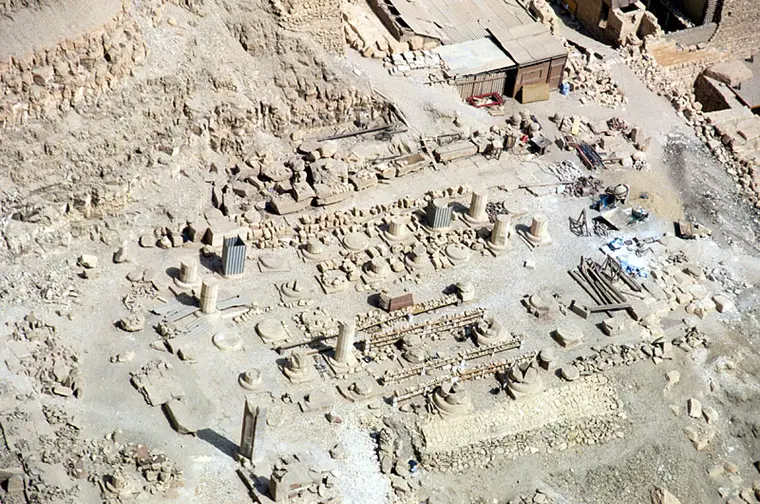
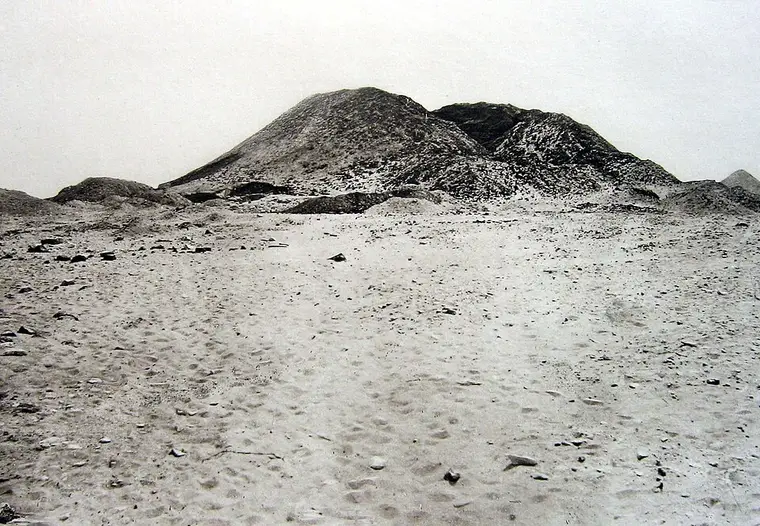
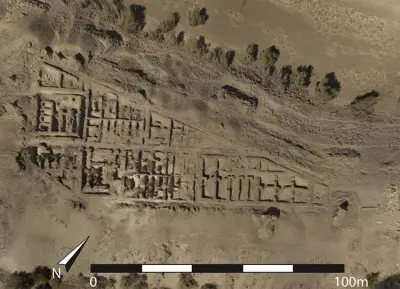
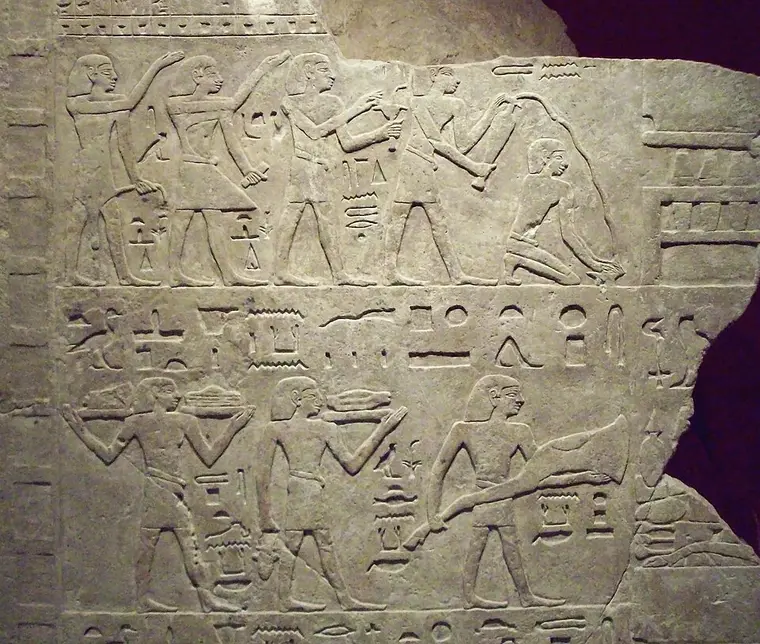
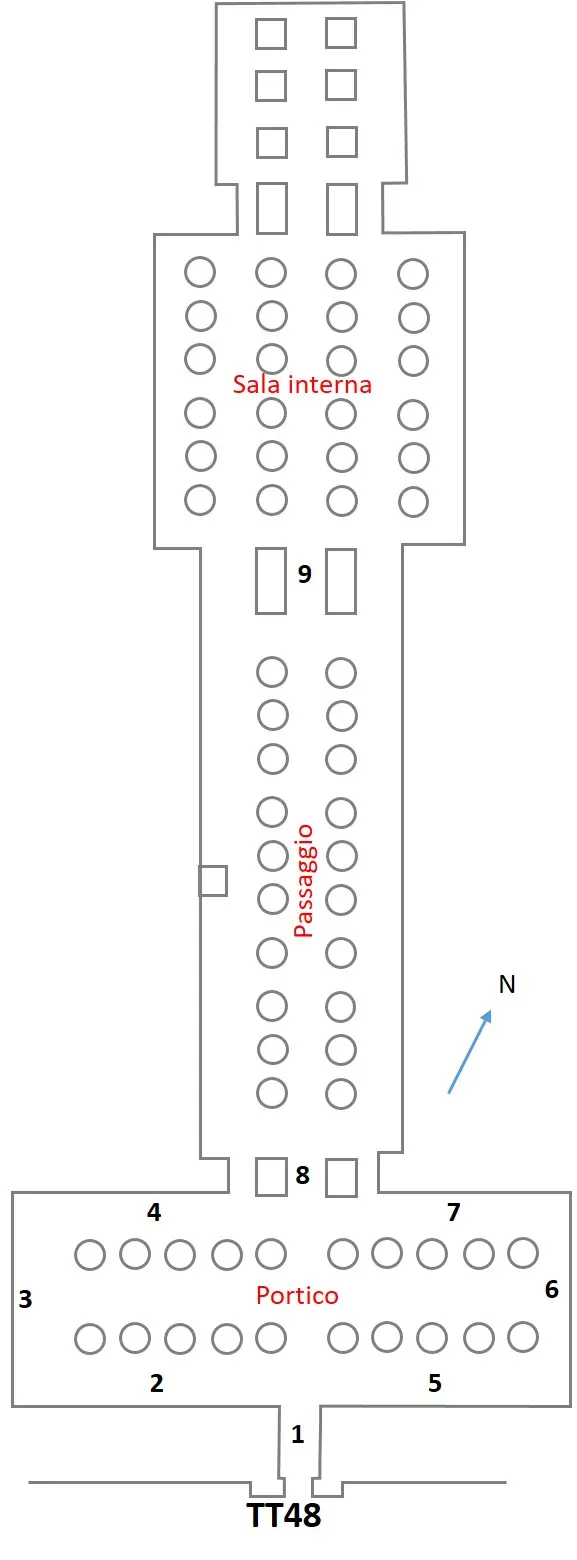
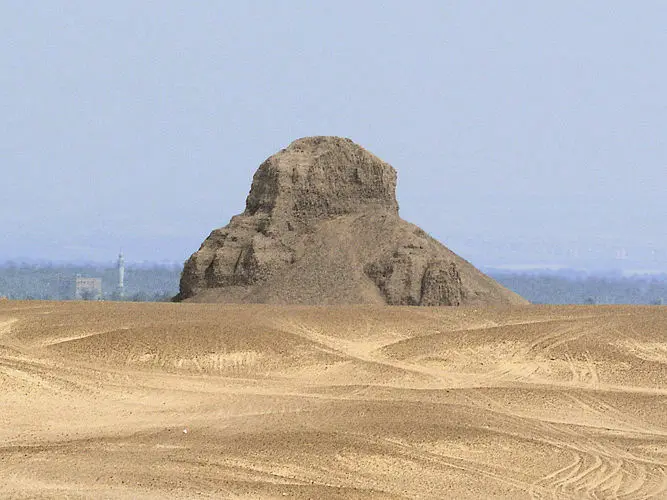
Sources for this chapter (181)Academic31Institution23Specialist book98Reputable web29
Academic(31)
- The Aamu of Shu in the Tomb of Khnumhotep II at Beni Hassan · Journal of Ancient Egyptian Interconnections · 2009
- The Rulers of Foreign Lands - Archaeology Magazine · 2018
- Gee · Overlooked Evidence for Sesostris III's Foreign Policy · Journal of the American Research Center in Egypt · 2004
- Tomb 197 at Abydos, Further Evidence for Long Distance Trade in the Middle Kingdom · Ägypten und Levante / Egypt and the Levant · 2014
- From desert ores to Middle Kingdom copper: elemental and lead isotope data from the RMAH collection, Belgium · Archaeological and Anthropological Sciences · 2021
- Production of arsenical bronze using speiss on the Elephantine Island (Aswan, Egypt) during the Middle Kingdom (Middle Bronze Age) ( c .2000–1650 BCE) · Archaeometry · 2025
- Amenemhet I and the Early Twelfth Dynasty at Thebes · Metropolitan Museum Journal · 1991
- Bell · Climate and the History of Egypt: The Middle Kingdom · Archaeological Institute of America · 1975
- King Nebhepetre Menthuhotep: his monuments, place in history, deification and unusual representations in form of gods · Annales du Service des Antiquités de l'Égypte · 1963
- Notes on the Government of Egypt in the Late Middle Kingdom · Journal of Near Eastern Studies · 1953
- Egyptian Art · The Art Institute of Chicago · 1994
- The Nature and Chronology of the Senwosret III–Amenemhat III Regnal Succession: Some Considerations Based on New Evidence from the Mortuary Temple of Senwosret III at Abydos · Journal of Near Eastern Studies · 1996
- Arnold, Dorothea · Amenemhat I and the Early Twelfth Dynasty at Thebes · The Metropolitan Museum of Art · 1991
- Arnold · Amenemhat I and the Early Twelfth Dynasty at Thebes · Metropolitan Museum Journal · 1991
- A Forgotten Governor Of Elephantine During The Twelfth Dynasty: Ameny · The Egypt Exploration Society · 2015
- Critique of the "Black Pharaohs" Theme: Racist Perspectives of Egyptian and Kushite/Nubian Interactions in Popular Media · African Archaeological Review · 2021
- Ethnicity: Constructions of Self and Other in Ancient Egypt · Journal of Egyptian History · 2018
- The Dark Side of a Model Community: The 'Ghetto' of el-Lahun · The Journal of Ancient Egyptian Architecture
- Zur Chronologie des Mittleren Reiches Teil II: Die sogenannte "Zweite Zwischenzeit" Altägyptens · Gregorian Biblical Press · 1988
- Gauthier · Quelques remarques sur la XIe dynastie. · BIFAO · 1906
- Wegner · The Nature and Chronology of the Senwosret III-Amenemhat III Regnal Succession: Some Considerations Based on New Evidence from the Mortuary Temple of Senwosret III at Abydos · Journal of Near Eastern Studies · 1996
- Simpson · "Sobkemḥēt, a Vizier of Sesostris III." · The Journal of Egyptian Archaeology · 1957
- The Historical Inscription of Khnumhotep at Dahshur: Preliminary Report · Bulletin of the American Schools of Oriental Research · 2008
- Dépôt de stèles dans le sanctuaire du Nouvel Empire au Gebel Zeit [avec 5 planches] · Bulletin de l'Institut français d'archéologie orientale · 1985
- Amenemhat III au ouadi Gaouasis · Bulletin de l'Institut français d'archéologie orientale · 2008
- Contributions à la prospographie du Moyen Empire [1. - Le vizir Imeny. 2. - Quelques anthroponymes d'Edfou du Moyen Empire. 3. - Une stèle d' Elkab] [avec 1 plance] · Bulletin de l'Institut français d'archéologie orientale · 1981
- Amethyst Mining in the Eastern Desert: A Preliminary Survey at Wadi el-Hudi · The Journal of Egyptian Archaeology · 1993
- Notes sur le ouadi Maghara et sa région au Moyen Empire · Bulletin de l'Institut français d'archéologie orientale · 2002
- Notes d'Onomastique Contribution à une Revision du Ranke PN [Dixième Série · Revue d'Égyptologie · 1995
- La stèle CGC 20140 d'Ikhernofret au Grand Musée égyptien GEM:20140 · The Conference Book of the General Union of Arab Archaeologists · 2016
- A Fragment of an Early Book of Two Ways on the Coffin of Ankh from Dayr al-Barshā (B4B) · The Journal of Egyptian Archaeology · 2019
Institution(23)
- Guardian Figure · Metropolitan Museum of Art
- Ancient Egypt Transformed: The Middle Kingdom · Metropolitan Museum of Art · 2015
- Statue of Amenemhat III
- Brief Guide to the Department of Egyptian and Classical Art · Brooklyn Museum · 1974
- Ancient Egyptian Coregencies · The Oriental Institute of the University of Chicago · 1977
- The Dictionary of Ancient Egypt · The British Museum Press · 1995
- History of Parasitology
- Sarcophagus of Henhenet
- Shrine of Henhenet
- Arnold · The Temple of Mentuhotep at Deir el Bahari · New York : Metropolitan Museum of Art, Egyptian Expedition · 1979
- Senusret (III) Khakhaure · Petrie.ucl.ac.uk
- Semna Boundary Stela of Senwosret III · 2025
- Lovejoy, Kaitlin Marie · International Relationship Between Egypt and Nubia Evidenced by the Semna Boundary Stela and Border Fortresses · 2020
- Hymns to king Senusret III
- Arnold · The Pyramid Complex of Senwosret III, Dahshur | Essay | The Metropolitan Museum of Art | Heilbrunn Timeline of Art History · 2004
- Expedition Magazine | Beneath the Mountain-of-Anubis
- The Tomb of Senwosret III at Abydos: Considerations on the Origins and Development of the Royal Amduat Tomb
- Expedition Magazine | Revealing a Hidden Tomb
- The World of Middle Kingdom Egypt (2000–1550 BC) Contributrions on Archaeology, Art, Religion, and Written Sources · Golden House Publications · 2015
- Studies on the Middle Kingdom · Harrasowitz Verlag · 2013
- The Political Situation in Egypt During the Second Intermediate Period, C. 1800-1550 B.C. · Museum Tusculanum Press · 1997
- Recent Discoveries and Latest Researches in Egyptology : Proceedings of the First Neapolitan Congress of Egyptology, Naples, June 18th-20th 2008 · Harassowitz Verlag · 2010
- Stèle de Sasatis · Louvre · 2021
Specialist book(98)
- Schneider · Historiographie in der Antike · Walter de Gruyter · 2008
- Were the Ancient Egyptians Black Or White? · Biblical Archaeology Society · 1989
- Grimal · A History of Ancient Egypt · Librairie Arthéme Fayard · 1988
- A History of Ancient Egypt · Librairie Arthéme Fayard · 1988
- An Introduction to the Archaeology of Ancient Egypt · John Wiley & Sons · 2015
- Egypt, Canaan and Israel: History, Imperialism, Ideology and Literature (Culture and History of the Ancient Near East) · BRILL · 2011
- The Oxford Handbook of the Archaeology of the Levant: c. 8000-332 BCE · Oxford University Press · 2014
- Petrie Museum of Egyptian Archaeology: Characters and Collections · UCL Press · 2015
- Robins · The Art of Ancient Egypt · Harvard University Press · 2008
- Invisible connections: an archaeometallurgical analysis of the Bronze Age metalwork from the Egyptian Museum of the University of Leipzig · Archaeopress Publishing Ltd · 2020
- Aldred · The Egyptians · Thames and Hudson · 1987
- Erman · Ancient Egyptian Literature: A Collection of Poems, Narratives and Manuals of Instructions from the Third and Second Millennia BC · Kegan Paul · 2005
- Foster · Ancient Egyptian Literature: An Anthology · University of Texas Press · 2001
- Gardiner · Egypt of the Pharaohs · Oxford University Press · 1964
- The Middle Kingdom of Ancient Egypt · Gerald Duckworth & Co. Ltd. · 2006
- Parkinson · Poetry and Culture in Middle Kingdom Egypt: A Dark Side to Perfection · Continuum · 2002
- Redford · Egypt, Canaan, and Israel in Ancient Times · Princeton University Press · 1992
- Richards · Society and Death in Ancient Egypt · Cambridge University Press · 2005
- Shaw · The Oxford History of Ancient Egypt · OUP Oxford · 2003
- Simpson · The Literature of Ancient Egypt: An Anthology of Stories, Instructions, and Poetry · Yale University Press · 1972
- Ancient Egypt: A Social History · Cambridge University Press · 1983
- The Oxford History of Ancient Egypt · Oxford University Press · 2000
- Van de Mieroop · A history of ancient Egypt · Wiley-Blackwell · 2011
- Grajetzki · The Middle Kingdom of Ancient Egypt: history, archaeology and society · Bloomsbury Academic · 2024
- Hornung · History of Ancient Egypt: Translated by David Lorton · 1999
- A companion to ancient Egypt · Wiley-Blackwell · 2010
- Litchteim · Ancient Egyptian Literature · University of California Press · 2024
- Kingship, Power, and Legitimacy in Ancient Egypt · Cambridge University Press · 2020
- A. Clayton · Chronicle of the Pharaohs: The Reign-by-Reign Record of the Rulers and Dynasties of Ancient Egypt · Thames & Hudson · 2006
- Bunson · Encyclopedia of Ancient Egypt (Facts on File Library of World History) · Facts on File · 2002
- A. Josephson · Offerings to the Discerning Eye · Brill · 2009
- C. Hayes · The Middle Kingdom in Egypt. Internal History from the Rise of the Heracleopolitans to the Death of Ammenemes III · Cambridge University Press · 1961
- General History of Africa Volume II - Ancient civilizations of Africa (ed. G Moktar) · UNESCO
- Historical Dictionary of Ancient Nubia · Rowman & Littlefield · 2021
- Ancient Egyptian Imperialism · John Wiley & Sons · 2018
- The story of Egypt : the civilization that shaped the world · Pegasus Books · 2017
- Essays in Egyptology in honor of Hans Goedicke · Van Siclen Books · 1994
- Textes de la première période intermédiaire et de la XIème dynastie
- Tyldesley · Chronicle of the Queens of Egypt · Thames & Hudson · 2006
- About the autonomy of the arts of ancient Sudan. In M. Honegger (Ed.), Nubian archaeology in the XXIst Century · Peeters Publishers
- Historical Dictionary of Ancient and Medieval Nubia · Scarecrow Press · 2003
- The Complete Royal Families of Ancient Egypt · Thames & Hudson · 2004
- Roth · Die Königsmütter des Alten Ägypten von der Frühzeit bis zum Ende der 12. Dynastie · Otto Harrassowitz · 2001
- Arnold · Der Tempel des Königs Mentuhotep von Deir el-Bahari · Philipp von Zabern · 1974
- Wendrick · Egyptian Archaeology · Wiley-Blackwell · 2010
- Török · Between Two Worlds: The Frontier Region Between Ancient Nubia and Egypt 3700 BC–500 AD · Brill · 2008
- Callender · The Oxford History of Ancient Egypt
- Arnold · Tombs of the Queens of Mentuhotep · Grimaldi Forum · 2008
- Arnold · The pyramid complex of Senwosret III at Dahshur: architectural studies · Yale university press · 2002
- Ancient Near Eastern Texts Relating to the Old Testament with Supplement · Princeton University Press · 2016
- Egypt, Canaan and Israel: History, Imperialism, Ideology and Literature · BRILL · 2011
- The literature of ancient Egypt: an anthology of stories, instructions, stelae, autobiographies, and poetry · Yale Univ. Pr · 2003
- Tallet · Sésostris III et la fin de la XIIe Dynastie · 2005
- Willems · A companion to Ancient Egypt, volume 1 · Wiley-Blackwell · 2010
- Quirke · Middle Kingdom studies · SIA publ · 1991
- Grajetzki · Court officials of the Egyptian Middle Kingdom · Duckworth · 2009
- Middle Kingdom palace culture and its echoes in the provinces: regional perspectives and realities · Brill · 2021
- Archaism and innovation: studies in the culture of Middle Kingdom Egypt · Dep. of Near Eastern Languages and Civilizations, Yale Univ. [u.a.] · 2009
- Freed · A companion to Ancient Egypt, volume 2 · Wiley-Blackwell · 2010
- Morkot · The Egyptians: An Introduction · Routledge · 2005
- Cimmino · Dizionario delle dinastie faraoniche · Bompiani · 2003
- Wilkinson · The Rise and Fall of Ancient Egypt · Bloomsbury · 2010
- Desert Road Archaeology in Ancient Egypt and Beyond · Heinrich-Barth-Institut · 2013
- Seafaring Expeditions to Punt in the Middle Kingdom · Brill · 2018
- Hydraulics of Open Channel Flow · Elsevier/Butterworth-Heinemann · 2004
- Ancient Egyptian Science: A Source Book · American Philosophical Society · 1989
- Chronicle of the Pharaohs · Thames & Hudson · 1994
- Les inscriptions hiéroglyphiques et hiératiques du Ouâdi Hammâmât · Institut français d'archéologie orientale · 1912
- Catalogue des Monuments et Inscriptions de l'Egypt Antique · Adolphe Holzhausen · 1894
- The discovery of Neferwptah · General Organization for Govt. Print. Offices · 1971
- The Inscriptions of Sinai : Translations and Commentary · Egypt Exploration Society · 1955
- Encyclopedia of the Archaeology of Ancient Egypt · Routledge · 1999
- The Middle Kingdom of Ancient Egypt: History, Archaeology and Society · Duckworth · 2006
- Court Officials of the Egyptian Middle Kingdom · Bloomsbury · 2009
- The Petrie Papyri : Hieratic Papyri from Kahun and Gurob (Principally of the Middle Kingdom) · Bernard Quaritch · 1897
- Felsinschriften aus dem sudanesischen Nubien · Akedemie Verlag · 1989
- Ancient Egyptian Chronology · Brill · 2006
- Ramesside Inscriptions: Historical and Biographical · Blackwell · 1975
- The Oxford Encyclopedia of Ancient Egypt, Volume 2 · Oxford University Press · 2001
- The Complete Pyramids · Thames & Hudson · 2008
- The Oxford Encyclopedia of Ancient Egypt, Volume 1 · Oxford University Press · 2001
- The great name: ancient Egyptian royal titulary · Society of Biblical Literature · 2013
- A Season in Egypt, 1887 · Field & Tuer, "The Leadenhall Press", EC · 1888
- Pharaonic King-lists, Annals, and Day-books · Benben Rubl. · 1986
- Die Königsmütter des Alten Ägypten von der Frühzeit bis zum Ende der 12. Dynastie · Harrassowitz Verlag · 2001
- Pharaonic Inscriptions from the Southern Eastern Desert of Egypt · Eisenbrauns · 2008
- The Amethyst Mining Inscriptions of Wadi el-Hudi Part I : Text · Aris & Phillips · 1980
- Visualizing Coregency. An Exploration of the Link between Royal Image and Co-Rule during the Reign of Senwosret III and Amenemhet III · Brill · 2020
- Beiträge zu den Expeditionen des Mittleren Reiches in die Ost-Wüste · Hildesheim Gerstenberg Verlag · 1981
- The Oxford Encyclopedia of Ancient Egypt, Volume 3 · Oxford University Press · 2001
- Pharaoh's Gateway to Eternity : The Hawara Labyrinth of Amenemhat III · Routledge · 2010
- The Pyramids: The Mystery, Culture and Science of Egypt's Great Monuments · Grove Press · 2001
- Handbuch der ägyptischen Königsnamen · Deutscher Kunstverlag · 1984
- Manetho with an English Translation · Harvard University Press · 1964
- His good name: essays on identity and self-presentation in ancient Egypt in honor of Ronald J. Leprohon · Lockwood Press · 2021
- Sobek of Shedet : The Crocodile God in the Fayyum in the Dynastic Period · Tau Editrice · 2010
- Lichtheim · Ancient Egyptian Literature, vol 1 · University of California Press · 1975
- Goelet · The Egyptian Book of the Dead: The Book of Going Forth by Day · Chronicle Books · 1994
Reputable web(29)
- Pyramid | Grove Art · 2003
- Thebes (i) | Grove Art
- Sarcophagus | Grove Art
- Stele | Grove Art · 2003
- Abydos | Grove Art
- Sphinx | Grove Art · 2003
- Taharqa | Grove Art · 2003
- Parker · The Sothic Dating of the Twelfth and Eighteenth Dynasties · 1977
- Amenemhet I
- Lundström · The Dynasties of Manetho
- Lundström · Turin King List: column 6
- Lundström · Turin King List: column 7
- Ancient Egypt - Dynasty XI
- The Ancient Egypt Site
- Statue of King Mentuhotep II in the Jubilee Garment (c. 2051-2000 B.C.) From Thebes, Deir el-Bahri
- Ancient Egypt and Archaeology Web Site - deir_el_bahri_068
- Sarcophagus of Kawit
- Search results for "osiride statue" - Wikimedia Commons
- Discovery of Bab el-Hosan
- Mentuhotep II, The Gateof the Horseman
- Mark · Senusret III · 2017
- THE STELA OF SEBEK-KHU
- Stelae: Ancient Egypt's Versatile Monumental Form · 2023
- Mortuary Complex of Pharaoh Senwosret III at South Abydos
- Amenemhat IV and Sobeknefru
- 136780: Stele · Universität zu Köln · 2021
- Persons and Names of the Middle Kingdom · Johannes Gutenberg Universität Mainz
- Stèle funéraire : Sésostris III (an 19, soit 1868 av. JC selon l'inscription) · Musée d'Art et d'Histoire de Genève · 2021
- 10 Oldest Religious Texts in the World · 2017
Every ancient date is an estimate. Scholarly chronologies differ by decades, and by more the further back you go, which is why each figure carries a tilde. When a period is published we name the chronology its dates come from.
In this period
In this period
89 minutes in total- 01Introduction1 min read
- 02Political history12 min read
- 03Administration4 min read
- 04Agriculture and climate1 min read
- 05Art6 min read
- 06Technology1 min read
- 07Literature1 min read
- 08Mentuhotep II18 min read
- 09Twelfth Dynasty of Egypt7 min read
- 10Amenemhat III23 min read
- 11Senusret III12 min read
- 12Coffin Texts3 min read