The Second Intermediate Period
~1650 – ~1550 BCEDynasties 13–17
11 chapters · 80 min read · 174 sources
~1650 BCE
Introduction
1 min readThe Second Intermediate Period marks a period when ancient Egypt was divided into smaller dynasties for a second time, dating from 1782 to 1550 BC, between the end of the Middle Kingdom and the start of the New Kingdom.…The Second Intermediate Period marks a period when ancient Egypt was divided into smaller dynasties for a second time, dating from 1782 to 1550 BC, between the end of the Middle Kingdom and the start of the New Kingdom. There is no universal agreement in Egyptology about how to define the period.
It is best known as the period when the Hyksos people of West Asia established the 15th Dynasty and ruled from Avaris, which, according to Manetho's Aegyptiaca, was founded by a king by the name of Salitis. The settling of these people may have occurred peacefully, although Manetho presents the Hyksos as "invaders of an obscure race" who conquered Egypt with brutality.
The Turin King List from the time of Ramesses II remains the primary source for understanding the chronology and political history of the Second Intermediate Period, along with studying the typology of scarabs, beetle-shaped amulets mass-produced in ancient Egypt and often inscribed with the names of rulers.
History
8 min readThe 12th Dynasty of Egypt ended in the late 19th century BC with the death of Queen Sobekneferu. She had no heirs, causing the dynasty to come to an abrupt end, and with it, the most prosperous era of the Middle…Collapse of the Middle Kingdom
The 12th Dynasty of Egypt ended in the late 19th century BC with the death of Queen Sobekneferu. She had no heirs, causing the dynasty to come to an abrupt end, and with it, the most prosperous era of the Middle Kingdom; it was succeeded by the much weaker 13th Dynasty. According to the Byzantine chronicler George Syncellus, all three sources of the translated king list of Africanus, Eusebius, and the Armenian of Eusebius state that the 13th Dynasty had sixty kings that ruled and lived in Dioplus for roughly 453 years. Retaining the seat of the 12th Dynasty, the 13th Dynasty (c. 1773 – 1650 BC) ruled from Itjtawy ("Seizer-of-the-Two-Lands") for most of its existence.
Migration to Thebes
The 13th Dynasty switched to Thebes in the far south possibly in the reign of Merneferre Ay. Daphna Ben Tor believes that this event was triggered by the invasion of the eastern Delta and the Memphite region by Canaanite rulers, who had their own culture, a variant of the contemporary late Palestinian Middle Bronze Age culture of the southern Levant. For some authors, this marks the end of the Middle Kingdom and the beginning of the Second Intermediate Period. This analysis is rejected by Ryholt and Baker however, who note that the stele of Seheqenre Sankhptahi, reigning toward the end of the dynasty, strongly suggests that he reigned over Memphis.
Though the 13th Dynasty may have controlled Upper Egypt, the 14th Dynasty ruled Lower Egypt, and both houses agreed to co-exist allowing trade. Evidently the rulers had trouble with securing power within their territory, being replaced in rapid fashion, but other factors like famine may have played a part. The eventual collapse of the 13th Dynasty became an opening for two smaller dynasties to take control of Egypt.
Transitional period
After allowing discipline at the southern forts to deteriorate, the government of the 13th Dynasty eventually withdrew its garrisons and, not long afterward, the forts were reoccupied by the rising Nubian state of Kush. An independent line of kings created the 14th Dynasty in the western Delta. In the north, Lower Egypt was overrun by the Hyksos, a Semitic people from across the Sinai. According to Manetho, invaders from the east seized Egypt "without striking a blow; and having overpowered the rulers of the land, they then burned our cities ruthlessly, razing to the ground the temples of gods..."
Similar to the First Intermediate Period of Egypt, the Second Intermediate Period was dynamic time in which rule of Egypt was roughly divided between rival power bases in Upper Egypt and Lower Egypt, each controlling a portion of land.
Fourteenth Dynasty
The 13th Dynasty proved unable to hold on to the entire territory of Egypt, and a provincial ruling family, located in the Nile Delta, broke away from the central authority to form the 14th Dynasty (–1650 BC). According to Syncellus, all three sources agree that the 14th Dynasty had seventy-six kings and their court was located in Xois, now modern day Sakha. The precise borders of the 14th Dynasty state are not known, due to the general scarcity of its monuments. In his study of the Second Intermediate Period, Kim Ryholt concludes that the territory directly controlled by the 14th Dynasty roughly consisted of the Nile Delta, with borders located near Athribis in the western Delta and Bubastis in the east. Most modern Egyptologists share the view that Avaris – rather than Xois – was the 14th Dynasty's seat of power.
Contested rulers proposed by Ryholt as the first five rulers of the dynasty are commonly identified as being of Canaanite (Semitic) descent based on their names. His conclusions about their chronological position within the period are contested in Ben Tor's study. Other sources don't refer to the dynasty as foreign or Hyksos and they were not referred to as "rulers of foreign lands" or "shepherd kings" in kings lists. The most attested, non-contested ruler of the dynasty, Nehesy Aasehre, left his name on two monuments at Avaris. His name means "the Nubian". According to Ryholt, he was the son and direct successor of the pharaoh Sheshi with a Nubian Queen named Tati.
The contested rulers (with the translation of their nomens) are:
Fifteenth Dynasty
The kings of the Fifteenth Dynasty are said to have been either Canaanite or Amorite. 17th Dynasty Pharaoh Kamose is known to have referred to Apophis, one of the kings of the 15th dynasty, as ruler of Retjenu (Syria-Palestine). The kings formed "the second Asiatic Kingdom in the Delta" and ruled Lower Egypt from Avaris for a hundred years. In Manethonian tradition, Salitis, described as a Hyksos (ḥḳꜣw-ḫꜣswt, a "shepherd" according to Africanus), is believed to have conquered the entirety of Egypt, but it is more likely that his rule did not extend beyond Lower Egypt. The settling of Levantine populations in Egypt may have occurred peacefully in the wake of the disintegration of the 14th Dynasty. It is believed that Avaris in the Delta was the largest city in the world from 1670 to 1557 BC under the Hyksos, however the kingdom being based in Avaris is now viewed as a secessionist move rather than expansionist. It is still debated if the movement of the Hyksos was a military invasion or a mass migration of Asiatics from Palestine.
The Turin King list indicates that there were six Hyksos kings, with an obscure Khamudi listed as the final king of the 15th Dynasty:
Abydos Dynasty
The Abydos Dynasty (c. 1640 to 1620 BC) may have been a short-lived local dynasty ruling over part of Upper Egypt during the Second Intermediate Period in Ancient Egypt and was contemporary with the 15th and 16th dynasties. The Abydos Dynasty stayed rather small with rulership over just Abydos or Thinis. The dynasty tentatively includes four rulers: Wepwawetemsaf, Pantjeny, Snaaib, and Senebkay. The Abydos Dynasty ceased when the Hyksos expanded into Upper Egypt. A possible graffito of Wepwawetemsaf was discovered by Karl Richard Lepsius in the tomb BH2 of the 12th Dynasty nomarch Amenemhat at Beni Hasan, about 250 km North of Abydos, in Middle Egypt. If the attribution of this graffito is correct and if Wepwawetemsaf did belong to the Abydos Dynasty, then its territory might have extended that far north. Since the dynasty was contemporaneous with the 16th Dynasty, the territory under Abydene control could not have extended farther than Hu, 50 km south of Abydos.
Sixteenth Dynasty
The 16th Dynasty (c. 1650-1580 BC) ruled the Theban region in Upper Egypt. Of the two chief versions of Manetho's Aegyptiaca, the 16th Dynasty is described by the more reliable Africanus (supported by Syncellus) as "shepherd [Hyksos] kings", but by Eusebius as Theban. In his 1997 study of the SIP, the Danish Egyptologist Kim Ryholt argues that the 16th Dynasty was an independent Theban kingdom. From Ryholt's reconstruction of the Turin canon, 15 kings can be associated to the dynasty, several of whom are attested by contemporary sources. While most likely rulers based in Thebes itself, some may have been local rulers from other important Upper Egyptian towns, including Abydos, El Kab and Edfu. By the reign of Nebiriau I, the realm controlled by the 16th Dynasty extended at least as far north as Hu and south to Edfu.
Ryholt gives the list of kings of the 16th Dynasty as shown in the table below. Others, such as Helck, Vandersleyen, Bennett combine some of these rulers with the Seventeenth Dynasty of Egypt. The list of rulers is given here as per Kim Ryholt and is supposedly in chronological order:
The continuing war against the 15th Dynasty dominated the short-lived 16th Dynasty. The armies of the 15th Dynasty continually encroached on 16th Dynasty territory, eventually conquering Thebes itself. Famine, which had plagued Upper Egypt during the late 13th Dynasty and the 14th Dynasty, also blighted the 16th Dynasty, most evidently during and after the reign of Neferhotep III. Sometime around 1580 BC, the 16th Dynasty was subsumed after conflict between Thebes and Avaris.
Seventeenth Dynasty
The 17th Dynasty (c.1571-1540 BC) was established by the Thebans quickly after the fall of the 16th. The borders between the Hyksos and the Egyptians seem to have alternated between Beni Hasan and Asyut. The founder of the dynasty was Rahotep and scholars consider his dynasty to have been native to Egypt. 17th Dynasty kings constructed a palatial complex at Deir el-Ballas, which is thought to have played an important role during the rule, but was later abandoned in the New Kingdom. Five kings are recorded on the Karnak King List, dated to the reign of Thutmose III. Three kings are also listed in the kings scene of TT2, dated to the reign of Ramesses II. More names may have originally appeared in the missing sections of the kings lists. The last two kings of the dynasty opposed the Hyksos rule over Egypt. The 17th Dynasty would see four different ruling families whose last king did not have a male heir to the throne. Subsequently, other powerful families established kings having short reigns. The 17th Dynasty maintained a short-lived peace with the 15th Dynasty, which ended with the start of the reign of Seqenenre (c. 1549-1545 BC), who started a series of wars against the Hyksos and perished in battle. King Kamose (c. 1545-1540 BC) continued the war against the Hyksos as a whole, but his brother Ahmose I would be the king to deal the final blow; he thus became the first king of the New Kingdom 18th Dynasty.
Reunification
At the end of the Second Intermediate period, the 18th Dynasty came to power in Egypt. The first king of the 18th Dynasty, Ahmose, completed the expulsion of the Hyksos from Egypt and consolidated his rule over the land, unifying Upper and Lower Egypt. With that, Ahmose ushered in a new period of prosperity, the New Kingdom.
Art and culture
3 min readIn the Late Middle Kingdom, Tell el-Dab'a became a major harbour for ships and a trading post with connections across the Mediterranean. It became increasingly populated by natives of the Levant, evidenced by changes in…Society
In the Late Middle Kingdom, Tell el-Dab'a became a major harbour for ships and a trading post with connections across the Mediterranean. It became increasingly populated by natives of the Levant, evidenced by changes in ceramics, burial customs, and architecture. Egyptian ethnonyms for Levantines include ꜥꜣmw ('Asiatics'), Jwntj.w ('those with bows'), k3tj.w ('those of the turquoise mining region on the Sinai'), Mnṯw.w ('furious ones(?)'), and Sṯtj.w ('those from the land of Setjet'), though this doesn't reflect their own identity. The exact origin of this Levantine population is debated; it is surmised they are a result of either seaborne immigration from the northern Levant or immigration from the southern Levant across the Sinai. Archaeological evidence from both regions suggests a rapid decline in trade contacts between Egypt and the northern Levant (Byblos), coinciding with the beginning of substantial trade contacts between Egypt and Palestine (southern Levant), sometime in the early 17th century BC. A number of seals found in Palestine attesting to Egyptian pharaohs are completely absent in the northern Levant. Support for the southern Levant shift is evidenced by 2020 analysis on Canaanite pottery from Tell el-Dab'a.
Warfare
A number of advances were introduced into Egypt during the period and thus adapted into the culture of the early New Kingdom, notably the use of horse and chariot and the wielding of the composite bow and the khopesh (sickle sword) in combat. Avaris being credited for the introduction of the horse and chariot is contested, as it is possible it was introduced by the Libyans instead. A team of archaeologists in 2011 uncovered pits containing severed right hands dating back roughly 3,600 years directly in front of the throne room of a Hyksos palace. This practice of taking enemies hands as trophies was named the "gold of honor" ritual and was probably introduced by the Hyksos. Later in Egypt, the ritual appears to have become standard practice.
Art
The arts of the first half of the 13th Dynasty is part of the Middle Kingdom (about 2025-1700 BC). The culture of the latter half of the 13th Dynasty in Upper Egypt exhibits a sharp downward trend, with loss of standard and style notably in orthography when inscribing hieroglyphs. Royal monuments no longer attain a certain level of artistry after the mid-13th Dynasty. Whilst the monuments commissioned by the king remain a relatively high level, the arts of the Second Intermediate Period generally do not reach this level in non-commisioned work again until the New Kingdom. 15th Dynasty rulers reverted to a style of scarab craftmanship common in the 12th Dynasty, though it soon corrupted after this initial ideal with scarabs becoming more degraded and perfunctory than the preceding 14th Dynasty. Archaeological evidence in Egypt indicates large-scale importation of Canaanite scarabs during the Second Intermediate Period. The proliferation of Anra scarabs in Egypt and Nubia was bolstered by the Palestinian market in the Levant, with anra scarabs most frequently found in Palestine (over 80%).
Religion
The Hyksos Rulers (c. 1550 BC), of foreign origin, adopted Egyptian conventions including the assumption of royal titles and prenomens according to custom, hieroglyphic inscriptions, and worship of the Egyptian pantheon. They took Set as their patron deity and it later merged with Ba'al of the Asiatic pantheon, becoming the hybrid deity Seth-Baal over time. By 200 BC, a tradition developed in the Ptolemaic Kingdom that identified Yahweh with Set. King Apophis is recorded as worshiping Set exclusively, as described in this 19th Dynasty passage:
Genetic impact
1 min readGenetic data from mummies of the Third Intermediate Period (787-544 BC), published in 2017 and again analysed in 2025, showed marginal continuity from the Nuwayrat Old Kingdom individual (NUE001) sample, complemented by…Genetic data from mummies of the Third Intermediate Period (787-544 BC), published in 2017 and again analysed in 2025, showed marginal continuity from the Nuwayrat Old Kingdom individual (NUE001) sample, complemented by a significant Levantine ancestry influx. The main ancestry source of the Third Intermediate Period mummies was Bronze Age Levant ancestry, appearing at around 64% in the main model. This phenomenon could have originated in the proposed Bronze Age Canaanite expansion of the end of the Middle Kingdom and the advent of the Second Intermediate Period of Egypt.
A strontium isotope analysis dismissed the Hyksos invasion model in favour of a migration one. Contrary to the model of a foreign invasion, the study didn't find more males moving into the region, but instead found a sex bias towards females, with a high proportion (77%) being non-locals.
Hyksos
34 min readThe Hyksos (; Egyptian ḥqꜣ(w)-ḫꜣswt, Egyptological pronunciation: heqau khasut, ), in modern Egyptology, were the kings of the Fifteenth Dynasty of Egypt (fl. ). Their seat of power was the city of Avaris in the Nile…The Hyksos (; Egyptian ḥqꜣ(w)-ḫꜣswt, Egyptological pronunciation: heqau khasut, ), in modern Egyptology, were the kings of the Fifteenth Dynasty of Egypt (fl. ). Their seat of power was the city of Avaris in the Nile Delta, from where they ruled over Lower Egypt and Middle Egypt up to Cusae.
In the Aegyptiaca, a history of Egypt written by the Greco-Egyptian priest and historian Manetho in the 3rd century BC, the term Hyksos is used ethnically to designate people of probable West Semitic, Levantine origin. While Manetho portrayed the Hyksos as invaders and oppressors, this interpretation is questioned in modern Egyptology. Instead, Hyksos rule might have been preceded by groups of Canaanite peoples who gradually settled in the Nile Delta from the end of the Twelfth Dynasty onwards and who may have seceded from the crumbling and unstable Egyptian control at some point during the Thirteenth Dynasty.
The Hyksos period marks the first in which foreign rulers ruled Egypt. Many details of their rule, such as the true extent of their kingdom and even the names and order of their kings, remain uncertain. The Hyksos practiced many Levantine or Canaanite customs alongside Egyptian ones. They have been credited with introducing several technological innovations to Egypt, such as the horse and chariot, as well as the khopesh (sickle sword) and the composite bow, a theory which is disputed.
The Hyksos did not control all of Egypt. They coexisted with the Sixteenth and Seventeenth Dynasties, which were based in Thebes. Warfare between the Hyksos and the pharaohs of the late Seventeenth Dynasty eventually culminated in the defeat of the Hyksos by Ahmose I, who founded the Eighteenth Dynasty of Egypt. In the following centuries, the Egyptians would portray the Hyksos as bloodthirsty and oppressive foreign rulers.
Name
Etymology
The term "Hyksos" is derived, via the Greek, from the Egyptian expression ( or, "heqau khasut"), meaning "rulers [of] foreign lands". The Greek form is likely a textual corruption of an earlier.
The first century Jewish historian Josephus gives the name as meaning "shepherd kings" or "captive shepherds" in his Contra Apion (Against Apion), where he describes the Hyksos as Jews as they appeared in the Hellenistic Egyptian historian Manetho. "Their race bore the generic name of Hycsos, which means 'king-shepherds'. For hyc in the sacred language denotes 'king' and sos in the common dialect means 'shepherd' or 'shepherds'; the combined words form Hycsos. Some say that they were Arabians."
Josephus's rendition may arise from a later Egyptian pronunciation of as, which was then understood to mean "lord of shepherds." It is unclear if this translation was found in Manetho; an Armenian translation of an epitome of Manetho given by the late antique historian Eusebius gives the correct translation of "foreign kings".
Use
"It is now commonly accepted in academic publications that the term refers only to the individual foreign rulers of the late Second Intermediate Period," especially of the Fifteenth Dynasty, rather than a people. However, Josephus used it as an ethnic term. Its use to refer to the population persists in some academic papers.
In Ancient Egypt, the term "Hyksos" was also used to refer to various Nubian and especially Asiatic rulers both before and after the Fifteenth Dynasty. It was used at least since the Sixth Dynasty of Egypt (c. 2345–2181 BC) to designate chieftains from the Syria-Palestine area. One of its earliest recorded uses is found c. 1900 BC in the tomb of Khnumhotep II of the Twelfth Dynasty to label a nomad or Canaanite ruler named "Abisha the Hyksos" (using the standard, "Heqa-kasut" for "Hyksos").
Based on the use of the name in a Hyksos inscription of Sakir-Har from Avaris, the name was used by the Hyksos as a title for themselves. However, Kim Ryholt argues that "Hyksos" was not an official title of the rulers of the Fifteenth Dynasty, and is never encountered together with royal titulary, only appearing as the title in the case of Sakir-Har. According to Ryholt, "Hyksos" was a generic term encountered separately from royal titulary, and in regnal lists after the end of the Fifteenth Dynasty itself. However, Vera Müller writes: "Considering that S-k-r-h-r is also mentioned with three names of the traditional Egyptian titulary (Horus name, Golden Falcon name and Two Ladies name) on the same monument, this argument is somehow strange." Danielle Candelora and Manfred Bietak also argue that the Hyksos used the title officially. All other texts in the Egyptian language do not call the Hyksos by this name, instead referring to them as Asiatics (ꜥꜣmw), with the possible exception of the Turin King List in a hypothetical reconstruction from a fragment. The title is not attested for the Hyksos king Apepi, possibly indicating an "increased adoption of Egyptian decorum". The names of Hyksos rulers in the Turin list are without the royal cartouche and have the throwstick "foreigners" determinative.
Scarabs also attest the use of this title for pharaohs usually assigned to the Fourteenth or Sixteenth Dynasty of Egypt, who are sometimes called "'lesser' Hyksos." The Theban Seventeenth Dynasty of Egypt is also given the title in some versions of Manetho, a fact which Bietak attributes to textual corruption. In the Twenty-fifth Dynasty of Egypt and during the Ptolemaic Period, the term Hyksos was adopted as a personal title and epithet by several pharaohs or high Egyptian officials, including the Theban official Mentuemhat, Philip III of Macedon, and Ptolemy XIII. It was also used on the tomb of Egyptian grand priest Petosiris at Tuna el-Gebel in 300 BC to designate the Persian ruler Artaxerxes III, although it is unknown if Artaxerxes adopted this title for himself.
Origins
Ancient historians
In his epitome of Manetho, Josephus connected the Hyksos with the Jews, but he also calls them Arabs. In their own epitomes of Manetho, the Late antique historians Sextus Julius Africanus and Eusebius say that the Hyksos came from Phoenicia. Until the excavation and discovery of Tell El-Dab'a (the site of the Hyksos capital Avaris) in 1966, historians relied on these accounts for the Hyksos period.
Modern historians
Material finds at Tell El-Dab'a indicate that the Hyksos originated in the Levant. The Hyksos' personal names indicate that they spoke a Western Semitic language and "may be called for convenience sake Canaanites."
Kamose, the last king of the Theban Seventeenth Dynasty, refers to Apepi as a "Chieftain of Retjenu" in a stela that implies a Levantine background for this Hyksos king. According to Anna-Latifa Mourad, the Egyptian application of the term to the Hyksos could indicate a range of backgrounds, including newly arrived Levantines or people of mixed Levantine-Egyptian origin.
Due to the work of Manfred Bietak, which found similarities in architecture, ceramics and burial practices, scholars currently favor a northern Levantine origin of the Hyksos. Based particularly on temple architecture, Bietak argues for strong parallels between the religious practices of the Hyksos at Avaris with those of the area around Byblos, Ugarit, Alalakh and Tell Brak, defining the "spiritual home" of the Hyksos as "in northernmost Syria and northern Mesopotamia". The connection of the Hyksos to Retjenu also suggests a northern Levantine origin: "Theoretically, it is feasible to deduce that the early Hyksos, as the later Apophis, were of elite ancestry from Rṯnw, a toponym [...] cautiously linked with the Northern Levant and the northern region of the Southern Levant."
Earlier arguments that the Hyksos names might be Hurrian have been rejected, while early-twentieth-century proposals that the Hyksos were Indo-Europeans "fitted European dreams of Indo-European supremacy, now discredited." Some have suggested that Hyksos or a part of them was of Maryannu origins as evident by their use and introduction of chariots and horses into Egypt. However, this theory has also been rejected by modern scholarship.
History
Early contacts between Egypt and the Levant
Historical records suggest that Semitic people and Egyptians had contacts at all periods of Egypt's history. The MacGregor plaque, an early Egyptian tablet dating to 3000 BC records "The first occasion of striking the East", with the picture of Pharaoh Den smiting a Western Asiatic enemy.
During the reign of Senusret II, c. 1890 BC, parties of Western Asiatic foreigners visiting the Pharaoh with gifts are recorded, as in the tomb paintings of 12th-dynasty official Khnumhotep II. These foreigners, possibly Canaanites or nomads, are labelled as Aamu, including the leading man with a Nubian ibex labelled as Abisha the Hyksos (, Heqa-kasut for "Hyksos"), the first known instance of the name "Hyksos".
Soon after, the Sebek-khu Stele, dated to the reign of Senusret III (reign: 1878–1839 BC), records the earliest known Egyptian military campaign in the Levant. The text reads "His Majesty proceeded northward to overthrow the Asiatics. His Majesty reached a foreign country of which the name was Sekmem (...) Then Sekmem fell, together with the wretched Retenu", where Sekmem (s-k-m-m) is thought to be Shechem and "Retenu" or "Retjenu" are associated with ancient Syria.
Background and arrival in Egypt
The only ancient account of the whole Hyksos period is by the Hellenistic Egyptian historian Manetho, who exists only as quoted by others. As recorded by Josephus, Manetho describes the beginning of Hyksos rule thus:
Manetho's invasion narrative is "nowadays rejected by most scholars." It is likely that more recent foreign invasions of Egypt influenced him. Instead, it appears that the establishment of Hyksos rule was mostly peaceful and did not involve an invasion of an entirely foreign population. Archaeology shows a continuous Asiatic presence at Avaris for over 150 years before the beginning of Hyksos rule, with gradual Canaanite settlement beginning there during the Twelfth Dynasty. Strontium isotope analysis of the inhabitants of Middle Kingdom and Second Intermediate Period Avaris also dismissed the invasion model in favor of a migration one. Contrary to the model of a foreign invasion, the study did not find more males moving into the region, but instead found a sex bias towards females, with a high proportion of 77% of females being non-locals.
Manfred Bietak argues that Hyksos "should be understood within a repetitive pattern of the attraction of Egypt for western Asiatic population groups that came in search of a living in the country, especially the Delta, since prehistoric times." He notes that Egypt had long depended on the Levant for expertise in areas of shipbuilding and seafaring, with possible depictions of Asiatic shipbuilders being found from reliefs from the Sixth Dynasty ruler Sahure. The Twelfth Dynasty of Egypt is known to have had many Asiatic immigrants serving as soldiers, household or temple serfs, and various other jobs. Avaris in the Nile Delta attracted many Asiatic immigrants in its role as a hub of international trade and seafaring.
The final powerful pharaoh of the Egyptian Thirteenth Dynasty was Sobekhotep IV, who died around 1725 BC, after which Egypt appears to have splintered into various kingdoms, including one based at Avaris ruled by the Fourteenth Dynasty. Based on their names, this dynasty was already primarily of West Asian origin. After an event in which their palace was burned, the Fourteenth Dynasty would be replaced by the Hyksos Fifteenth Dynasty, which would establish "loose control over northern Egypt by intimidation or force," thus greatly expanding the area under Avaris's control.
Kim Ryholt argues that the Fifteenth Dynasty invaded and displaced the Fourteenth. However, Alexander Ilin-Tomich argues that this is "not sufficiently substantiated." Bietak interprets a stela of Neferhotep III to indicate that Egypt was overrun by roving mercenaries around the time of the Hyksos ascension to power.
Kingdom
The length of time the Hyksos ruled is unclear. The fragmentary Turin King List says that there were six Hyksos kings who collectively ruled 108 years. However, in 2018, Kim Ryholt proposed a new reading of as many as 149 years, while Thomas Schneider proposed a length between 160 and 180 years. In 2024, Manfred Bietak defended the reading of the Turin King List as only showing a reign of 108 years, arguing that the longer reign periods were incompatible with the archaeology of the Hyksos capital, Avaris. Bietak stressed that:
The rule of the Hyksos overlaps with that of the native Egyptian pharaohs of the Sixteenth and Seventeenth Dynasties, better known as the Second Intermediate Period. The area under direct control of the Hyksos was probably limited to the eastern Nile delta. Their capital city was Avaris at a fork on the now-dry Pelusiac branch of the Nile. Memphis may have also been an important administrative center, although the nature of any Hyksos presence there remains unclear.
According to Anna-Latifa Mourad, other sites with likely Levantine populations or strong Levantine connections in the Delta include Tell Farasha and Tell el-Maghud, located between Tell Basta and Avaris, El-Khata'na, southwest of Avaris, and Inshas. The increased prosperity of Avaris may have attracted more Levantines to settle in the eastern Delta. Kom el-Hisn, at the edge of the Western Delta, shows Near Eastern goods but individuals mostly buried in an Egyptian style, which Mourad takes to mean that they were most likely Egyptians heavily influenced by Levantine traditions or, more likely, Egyptianized Levantines. The site of Tell Basta (Bubastis), at the confluence of the Pelusiac and Tanitic branches of the Nile, contains monuments to the Hyksos kings Khyan and Apepi, but little other evidence of Levantine habitation. Tell el-Habwa (Tjaru), located on a branch of the Nile near the Sinai, also shows evidence of non-Egyptian presence. However, most of the population appears to have been Egyptian or Egyptianized Levantines. Tell El-Habwa would have provided Avaris with grain and trade goods.
In the Wadi Tumilat, Tell el-Maskhuta shows a great deal of Levantine pottery and an occupation history closely correlated to the Fifteenth Dynasty, nearby Tell el-Rataba and Tell el-Sahaba show possible Hyksos-style burials and occupation, Tell el-Yahudiyah, located between Memphis and the Wadi Tumilat, contains a large earthwork that the Hyksos may have built, as well as evidence of Levantine burials from as early as the Thirteenth Dynasty, as well as characteristic Hyksos-era pottery known as Tell el-Yahudiyeh Ware The Hyksos settlements in the Wadi Tumilat would have provided access to Sinai, the southern Levant, and possibly the Red Sea.
The sites Tell el-Kabir, Tell Yehud, Tell Fawziya, and Tell Geziret el-Faras are noted by scholars other than Mourad to contain "elements of 'Hyksos culture'", but there is no published archaeological material for them.
The Hyksos claimed to be rulers of both Lower and Upper Egypt; however, their southern border was marked at Hermopolis and Cusae. Some objects might suggest a Hyksos presence in Upper Egypt, but they may have been Theban war booty or attest simply to short-term raids, trade, or diplomatic contact. The nature of Hyksos control over the region of Thebes remains unclear. Most likely Hyksos rule covered the area from Middle Egypt to southern Palestine. Older scholarship believed, due to the distribution of Hyksos goods with the names of Hyksos rulers in places such as Baghdad and Knossos, that Hyksos had ruled a vast empire, but it seems more likely to have been the result of diplomatic gift exchange and far-flung trade networks.
Wars with the Seventeenth Dynasty
The conflict between Thebes and the Hyksos is known exclusively from pro-Theban sources, and it is not easy to construct a chronology. These sources propagandistically portray the conflict as a war of national liberation. This perspective was formerly taken by scholars as well but is no longer thought to be accurate.
Hostilities between the Hyksos and the Theban Seventeenth Dynasty appear to have begun during the reign of Theban king Seqenenra Taa. Seqenenra Taa's mummy shows that he was killed by several blows of an axe to the head, apparently in battle with the Hyksos. It is unclear why hostilities may have started. The much later fragmentary New Kingdom tale The Quarrel of Apophis and Seqenenre blames the Hyksos ruler Apepi/Apophis for initiating the conflict by demanding that Seqenenre Tao remove a pool of hippopotamuses near Thebes. However, this is a satire on the Egyptian story-telling genre of the "king's novel" rather than a historical text. A contemporary inscription at Wadi el Hôl may also refer to hostilities between Seqenenra and Apepi.
Three years later, c. 1542 BC, Seqenenre Tao's successor Kamose initiated a campaign against several cities loyal to the Hyksos, the account of which is preserved on three monumental stelae set up at Karnak. The first of the three, Carnarvon Tablet includes a complaint by Kamose about the divided and occupied state of Egypt:
Following a common literary device, Kamose's advisors are portrayed as trying to dissuade the king, who attacks anyway. He recounts his destruction of the city of Nefrusy as well as several other cities loyal to the Hyksos. On a second stele, Kamose claims to have captured Avaris, but returned to Thebes after capturing a messenger between Apepi and the king of Kush. Kamose appears to have died soon afterward (c. 1540 BC).
Ahmose I continued the war against the Hyksos, most likely conquering Memphis, Tjaru, and Heliopolis early in his reign, the latter two of which are mentioned in an entry of the Rhind mathematical papyrus. Knowledge of Ahmose I's campaigns against the Hyksos mostly comes from the tomb of Ahmose, son of Ebana, who gives a first-person account claiming that Ahmose I sacked Avaris: "Then there was fighting in Egypt to the south of this town [Avaris], and I carried off a man as a living captive. I went down into the water—for he was captured on the city side—and crossed the water carrying him. [...] Then Avaris was despoiled, and I brought spoil from there.
Thomas Schneider places the conquest in year 18 of Ahmose's reign. However, excavations of Tell El-Dab'a (Avaris) show no widespread destruction of the city, which instead seems to have been abandoned by the Hyksos. Manetho, as recorded in Josephus, states that the Hyksos were allowed to leave after concluding a treaty:
Although Manetho indicates that the Hyksos population was expelled to the Levant, there is no archaeological evidence for this, and Manfred Bietak argues based on archaeological finds throughout Egypt that it is likely that numerous Asiatics were resettled in other locations in Egypt as artisans and craftsmen. Many may have remained at Avaris, as pottery and scarabs with typical "Hyksos" forms continued to be produced uninterrupted throughout the Eastern Delta. Canaanite cults also continued to be worshiped at Avaris.
Following the capture of Avaris, Ahmose, son of Ebana, records that Ahmose I captured Sharuhen (possibly Tell el-Ajjul), which some scholars argue was a city in Canaan under Hyksos control.
Rule and administration
Administration
The Hyksos show a mix of Egyptian and Levantine cultural traits. Their rulers adopted the full ancient Egyptian royal titulary and employed Egyptian scribes and officials. They also used Near-Eastern forms of administration, such as employing a chancellor as the head of their administration.
Rulers
The names, the order, length of rule, and even the number of Fifteenth Dynasty rulers are not known with complete certainty. After the end of their rule, the Hyksos kings were not considered legitimate rulers of Egypt and were omitted from most king lists. The fragmentary Turin King List included six Hyksos kings, however only the name of the last, Khamudi, is preserved. Six names are also preserved in the various epitomes of Manetho, however, it is difficult to reconcile the Turin King List and other sources with names known from Manetho, mainly due to the "corrupted name forms" in Manetho. The name Apepi/Apophis appears in multiple sources, however.
Various other archaeological sources also provide names of rulers with the Hyksos title, however, the majority of kings from the second intermediate period are attested once on a single object, with only three exceptions. Ryholt associates two other rulers known from inscriptions with the dynasty, Khyan and Sakir-Har. The name of Khyan's son, Yanassi, is also preserved from Tell El-Dab'a. The two best attested kings are Khyan and Apepi. Scholars generally agree that Apepi and Khamudi are the last two kings of the dynasty, and Apepi is attested as a contemporary of Seventeenth-Dynasty pharaohs Kamose and Ahmose I. Ryholt has proposed that Yanassi did not rule and that Khyan directly preceded Apepi, but most scholars agree that the order of kings is: Khyan, Yanassi, Apepi, Khamudi. There is less agreement on the early rulers. Sakir-Har is proposed by Schneider, Ryholt, and Bietak to have been the first king.
Recently, archaeological finds have suggested that Khyan may have been a contemporary of the Thirteenth Dynasty pharaoh Sobekhotep IV, potentially making him an early rather than a late Hyksos ruler. This has prompted attempts to reconsider the entire chronology of the Hyksos period, which as of 2018 had not yet reached any consensus.
Some kings are attested from either fragments of the Turin King List or from other sources who may have been Hyksos rulers. According to Ryholt, kings Semqen and Aperanat, known from the Turin King List, may have been early Hyksos rulers, however Jürgen von Beckerath assigns these kings to the Sixteenth Dynasty of Egypt. Another king known from scarabs, Sheshi, is believed by many scholars to be a Hyksos king, however Ryholt assigns this king to the Fourteenth Dynasty of Egypt. Manfred Bietak proposes that a king recorded as Yaqub-Har may also have been a Hyksos king of the Fifteenth Dynasty. Bietak suggests that many of the other kings attested on scarabs may have been vassal kings of the Hyksos.
None of the proposed identifications besides of Apepi and Apophis is considered certain.
In Sextus Julius Africanus's epitome of Manetho, the rulers of Sixteenth Dynasty are also identified as "shepherds" (i.e. Hyksos) rulers. Following the work of Ryholt in 1997, most but not all scholars now identify the Sixteenth Dynasty as a native Egyptian dynasty based in Thebes, following Eusebius's epitome of Manetho; this dynasty would be contemporary to the Hyksos.
Diplomacy
The Hyksos engagement in long-distance diplomacy is confirmed by a cuneiform letter discovered in the ruins of Avaris. Hyksos diplomacy with Crete and ancient Near East is also confirmed by the presence of gifts from the Hyksos court in those places. Khyan, one of the Hyksos rulers, is known for his wide-ranging contacts, as objects in his name have been found at Knossos and Hattusha indicating diplomatic contacts with Crete and the Hittites, and a sphinx with his name was bought on the art market at Baghdad and might demonstrate diplomatic contacts with Babylon, possibly with the first Kassites ruler Gandash.
The Theban rulers of the Seventeenth Dynasty are known to have imitated the Hyksos both in their architecture and regnal names. There is evidence of friendly relations between the Hyksos and Thebes, including possibly a marriage alliance, before the reign of the Theban pharaoh Seqenenra Tao.
An intercepted letter between Apepi and the King of Kingdom of Kerma, also called Kush, to the south of Egypt recorded on the Carnarvon Tablet has been interpreted as evidence of an alliance between the Hyksos and Kermans. Intensive contacts between Kerma and the Hyksos are further attested by seals with the names of Asiatic rulers or with designs known from Avaris at Kerma. The troops of Kerma are known to have raided as far north as Elkab according to an inscription of Sobeknakht II. According to his second stele, Kamose was effectively caught between the campaign for the siege of Avaris in the north and the offensive of Kerma in the south; it is unknown whether or not the Kermans and Hyksos were able to combine forces against him. Kamose reports returning "in triumph" to Thebes. Lutz Popko suggests that this "was perhaps a mere tactical retreat to prevent a war on two fronts". Ahmose I was also forced to confront a threat from the Nubians during his siege of Avaris: he was able to stop the forces of Kerma by sending a strong fleet, killing their ruler named A'ata. Ahmose I boasts about these successes on his tomb at Thebes. The Kermans also appear to have provided mercenaries to the Hyksos.
Vassalage
Many scholars have described the Egyptian dynasties contemporary to the Hyksos as "vassal" dynasties, an idea partially derived from the Nineteenth-Dynasty literary text The Quarrel of Apophis and Seqenenre, in which it is said "the entire land paid tribute to him [Apepi], delivering their taxes in full as well as bringing all good produce of Egypt." The belief in Hyksos vassalage was challenged by Ryholt as "a baseless assumption." Roxana Flammini suggests instead that Hyksos exerted influence through (sometimes imposed) personal relationships and gift-giving. Manfred Bietak continues to refer to Hyksos vassals, including minor dynasties of West Semitic rulers in Egypt.
Society and culture
Royal construction and patronage
The Hyksos do not appear to have produced any court art, instead appropriating monuments from earlier dynasties by writing their names on them. Many of these are inscribed with the name of King Khyan. A large palace at Avaris has been uncovered, built in the Levantine rather than the Egyptian style, most likely by Khyan. King Apepi is known to have patronized Egyptian scribal culture, commissioning the copying of the Rhind Mathematical Papyrus. The stories preserved in the Westcar Papyrus may also date from his reign.
The so-called "Hyksos sphinxes" or "Tanite sphinxes" are a group of royal sphinxes depicting the earlier pharaoh Amenemhat III (Twelfth Dynasty) with some unusual traits compared to conventional statuary, for example prominent cheekbones and the thick mane of a lion, instead of the traditional nemes headcloth. The name "Hyksos sphinxes" was given due to the fact that these were later reinscribed by several of the Hyksos kings, and were initially thought to represent the Hyksos kings themselves. Nineteenth-century scholars attempted to use the statues' features to assign a racial origin to the Hyksos. These Sphinxes were seized by the Hyksos from cities of the Middle Kingdom and then transported to their capital Avaris where they were reinscribed with the names of their new owners and adorned their palace. Seven of those sphinxes are known, all from Tanis, and now mostly located in the Cairo Museum. Other statues of Amenehat III were found in Tanis and are associated with the Hyksos in the same manner.
Burial practices
Evidence for distinct Hyksos burial practices in the archaeological record include burying their dead within settlements rather than outside them like the Egyptians. While some of the tombs include Egyptian-style chapels, they also include burials of young females, probably sacrifices, placed in front of the tomb chamber. There are also no surviving Hyksos funeral monuments in the desert in the Egyptian style, though these may have been destroyed. The Hyksos also interred infants who died in imported Canaanite amphorae. The Hyksos also practiced the burial of horses and other equids, likely a composite custom of the Egyptian association of the god Set with the donkey and near-eastern notions of equids as representing status.
Technology
The Hyksos use of horse burials suggest that the Hyksos introduced both the horse and the chariot to Egypt, however no archaeological, pictorial, or textual evidence exists that the Hyksos possessed chariots, which are first mentioned as ridden by the Egyptians in warfare against them by Ahmose, son of Ebana, at the close of Hyksos rule. In any case, it does not appear that chariots played any large role in the Hyksos rise to power or their expulsion. Josef Wegner further argues that horse-riding may have been present in Egypt as early as the late Middle Kingdom, prior to the adoption of chariot technology.
Traditionally, the Hyksos have also been credited with introducing a number of other military innovations, such as the sickle-sword and composite bow; however, "[t]o what extent the kingdom of Avaris should be credited for these innovations is debatable," with scholarly opinion currently divided. It is also possible that the Hyksos introduced more advanced bronze working techniques, though this is inconclusive. They may have worn full-body armor, whereas the Egyptians did not wear armor or helmets until the New Kingdom.
The Hyksos also introduced better weaving techniques and new musical instruments to Egypt. They introduced improvements in viniculture as well.
Trade and economy
The early period of Hyksos presence established their capital of Avaris "as the commercial capital of the Delta". The trading relations of the Hyksos were mainly with Canaan and Cyprus. Trade with Canaan is said to have been "intensive", especially with many imports of Canaanite wares, and may have reflected the Canaanite origins of the dynasty. Trade was mostly with the cities of the northern Levant, but connections with the southern Levant also developed. Additionally, trade was conducted with Faiyum, Memphis, oases in Egypt, Nubia, and Mesopotamia. Trade relations with Cyprus were also very important, particularly at the end of the Hyksos period. Aaron Burke has interpreted the equid burials in Avaris of evidence that the people buried with them were involved in the caravan trade. Anna-Latifa Mourad argues that "Hyksos were particularly interested in opening new avenues of trade, securing strategic posts in the eastern Delta that could give access to land-based and sea-based trade routes." These include the apparent Hyksos settlements of Tell el-Habwa I and Tell el-Maskhuta in the eastern Delta.
According to the Kamose stelae, the Hyksos imported "chariots and horses, ships, timber, gold, lapis lazuli, silver, turquoise, bronze, axes without number, oil, incense, fat and honey". The Hyksos also exported large quantities of material looted from southern Egypt, especially Egyptian sculptures, to the areas of Canaan and Syria. These transfers of Egyptian artifacts to the Near East may especially be attributed to king Apepi. The Hyksos also produced local, Levantine-influenced industries, such as Tell el-Yahudiyeh Ware.
There is little evidence of trade between Upper and Lower Egypt during the Hyksos period, and Manfred Bietak proposes that there was "a mutual trade boycott". Bietak proposes that this decreased the Hyksos ability to trade with the Mediterranean and weakened their economy.
Religion
Temples in Avaris existed both in Egyptian and Levantine style, the latter presumably for Levantine gods. The Hyksos are known to have worshiped the Canaanite storm god Baal, who was associated with the Egyptian god Set. Set appears to have been the patron god of Avaris as early as the Fourteenth Dynasty. Hyksos iconography of their kings on some scarabs shows a mixture of Egyptian pharaonic dress with a raised club, the iconography of Baal. Despite later sources claiming the Hyksos were opposed to the worship of other gods, votive objects given by Hyksos rulers to gods such as Ra, Hathor, Sobek, and Wadjet have also survived.
Genetic impact
Genetic data from mummies of the Third Intermediate Period (787-544 BCE), published in 2017 and again analyzed in 2025, showed marginal continuity from the Nuwayrat Old Kingdom individual (NUE001) sample, complemented by a significant Levantine ancestry influx. The main ancestry source of the Third Intermediate Period mummies was Bronze Age Levant ancestry, appearing at around 64% in the main model (P=0.32). The best-fit three-source model showed 46% for Levantine, 18% for Mesopotamian, and 36% for Moroccan-type ancestry (P=0.24). This shift towards majoritary Levantine ancestry could have originated in the proposed Bronze Age Canaanite expansion of the end of the Middle Kingdom and the advent of the Second Intermediate Period of Egypt, associated with the rise of the Hyksos and the Late Bronze Age collapse.
A study of dental traits by Nina Maaranen and Sonia Zakrzewski in 2021 on 90 people of Avaris indicated that individuals defined as locals and non-locals were not ancestrally different from one another. The results were in line with the archaeological evidence, suggesting Avaris was an important hub in the Middle Bronze Age eastern Mediterranean trade network, welcoming people from beyond its borders.
Potential biblical connections
In the Manethonian–Josephus tradition
Josephus, and most of the writers of antiquity, associated the Hyksos with the Jews. Quoting from Manetho's Aegyptiaca, Josephus states that when the Hyksos were expelled from Egypt, they founded Jerusalem (Contra Apion I.90). It is unclear if this is original to Manetho or Josephus's own addition, as Manetho does not mention "Jews" or "Hebrews" in his preserved account of the expulsion. Josephus's account of Manetho connects the expulsion of the Hyksos to another event two hundred years later, in which a group of lepers led by the priest Osarseph were expelled from Egypt to the abandoned Avaris. There they ally with the Hyksos and rule over Egypt for thirteen years before being driven out, during which time they oppress the Egyptians and destroy their temples. After the expulsion, Osarseph changes his name to Moses (Contra Apion I.227-250). Assmann argues that this second account is largely a mixture of the experiences of the later Amarna period with the Hyksos invasion, with Osarseph likely standing in for Akhenaten. The final mention of Osarseph, in which he changes his name to Moses, may be a later interpolation. The second account is sometimes held not to have been written by Manetho at all.
In modern scholarship
The majority of modern scholars do not believe that the Egyptian story elements in the Bible can be demonstrated with historical methods. However, some scholars have attempted to tie the narratives of the Hyksos period to the exodus period.
Scholars such as Jan Assmann and Donald Redford, for instance, have suggested that the story of the biblical exodus may have been wholly or partially inspired by the expulsion of the Hyksos. Archaeologists Israel Finkelstein and Neil Asher Silberman argue that the exodus narrative perhaps evolved from vague memories of the Hyksos expulsion, spun to encourage resistance to the 7th century domination of Judah by Egypt. An identification with the Hyksos would only depart minimally from accepted biblical chronology, and their expulsion is the only known large-scale expulsion of Asiatics from a location in Egypt. Other scholars, such with Manfred Bietak, have pointed out several problems with such theories, including the conflict between the portrayal of the Hyksos as a ruling elite with a background in trade and seafaring and the biblical portrayal of the Israelites as oppressed in Egypt.
John Bright states that Egyptian and Biblical records both suggest that Semitic people maintained access to Egypt at all periods of Egypt's history, and he suggested that it is tempting to suppose that Joseph who, according to the Old Testament (Genesis 39:50), was in favour at the Egyptian court and held high administrative positions next to the ruler of the land, was associated to the Hyksos rule in Egypt during the Fifteenth Dynasty. Such a connection might have been facilitated by their shared Semitic ethnicity. He also wrote that there is no proof for these events. Howard Vos has suggested that the "coat of many colors" said to have been worn by Joseph could be similar to the colorful garments seen in the painting of foreigners in the tomb of Khnumhotep II.
Ronald B. Geobey notes a number of problems with identifying the narrative of Joseph with events either prior to or during the Hyksos' rule, such as the detail that the Egyptians abhorred Joseph's people ("shepherds"; Gen. 46:31) and numerous anachronisms. Manfred Bietak suggests that the story fits better with the ambience of the later Twentieth Dynasty of Egypt, in particular with the xenophobic policy of pharaoh Setnakhte (1189–1186 BC). And Donald Redford argues that "to read [the Joseph story] as history is quite wrongheaded," while Megan Bishop Moore and Brad E. Kelle note the lack of any extra-biblical evidence for the events of Genesis, including the Joseph story, or Exodus.
A number of scholars do not believe that the exodus has any historical basis at all, while only scholars "on the fundamentalist fringe" accept the entire biblical account "unless [it] can be absolutely disproved". The current consensus among archaeologists is that, if an Israelite exodus from Egypt occurred, it must have happened instead in the Nineteenth Dynasty of Egypt (13th century BC), given the first appearance of a distinctive Israelite culture in the archaeological record. The potential connection of the Hyksos to the exodus is no longer a central focus of scholarly study of the Hyksos, but this supposed connection to the Exodus has continued to inspire popular interest.
Legacy
The Hyksos' rule continued to be condemned by New Kingdom pharaohs such as Hatshepsut, who, 80 years after their defeat, claimed to rebuild many shrines and temples which they had neglected.
Ramses II moved Egypt's capital to the Delta, building Pi-Ramesses near the site of Avaris, where he set up a stela marking the 400th anniversary of the cult of Set. Scholars used to suggest that this marked 400 years since the Hyksos had established their rule, however the lists of Ramesses' ancestors continued to omit the Hyksos and there is no evidence that they were honored during his reign. The Turin King List, which includes the Hyksos and all other disputed or disgraced former rulers of Egypt, appears to date from the reign of Ramesses or one of his successors. The Hyksos are marked as foreign kings via a throw-stick determinative rather than a divine determinative after their names, and the use of the title rather than the usual royal title. Kim Ryholt notes that these measures are unique to the Hyksos rulers and "may therefore have been a direct result of what seems to have been deliberate attempt to obliterate the memory of their kingship after their defeat."
Egyptian presence in the Levant
It is "often accepted" that Egypt established an empire in Canaan at the end of the wars against the Hyksos. Campaigns against locations in Canaan and Syria were conducted by Ahmose I and Thutmose I at the beginning of the Eighteenth Dynasty, as recorded in the tombs of Ahmose, son of Ebana and Ahmose pen-Nekhebet; Thutmose I is also mentioned as having hunted elephants in Syria in inscriptions at the temple of Hatshepsut at Deir el-Bahari. Thutmose III is known to have campaigned widely, conquering the "Shasu" Bedouins of northern Canaan, and the land of Retjenu, as far as Syria and Mittani in numerous military campaigns circa 1450 BC. However, Felix Höflmayer argues that there is little evidence of other campaigns and that "there is no evidence that would suggest such a scenario" as an Egyptian empire during the Eighteenth Dynasty. As regards claims that the campaigns in the Near East were spurred on by Hyksos rule, Thomas Schneider argues that "the empire building started with a delay of two generations and seeing a direct nexus may be as much a historical fallacy as it would be to link the fall of the Soviet Union in [1991] to the end of the Second World War in 1945, two generations earlier."
Later accounts
The Nineteenth-Dynasty story The Quarrel of Apophis and Seqenenre claimed that the Hyksos worshiped no god but Set, making the conflict into one between Ra, the patron of Thebes, and Set as patron of Avaris. Furthermore, the battle with the Hyksos was interpreted in light of the mythical battle between the gods Horus and Set, transforming Set into an Asiatic deity while also allowing for the integration of Asiatics into Egyptian society.
Manetho's portrayal of the Hyksos, written nearly 1300 years after the end of Hyksos rule and found in Josephus, is even more negative than the New Kingdom sources. This account portrayed the Hyksos "as violent conquerors and oppressors of Egypt" has been highly influential for perceptions of the Hyksos until modern times. Marc van de Mieroop argues that Josephus's portrayal of the initial Hyksos invasion is no more trustworthy than his later claims that they were related to the Exodus, supposedly portrayed in Manetho as performed by a band of lepers.
Early modern depictions
The discovery of the Hyksos in the 19th century, and their study following the decipherment of ancient Egyptian scripts, led to various theories about their history, origin, ethnicity and appearance, often illustrated with picturesque and imaginative details.
Sixteenth Dynasty of Egypt
4 min readThe Sixteenth Dynasty of ancient Egypt (notated Dynasty XVI) was a dynasty of rulers that ruled the Theban region in Upper Egypt for around 67 years.The Sixteenth Dynasty of ancient Egypt (notated Dynasty XVI) was a dynasty of rulers that ruled the Theban region in Upper Egypt for around 67 years.
This dynasty, together with the 15th and 17th dynasties, are often combined under the group title, Second Intermediate Period (c. 1650–1550 BC), a period that saw the division of Upper and Lower Egypt between the kings at Thebes and the Hyksos kings of the 15th Dynasty based at Avaris.
Identification
Of the two chief versions of Manetho's Aegyptiaca, the 16th Dynasty is described by the more reliable Africanus (supported by Syncellus) as "shepherd [hyksos] kings", but by Eusebius as Theban.
Ryholt (1997), followed by Bourriau (2003), in reconstructing the Turin canon, interpreted a list of Thebes-based kings to constitute Manetho's 16th Dynasty, although this is one of Ryholt's "most debatable and far-reaching" conclusions. For this reason other scholars do not follow Ryholt and see only insufficient evidence for the interpretation of the 16th Dynasty as Theban.
History
The continuing war against 15th Dynasty dominated the short-lived 16th Dynasty. The armies of the 15th Dynasty, winning town after town from their southern enemies, continually encroached on the 16th Dynasty territory, eventually threatening and then conquering Thebes itself. In his study of the Second Intermediate Period, the Egyptologist Kim Ryholt has suggested that Dedumose I sued for a truce in the latter years of the dynasty, but one of his predecessors, Nebiryraw I, may have been more successful and seems to have enjoyed a period of peace in his reign.
Famine, which had plagued Upper Egypt during the late 13th Dynasty and the 14th Dynasty, also blighted the 16th Dynasty, most evidently during and after the reign of Neferhotep III.
Kings
Various chronological orderings and lists of kings have been proposed by scholars for this dynasty. These lists fall broadly in two categories: those assuming that the 16th Dynasty comprised vassals of the Hyksos, as advocated by Jürgen von Beckerath and Wolfgang Helck; and those assuming that the 16th Dynasty was an independent Theban kingdom, as recently proposed by Kim Ryholt.
As vassals of the Hyksos
The traditional list of rulers of the 16th Dynasty regroups kings believed to be vassals of the Hyksos, some of which have semitic names such as Semqen and Anat-her. The list of kings differs from scholar to scholar and it is here given as per Jürgen von Beckerath's Dynasty XV/XVI in his Handbuch der ägyptischen Königsnamen. Wolfgang Helck, who also believes that the 16th Dynasty was an Hyksos vassal state, proposed a slightly different list of kings. Many of the rulers listed here in the 16th Dynasty under the hypothesis that they were vassals of the Hyksos are put in the 14th Dynasty in the hypothesis that the 16th Dynasty was an independent Theban kingdom. The chronological ordering is largely uncertain.
As an independent Theban Kingdom
In his 1997 study of the Second Intermediate Period, the Danish Egyptologist Kim Ryholt argues that the 16th Dynasty was an independent Theban kingdom. From Ryholt's reconstruction of the Turin canon, 15 kings can be associated to the dynasty, several of whom are attested by contemporary sources. While most likely rulers based in Thebes itself, some may have been local rulers from other important Upper Egyptian towns, including Abydos, El Kab and Edfu. By the reign of Nebiriau I, the realm controlled by the 16th Dynasty extended at least as far north as Hu and south to Edfu. Not listed in the Turin canon (after Ryholt) is Wepwawetemsaf, who left a stele at Abydos and was likely a local kinglet of the Abydos Dynasty.
Ryholt gives the list of kings of the 16th Dynasty as shown in the table below. Others, such as Helck, Vandersleyen, Bennett combine some of these rulers with the 17th Dynasty of Egypt. The list of rulers is given here as per Kim Ryholt and is supposedly in chronological order:
Additional kings are classified as belonging to this dynasty per Kim Ryholt but their chronological position is uncertain. They may correspond to the last five lost kings on the Turin canon:
Comparison of regnal lists
The 16th dynasty is rarely recorded on surviving king lists due to the period between the end of the Middle Kingdom and the beginning of the New Kingdom being skipped over on most lists. The Turin King List originally included a list of fifteen kings with individual reign lengths, however the papyrus is now in a fragmentary state and much of the information is now lost. Manetho's Aegyptiaca would have originally contained information on this dynasty but the work as a whole is now lost, and portions of the king list only exist in quotations. According to the version of Aegyptiaca quoted by Sextus Julius Africanus, the 16th dynasty was made up of "32 shepherd kings for 518 years" while the version quoted by Eusebius stated the dynasty had "5 kings of Thebes for 190 years".
The Karnak King List included some names of kings from this dynasty, but the list itself is in a fragmentary condition, and the names on the original list were not placed in regnal order.
~1580 BCE
Seventeenth Dynasty of Egypt
3 min readThe Seventeenth Dynasty of Egypt (notated Dynasty XVII, alternatively 17th Dynasty or Dynasty 17) was a dynasty of rulers in Upper Egypt during the late Second Intermediate Period, from around from 1580 to 1550 BC. Its…The Seventeenth Dynasty of Egypt (notated Dynasty XVII, alternatively 17th Dynasty or Dynasty 17) was a dynasty of rulers in Upper Egypt during the late Second Intermediate Period, from around from 1580 to 1550 BC. Its mainly Theban rulers are contemporary with the Hyksos of the 15th Dynasty and succeed the 16th Dynasty, which was also based in Thebes. The chronology of the 17th dynasty is very uncertain and the king lists provide little help.
The last two kings of the dynasty opposed the Hyksos rule over Egypt and initiated a war that would rid Egypt of the Hyksos kings and began a period of unified rule, the New Kingdom of Egypt. Kamose, the second son of Tao and last king of the 17th Dynasty, was the brother of Ahmose I, the first king of the 18th Dynasty.
Origins
The founder of the dynasty was Rahotep and most scholars consider his dynasty to have been native to Egypt.
Some scholars have suggested that the 17th dynasty of Egypt had Nubian ancestry due to the expanded presence of Nubians in Egypt during that time period and the craniofacial evidence from X-ray examination ofTao who displayed strong affinities with contemporary Nubians. Donald Redford explicitly argues that Egyptians "entered into the service of the king of Kush" between the 17th and 16th centuries BC, citing historical texts along with archaeological evidence that showed an increased Nubian presence from the third Cataract on the Nile as far north as Deir Rifeh. Redford summarises that a shared "community of interest" existed which coincided with the influx of Nubian pottery and weapons in Upper Egypt.
War with the Hyksos
While under the Hyksos rule, the kings of the 17th dynasty revived the cult of Osiris, they rebuilt temples, and they established military control over the religious site, Abdju. This was the beginning of their campaign for reunification.
The first wave of attacks launched toward the southern flank was led by King Tao, who was killed in the battle. His son, Kamose, succeeded him as the leader. After securing the southern flank, Kamose took to the North to fight more of the Hyksos. Despite little sustained opposition, he failed to take more land in the north and died suddenly after just 2 years at the throne. He left no sons behind to succeed him and his brother, Ahmose I, came to power at around 10 years old.
The nationalists in the North had weakened the Hyksos and could no longer muster a counter-attack. Around 1559 BC, led by an old enough to fight Ahmose I, they conquered the city of Memphis. Then, with naval support, conquered Hutwaret. They then followed the Hyksos to Sharuhen, a major center of Hyksos power, and laid siege to it for 3 years. After intimidating the surrounding areas, they had won the war. Being in the middle, the people of Thebes and Upper Egypt were had less influence and were politically "independent". They maintained mostly peaceful relationships with the Nubians and Hyksos, restoring unity to Upper and Lower Egypt. Beginning The New Kingdom of Egypt.
Comparison of regnal lists
This dynasty does not appear often on surviving Egyptian king lists, however five kings are recorded on the Karnak King List, dated to the reign of Thutmose III. Three kings are also listed in the kings scene of TT2, dated to the reign of Ramesses II. More names may have originally appeared in the missing sections of the kings lists.
The dynasty likely appeared on the Turin King List but the section containing the dynasty is heavily fragmented and very little survives. There were originally sixteen kings named after the Sixteenth Dynasty, but it is unknown if all of these kings were indeed part of the seventeenth dynasty, and one of the two first kings may have been Senebkay, who may have been part of a completely different dynasty.
~1560 BCE
Seqenenre Tao
6 min readThe dates of his reign are uncertain, but he may have risen to power in the decade ending in 1560 BC or in 1558 BC, based on the probable accession date of his son, Ahmose I, the first ruler of the 18th Dynasty; see…Reign
The dates of his reign are uncertain, but he may have risen to power in the decade ending in 1560 BC or in 1558 BC, based on the probable accession date of his son, Ahmose I, the first ruler of the 18th Dynasty; see Egyptian chronology.
Quarrel of Apophis and Seqenenre
New Kingdom literary tradition states that Tao came into contact with his Hyksos contemporary in the north, Apepi or Apophis. The tradition took the form of a tale, nowadays called "The Quarrel of Apophis and Seqenenre", in which the Hyksos king Apepi sent a messenger to Seqenenre in Thebes to demand that the Theban hippopotamus pool be done away with, for the noise of these beasts was such that he was unable to sleep in far-away Avaris. Perhaps the only historical information that can be gleaned from the tale is that Egypt was a divided land, the area of direct Hyksos control being in the north, but the whole of Egypt paying tribute to the Hyksos kings.
Tao participated in active diplomatic posturing, which went beyond simply exchanging insults with the Asiatic ruler in the North. He seems to have led military skirmishes against the Hyksos and, judging from the vicious head wounds on his mummy in the Egyptian Museum in Cairo, may have died during one of them.
Tao is credited with starting the opening moves in a war of revanchism against Hyksos incursions into Egypt, which saw the country completely liberated during the reign of his son Ahmose I.
His son and successor Kamose, the last ruler of the 17th Dynasty at Thebes, is credited with launching a successful campaign in the Theban war of liberation against the Hyksos, although he is thought to have died in the campaign. His mother, Ahhotep I, is thought to have ruled as regent after the death of Kamose and continued the warfare against the Hyksos until Ahmose I, the second son of Tao and Ahhotep I, was old enough to assume the throne and complete the expulsion of the Hyksos and the unification of Egypt.
Monumental construction
The relatively short length of Tao's reign did not allow for the construction of many monumental structures, but it is known that he had built a new palace made of mud brick at Deir el-Ballas. On an adjacent hillside overlooking the river, the foundations of a building were found that were identified as having been a military observation post.
A relatively large amount of pottery known as Kerma-ware was found at the site, indicating that a large number of Kerma Nubians were resident at the site. It is thought that they were there as allies of the king in his wars against the Hyksos.
Death
Mummy
In the Deir el-Bahri cache, the mummy of Tao was discovered in 1881. Priests had interred his mummy in the cache, along with Ahmose I, Amenhotep I, Thutmose I, Thutmose II, Thutmose III, Ramesses I, Seti I, Ramesses II, and Ramesses IX of the later 18th and 19th Dynasty.
The mummy was unwrapped by Eugène Grébaut when Professor Gaston Maspero resigned his office of directorship on June 5, 1886, and was succeeded in the superintendency of excavations and Egyptian archeology by Grébaut. In the same month, Grébaut began the work of unbandaging the mummy of Tao. The history of Tao's reign and revolt against the Hyksos had been considered legendary, but from the wounds present on the body, it was concluded by Maspero that he had died in battle. During the same season, the mummy of Seti I was unbandaged, and also that of an anonymous prince.
Maspero provides a vivid description of the injury that was done to the pharaoh at his death:
The wound on his forehead was probably caused by a Hyksos axe and his neck wound was probably caused by a dagger while he was prone. There are no wounds on his arms or hands, which suggests he was not able to defend himself.
Until 2009, the main hypotheses had been that he died either in a battle against the Hyksos or was killed while sleeping. A reconstruction of his death by Egyptologist Garry J Shaw and archaeologist and weapons expert Robert Mason suggested a third, which they saw as the likeliest, that Tao was executed by the Hyksos king Apepi. Garry J Shaw also analysed the arguments for the competing hypotheses and other physical, textual and statistical evidence concluding "that the most likely cause of Seqenenre's death is ceremonial execution at the hands of an enemy commander, following a Theban defeat on the battlefield."
His mummy appears to have been hastily embalmed. X-rays that were taken of the mummy in the late 1960s show that no attempt had been made to remove the brain or to add linen inside the cranium or eyes, both normal embalming practices for the time. In the opinion of James Harris and Kent Weeks, who undertook the forensic examination at the time the X-rays were taken, his mummy is the worst preserved of all the royal mummies held at the Egyptian Museum, and they noted that a "foul, oily smell filled the room the moment the case in which his body was exhibited was opened," which is likely due to the poor embalming process and the absence of the use of absorbing natron salts, leaving some bodily fluids in the mummy at the time of burial. Also, Harris and Weeks noted in 1973 that "his entire facial complex, in fact, is so different from other pharaohs (it is closest in fact to his son Ahmose) that he could be fitted more easily into the series of Nubian and Old Kingdom Giza skulls than into that of later Egyptian kings. Various scholars in the past have proposed a Nubian - that is, non-Egyptian-origin - for Seqenenre and his family, and his facial features suggest that this might indeed be true."
He was the earliest royal mummy on display in the revamped Royal Mummies Hall at the Egyptian Museum, Cairo.
In 2021, a CT scan of his mummy revealed that he died in his 40s, possibly on a battlefield, while his deformed hands imply that he was possibly imprisoned with his hands tied, and his facial fractures correlated well with the Hyksos weapons.
In April 2021, his mummy was moved to the National Museum of Egyptian Civilization along with those of 17 other kings and four queens in an event termed the Pharaohs' Golden Parade.
Legacy in modern literature
Seqenenre Tao appears in the historical novel Shadow Hawk by Andre Norton, in which he is murdered by priests allied with the Hyksos. The book focuses on an Egyptian officer leading Nubian troops in the service of the Theban kingdom.
The Hiram Key, a work of non-fiction by Christopher Knight and Robert Lomas, argues that Seqenenre Tao's death formed the basis of the Hiram Abiff legend in Freemasonry; however, this thesis is not widely accepted and the book has been criticized as pseudohistory.
~1550 BCE
Avaris
5 min readAvaris (Egyptian: ḥw.t wꜥr.t, sometimes hut-waret; ; ; ) was the Hyksos capital of Egypt located at the modern site of Tell el-Dab'a in the northeastern region of the Nile Delta. As the main course of the Nile migrated…Avaris (Egyptian: ḥw.t wꜥr.t, sometimes hut-waret; ; ; ) was the Hyksos capital of Egypt located at the modern site of Tell el-Dab'a in the northeastern region of the Nile Delta. As the main course of the Nile migrated eastward, its position at the hub of Egypt's delta emporia made it a major capital suitable for trade. It was occupied from around the 18th century BC until its capture by Ahmose I in the 16th century BC.
Excavations
In 1885, the Swiss Édouard Naville started the first excavations in the area around Tell-el-Daba. Between 1941 and 1942, Labib Habachi, an Egyptian Egyptologist first forwarded the idea that the site could be identified with Avaris. Between 1966 and 1969 and since 1975, the site has been excavated by the Austrian Archaeological Institute. Using radar imaging technology, its scientists could identify in 2010 the outline of the city including streets, houses, a port, and a side arm of the River Nile passing through the city.
The site at Tell el-Dab'a, covering an area of about 2 square kilometers, is in ruins today, but excavations have shown that, at one point, it was a well-developed center of trade with a busy harbour catering to over 300 ships during a trading season. Artifacts excavated at a temple erected in the Hyksos period have produced goods from all over the Aegean world. The temple even has Minoan-like wall paintings that are similar to those found on Crete at the Palace of Knossos. A large mudbrick tomb has also been excavated to the west of the temple, where grave goods, such as copper swords, have been found.
History
Foundation
The site was originally founded by Amenemhat I on the eastern branch of the Nile in the Delta. Its close proximity to Asia made it a popular town for Asiatic immigrants, most of whom were culturally Egyptianized, using Egyptian pottery, but also retained many aspects of their own culture, as can be seen from the various Asiatic burials including weapons of Levantine origin. One palatial district appears to have been abandoned as a result of an epidemic during the Thirteenth Dynasty.
Hyksos conquest
In the 18th century BC, the Hyksos conquered Lower Egypt and set up Avaris as their capital. Kamose, the last pharaoh of the Seventeenth Dynasty, besieged Avaris but was unable to defeat the Hyksos there.
Recapture by Egyptians
Ahmose I captured Avaris and overran the Hyksos. Canaanite-style artifacts dated to the Tuthmosid or New Kingdom period suggest that a large part of the city's Semitic population remained in residence following its reconquest by the Egyptians.
The pharaohs of the Eighteenth Dynasty set up a capital in Thebes and the palatial complex at Avaris was briefly abandoned, but areas such as the Temple of Seth and G6 region remained continuously occupied. It appears as well, that the site of Avaris had gone through a hiatus ceasing to be a political centre, dated after the time of Amenhotep II and until the late 18th dynasty.
Ramesside period
After Ramesses II constructed the city of Pi-Ramesses roughly to the north, Avaris was superseded by Pi-Ramesses. Parts of the former site of Avaris were used by the inhabitants of Pi-Ramesses as a cemetery and burial ground, and a large portion of it was used as a major navy base, while the "Harbor of Avaris" toponym continued to be used for Avaris' harbor through the Ramesside period. The newly constructed city served as a key administrative and military seat of governance.
The name "Avaris" is also referred to in Papyrus Sallier I in the late 13th century BC. In addition, the "Avaris" toponym is also known to Manetho in the 3rd century BC, quoted by Josephus in his Against Apion 1.14.
Urban chronology
Amenemhet I (12th dynasty) planned a settlement, called Hutwaret located in the 19th Nome, circa 1930 BC. It was a small Egyptian town until about 1830 BC when it began to grow by immigration of Canaanites (Levant Middle Bronze Age IIA) By 1800 BC it was a much larger trade colony under Egyptian control. Over the next 100 years immigration increased the size of the city. Scarabs with the name "Retjenu" have been found in Avaris, also dating to the 12th Dynasty (1991-1802 BCE). At about 1780 a temple to Set was built. The Canaanites living at Avaris considered the Egyptian god Set to be the Canaanite god Hadad. Both were weather gods. Around 1700 BC a temple district to the Canaanite Asherah and the Egyptian Hathor was built in the eastern part of the city. From 1700 onward, social stratification begins and an elite arise. In 1650 the Hyksos arrive and the city grows to 250 ha. It is believed that Avaris was the largest city in the world from 1670 to 1557 BC. A large citadel was built around 1550.
Minoan connection
Avaris, along with Tel Kabri in Israel and Alalakh in Syria, also has a record of Minoan civilization, which is otherwise quite rare in the Levant. Manfred Bietak, an Austrian archaeologist and excavator of Tell Dab'a, has speculated that there was close contact between the rulers of Avaris and the Minoans, and that the large building featuring frescoes allowed the Minoans to maintain a ritual life in Egypt. French archaeologist Yves Duhoux proposed the existence of a Minoan 'colony' on an island in the Nile Delta.
~1540 BCE
Kamose
10 min readKamose (died 1550 BC) was the last king of the Theban 17th Dynasty at the end of the Second Intermediate Period. Kamose is usually ascribed a reign of three years (his highest attested regnal year), although some…Kamose (died 1550 BC) was the last king of the Theban 17th Dynasty at the end of the Second Intermediate Period. Kamose is usually ascribed a reign of three years (his highest attested regnal year), although some scholars now favor giving him a longer reign of approximately five years. His prenomen or royal name was 'Wadjkheperre.'
He was the son of Tao and the brother of Ahmose I, founder of the 18th Dynasty. His mother is unknown, but is thought to be Ahhotep I. His reign is important for the decisive military initiatives he took against the Hyksos, who had come to rule much of Ancient Egypt. His father had begun the initiatives and lost his life in battle with the Hyksos. It is thought that his mother, as regent, continued the campaigns after the death of Kamose, and that his brother made the final conquest of them and united all of Egypt.
Campaigns
Casus Belli
Kamose was the final king in a succession of native Egyptian kings at Thebes. Originally, the Theban 17th dynasty rulers were at peace with Hyksos to their north prior to the reign of Tao. They controlled Upper Egypt up to Elephantine and ruled Middle Egypt as far north as Cusae. Kamose sought to extend his rule northward over all of Lower Egypt. This apparently was met with much opposition by his courtiers. It appears that at some point, these princes in Thebes had achieved a practical modus vivendi with the later Hyksos rulers, which included transit rights through Hyksos-controlled Middle and Lower Egypt and pasturage rights in the fertile Delta. Kamose's records on the Carnarvon Tablet (in the text also parallelled in the Thebes stelae of Kamose) relate the misgivings of this king's council to the prospect of a war against the Hyksos:
However, Kamose's presentation here may be propaganda designed to embellish his reputation since his predecessor, Tao, had already been engaged in conflict with the Hyksos (for unknown reasons), only to fall in battle. Kamose sought to regain by force what he thought was his by right, namely the kingship of Lower and Upper Egypt. The king thus responds to his council:
There is no evidence to support Pierre Montet's assertion that Kamose's move against the Hyksos was sponsored by the priesthood of Amun as an attack against the Seth-worshippers in the north (i.e., a religious motive for the war of liberation). The Carnarvon Tablet does state that Kamose went north to attack the Hyksos by the command of Amun, but this is common to virtually all royal inscriptions of Egyptian history, and should not be understood as the specific command from this deity. Kamose states his reasons for an attack on the Hyksos was nationalistic pride.
Northern Campaign
In Kamose's third year, he embarked on his military campaign against the Hyksos by sailing north out of Thebes on the Nile River. He first reached Nefrusy, which was just north of Cusae and was manned by an Egyptian garrison loyal to the Hyksos. A detachment of Medjay troops attacked the garrison and overran it. The Carnarvon Tablet recounted this much of the campaign, but breaks off there. Nonetheless, Kamose's military strategy probably can be inferred. As Kamose moved north, he could easily take small villages and wipe out small Hyksos garrisons, but if a city resisted, he could cut it off from the rest of the Hyksos kingdom simply by taking over the city directly to the north. This kind of tactic probably allowed him to travel very quickly up the Nile. The second stele of Kamose (found in Thebes) continues Kamose's narrative with an attack on Avaris. Because it does not mention Memphis or other major cities to the north, it has long been suspected that Kamose never did attack Avaris, but instead recorded what he intended to do. Kim Ryholt recently has argued that Kamose probably never advanced farther than the Anpu or Cynopolis Nome in Middle Egypt (around the Faiyum and the city of Saka) and did not enter either the Nile Delta, nor Lower Egypt proper.
According to the second stele, after moving north of Nefrusy, Kamose's soldiers captured a courier bearing a message from the Hyksos king Apepi at Avaris to his ally, the ruler of Kush, requesting the latter's urgent support against Kamose. Kamose promptly ordered a detachment of his troops to occupy and destroy the Bahariya Oasis in the western desert, which controlled the north–south desert route. Kamose, called "the Strong" in this text, ordered this action to protect his rearguard. Kamose then sailed southward, back up the Nile River to Thebes, for a joyous victory celebration after his military success against the Hyksos in pushing the boundaries of his kingdom northward from Cusae past Hermopolis through to Sako, which now formed the new frontier between the seventeenth dynasty of Thebes and the fifteenth dynasty Hyksos state.
Ryholt notes that Kamose never claims in his second stela to attack anything in Avaris itself, only "anything belonging to Avaris (nkt hwt-w'rt, direct genitive) i.e., the spoil [of war] which his army has carried off" as lines 7–8 and 15 of Kamose's stela—the only references to Avaris here—demonstrate:
Line 7–8: I placed the brave guard-flotilla to patrol as far as the desert-edge with the remainder (of the fleet) behind it, as if a kite were preying upon the territory of Avaris.
Line 15: I have not overlooked anything belonging to Avaris, because it (the area which Kamose was plundering) is empty.
The Second Stela of Kamose is well known for recounting that a Hyksos messenger was captured with a letter from Apophis—appealing for aid from the king of Kush against Kamose—while travelling through the western desert roads to Nubia. The final evidence that this king's military activities affected only the Cynopolite nome, and not the city of Avaris itself, is the fact that when Kamose returned the letter to Apophis, he dispatched it to Atfih which is about a hundred miles south of Avaris. Atfih, hence, formed either the new border or a no-man's land between the now shrunken Hyksos kingdom and Kamose's expanding seventeenth dynasty state. Furthermore, Kamose states in his second stele that his intention in returning the letter was for the Hyksos messenger to inform Apophis of the Theban king's victories "in the area of Cynopolis which used to be in his possession." This information confirms that Kamose confined his activities to this Egyptian nome and never approached the city of Avaris itself in his Year 3.
First Nubian Campaign
Kamose is known to have campaigned against the Kushites prior to his third year since the Hyksos king directly appeals to his Kushite counterpart to attack his Theban rival and avenge the damage which Kamose had inflicted upon both their states. It is unlikely that Kamose had the resources to simultaneously defeat the Kushites to the south and then inflict a serious setback on the Hyksos to the north in just one year over a front-line that extended over several hundred kilometres.
Length of reign
His Year 3 is the only attested date for Kamose and was once thought to signal the end of his reign. However, it now appears certain that Kamose reigned for one or two more years beyond this date because he initiated a second campaign against the Nubians. Evidence that Kamose had started a first campaign against the Kushites is affirmed by the contents of Apophis' captured letter where the Hyksos king's plea for aid from the king of Kush is recounted in Kamose's Year 3 Second stela:
Two separate rock-inscriptions found at Arminna and Toshka, deep in Nubia, give the prenomen and nomen of Kamose and Ahmose side by side and were inscribed at the same time—likely by the same draughtsman—according to the epigraphic data. In both inscriptions "the names of Ahmose follow directly below those of Kamose and each king is given the epithet di-ˁnḫ, Given Life, which was normally used only of ruling kings. This indicates that both Kamose and Ahmose were ruling when the inscriptions were cut and consequently that they were coregents. Since Kamose's name was recorded first, he would have been the senior coregent. However, no mention or reference to Ahmose as king appears in Kamose's Year 3 stela which indirectly records Kamose's first campaign against the Nubians; this can only mean that Kamose appointed the young Ahmose as his junior coregent sometime after his third year prior to launching a second military campaign against the Nubians. As a result, Kamose's second Nubian campaign must have occurred in his Year 4 or 5. The target of Kamose's second Nubian campaign may have been the fortress at Buhen which the Nubians had recaptured from Kamose's forces since a stela bearing his cartouche was deliberately erased and there is fire damage in the fort itself.
A slightly longer reign of five years for Kamose has now been estimated by Ryholt and this ruler's timeline has been dated from 1554 BC to 1549 BC to take into account a one year period of coregency between Ahmose and Kamose. Donald Redford notes that Kamose was buried very modestly, in an ungilded stock coffin which lacked even a royal uraeus. This may imply that the king died before he had enough time to complete his burial equipment presumably because he was engaged in warfare with his Kushite and Hyksos neighbours.
Mummy
The tomb of Kamose is mentioned in the Abbott Papyrus, which records an investigation into tomb robberies during the reign of Ramesses IX, about 400 years after Ahmose's interment. While his tomb was mentioned as being "in a good state", it is clear that his mummy was moved at some point afterward, as it was discovered in 1857 at Dra' Abu el-Naga, seemingly deliberately hidden in a pile of debris. The painted and stuccoed Rishi coffin was uncovered by early Egyptologists Auguste Mariette and Heinrich Brugsch, who noted that the mummy was in very poor shape. Buried with the mummy was a gold and silver dagger, amulets, a scarab, a bronze mirror, and a pectoral in the shape of a cartouche bearing the name of his successor and brother, Ahmose.
The coffin remains in Egypt, while the dagger is in Brussels and the pectoral and mirror are in the Louvre, Paris. The name of the pharaoh inscribed on the coffin was only recognized 50 years after the original discovery, by which time the mummy, which had been left with the pile of debris on which it was found in Dra' Abu el-Naga, was almost certainly long lost.
Stelae
Kamose erected two stelae in Thebes that seem to tell a consecutive narrative of his defeat of the Hyksos. The first stele is missing its last part.
The Carnarvon Tablet also preserves some of the text of the stelae.
Identification
As early as 1916, Alan Gardiner assumed that the First Carnarvon Tablet must be a copy of some commemorative stela of pharaoh Kamose. This was later confirmed when French Egyptologists Lacau and Chévrier were working in Karnak, and made an important discovery of two stela fragments. The smallest of them was found in 1932. And in 1935, the larger fragment appeared. Thus, it emerged that the Carnarvon Tablet text was copied from Kamose's stelas. These newer texts were published in 1939.
Other discoveries
More recently, some other inscriptions of Kamose were found.
Undated
Fifteenth Dynasty of Egypt
5 min readThe kings of the Fifteenth Dynasty are said to have been Canaanite. Pharaoh Kamose is known to have referred to Apophis, one of the kings of the dynasty, as "Chieftain of Retjenu (i.e. Caanan)". The kings of the…Dynastic history
The kings of the Fifteenth Dynasty are said to have been Canaanite. Pharaoh Kamose is known to have referred to Apophis, one of the kings of the dynasty, as "Chieftain of Retjenu (i.e. Caanan)". The kings of the Fifteenth Dynasty formed "the second Asiatic Kingdom in the Delta", covering an area which may have included Canaan itself, although the archaeological record is sparse. The dynasty probably lasted for a period of about 108 years.
The first king, also described as a Hyksos (ḥḳꜣw-ḫꜣswt, a "shepherd" according to Africanus), led his people into an occupation of the Nile Delta area and settled his capital at Avaris. These events put an end to the Fourteenth Dynasty of Egypt. There is no evidence of conflict at that time however, and the settling of the Canaanite populations could have occurred rather peacefully in the power vacuum left by the disintegration of the Fourteenth Dynasty. Subsequent relations with Egyptian polities, however, were marked with violent conflict.
Identity
The people of Avaris in the Nile Delta were called Aamu by the Egyptians, which was also the term used to designate the inhabitants of Syria, or the enemies of Ramses II at the battle of Kadesh. This has generally been translated as "Western Asiatics" by Egyptologists.
The term Hyksos was traditionally used to designate foreign chieftains, and more specifically "rulers of the Asiatics", already before the Fifteenth Dynasty and also after it. It was not an official title of the rulers of the Fifteenth dynasty, and is never encountered together with royal titulature, except in one rare instance in an inscription from Tell el-Dab'a mentioning an unknown king and describing him as a Hyksos. "Hyksos" was rather a generic term which is encountered separately from royal titulature, and in regnal lists after the end of the Fifteenth Dynasty itself. In another instance, Khyan is thought to have used the title "Hyksos" early in his reign, and then abandoned it for traditional Egyptian titulature when he invaded the whole of Egypt. Only the first four kings of the Fifteenth Dynasty are known to have used the naming "Hyksos", and after that royal titulature becomes purely Egyptian.
Territorial extent
Regular conflicts continued with the Egyptian dynasties to the south, the Sixteenth Dynasty, the Abydos Dynasty and the Seventeenth Dynasty, with short intervals of peace during which there were some relations with Nubia. Soon after the occupation of the Nile Delta, where it replaced the Fourteenth Dynasty, the Fifteenth Dynasty expanded to occupy Memphis, leading to the fall of the Thirteenth Dynasty at Memphis. As Egyptian political power disintegrated at Memphis, new dynasties arose in the south, the Abydos Dynasty and the Sixteenth Dynasty at Thebes.
The Fifteenth Dynasty at one point, after a period of about 20 years since its foundation, extended its rule as far south as Thebes, entering into conflict with Pharaoh Neferhotep III. The whole of Egypt was conquered during the reign of Khayan. The Abydos Dynasty also vanished on the occasion of these southern conquests. Numerous monuments from conquered areas were brought north to the capital of Avaris, and many were marked with additional inscriptions, especially by Apophis. All of this is contested however. For Alexander Ilin-Tomich, the territory directly ruled by the Hyksos kings of Avaris was likely confined to the eastern Delta and the nature and extent of their control over Middle Egypt remains unclear.
The Fifteenth Dynasty eventually ended with the conquest of Avaris by the Pharaoh Ahmose I.
Trade
The trading relations of the Fifteenth Dynasty were mainly with Canaan and Cyprus. Trade with Canaan is said to have been "intensive", especially with many imports of Canaanite wares, and may have reflected the Canaanite origins of the dynasty. According to the Kamose stelae, the Hyksos imported "charriots and horses, ships, timber, gold, lapis lazuli, silver, turquoise, bronze, axes without number, oil, incense, fat and honey". The Fifteenth Dynasty also exported large quantities of material looted from southern Egypt, especially Egyptian sculptures, to the areas of Canaan and Syria. These transfers of Egyptian artifacts to the Near East may especially be attributed to king Apophis. Trade relations with Cyprus were also very important.
Religion
The relation of the Fifteenth Dynasty to Egyptian religious traditions was ambiguous, and they are said by commentators from the Eighteenth Dynasty that "they ruled without ackowledging Re". The dynasty is recorded as having destroyed Egyptian monuments and removed Egyptian statuary for booty, as well as plundering royal tombs, Ahmose complaining that "pyramids have been torn down".
Rulers
Known rulers of the 15th Dynasty are as follows:
The 15th Dynasty of Egypt was the first Hyksos dynasty, ruling from Avaris, without control of the entire land. The Hyksos preferred to stay in northern Egypt since they infiltrated from the north-east. The names and order of kings are uncertain. The Turin King list indicates that there were six Hyksos kings, with an obscure Khamudi listed as the final king of the 15th Dynasty.
Number of kings named Apepi
Some scholars argue there were two Apophis kings named Apepi, but this is primarily because there are two known prenomens for this king: Awoserre and Aqenenre. However, the Danish Egyptologist Kim Ryholt maintains in his study of the Second Intermediate Period that these prenomens all refer to one man: Apepi I, who ruled Egypt for 40+X years. This is also supported by this king's employment of a third prenomen during his reign: Nebkhepeshre. Apophis likely employed different prenomens over the course of several periods of his reign. This scenario is not without precedent or parallel, since several kings, including Mentuhotep II, the famous Ramesses II, and Seti II, are known to have used two different prenomens during their reigns.
Comparison of regnal lists
The fifteenth dynasty was often excluded from Egyptian king lists due to being perceived as usurpers by Egyptians in later times. The Turin King List originally listed six "rulers of foreign lands", but the list itself is in a very fragmentary state and much of the information is now lost. Manetho's now-lost work Aegyptiaca, as quoted by Sextus Julius Africanus, originally listed six "shepherd kings from Phoenicia" and gave individual reign lengths of each king.
From this period
Places, objects and deities these chapters name — each one on the site, with its picture.
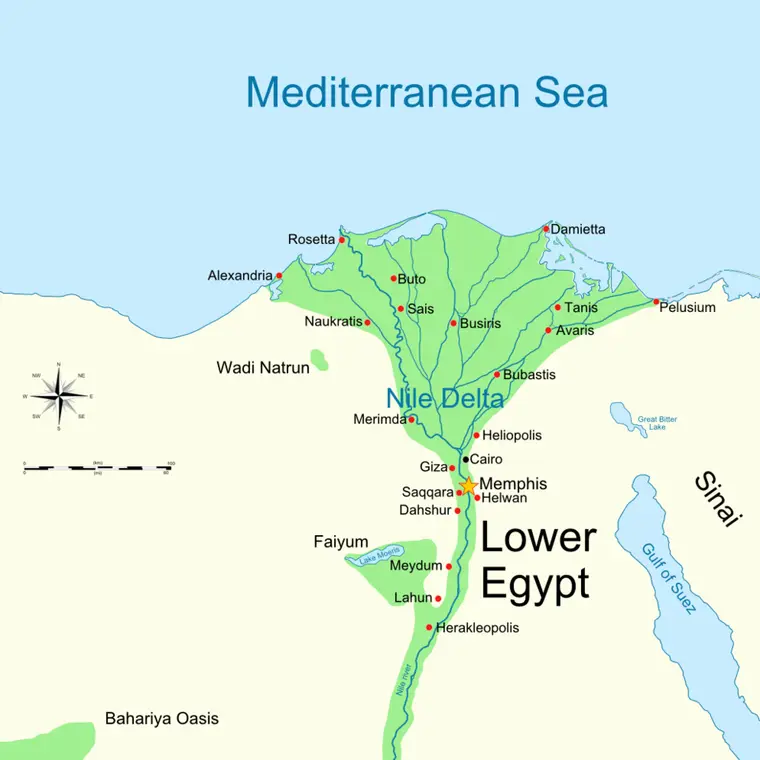
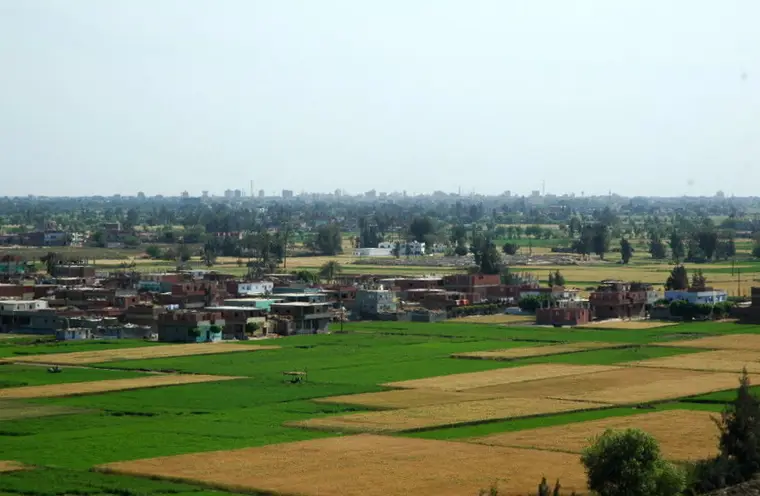
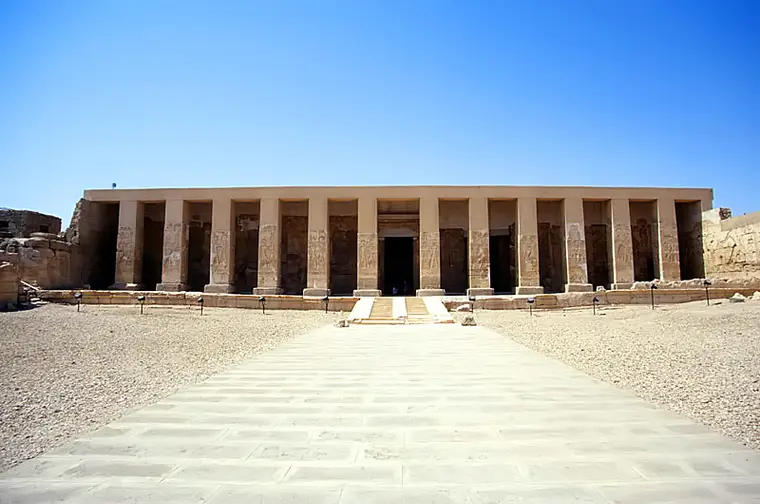
Sources for this chapter (174)Academic32Institution21Specialist book100Reputable web21
Academic(32)
- Review: Seals and Kings: The Political Situation in Egypt during the Second Intermediate Period c. 1800-1550 B. C. by K. S. B. Ryholt. · Bulletin of the American Schools of Oriental Research · 1999
- Ilin-Tomich · Second Intermediate Period · UCLA Encyclopedia of Egyptology · 2016
- Matić · Ethnicity of the Hyksos Forces and the Death of Pharaoh Seqenenre Tao · Етноантрополошки проблеми · 2024
- Ancient Egyptian mummy genomes suggest an increase of Sub-Saharan African ancestry in post-Roman periods · Nature Communications · 2017
- Multi-isotopic study of diet and mobility in the northeastern Nile Delta · Archaeological and Anthropological Sciences · 2021
- Who were the Hyksos? Challenging traditional narratives using strontium isotope (87Sr/86Sr) analysis of human remains from ancient Egypt · PLOS ONE · 2020
- Daressy · Un poignard du temps des Rois Pasteurs · Annales du Service des Antiquités de l'Égypte · 1906
- Morgan · An Aegean Griffin in Egypt: The Hunt Frieze at Tell el-Dab´a · Ägypten und Levante / Egypt and the Levant · 2010
- Whole-genome ancestry of an Old Kingdom Egyptian · Nature · 2025
- The people of Avaris: Intra-regional biodistance analysis using dental non-metric traits · Bioarchaeology of the Near East · 2021
- Bietak · The Egyptian community in Avaris during the Hyksos period · Ägypten und Levante / Egypt and the Levant · 2016
- Candelora · Entangled in Orientalism: How the Hyksos Became a Race · Journal of Egyptian History · 2018
- Candelora · Defining the Hyksos: A Reevaluation of the Title ḥqꜣ-ḫꜣswt and Its Implications for Hyksos Identity · Journal of the American Research Center in Egypt · 2017
- Flammini · Building the Hyksos' Vassals: Some Thoughts on the Definition of the Hyksos Subordination Practices · Ägypten und Levante / Egypt and the Levant · 2015
- Geobey · Joseph the Infiltrator, Jacob the Conqueror?: Reexamining the Hyksos–Hebrew Correlation · Journal of Biblical Literature · 2017
- Hernández · The Role of the War Chariot in the Formation of the Egyptian Empire in the Early 18th Dynasty · Studien zur Altägyptischen Kultur · 2014
- Kamrin · The Aamu of Shu in the Tomb of Khnumhotep II at Beni Hassan · Journal of Ancient Egyptian Interconnections · 2009
- Keel · Ein weiterer Skarabäus mit einer Nilpferdjagd, die Ikonographie der sogenannten Beamtenskarabäen und der ägyptische König auf Skarabäen vor dem Neuen Reich · Ägypten und Levante / Egypt and the Levant · 1996
- A Seal Impression of the Green Jasper Workshop from Tell El-Dabʿa · Ägypten und Levante / Egypt and the Levant · 2016
- Raspe · Manetho on the Exodus: A Reappraisal · Jewish Studies Quarterly · 1998
- The Turin King-List · Ägypten und Levante / Egypt and the Levant · 2004
- Schneider · Das Ende der Kurzen Chronologie: Eine Kritische Bilanz der Debatte zur Absoluten Datierung des Mittleren Reiches und der Zweiten Zwischenzeit · Ägypten und Levante / Egypt and the Levant · 2008
- Schneider · Hyksos Research in Egyptology and Egypt's Public Imagination: A Brief Assessment of Fifty Years of Assessments · Journal of Egyptian History · 2018
- Wegner · A ROYAL NECROPOLIS AT SOUTH ABYDOS: New Light on Egypt's Second Intermediate Period · Near Eastern Archaeology · 2015
- 'Were the ancient Egyptians black or white?' · Biblical Archaeology Review
- DeHaven King · The Nation in Antiquity: Unification, Civil War, and National Liberation in Ancient Kemet · Journal of Black Studies · 2015
- The Rulers of Foreign Lands - Archaeology Magazine · 2018
- The Toponym Retjenu on a Scarab from Tell el-Dabʿa · Ägypten und Levante / Egypt and the Levant · 1998
- Shaw · The Death of King Seqenenre Tao · Journal of the American Research Center in Egypt · 2009
- Studies of ancient crania from northern Africa · American Journal of Physical Anthropology · 1990
- Computed Tomography Study of the Mummy of King Seqenenre Taa II: New Insights Into His Violent Death · Frontiers in Medicine · 2021
- Kamal · Notes sur la rectification des noms Arabes des anciens rois d'Égypte accompagnée d'une notice explicative de quelques coutumes · Bulletin de l'Institut Égyptien · 1903
Institution(21)
- Second Intermediate Period
- LacusCurtius • Manetho's History of Egypt — Book II
- Museum · Handbook to the Nicholson Museum · University of Sydney · 1948
- Barnes · Table 5 - from THE TURIN KING LIST -IS IT REALLY STRAIGHT
- The Political Situation in Egypt During the Second Intermediate Period, C. 1800-1550 B.C. · Museum Tusculanum Press · 1997
- Ryholt · The Political Situation in Egypt During the Second Intermediate Period, C. 1800-1550 B.C. · Museum Tusculanum Press · 1997
- Kings of the 2nd Intermediate Period
- Art in the Second Intermediate Period
- The Sakir-Har door jamb inscription (slide 12) · The Second Intermediate Period: The Hyksos
- Hyksos headband
- Statue
- Hyksos axe
- Spearhead
- Whip handle
- Bietak · THE SECOND INTERMEDIATE PERIOD (THIRTEENTH–SEVENTEENTH DYNASTIES): Current Research, Future Prospects · Peeters · 2010
- Ryholt · The Political Situation in Egypt during the Second Intermediate Period c.1800-1550 B.C. · Museum Tuscalanum Press · 1997
- Ryholt · The Political Situation in Egypt during the Second Intermediate Period, c. 1800–1550 BC · Museum Tusculanum Press · 1997
- Eliezer D. Oren · The Hyksos: new historical and archaeological perspectives · University Museum, University of Pennsylvania · 1997
- Manfred Bietak, "A THUTMOSID PALACE PRECINCT AT PERU-NEFER/TELL EL-Dab'a," in: M. Bietak & S. Prell (Eds.), Palaces in Ancient Egypt and the Ancient Near East vol. I: Egypt, Contributions to the Archaeology of Egypt, Nubia and the Levant V, Vienna 2018, 231-257
- Manfred Bietak · Avaris, the capital of the Hyksos: recent excavations at Tell el-Dabʻa · British Museum Press for the Trustees of the British Museum · 1996
- Axe Experiment · History Television
Specialist book(100)
- Van de Mieroop · A history of ancient Egypt · Wiley-Blackwell · 2011
- Edwards · The Cambridge Ancient History · Cambridge University Press · 1965
- Ben-Tor · Scarabs, Chronology, and Interconnections: Egypt and Palestine in the Second Intermediate Period · Saint-Paul · 2007
- Marincola · A Companion to Greek and Roman Historiography · John Wiley & Sons · 2010
- Quirke · Exploring Religion in Ancient Egypt · John Wiley & Sons · 2014
- Scott · Seeds of Western Culture: Universal Chronology, the Exoduses and Archilochus' Odyssey - Fourth Edition · Graham P Scott · 2026
- Grimal · A History of Ancient Egypt · Librairie Arthéme Fayard · 1988
- Shaw · The Oxford History of Ancient Egypt · OUP Oxford · 2003
- Leprohon · The Great Name: Ancient Egyptian Royal Titulary · Society of Biblical Literature · 2013
- Saretta · Asiatics in Middle Kingdom Egypt: Perceptions and Reality · Bloomsbury Academic · 2017
- Kuhrt · The Ancient Near East, C. 3000-330 BC · Psychology Press · 1995
- Barton · Archaeology and the Bible · BoD – Books on Demand · 2019
- The Oxford History of Ancient Egypt · Oxford University Press · 2000
- Wegner · King Seneb-Kay's Tomb and the Necropolis of a Lost Dynasty at Abydos · University of Pennsylvania Press · 2021
- Tyldesley · The Private Lives of the Pharaohs · TV Books · 2001
- Mieroop · A History of Ancient Egypt · John Wiley & Sons · 2021
- Bunson · Encyclopedia of Ancient Egypt · Infobase Publishing · 2014
- Bietak · The Enigma of the Hyksos · Harrassowitz Verlag · 2021
- Engberg · The Hyksos Reconsidered · University of Chicago Press · 1939
- Ridgeway · The Origin and Influence of the Thoroughbred Horse · CUP Archive
- Petrie · Scarabs and Cylinders (with Names) · Oxbow Books · 2023
- Richards · The Anra scarab: an archaeological and historical approach · 1998
- Keel · Gods, Goddesses, And Images of God · Bloomsbury Academic · 1998
- Hays · Wenamun's Prophetic Mission: Theocratic Rhetoric in Egypt and the Hebrew Bible · Penn State Press · 2025
- Assmann · The Invention of Religion: Faith and Covenant in the Book of Exodus · Princeton University Press · 2018
- Ebers · The Historical Romances of Georg Ebers ... · D. Appleton · 1881
- Ancient Egyptians: People of the Pyramids · Oxford University Press · 2001
- Montet · Lives of the pharaohs · Weidenfeld and Nicolson · 1968
- Allen · Middle Egyptian: An Introduction to the Language and Culture of Hieroglyphs · Cambridge University Press · 2000
- Assmann · The mind of Egypt: history and meaning in the time of the Pharaohs · Harvard University Press · 2003
- Assmann · From Akhenaten to Moses: Ancient Egypt and Religious Change · Oxford University Press · 2014
- Bard · An introduction to the archaeology of Ancient Egypt · John Wiley & Sons · 2015
- von Beckerath · Handbuch der ägyptischen Königsnamen · von Zabern · 1999
- Ben-Tor · Scarabs, Chronology, and Connections: Egypt and Palestine in the Second Intermediate Period · Vandenhoeck and Ruprecht · 2007
- Bietak · Israel's Exodus in Transdisciplinary Perspective: Text, Archaeology, Culture, and Geoscience · Springer · 2015
- Bietak · The Oxford Encyclopedia of Ancient Egypt, Volume 2 · Oxford University Press · 2001
- Woudhuizen · The Ethnicity of the Sea Peoples · Erasmus Universiteit Rotterdam · 2006
- Bietak · Confronting the Past: Archaeological and Historical Essays on Ancient Israel in Honor of William G. Dever · Eisenbrauns · 2006
- Bietak · Chronos, Stratigraphic Analysis, Pottery Seriation and Radiocarbon Dating in Mediterranean Chronology · Presses Universitaires de Louvain · 2024
- Bourriau · The Oxford History of Ancient Egypt · Oxford University Press · 2000
- A History of Israel · Westminster John Knox Press · 2000
- Encyclopedia of Ancient Egypt · Infobase Publishing · 2014
- Burke · The Enigma of the Hyksos · Harrassowitz · 2019
- The Egyptian Museum in Cairo: A Walk Through the Alleys of Ancient Egypt · Farid Atiya Press · 2005
- Israel's Exodus in Transdisciplinary Perspective: Text, Archaeology, Culture, and Geoscience · Springer · 2015
- THE HYKSOS RULER KHYAN AND THE EARLY SECOND INTERMEDIATE PERIOD IN EGYPT: PROBLEMS AND PRIORITIES OF CURRENT RESEARCH. Proceedings of the Workshop of the Austrian Archaeological Institute and the Oriental Institute of the University of Chicago, Vienna, July 4 – 5, 2014 · Holzhausen · 2018
- Gabriel · Thutmose III: The Military Biography of Egypt's Greatest Warrior King · Potomac Books · 2009
- Ancient Israel: What Do We Know and How Do We Know It? · Bloomsbury · 2017
- Griffith · Archaeological Report 1890/91 - 1911/12: Comprising the Recent Work of the Egypt Exploration Fund and the Progress of Egyptology During the Year 1890/91-1911/12 · Kegan Paul, Trench, Trübner · 1891
- Gruen · The Construct of Identity in Hellenistic Judaism: Essays on Early Jewish Literature and History · de Gruyter · 2016
- The lost tombs of Thebes: life in paradise · Thames & Hudson · 2009
- Herslund · Chariots in Ancient Egypt: The Tano Chariot, A Case Study · Sidestone Press · 2018
- Policies of Exchange Political Systems and Modes of Interaction in the Aegean and the Near East in the 2nd Millenium B.C.E: Proceedings of the International Symposium at the University of Freiburg Institute for Archaeological Studies, 30th May - 2nd June 2012 · Austrian Academy of Sciences Press · 2015
- Hölbl · A History of the Ptolemaic Empire · Psychology Press · 2001
- Josephus · Josephus in Eight Volumes, 1: The Life; Against Apion · 1926
- Ancient Egyptian Literature · University of California Press · 2019
- 'Never Had the Like Occurred': Egypt's View of its Past · 2003
- Biblical History and Israel's Past: The Changing Study of the Bible and History · Wm. B. Eerdmans Publishing · 2011
- A companion to ancient Egypt · Wiley-Blackwell · 2010
- Mourad · Rise of the Hyksos: Egypt and the Levant from the Middle Kingdom to the early Second Intermediate Period · Oxford Archaeopress · 2015
- O'Connor · Beyond Babylon: art, trade, and diplomacy in the second millennium B.C. · Yale University Press · 2009
- A Companion to the Archaeology of the Ancient Near East · John Wiley & Sons · 2012
- Pritchard · Ancient Near Eastern Texts Relating to the Old Testament with Supplement · Princeton University Press · 2016
- Redford · Egypt, Canaan, and Israel in Ancient Times · Princeton University Press · 1992
- Redmount · The Oxford History of the Biblical World · Oxford University Press · 2001
- Richardson · Cairo and the Pyramids (Rough Guides Snapshot Egypt) · Rough Guides UK · 2013
- The Literature of Ancient Egypt: An Anthology of Stories, Instructions, and Poetry · Yale University Press · 2003
- Roy · The Politics of Trade: Egypt and Lower Nubia in the 4th Millennium BC · Brill · 2011
- Eternal Egypt: Masterworks of Ancient Art from the British Museum · University of California Press · 2001
- Sayce · The Egypt of the Hebrews and Herodotos · Books on Demand · 1895
- Schneider · Ancient Egyptian Chronology · BRILL · 2006
- A Dictionary of Archaeology · Wiley Blackwell · 2002
- The Oxford Handbook of the Archaeology of the Levant: c. 8000-332 BCE · Oxford University Press · 2014
- Stiebing · Ancient Near Eastern History and Culture · Routledge · 2009
- Berossos and Manetho, introduced and translated: native traditions in ancient Mesopotamia and Egypt · University of Michigan Press · 1996
- Vos · Nelson's New Illustrated Bible Manners and Customs: How the People of the Bible Really Lived · Thomas Nelson · 1999
- A History of the Pharaohs · Cambridge University Press · 2016
- Wilkinson · The Rise and Fall of Ancient Egypt · Bloomsbury · 2010
- Lives of the Ancient Egyptians · Thames and Hudson · 2013
- Science in the Study of Ancient Egypt · Routledge · 2015
- Van de Mieroop · A History of Ancient Egypt. · Wiley-Blackwell. · 2011
- David · Handbook to Life in Ancient Egypt Revised · Oxford University Press · 2007
- Bunson · Encyclopedia of Ancient Egypt (Facts on File Library of World History) · Facts on File · 2002
- Redford · The Oxford Encyclopedia of Ancient Egypt: 003 · Oxford Univ Pr
- Noll · Canaan and Israel in Antiquity: An Introduction · Sheffield Academic Press · 2002
- Dumper · Cities of the Middle East and North Africa: A Historical Encyclopedia · ABC-CLIO (2006) · 2006
- Tubb · Canaanites (Volume 2) (Peoples of the Past) · University of Oklahoma Press · 1999
- Tyldesley · Egypt: How a Lost Civilisation Was Rediscovered · BBC Books · 2007
- Modrzejewski · Jews of Egypt from Rameses II to Emperor Hadrian · T&T Clark · 1995
- Castleden · The Concise Encyclopedia of World History · Parragon Book Service · 1995
- Redford · From slave to pharaoh : the black experience of ancient Egypt · Johns Hopkins University Press · 2006
- The Politics of Trade: Egypt and Lower Nubia in the 4th Millennium BC · BRILL · 2011
- Michael Grant · The rise of the Greeks · Barnes & Noble Books · 2005
- Booth, C. · The Hyksos Period in Egypt · Shire · 2005
- Duhoux · Des minoens en Egypte? "Keftiou" et "les îles au milieu du Grand vert" · Univ. Press · 2003
- Carl Nicholas Reeves · Ancient Egypt: the great discoveries : a year-by-year chronicle · Thames & Hudson · 2000
- Rappoport · The Project Gutenberg EBook of History Of Egypt From 330 B.C. To The Present Time, Volume 12 (of 12), by S. Rappoport · The Grolier Society Publishers, London
- Norton · Shadow hawk · Bethlehem Books: Ignatius Press · 2001
- Mas'udi · Les Prairies d'Or · Impr. Impériale · 1861
- Carra de Vaux · L'abrégé des merveilles · Sindbad · 1984
Reputable web(21)
- The Hyksos
- Hyksos · 2024
- Tell-el-Daba - History
- Deir el-Ballas · 2017
- Severed hands unearthed at ancient Egyptian site may have been battle trophies
- Bietak · Encyclopedia of the Archaeology of Ancient Egypt · Routledge · 1999
- Curry · The Rulers of Foreign Lands · 2018
- Popko · Late Second Intermediate Period to Early New Kingdom · 2013
- Lundström · The Dynasties of Manetho
- Lundström · Turin King List: column 10
- Lundström · The Seventeenth Dynasty of ancient Egypt
- Ideas about "Race" in Nile Valley Histories: A Consideration of "Racial" Paradigms in Recent Presentations on Nile Valley Africa, from "Black Pharaohs" to Mummy Genomest · 2022
- Lundström · Turin King List: column 11
- Tell el-Dab'a - History · Tell el-Dab'a-Homepage
- Ancient Egyptian city located in Nile Delta by radar · BBC News · 2010
- The harbour of Tell el-Dabʿa
- Louvre e 15682 | Persons and Names of the Middle Kingdom
- Karnak Sheikh Labib 87CL358 | Persons and Names of the Middle Kingdom
- Cairo JE 21461 | Persons and Names of the Middle Kingdom and early New Kingdom
- Archived copy
- The Abbott Papyrus · reshafim.org.il
Every ancient date is an estimate. Scholarly chronologies differ by decades, and by more the further back you go, which is why each figure carries a tilde. When a period is published we name the chronology its dates come from.