The Coptic and Byzantine Period
~395 – ~641 CE
15 chapters · 128 min read · 332 sources
395 CE
Introduction
2 min readCopts (; ) are a Christian ethnoreligious group native to Egypt who have inhabited the area of modern Egypt since antiquity. They are descended from the ancient Egyptians. Copts predominantly follow the Coptic Orthodox…Copts (; ) are a Christian ethnoreligious group native to Egypt who have inhabited the area of modern Egypt since antiquity. They are descended from the ancient Egyptians. Copts predominantly follow the Coptic Orthodox Church, with a minority in the Coptic Catholic Church. They are the largest Christian population in Egypt and the Middle East, as well as in Sudan and Libya. Copts account for roughly 5 to 15 percent of the population of Egypt.
Originally referring to all Egyptians, the term Copt became synonymous with native Christians in light of Egypt's Islamization and Arabization after the Muslim conquest of Egypt in 639–646 AD. Copts have historically spoken the Coptic language, a direct descendant of the Demotic Egyptian that was spoken in late antiquity.
Following the Arab Muslim conquest of Egypt in the 7th century, the treatment of the Coptic Christians who did not convert ranged from relative tolerance to open persecution. Historically, the Copts suffered from waves of persecution giving way to relative tolerance in cycles that varied according to the local ruler and other political and economic circumstances. Themes of persecution and martyrdom constitute a significant part of Coptic identity due to historic and current conflicts.
Most Copts adhere to the Coptic Orthodox Church of Alexandria, an Oriental Orthodox Church. The smaller Coptic Catholic Church is an Eastern Catholic Church, in communion with the Holy See of Rome; others belong to the Evangelical Church of Egypt. Under Islamic rule, the Copts held important administrative and commercial positions. Copts also played an integral role in the Arab Renaissance (known as Al-Nahda). They contributed to Egypt's social and political life and key debates such as pan-Arabism, governance, educational reform, and democracy. They have historically flourished in business affairs.
While an integral part of broader Egyptian society and culture, Copts also preserve distinct religious traditions and some unique cultural elements. Coptic music is thought to incorporate some influences from earlier Egyptian musical traditions. Copts also maintain the use of the Coptic calendar, which is based on the ancient Egyptian calendar, and remains significant in their liturgical practices.
Many Copts view Arab identity as closely associated with Islam and may not fully identify with it, but they also have a national identity shared with other Egyptians. Copts and Muslim Egyptians are recognized as being physically indistinguishable. In urban cities of Egypt such as Cairo and Alexandria, Copts have a relatively high educational attainment, wealth index, and a strong representation in white-collar job types. Copts also face unique challenges, with most living in Upper Egypt—far from national core cities—working in blue collar jobs and having limited representation in the security agencies which dominate national politics. The majority of demographic, socio-economic, and health indicators are similar among Coptic Christians and Muslims in Egypt.
Etymology
3 min readThe English language adopted the word Copt in the 17th century from Neo-Latin Coptus, which derives from the Arabic collective, with the demonym, plural ; another variation is (where the Arabic reflects the historical…The English language adopted the word Copt in the 17th century from Neo-Latin Coptus, which derives from the Arabic collective, with the demonym, plural ; another variation is (where the Arabic reflects the historical Coptic ). These are Arabizations of the Coptic word (aiguption), Bohairic for "Egyptian" or in relation to Egypt, or (kuptaion), in Sahidic. The Coptic word in turn represents an adaptation of the Greek term for the indigenous people of Egypt,.
The Greek term for Egypt, Aígyptos, itself derives from the Egyptian language, but dates to a much earlier period, being attested already in Mycenaean Greek as a3-ku-pi-ti-jo (lit. "Egyptian"; used here as a man's name). This Mycenaean form likely comes from Middle Egyptian (reconstructed pronunciation: /ħawitˌkuʀpiˈtaħ/ → /ħajiʔˌkuʀpiˈtaħ/ → /ħəjˌkuʔpəˈtaħ/, Egyptological pronunciation Hut-ka-Ptah), literally meaning the "estate/palace of the kꜣ ("double" spirit) of Ptah" (compare Akkadian ), the name of the temple complex of the god Ptah at Memphis (and a synecdoche for the city of Memphis and the region around it).
The term Aigýptios in Greek came to designate the native Egyptian population in Roman Egypt (as distinct from Greeks, Romans, Jews, etc.). After the Muslim conquest of Egypt (639–646), it became restricted to those Egyptians adhering to Christianity.
In their historic Coptic language, which represents the final stage of the Egyptian language, there is no distinct term equivalent to Copt as a designation separate from Egyptian. Instead, terms such as rem en kēme (in the Sahidic dialect) ⲣⲙⲛⲕⲏⲙⲉ, lem en kēmi (Fayyumic), and rem en khēmi (Bohairic) ⲣⲉⲙ̀ⲛⲭⲏⲙⲓ are attested, all of which literally mean "people of Egypt" or "Egyptians"; cf. Egyptian, Demotic. This is not unique to Coptic, as many community endonyms translate simply to "people", though it is understood that by saying "people", an in-group is being referred to. For example, the term Inuit means "the people", and the term Romani derives from words referring to "man" or "people". To an extent it was not necessary to make a distinction between "person of Egypt" as someone other than a Copt throughout much of history, as other groups residing in Egypt (such as the Greeks) had recognized ethnonyms in Coptic, such as "Hellene", that were sufficient. In the medieval era, there also was not always a distinction made between the Christian Copts and their pre-Christian ancestors, and the same ethnonym was sometimes used for both, which means that the identity to the culture of being "Coptic" was not as tightly tied to Christianity as it commonly is today (though it was still often placed as in opposition to being Muslim, usually by Muslims themselves, who ceased identifying a family as "Coptic" after the first generation of converts to Islam).
The Arabic word (Copt) has also been connected to the Greek name of the town of Kóptos (, now Qifṭ; Coptic Kebt and Keft) in Upper Egypt. This association may have contributed to making "Copt" the settled form of the name.
In the 20th century, some Egyptian nationalists and intellectuals in the context of Pharaonism began using the term in the historical sense to refer to all Egyptians, both Christians and Muslims.
History
14 min readAfter the conquest of Egypt by Alexander the Great in 332 B.C., the country came under the rule of Greek Ptolemaic kings. While the majority of the population remained Egyptian, foreign settlers of both Greek and…Ptolemaic and Roman Egypt
After the conquest of Egypt by Alexander the Great in 332 B.C., the country came under the rule of Greek Ptolemaic kings. While the majority of the population remained Egyptian, foreign settlers of both Greek and non-Greek origin immigrated to Egypt during that period. While 10% may stand as a very approximate figure for the total immigrant population in Ptolemaic Egypt, including both Greeks and non-Greeks, this figure has been challenged as excessive. The native Egyptian population, which remained Egyptian in language and culture, spoke the latest stage of the Egyptian language, which came to be known later as Coptic. The creation of Coptic as a coherent writing system to express the Egyptian language undoubtedly served to cement the distinction between the native population in Egypt and the ruling Greeks.
Despite the presence of these immigrants and a foreign pharaoh, Egypt remained home primarily to Egyptians, by far the largest group within the population. In fact, most of the rural and urban native population that lived in towns, villages and hamlets the length of the Nile Valley continued their lives little changed during the rule of the Ptolemies. Even in Alexandria, the capital of Ptolemaic Egypt and the largest Greek city outside of Greece, the number of native Egyptians far outnumbered that of Greeks. In numbers and in culture, Egypt remained essentially Egyptian, even as foreign communities were incorporated into the life of the country. Over time, the small numbers of foreigners were integrated into the Egyptian population so that, when Rome took control of Egypt in 30 BC, the vast majority of Greeks in Egypt were essentially categorized by the Roman conquerors as Egyptians.
The Faiyum mummy portraits reflect the complex synthesis of the predominant Egyptian culture and religion with that of Hellenistic art, and were attached to sarcophagi of firmly Egyptian character. The dental morphology of the Roman-period Faiyum mummies was compared with that of earlier Egyptian populations, and was found to be "much more closely akin" to that of ancient Egyptians than to Greeks or other European populations.
Foundation of the Christian Church in Egypt
According to sacred tradition, Christianity was introduced to present day Egypt by Mark the Evangelist in Alexandria, shortly after the ascension of Christ and during the reign of the Roman emperor Claudius around 42 AD. The legacy that Mark left in Egypt was a considerable Christian community in Alexandria, but within half a century of Mark's arrival, Christianity had spread throughout all of Egypt. This is clear from a fragment of the Gospel of John, written in Coptic and found in Upper Egypt that can be dated to the first half of the 2nd century, and the New Testament writings found in Oxyrhynchus in Middle Egypt, which date to around 200 AD. In the 2nd century, Christianity began to spread to the rural areas, and Scripture was translated into the Coptic language (then known simply as Egyptian). By the beginning of the 3rd century AD, Christians constituted the majority of Egypt's population, and the Church of Alexandria was recognized as one of Christendom's four apostolic sees. The Church of Alexandria is therefore the oldest Christian church in Africa.
Contributions to Christianity
The Copts in Egypt contributed immensely to the Christian tradition. The Catechetical School of Alexandria was the oldest institution of its kind in the world. Founded around 190 AD by the scholar Pantanaeus, the school became an important focus of religious learning, where students were taught by scholars such as Athenagoras, Clement, Didymus, and Origen (185–251, the father of theology, who was also active in the field of commentary and comparative Biblical studies). However, the scope of this school was not limited to theological subjects; science, mathematics, and humanities were also taught there. The question-and-answer method of commentary began there, and 15 centuries before Braille, blind scholars used wood-carving techniques there to read and write.
As major early adopters of Christianity, Copts have earned the reputation of missionaries spreading the Christian faith as far afield as Switzerland, Abyssinia, and India, and influencing Mesopotamia, Persia, Rome, and Ireland.
Another major contribution the Egyptian Copts made to Christianity was the creation and organization of monasticism. Worldwide Christian monasticism stems, either directly or indirectly, from Egyptian origins. Prominent figures of the early monastic movement in Egypt include Anthony the Great (251–356), Paul of Thebes ( – ), Macarius the Great ( – 391), Shenouda the Archimandrite, and Pachomius the Cenobite. By the end of the 5th century, there were hundreds of monasteries and thousands of cells and caves scattered throughout the Egyptian desert. Pilgrims from all over the world visited the Egyptian Desert Fathers to emulate their spiritual, disciplined lives. Saint Jerome, who translated the Bible into Latin, came to Egypt while en route to Jerusalem around 400 AD, leaving details of his experiences in his letters. St. Benedict founded the Benedictine Order in the 6th century on the model of Saint Pachomius, though in a stricter form.
Ecumenical councils
The major contributions that the See of Alexandria has contributed to the establishment of early Christian theology and dogma are attested to by fact that the first three ecumenical councils in the history of Christianity were headed by Egyptian patriarchs. The Council of Nicaea (325 AD) was presided over by Pope Alexander I of Alexandria, along with Saint Hosius of Córdoba. In addition, the most prominent figure of the council was the future Patriarch of Alexandria Athanasius, who played the major role in the formulation of the Nicene Creed recited today in most Christian churches of different denominations. One of the council's decisions was to entrust the Patriarch of Alexandria with calculating and annually announcing the exact date of Easter to the rest of the Christian churches. The Council of Constantinople (381 AD) was presided over by Pope Timothy I of Alexandria, while the Council of Ephesus (431 AD) was presided over by Pope Cyril of Alexandria.
Council of Chalcedon
In the fourth and fifth centuries AD, the foundations were laid for the divergence in doctrine between the native Christian Church of the Egyptians and that of the empire. The official schism occurred at the Council of Chalcedon in 451 AD. The council, which condemned, deposed, exiled and replaced the native Egyptian patriarch of Alexandria Dioscorus I, was rejected by the Egyptian delegation to the council, and by extension by the entirety of the native Egyptian population. As a result of the Council of Chalcedon, the Church of Alexandria, which had jurisdiction over the entire country of Egypt, as well as all of continent of Africa, was divided into a church that accepted the decrees of the council, and one that rejected them. The church that accepted the council, became known as the Chalcedonian church, and survives today as the Greek Orthodox Patriarchate of Alexandria. On the other hand, the church that rejected the council of Chalcedon, to whom the vast majority of the native Copts adhered, became the predecessor of the Coptic Orthodox Church. The latter has been erroneously referred to as Monophysite, although it itself rejects that term and self-proclaims to be Miaphysite. The non-Chalcedonian Miaphysite doctrine became adopted as a badge of nationalism for the native Egyptians.
Byzantine Egypt
A distinctive Egyptian character of Egypt's native Copts began to develop after the council of Chalcedon, and reached its zenith in the period after the reign of emperor Justinian I in the sixth century AD. That process became the foundation for the evolution of a distinctive Egyptian character for the Coptic Orthodox Church, with its distancing from the empire's official Chalcedonian Christology and its distinctive Greek character. During that period and until the Arab invasion of Egypt in the seventh century, the Byzantine emperors repeatedly deposed and exiled native Egyptian non-Chalcedonian patriarchs of Alexandria, and imposed pro-Chalcedonian ones, most of whom were non-Egyptian. Over the years, because of what they had construed as persecution of the imperial authorities, the Egyptians hardened their position and rejected all conciliatory efforts that fell short of a full condemnation of the Council of Chalcedon. This position coincided with the rise in the public visibility of the Coptic language in several areas of the Egyptians' daily life.
Arab conquest of Egypt
In 641 AD, Egypt was conquered by Arab Muslim forces following the defeat of the Byzantine army. According to historian Roger S. Bagnall, the Copts who had developed a distinct Egyptian and non-Chalcedonian identity were subjected to a new system of governance that prioritized fiscal exploitation and systematic resource extraction, particularly through taxation.
Alfred J. Butler records that parts of Alexandria were damaged during the Arab entry into the city, including the destruction of some of its walls and the burning of several churches.
During the early years of the Rashidun Caliphate, Egypt's population, particularly the native Copts, was subjected to the imposition of new forms of taxation, forced labor requisitions for state infrastructure, and the appropriation of agricultural and technical resources. The fertile Nile Valley and the country's skilled labor force, particularly in shipbuilding and irrigation, were of strategic importance to the new administration.
By the early eighth century, Coptic Christians were increasingly compelled to participate in state-sponsored labor. According to Alfred J. Butler, entire Egyptian villages were required to supply annual quotas of workers for construction projects, including palaces and mosques in Fustat, Damascus, and Jerusalem. Additionally, they were conscripted into naval expeditions considered especially harsh, as those sent rarely returned to their villages due to the dangerous conditions.
Roger S. Bagnall emphasizes that fiscal exploitation and labor requisition were central elements of the early Islamic administrative system in Egypt. These policies imposed disproportionate burdens on rural communities, particularly the Copts, who bore the brunt of extractive practices aimed at funding the caliphate's military and infrastructural expansion.
In addition to labor, native Christians were subject to the jizya, a special tax levied exclusively on non-Muslims under Islamic law. Aziz Suryal Atiya notes that during the Umayyad period, this tax was extended even to monks, in violation of earlier pledges of exemption, and was often enforced with harsh penalties.
Faced with the cumulative pressures of taxation, legal inequality, and the threat of forced conscription or persecution, many Copts gradually converted to Islam. These converts were classified as Mawali (non-Arab Muslims) who, while integrated into the Muslim community, initially occupied a lower social and legal status than Arab Muslims.
The burden of taxation left many Copts in rural areas unable to meet their obligations. Oppressive taxation resulted in local resistance and many revolts by the Copts against the Arab occupiers, the most famous of which were the Bashmurian revolts between 720 A.D. and 832 A.D. Another reaction to the heavy taxation was for poor Christian Copts to either borrow money from richer members of their communities, or to altogether flee their lands and escape to other parts of Egypt.
Middle Ages
Despite the political upheaval, Egypt remained mainly Christian for approximately 800 years. Coptic Christians lost their majority status after the 14th century as a result of successive persecutions and the destruction of the Christian churches in Egypt. From the Muslim conquest of Egypt onwards, the Coptic Christians were persecuted by different Muslim regimes, such as the Umayyad Caliphate, the Abbasid Caliphate, the Fatimid Caliphate, the Mamluk Sultanate, and the Ottoman Empire. The persecution of Coptic Christians included closing and demolishing churches, forced conversions to Islam, and heavy Jizya taxation for those who refused to convert.
Coptic converts to Islam may have been motivated by the prospect of financial relief as they would no longer be subject to the Jizya tax, which was levied only on non-Muslims according to Islamic Sharia law. The History of the Patriarchs of Alexandria recounts the history of fiscal oppression imposed by the caliphate against Copts as driving conversions from Christianity to Islam. Early converts had to attach themselves to Arab Muslim patrons as Mawali. While they had to adopt Arabic as their main language, they remained fluent in Coptic, thus creating a growing bilingual group among Egyptian Muslims. Nevertheless, Egypt remained a majority Christian country well into the Middle Ages. Many cities in Upper Egypt had no Muslim communities at all during that time.
Early modern period
The treatment of Christian Copts by Muslim rulers remained challenging throughout the Middle Ages and continued into the early modern period. When Napoleon conquered Egypt in 1798 as part of the Napoleonic wars, a military unit known as the Coptic Legion was created out of necessity for self-defense by the Coptic community for protection against the Mamluks, Ottomans, and Egyptian Muslims. The Coptic Legion was headed by a Coptic general, General Yaqub, who recruited young Copts from Cairo and Upper Egypt for the legion. These were trained by instructors from the French army. Together with the Greek Legion, the Coptic Legion formed the Bataillon des Chasseurs d'Orient. Members of the Coptic Legion returned with the French army to France in 1801 after the defeat of the Napoleonic conquest of Egypt.
General Yaqub is considered to be the founder of the first project for Egypt's independence in modern times from the Ottoman Empire. He argued for the country's independence from an Egyptian nationalist point of view, highlighting the past glory of Egypt, lamenting its current state unworthy of a people who built a great civilization, and stressing the debt that humanity owes to Egypt's ancient culture.
During the Ottoman period, Copts were classified alongside other Oriental Orthodox (namely the Syriac Orthodox) and Church of the East peoples under the Armenian millet. Under Muslim rule, Christians paid special taxes, had lower access to political power, and were exempt from military service.
The position of the Copts improved dramatically under the rule of Muhammad Ali in the early 19th century. He abolished the jizya (a tax on non-Muslims) and allowed Copts to enroll in the army. Pope Cyril IV, who reigned from 1854 to 1861, reformed the church and encouraged broader Coptic participation in Egyptian affairs. Khedive Isma'il Pasha, in power 1863–1879, further promoted the Copts. He appointed them judges to Egyptian courts and awarded them political rights and representation in government. They flourished in business affairs.
Copts in modern Egypt
Egypt's struggle for independence from both the Ottoman Empire and the United Kingdom was marked by secular Egyptian nationalism. Copts were in the forefront of that struggle for Egypt's independence. When the Egyptian nationalist leader Saad Zaghlul met the Arab delegates at Versailles in 1919, he insisted that their struggles for statehood were not connected, stressing that the problem of Egypt was an Egyptian problem and not an Arab one.
When Zaghlul was exiled by the British to Malta in 1919, a number of prominent Coptic figures who joined him in resisting the British occupation of Egypt were also exiled with him, including Wissa Wassef and George Khayat, both key members of the Egyptian nationalist movement. When Zaghlul returned from his first exile, he was joined by the Copts Wissa Wassef, Sinout Hanna, Wassef Ghali, Morcos Hanna, and Makram Ebeid in forming a strong opposition against British colonialism in Egypt. Later in 1921, when Zaghlul was exiled to the Seychelles, Makram Ebeid was exiled with him.
The exiles were part of the larger Egyptian nationalist response to British colonial rule and represented a unified effort across religious lines in Egypt. They galvanized widespread protests in Egypt that culminated in the famous 1919 revolution, which further emphasized the shared desire for independence among Egyptians of all faiths. This unity became a hallmark of the early 20th-century Egyptian nationalism. In his memoirs, Fakhri 'Abd al-Nur, one of the most recognized Coptic figures of the 1919 Revolution, recalls the positive impact of the statement made by Saad Zaghlul at the onset of the revolution, declaring "equal responsibilities and equal rights" of Egyptian Copts and Muslims. In fact, the preacher of the 1919 Revolution was a Coptic priest, Father Morcos Sergius, who had been previously exiled by the British in 1915.
In April 1922, the British ordered the execution of seven Egyptian nationalists, four of whom were Copts: Wissa Wassef, Wassef Ghali, George Khayat, and Morcos Hanna. As a result of their struggle, Egypt gained its independence from both Great Britain and the Ottoman Empire on 28 February 1922. This struggle of Copts against the British and the Ottomans within the framework of Egyptian nationalism highlighted the Copts' (as well as the Egyptian Muslims') self-identification as Egyptians first and foremost with little attention to religious affiliations.
Significant cultural achievements for Copts during this era include the founding of the Coptic Museum in 1910 and the Higher Institute of Coptic Studies in 1954. Prominent Coptic thinkers from this period are Salama Moussa, Louis Awad and Secretary General of the Wafd Party Makram Ebeid.
In 1952, Gamal Abdel Nasser led a clique of army officers in a coup d'état against King Farouk, which overthrew the monarchy and declared Egypt a republic. Nasser was a secularist whose ideology was rooted in pan-Arab nationalism and socialism. The Copts were severely affected by Nasser's nationalization programs and his pan-Arab policies undermined the Copts' strong attachment to and sense of identity about their Egyptian pre-Arab identity.
Demographics
7 min readThe Coptic population in Egypt is difficult to estimate because researchers are forbidden by Egyptian authorities to ask a survey participant's religion. A lack of definite, reliable demographic data renders all…The Coptic population in Egypt is difficult to estimate because researchers are forbidden by Egyptian authorities to ask a survey participant's religion. A lack of definite, reliable demographic data renders all estimates uncertain. As of 2019, Copts were generally understood to make up approximately 10 percent of Egypt's population, with an estimated population of 9.5 million (figure cited in the Wall Street Journal, 2017) or 10 million (figure cited in the Associated Press, 2019). Smaller or larger figures have also been cited, in the range of "somewhere between 6% and 18% of the population," with the Egyptian government estimating lower numbers and the Coptic Orthodox Church estimating higher numbers. In 2023, Pope Tawadros II of Alexandria stated that the number of Copts in Egypt is estimated at 15 million out of a total population of 105 million, or approximately 14% of the population in Egypt. He also said there were another 2 million Copts living in approximately 100 different countries in the diaspora. He explained that this data was obtained from records of child baptisms, marriages, and deaths.
Despite challenges, Copts are well-integrated in Egyptian society. The highest concentrations of Copts are in Upper Egypt, especially around Asyut, Minya, Sohag and Qena, along with some districts in major cities of Cairo and Alexandria.
Diaspora
There are approximately 1-2 million Copts living outside of Egypt, and are known as the Coptic diaspora. They live mainly in the United States (500,000), Sudan (400,000–500,000), Australia (75,000), Libya (60,000), Canada (50,000), France (45,000), Italy (30,000), the United Kingdom (25,000–30,000), the United Arab Emirates (10,000), and the Netherlands (10,000).
Sudan
Sudan has a native Coptic minority, although many Copts in Sudan are descended from more recent Egyptian immigrants. Copts in Sudan live mostly in northern cities close to the border with Egypt. Many Sudanese Copts have advanced educations. They have occasionally faced forced conversion to Islam, resulting in their emigration and decrease in number.
Modern immigration of Copts to Sudan peaked in the early 19th century, and they generally received a tolerant welcome there. However, this was interrupted by a decade of persecution under Mahdist rule at the end of the 19th century. As a result of this persecution, many were forced to relinquish their faith, adopt Islam, and intermarry with the native Sudanese population. The Anglo-Egyptian invasion in 1898 allowed Copts greater religious and economic freedom. However, the return of Islamism in the mid-1960s and subsequent demands by radicals for an Islamic constitution prompted Copts to join in public opposition to religious rule.
Introduction of Islamic Sharia law in 1983 began a new phase of oppressive treatment of Copts, among other non-Muslims. Coptic leaders supported a secular candidate in the 1986 elections. However, when the National Islamic Front overthrew the elected government with the help of the military, discrimination against Copts returned in earnest. Hundreds of Copts were dismissed from the civil service and judiciary. In 1991, many Copts in Sudan fled the country after the execution by the government of a Coptic pilot for illegal possession of foreign currency and refusing to convert to Islam. Restrictions on the Copts' rights to Sudanese nationality followed, and it became difficult for them to obtain Sudanese nationality by birth or by naturalization, resulting in problems when attempting to travel abroad. The confiscation of Christian schools and the imposition of an Arab-Islamic emphasis in language and history teaching were accompanied by harassment of Christian children and the introduction of hijab dress laws. In contrast with the extensive media broadcasting of the Muslim Friday prayers, the radio ceased coverage of the Christian Sunday service.
After the 2018 Sudanese revolution, one Copt (Raja Nicola Issa Abdul-Masseh) was appointed in 2019 to the 11-member Transitional Sovereignty Council, which was convened as part of plan to transition Sudan to democracy. However, a military coup in 2019 dissolved the council and halted the democratic transition. Christians, including Copts, were subjected to intensified persecution during the civil war that began in 2023. Many became refugees or were internally displaced.
A 2018 report by the Minority Rights Group said Sudanese Copts had previously estimated their numbers at 400,000 to 500,000, about 1% of the Sudanese population, but that emigration and conversion (including forced conversion) to Islam had decreased their number further.
Libya
The Coptic population in Libya is uncertain. A 2013 estimate by the U.S. Department of State placed the entire population of non-Muslim Libyans at 180,000 (roughly 3% of the country's population). However, the Coptic Orthodox Church in Libya estimated that its membership alone was 300,000, including those who do not regularly attend church services. In 2011, there were three Coptic churches in the country. From 2011 to 2015, during the Libyan civil war, at least 200,000 Christians fled Libya. during that time, Islamist militants such as the Ansar al-Sharia, Nusra Front, and Islamic State violently persecuted Copts.
In 2015, twenty Copts were killed by beheading in Libya by the Islamic State. The video of their execution, which was broadcast by Al-Hayat gained widespread international attention, leading to their canonization by both the Coptic Orthodox Church and the Catholic Church.
North America
The largest Coptic diaspora population outside of Egypt is located in North America, both in the United States and Canada.
The first Coptic Orthodox church in North America, Saint Mark Coptic Orthodox Church, was built in Toronto in 1964. The first Coptic Orthodox church in the United States, Saint Mark Coptic Orthodox Church in New Jersey, was built in Jersey City, New Jersey shortly afterward.
As of 2018, the American Coptic population was estimated to be more than 500,000, with more than 250 Coptic churches in the United States at the time. In the early 2010s, the Canadian Coptic Association estimates that the population of Canadian Copts was 35,000. By 2017, there were an estimated 50,000 Canadian Copts, with more than 80% living in Ontario, mainly in the Greater Toronto Area.
Australia
The Coptic Australians population has been estimated at 30,000 (ABC News, 2017) to 100,000 (SBS, 2018). The first Coptic Orthodox priest in Australia arrived in 1969. The Coptic Orthodox Church in Australia is organized into two dioceses, the first based in Melbourne (diocese organized in 1999) and the second in Sydney (diocese organized in 2002). There is a single Coptic Catholic church in Australia, consecrated in 2019.
Middle East
Smaller communities of Copts are found throughout the Middle East outside Egypt, including Kuwait, Jordan, and Lebanon.
Jordan has a minor community of Copts. In 2005, the Virgin Mary Coptic Orthodox Church in the Abdali district of Amman had 8,000 members, mostly Egyptians.
As of 2012, Lebanon's Syriac League estimated that the Coptic population in the country numbered at 3,000 to 4,000.
In Israel, there were approximately 1,000 Copts as of 2014, mostly residing in Jerusalem.
Europe
In Europe, France has the largest number of Copts, estimated at 45,000. This is followed by Italy (30,000), the United Kingdom (25,000–30,000) and the Netherlands (10,000).
As of 2017, Germany was home to between 6,000 and 10,000 Copts. In the 2020s, the Coptic Orthodox population of Austria was estimated to be 10,000, although the 2001 Austrian census (the country's last to record religious affiliation) tallied just 1,633 Coptic Orthodox.
In Switzerland, the first Copts arrived in the 1960s, mostly students and those fleeing Egypt after the 1952 revolution. The first Coptic church in Switzerland opened in 2004, when there were approximately 1,000 Copts in the country.
Socioeconomics
Copts in Egypt are generally characterized by relatively high levels of educational attainment, income, and representation in professional and white-collar occupations, though their participation in security-related institutions remains limited. Most socioeconomic and health indicators among Copts in Egypt are broadly comparable to those of Egyptian Muslims. Historical data also suggest that Egyptian Christians have been overrepresented in the country's middle and upper-middle classes. As of 2016, 36% of Egyptian Christians had completed university education in institutions of higher education, among the highest rates in the Middle East and North Africa.
Throughout the 19th and early 20th centuries, Copts held significant roles in Egypt's financial and administrative sectors. They were widely employed as accountants in government offices, and by the 1960s, reportedly owned 51% of the country's banking institutions. In the mid-20th century, Christians were estimated to represent 45% of Egypt's medical doctors and 60% of its pharmacists.
Several Coptic families have attained significant economic influence, particularly in the private sector. The Sawiris family, through its Orascom conglomerate, became one of Egypt's most prominent business dynasties in the early 2000s, with interests spanning telecommunications, construction, tourism, and technology. In 2008, Forbes estimated their combined wealth at $36 billion.
Some scholars attribute the high educational and economic profile of the Coptic community to a historical emphasis within the Coptic community on literacy and the development of human capital.
Language
1 min readThe Coptic language is the most recent stage of the Egyptian language. Scholars argue that "Coptic" should more correctly be used to refer to the script rather than the language itself. Even though this script was…The Coptic language is the most recent stage of the Egyptian language. Scholars argue that "Coptic" should more correctly be used to refer to the script rather than the language itself. Even though this script was introduced as far back as the 1st century BC, it has been applied to the writing of the Egyptian language from the 1st century AD to the present day.
Coptic continued to flourish as a literary language in Egypt until the 13th century. It was supplanted by Egyptian Arabic in Lower Egypt and Sa'idi Arabic in Upper Egypt toward the 16th century but remained part of the education of intellectual Copts until the middle of the 17th century, and was still taught regularly in Coptic schools. In the early 19th century, Coptic was instrumental in Champollion's success in deciphering the Egyptian hieroglyphs.
While Coptic is extinct today, it is still the liturgical language of the native Egyptian Churches (the Coptic Orthodox Church and the Coptic Catholic Church). It is taught worldwide in many prestigious institutions, but its teaching within Egypt remains limited.
Dialects of the Coptic language include:
Calendar
3 min readThe Coptic calendar, also called the Alexandrian calendar, is used by the Coptic Orthodox Church and also by Ethiopia as its official calendar (with different names). This calendar is based on the ancient Egyptian…The Coptic calendar, also called the Alexandrian calendar, is used by the Coptic Orthodox Church and also by Ethiopia as its official calendar (with different names). This calendar is based on the ancient Egyptian calendar. To avoid the calendar creep of the latter, a reform of the ancient Egyptian calendar was introduced at the time of Ptolemy III (Decree of Canopus, in 238 BC), which consisted of the intercalation of a sixth epagomenal day every fourth year. However, this reform was opposed by Egyptian priests, and the idea was not adopted until 25 BC, when the Roman Emperor Augustus formally reformed the calendar of Egypt, keeping it forever synchronized with the newly introduced Julian calendar. To distinguish it from the Ancient Egyptian calendar, which remained in use by some astronomers until medieval times, this reformed calendar is known as the Coptic calendar. Its years and months coincide with those of the Ethiopian calendar but have different numbers and names.
Coptic year
The Coptic year is the extension of the ancient Egyptian civil year, retaining its subdivision into the three seasons, four months each. The three seasons are commemorated by special prayers in the Coptic liturgy. This calendar is still in use all over Egypt by farmers to keep track of the various agricultural seasons. The Coptic calendar has 13 months, 12 of 30 days each, and an intercalary month at the end of the year of 5 or 6 days, depending whether the year is a leap year or not. The year starts on 29 August in the Julian Calendar or on the 30th in the year before (Julian) leap years. The Coptic leap year follows the same rules as the Julian Calendar so that the extra month always has six days in the year before a Julian Leap Year.
The Feast of Neyrouz marks the first day of the Coptic year. Its celebration falls on the first day of the month of Thout, the first month of the Egyptian year, which for AD 1901 to 2098 usually coincides with 11 September of the Gregorian calendar, except before a Gregorian leap year when it's 12 September. Coptic years are counted from 284 AD, the year Diocletian became Roman Emperor, whose reign was marked by tortures and mass executions of Christians, especially in Egypt. Hence, the Coptic year is identified by the abbreviation A.M. (for Anno Martyrum or "Year of the Martyrs"). The A.M. abbreviation is also used for the unrelated Jewish year (Anno Mundi).
Every fourth Coptic year is a leap year without exception, as in the Julian calendar, so the above-mentioned new year dates apply only between AD 1900 and 2099 inclusive in the Gregorian Calendar. In the Julian Calendar, the new year is always 29 August, except before a Julian leap year when it's August 30. Easter is reckoned by the Julian Calendar in the Old Calendarist way.
To obtain the Coptic year number, subtract from the Julian year number either 283 (before the Julian new year) or 284 (after it).
Music
1 min readCoptic music is the music sung and played in the Coptic Orthodox Church and the Coptic Catholic Church. It has some roots in ancient Egyptian music and many elements of ancient Egyptian music continue to survive in…Coptic music is the music sung and played in the Coptic Orthodox Church and the Coptic Catholic Church. It has some roots in ancient Egyptian music and many elements of ancient Egyptian music continue to survive in Coptic liturgical music, with additional Byzantine and Hebrew influences. It consists mainly of chanted hymns in rhythm with instruments such as cymbals (hand and large size) and the triangle. The percussion instruments used in the Coptic Church are unusual among Christian liturgies. Since similar instruments appear in ancient Egyptian frescoes and reliefs, some believe that they may represent a survival from a very old tradition. Coptic music is purely religious.
Coptic chants are an ancient tradition that has been linked to the musical practices of ancient Egypt. One example is a hymn sung on Good Friday, which may be derived from melodies used by ancient Egyptian priests during royal funerary rites.
Coptic music has been transmitted orally over thousands of years, and only recently have manuscripts, musical notes, and books been used to record it.
Persecution and discrimination
2 min readReligious freedom in Egypt is constitutionally guaranteed but restricted in practice, particularly for the Coptic Christian minority. Discriminatory policies and bureaucratic hurdles have historically hampered the…Religious freedom in Egypt is constitutionally guaranteed but restricted in practice, particularly for the Coptic Christian minority. Discriminatory policies and bureaucratic hurdles have historically hampered the construction and repair of churches. Until 2005, presidential approval was required for even minor repairs, but this requirement was delegaed to governors and further eased by the 2016 Church Construction Law.
Copts have been the target of sectarian violence. Notable incidents include the 1999–2000 El-Kosheh clashes that left 21 dead, attacks on Alexandrian churches in 2006, and mob violence in Marsa Matrouh in 2010. Reports from the same period indicate that police frequently arrived too late to prevent violence, pressured Copts into "reconciliation" sessions, and rarely prosecuted attackers.
Following the 2013 ousting of President Mohamed Morsi, churches and Christian properties were targeted in retaliatory attacks. At least 45 churches were attacked, with accusations that Muslim Brotherhood rhetoric incited the violence.
Human trafficking and forced conversions have also been reported. Coptic women and girls have been subject to abduction, coercion, and forced marriage, with congressional and NGO concern raised about state inaction and complicity.
Copts are underrepresented in public office, security services, and judiciary positions. During President Mubarak's tenure, only a few Copts held cabinet or gubernatorial positions.
Religious conversion laws in Egypt remain asymmetrical. While conversion to Islam is easily recognized, Christians converting from Islam face legal and bureaucratic obstacles. Some converts have been arrested or denied identity documents. Though a 2008 court ruling allowed 12 citizens to re-register as Christians after converting to Islam, it required them to list their period as Muslims on official documents.
Recent years have seen incremental improvements. Church construction has become easier, with thousands of churches legalized under the 2016 law and fewer reports of obstruction. In Open Doors' World Watch List, Egypt dropped from 25th place out of 50 in 2013 to 40th in 2025, indicating a decline in reported persecution, though social and legal challenges remain.
Church affairs
1 min readToday, members of the non-Chalcedonian Coptic Orthodox Church constitute the majority of the Egyptian Christian population. Diaspora communities of other Christians, especially ones from across the Middle East, have…Today, members of the non-Chalcedonian Coptic Orthodox Church constitute the majority of the Egyptian Christian population. Diaspora communities of other Christians, especially ones from across the Middle East, have added to the diversity of churches in Egypt (such communities are not Egyptians themselves); this includes sister Oriental Orthodox Churches (Syriac Orthodox Church, Armenian Apostolic Church, and Ethiopian Orthodox Tewahedo Church), Roman Catholic Churches, Eastern Catholic Churches, and Protestant churches. Western missionary efforts have also led to the conversion of local Copts to various Protestant churches. The term "Coptic" remains exclusive, however, to the Egyptian natives, as opposed to the Christians of non-Egyptian origins. Some Protestant churches for instance are called "Coptic Evangelical Church", thus helping differentiate their native Egyptian congregations from churches attended by non-Egyptian immigrant communities such as Europeans or Americans.
The previous head of the Coptic Orthodox Church, Pope Shenouda III of Alexandria, died on 17 March 2012. On 4 November 2012, Bishop Tawadros was chosen as the new pope of Egypt's Coptic Christians. His name was selected from a glass bowl containing the three shortlisted candidates by a blindfolded boy at a ceremony in Cairo's St Mark's Cathedral.
Identity
5 min readCopts have historically maintained a strong sense of Egyptian identity, which has played a role in their cultural and religious expression. Throughout history, Copts have expressed resistance to broader regional…Copts have historically maintained a strong sense of Egyptian identity, which has played a role in their cultural and religious expression. Throughout history, Copts have expressed resistance to broader regional identities such as pan-Arabism and Islamism, while emphasizing their connection to Egypt.
The formulation of Coptic identity in the ethnic sense began in Greco-Roman Egypt against the backdrop of foreign rulers, first the Ptolemies and subsequently the Roman emperors. In Greco-Roman Egypt, the term Copt designated the local population of Egypt, as opposed to the elite group of foreign rulers and settlers (Greeks, Romans, etc.) who came to Egypt from other regions and established prominent empires. During that period, foreign rulers respected the Egyptians and their local religion, and erected many temples for Egyptian gods, such as the Temple of Horus in Edfu and the Temple of Hathor at Dendra. Despite the presence of these immigrants and a foreign pharaoh, Egypt remained home primarily to Egyptians, by far the largest group within the population. In fact, most of the rural and urban native population that lived in towns, villages and hamlets the length of the Nile Valley continued their lives little changed during the rule of the Ptolemies. Even in Alexandria, the capital of Ptolemaic Egypt and the largest Greek city outside of Greece, the number of native Egyptians far outnumbered that of Greeks. In numbers and in culture, Egypt remained essentially Egyptian.
The foundation for defining the Copts as an ethno-religious group rather than just an ethnic group began in the fourth and fifth centuries AD, as divergence in doctrine between the native Christian Church of the Egyptians and that of the empire began. The persecution and exile in the fourth century by emperor Constantine the Great of Athanasius, the native Egyptian patriarch of the Church of Alexandria, became the embodiment of the Egyptian character of the Church in Egypt. The persecution of Athanasius helped to create a type for the later patriarchs of Alexandria, who were repeatedly portrayed as defenders of the truth against outsiders and non-Egyptians. The official schism occurred at the Council of Chalcedon in 451 AD. The council, which condemned, deposed, exiled, and replaced the native Egyptian patriarch of Alexandria, Dioscorus I, was rejected by the Egyptian delegation to the council, and by extension by the entirety of the native Egyptian population. As a result of the Council of Chalcedon, the Church of Alexandria, which had jurisdiction over the entire country of Egypt, as well as all of continent of Africa, was divided into a church that accepted the decrees of the council, and one that rejected them. The church that accepted the council, became known as the Chalcedonian church, and survives today as the Greek Orthodox Patriarchate of Alexandria. On the other hand, the church that rejected the council of Chalcedon, to whom the vast majority of the native Egyptians adhered, became the predecessor of the Coptic Orthodox Church.
The process of identity-building for the native Egyptians emerged into view most clearly in the period after the reign of emperor Justinian I in the sixth century AD. That process became the foundation for the evolution of a distinctive Egyptian character for the Coptic Orthodox Church, with its distancing from the empire's official doctrine and its distinctive Greek character. Copts viewed their Church as one with direct doctrinal continuity with such Egyptian patristic giants as Athanasius of Alexandria and Cyril of Alexandria, both of whom were popes of the Church of Alexandria, and whose theology was the foundation of worldwide orthodox Christian belief. Another important aspect of the Coptic community's self-perception was its ethnic and religious continuity with the community that produced the many local Egyptian martyrs.
By the time of the Arab conquest of Egypt in 641 AD, the Copts had formed a distinct ethno-religious identity that was Egyptian and non-Chalcedonian, as opposed to the mainly Greek Byzantine Chalcedonian identity of the ruling empire. Under Arab Muslim rule, according to Bagnall and other historians, a combination of factors including heavy taxation i.e., the jizya (a tax levied exclusively on non-Muslims under Islamic Sharia law), avoidance of forced labor or conscription, fear of persecution, and the prospect of greater social and legal mobility led many Egyptians to gradually convert to Islam over the following centuries. Those Copts who converted to Islam were known as Mawali (non-Arab Muslims), and they held a lower social and legal status than Arab Muslims during the early Islamic period. In early Islamic Egypt, "Arab" referred mainly to the ruling elite of Arab descent. Within the social hierarchy of the time, Coptic Christians classified as dhimmis occupied a lower legal and social status than both Arab Muslims and Mawali (non-Arab converts to Islam). Over time, the term "Copt" came to exclusively identify Egyptians who maintained their Christian faith.
Under Islamic rule, Coptic identity continued to be defined against the backdrop of sound theology and Christology, in contrast to those of the Chalcedonians. However, with the presence of non-natives in the country, Coptic identity also began to stress the native Egyptian character of the Copts. As Muslims, mainly Egyptian converts and less commonly Arabs, slowly started settling in the countryside, they provided an "Other" against whom this identity became better defined. Coptic monasticism played a crucial role in the preservation of Coptic identity in Egypt. The Copts' Egyptian Christian identity was thus formulated. It was then with the spread of Arabic beyond the big cities that the Egyptian Church became known as "Coptic" and that native Egyptian Christians became known as "Copts", a semantic shift that occurred in the eighth and ninth centuries. Nonetheless, in their own native Coptic language, Copts continue to refer to themselves today as (the Egyptians), and to their Church as (the Egyptian Orthodox Church).
In modern times, the question of Coptic identity was never raised before the rise of pan-Arabism under Nasser in the early 1950s. Up to that point, both Egyptian Muslims and Egyptian Christians viewed themselves as only Egyptians without any Arab sentiment. The struggle to maintain this Egyptian identity began as Nasser and his regime tried to impose an Arab identity on the country, and attempted to erase all references to Egypt as a separate and unique entity. Today, Copts and many Egyptian Muslims reject Arab nationalism, emphasizing indigenous Egyptian heritage and culture as well as their own unique ethnicity and genetic makeup, which are completely different from those of the Arabs. Persecution has become pivotal to the Copts' sense of identity.
Genetics
4 min readFollowing the Arab conquest of Egypt in the 7th century, the term "Copt" became associated with Egypt's native population, who were majority Christian at the time. Over time, the term "Copt" came to represent Egyptian…Following the Arab conquest of Egypt in the 7th century, the term "Copt" became associated with Egypt's native population, who were majority Christian at the time. Over time, the term "Copt" came to represent Egyptian Christians as distinct from Egyptians who had embraced Islam. While cultural and historical connections to ancient Egypt constitute a significant part of Coptic identity, modern Copts are part of the broader Egyptian population, shaped by various cultural influences and their Christian faith. Genetics have shown that both Egypt's Muslim and Christian populations are largely descended from the pre-Islamic Egyptian population.
In the view of scholars Christopher Ehret, David Schoenbrun, Steven A. Brandt, and SOY Keita, the Nile Valley served as a crossroads which resulted in population interactions over a long period of time. They cite a range of published genetic studies which identified E1b1 affinities with the Copt populations that are common among Afro-Asiatic linguistic families including Ethiopian, Cushitic, Beja, Semitic and Berber populations. These authors referenced a range of genetic studies on the Coptic population which include "(Cruciani et al. 2007; Keita 2008) show for its population: 38.3–60% of M35 and 2–6.9% for M2; M89 12– 58%, and smaller percentages of other haplogroups e.g. B. One Coptic sample from a community that emigrated from Egypt to Sudan had frequencies of 17% of M35, 67% of M89, and 15% of B (Hassan et al. 2008). Another sample of Copts from Adaima in Egypt had >70% of M35, majority M78 (Crubezy 2010)".
According to Y-DNA analysis on Copts in Sudan, around 45% of Sudanese Copts carry the Haplogroup J. The remainder mainly belong to the E1b1b clade (21%). Both paternal lineages are common among other local Afroasiatic-speaking populations (Beja, Ethiopians, Sudanese Arabs), as well as the Nubians.
E1b1b/E3b reaches its highest frequencies among North Africans, Levantine Middle Easterners, and Ethiopid East Africans. The next most common haplogroups borne by Copts in Sudan are the European-linked R1b clade (15%), as well as the archaic African B lineage (15%). Maternally, Copts in Sudan exclusively carry various descendants of the macrohaplogroup N. This mtDNA clade is likewise closely associated with local Afroasiatic-speaking populations, including Berbers and Ethiopid peoples. Of the N derivatives borne by Copts, U6 is most frequent (28%), followed by the haplogroup T (17%). Genetic studies have shown the ancient Egyptians to be genetically intermediary between the populations of Southern Europe and Nubia (two frequently-used reference points).
A 2015 study by Dobon et al. identified an ancestral autosomal component of Western Eurasian origin that is common to many modern Afroasiatic-speaking populations in Northeast Africa. Known as the Coptic component, it peaks among Egyptian Copts who settled in Sudan over the past two centuries. In their analysis, Sudan's Copts formed a separated group in the PCA, a close outlier to other Egyptians, Afro-Asiatic-speaking Northeast Africans and Middle East populations. The scientists suggest that this points to a common origin for the general population of Egypt, or Middle Eastern and North African populations. Copts in general shared the same main ancestral component with North African/Middle Eastern populations. The study affirms that Copts are recognized as the most ancient population of Egypt, as the Sudanese Copts did not display the later Arabian influence that is present among the modern Egyptian population.
A 2017 genome-wide study by Hollfelder et al. analyzed approximately 3.9 million SNPs from 18 different populations in Sudan and South Sudan, including members of the Coptic community. The Copts, identified as an ethnic group that migrated from Egypt to Sudan around 200 years ago were compared to Egyptians from Egypt using ADMIXTURE and principal component analyses. The Copts displayed a genetic profile closely resembling that of Egyptians. At lower numbers of clusters, both groups appeared admixed between Near Eastern/European and northeastern Sudanese populations. At higher resolution (K≥18), the Copts formed a distinct ancestry component also present in Egyptians.
The study found low genetic differentiation between the two groups (FST = 0.00236) as well as nearly identical levels of estimated European ancestry, 69.54% ± 2.57 in the Copts and 70.65% ± 2.47 in Egyptians. Formal D-statistics revealed no significant evidence of differential admixture from other groups into either population. Both also exhibited low genetic diversity and extended runs of homozygosity compared to other northeast African and Middle Eastern groups. The authors concluded that the Copts and Egyptians share a common population history, with the Copts remaining relatively isolated since their migration to Sudan.
A 2020 study investigating genetic correlations between Egyptian Muslims and Egyptian Christians analyzed allele frequencies across nine autosomal STR loci (D3S1358, VWA, FGA, THO1, TPOX, CSF1PO, D5S818, D13S317, and D7S820) using DNA samples from 200 unrelated individuals, equally divided between the two groups. The samples were drawn from various locations across Egypt. Using allele frequency statistics, forensic efficiency parameters, population homogeneity charts, and graphical analyses, the study evaluated the degree of genetic similarity between the two groups. The findings revealed strong genetic correlation and no significant differentiation, leading the authors to conclude that Egyptian Muslims and Christians genetically originate from the same ancestral population.
449 CE
Council of Chalcedon
26 min readThe Council of Chalcedon (; ) was the fourth ecumenical council of the Christian Church. It was convoked by the Roman emperor Marcian. The council convened in the city of Chalcedon, Bithynia (modern-day Kadıköy,…The Council of Chalcedon (; ) was the fourth ecumenical council of the Christian Church. It was convoked by the Roman emperor Marcian. The council convened in the city of Chalcedon, Bithynia (modern-day Kadıköy, Istanbul, Turkey) from 8 October to 1 November 451. The council was attended by over 520 bishops or their representatives, making it the largest and best-documented of the first seven ecumenical councils. The principal purpose of the council was to re-assert the teachings of the ecumenical Council of Ephesus against the teachings of Eutyches and Nestorius. Such doctrines viewed Christ's divine and human natures as separate and distinct (Nestorianism), or viewed Christ as solely divine (monophysitism). The Council of Chalcedon issued the Chalcedonian Definition, stating that Jesus is "perfect both in deity and in humanness; this selfsame one is also actually God and actually man." The Council's judgments and definitions regarding the divine marked a significant turning point in the Christological debates.
Agenda
The ruling of the council stated:
Whilst this judgment marked a significant turning point in the Christological debates, it also generated heated disagreements between the council and the Oriental Orthodox Church, which did not agree with such conduct or proceedings. This disagreement would later cause the Oriental Orthodox Churches and the Chalcedonian churches to schism, and led to the council being regarded as Chalcedon, the Ominous by the Miaphysites.
The council's other responsibilities included addressing controversy, dealing with issues such as ecclesiastical discipline and jurisdiction, and approving statements of belief such as the Creed of Nicaea (325), the Creed of Constantinople (381, subsequently known as the Nicene Creed), two letters of St. Cyril of Alexandria against Nestorius, and the Tome of Pope Leo I. The Christology of the Church of the East may be called "non-Ephesine" for not accepting the Council of Ephesus, but it did finally gather to ratify the Council of Chalcedon at the Synod of Mar Aba I in 544. Through the 1994 Common Christological Declaration between the Chalcedonian Catholic Church and the Nestorian Assyrian Church of the East, the Assyrian Church of the East and the Catholic Church each accepted and confessed the same doctrine of Christology.
Background
In 325, the first ecumenical council (First Council of Nicaea) determined that Jesus Christ was God, "consubstantial" with the Father, and rejected the Arian contention that Jesus was a created being. This was reaffirmed at the First Council of Constantinople (381) and the First Council of Ephesus (431).
Eutychian controversy
About two years after Cyril of Alexandria's death in 444, an aged monk from Constantinople named Eutyches began teaching a subtle variation on the traditional Christology in an attempt to stop what he saw as a new outbreak of Nestorianism. He claimed to be a faithful follower of Cyril's teaching, which was declared orthodox in the Union of 433.
Cyril had taught that "There is only one physis, since it is the Incarnation, of God the Word." It was argued by Pope Leo I that due to potential ambiguity between the various Greek terms and their Latin equivalents, in addition to the energy and imprudence with which he asserted his opinions, Eutyches was misunderstood, and many believed that he was advocating Docetism, a sort of reversal of Arianism – where Arius had denied the consubstantial divinity of Jesus, Eutyches seemed to be denying that Jesus was fully human. Pope Leo I wrote that Eutyches' error seemed to be more from a lack of skill than from malice.
Eutyches had been accusing various personages of covert Nestorianism. In November 448, Flavian, Bishop of Constantinople held a local synod regarding a point of discipline connected with the province of Sardis. At the end of the session of this synod one of those inculpated, Eusebius, Bishop of Dorylaeum, brought a counter charge of heresy against the archimandrite. Eusebius demanded that Eutyches be removed from office. Flavian preferred that the bishop and the archimandrite sort out their differences, but as his suggestion went unheeded, Eutyches was summoned to clarify his position regarding the nature of Christ. Eventually, Eutyches reluctantly appeared, but his position was considered to be theologically unsophisticated, and the synod finding his answers unresponsive condemned and exiled him. Flavian sent a full account to Pope Leo I. Although it had been accidentally delayed, Leo wrote a compendious explanation of the whole doctrine involved, and sent it to Flavian as a formal and authoritative decision of the question.
Eutyches appealed against the decision, labeling Flavian a Nestorian, and received the support of Pope Dioscorus I of Alexandria. John Anthony McGuckin sees an "innate rivalry" between the Sees of Alexandria and Constantinople. Dioscurus, imitating his predecessors in assuming a primacy over Constantinople, held his own synod which annulled the sentence of Flavian, and absolved Eutyches after he claimed to have repented.
Latrocinium of Ephesus
Through the influence of the court official Chrysaphius, godson of Eutyches, in 449, the competing claims between the Patriarchs of Constantinople and Alexandria led Emperor Theodosius II to call a council which was held in Ephesus in 449, with Dioscorus presiding.
Pope Leo sent four legates to represent him and expressed his regret that the shortness of the notice must prevent the presence of any other bishop of the West. He provided his legates, one of whom died en route, with a letter addressed to Flavian explaining Rome's position in the controversy. Leo's letter, now known as Leo's Tome, confessed that Christ had two natures, and was not of or from two natures.
On August 8, 449 the Second Council of Ephesus began its first session. The Acts of the first session of this synod were read at the Council of Chalcedon, 451, and are thus preserved. The remainder of the Acts (the first session being wanting) are known through a Syriac translation by a Miaphysite monk, written in the year 535 and published from a manuscript in the British Museum. Nonetheless, there are somewhat different interpretations as to what actually transpired. The question before the council by order of the emperor was whether Flavian, in a synod held by him at Constantinople in November, 448, had justly deposed and excommunicated the Archimandrite Eutyches for refusing to admit two natures in Christ.
Dioscorus began the council by banning all members of the November 448 synod which had deposed Eutyches from sitting as judges. He then introduced Eutyches who publicly professed that while Christ had two natures before the incarnation, the two natures had merged to form a single nature after the incarnation. Of the 130 assembled bishops, 111 voted to rehabilitate Eutyches.
Throughout these proceedings, Hilary (one of the papal legates) repeatedly called for the reading of Leo's Tome, but was ignored. The Eastern Orthodox Church has very different accounts of The Second Council of Ephesus. Pope Dioscorus requested deferring reading of Leo's Tome, as it was not seen as necessary to start with, and could be read later. This was seen as a rebuke to the representatives from the Church of Rome not reading the Tome from the start.
Not having wanted for the letter to be read aloud for this reason, Dioscorus was then forced to depose Flavian of Constantinople and Eusebius of Dorylaeum on the grounds that they taught the Word having two distinct hypostases, in contrast to Cyril's teachings. According to Chalcedonian accounts, when Flavian and Hilary objected, Dioscorus called for a mob to enter the church which assaulted Flavian as he clung to the altar; other accounts blame one monk, Barsauma, and others yet blame Dioscorus himself. Flavian would die three days later. Other sources, however, implicate Empress Pulcheria and Anatolius of Constantinople, as it would not be realistic for a murder witnessed by many bishops and patriarchs at a major council to go unmentioned, and Flavian himself has letters to Leo after the council that make no mention of such events.
The papal legates refused to attend the second session at which several more bishops were deposed, including Ibas of Edessa, Irenaeus of Tyre, Domnus of Antioch, and Theodoret. Dioscorus then had Cyril of Alexandria's Twelve Anathemas declared orthodox with the intent of condemning any confession other than Cyril's one-nature formula.
According to a letter to the Empress Pulcheria collected among the letters of Leo I, Hilary apologized for not delivering to her the pope's letter after the synod, but owing to Dioscurus, who tried to hinder his going either to Rome or to Constantinople, he had great difficulty in making his escape in order to bring to the pontiff the news of the result of the council. Hilary, who later became pope and dedicated an oratory in the Lateran Basilica in thanks for his life, managed to escape from Constantinople and brought news of the council to Leo who immediately dubbed it a "synod of robbers"Latrociniumand refused to accept its pronouncements. The decisions of this council now threatened schism between the East and the West.
The claims that bishops being forced to approve actions, were challenged by Pope Dioscorus and the Egyptian Bishops at Chalcedon.
Convocation and session
The situation continued to deteriorate, with Leo demanding the convocation of a new council and Emperor Theodosius II refusing to budge, all the while appointing bishops in agreement with Dioscorus. All this changed dramatically with the Emperor's death and the elevation of Marcian to the imperial throne. To resolve the simmering tensions, Marcian announced his intention to hold a new council to set aside the 449 Second Council of Ephesus which was named the "Latrocinium" or "Robber Council" by Pope Leo. Pulcheria, the sister of Theodosius, may have influenced this decision, or even made the convention of a council a requirement during her negotiations with Aspar, the magister militum, to marry Marcian.
Leo had pressed for it to take place in Italy, but Emperor Marcian instead called for it to convene at Chalcedon because it was closer to Constantinople. This would allow him to respond quickly to any events along the Danube, which was being raided by the Huns under Attila.
The council opened on 8 October 451. Marcian had the bishops deposed by Dioscorus returned to their dioceses and had the body of Flavian brought to the capital to be buried honorably. The Emperor asked Leo to preside over the council, but Leo again chose to send legates in his place. This time, Bishops Paschasinus of Lilybaeum and Julian of Cos and two priests Boniface and Basil represented the western church at the council. The council was attended by about 520 bishops or their representatives and was the largest and best-documented of the first seven ecumenical councils. All the sessions were held in the church of St. Euphemia, Martyr, outside the city and directly opposite Constantinople. As to the number of sessions held by the Council of Chalcedon there is a great discrepancy in the various texts of the Acts, also in the ancient historians of the council. Either the respective manuscripts must have been incomplete; or the historians passed over in silence several sessions held for secondary purposes. According to the deacon Rusticus, there were in all sixteen sessions; this division is commonly accepted by scholars, including Karl Josef von Hefele, historian of the councils. If all the separate meetings were counted, there would be twenty-one sessions; several of these meetings, however, are considered as supplementary to preceding sessions.
Paschasinus refused to give Dioscorus (who had excommunicated Leo leading up to the council) a seat at the council. As a result, he was moved to the nave of the church. Paschasinus further ordered the reinstatement of Theodoret and that he be given a seat, but this move caused such an uproar among the council fathers, that Theodoret also sat in the nave, though he was given a vote in the proceedings, which began with a trial of Dioscorus. Ibas of Edessa, was also declared to be orthodox according to the contents of his letter which were read during the minutes of the Council of Chalcedon.
Marcian wished to bring proceedings to a speedy end, and asked the council to make a pronouncement on the doctrine of the Incarnation before continuing the trial. The council fathers, however, felt that no new creed was necessary, and that the doctrine had been laid out clearly in Leo's Tome. They were also hesitant to write a new creed as the First Council of Ephesus had forbidden the composition or use of any new creed. Aetius, deacon of Constantinople then read Cyril's letter to Nestorius, and a second letter to John of Antioch. The bishops responded, "We all so believe: Pope Leo thus believes... we all thus believe. As Cyril so believe we, all of us: eternal be the memory of Cyril: as the epistles of Cyril teach such is our mind, such has been our faith: such is our faith: this is the mind of Archbishop Leo, so he believes, so he has written."
Beronician, clerk of the consistory, then read from a book handed him by Aetius, the synodical letter of Leo to Flavian (Leo's Tome). After the reading of the letter, the bishops cried out: "This is the faith of the fathers, this is the faith of the Apostles. So we all believe, thus the orthodox believe.... Peter has spoken thus through Leo. So taught the Apostles. Piously and truly did Leo teach, so taught Cyril. Everlasting be the memory of Cyril. Leo and Cyril taught the same thing,... This is the true faith... This is the faith of the fathers. Why were not these things read at Ephesus?"
However, during the reading of Leo's Tome, three passages were challenged as being potentially Nestorian, and their orthodoxy was defended by using the writings of Cyril. Due to such concerns, the council decided to adjourn and appoint a special committee to investigate the orthodoxy of Leo's Tome, judging it by the standard of Cyril's Twelve Chapters, as some of the bishops present raised concerns about their compatibility. This committee was headed by Anatolius, Patriarch of Constantinople, and was given five days to carefully study the matter. The committee unanimously decided in favor of the orthodoxy of Leo, determining that what he said was compatible with the teaching of Cyril. A number of other bishops also entered statements to the effect that they believed that Leo's Tome was not in contradiction with the teaching of Cyril as well.
The council continued with Dioscorus' trial, but he refused to appear before the assembly. However, historical accounts from the Eastern Orthodox Church note that Dioscorus was put under solitary arrest. As a result, he was condemned, but by an underwhelming amount (more than half the bishops present for the previous sessions did not attend his condemnation), and all of his decrees were declared null. Empress Pulcheria (Marcian's wife) told Dioscorus "In my father's time, there was a man who was stubborn (referring to St. John Chrysostom) and you are aware of what was made of him", to which Dioscorus famously responded "And you may recall that your mother prayed at his tomb, as she was bleeding of sickness". Pulcheria is said to have slapped Dioscorus in the face, breaking some of his teeth, and ordered the guards to confine him, which they did pulling his beard hair. Dioscorus is said to have put these in a box and sent them back to his Church in Alexandria noting "this is the fruit of my faith." Marcian responded by exiling Dioscorus.
All of the bishops were then asked to sign their assent to the Tome, but a group of thirteen Egyptians refused, saying that they would assent to "the traditional faith". As a result, the Emperor's commissioners decided that a credo would indeed be necessary and presented a text to the fathers. No consensus was reached. Paschasinus threatened to return to Rome to reassemble the council in Italy. Marcian agreed, saying that if a clause were not added to the credo, the bishops would have to relocate. The Committee then sat in the oratory of the most holy martyr Euphemis and afterwards reported a definition of faith which while teaching the same doctrine was not the Tome of Leo.
Although it could be reconciled with Cyril's Formula of Reunion, it was not compatible in its wording with Cyril's Twelve Anathemas. In particular, the third anathema reads: "If anyone divides in the one Christ the hypostases after the union, joining them only by a conjunction of dignity or authority or power, and not rather by a coming together in a union by nature, let him be anathema." This appeared to some to be incompatible with Leo's definition of two natures hypostatically joined. However, the council would determine (with the exception of 13 Egyptian bishops) that this was an issue of wording and not of doctrine; a committee of bishops appointed to study the orthodoxy of the Tome using Cyril's letters (which included the twelve anathemas) as their criteria unanimously determined it to be orthodox, and the council, with few exceptions, supported this.
It approved the creed of Nicaea (325), the creed of Constantinople (381; subsequently known as the Nicene Creed), two letters of Cyril against Nestorius, which insisted on the unity of divine and human persons in Christ, and the Tome of Pope Leo I confirming two distinct natures in Christ.
Acceptance
The dogmatic definitions of the council are recognized as normative by the Eastern Orthodox and Catholic Churches, as well by certain other Western Churches; also, most Protestants agree that the council's teachings regarding the Trinity and the Incarnation are orthodox doctrine which must be adhered to. The council, however, is rejected by the Oriental Orthodox Churches, the latter teaching rather that "The Lord Jesus Christ is God the Incarnate Word. He possesses the perfect Godhead and the perfect manhood. His fully divine nature is united with His fully human nature yet without mixing, blending or alteration." The Oriental Orthodox contend that this latter teaching has been misunderstood as monophysitism, an appellation with which they strongly disagree but, nevertheless, refuse to accept the decrees of the council.
Many Anglicans and most Protestants consider it to be the last authoritative ecumenical council. These churches, along with Martin Luther, hold that both conscience and scripture preempt doctrinal councils and generally agree that the conclusions of later councils were unsupported by or contradictory to scripture.
Results
The Council of Chalcedon issued the Chalcedonian Definition, which repudiated the notion of a single nature in Christ, and declared that he has two natures in one person and hypostasis. It also insisted on the completeness of his two natures: Godhead and manhood. The council also issued 27 disciplinary canons governing church administration and authority. In a further decree, later known as canon 28, the bishops declared that the See of Constantinople (New Rome) had the patriarchal status with "equal privileges" ( in Greek, in Latin) to the See of Rome. No reference was made in Canon 28 to the bishops of Rome or Constantinople having their authority from being successors to Peter or Andrew respectively. Instead, the stated reasons in the actual text of the Canon that the episcopacy of these cities had been granted their status was the importance of these cities as major cities of the empire of the time.
Confession of Chalcedon
The Confession of Chalcedon provides a clear statement on the two natures of Christ, human and divine:
The full text of the definition reaffirms the decisions of the Council of Ephesus and the pre-eminence of the Creed of Nicea (325). It also canonises as authoritative two of Cyril of Alexandria's letters and the Tome of Leo written against Eutyches and sent to Archbishop Flavian of Constantinople in 449.
Canons
The work of the council was completed by a series of 30 disciplinary canons, the Ancient Epitomes of which are:
Canon 28 grants equal privileges to Constantinople as of Rome because Constantinople is the New Rome as renewed by canon 36 of the Quinisext Council. Pope Leo declared the canon 28 null and void and only approved the canons of the council which were pertaining to faith. Initially, the council indicated their understanding that Pope Leo's ratification was necessary for the canon to be binding, writing, "we have made still another enactment which we have deemed necessary for the maintenance of good order and discipline, and we are persuaded that your Holiness will approve and confirm our decree.... We are confident you will shed upon the Church of Constantinople a ray of that Apostolic splendor which you possess, for you have ever cherished this church, and you are not at all niggardly in imparting your riches to your children.... Vouchsafe then, most Holy and most Blessed Father, to accept what we have done in your name, and in a friendly spirit. For your legates have made a violent stand against it, desiring, no doubt, that this good deed should proceed, in the first instance, from your provident hand. But we, wishing to gratify the pious Christian emperors, and the illustrious Senate, and the capital of the empire, have judged that an Ecumenical Council was the fittest occasion for effecting this measure. Hence we have made bold to confirm the privileges of the aforementioned city (tharresantes ekurosamen) as if your holiness had taken the initiative, for we know how tenderly you love your children, and we feel that in honoring the child we have honored its parent.... We have informed you of everything with a view of proving our sincerity, and of obtaining for our labors your confirmation and consent." Following Leo's rejection of the canon, Bishop Anatolius of Constantinople conceded, "Even so, the whole force of confirmation of the acts was reserved for the authority of Your Blessedness. Therefore, let Your Holiness know for certain that I did nothing to further the matter, knowing always that I held myself bound to avoid the lusts of pride and covetousness." However, the Canon has since been viewed as valid by the Eastern Orthodox Church.
According to some ancient Greek collections, canons 29 and 30 are attributed to the council: canon 29, which states that an unworthy bishop cannot be demoted but can be removed, is an extract from the minutes of the 19th session; canon 30, which grants the Egyptians time to consider their rejection of Leo's Tome, is an extract from the minutes of the fourth session.
In all likelihood an official record of the proceedings was made either during the council itself or shortly afterwards. The assembled bishops informed the pope that a copy of all the "Acta" would be transmitted to him; in March 453, Pope Leo commissioned Julian of Cos, then at Constantinople, to make a collection of all the Acts and translate them into Latin. Most of the documents, chiefly the minutes of the sessions, were written in Greek; others, e.g. the imperial letters, were issued in both languages; others, again, e.g. the papal letters, were written in Latin. Eventually nearly all of them were translated into both languages.
The status of the sees of Constantinople and Jerusalem
The status of Jerusalem
The metropolitan of Jerusalem was given independence from the metropolitan of Antioch and from any other higher-ranking bishop, given what is now known as autocephaly, in the council's seventh session whose "Decree on the Jurisdiction of Jerusalem and Antioch" contains: "the bishop of Jerusalem, or rather the most holy Church which is under him, shall have under his own power the three Palestines". This led to Jerusalem becoming a patriarchate, one of the five patriarchates known as the pentarchy, when the title of patriarch was created in 531 by Justinian. The Oxford Dictionary of the Christian Church, s.v. patriarch (ecclesiastical), also calls it "a title dating from the 6th century, for the bishops of the five great sees of Christendom". Merriam-Webster's Encyclopedia of World Religions, says: "Five patriarchates, collectively called the pentarchy, were the first to be recognized by the legislation of the emperor Justinian (reigned 527–565)".
The status of Constantinople
In a canon of disputed validity, the Council of Chalcedon also elevated the See of Constantinople to a position "second in eminence and power to the Bishop of Rome".
The Council of Nicaea in 325 had noted that the Sees of Rome, Alexandria and Antioch should have primacy over other, lesser dioceses. At the time, the See of Constantinople was not yet of ecclesiastical prominence, but its proximity to the Imperial court gave rise to its importance. The Council of Constantinople in 381 modified the situation somewhat by placing Constantinople second in honor, above Alexandria and Antioch, stating in Canon III, that "the bishop of Constantinople... shall have the prerogative of honor after the bishop of Rome; because Constantinople is New Rome". In the early 5th century, this status was challenged by the bishops of Alexandria, but the Council of Chalcedon confirmed in Canon XXVIII:
In making their case, the council fathers argued that tradition had accorded "honor" to the see of older Rome because it was the first imperial city. Accordingly, "moved by the same purposes" the fathers "apportioned equal prerogatives to the most holy see of new Rome" because "the city which is honored by the imperial power and senate and enjoying privileges equaling older imperial Rome should also be elevated to her level in ecclesiastical affairs and take second place after her". The framework for allocating ecclesiastical authority advocated by the council fathers mirrored the allocation of imperial authority in the later period of the Roman Empire. The Eastern position could be characterized as being political in nature, as opposed to a doctrinal view. In practice, all Christians East and West addressed the papacy as the See of Peter and Paul or the Apostolic See rather than the See of the Imperial Capital. Rome understands this to indicate that its precedence has always come from its direct lineage from the apostles Peter and Paul rather than its association with Imperial authority.
After the passage of the Canon 28, Rome filed a protest against the reduction of honor given to Antioch and Alexandria. However, fearing that withholding Rome's approval would be interpreted as a rejection of the entire council, in 453 the pope confirmed the council's canons while declaring the 28th null and void. This position would change and later be accepted in 1215 at the Fourth Council of the Lateran.
Consequences: Chalcedonian Schism
The near-immediate result of the council was a major schism. The bishops who were uneasy with the language of Pope Leo's Tome repudiated the council, saying that the acceptance of two physes was tantamount to Nestorianism. Dioscorus of Alexandria advocated miaphysitism and had dominated the Council of Ephesus. A schism occurred, whereby the churches that rejected Chalcedon in favor of Ephesus and the rest of the Church broke off from each other, the most significant among the former being the Sees of Alexandria and Antioch. The rise of the "so-called" monophysitism in the East (as branded by the West) was incorrectly believed to be led by the Copts of Egypt. This must be regarded as the outward expression of the growing nationalist trends in that province against the gradual intensification of Byzantine imperialism, soon to reach its consummation during the reign of Emperor Justinian.
In Egypt, the Church of Alexandria splintered, as 30,000 Greeks of Chalcedonian persuasion led by Proterius were ranged against some five million Coptic non-Chalcedonian followers of Dioscorus led by Timothy II. Similarly, the Church of Antioch was divided among the local Greeks of Chalcedonian persuasion led by Paul and the Syriac non-Chalcedonian followers of Severus led by Sergius. A significant effect on the Orthodox Christians in Egypt was a series of persecutions by the Roman (later, Byzantine) empire forcing followers of the Oriental Orthodox Church to claim allegiance to Leo's Tome, or Chalcedon. This led to the martyrdom, persecution and death of thousands of Egyptian saints and bishops till the Arab Conquest of Egypt. As a result, The Council of Chalcedon is referred to as "Chalcedon, the Ominous" among Coptic Egyptians given how it led to Christians persecuting other Christians for the first time in history. Coptic Orthodox Christians continue to distinguish themselves from followers of Chalcedon to this day. Although the theological differences are seen as limited (if non-existent), it is politics, the subsequent persecutions, and the power struggles in the Roman Empire that may have led to this schism, or at least contributed significantly to amplifying it through the centuries.
The divisions in the Church weakened the Byzantine Empire's eastern provinces and helped ease the subsequent Sassanian and Arab invasions.
Justinian I attempted to bring those monks who still rejected the decision of the Council of Chalcedon into communion with the Chalcedonian church. The exact time of this event is unknown, but it is believed to have been between 535 and 548. Abraham of Farshut was summoned to Constantinople and chose to bring with him four monks. Upon arrival, Justinian summoned them and informed them that they could either accept the decision of the council or lose their positions. Abraham refused to entertain the idea. Theodora tried to persuade Justinian to change his mind, seemingly to no avail. Abraham himself stated in a letter to his monks that he preferred to remain in exile rather than subscribe to a faith contrary to that of Athanasius. They were not alone, and the non-Chalcedon churches compose Oriental Orthodoxy, with the Patriarch of Alexandria as their primus inter pares. Only in recent years has a degree of rapprochement between Chalcedonian Christians and the Oriental Orthodox been seen.
Liturgical commemorations
The Eastern Orthodox Church commemorates the "Holy Fathers of the 4th Ecumenical Council, who assembled in Chalcedon" on the Sunday on or after July 13; however, in some places (e.g., Russia) on that date is rather a feast of the Fathers of the First Six Ecumenical Councils.
For both of the above complete propers have been composed and are found in the Menaion.
For the former "The Office of the 630 Holy and God-bearing Fathers of the 4th... Summoned against the Monophysites Eftyches and Dioskoros" (despite the latter being miaphysite and not monophysite) was composed in the middle of the 14th century by Patriarch Philotheus I of Constantinople. This contains numerous hymns exposing the council's teaching, commemorating its leaders whom it praises and whose prayers it implores, and naming its opponents pejoratively, e.g., "Come let us clearly reject the errors of... but praise in divine songs the fourth council of pious fathers."
For the latter the propers are titled "We Commemorate Six Holy Ecumenical Councils". This repeatedly damns those anathematized by the councils with such rhetoric as "Christ-smashing deception enslaved Nestorius" and "mindless Arius and... is tormented in the fires of Gehenna" while the fathers of the councils are praised and the dogmas of the councils are expounded in the hymns therein.
451 CE
Coptic Orthodox Church of Alexandria
22 min readThe Coptic Orthodox Church, also known as the Coptic Orthodox Patriarchate of Alexandria, is an Oriental Orthodox Christian church based in Egypt. The head of the Coptic Orthodox Church and of the See of Alexandria is…The Coptic Orthodox Church, also known as the Coptic Orthodox Patriarchate of Alexandria, is an Oriental Orthodox Christian church based in Egypt. The head of the Coptic Orthodox Church and of the See of Alexandria is the pope of Alexandria on the Holy Apostolic See of Saint Mark. The current pope of the Coptic Orthodox Church is Pope Tawadros II. (Coptic: Ⲑⲉⲟ́ⲇⲛⲣⲟⲥ II) The See of Alexandria is titular. The Coptic pope presides from Saint Mark's Coptic Orthodox Cathedral in the Abbassia district in Cairo. The church follows the Coptic Rite for its liturgy, prayer and devotional patrimony. Adherents of the Coptic Orthodox Church make up Egypt's largest and most significant minority population, and the largest population of Christians in the Middle East and North Africa (MENA). They make up the largest share of the approximately 10 million Christians in Egypt.
According to Coptic tradition, the Coptic Orthodox Church was established by Saint Mark the Evangelist, a companion of the Apostles, during the middle of the 1st century. Due to disputes concerning the nature of Christ, the Oriental Orthodox Churches were in schism after the Council of Chalcedon in AD 451.
After AD 639, Egypt was ruled by its Islamic conquerors from Arabia. In the 12th century, the church relocated its seat from Alexandria to Cairo. The same century also saw the Copts become a religious minority. During the 14th and 15th centuries, Nubian Christianity was supplanted by Islam. In the 19th and 20th centuries, the larger body of ethnic Egyptian Christians began to call themselves Coptic Orthodox, to distinguish themselves from the Catholic Copts and from the Eastern Orthodox, who are mostly Greek. In 1959, the Ethiopian Orthodox Tewahedo Church was granted autocephaly. This was extended to the Eritrean Orthodox Tewahedo Church in 1998 following the successful Eritrean War of Independence from Ethiopia.
History
Apostolic foundation
According to tradition, the Coptic Church was founded by St. Mark the Evangelist ; it regards itself as the subject of many prophecies in the Old Testament.
Coptic language in the church
The Coptic language is a universal language used in Coptic churches in every country. It descends from Ancient Egyptian and uses the Coptic alphabet, a script descended from the Greek alphabet with added characters derived from the Demotic script. Today, the Bohairic dialect of Coptic is used primarily for liturgical purposes. Many of the hymns in the liturgy are in Coptic and have been passed down for many centuries. The language is used to preserve Egypt's dominant language prior to the Arab conquest, after which Coptic was banned by Arab rulers and gradually supplanted by Arabic. Today, most Copts speak Arabic as their first language, the official language of Egypt. Hence, Arabic is also used in church services nowadays. The service books, though written in Coptic, have Arabic text in parallel columns.
Catechetical School of Alexandria
The Catechetical School of Alexandria is the oldest catechetical school in the world. Jerome records that the Christian School of Alexandria was founded by Mark himself.
The theological college of the catechetical school was re-established in 1893.
The school became a leading center of the allegorical method of biblical interpretation, espoused rapprochement between Greek culture and the Christian faith, and attempted to assert orthodox Christian teachings against heterodox views in an era of doctrinal flux.
Role and participation in the ecumenical councils
Council of Nicaea
In the 4th century, an Alexandrian presbyter named Arius began a theological dispute about the nature of Christ that spread throughout the Christian world and is now known as Arianism. The Council of Nicea in AD 325 was convened by Emperor Constantine I after Pope Alexander I of Alexandria proposed holding a council to respond to heresies. A council under the presidency of Hosius of Cordova attempted to resolve the dispute. This eventually led to the formulation of the Symbol of Faith, also known as the Nicene Creed.
Council of Constantinople
In AD 381, Pope Timothy I of Alexandria presided over the second ecumenical council known as the First Council of Constantinople, to judge Macedonius, who denied the Divinity of the Holy Spirit. This council completed the Nicene Creed with this confirmation of the divinity of the Holy Spirit:
We believe in the Holy Spirit, the Lord, the Giver of Life, who proceeds from the Father, who with the Father and the Son is worshiped and glorified who spoke by the Prophets and in One, Holy, Catholic, and Apostolic church. We confess one Baptism for the remission of sins and we look for the resurrection of the dead and the life of the coming age, Amen
Council of Ephesus
Another theological dispute in the 5th century occurred over the teachings of Nestorius, the patriarch of Constantinople who taught that God the Word was not hypostatically joined with human nature, but rather dwelt in the man Jesus. As a consequence of this, he denied the title "Mother of God" (Theotokos) to the Virgin Mary, declaring her instead to be "Mother of Christ" Christotokos.
The council confirmed the teachings of Athanasius and confirmed the title of Mary as "Mother of God". It also clearly stated that anyone who separated Christ into two hypostases was anathema, as Cyril had said that there is "One Nature for God the Word Incarnate" (Mia Physis tou Theou Logou Sesarkōmenē). The introduction to the creed is formulated as follows:
We magnify you O Mother of the True Light and we glorify you O saint and Mother of God (Theotokos) for you have borne unto us the Saviour of the world. Glory to you O our Master and King: Christ, the pride of the Apostles, the crown of the martyrs, the rejoicing of the righteous, firmness of the churches and the forgiveness of sins. We proclaim the Holy Trinity in One Godhead: we worship Him, we glorify Him, Lord have mercy, Lord have mercy, Lord bless us, Amen.
Council of Chalcedon
The church of Alexandria was part in communion with the rest of Christendom until the Council of Chalcedon. When, in AD 451, Emperor Marcian attempted to heal divisions in the church, the response of Pope Dioscorus–the Pope of Alexandria who was later exiled–was that the emperor should not intervene in the affairs of the church. It was at Chalcedon that the emperor, through the imperial delegates, enforced harsh disciplinary measures against Pope Dioscorus in response to his boldness. In AD 449, Pope Dioscorus headed the 2nd Council of Ephesus, called the "Robber Council" by Chalcedonian historians. It held to the Miaphysite formula which upheld the Christology of "One Incarnate Nature of God the Word".
In terms of Christology, the Oriental Orthodox (Non-Chalcedonians) understanding is that Christ is "One Nature—the Logos Incarnate," of the full humanity and full divinity. The Chalcedonians' understanding is that Christ is recognized in two natures, full humanity and full divinity. Oriental Orthodoxy contends that such a formulation is no different from what the Nestorians teach.
From that point onward, Alexandria would have two patriarchs: the non-Chalcedonian native Egyptian one, now known as the Coptic pope of Alexandria and patriarch of All Africa on the Holy Apostolic See of St. Mark, and the Melkite or Imperial patriarch, now known as the Greek Orthodox patriarch of Alexandria.
Almost the entire Egyptian population rejected the terms of the Council of Chalcedon and remained faithful to the native Egyptian Church (now known as the Coptic Orthodox Church).
By anathematizing Pope Leo because of the tone and content of his tome, as per Alexandrine Theology perception, Pope Dioscorus was found guilty of doing so without due process; in other words, the Tome of Leo was not a subject of heresy in the first place, but it was a question of questioning the reasons behind not having it either acknowledged or read at the Second Council of Ephesus in AD 449. Pope Dioscorus of Alexandria was never labeled as a heretic by the council's canons. Copts also believe that the pope of Alexandria was forcibly prevented from attending the third congregation of the council from which he was ousted, apparently the result of a conspiracy tailored by the Roman delegates.
Before the current positive era of Eastern and Oriental Orthodox dialogues, Chalcedonians sometimes used to call the non-Chalcedonians "Monophysites", though the Coptic Orthodox Church in reality regards Monophysitism as a heresy. The Chalcedonian doctrine in turn came to be known as "Dyophysite". A term that comes closer to Coptic Orthodoxy is Miaphysite, which refers to a conjoined nature for Christ, both human and divine, united indivisibly in the Incarnate Logos.
From Chalcedon to the Arab conquest of Egypt
Muslim conquest of Egypt
The Muslim invasion of Egypt took place in AD 639. Relying on eyewitness testimony, Bishop John of Nikiu in his Chronicle provides a graphic account of the invasion from a Coptic perspective. Although the Chronicle has only been preserved in an Ethiopic (Ge'ez) text, some scholars believe that it was originally written in Coptic. John's account is critical of the invaders who he says "despoiled the Egyptians of their possessions and dealt cruelly with them", and he details the atrocities committed by the Muslims against the native population during the conquest:And when with great toil and exertion they had cast down the walls of the city, they forthwith made themselves masters of it, and put to the sword thousands of its inhabitants and of the soldiers, and they gained an enormous booty, and took the women and children captive and divided them amongst themselves, and they made that city a desolation.
Though critical of the Muslim commander (Amr ibn al-As), who, during the campaign, he says "had no mercy on the Egyptians, and did not observe the covenant they had made with him, for he was of a barbaric race", he does note that following the completion of the conquest, Amr "took none of the property of the Churches, and he committed no act of spoilation or plunder, and he preserved them throughout all his days."
Despite the political upheaval, the Egyptian population remained mainly Christian. However, gradual conversions to Islam over the centuries had changed Egypt from a Christian to a largely Muslim country by the end of the 12th century. Another scholar writes that a combination of "repression of Coptic revolts", Arab-Muslim immigration, and Coptic conversion to Islam resulted in the demographic decline of the Copts. Egypt's Umayyad rulers taxed Christians at a higher rate than Muslims, driving merchants towards Islam and undermining the economic base of the Coptic Church. Although the Coptic Church did not disappear, the Umayyad tax policies made it difficult for the church to retain the Egyptian elites.
Under Islamic rule (640–1800)
In 969, Egypt entered the Fatimid dynasty (in Egypt from 969 to 1171), who adopted a largely favorable attitude toward the Christians. The major exception to this was the persecution led by Caliph al-Hakim between 1004 and 1013, which included clothing regulations, prohibition of publicly celebrating Christian festivals, and dismissal of Christian and Jewish functionaries. However, at the end of his reign al-Hakim rescinded these measures, allowing the Copts to regain privileged positions within the administration.
The Coptic patriarchal residence moved from Alexandria to Cairo during the patriarchate of Cyril II (1078–92). This move was at the demand of the grand vizier Badr al-Jamali, who insisted that the pope establish himself in the capital. When Saladin entered Egypt in 1163, this ushered in a government focused on defending Sunni Islam. Christians were again discriminated against, and meant to show modesty in their religious ceremonies and buildings.
During the Ottoman period, Copts were classified alongside other Oriental Orthodox and Nestorian peoples under the Armenian millet.
In 1798, the French invaded Egypt unsuccessfully and the British helped the Turks to regain power over Egypt under the Muhammad Ali dynasty.
From the 19th century to the 1952 revolution
The position of Copts began to improve early in the 19th century under the stability and tolerance of the Muhammad Ali Dynasty. The Coptic community ceased to be regarded by the state as an administrative unit. In 1855 the jizya tax was abolished by Sa'id Pasha. Shortly thereafter, the Copts started to serve in the Egyptian army.
Towards the end of the 19th century, the Coptic Church underwent phases of new development. In 1853, Pope Cyril IV established the first modern Coptic schools, including the first Egyptian school for girls. He also founded a printing press, which was only the second national press in the country. The pope established very friendly relations with other denominations, to the extent that when the Greek Patriarch in Egypt had to absent himself from the country for a long period of time, he left his church under the guidance of the Coptic patriarch.
The Theological College of the School of Alexandria was reestablished in 1893. It began its new history with five students, one of whom was later to become its dean. Today it has campuses in Alexandria and Cairo, and in various dioceses throughout Egypt, as well as outside Egypt. It has campuses in New Jersey, Los Angeles, Sydney, Melbourne, and London, where potential clergymen and other qualified men and women study many subjects, including theology, church history, missionary studies, and the Coptic language.
From the mid 20th to the early 21st centuries
In 1959, the Ethiopian Orthodox Tewahedo Church was granted its first own patriarch Abuna Basilios by Pope Cyril VI. Furthermore, the Eritrean Orthodox Tewahedo Church similarly became independent of the Ethiopian Orthodox Tewahedo Church in 1994, when four bishops were consecrated by Pope Shenouda III of Alexandria to form the basis of a local Holy Synod of the Eritrean Church. In 1998, the Eritrean Orthodox Tewahedo Church gained its autocephaly from the Coptic Orthodox Church when its first patriarch was enthroned by Pope Shenouda III.
Since the 1980s theologians from the Oriental (non-Chalcedonian) Orthodox and Eastern (Chalcedonian) Orthodox churches have been meeting in a bid to resolve theological differences, and have concluded that many of the differences are caused by the two groups using different terminology to describe the same thing.
In the 1990s, the Orthodox Church of the British Isles (formerly the Catholicate of the West) joined the Coptic Orthodox Church as a diocese named the British Orthodox Church. By 2015, it formally separated with the Coptic Orthodox Church as a non-canonical, autocephalous church.
In the summer of 2001, the Coptic Orthodox and Greek Orthodox patriarchates of Alexandria agreed to mutually recognize baptisms performed in each other's churches, making re-baptisms unnecessary, and to recognize the sacrament of marriage as celebrated by the other.
In Tahrir Square, Cairo, on Wednesday 2 February 2011, Coptic Christians joined hands to provide a protective cordon around their Muslim neighbors during salat (prayers) in the midst of the 2011 Egyptian Revolution.
Continued persecution into the 21st century
While Copts have cited instances of persecution throughout their history, Human Rights Watch has noted growing religious intolerance and sectarian violence against Coptic Christians in recent years, and a failure by the Egyptian government to effectively investigate properly and prosecute those responsible. More than a hundred Egyptian copts were killed in sectarian clashes from 2011 to 2017, and many homes and businesses destroyed. In Minya, 77 cases of sectarian attacks on Copts between 2011 and 2016 were documented by the Egyptian Initiative for Personal Rights. Coptic Christian women and girls are often abducted and disappear.
In 2015, 21 men traveled to Libya to support their families. There, they would be kidnapped and beheaded by the Islamic State in Libya.
Continued church reforms
Under Pope Shenouda III, from 1971 to 2012, the church underwent a large transformation. Writing in 2013, the theologian Samuel Tadros stated "Today's Coptic Church as an institution is built solely on his vision". For the first time in its history, the synod codified its internal laws. It also established numerous coptic institutions within and outside of Egypt. Shenouda raised the number of bishops from 26 to 117 and ordained hundreds of priests, which greatly reduced the influence of any one bishop. Shenouda also instituted a yearly meeting of the synod, which greatly expanded the number of laws governing the church. This included instituting church curriculums for the education of new priests, new deacons, and newly weds. For the first time in the Coptic Church's modern history, women could become ordained as deacons. The synod also adopted a model for community development, dramatically increasing the scope of community services provided by the church, including: hospitals, adult literacy schools, orphanages, libraries, and community centres. Much of this work was fuelled by donations from wealthy Coptic industrialists and Copts from abroad. Shenouda also held talks with the Eastern Orthodox and Roman Catholic churches, in an effort to promote ecumenism. On 10 May 1973, Shenouda visited the Vatican, where a joint Christological declaration was issued jointly by the Coptic Orthodox and Catholic churches.
Pope Shenouda also increased the church's involvement in politics, seeing it as a way to advocate for the interest of Copts, during the rise of Islamism in Egypt and increase in terrorist attacks. The president of Egypt, Anwar Sadat ordered that Shenouda be put into exile in a Coptic Monastery far away from Cairo in 1981. This exile was short lived, ending when Sadat was assassinated by Muslim extremists a few months later. Under president Hosni Mubarak, Shenouda continued his political stance and often protested persecution of Copts by leaving Cairo and staying in seclusion, which often caused the regime to quickly address issues. Shenouda's political involvement drew criticism from some church members, including the prominent monk Father Matta El Meskeen.
On 17 March 2012, Pope Shenouda died, leaving many Copts mourning and worrying as tensions rose with Muslims. Shenouda constantly met with Muslim leaders in order to create peace, his death resulting in concerns that without his mediation good relations would break down. Many were worried about increased Islamic control of Egypt as the Muslim Brotherhood won 70% of the parliamentary elections. Shenouda's approach to church leadership has, in part, been adopted by the current patriarch. Pope Tawadros II of Alexandria maintains relations with the Egyptian government and other churches. However, while Shenouda was critical of the expanded influence of Protestant teaching and books in Coptic churches, Tawadros has increased ecumenical dialogue with several Protestant churches. In 2013, Tawadros supported the movement demanding the removal of Egyptian Islamist president Mohamed Morsi. However, Tawadros has been a relatively less political figure than his predecessor and has expressed support for the Egyptian government's institutions during crises.
On 10 May 2023, Pope Tawadros visited the Vatican to celebrate Coptic-Catholic Friendship day and the 50 year anniversary of the meeting between Pope Paul VI and Pope Shenouda III. In this same year Pope Francis announced that the 21 Coptic Martyrs killed by ISIS in Libya in 2015 would be added to the Catholic Roman Martyrology, and Pope Tawadros gifted relics from each of the 21 martyrs to the Vatican.
Fasts, feasts, liturgy and canonical hours
Communicants of the Coptic Orthodox Church use a breviary known as the Agpeya to pray the canonical hours at seven fixed prayer times while facing in the eastward direction, in anticipation of the Second Coming of Jesus; this Christian practice has its roots in Psalm 119:164, in which the prophet David prays to God seven times a day. Church bells enjoin Christians to pray at these hours. Before praying, they wash their hands and face to be clean before and present their best to God; shoes are removed to acknowledge that one is offering prayer before a holy God. During each of the seven fixed prayer times, Coptic Orthodox Christians pray "prostrating three times in the name of the Trinity; at the end of each Psalm... while saying the 'Alleluia';" and 41 times for each of the Kyrie eleisons present in a canonical hour. In the Coptic Orthodox Church, it is customary for women to wear a Christian headcovering when praying. The Coptic Orthodox Church observes days of ritual purification. However, while meat that still contains blood after cooking is discouraged from being eaten, the Coptic Church does not forbid its members from consuming any particular type of food, unlike in Islam or Judaism.
All churches of the Coptic Orthodox Church are designed to face the eastward direction of prayer and efforts are made to remodel churches obtained from other Christian denominations that are not built in this fashion.
In Coptic Orthodox Christianity, fasting is traditionally defined as going without water and food from midnight to sunset; after that time, the consumption of water and one vegetarian meal is permitted. In addition to fasting, Coptic Christians practice abstinence from meat, eggs, and lacticinia (milk, butter, and cheese) when preparing supper. With respect to Eucharistic discipline, Coptic Orthodox Christians fast from midnight onwards (or at least nine hours) prior to receiving the sacrament of Holy Communion. They fast every Wednesday and Friday of the year (Wednesdays in remembrance of the betrayal of Christ, and on Fridays in remembrance of His crucifixion and death). In total, fast days in a year for Coptic Orthodox Christians numbers between 210 and 240. This means that Copts abstain from all animal products for up to two-thirds of each year. The fasts for Advent and Lent are 43 days and 55 days, respectively. In August, before the celebration of the Dormition of the Mother of God, Coptic Christians fast 15 days; fasting is also done before the feast of Feast of Saints Peter and Paul, starting from the day of Pentecost. Married couples refrain from sexual relations during Lent "to give themselves time for fasting and prayer".
Christmas has been a national holiday in Egypt since 2003. It is the only Christian holiday in Egypt. Coptic Christmas, which usually falls on January 6 or 7 is a major feast. Other major feasts are Epiphany, Palm Sunday, Easter, Pentecost, Ascension, and Annunciation. These are known in the Coptic world as the Seven Major Feasts. Major feasts are always preceded by fasts. Additionally, the Coptic Orthodox Church also has Seven Minor Feasts: the Circumcision of the Lord, Entrance into the Temple, Entrance into Egypt, Transfiguration, Maundy Thursday, Thomas Sunday, and Great Lent. Furthermore, there are several indigenous feasts of the Theotokos. There are also other feasts commemorating the martyrdom of important saints from Coptic history.
Demographics
Available Egyptian census figures and other third-party survey reports have not reported more than 4 million Coptic Orthodox Christians in Egypt. However media and other agencies, sometimes taking into account the claims of the church itself, generally approximate the Coptic Orthodox population at 10% of the Egyptian population or 10 million people. Egyptian Copts are the biggest Christian community in the Arab world. Estimates of their numbers vary, but generally range between 4.7 and 7.1 million. The majority of them live in Egypt under the jurisdiction of the Coptic Orthodox Church. Since 2006, Egyptian censuses have not reported on religion and church leaders have alleged that Christians were under-counted in government surveys. The Coptic Church contests the accuracy of government censuses. In 2017, a government owned newspaper Al Ahram estimated the percentage of Copts at 10 to 15% and the membership claimed by the Coptic Orthodox Church is in the range of 20 to 25 million. In 2023, Pope Tawadros II claimed the Coptic Orthodox Church counts 15 million members in Egypt and 2 million in the diaspora. Bishops and Pope Shenouda III had repeatedly claimed that the population of Coptic Orthodox Christians is underreported by the Egyptian government. Church leaders have claimed that, as of 2009, Coptic Orthodox Christians comprised up to 20% of the population. Pew Research has estimated there were four million Egyptian 'Orthodox' Christians in 2016, primarily Coptic Orthodox. The World Christian Database, published in 2021 and produced by the Center for the Study of Global Christianity at the Gordon-Conwell Theological Seminary, estimated that were 8,798,000 Oriental Orthodox Christians in Egypt.
There are also significant numbers in the diaspora outside Africa in countries such as the United States (USA), Canada, Australia, France, and Germany. The exact number of Egyptian born Coptic Orthodox Christians in the diaspora is hard to determine and is roughly estimated to be close to 1 million. Estimates in 2013 put the total number of Egyptians in the USA, Canada, Australia, and Great Britain at 533,000.
There are between 150,000 and 200,000 adherents in Sudan.
Jurisdiction outside Egypt
Besides Egypt, the Church of Alexandria has jurisdiction over all of Africa. The following autocephalous churches have strong historical ties to the Coptic Orthodox Church.
Ethiopian Orthodox Tewahedo Church
Tradition holds that Ethiopia was first evangelized by St. Matthew and St. Bartholomew in the 1st century AD, and the first Ethiopian convert is thought to have been the eunuch in Jerusalem mentioned in The Acts of the Apostles (8:27–40). Ethiopia was further Christianized in the 4th century AD by two men (likely brothers) from Tyre—St. Frumentius. Ever since the conversion of Ezana of Axum to Christianity by Frumentius in 325 AD, the Ethiopian Orthodox Tewahedo Church has received its archbishops from the Coptic Orthodox Church. Until the mid-twentieth century, the metropolitans of the Ethiopian church were ethnic Copts. Joseph II consecrated Archbishop Abuna Basilios as the first native head of the Ethiopian Church on 14 January 1951. In 1959, Pope Cyril VI of Alexandria crowned Abuna Basilios as the first Patriarch of Ethiopia.
Eritrean Orthodox Tewahedo Church
Following the independence of Eritrea from Ethiopia in 1993, the newly independent Eritrean government appealed to Pope Shenouda III of Alexandria for Eritrean Orthodox autocephaly. In 1994, Pope Shenouda ordained Abune Phillipos as first Archbishop of Eritrea.
Administration
The Coptic Orthodox Patriarchate of Alexandria is governed by its Holy Synod, which is headed by the Patriarch of Alexandria. Under his authority are the metropolitan archbishops, metropolitan bishops, diocesan bishops, patriarchal exarchs, missionary bishops, auxiliary bishops, suffragan bishops, assistant bishops, chorbishops and the patriarchal vicars for the Church of Alexandria. They are organized as follows:
Undated
Coptic language
25 min readCoptic is a dormant Afroasiatic language. It is a group of closely related Egyptian dialects, representing the most recent developments of the Egyptian language, and historically spoken by the Egyptians, starting from…Coptic is a dormant Afroasiatic language. It is a group of closely related Egyptian dialects, representing the most recent developments of the Egyptian language, and historically spoken by the Egyptians, starting from the third century AD in Roman Egypt. Coptic was supplanted by Arabic as the primary spoken language of Egypt following the Arab conquest of Egypt and was slowly replaced over the centuries.
Coptic has no modern-day native speakers, and no fluent speakers apart from a number of priests although it remains in daily use as the liturgical language of the Coptic Orthodox Church and of the Coptic Catholic Church. It is written with the Coptic alphabet, a modified uncial form of the Greek alphabet with seven additional letters borrowed from the Demotic Egyptian script.
The major Coptic dialects are Sahidic, Bohairic, Akhmimic, Fayyumic, Lycopolitan (Asyutic), and Oxyrhynchite. Sahidic Coptic was spoken between the cities of Asyut and Oxyrhynchus and flourished as a literary language across Egypt in the period AD. The Gnostic texts in the Nag Hammadi library are primarily written in the Sahidic dialect. However, some texts also contain elements of the Subakhmimic (Lycopolitan) dialect, which was also used in Upper Egypt. Bohairic, the dialect of Lower Egypt, gained prominence in the 9th century and is the dialect used by the Coptic Church liturgically.
Geographic distribution
Coptic is spoken liturgically in the Coptic Orthodox and Coptic Catholic Church (along with Modern Standard Arabic). The language is spoken only in Egypt and historically has had little influence outside of the territory, except for monasteries located in Nubia (which straddles modern Egypt and Sudan). Coptic's most noticeable linguistic influence has been on the various dialects of Egyptian Arabic, which is characterised by a Coptic substratum in lexical, morphological, syntactical, and phonological features.
History
The Egyptian language may have the longest documented history of any language, from Old Egyptian, which appeared just before 3200 BC, to its final phases as Coptic in the Middle Ages. Coptic belongs to the Later Egyptian phase, which started to be written in the New Kingdom of Egypt. Later Egyptian represented colloquial speech of the later periods. It had analytic features like definite and indefinite articles and periphrastic verb conjugation. Coptic, therefore, is a reference to both the most recent stage of Egyptian after Demotic and the new writing system that was adapted from the Greek alphabet.
Pre-Islamic period
The earliest attempts to write the Egyptian language using the Greek alphabet are Greek transcriptions of Egyptian proper names, most of which date to the Ptolemaic Kingdom. Scholars frequently refer to this phase as Pre-Coptic. However, it is clear that by the Late Period, Demotic scribes regularly employed a more phonetic orthography, a testament to the increasing cultural contact between Egyptians and Greeks even before Alexander the Great's conquest of Egypt.
Alexander the Great's conquest of Egypt and the subsequent Greek administration of the Ptolemaic Kingdom led to widespread hellenization and Greek-Coptic bilingualism, especially in Lower Egypt, particularly the Nile Delta. This led to the entrance of many Greek loanwords into Coptic, particularly in words relating to technical, legal, commercial, and technological topics.
Efforts to write Coptic in the Greek alphabet probably began in the 1st century BC. The earliest text known is from the 1st century AD. This first phase of written Coptic is called Old Coptic and lasts into the 4th or 5th century. The earliest stage of experimentation with the Egyptian language in the Greek alphabet is often called Pre-Old Coptic or Graeco-Egyptian. Other authors distinguish between early and late Old Coptic.
Old Coptic consists of pagan writings of a magical or divinatory nature. These texts lack the consistent script style and borrowed Greek vocabulary of later Coptic literature, which is entirely Christian or para-Christian (i.e., Gnostic and Manichaean). Some use exclusively Greek letters, with none of the borrowed Demotic Egyptian script of standard Coptic, while others use more Demotic letters than became standard. The production of pagan magical texts written in Egyptian in Greek letters continued into the period of Coptic literature proper.
One traditional theory links the origin of literary Coptic to the Gnostic community in Alexandria. No surviving Coptic manuscript, however, can be linked to Alexandria. Another links it to Christian monasteries and the need to translate Greek teaching into the vernacular. The high proportion of borrowed Greek vocabulary in early Coptic texts, however, makes their practical utility as translations questionable. More recently, it has been suggested that the revival of Egyptian as a literary language (in the form of Coptic) was part of an "effort to revive a national Egyptian culture." Paola Buzi refers to it as an "identity operation", an assertion of distinctness. Conversely, since the rise of the Coptic writing system paralleled the rise of Christianity, it may have been stimulated by the desire to distance itself from the pagan associations of traditional Egyptian writing.
Literary Coptic first appears in the 3rd century. The earliest literary texts are translations of Greek texts, either Christian or Gnostic. The five literary texts dated to the 3rd century are all biblical, either marginal annotations to Greek bibles or bilingual Greek–Coptic biblical texts. There is a single documentary text, a private letter on an ostracon, dated to this century.
Islamic period
The Arab conquest of Egypt brought the spread of Islam in the seventh century. At the turn of the eighth century, Abd al-Malik ibn Marwan, the Umayyad caliph, decreed that Arabic replace Koine Greek as the sole administrative language. Literary Coptic gradually declined, and within a few hundred years, Egyptian bishop Severus ibn al-Muqaffa found it necessary to write his History of the Patriarchs in Arabic. However, ecclesiastically the language retained an important position, and many hagiographic texts were also composed during this period. Until the 10th century, Coptic remained the spoken language of the native population outside the capital.
The Coptic language massively declined under the hands of al-Hakim bi-Amr Allah, the Fatimid caliph, as part of his campaigns of religious persecution. Emile Maher Ishaq, a noted Coptologist, writes in the Coptic Encyclopedia that al-Hakim bi-Amr Allah issued strict orders completely prohibiting the use of Coptic anywhere, whether in schools, public streets, and even within family homes. Those who did not comply were liable to have their tongues removed. Oral traditions of the Coptic Church tell of removed tongues left on the street or in a public square to intimidate and warn against speaking Coptic.
As a literary language, Arabic began to slowly replace Coptic among native Egyptians in the 10th century and likely became the most used literary language between the 11th or 12th centuries; with the last known literary work written in Coptic dating to the late 14th century.
As a primary spoken language, Coptic was the majority language in Egypt until sometime between the 10th and 12th centuries, and then survived as a minority primary language until at least the 17th century. The language may have survived in isolated pockets in Upper Egypt as late as the 19th century. In the village of Zainiya (pi-Solsel) north of Luxor), passive speakers over 50 years old were recorded as late as the 1930s, and traces of traditional vernacular Coptic were reported to exist in other places such as Abydos and Dendera.
From the medieval period, there are two known examples of tarsh-printed Coptic. The fragmentary amulet A.Ch. 12.145 of Austrian National Library, and the more intact University of Utah, Or. P.1563r containing a frame of Coptic text around an Arabic main text.
Modern revitalisation attempts
In the early 20th century, some Copts tried to revive the Coptic language, but they were unsuccessful.
In the second half of the 20th century, Pope Cyril VI of Alexandria started a national Church-sponsored movement to revive Coptic. Several works of grammar were published, including a more comprehensive dictionary than had been formerly available. The scholarly findings of the field of Egyptology and the inauguration of the Institute of Coptic Studies further contributed to the renaissance. Efforts at language revitalisation continue to be undertaken, and have attracted the interest of Copts and linguists in and outside of Egypt.
Dialects
There is little written evidence of dialectal differences in the pre-Coptic phases of the Egyptian language due to the centralised nature of the political and cultural institutions of ancient Egyptian society. However, literary Old and Middle (Classical) Egyptian represent the spoken dialect of Lower Egypt around the city of Memphis, the capital of Egypt in the Old Kingdom. Later Egyptian is more representative of the dialects spoken in Upper Egypt, especially around the area of Thebes as it became the cultural and religious center of the New Kingdom.
Coptic more obviously displays a number of regional dialects that were in use from the coast of the Mediterranean Sea in northern Egypt, south into Nubia, and in the western oases. However, while many of these dialects reflect actual regional linguistic (namely phonological and some lexical) variation, they mostly reflect localized orthographic traditions with very little grammatical differences.
Lower Egyptian dialects
Bohairic
The Bohairic (also known as Memphitic) dialect originated in the western Nile Delta. The earliest Bohairic manuscripts date to the 4th century, but most texts come from the 9th century and later; this may be due to poor preservation conditions for texts in the humid regions of northern Egypt. It shows several conservative features in lexicon and phonology not found in other dialects. Bohairic is the dialect used as the liturgical language of the modern Coptic Orthodox Church, replacing Sahidic some time in the eleventh century. In contemporary liturgical use, there are two traditions of pronunciation, arising from successive reforms in the 19th and 20th centuries (see Coptic pronunciation reform). Modern revitalisation efforts are based on this dialect.
Bashmuric (also known as Mansurian, Dialect G, and Bashmurian) was a sub-dialect of Bohairic most likely spoken in Eastern Delta. Its main characteristic is using solely Greek letters to represent Coptic phonemes.
Upper Egyptian dialects
Sahidic
Sahidic (also known as Thebaic or Theban) is the dialect in which most known Coptic texts are written, and was the leading dialect in the pre-Islamic period. Where it was spoken is a matter of debate; it name which comes from an Arabic term Aṣ-ṣa'id meaning Upper [Southern] Egypt would imply it was spoken there, but Sahidic's features seem to suggest it was spoken in the north. It is also possible that Sahidic was the urban dialect spoken in the major urban centers of Thebes and Memphis differentiating it from the other rural dialects. Around 300 it began to be written in literary form, including translations of major portions of the Bible (see Coptic versions of the Bible). By the 6th century, a standardised spelling had been attained throughout Egypt. Almost all native authors wrote in this dialect of Coptic. Sahidic was, beginning in the 9th century, challenged by Bohairic, but is attested as late as the 14th.
While texts in other Coptic dialects are primarily translations of Greek literary and religious texts, Sahidic is the only dialect with a considerable body of original literature and non-literary texts. Because Sahidic shares most of its features with other dialects of Coptic with few peculiarities specific to itself, and has an extensive corpus of known texts, it is generally the dialect studied by learners of Coptic, particularly by scholars outside of the Coptic Church.
Proto-Theban
Proto-Theban is a dialect of Coptic only attested in a single source, as such information on it is limited but; Proto-Theban closely resembles what reconstructed Proto-Sahidic dialect would have looked like. The variant of the Coptic script used in its singular attestation is also distinct as it contains 10 letters from the Demotic Script which is significantly higher than other dialects.
Fayyumic
Fayyumic (also known as Crocodilopolic; in older works it is often called Bashmuric) was spoken primarily in the Faiyum west of the Nile Valley. It is attested from the 3rd to the 10th centuries. It is most notable for writing (which corresponds to ), where other dialects generally use (probably corresponding to a flap ). In earlier stages of Egyptian, the liquids were not distinguished in writing until the New Kingdom, when Late Egyptian became the administrative language. Late Egyptian orthography utilised a grapheme that combined the graphemes for and in order to express. Demotic for its part indicated using a diacritic variety of.
South Fayyumic
South Fayyumic (also called Dialect V) was spoken around modern towns of Beni Suef and Bush and is distinguished from central Fayyumic by not having lambdacism.
Ashmuninic
Ashmuninic (also known as Hermopolic or Dialect H) was spoken around the city of Shmun and shares South Fayyumic features like vowel gemination and absence of lambdacism.
Oxyrhynchite
Oxyrhynchite (also known as Mesokemic or, confusingly, Middle Egyptian) is the dialect of Oxyrhynchus and surrounding areas. It shows similarities with Fayyumic and is attested in manuscripts from the fourth and fifth centuries.
Lycopolitan
Lycopolitan (also known as Subakhmimic and Assiutic) is a dialect closely related to Akhmimic in terms of when and where it was attested, but manuscripts written in Lycopolitan tend to be from the area of Asyut. The main differences between the two dialects seem to be graphic in nature. The Lycopolitan variety was used extensively for translations of Gnostic and Manichaean works, including the texts of the Nag Hammadi library.
Akhmimic
Akhmimic (also called Chemmic or Panopolic) was the dialect of the area around the town of Akhmim. It flourished during the fourth and fifth centuries, after which no writings are attested. Akhmimic is phonologically the most archaic of the Coptic dialects. One characteristic feature is the retention of the phoneme, which is realised as in most other dialects.
Aswanic
Aswanic (also known as Syenic) was the dialect of the area around the town of Aswan. It is very close to Akhmimic, and sometimes considered a sub-dialect, although, what makes it different is that "ϩ" is written before pronouns, for example in standard Coptic it is said Afso, which means drank, but in the Aswanic dialect it is said Hafso. It also has a distinctive way of writing; so the letter "" is written instead of the letter "ϥ".
Phonology
Coptic provides the clearest indication of Later Egyptian phonology from its writing system, which fully indicates vowel sounds and occasionally stress patterns. The phonological system of Later Egyptian is also better known than that of the Classical phase of the language because of a greater number of sources indicating Egyptian sounds, including cuneiform letters containing transcriptions of Egyptian words and phrases, and Egyptian renderings of Northwest Semitic names. Coptic sounds, in addition, are known from a variety of Coptic-Arabic papyri in which Arabic letters were used to transcribe Coptic and vice versa. They date to the medieval Islamic period, when Coptic was still spoken.
Vowels
There are some differences of opinion among Coptic language scholars on the correct phonetic interpretation of the writing system of Coptic. Differences centre on how to interpret the pairs of letters and. In the Attic dialect of Ancient Greek in the 5th century BC, the first member of each pair is a short closed vowel, and the second member is a long open vowel. In some interpretations of Coptic phonology, it is assumed that the length difference is primary, with and is. Other scholars argue for a different analysis in which and are interpreted as and.
These two charts show the two theories of Coptic vowel phonology:
Dialects vary in their realisation. The difference between and seems to be allophonic. Evidence is not sufficient to demonstrate that these are distinct vowels, and if they are, the difference has a very low functional load. For dialects that use orthographic for a single vowel, there appears to be no phonetic difference from.
Double orthographic vowels are presumed here to be long, but there is considerable debate as to whether these double vowels represent long vowels or glottal stops.
There is no length distinction in final stressed position, but only those vowels that occur long appear there:.
In Sahidic, the letter was used for short before back fricatives, and also for unstressed schwa. It's possible there was also a distinction between short and, but if so the functional load was extremely low.
Bohairic did not have long vowels. was only written. As above, it's possible that and were distinct vowels rather than just allophones.
In Late Coptic (that is, Late Bohairic), the vowels were reduced to those found in Egyptian Arabic,. became, became, and became either or. It is difficult to explain. However, it generally became in stressed monosyllables, in unstressed monosyllables, and in polysyllables, when followed by, and when not.
There were no doubled orthographic vowels in Mesokemic. Some representative correspondences with Sahidic are:
It is not clear if these correspondences reflect distinct pronunciations in Mesokemic, or if they are an imitation of the long Greek vowels.
Consonants
As with the vowels, there are differences of opinion over the correct interpretation of the Coptic consonant letters, particularly with regard to the letters and. is transcribed as in many older Coptic sources and as or. notes that the current conventional pronunciations are different from the probable ancient pronunciations: Sahidic was probably pronounced and was probably pronounced. suggests that was pronounced.
Beside being found in Greek loanwords, the letters were used in native words for a sequence of plus, as in = "the-way" (f.sg.) and = "the-snake" (m.sg). The letters did not have this use in Bohairic, which used them for single sounds.
It is possible that Coptic has a glottal stop,, though there is no definitive evidence. Supporters of this theory have posited that the glottal stop was represented with word-initially, with word-finally in monosyllabic words in northern dialects, and in monosyllabic words in Akhmimic and Assiutic. In Sahidic, it has been postulated that it represented the second of a doubled vowel.
In Late Coptic (ca. 14th century), Bohairic sounds that did not occur in Egyptian Arabic were lost. A possible shift from a tenuis-aspirate distinction to voiced-tenuis is only attested from the alveolars, the only place that Arabic has such a contrast.
Earlier phases of Egyptian may have contrasted voiceless and voiced bilabial plosives, but the distinction seems to have been lost. Late Egyptian, Demotic and Coptic all interchangeably use their respective graphemes to indicate either sound; for example, Coptic for 'iron' appears alternately as, and. That probably reflects dialect variation. Both letters were interchanged with and to indicate, and was also used in many texts to indicate the bilabial approximant. Coptologists believe that Coptic was articulated as a voiced bilabial fricative. In the present-day Coptic Church services, this letter is realised as, but it is almost certainly a result of the pronunciation reforms instituted in the 19th century.
Whereas Old Egyptian contrasts and, the two sounds appear to be in free variation in Coptic, as they were since the Middle Egyptian period. However, they are contrasted only in Greek loans; for example, native Coptic (anzēb) and (ansēbə) 'school' are homophonous. Other consonants that sometimes appear to be either in free variation or to have different distributions across dialects are and, and (especially in the Fayyumic dialect, a feature of earlier Egyptian) and and, with the voiceless stop consonants being more common in Coptic words and the voiced ones in Greek borrowings. Apart from the liquid consonants, this pattern may indicate a sound change in Later Egyptian, leading to a neutralisation of voiced alveolar and velar plosives. When the voiced plosives are realised, it is usually the result of consonant voicing in proximity to.
A few early manuscripts have a letter or ç where Sahidic and Bohairic have š. and Akhmimic has x. This sound seems to have been lost early on.
Writing system
Coptic uses a writing system almost wholly derived from the Greek alphabet, with the addition of a number of letters that have their origins in Demotic Egyptian. This is comparable to the Latin-based Icelandic alphabet, which includes the runic letter thorn. There is some variation in the number and forms of these signs depending on the dialect. Some of the letters in the Coptic alphabet that are of Greek origin were normally reserved for Greek words. Old Coptic texts used several graphemes that were not retained in the literary Coptic orthography of later centuries.
In Sahidic, syllable boundaries may have been marked by a supralinear stroke ⟨◌̄⟩, or the stroke may have tied letters together in one word, since Coptic texts did not otherwise indicate word divisions. Some scribal traditions use a diaeresis over the letters and at the beginning of a word or to mark a diphthong. Bohairic uses a superposed point or small stroke known as (, "movement"). When jinkim is placed over a vowel it is pronounced independently, and when it is placed over a consonant a short precedes it.
Grammar
Coptic is primarily a fusional (inflectional) language, though some scholars, such as, have suggested it has agglutinative or even polysynthetic tendencies. Its morphology relies heavily on prefixation and clitics, but these forms frequently encode multiple grammatical functions. Its standard word order is subject–verb–object, though it can shift to verb–subject–object with the appropriate preposition before the subject. Number, gender, tense, and mood are marked by prefixes and clitics, which evolved from Late Egyptian. While earlier stages of Egyptian used suffixation for verb conjugation, Coptic largely replaced these with periphrastic constructions and prefix-based inflection, though vestiges of suffix inflection survive in certain verbs and possessive structures. For example, the Middle Egyptian form *satāpafa ('he chooses', written stp.f in hieroglyphs) corresponds to the Coptic (Sahidic) f.sotp (, 'he chooses'), where the prefix "f-" encodes multiple grammatical functions simultaneously, characteristic of fusional morphology rather than agglutination.
Nouns
All Coptic nouns carry grammatical gender, either masculine or feminine, usually marked through a definite article as in the Romance languages, though Coptic articles are prefixes rather than separate words. Masculine nouns are marked with the article and feminine nouns with the article in the Sahidic dialect and and in the Bohairic dialect.
The definite and indefinite articles also indicate number; however, only definite articles mark gender. Coptic has a number of broken plurals, a vestige of Older Egyptian, but in the majority of cases, the article marks number. Generally, nouns inflected for plurality end in, but there are some irregularities. The dual was another feature of earlier Egyptian that survives in Coptic in only few words, such as (snau) 'two'.
Words of Greek origin keep their original grammatical gender, except for neuter nouns, which become masculine in Coptic.
Possession of definite nouns is expressed with a series of possessive articles which are prefixed to the noun. These articles agree with the person, number, and gender of the possessor and the number and gender of the possessed noun. The forms of the possessive article vary according to dialect.
Pronouns
Coptic pronouns are of two kinds, dependent and independent. Independent pronouns are used when the pronoun is acting as the subject of a sentence, as the object of a verb, or with a preposition. Dependent pronouns are a series of prefixes and suffixes that can attach to verbs and other nouns. Coptic verbs can therefore be said to inflect for the person, number and gender of the subject and the object: a pronominal prefix marks the subject, and a pronominal suffix marks the object, e.g. "I I'have'it the ball." When (as in this case) the subject is a pronoun, it normally is not also expressed independently, unless for emphasis.
As in other Afroasiatic languages, gender of pronouns differ only in the second and third person singular.
Adjectives
Most Coptic adjectives are actually nouns that have the attributive particle n to make them adjectival. In all stages of Egyptian, this morpheme is also used to express the genitive; for example, the Bohairic word for 'Egyptian',, is a combination of the nominal prefix rem- (the reduced form of rōmi 'man'), followed by the genitive morpheme ən ('of') and finally the word for Egypt, kʰēmi.
Verbs
Verbal grade system
Coptic, like Ancient Egyptian and Semitic languages, has root-and-pattern or templatic morphology, and the basic meaning of a verb is contained in a root and various derived forms of root are obtained by varying the vowel pattern. For example, the root for 'build' is kt. It has four derived forms: (The nominal state grade is also called the construct state in some grammars of Coptic.)
The absolute, nominal, and pronominal state grades are used in different syntactic contexts. The absolute state grade of a transitive verb is used before a direct object with the accusative preposition, and the nominal state grade is used before a direct object with no case-marking. The pronominal state grade is used before a pronominal direct object enclitic. In addition, many verbs also have a neutral state grade, used to express a state resulting from the action of the verb. Compare the following forms:
ABS:absolute state grade NOM:nominal state grade PRONOM:pronominal state grade
For most transitive verbs, both absolute and nominal state grade verbs are available for non-pronominal objects. However, there is one important restriction, known as Jernstedt's rule (or the Stern-Jernstedt rule): present-tense sentences cannot be used in the nominal state grade. Thus sentences in the present tense always show a pattern like the first example above (absolute state), never the second pattern (nominal state).
In general, the four grades of Coptic verb are not predictable from the root, and are listed in the lexicon for each verb. The following chart shows some typical patterns of correspondence:
It is hazardous to make firm generalisations about the relationships between these grade forms, but the nominal state is usually shorter than the corresponding absolute and neutral forms. Absolute and neutral state forms are usually bisyllabic or contain a long vowel; the corresponding nominal state forms are monosyllabic or have short vowels.
Tense/aspect/mood inflection
Coptic has a very large number of distinct tense-aspect-mood categories, expressed by particles which are either before the verb or before the subject. The future is a preverbal particle and follows the subject:
In contrast, the perfective is a pre-subject particle:
There is some variation in the labels for the tense/aspect/mood categories. The chart below shows the labels from,,. (Where they agree, only one label is shown.) Each form lists the morphology found with a nonpronominal subject (Marked with an underscore in Coptic) and a third person singular masculine pronominal subject ('he'):
An approximate range of use for most of the tense/aspect/mood categories is shown in the following table:
Second tenses
An unusual feature of Coptic is the extensive use of a set of "second tenses", which are required in certain syntactic contexts. "Second tenses" are also called "relative tenses" in some work.
Prepositions
Coptic has prepositions, rather than postpositions:
Pronominal objects of prepositions are indicated with enclitic pronouns:
Many prepositions have different forms before the enclitic pronouns. Compare:
Vocabulary
The core lexicon of Coptic is Egyptian, most closely related to the preceding Demotic phase of the language. Up to 40% of the vocabulary of literary Coptic is drawn from Greek, but borrowings are not always fully adapted to the Coptic phonological system and may have semantic differences as well. There are instances of Coptic texts having passages that are almost entirely composed from Greek lexical roots. However, that is likely because the majority of Coptic religious texts are direct translations of Greek works.
The Greek loanwords in Coptic retain their original male or female gender, but Greek neuter nouns are treated as masculine in Coptic. The Greek nouns are usually inflected in the singular and in the nominative case though occasionally.
Words or concepts for which no adequate Egyptian translation existed were taken directly from Greek to avoid altering the meaning of the religious message. In addition, other Egyptian words that would have adequately translated the Greek equivalents were not used as they were perceived as having overt pagan associations. Old Coptic texts use many such words, phrases and epithets; for example, the word '(Who is) in (His) Mountain', is an epithet of Anubis. There are also traces of some archaic grammatical features, such as residues of the Demotic relative clause, lack of an indefinite article and possessive use of suffixes.
Thus, the transition from the old traditions to the new Christian religion also contributed to the adoption of Greek words into the Coptic religious lexicon. It is safe to assume that the everyday speech of the native population retained, to a greater extent, its indigenous Egyptian character, which is sometimes reflected in Coptic nonecclesiastical documents such as letters and contracts.
Influence on other languages
In addition to influencing the grammar, vocabulary and syntax of Egyptian Arabic, Coptic has lent to both Arabic and Hebrew such words as:
A few words of Coptic origin are found in the Greek language; some of the words were later lent to various European languages — such as barge, from Coptic (, "small boat").
However, most words of Egyptian origin that entered Koine Greek, and subsequently other European languages, came directly from Egyptian, often from Demotic. An example is the Greek, which comes directly from Egyptian or Demotic. However, Coptic reborrowed some words of Egyptian origin from Greek.
Many place names in modern Egypt are Arabic adaptations of their former Coptic names:
The Coptic name, ( 'belonging to God' or 'he of God') was adapted into Arabic as, which remains a common name among Copts to this day. It was also borrowed into Koine Greek as. That, in turn, is the source of the Russian name, perhaps best known in the name of the mathematician Pafnuty Chebyshev.
Sample text
Coptic:
Bohairic Coptic:
Bohairic Coptic Transliteration: Ephouai semisi remheu nem etshōsh e axia nem dikaiosunē. Enthōou se’erehmot gnōmē nem sunēdēsis ouoh empenthreuarshēt em’metrōmi hina enthōou emephrēti enesnēou.
English: All human beings are born free and equal in dignity and rights. They are endowed with reason and conscience and should act towards one another in a spirit of brotherhood.
Desert Fathers
12 min readThe Desert Fathers were early Christian hermits and ascetics, who lived primarily in the Wadi El Natrun, then known as Skete, in Roman Egypt, beginning around the third century. The Sayings of the Desert Fathers is a…The Desert Fathers were early Christian hermits and ascetics, who lived primarily in the Wadi El Natrun, then known as Skete, in Roman Egypt, beginning around the third century. The Sayings of the Desert Fathers is a collection of sayings and other texts attributed to desert monks and nuns from this era.
The first Desert Father was Paul of Thebes. The most well-known was Anthony the Great, who moved to the desert in 270–271 and became known as both the father and founder of desert monasticism. By the time Anthony had died in 356, thousands of monks and nuns had been drawn to live in the desert following Anthony's example, leading his biographer, Athanasius of Alexandria, to write that "the desert had become a city." The Desert Fathers significantly influenced the development of Christianity.
The desert monastic communities that grew out of the informal gathering of hermit monks became the model for Christian monasticism, first influencing the Coptic communities these monks were a part of and preached to. Some were monophysites or believed in a similar idea.
The eastern monastic tradition at Mount Athos and the western Rule of Saint Benedict were both strongly influenced by the traditions that began in the desert. All of the monastic revivals of the Middle Ages looked to the desert for inspiration and guidance. Much of Eastern Christian spirituality, including the Hesychast movement, has its roots in the practices of the Desert Fathers. Even religious renewals such as the German evangelicals and Pietists in Pennsylvania, the movement, and the Methodist Revival in England are seen by modern scholars as being influenced by the Desert Fathers.
Early history
Paul of Thebes is often credited with being the first hermit monk to go to the desert, but it was Anthony the Great who launched the movement that became the Desert Fathers. Sometime around 270, Anthony heard a Sunday sermon stating that perfection could be achieved by selling all of one's possessions, giving the proceeds to the poor, and following Jesus. He followed the advice and made the further step of moving deep into the desert to seek complete solitude.
Anthony lived in a time of transition for Christianity: the Diocletianic Persecution in 303 was the last great formal persecution of Christians in the Roman Empire. Only ten years later, Christianity was made legal in Egypt by Diocletian's successor, Constantine the Great. Those who left for the desert formed an alternate Christian society when becoming a Christian was no longer risky. Anthony saw the desert's solitude, austerity, and sacrifice as an alternative to martyrdom, which many Christians formerly saw as the highest form of sacrifice. Anthony quickly gained followers eager to live their lives with solidarity and separation from material goods. From these prohibitions, Athanasius recorded that Anthony received special privileges from God, such as the ability to heal the sick, inspire others to have faith in healing through God, and even occasionally converse with God.
Around this time, desert monasticism appeared nearly simultaneously in several areas, including Egypt and Roman Syria, and some of the Desert Fathers's Coptic traditions also spread to Nubia.
Over time, the model of Anthony and other hermits attracted many followers, who lived alone in the desert or small groups. They chose a life of extreme asceticism, renouncing all the pleasures of the senses, rich food, baths, rest, and anything that made them comfortable. They instead focused on praying, singing psalms, fasting, giving alms to the needy, and preserving love and harmony with one another while keeping their thoughts and desires for God alone. Thousands joined them in the desert, mostly men but also a handful of women. Religious seekers also began going to the desert seeking advice and counsel from the early Desert Fathers. By the time of Anthony's death, there were so many men and women living in the desert that it was described as "a city" by Anthony's biographer.
The Desert Fathers advocated three main approaches to monasticism. One was the austere life of the hermit, as practiced by Anthony and his followers in lower Egypt. Another was the cenobitic life, communities of monks and nuns in Upper Egypt formed by Pachomius the Great. The third was begun by Saint Amun as a semi-hermitic lifestyle seen primarily in Nitria, Kellia, and Scetis west of the Nile. The latter were small groups (two to six) of monks and nuns with a common spiritual elder—these separate groups would join in larger gatherings to worship on Saturdays and Sundays. This third form of monasticism was responsible for most of the sayings that were compiled as the Sayings of the Desert Fathers.
Development of monastic communities
The small communities founded by the Desert Fathers were the beginning of Christian monasticism. Initially Anthony and others lived as hermits, sometimes forming groups of two or three. Small informal communities began developing, until the monk Pachomius, seeing the need for a more formal structure, established a monastery with rules and organization. His regulations included discipline, obedience, manual labour, silence, fasting, and long periods of prayer—some historians view the rules as being inspired by Pachomius' experiences as a Roman soldier.
The first fully organized monastery with Pachomius included men and women living in separate quarters, up to three in a room. They supported themselves by weaving cloth and baskets, along with other tasks. Each new monk or nun had a three-year probationary period, concluding with admittance in full standing to the monastery. All property was held communally, meals were eaten together and in silence, twice a week they fasted, and they wore simple peasant clothing with a hood. Several times a day they came together for prayer and readings, and each person was expected to spend time alone meditating on the scriptures. Programs were created for educating those who came to the monastery unable to read.
Pachomius also formalized the establishment of an abba (father) or amma (mother) in charge of the spiritual welfare of their monks and nuns, with the implication that those joining the monastery were also joining a new family. Members also formed smaller groups, with different tasks in the community and the responsibility of looking after each other's welfare. The new approach grew to the point that there were tens of thousands of monks and nuns in these organized communities within decades of Pachomius' death. One of the early pilgrims to the desert was Basil of Caesarea, who took the Rule of Pachomius into the Eastern Church. Basil expanded the idea of community by integrating the monks and nuns into the wider public community, with the monks and nuns under the authority of a bishop and serving the poor and needy.
As more pilgrims began visiting the monks in the desert, influence from the monastic communities began spreading. Latin versions of the original Greek stories and sayings of the Desert Fathers, along with the earliest monastic rules coming out of the desert, guided the early monastic development in the Byzantine world and eventually in the Western Christian world and beyond its existing boundaries. John Cassian played an important role in mediating the influence of the Desert Fathers to the West. This can be seen, for example, in the Rule of Saint Benedict, in which Benedict of Nursia urged his monks to read the writings of John Cassian on the Desert Fathers. The Sayings of the Desert Fathers was also widely read in the early Benedictine monasteries.
Notable Desert Fathers and Mothers
Many of the monks and nuns developed a reputation for holiness and wisdom, with the small communities following a particularly holy or wise elder, who was their spiritual father (abba) or mother (amma). The individual Desert Fathers and Desert Mothers are mostly known through The Sayings of the Desert Fathers, which included 1,202 sayings attributed to twenty-seven abbas and three ammas. The largest number of sayings are attributed to Abba Poemen, Greek for "shepherd". Because of the wide disparity of dates for the sayings attributed to Abba Poemen, some scholars believe that "Poemen" was a generic name for a combination of different unnamed abbas. Others conclude that the sayings attributed to Abba Poemen are accurate, based on a notable and historical Abba Poemen. Among the notable Desert Fathers and Mothers with sayings in the book, in addition to Anthony the Great, were Arsenius the Great, Poemen, Macarius of Egypt, Moses the Black, and Syncletica of Alexandria.
Other notable Desert Fathers include Pachomius, Or of Nitria, and Shenoute. Many individuals spent part of their lives in the Egyptian desert, including Athanasius of Alexandria, Evagrius Ponticus, and Hilarion (later lived as a hermit in the area of Gaza). John Cassian's works brought the wisdom of the Desert Fathers into a wider arena.
Practices
Withdrawal from society
The legalization of Christianity by the Roman Empire in 313 gave Anthony a greater resolve to go out into the desert. Nostalgic for the tradition of martyrdom, he saw withdrawal and asceticism as an alternative. He insisted on selling all his material possessions—he left his younger sister a small amount of money to live her life in a convent, and donated the rest to the poor. When members of the church began finding ways to work with the Roman state, the Desert Fathers saw that as a compromise between "the things of God and the things of Caesar." The monastic communities were essentially an alternate Christian society. The hermits doubted that religion and politics could ever produce a truly Christian society. For them, the only Christian society was spiritual and not mundane.
Hesychasm
(from the Greek for "stillness, rest, quiet, silence") is a mystical tradition and movement that originated with the Desert Fathers and was central to their practice of prayer. for the Desert Fathers was primarily the practice of "interior silence and continual prayer." It did not become a formal movement of specific practices until the fourteenth century Byzantine meditative prayer techniques, when it was more closely identified with the Prayer of the Heart, or "Jesus Prayer". The prayer's origin is also traced back to the Desert Fathers—the Prayer of the Heart was found inscribed in the ruins of a cell from that period in the Egyptian desert. The earliest written reference to the practice of the Prayer of the Heart may be in a discourse collected in the on Abba Philimon, a Desert Father. prayer was a meditative practice that was traditionally done in silence and with eyes closed—"empty of mental pictures" and visual concepts, but with the intense consciousness of God's presence.
The words and were frequently used in 4th and 5th century writings of Desert Fathers such as Macarius of Egypt, Evagrius Ponticus, and Gregory of Nyssa. The title was used in early times synonymously with hermit, as compared to a cenobite who lived in community. can refer to inner or outer stillness, though in The Sayings of the Desert Fathers it referred to inner tranquility.
Charity and forgiveness
The Desert Fathers gave a great deal of emphasis to living and practicing the teachings of Jesus, much more than theoretical knowledge. Their efforts to live the commandments were not seen as being easy—many of the stories from that time recount the struggle to overcome negative emotions such as anger and judgment of others. Helping a brother monk who was ill or struggling was seen as taking priority over any other consideration. Hermits were frequently seen to break a long fast when hosting visitors, as hospitality and kindness were more important than keeping the ascetic practices that were so dominant in the Desert Fathers' lives.
Recitation of scripture
The lives of the Desert Fathers that were organized into communities included frequent recitation of the scriptures—during the week they chanted psalms while performing manual labour and during the weekends they held liturgies and group services. The monk's experience in the cell occurred in a variety of ways, including meditation on scripture. Group practices were more prominent in the organized communities formed by Pachomius. The purpose of these practices were explained by John Cassian, a Desert Father, who described the goal of psalmody (the outward recitation of scripture) and asceticism as the ascent to deep mystical prayer and mystical contemplation.
Essential texts
There are many different collections of sayings of the Desert Fathers. The earliest writings were simply ordered by the initial letter of the Abba's name in the order of the Greek alphabet, resulting in the editors starting with Anthony the Great, Arsenius and Agathon, and concluding with Cheremon, Psenthaisius and Or. These editors were the first to use the word (meaning: saying, maxim or aphorism), resulting in this collection being known as (The Sayings of the Desert Fathers: The Alphabetical Collection). This collection contains about a thousand items.
The same editors also recognised a number of anonymous sayings and tales of the Desert Fathers and Mothers that were popularly circulated. This material was gathered into a collection now known as the (Anonymous Sayings of the Desert Fathers). These sayings were loosely ordered by subject (for instance: humility, charity etc.).
The collection now known as the Systematic Collection began to emerge a century later and features sayings from the Alphabetic Collection and the Anonymous Sayings, combined and systematically ordered under twenty-one chapters. This collection contains about 1200 items and therefore does not completely combine the two older collections.
The various collections of sayings often overlap.
Partial list of traditional texts
In arts
Painting (with Sassetta, Paolo Uccello in The Tebaid, Hieronymus Bosch in the Triptych of the Temptation of St. Anthony, and Mathis Grünewald in the Isenheim Altarpiece, to mention only the most famous), literature (with Gustave Flaubert, Anatole France in Le Jongleur de Notre Dame, and Luca Desiato), music (with Paul Hindemith and Ottorino Respighi) have been inspired by their lives, sometimes capturing only the picturesque or folkloristic aspects: the temptations, the little devils, the little monsters that populate the paintings of apothegms.
From this period
Places, objects and deities these chapters name — each one on the site, with its picture.

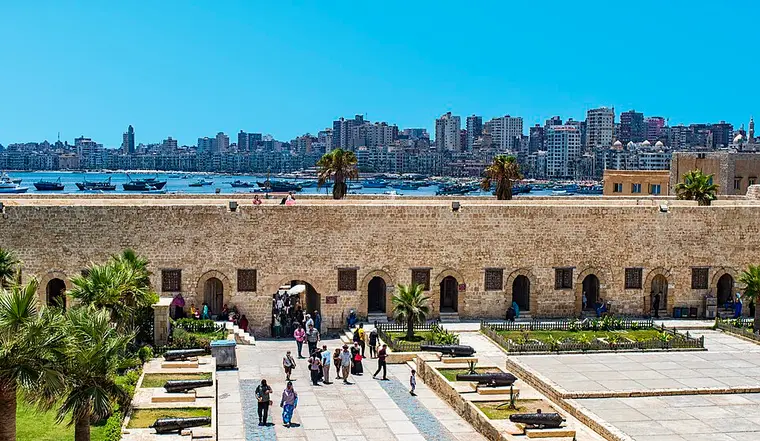
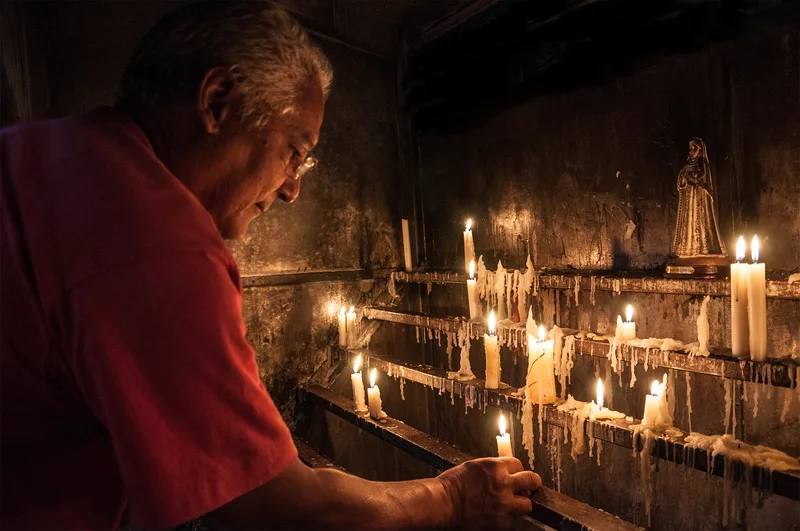
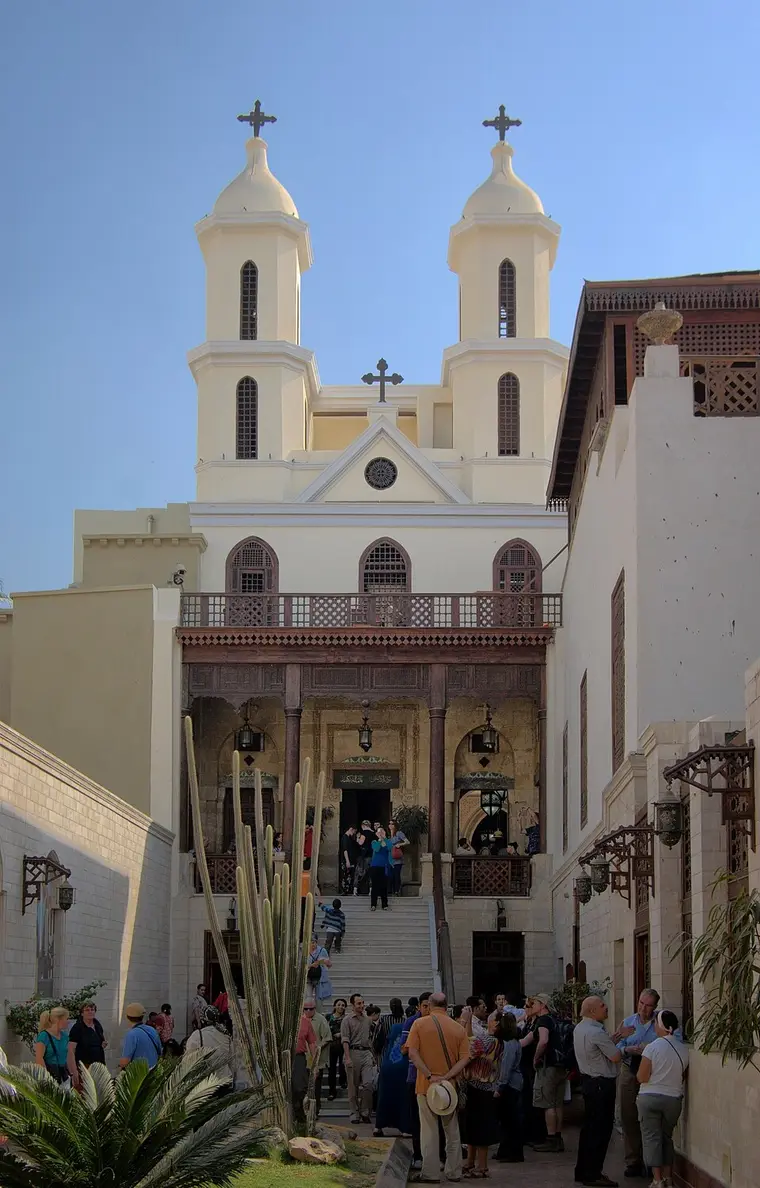
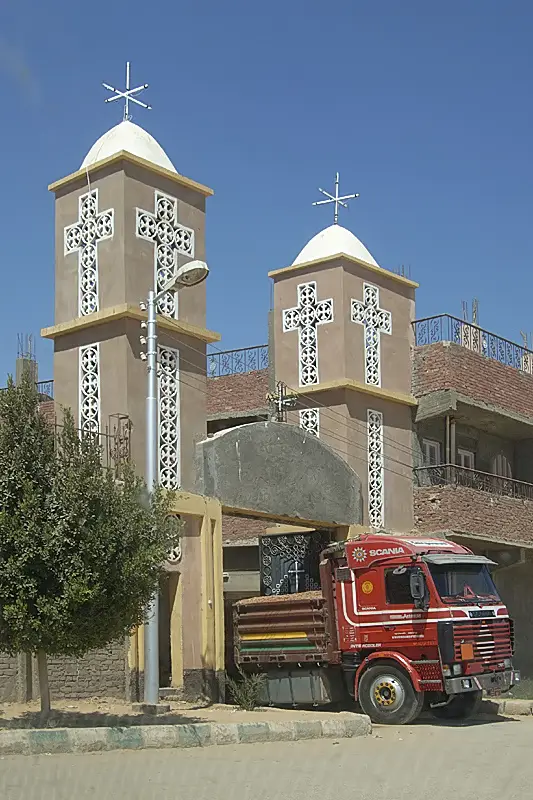
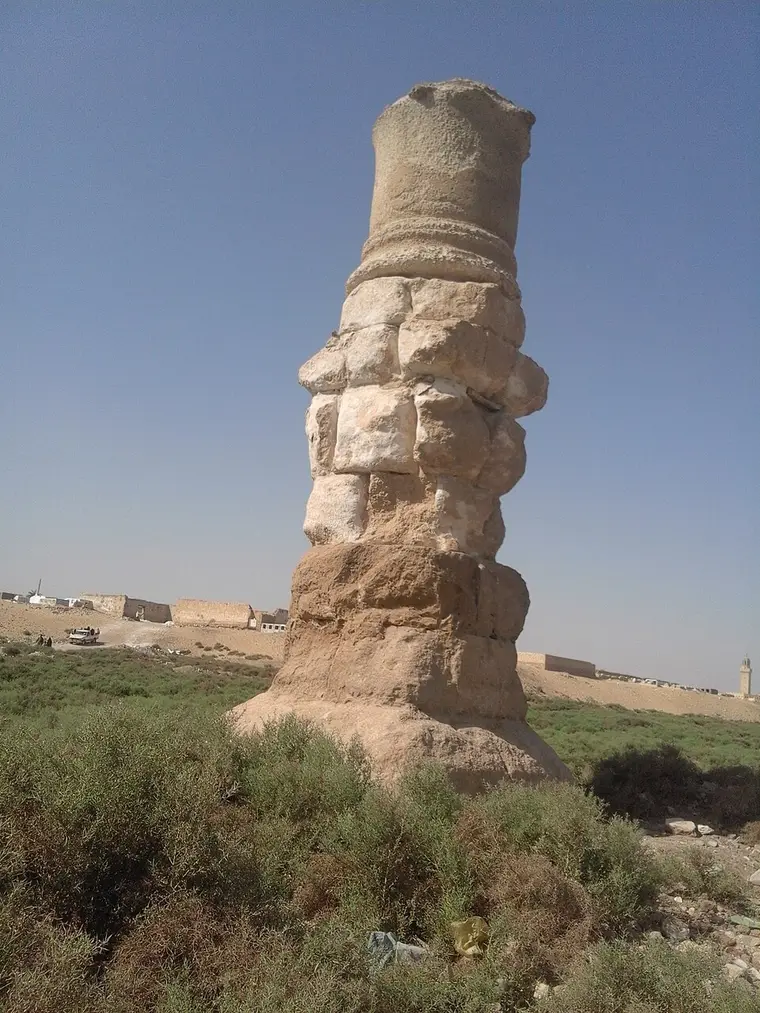
Sources for this chapter (332)Academic36Institution13Specialist book150Reputable web133
Academic(36)
- Setiyono · From Pan-Arabism to Pharaonism: Egypt's Gradual Change of National Identity during the Sisi Era · Global Strategis · 2023
- The Arab Middle East and the Modern World · International Affairs · 1946
- Lapidus · The Conversion of Egypt to Islam · Israel Oriental Studies · 1972
- A Project for the Independence of Egypt, 1801 · Journal of the American Oriental Society · 1970
- Characterizing the Copts in Egypt: Demographic, socioeconomic and health indicators · QScience Connect · 2013
- Accursed, Superior Men: Ethno-Religious Minorities and Politics in the Medieval Mediterranean · Comparative Studies in Society and History · 2014
- The Copts in modern Egypt · Middle Eastern Studies · 1982
- Icons of contention: The iconography of martyrdom and the construction of Coptic identity in post-revolutionary Egypt · Media, War & Conflict · 2020
- Y-chromosome variation among Sudanese: Restricted gene flow, concordance with language, geography, and history · American Journal of Physical Anthropology · 2008
- Trombetta, Beniamino · Phylogeographic refinement and large scale genotyping of human Y chromosome haplogroup E provide new insights into the dispersal of early pastoralists in the African continent · Genome Biology and Evolution · 2015
- Begoña Dobon · The genetics of East African populations: a Nilo-Saharan component in the African genetic landscape · Scientific Reports · 2015
- Northeast African genomic variation shaped by the continuity of indigenous groups and Eurasian migrations · PLOS Genetics · 2017
- Allele frequency comparative study between the two main Egyptian ethnic groups · Forensic Science International · 2020
- O'Sullivan · Coptic Conversion and the Islamization of Egypt · Mamluk Studies Review · 2006
- A Brief History of Coptic Personal Status Law · Berkeley Journal of Middle Eastern and Islamic Law · 2010
- The U.S. Coptic Diaspora and the Limit of Polarization · Centre National de la Recherche Scientifique
- Hanna · With Friends Like These: Coptic Activism in the Diaspora · Middle East Report · 2013
- The Copts: Passive Survivors under Threat · Africa Watch · 1993
- Brock · Miaphysite, not Monophysite! · Cristianesimo Nella Storia · 2016
- Winkler · Miaphysitism: A New Term for Use in the History of Dogma and in Ecumenical Theology · The Harp · 1997
- Rubenson · The Transition from Coptic to Arabic · Égypte/Monde arabe · 1996
- Pharaonism and the Revival of the Coptic Language among Early Twentieth-Century Coptic Christians · Bulletin of the Society for Near Eastern Studies in Japan · 2016
- The system of Coptic vowel reduction: Evidence from L2 Greek usage · Italian Journal of Linguistics · 2022
- Funk · Die Zeugen des koptischen Literaturdialekts I7 · Zeitschrift für Ägyptische Sprache und Altertumskunde · 1987
- Takács · Questions of Egyptian Historical Phonology and Afro-Asiatic · Bibliotheca Orientalis · 2015
- On Coptic Sounds · Orientalia · 1993
- Jernstedt · Das koptische Präsens und die Anknüpfungsarten des näheren Objekts · Comptes Rendus de l'Académie des Sciences de l'URSS · 1927
- Pearson · Review of The Nag Hammadi Library · Journal of the American Academy of Religion · 1989
- Schaefer · Malleable Magic: Medieval Arabic Block Printed Amulets and Their Audiences · Manuscript Cultures · 2022
- The Coptic Universal Dependency Treebank · Association for Computational Linguistics · 2018
- Abel · On the Coptic Language · Transactions of the Philological Society · 1855
- Gessman · The Birth of the Coptic Script · University of South Florida Language Quarterly 14 · 1976
- Harmless · Remembering Poemen Remembering: The Desert Fathers and the Spirituality of Memory · Church History · 2000
- Worthen · The Chalcedon Problem: Rousas John Rushdoony and the Origins of Christian Reconstructionism · Church History · 2008
- Chalcedon, Council of
- John Romanides · St. Cyril's "One Physis or Hypostasis of God the Logos Incarnate" and Chalcedon · Greek Orthodox Theological Review · 1964
Institution(13)
- Egypt · Berkley Center for Religion, Peace, and World Affairs
- Coptic Orthodox Church (NSW) Property Trust Act 1990
- Yerkes · What Egypt under Sissi is really like for Coptic Christians · 2016
- Music, Coptic
- Coptic Christianity in Egypt · Harvard Divinity School
- Collections Online | British Museum
- Emile Maher Ishaq · Coptic language, Spoken
- Dialect P (or Proto-Theban)
- ⲗⲁϩⲙϥ [lahmf], ⲗⲁϩⲙⲉϥ [lahmef] · Georgetown University
- Buzi · Literature, Coptic: Update · Claremont Graduate University · 2021
- Orlandi · Literature, Coptic · Macmillan Publishers · 1991
- Internet History Sourcebooks
- Ecumenical Council · columbia.edu
Specialist book(150)
- Erman · Life in Ancient Egypt · Courier Corporation · 1971
- Black Athena Revisited · University of North Carolina Press · 1996
- Pateman, Robert & Salwa El-Hamamsy · Egypt · Marshall Cavendish Benchmark · 2003
- Colla · Conflicted Antiquities: Egyptology, Egyptomania, Egyptian Modernity · Duke University Press · 2008
- Cannuyer · Coptic Egypt: The Christians of the Nile · Thames & Hudson · 2001
- Minahan · Encyclopedia of Stateless Nations: Ethnic and National Groups Around the World · Greenwood · 2016
- Elmasry · The Story of the Copts · St. Anthony Coptic Orthodox Monastery Publications · 1978
- Tadros · Copts at the Crossroads: The Challenges of Building Inclusive Democracy in Contemporary Egypt · Oxford University Press · 2013
- Copts in Context: Negotiating Identity, Tradition, and Modernity · Univ of South Carolina Press · 2017
- The Rowman & Littlefield Handbook of Christianity in the Middle East · Rowman & Littlefield · 2020
- Etheredge · Middle East, Region in Transition: Egypt · Britannica Educational Publishing · 2011
- Lyster · The Cave Church of Paul the Hermit at the Monastery of St. Pau · Yale University Press · 2013
- N. Swanson · The Coptic Papacy in Islamic Egypt (641–1517) · American Univ in Cairo Press · 2010
- Who Are the Christians in the Middle East? · Wm. B. Eerdmans Publishing · 2003
- Gurr · Peoples Versus States: Minorities at Risk in the New Century · US Institute of Peace Press · 2000
- Contemporary Christian Culture: Messages, Missions, and Dilemmas · Lexington Books · 2017
- The Cambridge History of the Bible: Volume 1, From the Beginnings to Jerome · Cambridge University Press · 1975
- Alexandria: The City that Changed the World · Simon and Schuster · 2024
- Egypt's Identities in Conflict: The Political and Religious Landscape of Copts and Muslims · McFarland · 2018
- Encyclopedia of Monasticism · Fitzroy Dearborn Publishers · 2000
- The Oxford Handbook of Christian Monasticism · Oxford University Press · 2020
- Bagnall · Egypt in Late Antiquity · Princeton University Press · 1993
- Butler · The Arab Conquest of Egypt and the Last Thirty Years of the Roman Dominion · Oxford University Press · 1902
- Atiya · A History of Eastern Christianity · Methuen & Co. · 1968
- Hoyland · Christians and Others in the Umayyad State · Oxford University Press · 2004
- The American Colony Guide-book to Jerusalem and Environs · Vester · 1925
- Goddard · A History of Christian–Muslim Relations · Rowman & Littlefield · 2000
- Feder · Christianity and Monasticism in Northern Egypt: Beni Suef, Giza, Cairo, and the Nile Delta · American University in Cairo Press · 2017
- John Joseph Saunders · A History of Medieval Islam · Routledge · 2002
- Marina Rustow · Heresy and the Politics of Community: The Jews of the Fatimid Caliphate · Cornell University Press · 2014
- Christian-Muslim Relations. A Bibliographical History, Volume 5 (1350–1500) · Brill · 2013
- Werthmuller · Coptic Identity and Ayyubid Politics in Egypt, 1218–1250 · American Univ in Cairo Press · 2010
- "They Can Live in the Desert but Nowhere Else": A History of the Armenian Genocide · Princeton University Press · 2015
- Nisan · Minorities in the Middle East · McFarland · 2002
- Mariz Tadros · Under Caesar's Sword: How Christians Respond to Persecution · Cambridge University Press · 2018
- Australia's Religious Communities: Facts and Figures from the 2011 Australian Census and Other Sources · Christian Research Association · 2012
- B. Rugh · Christians in Egypt: Strategies and Survival · Springer · 2016
- M. Farag · The Coptic Christian Heritage: History, Faith and Culture · Routledge · 2013
- Allen · Middle Egyptian: An Introduction to the Language and Culture of Hieroglyphs · Cambridge University Press · 2000
- Declercq · Anno Domini: The Origins of the Christian Era · Isd · 2000
- Calculating Coptic Orthdox Easter
- A Sword over the Nile · Austin Macauley · 2020
- Held · Middle East Patterns, Student Economy Edition: Places, People, and Politics · Routledge · 2018
- "Afrasian linguistics" in The Oxford Handbook of Archaeology and Language · Oxford University Press · 2025
- Betts · Christians in the Arab East: A Political Study · Lycabettus Press · 1978
- Charles · The Chronicle of John, Bishop of Nikiu: Translated from Zotenberg's Ethiopic Text · Evolution Publishing · 2007
- Copts in Egypt: A Christian Minority Under Siege: Papers Presented at the First International Coptic Symposium, Zurich, September 23–25, 2004 · Vandenhoeck & Ruprecht · 2006
- Meyendorff · Imperial unity and Christian divisions: The Church 450–680 A.D. · St. Vladimir's Seminary Press · 1989
- Ostrogorsky · History of the Byzantine State · Basil Blackwell · 1956
- Meinardus · Two Thousand Years of Coptic Christianity · American University in Cairo Press · 1999
- Two Thousand Years of Coptic Christianity · American University in Cairo Press · 2002
- World Religions · Greenhaven Publishing LLC · 2009
- Christianity: the One, the Many: What Christianity Might Have Been and Could Still Become Volume 1 · Xlibris Corporation · 2008
- Apollinaris of Laodicea · Apollinaris von Laodicea und seine Schule: Texte und Untersuchungen · Mohr Siebeck Verlag · 1904
- Olupona · African Religions: A Very Short Introduction · Oxford University Press · 2014
- Early Christian Authors on Samaritans and Samaritanism: Texts, Translations and Commentary (Texts and Studies in Ancient Judaism) · 2002
- The Chronicle of John, Bishop of Nikiu: Translated from Zotenberg's Ethiopic Text, Chapter CXV: paragraph 7 · 1913
- The Chronicle of John, Bishop of Nikiu: Translated from Zotenberg's Ethiopic Text, Chapter CXVIII: paragraph 12 · 1913
- The Chronicle of John, Bishop of Nikiu: Translated from Zotenberg's Ethiopic Text, Chapter CXX: paragraph 36 · 1913
- The Chronicle of John, Bishop of Nikiu: Translated from Zotenberg's Ethiopic Text, Chapter CXXI: paragraph 3 · 1913
- The Cambridge History of Christianity: Volume 5: Eastern Christianity · Cambridge University Press · 2006
- Partrick · Traditional Egyptian Christianity: History of the Coptic Orthodox Church · Fisher Park Press · 1996
- Growth in Agreement II. Reports and Agreed Statements of Ecumenical Conversations at World Level 1982–1998, ed. Jeffrey Gros, FSC, Harding Meyer, William G. Rusch, WCC and Michigan · 2000
- Clarke · Encyclopedia of New Religious Movements · Routledge · 2004
- Escalating Violence Against Coptic Women and Girls: Will the New Egypt be More Dangerous than the Old? : Hearing before the Commission on Security and Cooperation in Europe, One Hundred Twelfth Congress, Second Session, July 18, 2012 · Government Printing Office · 2012
- Mary Cecil, 2nd Baroness Amherst of Hackney · A Sketch of Egyptian History from the Earliest Times to the Present Day · Methuen · 1906
- Comparative Christianity: A Student's Guide to a Religion and Its Diverse Traditions · Universal-Publishers · 2010
- Water: A Spiritual History · Bloomsbury Publishing · 2012
- H. Bulzacchelli · Judged by the Law of Freedom: A History of the Faith-works Controversy, and a Resolution in the Thought of St. Thomas Aquinas · University Press of America · 2006
- The Coptic Christian Heritage: History, Faith and Culture · Routledge · 2013
- Christians in Egypt : Orthodox, Catholic and Protestant Communities Past and Present · Oxford University Press · 2006
- Food, Feasts, and Faith: An Encyclopedia of Food Culture in World Religions [2 volumes] · ABC-CLIO · 2017
- Introduction to Eastern Christian Liturgies · Liturgical Press · 2022
- Zurlo · Global Christianity: a guide to the world's largest religion from Afghanistan to Zimbabwe · Zondervan Academic · 2022
- Sudan: Conflict and minorities · Minority Rights Group International · 1995
- Hancock · The Sign and the Seal · 1992
- Historical Dictionary of Ethiopia · Scarecrow Press · 2013
- Religions of the World: A Comprehensive Encyclopedia of Beliefs and Practices, 2nd Edition [6 volumes] · ABC-CLIO · 2010
- Grillmeier · Christ in Christian Tradition: From the Apostolic Age to Chalcedon (451) · John Knox Press · 1975
- Christ in Christian Tradition: The Church of Alexandria with Nubia and Ethiopia after 451 · Westminster John Knox Press · 1996
- Morgan · History of the Coptic Orthodox People and the Church of Egypt · FriesnPress · 2016
- Partrick · Traditional Egyptian Christianity: A History of the Coptic Orthodox Church · Fisher Park Press · 1996
- Butcher · Story of the Church of Egypt · Smith, Elder & Co. · 2008
- Blasco Torres · Representing Foreign Sounds: Greek Transcriptions of Egyptian Anthroponyms from 800 BC to 800 AD · University of Salamanca · 2017
- Swanson · The Coptic Papacy in Islamic Egypt (641-1517) · American Univ in Cairo Press · 2010
- Papyrology and the History of Early Islamic Egypt · Brill Academic Publishers · 2004
- Allen · Coptic: A Grammar of Its Six Major Dialects · Eisenbrauns · 2020
- Emmel · Egypt in the Byzantine World, 300–700 · Cambridge University Press · 2007
- Fournet · The Rise of Coptic: Egyptian versus Greek in Late Antiquity · Princeton University Press · 2020
- Gignac · The Coptic Encyclopedia · Macmillan Publishing Company and Collier Macmillan Canada · 1991
- Greenberg · On Language: Selected Writings of Joseph H. Greenberg · Stanford University Press · 1990
- Lambdin · Introduction to Sahidic Coptic · Mercer University Press · 1983
- Layton · Coptic in 20 Lessons: Introduction to Sahidic Coptic with Exercises & Vocabularies · Peeters Publishers · 2007
- Loprieno · Ancient Egyptian: A Linguistic Introduction · Cambridge University Press · 1995
- Orlandi · The Roots of Egyptian Christianity · Fortress Press · 1986
- Plumley · Introductory Coptic Grammar · Home & Van Thal · 1948
- Reintges · Coptic Egyptian (Sahidic dialect): a learner's grammar · Rüdiger Köppe Verlag · 2004
- Reintges · Clause linking and clause hierarchy · John Benjamins · 2010
- Richter · Hellenism to Islam: Cultural and Linguistic Change in the Roman Near East · Cambridge University Press · 2009
- Schaefer · Enigmatic Charms: Medieval Arabic Block Printed Amulets in American and European Libraries and Museums · E. J. Brill · 2006
- Allen · Ancient Egyptian Phonology · Cambridge University Press · 2020
- Peust · Egyptian Phonology: An Introduction to the Phonology of a Dead Language · Peust & Gutschmidt · 1999
- Ireland: A Colony Once Again · Cambridge Scholars Publishing · 2012
- Wortley · The Anonymous Sayings of the Desert Fathers
- Athanasius of Alexandria · A Select Library of the Nicene and Post-Nicene Fathers of the Christian Church, Second Series · Christian Literature Publishing Company · 1892
- Binns · The Cambridge History of Christianity. Volume 5: Eastern Christianity · Cambridge University Press · 2006
- Burton-Christie · The Word in the Desert: Scripture and the Quest for Holiness in Early Christian Monasticism · Oxford University Press · 1993
- Chryssavgis · In the Heart of the Desert: The Spirituality of the Desert Fathers and Mothers · World Wisdom · 2008
- Egan · An Anthology of Christian Mysticism · Liturgical Press · 1996
- Guillaumont · Aux origines du monachisme chrétien: Pour une phénoménologie du monachisme · Abbaye de Bellefontaine · 1979
- Harmless · Desert Christians: An Introduction to the Literature of Early Monasticism · Oxford University Press · 2004
- History of the World Christian Movement · T&T Clark · 2001
- Keller · Oasis of Wisdom: The Worlds of the Desert Fathers and Mothers · Liturgical Press · 2005
- The Essential Writings of Christian Mysticism · Modern Library · 2006
- Merton · Wisdom of the Desert · New Directions · 1960
- Meyendorff · St Gregory Palamas and Orthodox Spirituality · St Vladimir's Seminary Press · 1974
- Nes · The Uncreated Light: An Iconographical Study of the Transfiguration in the Eastern Church · Wm. B. Eerdmans Publishing · 2007
- The Blackwell Dictionary of Eastern Christianity · Blackwell Publishing · 1999
- Riddle · A History of the Middle Ages, 300–1500 · Rowman & Littlefield · 2008
- Rock · The Cambridge History of Christianity. Volume 5: Eastern Christianity · Cambridge University Press · 2006
- Waddell · The Desert Fathers · University of Michigan Press · 1957
- The Sayings of the Desert Fathers: The Alphabetical Collection · Cistercian Publications · 1984
- Ware · The Inner Kingdom · St Vladimir's Seminary Press · 2000
- Wilfong · The Cambridge History of Egypt. Volume 1: Islamic Egypt, 640–1517 · Cambridge University Press · 1998
- The Book of the Elders: Sayings of the Desert Fathers · Liturgical Press · 2012
- Agailby · The Arabic Life of Antony Attributed to Serapion of Thmuis: Cultural Memory Reinterpreted · Leiden · 2018
- Moffett · A History of Christianity in Asia. Volume I: Beginnings to 1500 · HarperCollins · 1992
- The Story of Christian Theology: Twenty Centuries of Tradition Reform · InterVarsity Press · 1999
- The Acts of the Council of Chalcedon · Liverpool University Press · 2007
- Richard Price · The acts of the Council of Chalcedon by Council of Chalcedon · 2006
- The Christian Tradition: A History of the Development of Doctrine · University of Chicago Press · 1971
- Richard Price · The Acts of the Council of Chalcedon · Liverpool University Press · 2006
- Hughes · A Popular History of the Catholic Church · Image Books (Doubleday) · 1954
- Center for the Preservation of Ancient Religious Texts · The Bazaar Of Heracleides
- Donald S. Armentrout · An Episcopal dictionary of the church · Church Publishing Incorporated · 2005
- Bokenkotter · A Concise History of the Catholic Church · Doubleday · 2004
- Western Civilization · Houghton Mifflin Company · 2005
- Kelly · A Response to 'Evangelicals, Catholics, and Unity' · 2004
- Encyclopedia of World Religions · Merriam-Webster · 1999
- The Oxford Handbook of Christology · Oxford University Press · 2015
- Petrosyan · The Christology of the Armenian Church · Holy Etchmiadzin · 1995
- Bury · A history of the later Roman empire from Arcadius to Irene · 1889
- Edwards · Catholicity and Heresy in the Early Church · Ashgate · 2009
- Gwynn · Chalcedon in Context: Church Councils 400–700 · Liverpool University Press · 2009
- Kelly · Early Christian Creeds · Continuum · 2006
- Louth · Chalcedon in Context: Church Councils 400–700 · Liverpool University Press · 2009
- Meyendorff · Orthodoxy and Catholicity · Sheed & Ward · 1966
- Price · Chalcedon in Context: Church Councils 400–700 · Liverpool University Press · 2009
- Roueché · Chalcedon in Context: Church Councils 400–700 · Liverpool University Press · 2009
- Whitby · Chalcedon in Context: Church Councils 400–700 · Liverpool University Press · 2009
Reputable web(133)
- Copts in Egypt · Minority Rights Group · 2017
- Counting Coptic Christians in Egypt – Providence · 2023
- Kjeilen · Coptic Church
- La Chiesa copta · 2014
- Middle Killeavy Parish Web Site
- Who are Egypt's Coptic Christians? · CNN · 2017
- البابا تواضروس: ١٥ مليون مسيحي في مصر | المصري اليوم · 2023
- How many Christians are there in Egypt? · 2011
- Egyptian Copts reject population estimate - Politics - Egypt
- Who are the Coptic Christians of Egypt?
- Egypt's Sisi meets world Evangelical churches delegation in Cairo - Politics - Egypt
- Refugees · Refworld | World Directory of Minorities and Indigenous Peoples – Egypt: Copts of Egypt · 2017
- Egypt from "U.S. Department of State/Bureau of Near Eastern Affairs" · United States Department of State · 2008
- Egypt from "Foreign and Commonwealth Office" · Foreign and Commonwealth Office -UK Ministry of Foreign Affairs · 2008
- Coptic Dictionary Online
- Inuit, Inuk (Linguistic recommendation from the Translation Bureau) · Translation Bureau, Public Services and Procurement Canada · 2024
- ROMANY definition and meaning | Collins English Dictionary · 2025
- The Primacy of the See of Constantinople in Theory and Practice* – Greek Orthodox Archdiocese of America – Orthodox Church
- Papal Primacy and the Council of Nicea
- THE EXCELLENT ARTICLE ON GENERAL YA'QUB BY ANWAR LOUCA IN THE COPTIC ENCYCLOPEDIA · 2012
- Napoleon in Egypt: Local Units Side with the French · 2024
- A people's revolution: The Coptic contingent · 2019
- Father Sergius: The preacher of Egypt's 1919 revolution · 2019
- Copts
- Vatican formally recognizes 21 Coptic Orthodox killed in Libya as martyrs, gives them feast day · 2023
- King commends Coptic Church's role in promoting coexistence
- The ethnic origin of Christians in Israel
- Religion and Education Around the World · Pew Research Center · 2016
- Naguib Sawiris: 'If God wanted women to be veiled, he would have created them with a veil' · 2019
- Arabian Business: The Sawiris Family
- The richest men in Africa – 2009
- #60 Naguib Sawiris - Forbes.com
- #68 Nassef Sawiris - Forbes.com
- #96 Onsi Sawiris - Forbes.com
- #396 Samih Sawiris - Forbes.com
- The Coptic Studies' Corner
- The Coptic Calendar of Martyrs
- Birth of the Coptic Calendar – Special Files – Folk
- Coptic Orthodox Calendar / Easter Calculation
- The Egyptian Copts And Their Music
- Humming the oldest tune in history · 2012
- United States Commission on Int'l Religious Freedom
- Gilbert · Egypt's Coptic Christians – Braced for Persecution · 2015
- Egypt: National Unity and the Coptic issue. (Arab Strategic Report 2004–2005)
- World Watch List – Persecution of Christians · Open Doors
- (U.S.A.) · Egypt — Presbyterians at work around the world — Mission and Ministry — Presbyterian Mission Agency · 2010
- The Copts of Egypt: Guardians of an Ancient Faith – Travel2Egypt · 2024
- Khalil · Reactions in the Egyptian Press To a Lecture Delivered by a Coptic Bishop In Hudson Institute
- Who are the Copts of The Coptic Orthodox Church
- Naguib Sawiris
- Who are Egypt's Coptic Christians? ويوجد حوالي 1-2 مليون مسيحي قبطي آخرين منتشرين في جميع أنحاء أفريقيا وأوروبا وأستراليا وكندا والولايات المتحدة، وفقًا لمجلس الكنائس العالمي.[https://www.refworld.org/reference/countryrep/mrgi/2018/en/64852 Sudan: Copts], World Directory of Minorities and Indigenous Peoples, Minority Rights Group International (June 2018) المسيحية في ليبيا[http://www.copt.org.au/publications/diary/D2005.pdf Coptic Orthodox Church Listings for Libya, p. 136] يشكل الأقباط ما يقرب · 2025
- Country Profile: The Arab Republic of Egypt · Government of the United Kingdom
- Excluded and Unequal · The Century Foundation · 2019
- Hackett · How many Christians are there in Egypt? · 2011
- ? · United Copts of Great Britain · 2008
- The Copts and Their Political Implications in Egypt · 2005
- Coptic Orthodox Church of Alexandria-Britannica
- الأقباط متحدون – اللغة القبطية
- The School of Alexandria – Part I – An Introduction to the School of Alexandria · Copticchurch.net
- Attia · The Catechetical School of Alexandria · 2015
- Didymus The Blind | Alexandrian Scholar, Biblical Exegete & Church Father | Britannica
- مجمع نيقية المقدس 325 م. | St-Takla.org
- Church · Defeating Nestorius: The Third Ecumenical Council · 2025
- Coptic Christians-Encyclopedia.com
- Theodosius Of Alexandria · Encyclopedia Britannica · 2022
- Saint George Coptic Church · Suscopts.org
- Press Release on the union of Coptic and British Orthodox Churches
- BRITISH ORTHODOX UNITE WITH COPTIC PATRIARCHATE
- Joint announcement from the Coptic Orthodox Church in the United Kingdom and the British Orthodox Church of the British Isles | The British Orthodox Church
- Pastoral Agreement between the Coptic Orthodox and Greek Orthodox Patriarchates of Alexandria · 2001
- Masress : Sectarian tensions rise in wake of crime boss death · Masress
- The 21 Martyrs of Libya: Videotaped Instanteous Sainthood – Literature – Resources · 2015
- Tadros · The Coptic Church in peril: The Islamization of Egypt and the end of Egyptian Christianity · 2013
- joint christological declaration
- How a bishop's murder could change Egypt's Coptic church
- Fr Matta El Meskeen · 2006
- Pope Tawadros II Supports Revolution · ecumenicalnews.com · 2013
- Politics Stymie Religious Reform in Egypt's Coptic Church · 2018
- 50th anniversary of Coptic-Catholic Friendship day · 2023
- Stand, Bow, Prostrate: The Prayerful Body of Coptic Christianity · The Clarion Review · 2013
- Prayers of the Church · Ethiopian Orthodox Tewahedo Church
- What is the relationship between bells and the church? When and where did the tradition begin? Should bells ring in every church? · Coptic Orthodox Diocese of the Southern United States · 2020
- Did you know Muslims pray in a similar way to some Christians? · Aleteia · 2017
- Coptic Orthodox Diocese of the Southern United States - Q&A
- Why We Face the East · St Mary and Archangel Michael Church
- The Meaning of the Great Lent · Coptic Orthodox Diocese of Los Angeles, Southern California, and Hawaii · 2009
- Article on Fasting · St. Mary & St. Abanoub Coptic Orthodox Church · 2016
- Egypt's Sisi meets world Evangelical churches delegation in Cairo – Politics – Egypt – Ahram Online
- Egypt's Coptic Bishop Morcos: We need to build 4,000 churches in next 10 years · 2017
- Twenty-Three Million Coptic Christians in Egypt, Says Authority · 2013
- Pope Tawadros II: Number of Copts 15 million in Egypt · 2023
- BBC - Religions - Christianity: Coptic Orthodox Church
- General Findings: Coptic Diaspora Survey
- الكنيسة المسيحية القبطية الأرثوذكسية في مصر و تاريخ الأقباط
- Britannica Academic
- Coptic Orthodox Church of Alexandria
- Tawadros II
- Pope of Alexandria | Coptic Orthodox Diocese of Los Angeles
- Iskandar · From Paris to Cairo: Resistance of the Unacculturated · The Ambassadors Online Magazine · 2006
- Coptic
- Coptic Language History
- The Vision of Theophilus: Resistance Through Orality Among the Persecuted Copts · 2010
- The Coptic Alphabet
- Coptic Lesson 5:The Rule of the JINKIM
- pAy, pA(n)y
- nTr
- Ager · Coptic language and alphabet
- Boud'hors · Coptic Literature · Oxford University Press · 2018
- Wilfong · Coptic Literature · Oxford University Press · 2001
- Descent into the Desert · 2014
- Notes Toward a New Language: Into the Desert
- Cassian, John · Oxford University Press · 1991
- Peterson · Hesychasm · Westminster John Knox Press · 2008
- Council of Chalcedon | Description, History, & Significance
- Catholic Encyclopedia: Council of Chalcedon
- Definition of Chalcedon
- Christianity's Great Schism of 1054 AD
- Eutyches | Biography, Eutychianism, Beliefs, & Facts
- NPNF2-14. The Seven Ecumenical Councils | Christian Classics Ethereal Library · Ccel.org · 2005
- Flavian - Appeal to Leo
- St. Hilary
- Kirsch · St. Pulcheria · Robert Appleton Company · 1911
- Council of Chalcedon | Christianity · 1955
- Tadros · Introduction to the Coptic Church · 1993
- Orthodox And Oriental Orthodox Consultation
- Questions and Answers by His Grace Bishop Youssef · suscopts
- Chalcedonian Definition
- L'idea di pentarchia nella cristianità · Homo laicus
- Canon xxviii & eastern papalism: cause or effect? · AOI USA
- of Antinoes · Council of Chalcedon 451 ad · 2013
- On the Sunday of the Holy Fathers of the 4th Ecumenical Council, who assembled in Chalcedon · Anastasis – The Home Page of Archimandrite Ephrem
- TA ΜΗΝΑΙΑ – Ιούλιος – Τῇ Κυριακῇ τῶν ἁγίων Πατέρων τῆς Δ' Οἰκουμενικῆς Συνόδου, τῶν ἐν Χαλκηδόνι συνελθόντων
- Богослужебные тексты – Рядовая Минея – Июль – 16 июля: Священномученика Афиногена и десяти учеников его. Святые отцов шести Вселенских соборов
Every ancient date is an estimate. Scholarly chronologies differ by decades, and by more the further back you go, which is why each figure carries a tilde. When a period is published we name the chronology its dates come from.
In this period
In this period
128 minutes in total- 01Introduction2 min read
- 02Etymology3 min read
- 03History14 min read
- 04Demographics7 min read
- 05Language1 min read
- 06Calendar3 min read
- 07Music1 min read
- 08Persecution and discrimination2 min read
- 09Church affairs1 min read
- 10Identity5 min read
- 11Genetics4 min read
- 12Council of Chalcedon26 min read
- 13Coptic Orthodox Church of Alexandria22 min read
- 14Coptic language25 min read
- 15Desert Fathers12 min read