The Roman Period
~30 BCE – ~395 CE
13 chapters · 117 min read · 135 sources
~30 BCE
Introduction
3 min readDuring the era of the Roman Empire, most of modern-day Egypt, except for the Sinai, was ruled as the imperial province of Aegyptus, from the time it was conquered by Roman forces in 30 BC, to AD 642. The last few…During the era of the Roman Empire, most of modern-day Egypt, except for the Sinai, was ruled as the imperial province of Aegyptus, from the time it was conquered by Roman forces in 30 BC, to AD 642. The last few centuries of this period has been called late antique Egypt. The province was bordered by Crete and Cyrenaica to the west and Judaea, later Arabia Petraea, to the East.
Egypt came to serve as a major producer of grain for the empire and had a highly developed urban economy. It was by far the wealthiest Roman province outside of Italy. The population of Roman Egypt is unknown, although estimates vary from. Alexandria, its capital, was the largest port and second largest city of the Roman Empire.
Three Roman legions garrisoned Egypt in the early Roman imperial period, with the garrison later reduced to two, alongside formations of the Roman army. The major town of each nome (administrative region) was known as a metropolis and granted additional privileges. The inhabitants of Roman Egypt were divided by social class along ethnic and cultural lines. Most inhabitants were peasant farmers, who lived in rural villages and spoke the Egyptian language (which evolved from the Demotic Egyptian of the Late and Ptolemaic periods to Coptic under Roman rule). In each metropolis, the citizens spoke Koine Greek and followed a Hellenistic culture. However, there was considerable social mobility, increasing urbanization, and both the rural and urban population were involved in trade and had high literacy rates. In AD 212, the Constitutio Antoniniana gave Roman citizenship to all free Egyptians.
The Antonine Plague struck in the late 2nd century, but Roman Egypt recovered by the 3rd century. Having escaped much of the Crisis of the Third Century, Roman Egypt fell under the control of the breakaway Palmyrene Empire after an invasion of Egypt by Zenobia in 269. The emperor Aurelian successfully besieged Alexandria and recovered Egypt. The usurpers Domitius Domitianus and Achilleus took control of the province in opposition to emperor Diocletian, who recovered it in 297–298. Diocletian then introduced administrative and economic reforms. These coincided with the Christianization of the Roman Empire, especially the growth of Christianity in Egypt. After Constantine the Great gained control of Egypt in AD 324, the emperors promoted Christianity. The Coptic language, derived from earlier forms of Egyptian, emerged among the Christians of Roman Egypt.
Under Diocletian the frontier was moved downriver to the First Cataract of the Nile at Syene (Aswan), withdrawing from the Dodekaschoinos region. This southern frontier was largely peaceful for many centuries, likely garrisoned by limitanei of the late Roman army. Regular units also served in Egypt, including Scythians known to have been stationed in the Thebaid by Justinian the Great. Constantine introduced the gold solidus coin, which stabilized the economy. The trend towards private ownership of land became more pronounced in the 5th century and peaked in the 6th century, with large estates built up from many individual plots. Some large estates were owned by Christian churches, and smaller land-holders included those who were themselves both tenant farmers on larger estates and landlords of tenant-farmers working their own land. The First Plague Pandemic arrived in the Mediterranean Basin with the emergence of the Justinianic Plague at Pelusium in Roman Egypt in 541.
Egypt was conquered by the Sasanian Empire in 618, who ruled the territory for a decade, but it was returned to the Eastern Roman Empire by the defection of the governor in 628. Egypt ceased to be a part of the Roman Empire in 642, when it became part of the Rashidun Caliphate following the Muslim conquest of Egypt.
Formation
2 min readThe Ptolemaic Kingdom (, the Thirty-first Dynasty) had ruled Egypt since the Wars of Alexander the Great that overthrew Achaemenid Egypt. The Ptolemaic pharaoh Cleopatra VII sided with Julius Caesar during Caesar's…The Ptolemaic Kingdom (, the Thirty-first Dynasty) had ruled Egypt since the Wars of Alexander the Great that overthrew Achaemenid Egypt. The Ptolemaic pharaoh Cleopatra VII sided with Julius Caesar during Caesar's Civil War (49–45 BC) and Caesar's subsequent Roman dictatorship. After Caesar's assassination in 44 BC, Cleopatra aligned Egypt with Mark Antony, the Roman triumvir who controlled the eastern Mediterranean. In the last war of the Roman Republic (32–30 BC), Antony (with Cleopatra's support) fought against Octavian. The decisive naval Battle of Actium was won by Octavian, who then invaded Egypt. In August 30 BC, following the Battle of Alexandria the defeated Antony and Cleopatra killed themselves. The Ptolemaic Kingdom of Egypt ceased to exist; Egypt was seized by Octavian as his personal possession.
The legal status was settled in January 27 BC, when Octavian was granted the honorific name of Augustus and Egypt became an imperial province of the newly established Roman Empire. Augustus (and succeeding Roman emperors) ruled Egypt as the Roman pharaoh. The Ptolemaic institutions were dismantled: the government administration was wholly reformed, as was the social structure, though some bureaucratic elements were maintained. The Graeco-Egyptian legal system of the Hellenistic period continued in use, but within the bounds of Roman law. The tetradrachm coinage minted at the Ptolemaic capital of Alexandria continued to be the currency of an increasingly monetized economy, but its value was made equal to the Roman denarius. Augustus introduced land reforms that enabled wider entitlement to private ownership of land (previously rare under the Ptolemaic cleruchy system of allotments under royal ownership) and the local administration reformed into a Roman liturgical system, in which land-owners were required to serve in local government. The priesthoods of the Ancient Egyptian deities and Hellenistic religions of Egypt kept most of their temples and privileges, and in turn the priests also served the Roman imperial cult of the deified emperors and their families.
Roman government in Egypt
7 min readAs Rome overtook the Ptolemaic system in place for areas of Egypt, they made many changes. The effect of the Roman conquest was at first to strengthen the position of the Greeks and of Hellenism against Egyptian…As Rome overtook the Ptolemaic system in place for areas of Egypt, they made many changes. The effect of the Roman conquest was at first to strengthen the position of the Greeks and of Hellenism against Egyptian influences. Some of the previous offices and names of offices under the Hellenistic Ptolemaic rule were kept, some were changed, and some names would have remained but the function and administration would have changed.
The Romans introduced important changes in the administrative system, aimed at achieving a high level of efficiency and maximizing revenue. The duties of the prefect of Aegyptus combined responsibility for military security through command of the legions and cohorts, for the organization of finance and taxation, and for the administration of justice.
The Egyptian provinces of the Ptolemaic Kingdom remained wholly under Roman rule until the administrative reforms of the augustus Diocletian. In these first three centuries of Roman Egypt, the whole country came under the central Roman control of single governor, officially called in and more usually referred to as the or the. The double title of the governor as prefect "of Alexandria and Egypt" reflects the distinctions between Upper and Lower Egypt and Alexandria, since Alexandria, outside the Nile Delta, was not within the then-prevailing traditional geographic boundaries of Egypt.
From the 1st century BC, the Roman governor of Egypt was appointed by the emperor for a multi-year term and given the rank of prefect. Both the governor and the major officials were of equestrian rank (unlike other Roman provinces, which had governors of senatorial rank). The prefect of Egypt had more or less equivalent civil and military powers (imperium) to a proconsul, since a Roman law (a ) granted him "proconsular imperium". Unlike in senatorial provinces, the prefect was responsible for the collection of certain taxes and for the organization of the all-important grain shipments from Egypt (including the annona). Because of these financial responsibilities, the governor's administration had to be closely controlled and organized. The governorship of Egypt was the second-highest office available to the equestrian class on the cursus honorum (after that of the praetorian prefect, the commander of the imperial Praetorian Guard) and one of the highest-paid, receiving an annual salary of 200,000 sesterces (a "ducenarian" post). The prefect was appointed at the emperor's discretion; officially the governors' status and responsibilities mirrored those of the augustus himself: his fairness and his foresight. From the early 2nd century, service as the governor of Egypt was frequently the penultimate stage in the career of a praetorian prefect.
The governor's powers as prefect, which included the rights to make edicts and, as the supreme judicial authority, to order capital punishment, expired as soon as his successor arrived in the provincial capital at Alexandria, who then also took up overall command of the Roman legions of the Egyptian garrison. (Initially, three legions were stationed in Egypt, with only two from the reign of Tiberius.) The official duties of the praefectus Aegypti are well known because enough records survive to reconstruct a mostly complete official calendar (fasti) of the governors' engagements. Yearly in Lower Egypt, and once every two years in Upper Egypt, the praefectus Aegypti held a conventus, during which legal trials were conducted and administrative officials' practices were examined, usually between January (Ianuarius) and April (Aprilis) in the Roman calendar. Evidence exists of more than 60 edicts issued by the Roman governors of Egypt.
To the government at Alexandria besides the prefect of Egypt, the Roman emperors appointed several other subordinate procurators for the province, all of equestrian rank and, at least from the reign of Commodus of similar, "ducenarian" salary bracket. The administrator of the Idios Logos, responsible for special revenues like the proceeds of bona caduca property, and the iuridicus, the senior legal official, were both imperially appointed. From the reign of Hadrian, the financial powers of the prefect and the control of the Egyptian temples and priesthoods was devolved to other procurators, a dioiketes, the chief financial officer, and an archiereus. A procurator could deputize as the prefect's representative where necessary.
Procurators were also appointed from among the freedmen (manumitted slaves) of the imperial household, including the powerful, responsible for state property in the province. Other procurators were responsible for revenue farming of state monopolies (the ), oversight of farm lands (the ), of the warehouses of Alexandria (the ), and of exports and emigration (the ). These roles are poorly attested, with often the only surviving information beyond the names of the offices is a few names of the incumbents. In general, the central provincial administration of Egypt is no better-known than the Roman governments of other provinces, since, unlike in the rest of Egypt, the conditions for the preservation of official papyri were very unfavourable at Alexandria.
Local government in the hinterland outside Alexandria was divided into traditional regions known as nomoi. The mētropoleis were governed by magistrates drawn from the liturgy system; these magistrates, as in other Roman cities, practised euergetism and built public buildings. To each nome the prefect appointed a strategos ; the strategoi were civilian administrators, without military functions, who performed much of the government of the country in the prefect's name and were themselves drawn from the Egyptian upper classes. The strategoi in each of the mētropoleis were the senior local officials, served as intermediaries between the prefect and the villages, and were legally responsible for the administration and their own conduct while in office for several years. Each strategos was supplemented by a royal scribe. These scribes were responsible for their nomes financial affairs, including administration of all property, land, land revenues, and temples, and what remains of their record-keeping is unparalleled in the ancient world for its completeness and complexity. The royal scribes could act as proxy for the, but each reported directly to Alexandria, where dedicated financial secretaries – appointed for each individual nome – oversaw the accounts: an and a. The was responsible for general financial affairs while the likely dealt with matters relating to the Idios Logos. In 200/201, the emperor Septimius Severus granted each metropolis, and the city of Alexandria, a boulē (a Hellenistic town council).
The nomoi were grouped traditionally into those of Upper and Lower Egypt, the two divisions each being known as an "epistrategy" after the chief officer, the epistrategos, each of whom was also a Roman procurator. Soon after the Roman annexation, a new epistrategy was formed, encompassing the area just south of Memphis and the Faiyum region and named "the Heptanomia and the Arsinoite nome". In the Nile Delta however, power was wielded by two of the epistrategoi. The epistrategoss role was mainly to mediate between the prefect in Alexandria and the strategoi in the mētropoleis, and they had few specific administrative duties, performing a more general function. Their salary was sexagenarian – 60,000 sesterces annually.
Each village or kome was served by a village scribe, whose term, possibly paid, was usually held for three years. Each, to avoid conflicts of interest, was appointed to a community away from their home village, as they were required to inform the strategoi and epistrategoi of the names of persons due to perform unpaid public service as part of the liturgy system. They were required to be literate and had various duties as official clerks. Other local officials drawn from the liturgy system served for a year in their home kome; they included the practor, who collected certain taxes, as well as security officers, granary officials, public cattle drivers, and cargo supervisors. Other liturgical officials were responsible for other specific aspects of the economy: a suite of officials was each responsible for arranging supplies of particular necessity in the course of the prefect's official tours. The liturgy system extended to most aspects of Roman administration by the reign of Trajan, though constant efforts were made by people eligible for such duties to escape their imposition.
The reforms of the early 4th century had established the basis for another 250 years of comparative prosperity in Aegyptus, at a cost of perhaps greater rigidity and more oppressive state control. Aegyptus was subdivided for administrative purposes into a number of smaller provinces, and separate civil and military officials were established; the praeses and the dux. The province was under the supervision of the count of the Orient (i.e. the vicar) of the diocese headquartered in Antioch in Syria.
Emperor Justinian abolished the Diocese of Egypt in 538 and re-combined civil and military power in the hands of the dux with a civil deputy (praeses) as a counterweight to the power of the church authorities. All pretense of local autonomy had by then vanished. The presence of the soldiery was more noticeable, its power and influence more pervasive in the routine of town and village life.
Military
6 min readThe Roman army was among the most homogenous Roman structures, and the organization of the army in Egypt differed little from its organization elsewhere in the Roman Empire. The Roman legions were recruited from Roman…The Roman army was among the most homogenous Roman structures, and the organization of the army in Egypt differed little from its organization elsewhere in the Roman Empire. The Roman legions were recruited from Roman citizens and the Roman auxilia recruited from the non-citizen subjects.
Egypt was unique in that its garrison was commanded by the praefectus Aegypti, an official of the equestrian order, rather than, as in other provinces, a governor of the senatorial class. This distinction was stipulated in a law promulgated by Augustus, and, because it was unthinkable that an equestrian should command a senator, the commanders of the legions in Egypt were themselves, uniquely, of equestrian rank. As a result of these strictures, the governor was rendered unable to build up a rival power base (as Mark Antony had been able to do), while the military legati commanding the legions were career soldiers, formerly centurions with the senior rank of primus pilus, rather than politicians whose military experience was limited to youthful service as a military tribune. Beneath the praefectus Aegypti, the overall commander of legions and stationed in Egypt was styled in, from the, or as. Collectively, these forces were known as the.
The Roman garrison was concentrated at Nicopolis, a district of Alexandria, rather than at the strategic heart of the country around Memphis and Egyptian Babylon. Alexandria was the Mediterranean's second city in the early Roman empire, the cultural capital of the Greek East and rival to Rome under Antony and Cleopatra. Because only a few papyri are preserved from the area, little more is known about the legionaries' everyday life than is known from other provinces of the empire, and little evidence exists of the military practices of the prefect and his officers. Most papyri have been found in Middle Egypt's villages, and the texts are primarily concerned with local affairs, rarely giving space to high politics and military matters. Not much is known about the military encampments of the Roman imperial period, since many are underwater or have been built over and because Egyptian archaeology has traditionally taken little interest in Roman sites. Because they supply a record of soldiers' service history, six bronze Roman military diplomas dating between 83 and 206 are the main source of documentary evidence for the in Egypt; these inscribed certificates rewarded 25 or 26 years of military service in the with Roman citizenship and the right of conubium. That the army was more Greek-speaking than in other provinces is certain.
The heart of the Army of Egypt was the Nicopolis garrison at Alexandria, with at least one legion permanently stationed there, along with a strong force of cavalry. These troops would both guard the residence of the against uprisings among the Alexandrians and were poised to march quickly to any point at the prefect's command. At Alexandria too was the, the provincial fleet of the Roman Navy in Egypt. In the 2nd and 3rd centuries, there were around 8,000 soldiers at Alexandria, a fraction of the megalopolis's huge population.
Initially, the legionary garrison of Roman Egypt consisted of three legions: the Legio III Cyrenaica, the Legio XXII Deiotariana, and one other legion. The station and identity of this third legion is not known for sure, and it is not known precisely when it was withdrawn from Egypt, though it was certainly before 23 AD, during the reign of Tiberius. In the reign of Tiberius's step-father and predecessor Augustus, the legions had been stationed at Nicopolis and at Egyptian Babylon, and perhaps at Thebes. After August 119, the III Cyrenaica was ordered out of Egypt; the XXII Deiotariana was transferred sometime afterwards, and before 127/8, the Legio II Traiana arrived, to remain as the main component of the Army of Egypt for two centuries.
After some fluctuations in the size and positions of the garrison in the early decades of Roman Egypt, relating to the conquest and pacification of the country, the contingent was mostly stable during the Principate, increasing somewhat towards the end of the 2nd century, and with some individual formations remaining in Egypt for centuries at a time. Three or four alae of cavalry were stationed in Egypt, each ala numbering around 500 horsemen. There were between seven and ten cohortes of infantry, each cohors about 500 strong, although some were cohortes equitatae – mixed units of 600 men, with infantry and cavalry in a roughly 4:1 ratio. Besides the stationed at Alexandria, at least three detachments permanently garrisoned the southern border, on the Nile's First Cataract around Philae and Syene (Aswan), protecting Egypt from enemies to the south and guarding against rebellion in the Thebaid.
Besides the main garrison at Alexandrian Nicopolis and the southern border force, the disposition of the rest of the Army of Egypt is not clear, though many soldiers are known to have been stationed at various outposts, including those defending roads and remote natural resources from attack. Roman detachments, centuriones, and beneficiarii maintained order in the Nile Valley, but about their duties little is known, as little evidence survives, though they were, in addition to the strategoi of the nomoi, the prime local representatives of the Roman state. Archaeological work led by Hélène Cuvigny has revealed many ostraca (inscribed ceramic fragments) which give unprecedently detailed information on the lives of soldiers stationed in the Eastern Desert along the Coptos–Myos Hormos road and at the imperial granite quarry at Mons Claudianus. Another Roman outpost, known from an inscription, existed on Farasan, the chief island of the Red Sea's Farasan Islands off the west coast of the Arabian Peninsula.
As in other provinces, many of the Roman soldiers in Egypt were recruited locally, not only among the non-citizen, but among the legionaries as well, who were required to have Roman citizenship. An increasing proportion of the Army of Egypt was of local origin in the reign of the Flavian dynasty, with an even higher proportion – as many as three quarters of legionaries – under the Severan dynasty. Of these, around one third were themselves the offspring of soldiers, raised in the canabae settlements surrounding the army's base at Nicopolis, while only about one eighth were Alexandrian citizens. Egyptians were given Roman-style Latin names on joining the army; unlike in other provinces, indigenous names are nearly unknown among the local soldiers of the Army of Egypt.
One of the surviving military diplomas lists the soldier's birthplace as Coptos, while others demonstrate that soldiers and centurions from elsewhere retired to Egypt: veterans from Chios and Hippo Regius (or Hippos) are named. Evidence from the 2nd century suggests most came from Egypt, with others drawn from the provinces of Africa and Syria, and from Roman Asia Minor. from the Balkans, who served throughout the Roman army, also served in Egypt: many Dacian names are known from ostraca in the Trajanic period, perhaps connected with the recruitment of Dacians during and after Trajan's Dacian Wars; they are predominantly cavalrymen's names, with some infantrymen's. Thracians, common in the army in other Roman provinces, were also present, and an auxiliary diploma from the Egyptian garrison has been found in Thracia. Two diplomas connect Army of Egypt veterans with Syria, including one naming Apamea. Large numbers of recruits mustered in Asia Minor may have supplemented the garrison after the Diaspora Revolt, a Jewish uprising in Egypt, Libya and Cyprus.
Society
5 min readThe social structure in Aegyptus under the Romans was both unique and complicated. On the one hand, the Romans continued to use many of the same organizational tactics that were in place under the leaders of the…The social structure in Aegyptus under the Romans was both unique and complicated. On the one hand, the Romans continued to use many of the same organizational tactics that were in place under the leaders of the Ptolemaic period. At the same time, the Romans saw the Greeks in Aegyptus as "Egyptians", an idea that both the native Egyptians and Greeks would have rejected. To further compound the whole situation, Jews, who themselves were very Hellenized overall, had their own communities, separate from both Greeks and native Egyptians.
Most inhabitants were peasants, many working as tenant-farmers for high rents in kind, cultivating sacred land belonging to temples or public land formerly belonging to the Egyptian monarchy. The division between the rural life of the villages, where the Egyptian language was spoken, and the metropolis, where the citizens spoke Koine Greek and frequented the Hellenistic gymnasia, was the most significant cultural division in Roman Egypt, and was not dissolved by the Constitutio Antoniniana of 212, which made all free Egyptians Roman citizens. There was considerable social mobility however, accompanying mass urbanization, and participation in the monetized economy and literacy in Greek by the peasant population was widespread.
The Romans began a system of social hierarchy that revolved around ethnicity and place of residence. Other than Roman citizens, a Greek citizen of one of the Greek cities had the highest status, and a rural Egyptian would be in the lowest class. In between those classes was the metropolite, who was almost certainly of Hellenic origin. Gaining citizenship and moving up in ranks was very difficult and there were not many available options for ascendancy.
One of the routes that many followed to ascend to another caste was through enlistment in the army. Although only Roman citizens could serve in the legions, many Greeks found their way in. The native Egyptians could join the auxiliary forces and attain citizenship upon discharge. The different groups had different rates of taxation based on their social class. Roman citizens and citizens of Alexandria were exempted from the poll tax. Hellenized inhabitants of the nome capitals paid a low rate of poll tax, while native Egyptians paid a higher rate. Native Egyptians were barred from serving in the army, and there were other defined legal distinctions between the classes. Within the mētropoleis there was a Hellenic socio-political élite, an urban land-owning aristocracy that dominated Egypt by the 2nd and throughout the 3rd centuries through their large private estates.
The social structure in Aegyptus is very closely linked to the governing administration. Elements of centralized rule that were derived from the Ptolemaic period lasted into the 4th century. One element in particular was the appointment of strategoi to govern the 'nomes', the traditional administrative divisions of Egypt. Boulai, or town councils, in Egypt were only formally constituted by Septimius Severus. It was only under Diocletian later in the 3rd century that these boulai and their officers acquired important administrative responsibilities for their nomes. The Augustan takeover introduced a system of compulsory public service, which was based on poros (property or income qualification), which was wholly based on social status and power. The Romans also introduced the poll tax which was similar to tax rates that the Ptolemies levied, but the Romans gave special low rates to citizens of mētropoleis. The city of Oxyrhynchus had many papyri remains that contain much information on the subject of social structure in these cities. This city, along with Alexandria, shows the diverse set-up of various institutions that the Romans continued to use after their takeover of Egypt.
Just as under the Ptolemies, Alexandria and its citizens had their own special designations. The capital city enjoyed a higher status and more privileges than the rest of Egypt. Just as it was under the Ptolemies, the primary way of becoming a citizen of Roman Alexandria was through showing when registering for a deme that both parents were Alexandrian citizens. Alexandrians were the only Egyptians that could obtain Roman citizenship.
If a common Egyptian wanted to become a Roman citizen he would first have to become an Alexandrian citizen. The Augustan period in Egypt saw the creation of urban communities with "Hellenic" landowning elites. These landowning elites were put in a position of privilege and power and had more self-administration than the Egyptian population. Within the citizenry, there were gymnasiums that Greek citizens could enter if they showed that both parents were members of the gymnasium based on a list that was compiled by the government in 4–5 AD.
The candidate for the gymnasium would then be let into the ephebus. There was also the council of elders known as the gerousia. This council of elders did not have a boulai to answer to. All of this Greek organization was a vital part of the metropolis and the Greek institutions provided an elite group of citizens. The Romans looked to these elites to provide municipal officers and well-educated administrators. These elites also paid lower poll-taxes than the local native Egyptians, fellahin. It is well documented that Alexandrians in particular were exempted from paying poll-taxes, and were able to enjoy lower tax-rates on land. Egyptian landholders paid about 3 times more than the elites per aroura of land in tax-rates, and about 4–5 times more than Alexandrians per aroura of land in tax-rates.
These privileges even extended to corporal punishments. Romans were protected from this type of punishment while native Egyptians were whipped. Alexandrians, on the other hand, had the privilege of merely being beaten with a rod. Although Alexandria enjoyed the greatest status of the Greek cities in Egypt, it is clear that the other Greek cities, such as Antinoöpolis, enjoyed privileges very similar to the ones seen in Alexandria; for instance, like Alexandrians, Antinoöpolites were exempted from paying poll-taxes.
The Gnomon of the Idios Logos shows the connection between law and status. It lays out the revenues it deals with, mainly fines and confiscation of property, to which only a few groups were apt. The Gnomon also confirms that a freed slave takes his former master's social status. The Gnomon demonstrates the social controls that the Romans had in place through monetary means based on status and property.
Economy
3 min readThe economic resources that this imperial government existed to exploit had not changed since the Ptolemaic period, but the development of a much more complex and sophisticated taxation system was a hallmark of Roman…The economic resources that this imperial government existed to exploit had not changed since the Ptolemaic period, but the development of a much more complex and sophisticated taxation system was a hallmark of Roman rule. Taxes in both cash and kind were assessed on land, and a bewildering variety of small taxes in cash, as well as customs dues and the like, was collected by appointed officials.
A massive amount of Aegyptus' grain was shipped downriver (north) both to feed the population of Alexandria and for export to the Roman capital. There were frequent complaints of oppression and extortion from the taxpayers.
For land management and tenure, the Ptolemaic state had retained much of the categorization of land as under the earlier pharaohs, but the Roman Empire introduced a distinction between private and public lands – the earlier system had categorized little land as private property – and a complex arrangement was developed consisting of dozens of types of land-holding. Land's status was determined by the hydrological, juridical, and function of the property, as well as by the three main categories of ownership held over from the Ptolemaic system: the sacred property belonging to the temples ; the royal land belonging to the state and forming most of its revenue; and the "gifted land" (; ) leased out under the cleruchy system.
The Roman government had actively encouraged the privatization of land and the increase of private enterprise in manufacture, commerce, and trade, and low tax rates favored private owners and entrepreneurs. The poorer people gained their livelihood as tenants of state-owned land or of property belonging to the emperor or to wealthy private landlords, and they were relatively much more heavily burdened by rentals, which tended to remain at a fairly high level.
Overall, the degree of monetization and complexity in the economy, even at the village level, was intense. Goods were moved around and exchanged through the medium of coin on a large scale and, in the towns and the larger villages, a high level of industrial and commercial activity developed in close conjunction with the exploitation of the predominant agricultural base. The volume of trade, both internal and external, reached its peak in the 1st and 2nd centuries.
By the end of the 3rd century, major problems were evident. A series of debasements of the imperial currency had undermined confidence in the coinage, and even the government itself was contributing to this by demanding more and more irregular tax payments in kind, which it channelled directly to the main consumers, the army personnel. Local administration by the councils was careless, recalcitrant, and inefficient; the evident need for firm and purposeful reform had to be squarely faced in the reigns of Diocletian and Constantine I.
There are numerous indications of Roman trade with India during the period, particularly between Roman Egypt and the Indian subcontinent. Kushan Empire ruler Huvishka (150–180 CE) incorporated in his coins the Hellenistic-Egyptian god Serapis (under the name ϹΑΡΑΠΟ, "Sarapo"). Since Serapis was the supreme deity of the pantheon of Alexandria in Egypt, this coin suggests that Huvishka had a strong orientation towards Roman Egypt, which may have been an important market for the products coming from the Kushan Empire.
Architecture
5 min readIn the administrative provincial capitals of the nomoi, the mētropoleis mostly inherited from the Pharaonic and Ptolemaic period, Roman public buildings were erected by the governing strategos and the local gymnasiarch.…In the administrative provincial capitals of the nomoi, the mētropoleis mostly inherited from the Pharaonic and Ptolemaic period, Roman public buildings were erected by the governing strategos and the local gymnasiarch. In most cases, these have not survived and evidence of them is rare, but it is probable that most were built in the classical architecture of the Graeco-Roman world, employing the classical orders in stone buildings. Prominent remains include two Roman theatres at Pelusium, a temple of Serapis and a tetrastyle at Diospolis Magna at Thebes, and, at Philae, a triumphal arch and temples dedicated to the worship of the emperor Augustus and the goddess Roma, the personification of Rome. Besides a few individual stone blocks in some mētropoleis, substantial remains of Roman architecture are known in particular from three of the mētropoleis – Heracleopolis Magna, Oxyrhynchus, and Hermopolis Magna – as well as from Antinoöpolis, a city founded by the emperor Hadrian. All these were sacred cities dedicated to particular deities. The ruins of these cities were first methodically surveyed and sketched by intellectuals attached to Napoleon's campaign in Egypt, eventually published in the Description de l'Égypte series. Illustrations produced by Edme-François Jomard and Vivant Denon form much of the evidence of these remains, because since the 19th century many of the ruins have themselves disappeared. South of Thebes, the mētropoleis may have been largely without classical buildings, but near Antinoöpolis the classical influence may have been stronger. Most mētropoleis were probably built on the classical Hippodamian grid employed by the Hellenistic polis, as at Alexandria, with the typical Roman pattern of the Cardo (north–south) and Decumanus Maximus (east–west) thoroughfares meeting at their centres, as at Athribis and Antinoöpolis.
Vivant Denon made sketches of ruins at Oxyrhynchus, and Edme-François Jomard wrote a description; together with some historical photographs and the few surviving remains, these are the best evidence for the classical architecture of the city, which was dedicated to the medjed, a sacred species of Mormyrus fish. Two groups of buildings survive at Heracleopolis Magna, sacred to Heracles/Hercules, which is otherwise known from Jomard's work, which also forms the mainstay of knowledge about the architecture of Antinoöpolis, founded by Hadrian in honour of his deified lover Antinous. The Napoleonic-era evidence is also important for documenting Hermopolis Magna, where more buildings survive and which was dedicated to the worship of Thoth, equated with Hermes/Mercury.
The oldest known remains of church architecture in Egypt are at the Roman village of Kellis; following the house church of the early 4th century, a three-aisled, apsed basilica church was built in the Constantinian period, with pastaphoria on either side, while a third church was accompanied by a Christian cemetery. All these churches were built on an east–west axis, with the liturgical focus at the east, and the pastaphoria (side-rooms) were a common mark of churches in the country. Churches were built quickly after the victory of Constantine over Licinius, and in the 4th century even towns like ‘Ain el-Gedida in the Dakhla Oasis had their own churches. The earliest known monumental basilica of which remains survive is that at Antinoöpolis; a five-aisled, apsed basilica facing east and set in a cemetery is long and wide.
In the late 4th century, monastic churches differed from the other churches by building rectangular sanctuaries – rather than semi-circular ones – at their east ends where the altar stood, and in place of the apse was an aedicula or niche embellished with an arch and columns in applied in plaster. In the 5th century, regional styles of monumental church basilica with pastaphoria emerged: on the coast of the Mediterranean and throughout the northern part of the country the churches were basilicas of three or five aisles, but in Middle Egypt and Upper Egypt the basilicas were often given a colonnade all the way around the structure, forming a continuous ambulatory by the addition of a transverse fourth aisle to the west of the other three. In eastern Egypt, the columns and colonnade were emphasized, and the sanctuary distinguished with a triumphal arch in front of it.
A transept plan was adopted only in urban environments like Abu Mena and Marea in the western Nile Delta. In the middle 5th century, the Great Basilica, one of the largest churches in Egypt, was built at Hermopolis Magna at the central crossroads of the city. Unusually, the three-aisled transept basilica had semicircular extensions on the north and south walls. At the Coptic White Monastery at Sohag, the 5th-century church was built with a triconch apse, an unusual design also found at Sohag's Dayr Anbā Bishoi; in the Wadi El Natrun at Dayr as-Suyrān; in the Dakhla Oasis in the Western Desert at Dayr Abū Mattā, and at Dendera. The tomb-chapel of the White Monastery's founder, Shenoute, was also built with this triconch plan and was the first instance of a monastic founder's tomb built in a monastery. Some of the White Monastery's limestone ashlars were spolia; the stones were likely taken from the pharaonic buildings at Upper Egyptian Athribis nearby. The main church's interior is a three-aisled basilica with an ambon and seat, and the usual Egyptian western transverse aisle, but its exterior resembles an Egyptian temple, with cavetto cornices on the roof. Unusually for the Coptic churches, the White Monastery's church has two narthexes, perhaps to accommodate worshippers from outside the monastic community. The affiliated Red Monastery nearby preserves the most extensive painted decoration from late antiquity anywhere and is probably representative of the period's Egyptian churches' interior decoration. Besides the main monumental basilica at Antinoöpolis, there were two other cruciform churches built there in the later 5th century.
Religion
18 min readThe worship of Egypt's rulers was interrupted entirely by the fall of the Ptolemaic dynasty, who together with their predecessor Alexander the Great had been worshipped with an Egypto-Hellenistic ruler cult. After the…Imperial cult
The worship of Egypt's rulers was interrupted entirely by the fall of the Ptolemaic dynasty, who together with their predecessor Alexander the Great had been worshipped with an Egypto-Hellenistic ruler cult. After the Roman conquest of Egypt, Augustus instituted a new Roman imperial cult in Egypt. Formally, the "Roman people" were now collectively the ruler of Egypt; emperors were never crowned pharaoh in person in the traditional way, and there is no evidence that the emperors were systematically incorporated into the traditional pantheons worshipped by the traditional priesthoods. Instead, the image of Augustus was identified with Zeus Eleutherios, and modelled on the example of Alexander the Great, who was said to have "liberated" Egypt from the old pharaohs. Nevertheless, in 27 BC there was at Memphis, as was traditional, a high priest of Ptah appointed under Augustus's authority as the senior celebrant of the Egyptian ruler cult and referred to as a "priest of Caesar". Augustus had been honoured with a cult in Egypt before his death, and there is evidence that Nero was worshipped while still living, as was Hadrian in particular. While alive however, the emperor was usually honoured with offerings to the various gods "for his health" ; usually, only after the emperor's death was he deified and worshipped as a god. A letter of Claudius written to the Alexandrians in 41 AD rejects the offer of a cult of himself, permitting only divine honours such as statues and reserving cult worship for the deified Augustus. For juridical purposes, the imperial oath recalling Ptolemaic precedent had to be sworn in the name or "fortune" (tyche) of the emperor: "I swear by Caesar Imperator, son of God, Zeus Eleutherios, Augustus".
The official cult was superintended by the archiereus for Alexandria and All Egypt, who was procurator in charge of Egypt's temples and responsible for the worship of the imperial deities and of Serapis throughout the country. As with the praefectus Aegypti, the archiereus of Alexandria and All Egypt was a Roman citizen and probably appointed from the equestrian class. The official cult in Egypt differed from that in other provinces; the goddess Roma, closely associated with the Roman Senate, was not introduced by Augustus, since as an imperial province Egypt lay beyond the reach of the Senate's powers (imperium). The archiereus for Alexandria and All Egypt was appointed by the emperor. The high priest's full title ("high priest of the gods Augusti and the Great Serapis and the one who is responsible for the temples of Egypt and the whole country") indicates that the cult of Serapis was closely connected with the worship of the emperors and that both were overseen by the same Roman official.
An archiereus existed in each of the nomoi; drawn from the local elite through the liturgy system, these high priests were responsible for the maintenance of the imperial temples and cults in their mētropoleis. These officials, in place since the mid-1st century AD at latest, was each known as the "high priest of the Lords Augusti and all the gods" or the "high priest of the city", and was responsible mainly for the organization of the imperial cult, since the traditional local cults already had their own priesthoods. Though imposed by the Roman state and overseen from the provincial capital, the imperial cult was locally organized, though direct imperial control is also attested for the cult at Alexandria. Throughout Egypt, sacrificial altars dedicated to the worship of the deified emperor Augustus were set up in dedicated temples (sebasteia or caesarea). Each sebasteion or caesareum had administrative functions as well as organizing the local cult of the emperor. Nevertheless, there is scant evidence that the worship of the emperors was common in private settings, and the Alexandrians were frequently hostile to the emperors themselves.
The form of the imperial cult established in the reign of Augustus, which may have been largely focused on the deified first emperor himself, continued until the reign of Constantine the Great. The widow of the emperor Trajan, the augusta Plotina, was deified after her death by Hadrian. At Dendera, in a temple dedicated to Aphrodite, the late empress was identified with the Egyptian goddess Hathor, the first instance of a member of the imperial family – besides the emperor himself – being integrated into the Egyptian pantheon. Unlike the royal cult of the Ptolemaic dynasty, whose festivals were celebrated according to the Egyptian calendar, the imperial cult days, such as the emperors' birthdays, fell according to the Roman calendar.
Cult of Serapis and Isis
Serapis was a syncretic god of abundance and the afterlife which united Hellenistic and Egyptian features and which had been instituted by Ptolemy I Soter at the beginning of the Ptolemaic period, possibly related to the cult of Osiris-Apis. Serapis assumed the role of Osiris in the Egyptian pantheon as god of the afterlife and regeneration, the husband of the fertility goddess Isis, and the father of the child Horus, known to the Hellenistic world as Harpocrates. Emperors were sometimes depicted as Serapis, with their portraits bearing Serapis's distinguishing features, who, unlike most native Egyptian gods but in common with Osiris, was never depicted in animal or part-animal form. Caracalla took the title "Philosarapis" to indicate his devotion to the cult. Serapis was distinguished by his Greek-style clothes, long hair, and beard, as well as by his flat-topped crown, known as a calathus. The Mysteries of Isis, a mystery cult developed outside Egypt and reimported to the country from Roman territories elsewhere, were increasingly celebrated, and Isis was the supreme female deity and creator-goddess in the pantheon, incorporating the Ptolemaic queen-worship tradition. As Isis, she was an image of motherhood, feeding her infant Harpocrates; as Isis, she was a goddess of magic and mysteries.
In Roman Egypt, the cult was superintended by the archiereus for Alexandria and All Egypt. Temples of Serapis (serapea) were found throughout Egypt, with the oldest serapeum at Memphis and the greatest the Serapeum of Alexandria. The holy family of Serapis, Isis, and Harpocrates was worshipped throughout the empire; by the 4th century, the cult had become, behind Christianity, the most popular religion in the Roman world.
Temples
The imperially-appointed archiereus for Alexandria and All Egypt was responsible for the administrative management of the temples, beyond those of the imperial cult, dedicated to Graeco-Roman deities and the ancient Egyptian gods. He controlled access to the priesthoods of the Egyptian cults: the ritual circumcision of candidates was subject to his approval and he mediated disputes involving temples, wielding some judicial powers. As sponsors of temple cults, emperors appeared in traditional pharaonic regalia on carved temple reliefs. Similarly, Egyptian gods were sometimes shown wearing Roman military garb, particularly Anubis and Horus.
The history of Egyptian temples in Roman times can be studied particularly well in some settlements at the edges of the Faiyum: Archaeological evidence, along with lots of written sources on the daily life of the priests, are available from Bakchias, Narmouthis, Soknopaiou Nesos, Tebtunis, and Theadelphia. For instance, temples can be seen supporting each other by asking colleagues to assist when there was a shortage of staff, but also competing with each other for spheres of influence. When temples came into conflict with authorities, then mainly with lower administrative officials, who belonged to the local population themselves; the Roman procurators intervened in these conflicts, if at all, then in a moderating manner.
The Julio-Claudian emperors Tiberius, Caligula, Claudius, and Nero all sponsored religious monuments and institutions at Coptos and Dendera. Tiberius is known to have patronized monuments at Armant, Aswan, Athribis, Debod, Diospolis Parva, Edfu, Karnak, Kom Ombo, Luxor, Philae and at the Temple of Shenhur. Claudius's patronage is recorded at Aswan, Athribis, Esna, Kom Ombo, and at Philae. Nero is recorded as having sponsored Egyptian elites at the Dakhla Oasis in the Western Desert, and at Karanis and Akoris, as well as at Aswan and Kom Ombo. During the short reigns of Galba and of the contestants in the Year of the Four Emperors after the fall of Nero, images of both Otho and Galba were carved in reliefs at Medinet Habu, a Pharaonic temple dating from the Eighteenth Dynasty, but no monuments to Vitellius are known.
The Flavian emperors Vespasian, Titus, and Domitian are all known to have been responsible for works at Esna. Both Vespasian and his older son Titus sponsored work at the Dakhla Oasis, with Vespasian also the sponsor of work at Medinet Habu. Vespasian and his younger son Domitian were both credited with patronage of works at Kom Ombo and Silsila, and Domitian's sponsorship was also recorded at Akhmim, Armant, Dendera, and Philae. 185 scenes in many temples show Domitian, concentrated in the oases and in Upper Egypt; his name was in some places removed as a result of his damnatio memoriae.After Domitian's assassination, the emperor Nerva's patronage of Egyptian temples is recorded only at Esna. Nerva's adoptive heir Trajan continued to lend imperial sponsorship to Egyptian cults, with his patronage recorded at Dendera, Esna, Gebelein, Kalabsha, Kom Ombo, Medinet Habu, and Philae. During Hadrian's tour of Egypt in 130–131, the emperor founded the new Hellenistic polis of Antinoöpolis at the point where Antinous drowned in the Nile and instituted a cult of Antinous as Osiris, to whom a death by drowning was sacrosanct. Hadrian commissioned the Barberini obelisk to commemorate his late lover's funeral rites, including the Egyptian opening of the mouth ceremony; the obelisk was erected in Rome and the cult of Antinous was propagated throughout the provinces. Hadrian also sponsored building work at Philae, and both he and his successor Antoninus Pius sponsored work at Armant, Dendera, and Esna. The reign of Antoninus Pius – also patron of building works at Coptos, Medamud, Medinet Habu, and Tod – saw the last substantial building work on Egyptian temples. After those of Antoninus Pius found at Medinet Habu, Deir el-Shelwit, and Dendera, no further imperial cartouches are known from the regions of Thebes and the western oases. From the reign of Marcus Aurelius, who is recorded as having rededicated an offering to Hathor originally made by Ptolemy VIII Physcon, the rate of new temple building and decoration slackened. Commodus was recorded as Pharaonic sponsor of temples at Armant, Esna, Kom Ombo and Philae, the last emperor to be widely honoured in this way in surviving monuments; a general lack of resources and the political turbulence after Commodus's assassination was probably responsible. The name of his successor Pertinax is recorded at the Temple of Tutu at Kellis. After inscriptions of Commodus, Greek inscriptions are no longer found in the temples of the Faiyum. It is possible that the reform of Septimius Severus at the turn of the 3rd century aggravated the decline of the Egyptian temples; the mētropoleis now given administrative control over the temples of their nomoi did not prioritize their upkeep. With a carved relief at Esna, Septimius Severus was commemorated, together with his son and co-augustus Caracalla, his wife Julia Domna the augusta, and their younger son Geta, on the occasion of the imperial tour of Egypt in 199–200. Caracalla's own titles are recorded at Philae, Ombos, in Middle Egypt, and in the Delta. After he murdered his brother and co-augustus Geta, his image was removed from their father's monument relief at Esna as part of the damnatio memoriae imposed by Caracalla. Caracalla's successor was Macrinus, whose patronage is recorded only at Kom Ombo; evidence of his successor Elagabalus in Egypt has not survived, and neither is the patronage of Severus Alexander recorded.
Monumental temple-building and decoration among the Egyptian cults ceased altogether in the early 3rd century. After Philip the Arab's cartouche was added to the temple wall at Esna, his successor Decius's cartouche was carved into it, the last known instance of this long-established practice of usurping pharaohs' erasure of their predecessors' dynastic legacy. Philip the Arab's reign saw the last Roman inscription found in the Temple of Kalabsha; at some time thereafter the site was abandoned by the Romans. At Tahta in Middle Egypt, the cartouche of Maximinus Daza was added to a since-ruined temple, along with other additions; he is the last Roman emperor known to have been recorded in official hieroglyphic script. The last Buchis bull of Hermonthis (Armant) was born in the reign of Licinius and died in the reign of Constantius II; the cartouche on its funerary stela, dedicated in 340, is the last of all. Under the Theodosian dynasty, during the joint reigns of Theodosius the Great and his sons Arcadius and Honorius, an inscription at Philae's Temple of Harendotes commemorated the birthday of Osiris in the 110th anno Diocletiani (24 August 394), the latest hieroglyphic inscription to be dated securely.
Caligula allowed the worship of Egyptian gods in Rome, which had been formally forbidden since Augustus's reign. In Rome, and at Beneventum (Benevento), Domitian established new temples to the Egyptian gods Isis and Serapis. A general "Egyptomania" followed Hadrian's tour of the country, and Hadrian's Villa at Tibur (Tivoli) included an Egyptian-themed area known as the Canopus. Hadrian may have been advised on religious matters by Pancrates, a poet and priest of Egypt.
Christianity
The authors of the New Testament do not record any missions of the apostles to Alexandria or any epistles to the Egyptians, though Egyptian and Alexandrian Jews in Jerusalem are mentioned in the Book of Acts. ( and.) An Alexandrian Jew, Apollos, is recorded in the Book of Acts as speaking in the synagogue at Ephesus, and because of an interpolation to current by the 5th-century – e.g. in the Codex Bezae – which suggested Apollos had been converted to Christianity in Egypt, Christianity's arrival has been dated to the 1st century, but there is no sure evidence of this, as Apollos may have been converted elsewhere. The pseudepigraphical Secret Gospel of Mark, of dubious authenticity, is the first text to claim Mark the Apostle visited Egypt. The 3rd-century Sextus Julius Africanus's chronology was probably the source of the 4th-century bishop Eusebius of Caesarea's narrative of Mark's arrival in Egypt, which conflicts with that of the Secret Gospel of Mark and is the earliest history of Alexandrian Christianity, including the names of the ten bishops who supposedly succeeded Mark before the late 2nd-century episcopate of Julian of Alexandria. The drive to connect Alexandria with the lives of New Testament characters was part of a desire to establish continuity and apostolic succession with the churches supposed to have been founded by Saint Peter and the other apostles. Christianity probably arrived in Egypt among the Hellenized Alexandrian Jews, from Palestine's communities of Jewish Christians.
The earliest evidence of Christianity in Egypt is a letter written in the first half of the 3rd century and mentioning the gymnasiarch and the boulē (thereby indicating the author and recipient were of the upper class) uses the Christian nomina sacra and the, drawn from the Pauline epistles. Another papyrus from the same period records the names of candidates for liturgy service "supervision of the water-tower and fountains of the metropolis" of Arsinoë (Faiyum); among the names is one "Antonios Dioscoros son of Origen, Alexandrian", against whose name is noted in. With Alexandrian citizenship and a Roman nomen, Antonios was likely of higher social status than the other candidates on the list, and is the first named Egyptian Christian for which evidence exists. In the Chora beyond Alexandria, there is no evidence at all for Christianity in the 2nd century, excepting some ambiguous letters, besides some papyrus fragments of scriptures among the Oxyrhynchus Papyri and among the papyri found at Antinoöpolis and Hipponon (Qarara) in the Heracleopolite nome around Heracleopolis Magna. Many of these are in the form of codices rather than scrolls, the codex being preferred by Christian scribes. Among the 2nd-century New Testament papyri are Rylands Library Papyrus P52 and Oxyrhynchus Papyrus 3523 – fragments of the Gospel of John –, and Oxyrhynchus Papyrus LXIV 4404 a fragment of the Gospel of Matthew. It is not known whether these indicate a Christian presence outside the capital in the 2nd century, whether these papyri, dated subjectively by palaeography, are as old as has been proposed, or whether they were in Egypt when newly made or arrived in later times as already old books.
Bishops often named their successors (e.g. Peter, his brother, by Athanasius in 373) or the succession was effected by imposing the hands of a deceased bishop on the one chosen to follow him. By 200 it is clear that Alexandria was one of the great Christian centres. The Christian apologists Clement of Alexandria and Origen both lived part or all of their lives in that city, where they wrote, taught, and debated. With the Edict of Milan in 313, Constantine I ended the persecution of Christians. Over the course of the 5th century, paganism was suppressed and lost its following, as the poet Palladas pointedly noted. It lingered underground for many decades: the final edict against paganism was issued in 435, but graffiti at Philae in Upper Egypt proves worship of Isis persisted at its temples into the 6th century. Many Egyptian Jews also became Christians, but many others refused to do so, leaving them as the only sizable religious minority in a Christian country. In the 4th century CE, Coptic missionary work extended to the area of present-day Ethiopia.
No sooner had the Egyptian Church achieved freedom and supremacy than it became subject to a schism and prolonged conflict which at times descended into civil war. Alexandria became the centre of the first great split in the Christian world, between the Arians, named for the Alexandrian priest Arius, and their opponents, represented by Athanasius, who became Archbishop of Alexandria in 326 after the First Council of Nicaea rejected Arius's views. The Arian controversy caused years of riots and rebellions throughout most of the 4th century. In the course of one of these, the great temple of Serapis, the stronghold of paganism, was destroyed. Athanasius was alternately expelled from Alexandria and reinstated as its Archbishop between five and seven times.
Patristic authorship was dominated by Egyptian contributions: Athanasius, Didymus the Blind and Cyril, and the power of the Alexandrian see embodied in Athanasius, Theophilus, his nephew, Cyril and shortly by Dioscuros.
Egypt had an ancient tradition of religious speculation, enabling a variety of controversial religious views to thrive there. Not only did Arianism flourish, but other doctrines, such as Gnosticism and Manichaeism, either native or imported, found many followers. Another religious development in Egypt was the monasticism of the Desert Fathers, who renounced the material world in order to live a life of poverty in devotion to the Church.
Egyptian Christians took up monasticism with such enthusiasm that the Emperor Valens had to restrict the number of men who could become monks. Egypt exported monasticism to the rest of the Christian world. Another development of this period was the development of Coptic, a form of the Ancient Egyptian language written with the Greek alphabet supplemented by several signs to represent sounds present in Egyptian which were not present in Greek. It was invented to ensure the correct pronunciation of magical words and names in pagan texts, the so-called Greek Magical Papyri. Coptic was soon adopted by early Christians to spread the word of the gospel to native Egyptians and it became the liturgical language of Egyptian Christianity and remains so to this day.
Christianity eventually spread out west to the Berbers. The Coptic Church was established in Egypt. Later on in the seventh and eighth centuries, Christianity spread out to Nubia.
The fall of the Western Empire in the 5th century further isolated the Egyptian Romans from Rome's culture and hastened the growth of Christianity. The success of Christianity led to a virtual abandonment of pharaonic traditions: with the disappearance of the Egyptian priests and priestesses who officiated at the temples, no-one could read the hieroglyphs of Pharaonic Egypt, and its temples were converted to churches or abandoned to the desert.
Cyril, the patriarch of Alexandria, convinced the city's governor to expel the Jews from the city in 415 with the aid of the mob, in response to the Jews' alleged night-time massacre of many Christians The murder of the philosopher Hypatia in March 415 marked a dramatic turn in classical Hellenic culture in Egypt but philosophy thrived in sixth century Alexandria. Another schism in the Church produced prolonged disturbances and may have alienated Egypt from the Empire. The countless papyrus finds mark the continuance of Greek culture and institutions at various levels.
The new religious controversy was over the Christ's human and divine nature. The issue was whether he had two natures, human and divine, or a combined one (hypostatic union from his humanity and divinity). In an intensely religious age, it was enough to divide an empire. The Miaphysite controversy arose after the First Council of Constantinople in 381 and continued until well after the Council of Chalcedon in 451, which ruled in favour of the position that Christ was "one person in two natures" as opposed to Monophysitism (a single nature).
Monophysite belief was not held by the 'miaphysites' as they stated that Jesus was out of two natures in one nature called, the "Incarnate Logos of God". Many of the 'miaphysites' claimed that they were misunderstood, that there was really no difference between their position be the Chalcedonian position, and that the Council of Chalcedon ruled against them because of political motivations alone. The Church of Alexandria split from the Churches of Rome and Constantinople over this issue, creating what would become the Coptic Orthodox Church of Alexandria, which remains a major force in Egyptian religious life today. Egypt and Syria remained hotbeds of Miaphysite sentiment, and organised resistance to the Chalcedonian view was not suppressed until the 570s.
History
17 min readThe province was established in 30 BC after Octavian (the future Roman emperor Augustus) defeated his rival Mark Antony, deposed Pharaoh Cleopatra, and annexed the Ptolemaic Kingdom to the Roman Empire.Early Roman Egypt (30 BC–4th century)
The province was established in 30 BC after Octavian (the future Roman emperor Augustus) defeated his rival Mark Antony, deposed Pharaoh Cleopatra, and annexed the Ptolemaic Kingdom to the Roman Empire.
The first prefect of Aegyptus, Gaius Cornelius Gallus, brought Upper Egypt under Roman control by force of arms, following the Revolt of Thebes, and established a protectorate over the southern frontier district, which had been abandoned by the later Ptolemies.
The second prefect, Aelius Gallus, made an unsuccessful expedition to conquer Arabia Petraea and even Arabia Felix. The Red Sea coast of Aegyptus was not brought under Roman control until the reign of Claudius. The third prefect, Gaius Petronius, cleared the neglected canals for irrigation, stimulating a revival of agriculture. Petronius even led a campaign into present-day central Sudan against the Kingdom of Kush at Meroe, whose queen Imanarenat had previously attacked Roman Egypt. Failing to acquire permanent gains, in 22 BC he razed the city of Napata to the ground and retreated to the north.
The reigns of Tiberius, Caligula, and Claudius were mainly peaceful in Egypt, with intermittent civil strife between Greeks and Jews in Alexandria. According to the Latin historian Tacitus, Germanicus visited Egypt without the permission of Tiberius and caused a rift with his uncle, the emperor. Claudius refused Alexandrian demands for self-government under their own senate, and attempted to quell the unrest between Alexandrian Greek and Jews. Under Nero, perhaps influenced by Chaeremon of Alexandria – an Egyptian priest and the emperor's Stoic tutor – an expedition to Meroë was undertaken, though possible plans for an invasion of the southern kingdom was forestalled by the military demands of the First Jewish–Roman War, a revolt in Judaea.
The first praefectus Aegypti of Alexandrian origin was Tiberius Julius Alexander, who was governor through the Year of the Four Emperors and who eventually proclaimed the general Vespasian, victor in the Jewish War, emperor at Alexandria in July 69 AD. This prefect was himself of Hellenized Jewish descent and related to Philo of Alexandria. The importance of the Egyptian grain harvest to Rome helped Vespasian assert control over the whole empire.
From the reign of Nero onward, Aegyptus enjoyed an era of prosperity which lasted a century. Much trouble was caused by religious conflicts between the Greeks and the Jews, particularly in Alexandria, which after the destruction of Jerusalem in 70 became the world centre of Jewish religion and culture.
Vespasian was the first emperor since Augustus to appear in Egypt. At Alexandria he was hailed as pharaoh; recalling the welcome of Alexander the Great at the Oracle of Zeus-Ammon of the Siwa Oasis, Vespasian was proclaimed the son of the creator-deity Amun (Zeus-Ammon), in the style of the ancient pharaohs, and an incarnation of Serapis in the manner of the Ptolemies. As Pharaonic precedent demanded, Vespasian demonstrated his divine election by the traditional methods of spitting on and trampling a blind and crippled man, thereby miraculously healing him. (This Egyptian tradition of healing is related to the healing the man blind from birth, one of the miracles of Jesus of Nazareth.)
In 114, during the reign of Trajan, unrest among the Jews of Alexandria broke out after the coming of a Messiah was announced at Cyrene. The uprising that year was defeated, but between 115 and 117 a revolt continued in the countryside in the absence of the armies away on Trajan's Parthian campaign. This Diaspora Revolt meant that the Greeks and the Egyptian peasants took up arms in the fight against the Jews, which culminated in their defeat and the effective destruction of the Alexandrian Jewish community, which did not recover until the 3rd century. The city of Oxyrhynchus, by contrast, celebrated their survival of the rebellion with annual festivals for at least eighty years.
In the reign of Trajan's successor Hadrian, an Egyptian revolt was instigated on the occasion of a new Apis bull's identification in 122; this rebellion was soon suppressed. Hadrian himself toured Egypt with his court for eight to ten months in 130–131, embarking on a Nile cruise, hunting lions in the desert, and making the dawn visit to the Colossi of Memnon. Hadrian founded the city of Antinoöpolis where his lover Antinous drowned in the river; the polis joined the other three poleis as a city with Hellenic citizenship rights, and he commissioned the Via Hadriana, connecting Antinoöpolis with Berenice Troglodytica, on the Red Sea.
In 139, at the start of the reign of Antoninus Pius, the Sothic cycle came to its end, meaning that for the first time in 1,460 years, the heliacal rising of Sirius coincided with the Egyptian calendar's New Year. The emperor's coinage commemorated the good fortune this was expected to portend with images of the millennial phoenix. At some time during his reign, Antoninus Pius visited Alexandria and had new gates and a new hippodrome built, but in 153, a riot in Alexandria killed the
The destructive Antonine Plague epidemic affected Egypt from 165 to 180; evidence of mass graves from that time has been discovered by archaeological excavation in the Valley of the Queens. A revolt of the native Egyptians from 171 was suppressed only in 175, after much fighting. This "Bucolic War", named for the native "herdsmen" was led by one Isidorus and had defeated the Roman garrison of Egypt. Control was re-established by Avidius Cassius, the governor of Roman Syria and son of an erstwhile praefectus Aegypti, who then declared himself emperor in 175, being acknowledged by his own armies and the Army of Egypt amid rumours that the emperor Marcus Aurelius was dead. On the emperor's approach, Cassius was deposed and killed after three months' rule, and the clemency of Marcus Aurelius restored peace as he visited Alexandria in 176.
Marcus Aurelius's successor Commodus overturned his adoptive father's pardon of Avidius Cassius's family by having them all murdered at the beginning of his reign. After Commodus's own murder, Pertinax was appointed emperor on 1 January 193, but this was only officially noticed in Egypt in early March, shortly before Pertinax's murder; news of this did not become known in parts of Egypt until late May. Pescennius Niger, who had commanded a garrison at Aswan and the army in Syria, was recognized as the reigning emperor of Egypt by June 193, with Egypt ignoring the claims made in the brief reign of Didius Julianus at Rome.
Following Hadrian's route, Septimius Severus made a tour of Egypt in 199–200, visiting the Colossi of Memnon and ordering the statues repaired, which resulted in the natural "singing" phenomenon reported by visitors to the Colossi for centuries ceasing to be heard. A series of administrative reforms, probably intended to improve revenue collection, included a new boulē (a local council or senate) for Alexandria, and for the mētropolis of each nome, instituted in 200/201.
Caracalla granted Roman citizenship to all Egyptians, in common with the other provincials, with the 212 Constitutio Antoniniana. As a consequence, many Egyptians adopted the emperor's nomen gentilicium, "Aurelius" (after his imperial predecessor Marcus Aurelius) as their name according to Roman naming conventions, though citizenship's entitlements were less valuable than in past centuries and carried a tax burden. Caracalla murdered his brother and co-augustus Geta not long after their father's death, claiming self-defence and imposing a damnatio memoriae; this excuse and other defects of the emperor's character were mocked by the Alexandrians as he approached Egypt in 215, angering Caracalla. The emperor massacred Alexandria's welcoming delegation and allowed his army to sack the city; afterwards, he barred Egyptians from entering the place (except where for religious or trade reasons) and increased its security.
Macrinus, having assassinated Caracalla, assumed power and dispatched a new praefectus Aegypti and, breaking precedent, a senator to govern Egypt. When the deaths of Macrinus and his co-augustus Diadumenian after the Battle of Antioch were announced in Alexandria, the Alexandrians rose up, killed the senator, and forced out the prefect. The victor in the civil war was Elagabalus, himself succeeded by Severus Alexander after the former's murder, but even though Severus Alexander may have visited Alexandria, neither emperor is much recorded in Egyptian sources.
After Decius died, Trebonianus Gallus was recognized as emperor; in 253 an embassy from Meroë to the Romans is attested from a graffito carved at Philae. Both Trebonianus Gallus and Aemilianus had coins issued in their names at Alexandria. During the reigns of Valerian and his son Gallienus, the empire's instability was compounded by the Valerianic Persecution and the unprecedented total defeat and capture of Valerian by the Sasanian Empire's Shapur I at the 260 Battle of Edessa. After this humiliation, the army acclaimed the brothers Quietus and Macrianus augusti; they were the acknowledged emperors in Egypt. When they were overthrown, the Alexandrians acclaimed Lucius Mussius Aemilianus, the praefectus Aegypti as their new emperor. He enjoyed successes against the Blemmyes attacking the Thebaid, but by August 262 Alexandria was devastated and had lost two thirds of its inhabitants amid street fighting between the loyalists of Aemilianus and Gallienus; Aemilianus was defeated.
There was a series of revolts, both military and civilian, through the 3rd century. Under Decius, in 250, the Christians again suffered from persecution, but their religion continued to spread. The prefect of Aegyptus in 260, Mussius Aemilianus, first supported the Macriani, usurpers during the rule of Gallienus, and later, in 261, became a usurper himself, but was defeated by Gallienus.
During the existence of the break-away Palmyrene Empire, Egypt came under the rule of Zenobia. Under her control, the Palmyrene state went to war with Rome, holding Egypt against Aurelian ; his forces, led by his eventual successor Probus, captured Egypt by the end of 271. In 272 however, both Alexandria and Palmyra were again in revolt, at the instigation of Firmus, an Alexandrian with connections to the Blemmyes. Aurelian besieged Alexandria and Firmus killed himself. The reign of Aurelian's successor Marcus Claudius Tacitus left no known surviving mark on Egypt, and his brother Florianus was overthrown by Probus with the support of the Army of Egypt. The Blemmyes attacked Coptos and Ptolemais with incursions into Upper Egypt; Probus defeated them.
Later antique Egypt (4th–7th centuries)
Coptos revolted in 293 and was destroyed by the augustus Diocletian's caesar (junior co-emperor) and future successor, Galerius. Diocletian's reforms subdivided the empire into more numerous late Roman provinces; these were grouped into thirteen Roman dioceses, and these into four praetorian prefectures. The old province of Aegyptus was divided, with the Thebaid becoming its own province. Financial and tax reforms were implemented in Egypt in 297, and Egyptian currency was brought into line with the rest of the empire's monetary reforms. The role of the praefectus Aegypti was divided between a praeses – a civilian governor – and a military dux.
In 297, Domitius Domitianus led a revolt and made himself emperor, assisted by Achilleus. Diocletian captured Alexandria from them after an eight-month siege and "Pompey's Pillar" was erected in his honour in the Serapeum of Alexandria. Diocletian then travelled through Egypt as far as Philae, where new gates were constructed for the occasion. Diocletian is also known to have visited Panopolis in 298. He ceded the Dodekaschoinos, upstream of the First Cataract in Lower Nubia, to the Noba people, who were subsidized by the Romans to defend the frontier, now at Syene (Aswan), from attack by the Blemmyes. Diocletian's second visit to Egypt, in 302, involved distributions of bread to the Alexandrians and actions taken against adherents of Manichaeism; the following year, Diocletian instituted the Diocletianic Persecution against Christianity. The persecution was remembered as particularly intense under Satrius Arrianus and Sossianus Hierocles, the praefecti between 304 and 307 and in 310 respectively. The Edict of Serdica published by Galerius, the senior emperor in 311, ended the Diocletianic Persecution.In 313, having defeated their rivals, the co-augusti Licinius and Constantine the Great issued their Edict of Milan, giving Christianity official recognition among the Romans' other religions. The tax system was reformed, and new fifteen-year cycles (back-dated to 312) of indictions were instituted for revenue purposes. The former soldier Pachomius the Great was baptized into Christianity in 313. Constantine may have planned a visit to Egypt in 325, since preparations were made for an imperial reception at Oxyrhynchus, but these plans would have been forestalled by the convocation of the Christian First Council of Nicaea. The Nicene Creed united most of the Christian Church against the Arianism promoted by the Egyptian bishop Arius and in favour of the doctrines of another Egyptian bishop, Athanasius of Alexandria. In 330, the Christian monastic Macarius of Egypt established his monastery at Scetis (Wadi El Natrun) in the Nitrian Desert.
On 24 February 391, the emperor Theodosius the Great, in the names of himself and his co-augusti (his brother-in-law Valentinian II and his own son Arcadius ) banned sacrifices and worship at temples throughout the empire in a decree addressed to Rome's praefectus urbi. On 16 June, writing to the praefectus augustalis and the comes Aegypti, Theodosius and his imperial colleagues reissued the ban on temple worship and sacrifices for Alexandria and Egypt specifically.
Unrest was fomented against the pagan inhabitants by the bishop, Theophilus of Alexandria, who provoked riots by attempting to convert a temple into a church and staging the discovery of Christian relics. These were processed through the streets and the pagans were forced to take refuge in the Serapeum, with the philosopher Olympius at their head. The Christian mob loyal to Theophilus sacked the Serapeum, and ultimately it was rededicated as a church to John the Baptist. The Serapeum of Canopus (Abu Qir) was looted at the same time, becoming first a monastery and then a church dedicated to Cyrus and John. Ammonius Grammaticus – a priest of Thoth – and the Alexandrian poet Claudian both subsequently fled Egypt, for Constantinople and Rome respectively.
Arcadius' son and successor Theodosius II's long reign saw the unrest generated by the bishop Cyril of Alexandria; he was opposed to the doctrines of Nestorius, bishop of Constantinople, in relation to the title Mother of God (Theotokos). The faction of Cyril, aided by Shenoute, prevailed, and Nestorius, having been denounced at the 431 Council of Ephesus, was banished in 435 to the Kharga Oasis in the Western Desert. The see of Alexandria's bishop reached the zenith of its influence in 449, when under Dioscorus I it successfully defended the doctrines of Eutyches at the Second Council of Ephesus against the positions of Dioscorus' rival bishops, Leo I of Rome and Flavian of Constantinople.
The Blemmyes continued to attack Roman Egypt, though they were romanticized by pagans for their resistance to the Christians. Olympiodorus of Thebes wrote a positive account of them after a visit in. In 451, the emperor Marcian arrived at a peace treaty with the Blemmyes which allowed them the use of the temple at Philae annually and permitted them to use (and return) the temples' cult statues for oracular purposes.
Marcian however, convened the 451 Council of Chalcedon, overturning the conclusions of the Second Council of Ephesus, condemning Dioscorus and sending him into exile. The resultant, and lasting, schism between the Coptic Church and the state church of the Roman Empire dates from this time. Proterius was appointed bishop in Dioscorus' stead. When the Alexandrians heard of the accession of Marcian's successor Leo I, they tore apart the hated Proterius and replaced him with their own nomination, Timothy II, whose election was not recognized by either Leo or his successor and son-in-law Zeno. When Leo's brother-in-law Basiliscus seized Zeno's throne in 475, his miaphysitism enabled a thaw in relations between Alexandria and the eastern imperial capital, but Zeno's recovery of Constantinople the following year resumed the hostility. Zeno's attempt to repair relations between Rome, Constantinople and Alexandria resulted in his own excommunication by the bishop of Rome, Felix III, and beginning the Acacian schism.
The Sasanian Empire invaded the Nile Delta in the reign of Anastasius I, though the Sasanian army retreated after they failed to capture Alexandria or make significant gains. In the early 6th century and in the reign of Justin I, the Blemmyes again made attacks on Upper Egypt. Justin's successor Justinian I and his wife, the augusta Theodora, both sought to convert the Noba to Christianity; envoys of Justinian promoted dyophysitism but the Noba were persuaded to adopt the miaphysitism of the Coptic Church by emissaries of the empress. Newly converted, they assisted the Roman army in its conquest of the pagan Blemmyes, and the general Narses was in 543 sent to confiscate the cult statues of Philae (which were sent to Constantinople), close the temple, and suppress its priesthood by imprisonment. In 577, during the retirement of Justinian's successor Justin II and the start of Tiberius II Constantine's reign, the defences at Philae had to be rebuilt to repel attacks by the Blemmyes.The reign of Constantine the Great also saw the founding of Constantinople as a new capital for the Roman Empire, and in the course of the 4th century, the Empire was divided in two, with Egypt finding itself in the Eastern Empire with its capital at Constantinople. Latin, never well established in Egypt, would play a declining role with Greek continuing to be the dominant language of government and scholarship. During the 5th and 6th centuries the Eastern Roman Empire, known historiographically as the Byzantine Empire, gradually transformed itself into a thoroughly Christian state whose culture differed significantly from its pagan past.
The Eastern Empire became increasingly "oriental" in style as its links with the old Græco-Roman world faded. The Greek system of local government by citizens had now entirely disappeared. Offices, with new Greek-Byzantine names, were almost hereditary in the wealthy land-owning families. Alexandria, the second city of the empire, continued to be a centre of religious controversy and violence.
Egypt nevertheless continued to be an important economic center for the Empire supplying much of its agriculture and manufacturing needs as well as continuing to be an important center of scholarship. It would supply the needs of the Byzantine Empire and the Mediterranean as a whole. The reign of Justinian (527–565) saw the Empire recapture Rome and much of Italy from the barbarians, but these successes left the empire's eastern flank exposed. The Empire's "bread basket" now lacked protection.
Episcopal sees
Ancient episcopal sees of the Roman province of Aegyptus Primus (I) listed in the Annuario Pontificio as titular sees, suffragans of the Patriarchate of Alexandria are enumerated in the following. The list here, however, does not cover other provinces such as Augustamnica, Arcadia and Thebais.
Ancient episcopal sees of the Roman province of Aegyptus Secundus (II) listed in the Annuario Pontificio as titular sees:
Sassanian Persian invasion (619 AD)
The Sasanian conquest of Egypt, beginning in AD 618 or 619, was one of the last Sassanid triumphs in the Roman-Persian Wars against Roman Empire. From 619 to 628, they incorporated Egypt once again within their territories, the previous longer time being under the Achaemenids. Khosrow II Parvêz had begun this war on the pretext of retaliation for the assassination of Emperor Maurice (582–602) and had achieved a series of early successes, culminating in the conquests of Jerusalem (614) and Alexandria (619).
A Byzantine counteroffensive launched by Emperor Heraclius in the spring of 622 shifted the advantage, and the war was brought to an end by the fall of Khosrow on 25 February 628. The Egyptians had no love of the emperor in Constantinople and put up little resistance. Khosrow's son and successor, Kavadh II Šêrôe (Šêrôy), who reigned until September, concluded a peace treaty returning territories conquered by the Sassanids to the Eastern Roman Empire.
The Sassanian conquest allowed Miaphysitism to resurface in the open in Egypt, and when imperial rule was restored by Emperor Heraclius in 629, the Miaphysites were persecuted and their patriarch expelled. Egypt was thus in a state of both religious and political alienation from the Empire when a new invader appeared.
Arab Islamic conquest (639–646 AD)
An army of 4,000 Arabs led by Amr Ibn Al-Aas was sent by the Caliph Umar, successor to Muhammad, to spread Islamic rule to the west. Arabs crossed into Egypt from Palestine in December 639, and advanced rapidly into the Nile Delta. The Imperial garrisons retreated into the walled towns, where they successfully held out for a year or more.
The Arabs sent for reinforcements, and in April 641 they besieged Alexandria. Following a brief truce, the imperial forces retreated, ending 671 years of Roman government. The Byzantines assembled a fleet with the aim of recapturing Egypt, and briefly won back Alexandria in late 645. However, the Muslims retook the city in 646, completing the Muslim conquest of Egypt. 40,000 civilians were evacuated to Constantinople with the imperial fleet.
1 CE
Fayum mummy portraits
24 min readMummy portraits or Fayum mummy portraits are a type of naturalistic encaustic portrait typically painted on wooden boards attached to the mummies of upper class individuals living in Egypt during the Roman period. They…Mummy portraits or Fayum mummy portraits are a type of naturalistic encaustic portrait typically painted on wooden boards attached to the mummies of upper class individuals living in Egypt during the Roman period. They belong to the tradition of panel painting, one of the most highly regarded forms of art in the Classical world. The Fayum portraits are the only large body of art from that tradition to have survived.
Mummy portraits have been found across Egypt, but are most common in the Faiyum Basin, particularly from Hawara and the Hadrianic Roman city Antinoopolis. "Faiyum portraits" is generally used as a stylistic, rather than a geographic, description. While painted cartonnage mummy cases date back to pharaonic times, the Faiyum mummy portraits were an innovation dating to the time of Roman rule in Egypt. The portraits date to the Imperial Roman era, from the late 1st century BC or the early 1st century AD onwards. It is not clear when their production ended, but some research suggests the middle of the 3rd century. They are among the largest groups among the very few survivors of the panel painting tradition of the classical world, which continued into Byzantine, Eastern Mediterranean, and Western traditions in the post-classical world, including the local tradition of Coptic Christian iconography in Egypt.
The portraits covered the faces of bodies that were mummified for burial. Extant examples indicate that they were mounted into the bands of cloth that were used to wrap the bodies. Almost all have now been detached from the mummies. They usually depict a single person, showing the head, or head and upper chest, viewed frontally. In terms of artistic tradition, the images clearly derive more from Greco-Roman artistic traditions than Egyptian ones. Two groups of portraits can be distinguished by technique: one of encaustic (wax) paintings, the other in tempera. The former are usually of higher quality.
About 900 mummy portraits are known at present. The majority were found in the necropolis of Faiyum. Due to the hot dry Egyptian climate, the paintings are frequently very well preserved, often retaining their brilliant colours seemingly unfaded by time.
Materials and techniques
A majority of images show a formal portrait of a single figure, facing and looking toward the viewer, from an angle that is usually slightly turned from full face. The figures are presented as busts against a monochrome background which in some instances are decorated. The individuals are both male and female and range in age from childhood to old age.
Painted surface
Mummy portrait of a man from Fayum, Hawara, modern-day Egypt. The portrait was painted in encaustic on limewood. Roman, 80-100 CE. The British Museum, London.jpg|Mummy portrait of a man from Fayum. Encaustic on limewood, AD 80–100. British Museum Mummy portrait of a woman from Fayum, Hawara,modern-day Egypt. The portrait was painted in encaustic on wood. Roman, 300-325 CE. The British Museum, London.jpg|Mummy portrait of a woman from Fayum, Hawara, modern-day Egypt. Encaustic on wood, AD 300–325. British Museum
The majority of preserved mummy portraits were painted on boards or panels, made from different imported hardwoods, including oak, lime, sycamore, cedar, cypress, fig, and citrus. The wood was cut into thin rectangular panels and made smooth. The finished panels were set into layers of wrapping that enclosed the body and were surrounded by bands of cloth, giving the effect of a window-like opening through which the face of the deceased could be seen. Portraits were sometimes painted directly onto the canvas or rags of the mummy wrapping (cartonnage painting).
Painting techniques
The wooden surface was sometimes primed for painting with a layer of plaster. In some cases the primed layer reveals a preparatory drawing. Two painting techniques were employed: encaustic (wax) painting and animal glue tempera. The encaustic images are striking because of the contrast between vivid and rich colours, and comparatively large brush-strokes, producing an "Impressionistic" effect. The tempera paintings have a finer gradation of tones and chalkier colours, giving a more restrained appearance. In some cases, gold leaf was used to depict jewellery and wreaths. There also are examples of hybrid techniques or of variations from the main techniques.
The Fayum portraits reveal a wide range of painterly expertise and skill in presenting a lifelike appearance. The naturalism of the portraits is often revealed in knowledge of anatomic structure and in skilled modelling of the form by the use of light and shade, which gives an appearance of three-dimensionality to most of the figures. The graded flesh tones are enhanced with shadows and highlights indicative of directional lighting.
Subjects and social context of the paintings
Portrait of the Boy Eutyches - Metmuseum 18.9.2.jpg|Portrait of a boy, identified by inscription as Eutyches (Greek: Ευτύχης), Metropolitan Museum of Art Egyptian - Mummy Portrait of a Man - Walters 323.jpg|A portrait from the late 1st century AD. Walters Art Museum, Baltimore. Fayum-22.jpg|Man with sword belt, Altes Museum.
People of Fayum
Under Hellenistic rule, Egypt hosted several Greek settlements, mostly concentrated in Alexandria, but also in a few other cities, where Greek settlers lived alongside some seven to ten million native Egyptians, or possibly a total of three to five million for all ethnicities, according to lower estimates. Faiyum's earliest Greek inhabitants were soldier-veterans and cleruchs (elite military officials) who were settled by the Ptolemaic kings on reclaimed lands. Native Egyptians also came to settle in Faiyum from all over the country, notably the Nile Delta, Upper Egypt, Oxyrhynchus and Memphis, to undertake the labor involved in the land reclamation process, as attested by personal names, local cults and recovered papyri. It is estimated that as much as 30 percent of the population of Faiyum was Greek during the Ptolemaic period, with the rest being native Egyptians. By the Roman period, much of the "Greek" population of Faiyum was made-up of either Hellenized Egyptians or people of mixed Egyptian-Greek origins. Later, in the Roman Period, many veterans of the Roman army, who, initially at least, were not Egyptian but people from disparate cultural and ethnic backgrounds, settled in the area after the completion of their service, and formed social relations and intermarried with local populations.
While commonly believed to depict Greek settlers in Egypt, the Faiyum portraits instead reflect the complex synthesis of the predominant Egyptian culture and that of the elite Greek minority in the city. According to Walker, the early Ptolemaic Greek colonists married local women and adopted Egyptian religious beliefs, and by Roman times, their descendants were viewed as Egyptians by the Roman rulers, despite their own self-perception of being Greek.
The portraits are said to represent both descendants of ancient Greek mercenaries, who had fought for Alexander the Great, settled in Egypt and married local women, as well as native Egyptians who were the majority, many of whom had adopted Greek or Latin names, then seen as 'status symbols'.
A DNA study showed genetic continuity between the Pre-Ptolemaic, Ptolemaic and Roman populations of Egypt, indicating that foreign rule impacted Egypt's population only to a very limited degree at the genetic level.
In terms of anthropological characteristics, academic Alan K. Bowman stated that based on skull analysis, the Faiyum mummy burials were said to be the same as 'native' Egyptians of the Pharaonic era. The dental morphology of the Roman-period Faiyum mummies was also compared with that of earlier Egyptian populations, and was found to be "much more closely akin" to that of ancient Egyptians, than to Greeks or other European populations. This conclusion was seen again in 2009, by Joel D. Irish, where he noted: "Interestingly, Roman period Hawara in Lower Egypt seems not to have been composed of migrants-while there is a possibility that the dynastic occupation of Saqqara may have been."
Age profile of those depicted
Most of the portraits depict the deceased at a relatively young age, and many show children. According to Susan Walker, C.A.T. scans reveal a correspondence of age and sex between mummy and image. She concludes that the age distribution reflects the low life expectancy at the time. A number of portraits of adolescent males indicate some form of facial hair either on the chin or upper lip. There are no real attestations for growth of facial hair in Egyptian culture given the culture of hairlessness as a manifestation of cleanliness. This indicates perhaps a deep cultural influence from the Greeks rather than the Romans, as emphasis would be on the removal of facial hair. Egyptologist Dominic Monserrat concludes that this detail could indicate the depicted deceased would have died according to Greek cultural values "at his optimum sexual vitality and attractiveness."
Social status
The patrons of the portraits apparently belonged to the affluent upper class of military personnel, civil servants and religious dignitaries. Not everyone could afford a mummy portrait; many mummies were found without one. Flinders Petrie states that only one or two percent of the mummies he excavated were embellished with portraits. The rates for mummy portraits do not survive, but it can be assumed that the material caused higher costs than the labour, since in antiquity, painters were appreciated as craftsmen rather than as artists. The situation from the "Tomb of Aline" is interesting in this regard. It contained four mummies: those of Aline, of two children and of her husband. Unlike his wife and children, the latter was not equipped with a portrait but with a gilt three-dimensional mask. Perhaps plaster masks were preferred if they could be afforded.
Based on literary, archaeological and genetic studies, it appears that those depicted were native Egyptians, who had adopted the dominant Greco-Roman culture.
Hairstyles and clothing are always influenced by Roman fashion. Women and children are often depicted wearing valuable ornaments and fine garments, men often wearing specific and elaborate outfits. Men with beards were seen as having masculinity, maturity, and high social status. They were seen to have wisdom. Greek inscriptions of names are relatively common, sometimes they include professions. It is not known whether such inscriptions always reflect reality, or whether they may state ideal conditions or aspirations rather than true conditions. One single inscription is known to definitely indicate the deceased's profession (a shipowner) correctly. The mummy of a woman named Hermione also included the term γραμματική (grammatike). For a long time, it was assumed that this indicated that she was a teacher by profession; for this reason, Flinders Petrie donated the portrait to Girton College, Cambridge, the first residential college for women in Britain. However, today, it is assumed that the term indicates her level of education. Some portraits of men show sword-belts or even pommels, suggesting that they were members of the Roman military.
Culture-historical context
Production of the paintings
For a long time it was believed that the Fayum portraits were produced during the lifetime of their subjects and displayed as "salon paintings" within their houses, to be added to their mummy wrapping after their death. In addition, much debate continues on whether or not these portraits were painted from first hand observation of the subjects. This concept of painting from real subjects and display reflects a more modern and predominantly Western view of portrait making. Rather newer research suggests that they were painted by other means perhaps even after the death of an individual. Physical evidence is not concrete, however, textual evidence such as from Pliny the Elder states "realistic portraiture indeed has for many generations been the highest ambition of art", demonstrating that capturing the likeness of an individual as being valued in the ancient world.
Changes in burial habits
The burial habits of Ptolemaic Egyptians mostly followed ancient traditions. The bodies of members of the upper classes were mummified, equipped with a decorated coffin and a mummy mask to cover the head. The Greeks who entered Egypt at that time mostly followed their own habits. There is evidence from Alexandria and other sites indicating that they practised the Greek tradition of cremation. This broadly reflects the general situation in Hellenistic Egypt, its rulers proclaiming themselves to be pharaohs but otherwise living in an entirely Hellenistic world, incorporating only very few local elements. Conversely, the Egyptians only slowly developed an interest in the Greek-Hellenic culture that dominated the East Mediterranean since the conquests of Alexander. This situation changed substantially with the arrival of the Romans. Within a few generations, all Egyptian elements disappeared from everyday life. Cities like Karanis or Oxyrhynchus are largely Greco-Roman places. There is clear evidence that this resulted from a mixing of different ethnicities in the ruling classes of Roman Egypt.
Religious continuity
Only in the sphere of religion is there evidence for a continuation of Egyptian traditions. Egyptian temples were erected as late as the 2nd century. In terms of burial habits, Egyptian and Hellenistic elements now mixed. Coffins became increasingly unpopular and went entirely out of use by the 2nd century. In contrast, mummification appears to have been practised by large parts of the population. The mummy mask, originally an Egyptian concept, grew more and more Graeco-Roman in style, Egyptian motifs became ever rarer. The adoption of Roman portrait painting into Egyptian burial cult belongs in this general context.
Link with Roman funeral masks
Some authors suggest that the idea of such portraits may be related to the custom among the Roman nobility of displaying imagines, images of their ancestors, in the atrium of their house. In funeral processions, these wax masks were worn by professional mourners to emphasize the continuity of an illustrious family line, but originally perhaps to represent a deeper evocation of the presence of the dead. Roman festivals such as the Parentalia as well as everyday domestic rituals cultivated ancestral spirits (see also veneration of the dead). The development of mummy portraiture may represent a combination of Egyptian and Roman funerary practices, since it appears only after Egypt was established as a Roman province.
Egitto romano, ritratto di giovane uomo, su copritesta di mummia, I secolo dc.jpg|Fayum mummy portrait of a man, 1st century AD, Oriental Institute, Chicago Homme avec barbe, portrait funéraire, Fayoum, Égypte.jpg|Fayum portrait of a man, mid-2nd century, Myers Collection, Eton College. Epoca romana, ritratto femminile del fayum, IV sec dc.JPG|Fayum portrait of a woman, 4th century, Museo archeologico nazionale, Florence Fayum-18.jpg|Fayum portrait of a woman, 2nd century, Manchester Museum, University of Manchester
Style
The combination of naturalistic Greek portrait of the deceased with Egyptian-form deities, symbols, and frame was primarily phenomenon of funerary art from the chora, or countryside, in Roman Egypt. Combining Egyptian and Greek pictorial forms or motifs was not restricted to funerary art, however: the public and highly visible portraits of Ptolemaic dynasts and Roman emperors grafted iconography developed for a ruler's Greek or Roman images onto Egyptian statues in the dress and posture of Egyptian kings and queens. The possible combinations of Greek and Egyptian elements can be elucidated by imposing a (somewhat artificial) distinction between form and content, where 'form' is taken as the system of representation, and 'content' as the symbol, concept, or figure being portrayed.
Mummy portraits as sources on provincial Roman fashion
Provincial fashions
Mummy portraits depict a variety of different Roman hairstyles. They are one of the main aids in dating the paintings. The majority of the deceased were depicted with hairstyles then in fashion. They are frequently similar to those depicted in sculpture. As part of Roman propaganda, such sculptures, especially those depicting the imperial family, were often displayed throughout the empire. Thus, they had a direct influence on the development of fashion. Nevertheless, the mummy portraits, as well as other finds, suggest that fashions lasted longer in the provinces than in the imperial court, or at least that diverse styles might coexist.
Hairstyles
Fayum-13.jpg|Depiction of a woman with curly hair, wearing a violet chiton and cloak and pendant earrings. British Museum Egyptian - Female Portrait Mask - Walters 325.jpg|The plaited hairstyle of this elite woman makes it possible to date this painting to the reign of Trajan (98–117). Walters Art Museum Fayum-11.jpg|Depiction of a woman with a ringlet hairstyle, an orange chiton with black bands and rod-shaped earrings. Museum of Scotland
Comparing the hairstyles on mummy portraits, it is revealed that the vast majority of them correspond to the fast-changing fashion of hairstyles used by the elite of the rest of the Roman Empire. They, in turn, often followed the fashion of the Roman emperors and their wives, whose images and coiffures can be dated through their depictions on coins. The female hairstyles are what is usually used for the dating of mummy portraits, because other than a number of elite boys who had long hair parted on the forehead and bound into a bun in the neck, male hairstyle does not differ by much. This is because Roman male was advised to avoid excessive attention to hairstyles as he may be criticized for unmanliness. Complex ringlets with nested plaits, and curls over the forehead was popular in the late first century, with small oval nested plaits popular in the time of Antonines. A later popular woman's hairstyle is one inspired by the Roman Empress, Faustina I, with longer strands at the middle of the scalp drawn back into twists or plaits that were then wound into a tutulus at the crown of the head. Central-parted hair-knots at the back of the neck were common later in the same period. Empress Julia Domna popularized fluffy waved hair. Straight hair was common in the same period while later plaits on the crown of the head were rarely present.
Clothing
Other than representations of their wealth and social status, the subject's clothing suggests their previous roles in their local communities. For instance, men depicted to show their bare upper torso were usually athletes. The most common attire is a cloak worn over a chiton. It is common to have a traditionally Roman decorative line, clavus (plural clavi), on the subject's clothing. Most of the decorative lines are dark colored. While painted mummy portraits are shown to bear the traditional Roman decorative lines, not a single portrait has been definitely shown to depict the toga. It should, however, be kept in mind that Greek cloaks and togas are draped very similarly on depictions of the 1st and early 2nd centuries. In the late 2nd and 3rd centuries, togas should be distinguishable, but fail to occur.
Jewelry
Apart from the gold wreaths worn by many men, with very few exceptions, only women are depicted with jewellery. This generally accords with the common jewellery types of the Graeco-Roman East. Especially the Antinoopolis portraits depict simple gold link chains and massive gold rings. There are also depictions of precious or semi-precious stones like emerald, carnelian, garnet, agate or amethyst, rarely also of pearls. The stones were normally ground into cylindrical or spherical beads. Some portraits depict elaborate colliers, with precious stones set in gold.
The gold wreath was apparently rarely, if ever, worn in life, but a number have been found in graves from much earlier periods. Based on the plant wreaths given as prizes in contests, the idea was apparently to celebrate the achievements of the deceased in life.
There are three basic shapes of ear ornaments: Especially common in the 1st century are circular or drop-shaped pendants. Archaeological finds indicate that these were fully or semi-spherical. Later tastes favoured S-shaped hooks of gold wire, on which up to five beads of different colours and materials could be strung. The third shape are elaborate pendants with a horizontal bar from which two or three, occasionally four, vertical rods are suspended, usually each decorated with a white bead or pearl at the bottom. Other common ornaments include gold hairpins, often decorated with pearls, fine diadems, and, especially at Antinoopolis, gold hairnets. Many portraits also depict amulets and pendants, perhaps with magical functions.
Coexistence with other burial habits
The religious meaning of mummy portraits has not, so far, been fully explained, nor have associated grave rites. There is some indication that it developed from genuine Egyptian funerary rites, adapted by a multi-cultural ruling class. The tradition of mummy portraits occurred from the Delta to Nubia, but it is striking that other funerary habits prevailed over portrait mummies at all sites except those in the Faiyum (and there especially Hawara and Achmim) and Antinoopolis. In most sites, different forms of burial coexisted. The choice of grave type may have been determined to a large extent by the financial means and status of the deceased, modified by local customs. Portrait mummies have been found both in rock-cut tombs and in freestanding built grave complexes, but also in shallow pits. It is striking that they are virtually never accompanied by any grave offerings, with the exception of occasional pots or sprays of flowers.
End of the mummy portrait tradition
For a long time, it was assumed that the latest portraits belong to the end of the 4th century, but recent research has modified this view considerably, suggesting that the last wooden portraits belong to the middle, the last directly painted mummy wrappings to the second half of the 3rd century. It is commonly accepted that production reduced considerably since the beginning of the 3rd century. Several reasons for the decline of the mummy portrait have been suggested; no single reason should probably be isolated, rather, they should be seen as operating together.
Thus, a combination of several factors appears to have led to changes of fashion and ritual. No clear causality can be asserted.
Considering the limited nature of the current understanding of portrait mummies, it remains distinctly possible that future research will considerably modify the image presented here. For example, some scholars suspect that the centre of production of such finds, and thus the centre of the distinctive funerary tradition they represent, may have been located at Alexandria. New finds from Marina el-Alamein strongly support such a view. In view of the near-total loss of Greek and Roman paintings, mummy portraits are today considered to be among the very rare examples of ancient art that can be seen to reflect "Great paintings" and especially Roman portrait painting.
Art-historical significance
The mummy portraits have immense art-historical importance. Ancient sources indicate that panel painting rather than wall painting (i.e., painting on wood or other mobile surfaces) was held in high regard, but very few ancient panel paintings survive. One of the few examples besides the mummy portraits is the Severan Tondo, also from Egypt (200 AD), which, like the mummy portraits, is believed to represent a provincial version of contemporary style.
Some aspects of the mummy portraits, especially their frontal perspective and their concentration on key facial features, strongly resemble later icon painting. A direct link has been suggested, but it should be kept in mind that the mummy portraits represent only a small part of a much wider Graeco-Roman tradition, the whole of which later bore an influence on the art of late antiquity and Byzantine art. A pair of panel "icons" of Serapis and Isis of comparable date (3rd century) and style are in the Getty Museum at Malibu; as with the cult of Mithras, earlier examples of cult images were sculptures or pottery figurines, but from the 3rd century reliefs and then painted images are found.
History of research
Pre-19th century
The Italian explorer Pietro Della Valle, on a visit to Saqqara-Memphis in 1615, was the first European to discover and describe mummy portraits. He was conducting excavations when a merchant came to his tent one night and claimed to have a mummy to sell, but that it had to remain a secret from the other locals. Della Valle described the discovery in his 1650 travelogue: Della Valle purchased the mummy from the man, along with the mummy of a woman found in the same well, for a total of six piastres. He transported them to Europe and they are now both in the Albertinum (Staatliche Kunstsammlungen Dresden).
19th-century collectors
Although interest in ancient Egypt steadily increased after that period, further finds of mummy portraits did not become known before the early 19th century. The provenance of these first new finds is unclear; they may come from Saqqara as well, or perhaps from Thebes. In 1820, the Baron of Minotuli acquired several mummy portraits for a German collector, but they became part of a whole shipload of Egyptian artifacts lost in the North Sea. In 1827, Léon de Laborde brought two portraits, supposedly found in Memphis, to Europe, one of which can today be seen at the Louvre, the other in the British Museum. Ippolito Rosellini, a member of Jean-François Champollion's 1828–29 expedition to Egypt, brought a further portrait back to Florence. It is so similar to de Laborde's specimens that it is thought to be from the same source. During the 1820s, the British Consul General to Egypt, Henry Salt, sent several further portraits to Paris and London. Some of them were long considered portraits of the family of the Theban Archon Pollios Soter, a historical character known from written sources, but this has turned out to be incorrect.
Once again, a long period elapsed before more mummy portraits came to light. In 1887, Daniel Marie Fouquet heard of the discovery of numerous portrait mummies in a cave. He set off to inspect them some days later, but arrived too late, as the finders had used the painted plaques for firewood during the three previous cold desert nights. Fouquet acquired the remaining two of what had originally been fifty portraits. While the exact location of this find is unclear, the likely source is from er-Rubayat. At that location, not long after Fouquet's visit, the Viennese art trader Theodor Graf found several further images, which he tried to sell as profitably as possible. He engaged the famous Egyptologist Georg Ebers to publish his finds. He produced presentation folders to advertise his individual finds throughout Europe. Although little was known about their archaeological find contexts, Graf went as far as to ascribe the portraits to known Ptolemaic pharaohs by analogy with other works of art, mainly coin portraits. None of these associations were particularly well argued or convincing, but they gained him much attention, not least because he gained the support of well-known scholars like Rudolf Virchow. As a result, mummy portraits became the centre of much attention. By the late 19th century, their very specific aesthetic made them sought-after collection pieces, distributed by the global arts trade.
Archaeological study: Flinders Petrie
In parallel, more scientific engagement with the portraits was beginning. In 1887, the British archaeologist Flinders Petrie started excavations at Hawara. He discovered a Roman necropolis which yielded 81 portrait mummies in the first year of excavation. At an exhibition in London, these portraits drew large crowds. In the following year, Petrie continued excavations at the same location but now suffered from the competition of a German and an Egyptian art dealer. Petrie returned in the winter of 1910–11 and excavated a further 70 portrait mummies, some of them quite badly preserved. With very few exceptions, Petrie's studies still provide the only examples of mummy portraits so far found as the result of systematic excavation and published properly. Although the published studies are not entirely up to modern standards, they remain the most important source for the find contexts of portrait mummies.
Late-19th- and early-20th-century collectors
In 1892, the German archaeologist von Kaufmann discovered the so-called "Tomb of Aline", which held three mummy portraits; among the most famous today. Other important sources of such finds are at Antinoöpolis and Akhmim. The French archaeologist Albert Gayet worked at Antinoöpolis and found much relevant material, but his work, like that of many of his contemporaries, does not satisfy modern standards. His documentation is incomplete, many of his finds remain without context.
Museums and Provenance
Museums and collections around the world possess more than 700 portraits. Around 130 portraits are located in North America and held at leading institutions such as the J. Paul Getty Museum in Los Angeles and the Metropolitan Museum of Art in New York. The known provenance of a large number the portraits falls short due to poorly documented archaeological reports and excavation data; which highlights a common difficulty in research. However, an exception of this was the work of Petrie at Hawara which enlisted excellent written records but which only counts for a small portion of portraits among the hundreds found.
Oxyrhynchus Papyri
7 min readThe Oxyrhynchus Papyri are a group of manuscripts discovered during the late nineteenth and early twentieth centuries by papyrologists Bernard Pyne Grenfell and Arthur Surridge Hunt at an ancient rubbish dump near…The Oxyrhynchus Papyri are a group of manuscripts discovered during the late nineteenth and early twentieth centuries by papyrologists Bernard Pyne Grenfell and Arthur Surridge Hunt at an ancient rubbish dump near Oxyrhynchus in Egypt (, modern el-Bahnasa).
The manuscripts date from the time of the Ptolemaic (3rd century BC) and Roman periods of Egyptian history (from 32 BC to the Muslim conquest of Egypt in 640 AD).
Only an estimated 10% are literary in nature. Most of the papyri found seem to consist mainly of public and private documents: codes, edicts, registers, official correspondence, census-returns, tax-assessments, petitions, court-records, sales, leases, wills, bills, accounts, inventories, horoscopes, and private letters.
Although most of the papyri were written in Greek, some texts written in Egyptian (Egyptian hieroglyphics, Hieratic, Demotic, mostly Coptic), Latin and Arabic were also found. Texts in Hebrew, Aramaic, Syriac and Pahlavi have so far represented only a small percentage of the total.
Since 1898, academics have collated and transcribed over 5,000 documents from what were originally hundreds of boxes of papyrus fragments the size of large cornflakes. This is thought to represent only 1 to 2% of what is estimated to be at least half a million papyri still remaining to be conserved, transcribed, deciphered and catalogued. The most recent published volume was Vol. LXXXVIII,.
Oxyrhynchus Papyri are currently housed in institutions all over the world. A substantial number are housed in the Bodleian Art Library at Oxford University. There is an online table of contents briefly listing the type of contents of each papyrus or fragment.
Administrative texts
Administrative documents assembled and transcribed from the Oxyrhynchus excavation encompass a wide variety of legal matters, such as marriages, employment contracts, and censuses. Some of the more notable papyri transcribed so far include:
In addition to detailing the cases themselves, these legal documents provide interesting insight into everyday life under Graeco-Roman occupied Egypt, and are often overlooked beside its pharaonic predecessor. For example, Saraeus' hearing with strategus Paison reveal that courts used the Roman names for year, marked by the reign of the emperor, but maintained the Egyptian months, called Pharmouthi.
Secular texts
Although most of the texts uncovered at Oxyrhynchus were non-literary in nature, the archaeologists succeeded in recovering a large corpus of literary works that had previously been thought to have been lost. Many of these texts had previously been unknown to modern scholars.
Greek
Several fragments can be traced to the work of Plato, for instance the Republic, Phaedo, or the dialogue Gorgias, dated around 200–300 CE.
Historiography
The discovery of a historical work known as the Hellenica Oxyrhynchia also revealed new information about classical antiquity. The identity of the author of the work is unknown; many early scholars proposed that it may have been written by Ephorus or Theopompus, but many modern scholars are now convinced that it was written by Cratippus. The work has won praise for its style and accuracy and has even been compared favorably with the works of Thucydides.
Mathematics
The findings at Oxyrhynchus also turned up the oldest and most complete diagrams from Euclid's Elements. Fragments of Euclid led to a re-evaluation of the accuracy of ancient sources for The Elements, revealing that the version of Theon of Alexandria has more authority than previously believed, according to Thomas Little Heath.
Drama
The classical author who has most benefited from the finds at Oxyrhynchus is the Athenian playwright Menander (342–291 BC), whose comedies were very popular in Hellenistic times and whose works are frequently found in papyrus fragments. Menander's plays found in fragments at Oxyrhynchus include Misoumenos, Dis Exapaton, Epitrepontes, Karchedonios, Dyskolos and Kolax. The works found at Oxyrhynchus have greatly raised Menander's status among classicists and scholars of Greek theatre.
Another notable text uncovered at Oxyrhynchus was Ichneutae, a previously unknown play written by Sophocles. The discovery of Ichneutae was especially significant since Ichneutae is a satyr play, making it only one of two extant satyr plays, with the other one being Euripides's Cyclops.
Extensive remains of the Hypsipyle of Euripides and a life of Euripides by Satyrus the Peripatetic were also found at Oxyrhynchus.
Poetry
Latin
An epitome of seven of the 107 lost books of Livy was the most important literary find in Latin.
Christian texts
Among the Christian texts found at Oxyrhynchus, were fragments of early non-canonical Gospels, Oxyrhynchus 840 (3rd century AD) and Oxyrhynchus 1224 (4th century AD). Other Oxyrhynchus texts preserve parts of Matthew 1 (3rd century: P2 and P401), 11–12 and 19 (3rd to 4th century: P2384, 2385); Mark 10–11 (5th to 6th century: P3); John 1 and 20 (3rd century: P208); Romans 1 (4th century: P209); the First Epistle of John (4th-5th century: P402); the Apocalypse of Baruch (chapters 12–14; 4th or 5th century: P403); the Gospel of Thomas (3rd century AD: P655); The Shepherd of Hermas (3rd or 4th century: P404), and a work of Irenaeus, (3rd century: P405). There are many parts of other canonical books as well as many early Christian hymns, prayers, and letters also found among them.
All manuscripts classified as "theological" in the Oxyrhynchus Papyri are listed below. A few manuscripts that belong to multiple genres, or genres that are inconsistently treated in the volumes of the Oxyrhynchus Papyri, are also included. For example, the quotation from Psalm 90 (P. Oxy. XVI 1928) associated with an amulet, is classified according to its primary genre as a magic text in the Oxyrhynchus Papyri; however, it is included here among witnesses to the Old Testament text. In each volume that contains theological manuscripts, they are listed first, according to an English tradition of academic precedence (see also Doctor of Divinity).
Old Testament
The original Hebrew Bible (Tanakh) was translated into Greek between the 3rd and 1st centuries BC. This translation is called the Septuagint (or LXX, both 70 in Latin), because there is a tradition that seventy Jewish scribes compiled it in Alexandria. It was quoted in the New Testament and is found bound together with the New Testament in the 4th and 5th century Greek uncial codices Sinaiticus, Alexandrinus and Vaticanus. The Septuagint included books, called the Apocrypha or Deuterocanonical by some Christians, which were later not accepted into the Jewish canon of sacred writings (see next section). Portions of Old Testament books of undisputed authority found among the Oxyrhynchus Papyri are listed in this section.
Old Testament Deuterocanon (or, Apocrypha)
This name designates several, unique writings (e.g., the Book of Tobit) or different versions of pre-existing writings (e.g., the Book of Daniel) found in the canon of the Jewish scriptures (most notably, in the Septuagint translation of the Hebrew Tanakh). Although those writings were no longer viewed as having a canonical status amongst Jews by the beginning of the second century A.D., they retained that status for much of the Christian Church. They were and are accepted as part of the Old Testament canon by the Catholic Church and Eastern Orthodox churches. Protestant Christians, however, follow the example of the Jews and do not accept these writings as part of the Old Testament canon.
Other related papyri
New Testament
The Oxyrhynchus Papyri have provided the most numerous sub-group of the earliest copies of the New Testament. These are surviving portions of codices (books) written in Greek uncial (capital) letters on papyrus. The first of these were excavated by Bernard Pyne Grenfell and Arthur Surridge Hunt in Oxyrhynchus, at the turn of the 20th century. Of the 127 registered New Testament papyri, 52 (41%) are from Oxyrhynchus. The earliest of the papyri are dated to the middle of the 2nd century, so were copied within about a century of the writing of the original New Testament documents.
Grenfell and Hunt discovered the first New Testament papyrus, on only the second day of excavation, in the winter of 1896–7. This, together with the other early discoveries, was published in 1898, in the first volume of the now 86-volume work, The Oxyrhynchus Papyri.
New Testament apocrypha
The Oxyrhynchus Papyri collection contains around twenty manuscripts of New Testament apocrypha, works from the early Christian period that presented themselves as biblical books, but were not eventually received as such by the orthodoxy. These works found at Oxyrhynchus include the gospels of Thomas, Mary, Peter, James, The Shepherd of Hermas, and the Didache. (All of these are known from other sources as well.) Among this collection are also a few manuscripts of unknown gospels. The three manuscripts of Thomas represent the only known Greek manuscripts of this work; the only other surviving manuscript of Thomas is a nearly complete Coptic manuscript from the Nag Hammadi find. P. Oxy. 4706, a manuscript of The Shepherd of Hermas, is notable because two sections believed by scholars to have been often circulated independently, Visions and Commandments, were found on the same roll.
Other related texts
4 CE
Antinoöpolis
9 min readAntinoöpolis (also Antinoopolis, Antinoë, Antinopolis; ; Antinow;, modern, modern Sheikh 'Ibada or Sheik Abāda) was a city founded at an older Egyptian village by the Roman emperor Hadrian to commemorate his deified…Antinoöpolis (also Antinoopolis, Antinoë, Antinopolis; ; Antinow;, modern, modern Sheikh 'Ibada or Sheik Abāda) was a city founded at an older Egyptian village by the Roman emperor Hadrian to commemorate his deified young beloved, Antinoüs, on the east bank of the Nile, not far from the site in Upper Egypt where Antinoüs drowned in 130 AD. Antinoöpolis was a little to the south of the Egyptian village of Besa, named after the god and oracle of Bes. Antinoöpolis was built at the foot of the hill upon which Besa was seated. The city is located nearly opposite Hermopolis Magna and was connected to Berenice Troglodytica by the Via Hadriana.
History
New Kingdom
During the New Kingdom, the city, Hir-we, was the location of Ramesses II's great temple, dedicated to the gods of Khmun and Heliopolis.
Roman period
During the Roman Empire, the city of Antinoöpolis was erected in AD 130 by the emperor Hadrian on the site of Hir-we as the cult centre of the deified Antinoüs. All previous buildings, including a necropolis, were razed and replaced, with the exception of the Temple of Ramses II. Hadrian also had political motives for the creation of Antinoöpolis, which was to be the first Hellenic city in the Middle Nile region, thus serving as a bastion of Greek culture within the Egyptian area. To encourage Egyptians to integrate with this imported Greek culture he allowed the main deity of Hir-we, Bes, to continue to be worshipped in Antinoöpolis alongside the new primary deity, Osiris-Antinoüs. He encouraged Greeks from elsewhere to settle in the new city, using various incentives to do so. The city was designed on a gridiron plan that was typical of Hellenic cities, and embellished with columns and many statues of Antinoüs, as well as a temple devoted to the deity.
The city of Antinoöpolis was the centre of the official cult of Antinoüs. The city exhibited the Graeco-Roman architecture of Hadrian's age in immediate contrast with the Egyptian style. Hadrian proclaimed that games would be held at the city in Spring 131 in commemoration of Antinoüs. Known as the Antinoeia, they would be held annually for several centuries, being noted as the most important in Egypt. Events included athletic competitions, chariot and equestrian races, and artistic and musical festivals, with prizes including citizenship, money, tokens, and free lifetime maintenance. Divine honours were paid in the Antinoeion to Antinoüs as a local deity, and games and chariot-races were annually exhibited in commemoration of his death and of Hadrian's sorrow. (Dictionary of Antiquities, s. v..) According to the Greek Menaea, it was at Antinoë that Saint Julian underwent martyrdom during the Persecutions of Diocletian. Numerous other Christian martyrs are known to have died here under the orders of the governor Arianus.
Byzantine period
Antinoöpolis continued to grow into the Byzantine era, being Christianized with the conversion of the Empire, but retaining an association with magic for centuries to come. As a cultural centre, it was the native city of the 4th-century mathematician Serenus of Antinoöpolis. Antinoöpolis in the 6th century was still a "most illustrious' city in a surviving divorce decree of 569 AD.
Medieval period
The city was abandoned around the 10th century. It continued to host a massive Graeco-Roman temple until the 19th century, when it was destroyed to feed a cement works. Over the centuries, stone from the Hadrianic city was removed for the construction of homes and mosques. By the 18th century, the ruins of Antinopolis were still visible, being recorded by such European travellers as Jesuit missionary Claude Sicard in 1715 and Edme-François Jomard the surveyor circa 1800. However, in the 19th century, Antinopolis was almost completely destroyed by local industrial production, as the chalk and limestone was burned for powder while stone was used in the construction of a nearby dam and sugar factory.
Structure and organization
The city of Antinoöpolis was governed by its own senate and prytaneus or president. The senate was chosen from the members of the wards, of which we learn the name of one – – from inscriptions (Orelli, No. 4705); and its decrees, as well as those of the prytaneus, were not, as usual, subject to the revision of the nomarch, but to that of the prefect of the Thebaid. Antinoöpolis first belonged to the Heptanomis, but under Diocletian (286 AD) Antinoöpolis became the capital of the nome of the Thebaid.
Antinoë was the seat of a Christian bishop by the 4th century, originally a suffragan of the metropolitan see of Ptolemais in Thebaide, but it became a metropolitan see itself in the 5th century, having as suffragans Herrmopolis Parva, Cusae, Lycopolis, Hypselis, Apollonopolis Parva, Antaeopolis, Panopolis and Theodosiopolis. No longer a Latin residential bishopric, Antinoë is today listed by the Catholic Church as a titular see.
Archaeological finds
The earliest finds at the site date to the New Kingdom, when Bes and Hathor were important deities. A grotto, once inhabited by Christian anchorites, probably marks the seat of the shrine and oracle, and Grecian tombs with inscriptions point to the necropolis of Antinoöpolis. The ruins of Antinoöpolis attest, by the area which they fill, the ancient grandeur of the city. The direction of the principal streets may still be traced. The streets were built on a grid plan with roads intersecting at right angles, like the majority of Roman cities at this time, and Jomard, a member of Napoleon's Commission d’Egypte found that the streets were divided into quarters and blocks, with each building being conveniently numbered. One at least of them, which ran from north to south, had on either side of it a corridor supported by columns for the convenience of foot-passengers. The walls of the theatre near the southern gate, and those of the hippodrome without the walls to the east, are still extant. At the north-western extremity of the city was a portico, of which four columns remain, inscribed to Good Fortune, and bearing the date of the 14th and last year of the reign of Alexander Severus, 235 AD.
As far as can be ascertained from the space covered with mounds of masonry, Antinoöpolis was about a mile and a half in length, and nearly half a mile broad. The remains of the city, having a three and a half mile circumference, suggests Roman and Hellenistic foundations and was surrounded by a brick wall on three sides, leaving the fourth side open to the Nile. Near the Hippodrome are a well and tanks appertaining to an ancient road, which leads from the eastern gate to a valley behind the town, ascends the mountains, and, passing through the desert by the Wádee Tarfa, joins the roads to the quarries of the Mons Porphyrites. At the beginning of the 19th century, when Napoleonic surveys were made, a theatre, many temples, a triumphal arch, two streets with double colonnades (illustrated in Description de l'Egypte), a circus, and a hippodrome nearby, were still to be seen.
A small collection of textiles excavated 1913–1914 by John de Monins Johnson are held in the collections of the Museum of New Zealand Te Papa Tongarewa.
Albert Gayet
Albert Gayet (1856–1916) was known as the "archaeologist of Antinoöpolis" and, without his extensive research and documentation of the site, very little would be known about this Greco-Roman city. Though there is much data of Antinoöpolis recorded from the Napoleonic Commission, Gayet's report sheds a greater light on the ancient city. As Christianity began to spread through the Roman Empire, Antinoöpolis became a place of worship. Centuries after the city of Antinoüs was established by the Roman emperor, Christianity became the way of life. The city was home to many nuns and monks and Christian sanctuaries were built. Many came to venerate saints, such as Claudius and Colluthus, and monasteries were abundant. Gayet's findings confirm the wide spread of Christianity. Gayet's excavations have revealed mummies, grave goods, and thousands of fabrics at the site of Antinoöpolis. Gayet uncovered a large cemetery, the burial place of numerous Coptic Christians. Mummification was prohibited by law in the fourth century A.D., and so the remains of deceased Christians were dressed in tunics and swaddled with other textiles before being buried. Gayet's findings give researchers a better understanding of early Christian burial practices and his preservation of artistic textiles found at the site show the evolving Coptic style. The transformation of style was the canonical art of ancient Egypt infused with Classical and then Christian art.
Antinoöpolis today
Today, Antinoöpolis is the site of El Sheikh Ibada, a small village. Many of the original buildings have been broken down for materials to build newer structures, such as sugar factories for El-Rodah, but visitors can still see the remains of the Roman Circus and ruins of a few temples. Some excavations were undertaken by the University of Rome, 1965–68, with Sergio Donadoni. Papyri from the site were edited and translated by J. W. B. Barns and H. Zilliacus.
40 CE
Oxyrhynchus
11 min readOxyrhynchus ( ;, ; ; ), also known by its modern name Al-Bahnasa, is a city in Middle Egypt located about 160 km south-southwest of Cairo in Minya Governorate. It is also an important archaeological site. Since the late…Oxyrhynchus ( ;, ; ; ), also known by its modern name Al-Bahnasa, is a city in Middle Egypt located about 160 km south-southwest of Cairo in Minya Governorate. It is also an important archaeological site. Since the late 19th century, the area around Oxyrhynchus has been excavated almost continually, yielding an enormous collection of papyrus texts dating from the Ptolemaic Kingdom and Roman Egypt. They also include a few vellum manuscripts, and more recent Arabic manuscripts on paper (for example, the medieval P. Oxy. VI 1006).
History
Ancient Egyptian era
Oxyrhynchus lies west of the main course of the Nile on the Bahr Yussef, a branch that terminates in Lake Moeris and the Faiyum oasis. In ancient Egyptian times, there was a city on the site called Per-Medjed, named after the medjed, a species of elephantfish of the Nile worshipped there as the fish that ate the penis of Osiris. It was the capital of the 19th Upper Egyptian Nome.
Ptolemaic era
After the conquest of Egypt by Alexander the Great in 332 BC, the city was reestablished as a Hellenistic town called Oxyrrhynchoupolis. In the Hellenistic period, Oxyrhynchus was a prosperous regional capital, the third-largest city in Egypt. After Egypt was Christianized, it became famous for its many churches and monasteries. Saints Sirenos, Philoxenos and Ioustos were venerated and had shrines dedicated to them in the city.
Roman era
Oxyrhynchus remained a prominent, though gradually declining, town in the Roman and Byzantine periods.
During the Jewish diaspora uprisings of 115–117 CE, fighting spread to the nome of Oxyrhynchus. The Roman suppression led to the near-total expulsion and destruction of Jewish communities in Egypt. Papyrological evidence indicates that a local festival commemorating the Jewish defeat was still celebrated in Oxyrhynchus some eighty years later. Jewish life in the area did not re-emerge until the third century, with a papyrus dated to 291 CE recording an active synagogue in Oxyrhynchus and identifying one of its officials as originating from Palestine.
From 619 to 629, during the brief period of Sasanian Egypt, three Greek papyri from Oxyrhynchus include references to large sums of gold that were to be sent to the emperor.
Arab era
During the era of Rashidun Caliphate, the town of Oxyrhinchus was invaded and conquered by Rashidun army under the leadership of Khalid ibn al-Walid. At first, the Rashidun sent emissary of Al-Mughira to negotiate with the garrison commander of the city named Batlus, however, as the negotiation ended badly, the Rashidun forces then sent their troops to attack Bahnasa. The Rashidun governor of Egypt, Amr ibn al-As, dispatched Khalid as the commander of this expedition, who take the route through Fustat.
Various early Islamic chroniclers, such as Al-Waqidi in his F̣utūh al-Bahnasā, and Muhammad ibn Muhammad al-Mu"izz in The Conquest of Bahnasa, reported that the Muslim armies under Khalid ibn al-Walid entered Bahnasa in 639, which defended by 50,000 Byzantine and Sudanese christian auxiliaries of Beja, which reinforced by 1,300 elephant-riding mounted archers, and anti cavalry unit named al-Quwwad which armed with iron sticks. These units was led by a Patrician named Batlus. Meanwhile, al-Maqqari even stated 50,000 christian army of Byzantine Sudanese christian alliance in the "Battle of Darishkur". Before the battle, the Rashidun army camped in a place which called Dashur. 21st century Byzantine historian Benjamin Hendrickx reported that the African christians has mustered around 20,000 Sudanese Symmachoi corps a successor of Foederati auxiliary troops in Roman empire that existed around 400-650 AD. the record of al-Maqrizi stated in this conflict, Dhiraar ibn al-Azwar, Miqdad ibn Aswad, Zubayr ibn al-Awwam, and Uqba ibn Amir each commanding muslims cavalry facing the Elephant corps led by Byzantine exarchate commander named Batlus. The Rashidun cavalry armed with spears ignited in flames that tip soaked in Santonin plants and Sulphur which were used drive the elephants flee in terror, as those elephants scared with the presence of the flaming tip of spear. while the elephant riders were toppled from the elephant's back and crushed underfoot on the ground. Meanwhile, the al-Quwwad warriors who used iron staffs were routed by the Rashidun cavalry soldiers who seized chain weapons from their fellow al-Quwwad units.
Later, after they managed to defeat the Byzantine field army, the Rashidun forces besieged the city. There are two version about the siege, the first version narrated the siege was led by Khalid ibn al-Walid, who also brought an ex Sassanid Marzban and his 2,000 Persian convert soldiers in this campaign. The Persian Marzban suggested to Khalid to form a suicide squad who will carry a wooden box filled with mixture of sulphur and oil and placing it at the gates, ignited it and blasting the gates(or melting the iron gate, according to the original translation), allowing the Muslim army to enter the city. The second version were the Muslim army led by Qays ibn Harith without much details of how the Muslims managed to subdue the city. However, this source mention that Qays ibn Harith name were used temporarily to rename Oxyrhynchus for while to honor his deeds in this campaign, before being renamed to be al-Bahnasa.
From that point on, the town's name was changed to Al-Bahnasa. The town subsequently contained a cemetery of 5,000 companions of the Islamic prophet Muhammad who had participated in the conquest of Oxyrhynchus. After the Muslim conquest of Egypt in 641, the canal system on which the town depended fell into disrepair, and Oxyrhynchus was abandoned. Today the town of el Bahnasa occupies part of the ancient site. The Arabs called the city as "Al-Baqi' of Egypt", as the city was known for having 5,000 Sahaba buried in it. The large number of fallen Muslim soldiers buried in this city was due to major battles against the Roman army and their fortifications in this area.
Before it was renamed as "al-Bahnasa", Oxyrynchus were renamed as "Al-Qays town", by Maqrizi or "town of martyrs" in honor to one of the Muslim commander that participated in the conquest of Oxyrynchus. Ali Pasha Mubarak mentioned it in the compromise plans that it was a city that had great fame and its flat was about 1000 acres and the golden curtains were working and the length of the curtains was 30 cubits and its territory included 120 villages other than the plantations and the hamlets. The northern is Kandous, the western is the mountain, the tribal is Touma, and the eastern is the sea. Each gate had three towers, and there were forty ribats, palaces, and many mosques, and at its western end there is a famous place known as the Dome of Seven Maidens.
Among the most notable tombs were allegedly belong to the Muslim martyrs were the tombs of the children of Aqil bin Ali bin Abi Talib (brother of Ali, fourth Rashidun Caliph), Ziyad bin Abi Sufyan bin Abdul Muttalib (son of Abu Sufyan ibn Harb), Aban ibn Uthman bin Affan, Muhammad ibn Abi Abd al-Rahman bin Abi Bakr al-Siddiq (grandson of Abu Bakar), and Hassan al-Salih ibn Zayn al-Abidin bin al-Hussein (great-grandson of Ali).
Ibn Taghribirdi, a Mamluk era historian, also writing the history of Bahnasa conquest in his book, Al Duhur fi madaa al 'Ayaam wa al shuhur
The Muslims army settled in the town for three years as their base after the conquest, while launching occasional raids on the black and the coasts. Al-Qa`qa` bin Amr, Hashem, Abu Ayyub al-Ansari and Uqba ibn Nafi Al-Fihri, the future conqueror of Maghreb, and went with two thousand of Persians convert who now fight under the caliphate, and raided the border of Barqa.
Modern era
Today, there are many structures in Al-Bahnasa erected in honor of various Muslim conquerors who are regarded as heroes by the locals. For example, the mosque of Hasan al-Salah was built in honor of a man (the great-grandson of Ali) who participated in the conquest of Al-Bahnasa. It is the only mosque in Egypt that has two mihrabs. Other examples include the tomb of Sidi Fath al-Bab, the mosque of Sidi Ali al-Jamam, and a large cemetery in which many people that participated in the Arab conquest of Egypt are buried. There are also many domes in Bahnasa which are attributed to soldiers such as Muhammad bin Uqbah bin Amer Al-Juhani and Ubadah bin Al-Samit.
There was also a particular mosque called Dome of Seven Maidens, which allegedly was built to honor seven Oxyrhynchus Coptic girls who defected and helped the Muslim armies under 'Amr ibn al-As and now venerated for their effort in the conquest of the city. As the town of al-Bahnasa now contained thousands of historical structures in memoir of the conquests, including the 5,000 graves of companions of the prophet and Tabi'un martyrs of the battle of Bahnasa, the town are regarded by locals as "al-Baqi' of Egypt", which became the point of interest for many foreign tourists particularly from the Muslim majority country.
Archaeological excavation
In 1882, Egypt, while still nominally part of the Ottoman Empire, came under effective British rule, and British archaeologists began the systematic exploration of the country. Because Oxyrhynchus was not considered an Ancient Egyptian site of any importance, it was neglected until 1896, when two young excavators, Bernard Pyne Grenfell and Arthur Surridge Hunt, both fellows of The Queen's College, Oxford, began to excavate it. "My first impressions on examining the site were not very favourable," wrote Grenfell. "The rubbish mounds were nothing but rubbish mounds." However, they very soon realized what they had found. The unique combination of climate and circumstance had left at Oxyrhynchus an unequalled archive of the ancient world. "The flow of papyri soon became a torrent," Grenfell recalled. "Merely turning up the soil with one's boot would frequently disclose a layer."
There is an on-line table of contents briefly listing the type of contents of each papyrus or fragment.
Since the 1930s, work on the papyri has continued. For many years it was under the supervision of Professor Peter Parsons of Oxford. Eighty large volumes of the Oxyrhynchus Papyri have been published.
Since the days of Grenfell and Hunt, the focus of attention at Oxyrhynchus has shifted. Modern archaeologists are interested in learning about the social, economic, and political life of the ancient world. This shift in emphasis had made Oxyrhynchus, if anything, even more important, for the very ordinariness of most of its preserved documents makes them most valuable for modern scholars of social history. Many works on Egyptian and Roman social and economic history and on the history of Christianity rely heavily on documents from Oxyrhynchus.
A joint project with Brigham Young University using multi-spectral imaging technology has been extremely successful in recovering previously illegible writing. With this technology, many pictures are taken of an illegible papyrus using different filters, each finely tuned to capture only certain wavelengths of light. Thus, researchers can find the optimum spectral portion for distinguishing ink from paper in order to display otherwise completely illegible papyri. The amount of text potentially to be deciphered by this technique is huge. A selection of the images obtained during the project and more information on the latest discoveries has been provided on the project's website.
On June 21, 2005, the Times Literary Supplement published the text and translation of a newly reconstructed poem by Sappho, together with discussion by Martin L. West. Part of this poem was first published in 1922 from an Oxyrhynchus papyrus, no. 1787 (fragment 1). Most of the rest of the poem has now been found on a papyrus kept at Cologne University.
In May 2020, an Egyptian-Catalan archaeological mission headed by Esther Pons and Maite Mascort revealed a unique cemetery consisting of one room built with glazed limestone dating back to the 26th Dynasty (the so-called El-Sawi era). Archaeologists also uncovered bronze coins, clay seals, Roman tombstones and small crosses.
In February 2023, 16 individual tombs and 6 funerary complex from the Persian, Roman and Coptic periods and 2 deposited frogs were discovered by the Egyptian-Spanish archaeological mission. Majority of the bodies preserved with decorated shrouds were revealed alongside the pottery vessels and lamps.
In April 2026, an archaeological mission led by the University of Barcelona and the Institute of the Ancient Near East uncovered a significant Roman-era tomb complex that provides evidence of complex, syncretic funerary traditions. The excavation revealed a range of mortuary practices, including mummification with linen wraps and gold leaf, as well as the deposition of cremated remains within limestone chambers alongside animal offerings, such as a feline head. The recovery of ritual objects, specifically three golden and one copper tongue, suggests a practice intended to allow the deceased to communicate in the afterlife, while the discovery of a papyrus fragment containing a passage from Homer’s Iliad and various bronze and terracotta figurines such as Cupid and Harpocrates underscores the fusion of Greek literary culture and Greco-Roman religious iconography with local Egyptian burial customs.
Archaeological structures of Muslim conquest
The Egyptian Ministry of Tourism and Antiquities expressed their interest in a project to restore the tombs of the Al-Bahnasa, an ancient city, in which many papyri dating back to the Greco-Roman era were found, as well as a number of tombs for the companions of Muhammad. In 2021, Egypt's head of Islamic, Coptic, Jewish antiquities sector followed up on the progress of the restoration.
In March 2020, archeological researchers from the Antiquities Inspection of Al-Bahnasa District located archaeological evidence of the encampment of Khalid ibn al-Walid and 10,000 soldiers under him, including 70 veterans of the Battle of Badr. The excavators said the Muslim armies' encampments were located in the current location of the village of Beni Hilal, Minya District, west of Bahnasa.
From this period
Places, objects and deities these chapters name — each one on the site, with its picture.
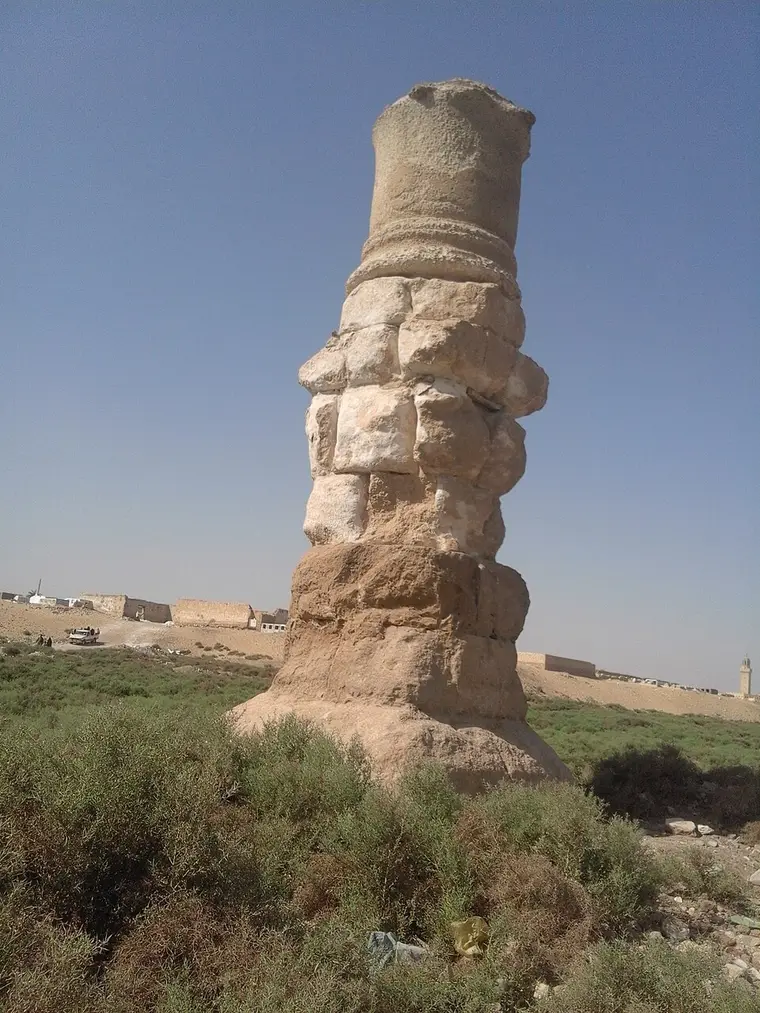
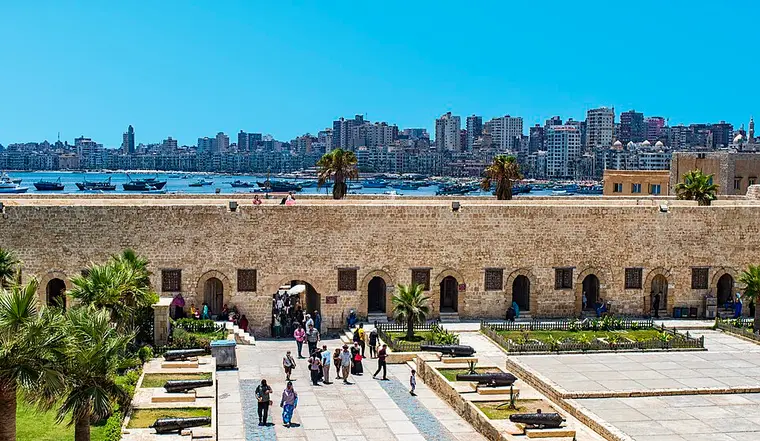
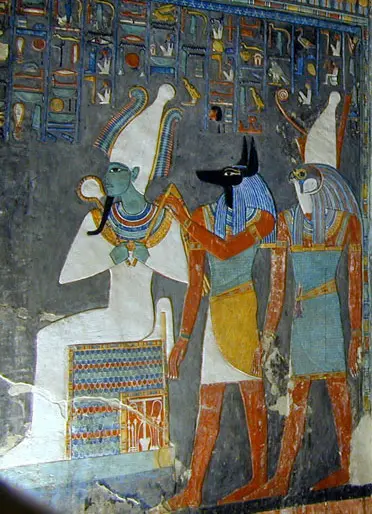
Sources for this chapter (135)Academic22Institution15Specialist book63Reputable web35
Academic(22)
- Alan · 11 Ptolemaic and Roman Egypt: Population and Settlement' · 2012
- Turner · Oxyrhynchus and Rome · Harvard Studies in Classical Philology · 1975
- Alston · Philo's In Flaccum: Ethnicity and Social Space in Roman Alexandria · Greece and Rome · 1997
- Bell · Hellenic Culture in Egypt · Journal of Egyptian Archaeology · 1922
- Turner · Roman Oxyrhynchus · Journal of Egyptian Archaeology · 1952
- Cities and Administration in Roman Egypt · Journal of Roman Studies · 1992
- El-Abbadi · The Gerousia in Roman Egypt · The Journal of Egyptian Archaeology · 1964
- Villages, Land and Population in Graeco-Roman Egypt · Proceedings of the Cambridge Philological Society · 1990
- Who were the ancient Egyptians? Dental affinities among Neolithic through postdynastic peoples · American Journal of Physical Anthropology · 2006
- Further analysis of the population history of ancient Egyptians · American Journal of Physical Anthropology · 2009
- Montserrat · The Representation of Young Males in 'Fayum Portraits' · The Journal of Egyptian Archaeology · 1993
- Ancient Egyptian mummy genomes suggest an increase of Sub-Saharan African ancestry in post-Roman periods · Nature Communications · 2017
- Riggs · Facing the Dead: Recent Research on the Funerary Art of Ptolemaic and Roman Egypt · American Journal of Archaeology · 2002
- THE BORDER TROOPS OF THE ROMAN-BYZANTINE SOUTHERN EGYPTIAN LIMES: PROBLEMS AND REMARKS ON THE ROLE OF THE AFRICAN AND 'BLACK' AFRICAN MILITARY UNITS · Ekklesiastikos Pharos · 2012
- THE FUTŪḤ AL-BAHNASĀ: And its relation to pseudo-"Maġāzī" and "Futūḥ" literature, Arabic "Siyar" and Western Chanson de Geste in the Middle Ages · Quaderni di Studi Arabi · 1986
- Livingstone · "When sorted and cleaned may prove of great interest" · Tuhinga · 2023
- Antinoe? Epitaph of Eudaimonis, 2nd cent. A.D. · Supplementum Epigraphicum Graecum
- Brewster · A Weaver of Oxyrhynchus: Sketch of a Humble Life in Roman Egypt · Transactions and Proceedings of the American Philological Association · 1927
- Papyrus Cattaoui. · Archiv für Papyrusforschung und verwandte Gebiete · 1906
- Goligher · The New Greek Historical Fragment Attributed to Theopompus or Cratippus · Oxford University Press · 1908
- Harding · The Authorship of the Hellenika Oxyrhynchia · The Ancient History Bulletin · 1987
- Westlake · Review of Hellenica Oxyrhynchia by Vittorio Bartoletti · Cambridge University Press · 1960
Institution(15)
- Egypt · Berkley Center for Religion, Peace, and World Affairs
- Yuri Marano · Discussion: Porphyry head of emperor ('Justinian'). From Constantinople (now in Venice). Early sixth century. · 2012
- Annotated Translation of the Chapter on the Western Regions according to the Hou Hanshu · 2003
- The Peoples of the West from the Weilue 魏略 by Yu Huan 魚豢: A Third Century Chinese Account Composed between 239 and 265 CE · 2004
- B. T. Trope · Excavating Egypt: great discoveries from the Petrie Museum of Egyptian Archaeology, University College, London · Michael C. Carlos Museum · 2005
- Thompson · Mummy portraits in the J. Paul Getty Museum · J. Paul Getty Museum · 1982
- W. M. Flinders Petrie · Roman Portraits and Memphis (IV) · 1911
- Where is Oxyrhynchus? · Oxyrhynchus Online
- Results | The Cult of Saints
- Publications: Full List · Egypt Exploration Society
- Publications
- Multispectral imaging · Oxyrhynchos online
- The Princeton Encyclopedia of Classical Sites · Princeton University Press · 1976
- Mummy of a woman with portrait
- 4494
Specialist book(63)
- Palme · Egypt in the Byzantine World, 300–700 · Cambridge University Press · 2007
- Jördens · The Oxford Handbook of Roman Egypt · 2012
- Haensch · The Oxford Handbook of Roman Egypt · Oxford University Press · 2012
- Alston · Soldier and Society in Roman Egypt: A Social History · Routledge · 2002
- Lewis · On Government and Law in Roman Egypt · Scholars Press · 1995
- Sherwin-White · The Roman Citizenship · Clarendon Press · 1973
- Delia · Alexandrian Citizenship During the Roman Principate · Scholars Press · 1991
- Blouin · The Oxford Handbook of Roman Egypt · 2012
- History of Civilizations of Central Asia · Motilal Banarsidass Publ. · 1999
- Christiansen · Coinage in Roman Egypt: The Hoard Evidence · Aarhus University Press · 2004
- Sage and Emperor: Plutarch, Greek Intellectuals, and Roman Power in the Time of Trajan (98-117 A.D.) · Leuven University Press · 2002
- Bailey · The Oxford Handbook of Roman Egypt · Oxford University Press · 2012
- Pfeiffer · The Oxford Handbook of Roman Egypt · Oxford University Press · 2012
- Sippel · Gottesdiener und Kamelzüchter: Das Alltags- und Sozialleben der Sobek-Priester im kaiserzeitlichen Fayum · Harrassowitz · 2020
- Choat · The Oxford Handbook of Roman Egypt · Oxford University Press · 2012
- Two Thousand Years of Coptic Christianity · American University in Cairo Press · 2002
- Ritner · The Cambridge History of Egypt · Cambridge University Press · 1998
- Gwynn · Christianity in the Later Roman Empire: A Sourcebook · Bloomsbury Academic · 2015
- Fowden · The Egyptian Hermes: A Historical Approach to the Late Pagan Mind · Princeton University Press · 1993
- Walter · Byzantium and the Early Islamic Conquests · Cambridge University Press · 1992
- Wiseman · The House of Augustus: A Historical Detective Story · Princeton University Press · 2019
- Butler · The Arab Conquest of Egypt and the Last Thirty Years under Roman Dominion · Oxford University Press · 1903
- Angold · Byzantium: the bridge from antiquity to the Middle Ages · St. Martin's Press · 2001
- Bowman · Egypt after the pharaohs: 332 BC-AD 642; from Alexander to the Arab conquest · University of California Press · 1996
- Chauveau · Egypt in the age of Cleopatra: history and society under the Ptolemies · Cornell University Press · 2000
- Ellis · Graeco-Roman Egypt · Shire Publications · 1992
- Kelly · The financial markets of Roman Egypt: risk and return · Liverpool University Press · 2023
- Peacock · The Oxford history of ancient Egypt · Oxford University Press · 2003
- The Oxford handbook of Roman Egypt · Oxford University Press · 2012
- Rowlandson · Landowners and tenants in Roman Egypt: the social relations of agriculture in the Oxyrhynchite nome · Clarendon Press · 2002
- Women and society in Greek and Roman Egypt: a sourcebook · Cambridge University Press · 1998
- Klaus Parlasca · Ritratti di mummie
- Adams · The Cambridge Companion to the Hellenistic World · Cambridge University Press · 2006
- Stanwick · Portraits of the Ptolemies: Greek Kings as Egyptian Pharaohs · University of Texas Press · 2003
- Bagnall · Ancient Faces: Mummy Portraits in Roman Egypt · Routledge · 2000
- Soldier and Society in Roman Egypt: A Social History · 1995
- Riggs · The Beautiful Burial in Roman Egypt: Art, Identity, and Funerary Religion · Oxford University Press · 2005
- Bowman · Egypt After the Pharaohs 332 BC-AD 642: From Alexander to the Arab Conquest · University of California Press · 1989
- Kurt Weitzmann · The Icon · Evans Brothers Ltd · 1982
- Della Valle · The Pilgrim: The Travels of Pietro Della Valle · Hutchinson · 1990
- Flinders Petrie: A Life in Archaeology · Victor Gollancz Ltd · 1985
- Susan Walker · Ancient Faces, Mummy Portraits from Roman Egypt · 1997
- Barbara Borg · "Der zierlichste Anblick der Welt ...". Ägyptische Porträtmumien · Von Zabern · 1998
- Ancient Faces. Mummy Portraits from Roman Egypt · 2000
- E. A. Wallis Budge · An Egyptian hieroglyphic dictionary: with an index of English words, king list and geological list with indexes, list of hieroglyphic characters, coptic and semitic alphabets, etc. Vol II= · John Murray · 1920
- Dictionnaire des Noms Géographiques Contenus dans les Textes Hiéroglyphiques Vol .2 · 1925
- The Late Roman-Rabbinic Period · Cambridge University Press · 2006
- The Journal of Egyptian Archaeology · Egypt Exploration Fund · 1998
- Epilogue. The Demise of Christian Oxyrhynchus · Brill · 2012
- F̣utūh al-Bahnasā al-Gharāʻ · 1934
- "Haḏā Kitāb" Qiṣṣat al-Bahnasā wa-mā fihā min al-ʿaǧā'ib wa-l-ġarā'ib · Maṭbaʿat al-Wahabīya · 1873
- A. Paul · A History of the Beja Tribes of the Sudan · Cambridge University Press · 2012
- فتوح الشام (نسخة منقحة) · 2008
- أقاليم مصر الفرعونية · ktab INC. · 2015
- Archaeological Report: 1896-1897 · Egypt Exploration Fund. · 1898
- قصة البهنسا: حكاية غزوة · Egyptian General Authority for Cultural Palaces; Department of History at the Faculty of Arts · 2012
- Lettered Christians · Brill · 2012
- Muḥammad ibn ʻUmar Wāqidī · F̣utūh al-Bahnasā al-Gharāʻ · the University of Michigan · 1934
- Lambert · Beloved and God: The Story of Hadrian and Antinous · George Weidenfeld & Nicolson · 1984
- Bernard P. Grenhell and Arthur S. Hunt · The Oxyrhynchus Papyri part 2 · 1899
- The Oxyrhynchus papyri · Egypt Exploration Fund · 1898
- Meister · Oxford Classical Dictionary · Oxford University Press · 2003
- Ancient Greek Music · Clarendon Press at the Oxford University Press · 1994
Reputable web(35)
- Ancient Egypt - Roman, Byzantine, 30 BCE-642 CE · 2025
- Ancient Egypt Population Estimates: Slaves and Citizens · 2017
- Nicola Hoesch · Mumienporträts · 2000
- Fayoum mummy portraits
- Panel Portrait of a Bearded Man | The Walters Art Museum
- Painting
- [image]
- Henning Wrede · Mumienporträts · 1982
- Oxyrhynchus Online Image Database · Oxyrhynchus Online Project Metadata
- Futuh Sham, complete second version
- For love of the Prophet's companions
- Bahnasa; Objek Wisata yang Menyimpan Jejak Sejarah Islam · KMA mesir · 2019
- The city of Bahnasa .. Why is the Ministry of Tourism and Antiquities interested in restoring it? · 2020
- Egypt's head of Islamic, Coptic, Jewish antiquities sector follows up on progress of project of restoring archeological village of Al-Bahnasa in Minya
- Bill Casselman · One of the oldest extant diagrams from Euclid · Department of Mathematics, University of British Columbia
- Martin West · A New Sappho Poem · Times Online · 2005
- P.Oxy.XV 1787
- P.Köln Inv. Nr. 21351_2
- StackPath · 2020
- Unique cemetery dating back to el-Sawi era discovered in Egypt amid coronavirus crisis · 2020
- Mahmoud · Egypt makes major archaeological discovery amid coronavirus crisis · 2020
- Group Of Persian, Roman and Coptic Tombs Discovered In Egypt · 2023
- In Photos: 22 Persian, Roman and Coptic tombs discovered in Upper Egypt's Minya - Greco-Roman - Antiquities
- Egypt unveils rare Roman-era tomb in Minya, illuminating ancient burial rituals - Dailynewsegypt · 2026
- Roman tomb unveiled in Egypt's Minya with golden-tongued mummies and statues · 2026
- Digital Collections, The New York Public Library · (still image) Antinoë [Antinoöpolis]. Vue de l'arc de triomphe., (1809 - 1828) · The New York Public Library, Astor, Lenox, and Tilden Foundations
- Coptic textiles
- Bernard Pyne Grenfell · The Oxyrhynchus papyri · 1898
- Thomas Little Heath · A history of Greek mathematics · Oxford, The Clarendon Press · 1921
- "Sayings of Jesus" papyrus (P.Oxy. 5575) now published · 2023
- 2067
- 2531
- 2070
- 2071
- 2068
Every ancient date is an estimate. Scholarly chronologies differ by decades, and by more the further back you go, which is why each figure carries a tilde. When a period is published we name the chronology its dates come from.
In this period
In this period
117 minutes in total- 01Introduction3 min read
- 02Formation2 min read
- 03Roman government in Egypt7 min read
- 04Military6 min read
- 05Society5 min read
- 06Economy3 min read
- 07Architecture5 min read
- 08Religion18 min read
- 09History17 min read
- 10Fayum mummy portraits24 min read
- 11Oxyrhynchus Papyri7 min read
- 12Antinoöpolis9 min read
- 13Oxyrhynchus11 min read