The Ptolemaic Period
~305 – ~30 BCE
12 chapters · 220 min read · 254 sources
~305 BCE
Introduction
3 min readThe Ptolemaic Kingdom (;, ) or Ptolemaic Empire was an ancient Greek polity based in Egypt during the Hellenistic period. It was founded in 305 BC by the Macedonian Greek general Ptolemy I Soter, a companion of…The Ptolemaic Kingdom (;, ) or Ptolemaic Empire was an ancient Greek polity based in Egypt during the Hellenistic period. It was founded in 305 BC by the Macedonian Greek general Ptolemy I Soter, a companion of Alexander the Great, and was ruled by the Ptolemaic dynasty until the death of Cleopatra VII in 30 BC.
Alexandria, a Greek polis (city-state) founded by Alexander the Great, became the capital city and a major center of Greek culture, learning, and trade for the next several centuries. Reigning for nearly three centuries, the Ptolemies were the longest and final dynasty of ancient Egypt, heralding a distinct era of religious and cultural syncretism between the Greek and Egyptian civilizations.
Alexander conquered Egypt in 332 BC during his campaigns against the Achaemenid Empire. Alexander's death in 323 BC was followed by the rapid unraveling of the Macedonian Empire amid competing claims by the diadochi, his closest friends and companions. Ptolemy, one of Alexander's most trusted generals and confidants, won control of Egypt from his rivals and declared himself its ruler in 305 BC. Following the Syrian Wars with the Seleucid Empire, a rival Hellenistic state, the Ptolemaic Kingdom expanded its territory to include eastern Libya, the Sinai, and northern Nubia.
To legitimize their rule and gain recognition from native Egyptians, the Ptolemies adopted the local title of pharaoh, alongside the Greek title of basileus, and had themselves portrayed on public monuments in Egyptian style and dress; the monarchy otherwise strictly maintained its Hellenistic character and traditions. The kingdom had a complex government bureaucracy that exploited the country's vast economic resources to the benefit of a Greek ruling class, which dominated military, political, and economic affairs and rarely integrated into Egyptian society and culture. Native Egyptians maintained control over local and religious institutions, and only gradually accrued power in the central bureaucracy, provided they Hellenized. Beginning with Ptolemy I's son and successor, Ptolemy II Philadelphus, the Ptolemies began to adopt Egyptian customs, such as marrying their siblings per the Osiris myth and participating in Egyptian religious life. New temples were built, older ones restored, and royal patronage lavished on the priesthood.
From the mid third century BC, Ptolemaic Egypt was the wealthiest of Alexander's successor states and the leading example of Greek civilization. At its peak under Ptolemy III Euergetes, the kingdom was the greatest power in the Mediterranean, and a major center of scientific, artistic, and intellectual development. Beginning in the mid second century BC, dynastic strife and a series of foreign wars weakened the kingdom, and it became increasingly reliant on the Roman Republic. Under Cleopatra VII, who sought to restore Ptolemaic power, Egypt became entangled in a Roman civil war, which ultimately led to its conquest by Rome as the last independent Hellenistic state. Roman Egypt became one of Rome's richest provinces and a center of Greek culture. Greek remained the language of government and trade until the Muslim conquest in 641 AD, while Alexandria maintained its status as one of the leading cities of the Mediterranean well into the late Middle Ages.
History
20 min readThe Ptolemaic reign in Egypt is one of the best-documented time periods of the Hellenistic era, due to a wealth of surviving papyri and ostraca written in Koine Greek and Egyptian.The Ptolemaic reign in Egypt is one of the best-documented time periods of the Hellenistic era, due to a wealth of surviving papyri and ostraca written in Koine Greek and Egyptian.
Background
In 332 BC, Alexander the Great, King of Macedon, conquered Egypt, which at the time was a satrapy of the Achaemenid Empire later called Egypt's Thirty-first Dynasty. He visited Memphis, and travelled to the oracle of Amun at the Siwa Oasis. The oracle declared him to be the son of Amun.
Alexander conciliated the Egyptians by the respect he showed for their religion, but he appointed Macedonians to virtually all the senior posts in the country, and founded a new Greek city, Alexandria, to be the new capital. The wealth of Egypt could now be harnessed for Alexander's conquest of the rest of the Achaemenid Empire. Early in 331 BC he was ready to depart, and led his forces away to Phoenicia. He left Cleomenes of Naucratis as the ruling nomarch to control Egypt in his absence. Alexander would never return to Egypt.
Establishment
Following Alexander's death in Babylon in 323 BC, a succession crisis erupted among his generals. Initially, Perdiccas ruled the empire as regent for Alexander's half-brother Arrhidaeus, who became Philip III of Macedon, and then as regent for both Philip III and Alexander's infant son Alexander IV of Macedon, who had not been born at the time of his father's death. Perdiccas appointed Ptolemy, one of Alexander's closest companions, to be satrap of Egypt. Ptolemy ruled Egypt from 323 BC, nominally in the name of the joint kings Philip III and Alexander IV. However, as Alexander the Great's empire disintegrated, Ptolemy soon established himself as ruler in his own right. Ptolemy successfully defended Egypt against an invasion by Perdiccas in 321 BC, and consolidated his position in Egypt and the surrounding areas during the Wars of the Diadochi (322–301 BC). In 305 BC, Ptolemy took the title of basileus and pharaoh. As Ptolemy I Soter ("Saviour"), he founded the Ptolemaic dynasty that was to rule Egypt for nearly 300 years.
All the male rulers of the dynasty took the name Ptolemy, while princesses and female rulers preferred the names Cleopatra, Arsinoë and Berenice. The Ptolemies also adopted the Egyptian custom of marrying their sisters, with many of their line ruling jointly with their spouses, who were also of the royal house. This custom made Ptolemaic politics confusing and incestuous, and increasingly enfeebled the later Ptolemies. The only basilissa-regnant or female Pharaohs to officially rule on their own were Cleopatra II, Berenice III and Berenice IV. Cleopatra V did co-rule, but it was with another female, Berenice IV. Cleopatra VII officially co-ruled with Ptolemy XIII Theos Philopator, Ptolemy XIV, and Ptolemy XV, but effectively, she ruled Egypt alone.
The early Ptolemies did not disturb the religion or the customs of the ancient Egyptians. They built magnificent new temples for the Egyptian gods and soon adopted the outward display of the pharaohs of old. Rulers such as Ptolemy I Soter respected the Egyptian people and recognized the importance of their religion and traditions. During the reign of Ptolemies II and III, thousands of Macedonian veterans were rewarded with grants of farmlands, and Macedonians were planted in colonies and garrisons or settled themselves in villages throughout the country. Upper Egypt, farthest from the centre of government, was less immediately affected, even though Ptolemy I established the Greek colony of Ptolemais Hermiou to be its capital. But within a century, Greek influence had spread through the country and intermarriage had produced a large Greco-Egyptian educated class. Nevertheless, the Greeks always remained a privileged minority in Ptolemaic Egypt. They lived under Greek law, received a Greek education, were tried in Greek courts, and were citizens of Greek cities.
Rise and peak
Ptolemy I
The first part of Ptolemy I's reign was dominated by the Wars of the Diadochi between the various successor states to the empire of Alexander. His first objective was to hold his position in Egypt securely, and secondly to increase his domain. Within a few years he had gained control of Cyrenaica, Coele-Syria (including Judea), Cyprus and some Aegean islands. When Antigonus, ruler of Syria, tried to reunite Alexander's empire, Ptolemy joined the coalition against him. In 312 BC, allied with Seleucus, the ruler of Babylonia, he defeated Demetrius, the son of Antigonus, in the battle of Gaza.
In 311 BC, a peace was concluded between the combatants, but in 309 BC war broke out again, and Ptolemy occupied Corinth and other parts of Greece, although he lost Cyprus after a naval battle in 306 BC. Antigonus then tried to invade Egypt but Ptolemy held the frontier against him. When the coalition was renewed against Antigonus in 302 BC, Ptolemy joined it, but neither he nor his army were present when Antigonus was defeated and killed at Ipsus. He had instead taken the opportunity to secure Coele-Syria and Palestine as well as parts of Anatolia, in breach of the agreement assigning it to Seleucus, thereby setting the scene for the future Syrian Wars. Thereafter Ptolemy tried to stay out of land wars, but he retook Cyprus in 295 BC.
Feeling the kingdom was now secure, Ptolemy shared rule with his son Ptolemy II by Queen Berenice in 285 BC. He then may have devoted his retirement to writing a history of the campaigns of Alexander—which was lost but was a principal source for the later work of Arrian. Ptolemy I died in 283 BC at the age of 84. He left a stable and well-governed kingdom to his son.
Ptolemy II
Ptolemy II Philadelphus, who succeeded his father as pharaoh of Egypt in 283 BC, was a peaceful and cultured pharaoh, though unlike his father was no great warrior. Ptolemy I had left Egypt strong and prosperous; three years of campaigning in the First Syrian War made the Ptolemies masters of the eastern Mediterranean, controlling the Aegean islands (the Nesiotic League) and the coastal districts of Cilicia, Pamphylia, Lycia and Caria in Asia Minor. However, some of these territories were lost near the end of his reign as a result of the Second Syrian War. In the 270s BC, Ptolemy II defeated the Kingdom of Kush in war, gaining the Ptolemies free access to Kushite territory and control of important gold deposits south of Egypt known as Dodekaschoinos. As a result, the Ptolemies established hunting stations and ports as far south as Port Sudan, from where raiding parties containing hundreds of men searched for war elephants. Hellenistic culture would acquire an important influence on Kush at this time.
Ptolemy II was an eager patron of scholarship, funding the expansion of the Library of Alexandria and patronising scientific research. Poets like Callimachus, Theocritus, Apollonius of Rhodes, Posidippus were provided with stipends and produced masterpieces of Hellenistic poetry, including panegyrics in honour of the Ptolemaic family. Other scholars operating under Ptolemy's aegis included the mathematician Euclid and the astronomer Aristarchus. Ptolemy is thought to have commissioned Manetho to compose his Aegyptiaca, an account of Egyptian history, perhaps intended to make Egyptian culture intelligible to its new rulers.
Ptolemy's first wife, Arsinoe I, daughter of Lysimachus, was the mother of his legitimate children. After her repudiation he followed Egyptian custom and married his sister, Arsinoe II, beginning a practice that, while pleasing to the Egyptian population, had serious consequences in later reigns. The material and literary splendour of the Alexandrian court was at its height under Ptolemy II. Callimachus, keeper of the Library of Alexandria, Theocritus, and a host of other poets, glorified the Ptolemaic family. Ptolemy himself was eager to increase the library and to patronise scientific research. He spent lavishly on making Alexandria the economic, artistic and intellectual capital of the Hellenistic world. The academies and libraries of Alexandria proved vital in preserving much Greek literary heritage.
Ptolemy III Euergetes
Ptolemy III Euergetes ("the Benefactor") succeeded his father in 246 BC. He abandoned his predecessors' policy of keeping out of the wars of the other Macedonian successor kingdoms, and began the Third Syrian War (246–241 BC) with the Seleucid Empire when his sister, Queen Berenice, and her son were murdered in a dynastic dispute. Ptolemy marched into the heart of the Seleucid realm, as far as Babylonia, while his fleets in the Aegean Sea made fresh conquests as far north as Thrace.
This victory marked the zenith of the Ptolemaic power. Seleucus II Callinicus kept his throne, but Egyptian fleets controlled most of the coasts of Anatolia and Greece. After this triumph Ptolemy no longer engaged actively in war, although he supported the enemies of Macedon in Greek politics. His domestic policy differed from his father's in that he patronised the native Egyptian religion more liberally: he left larger traces among the Egyptian monuments. In this his reign marks the gradual Egyptianisation of the Ptolemies.
Ptolemy III continued his predecessor's sponsorship of scholarship and literature. The Great Library in the Musaeum was supplemented by a second library built in the Serapeum. He was said to have had every book unloaded in the Alexandria docks seized and copied, returning the copies to their owners and keeping the originals for the Library. It is said that he borrowed the official manuscripts of Aeschylus, Sophocles, and Euripides from Athens and forfeited the considerable deposit he paid for them in order to keep them for the Library rather than returning them. The most distinguished scholar at Ptolemy III's court was the polymath and geographer Eratosthenes, most noted for his remarkably accurate calculation of the circumference of the world. Other prominent scholars include the mathematicians Conon of Samos and Apollonius of Perge.
Ptolemy III financed construction projects at temples across Egypt. The most significant of these was the Temple of Horus at Edfu, one of the masterpieces of ancient Egyptian temple architecture and now the best-preserved of all Egyptian temples. Ptolemy III initiated construction on it on 23 August 237 BC. Work continued for most of the Ptolemaic dynasty; the main temple was finished in the reign of his son, Ptolemy IV, in 212 BC, and the full complex was only completed in 142 BC, during the reign of Ptolemy VIII, while the reliefs on the great pylon were finished in the reign of Ptolemy XII.
Decline
Ptolemy IV
In 221 BC, Ptolemy III died and was succeeded by his son Ptolemy IV Philopator, a weak king whose rule precipitated the decline of the Ptolemaic Kingdom. His reign was inaugurated by the murder of his mother, and he was always under the influence of royal favourites, who controlled the government. Nevertheless, his ministers were able to make serious preparations to meet the attacks of Antiochus III the Great on Coele-Syria, and the great Egyptian victory of Raphia in 217 BC secured the kingdom. A sign of the domestic weakness of his reign was the rebellions by native Egyptians that took away over half the country for over 20 years. Philopator was devoted to orgiastic religions and to literature. He married his sister Arsinoë, but was ruled by his mistress Agathoclea.
Like his predecessors, Ptolemy IV presented himself as a typical Egyptian Pharaoh and actively supported the Egyptian priestly elite through donations and temple construction. Ptolemy III had introduced an important innovation in 238 BC by holding a synod of all the priests of Egypt at Canopus. Ptolemy IV continued this tradition by holding his own synod at Memphis in 217 BC, after the victory celebrations of the Fourth Syrian War. The result of this synod was the Raphia Decree, issued on 15 November 217 BC and preserved in three copies. Like other Ptolemaic decrees, the decree was inscribed in hieroglyphs, Demotic, and Koine Greek. The decree records the military success of Ptolemy IV and Arsinoe III and their benefactions to the Egyptian priestly elite. Throughout, Ptolemy IV is presented as taking on the role of Horus who avenges his father by defeating the forces of disorder led by the god Set. In return, the priests undertook to erect a statue group in each of their temples, depicting the god of the temple presenting a sword of victory to Ptolemy IV and Arsinoe III. A five-day festival was inaugurated in honour of the Theoi Philopatores and their victory. The decree thus seems to represent a successful marriage of Egyptian Pharaonic ideology and religion with the Hellenistic Greek ideology of the victorious king and his ruler cult.
Great Theban Revolt
The Great Theban Revolt or the Great Revolt of Egypt (205–186 BC) was a large, 20-year-long native uprising against the ruling Ptolemaic dynasty. Misrule by the Pharaoh in Alexandria led to a nearly successful revolt, led by a priest named Horwennefer. He proclaimed himself Pharaoh in 205 BC, and ruled upper Egypt until his death in 199 BC. The rebellion began in Upper Egypt and led to the establishment of an autonomous state ruled by native pharaohs. Egyptian leaders seized control of Thebes and much of Upper Egypt by 205 BC. Horwennefer was succeeded by his son Ankhwennefer, whose forces nearly drove the Ptolemies out of the country. The revolutionary dynasty was finally defeated in 186, and a stele celebrating this event was historically significant as the famous Rosetta Stone.
Ptolemy V Epiphanes and Ptolemy VI Philometor
The Great Revolt was the most significant challenge to Ptolemaic power. The revolutionary dynasty was finally defeated in 186 BC, but this period severely weakened Ptolemaic control over Egypt.
Ptolemy V Epiphanes, son of Philopator and Arsinoë, was a child when he came to the throne in 204 BC, and a series of regents ran the kingdom. As the Great Revolt was raging internally, Antiochus III the Great of the Seleucid Empire and Philip V of Macedon made a compact to seize the Ptolemaic possessions. Philip seized several islands and places in Caria and Thrace, while the battle of Panium in 200 BC transferred Coele-Syria from Ptolemaic to Seleucid control. After this defeat Egypt formed an alliance with the rising power in the Mediterranean, Rome. Once he reached adulthood Epiphanes became a tyrant, before his early death in 180 BC. He was succeeded by his infant son Ptolemy VI Philometor.
In 170 BC, Antiochus IV Epiphanes invaded Egypt and captured Philometor, installing him at Memphis as a puppet king. Philometor's younger brother (later Ptolemy VIII Physcon) was installed as king by the Ptolemaic court in Alexandria. When Antiochus withdrew, the brothers agreed to reign jointly with their sister Cleopatra II. They soon fell out, however, and quarrels between the two brothers allowed Rome to interfere and to steadily increase its influence in Egypt. Philometor eventually regained the throne. In 145 BC, he was killed in the battle of Antioch.
Throughout the 160s and 150s BC, Ptolemy VI also reasserted Ptolemaic control over the northern part of Nubia. This achievement is heavily advertised at the Temple of Isis at Philae, which was granted the tax revenues of the Dodecaschoenus region in 157 BC. Decorations on the first pylon of the Temple of Isis at Philae emphasise the Ptolemaic claim to rule the whole of Nubia. The aforementioned inscription regarding the priests of Mandulis shows that some Nubian leaders at least were paying tribute to the Ptolemaic treasury in this period. In order to secure the region, the strategos of Upper Egypt, Boethus, founded two new cities, named Philometris and Cleopatra in honour of the royal couple.
Later Ptolemies
After Ptolemy VI's death in 145 BC a series of civil wars and feuds between the members of the Ptolemaic dynasty started and lasted for over a century. Philometor was succeeded by yet another infant, his son Ptolemy VII Neos Philopator. But Physcon soon returned, killed his young nephew, seized the throne and as Ptolemy VIII soon proved himself a cruel tyrant. On his death in 116 BC he left the kingdom to his wife Cleopatra III and her son Ptolemy IX Philometor Soter II. The young king was driven out by his mother in 107 BC, who reigned jointly with Physcon's youngest son Ptolemy X Alexander I. In 88 BC Ptolemy IX again returned to the throne, and retained it until his death in 80 BC. He was succeeded by Ptolemy XI Alexander II, the son of Ptolemy X. He was lynched by the Alexandrian mob after murdering his stepmother, who was also his cousin, aunt and wife. These sordid dynastic quarrels left Egypt so weakened that the country became a de facto protectorate of Rome, which had by now absorbed most of the Greek world.
Ptolemy XI was succeeded by a son of Ptolemy IX, Ptolemy XII Neos Dionysos, nicknamed Auletes, the flute-player. By now Rome was the arbiter of Egyptian affairs, and annexed both Libya and Cyprus. In 58 BC Auletes was driven out by the Alexandrian mob, but the Romans restored him to power three years later. He died in 51 BC, leaving the kingdom to his ten-year-old son and seventeen-year-old daughter, Ptolemy XIII Theos Philopator and Cleopatra VII, who reigned jointly as husband and wife.
Final years
Cleopatra VII
Cleopatra VII ascended the Egyptian throne on 22 March 51 BC upon the death of her father, Ptolemy XII Neos Dionysos. She reigned as queen "philopator" and pharaoh with various male co-regents from 51 to 30 BC.
The demise of the Ptolemies' power coincided with the growing dominance of the Roman Republic. With one empire after another falling to Macedon and the Seleucid empire, the Ptolemies had little choice but to ally with the Romans, a pact that lasted over 150 years. By Ptolemy XII's time, Rome had achieved a massive amount of influence over Egyptian politics and finances to the point that he declared the Roman senate the guardian of the Ptolemaic dynasty. He had paid vast sums of Egyptian wealth and resources in tribute to the Romans in order to regain and secure his throne following the rebellion and brief coup led by his older daughters, Tryphaena and Berenice IV. Both daughters were killed in Auletes' reclaiming of his throne; Tryphaena by assassination and Berenice by execution, leaving Cleopatra VII as the oldest surviving child of Ptolemy Auletes. Traditionally, Ptolemaic royal siblings were married to one another on ascension to the throne. These marriages sometimes produced children, and other times were only a ceremonial union to consolidate political power. Ptolemy Auletes expressed his wish for Cleopatra and her brother Ptolemy XIII to marry and rule jointly in his will, in which the Roman senate was named as executor, giving Rome further control over the Ptolemies and, thereby, the fate of Egypt as a nation.
After the death of their father, Cleopatra VII and her younger brother Ptolemy XIII inherited the throne and were married. Their marriage was only political, however, and their relationship soon degenerated. Cleopatra was stripped of authority and title by Ptolemy XIII's advisors, who held considerable influence over the young king. Fleeing into exile, Cleopatra attempted to raise an army to reclaim the throne.
Julius Caesar left Rome for Alexandria in 48 BC in order to quell the looming civil war, as war in Egypt, which was one of Rome's greatest suppliers of grain and other expensive goods, would have had a detrimental effect on trade with Rome, especially on Rome's working-class citizens. During his stay in the Alexandrian palace, he received 22-year-old Cleopatra, allegedly carried to him in secret wrapped in a carpet. Caesar agreed to support Cleopatra's claim to the throne. Ptolemy XIII and his advisors fled the palace, turning the Egyptian forces loyal to the throne against Caesar and Cleopatra, who barricaded themselves in the palace complex until Roman reinforcements could arrive to combat the rebellion, known afterward as the Siege of Alexandria. Ptolemy XIII's forces were ultimately defeated at the Battle of the Nile and the king was killed in the conflict, reportedly drowning in the Nile while attempting to flee with his remaining army.
In the summer of 47 BC, having married her younger brother Ptolemy XIV, Cleopatra embarked with Caesar for a two-month trip along the Nile. Together, they visited Dendara, where Cleopatra was being worshiped as pharaoh, an honor beyond Caesar's reach. They became lovers and had a son, Caesarion. In 45 BC, Cleopatra and Caesarion left Alexandria for Rome, where they stayed in a palace built by Caesar in their honor.
In 44 BC, Caesar was murdered in Rome by several Senators. With his death, Rome split between supporters of Mark Antony and Octavian. When Mark Antony seemed to prevail, Cleopatra supported him and, shortly after, they too became lovers and eventually married in Egypt (though their marriage was never recognized by Roman law, as Antony was married to a Roman woman). Their union produced three children; the twins Cleopatra Selene and Alexander Helios, and another son, Ptolemy Philadelphos.
Mark Antony's alliance with Cleopatra angered Rome even more. Branded a power-hungry enchantress by the Romans, she was accused of seducing Antony to further her conquest of Rome. Further outrage followed at the donations of Alexandria ceremony in autumn of 34 BC in which Tarsus, Cyrene, Crete, Cyprus, and Judaea were all to be given as client monarchies to Antony's children by Cleopatra. In his will Antony expressed his desire to be buried in Alexandria, rather than taken to Rome in the event of his death, which Octavian used against Antony, sowing further dissent in the Roman populace.
Octavian was quick to declare war on Antony and Cleopatra while public opinion of Antony was low. Their naval forces met at Actium, where the forces of Marcus Vipsanius Agrippa defeated the navy of Cleopatra and Antony. Octavian waited for a year before he claimed Egypt as a Roman province. He arrived in Alexandria and easily defeated Mark Antony's remaining forces outside the city. Facing certain death at the hands of Octavian, Antony attempted suicide by falling on his own sword, but survived briefly. He was taken by his remaining soldiers to Cleopatra, who had barricaded herself in her mausoleum, where he died soon after.
Knowing that she would be taken to Rome to be paraded in Octavian's triumph (and likely executed afterward or, at best, sent into exile), Cleopatra and her handmaidens committed suicide on 12 August 30 BC. Legend and numerous ancient sources claim that she died by way of the venomous bite of an asp, though others state that she used poison, or that Octavian ordered her death himself.
Caesarion, her son by Julius Caesar, nominally succeeded Cleopatra until his capture and supposed execution in the weeks after his mother's death. Cleopatra's children by Antony were spared by Octavian and given to his sister (and Antony's Roman wife) Octavia Minor, to be raised in her household. No further mention is made of Cleopatra and Antony's sons in the known historical texts of that time, but their daughter Cleopatra Selene was eventually married through arrangement by Octavian into the Mauretanian royal line, one of Rome's many client monarchies. Through Cleopatra Selene's offspring the Ptolemaic line intermarried back into the Roman nobility for centuries.
With the deaths of Cleopatra and Caesarion, the dynasty of Ptolemies and the entirety of pharaonic Egypt came to an end. Alexandria remained the capital of the country, but Egypt itself became a Roman province. Octavian became the sole ruler of Rome and began converting it into a monarchy, the Roman Empire.
Roman rule
Under Roman rule, Egypt was governed by a prefect selected by the emperor from the Equestrian class and not a governor from the Senatorial order, to prevent interference by the Roman Senate. The main Roman interest in Egypt was always the reliable delivery of grain to the city of Rome. To this end the Roman administration made no change to the Ptolemaic system of government, although Romans replaced Greeks in the highest offices. But Greeks continued to staff most of the administrative offices and Greek remained the language of government except at the highest levels. Unlike the Greeks, the Romans did not settle in Egypt in large numbers. Culture, education and civic life largely remained Greek throughout the Roman period. The Romans, like the Ptolemies, respected and protected Egyptian religion and customs, although the cult of the Roman state and of the Emperor was gradually introduced.
Culture
10 min readPtolemy I, perhaps with advice from Demetrius of Phalerum, founded the Library of Alexandria, a research centre located in the royal sector of the city. Its scholars were housed in the same sector and funded by…Ptolemy I, perhaps with advice from Demetrius of Phalerum, founded the Library of Alexandria, a research centre located in the royal sector of the city. Its scholars were housed in the same sector and funded by Ptolemaic rulers. The chief librarian served also as the crown prince's tutor. For the first hundred and fifty years of its existence, the library drew the top Greek scholars from all over the Hellenistic world. It was a key academic, literary and scientific centre in antiquity.
Greek culture had a long but minor presence in Egypt long before Alexander the Great founded the city of Alexandria. It began when Greek colonists, encouraged by many Pharaohs, set up the trading post of Naucratis. As Egypt came under foreign domination and decline, the Pharaohs depended on the Greeks as mercenaries and even advisors. When the Persians took over Egypt, Naucratis remained an important Greek port and the colonist population were used as mercenaries by both the rebel Egyptian princes and the Persian kings, who later gave them land grants, spreading Greek culture into the valley of the Nile. When Alexander the Great arrived, he established Alexandria on the site of the Persian fort of Rhakortis. Following Alexander's death, control passed into the hands of the Lagid (Ptolemaic) Dynasty; they built Greek cities across their empire and gave land grants across Egypt to the veterans of their many military conflicts. Hellenistic civilization continued to thrive even after Rome annexed Egypt after the battle of Actium and did not decline until the Islamic conquests.
Art
Ptolemaic art was produced during the reign of the Ptolemaic Rulers (304–30 BC) and was concentrated primarily within the bounds of the Ptolemaic Empire. At first, artworks existed separately in either the Egyptian or the Hellenistic style, but over time, these characteristics began to combine. The continuation of the Egyptian art style evidences the Ptolemies' commitment to maintaining Egyptian customs. This strategy not only helped to legitimize their rule, but also placated the general population. Greek-style art was also created during this time and existed in parallel to the more traditional Egyptian art, which could not be altered significantly without changing its intrinsic, primarily religious function. Art found outside of Egypt itself, though within the Ptolemaic Kingdom, sometimes used Egyptian iconography as it had been used previously, and sometimes adapted it.
For example, the faience sistrum inscribed with the name of Ptolemy has some deceptively Greek characteristics, such as the scrolls at the top. However, there are many examples of nearly identical sistra and columns dating all the way to Dynasty 18 in the New Kingdom. It is, therefore, purely Egyptian in style. Aside from the name of the king, there are other features that specifically date this to the Ptolemaic period. Most distinctively is the color of the faience. Apple green, deep blue, and lavender-blue are the three colors most frequently used during this period, a shift from the characteristic blue of the earlier kingdoms. This sistrum appears to be an intermediate hue, which fits with its date at the beginning of the Ptolemaic empire.
During the reign of Ptolemy II, Arsinoe II was deified either as stand-alone goddesses or as a personification of another divine figure and given their own sanctuaries and festivals in association to both Egyptian and Hellenistic gods (such as Isis of Egypt and Hera of Greece). For example, Head Attributed to Arsinoe II deified her as an Egyptian goddess. However, the Marble head of a Ptolemaic queen deified Arsinoe II as Hera. Coins from this period also show Arsinoe II with a diadem that is solely worn by goddesses and deified royal women.
The Statuette of Arsinoe II was created c. 150–100 BC, well after her death, as a part of her own specific posthumous cult which was started by her husband Ptolemy II. The figure also exemplifies the fusing of Greek and Egyptian art. Although the backpillar and the goddess's striding pose is distinctively Egyptian, the cornucopia she holds and her hairstyle are both Greek in style. The rounded eyes, prominent lips, and overall youthful features show Greek influence as well. Despite the unification of Greek and Egyptian elements in the intermediate Ptolemaic period, the Ptolemaic Kingdom also featured prominent temple construction as a continuation of developments based on Egyptian art tradition from the Thirtieth Dynasty. Such behavior expanded the rulers' social and political capital and demonstrated their loyalty toward Egyptian deities, to the satisfaction of the local people. Temples remained very New Kingdom and Late Period Egyptian in style though resources were oftentimes provided by foreign powers. Temples were models of the cosmic world with basic plans retaining the pylon, open court, hypostyle halls, and dark and centrally located sanctuary. However, ways of presenting text on columns and reliefs became formal and rigid during the Ptolemaic Dynasty. Scenes were often framed with textual inscriptions, with a higher text to image ratio than seen previously during the New Kingdom. For example, a relief in the temple of Kom Ombo is separated from other scenes by two vertical columns of texts. The figures in the scenes are smooth, rounded, and high relief, a style continued throughout the 30th Dynasty. The relief represents the interaction between the Ptolemaic kings and the Egyptian deities, which legitimized their rule in Egypt.
In Ptolemaic art, the idealism seen in the art of previous dynasties continues, with some alterations. Women are portrayed as more youthful, and men begin to be portrayed in a range from idealistic to realistic. An example of realistic portrayal is the Berlin Green Head, which shows the non-idealistic facial features with vertical lines above the bridge of the nose, lines at the corners of the eyes and between the nose and the mouth. The influence of Greek art was shown in an emphasis on the face that was not previously present in Egyptian art and incorporation of Greek elements into an Egyptian setting: individualistic hairstyles, the oval face, "round [and] deeply set" eyes, and the small, tucked mouth closer to the nose. Early portraits of the Ptolemies featured large and radiant eyes in association to the rulers' divinity as well as general notions of abundance.
Religion
When Ptolemy I Soter made himself king of Egypt, he created a new god, Serapis, to garner support from both Greeks and Egyptians. Serapis was the patron god of Ptolemaic Egypt, combining the Egyptian gods Apis and Osiris with the Greek deities Zeus, Hades, Asklepios, Dionysos, and Helios; he had powers over fertility, the sun, funerary rites, and medicine. His growth and popularity reflected a deliberate policy by the Ptolemaic state, and was characteristic of the dynasty's use of Egyptian religion to legitimize their rule and strengthen their control.
The cult of Serapis included the worship of the new Ptolemaic line of pharaohs; the newly established Hellenistic capital of Alexandria supplanted Memphis as the preeminent religious city. Ptolemy I also promoted the cult of the deified Alexander, who became the state god of the Ptolemaic kingdom. Many rulers also promoted individual cults of personality, including celebrations at Egyptian temples.
Because the monarchy remained staunchly Hellenistic, despite otherwise co-opting Egyptian faith traditions, religion during this period was highly syncretic. The wife of Ptolemy II, Arsinoe II, was often depicted in the form of the Greek goddess Aphrodite, but she wore the crown of lower Egypt, with ram's horns, ostrich feathers, and other traditional Egyptian indicators of royalty and/or deification; she wore the vulture headdress only on the religious portion of a relief. Cleopatra VII, the last of the Ptolemaic line, was often depicted with characteristics of the goddess Isis; she usually had either a small throne as her headdress or the more traditional sun disk between two horns. Reflecting Greek preferences, the traditional table for offerings disappeared from reliefs during the Ptolemaic period, while male gods were no longer portrayed with tails, so as to make them more human-like in accordance with the Hellenistic tradition.
Nevertheless, the Ptolemies remained generally supportive of the Egyptian religion, which always remained key to their legitimacy. Egyptian priests and other religious authorities enjoyed royal patronage and support, more or less retaining their historical privileged status. Temples remained the focal point of social, economic, and cultural life; the first three reigns of the dynasty were characterized by rigorous temple building, including the completion of projects left over from the previous dynasty; many older or neglected structures were restored or enhanced. The Ptolemies generally adhered to traditional architectural styles and motifs. In many respects, the Egyptian religion thrived: temples became centers of learning and literature in the traditional Egyptian style. The worship of Isis and Horus became more popular, as did the practice of offering animal mummies.
Memphis, while no longer the center of power, became the second city after Alexandria, and enjoyed considerable influence; its High Priests of Ptah, an ancient Egyptian creator god, held considerable sway among the priesthood and even with the Ptolemaic kings. Saqqara, the city's necropolis, was a leading center of worship of Apis bull, which had become integrated into the national mythos. The Ptolemies also lavished attention on Hermopolis, the cult center of Thoth, building a Hellenistic-style temple in his honor. Thebes continued to be a major religious center and home to a powerful priesthood; it also enjoyed royal development, namely of the Karnak complex devoted to the Osiris and Khonsu. The city's temples and communities prosperous, while a new Ptolemaic style of cemeteries were built.
A common stele that appears during the Ptolemaic Dynasty is the cippus, a type of religious object produced for the purpose of protecting individuals. These magical stelae were made of various materials such as limestone, chlorite schist, and metagreywacke, and were connected with matters of health and safety. Horus on the Crocodiles cippi during the Ptolemaic Period generally featured the child form of the Egyptian god Horus, Horpakhered (or Harpocrates). This portrayal refers to the myth of Horus triumphing over dangerous animals in the marshes of Khemmis with magic power (also known as Akhmim).
Society
Ptolemaic Egypt was highly stratified in terms of both class and language. More than any previous foreign rulers, the Ptolemies retained or co-opted many aspects of the Egyptian social order, using Egyptian religion, traditions, and political structures to increase their own power and wealth.
As before, peasant farmers remained the vast majority of the population, while agricultural land and produce were owned directly by the state, temple, or noble family that owned the land. Macedonians and other Greeks now formed the new upper classes, replacing the old native aristocracy. A complex state bureaucracy was established to manage and extract Egypt's vast wealth for the benefit of the Ptolemies and the landed gentry.
Greeks held virtually all the political and economic power, while native Egyptians generally occupied only the lower posts; over time, Egyptians who spoke Greek were able to advance further and many individuals identified as "Greek" were of Egyptian descent. Eventually, a bilingual and bicultural social class emerged in Ptolemaic Egypt. Priests and other religious officials remained overwhelmingly Egyptian, and continued to enjoy royal patronage and social prestige, as the Ptolemies' relied on the Egyptian faith to legitimize their rule and placate the populace.
Although Egypt was a prosperous kingdom, with the Ptolemies lavishing patronage through religious monuments and public works, the native population enjoyed few benefits; wealth and power remained overwhelmingly in the hands of Greeks. Subsequently, uprisings and social unrest were frequent, especially by the early third century BC. Egyptian nationalism reached a peak in the reign of Ptolemy IV Philopator (221–205 BC), when a succession of native self-proclaimed "pharaoh" gained control over one district. This was only curtailed nineteen years later when Ptolemy V Epiphanes (205–181 BC) succeeded in subduing them, though underlying grievances were never extinguished, and riots erupted again later in the dynasty.
Science
Ptolemaic Egypt was a major center of scientific and intellectual activity from its founding: Ptolemy I Soter (323−280 BC) established the Museion and the Library of Alexandria to encourage the development of the arts and sciences and to attract leading thinkers from across the known world. He mandated "collect[ion] all books in the inhabited world" and personally corresponded with leaders of other nations "requesting that they [furnish] works by poets and prose-writers, rhetoricians, and sophists, doctors and soothsayers, historians and all the others too". Agents were subsequently dispatched to foreign cities to acquire such works without regard to cost.
Economy
4 min readEgypt's abundant agricultural resources, deep tradition of relatively stable centralised government, and geographic location made it an important trade axis between the Mediterranean, Near East, and Horn of Africa for…Egypt's abundant agricultural resources, deep tradition of relatively stable centralised government, and geographic location made it an important trade axis between the Mediterranean, Near East, and Horn of Africa for at least a millennium. Building upon this strong foundation, the Ptolemies profoundly reshaped the Egyptian economy through the promotion of Greek settlement and investment, the founding of Alexandria as a commercial hub, and the integration of Hellenistic institutions. The dynasty sought to maximize resource extraction by tightly regulating virtually all economic activity through a complex and hierarchical bureaucracy nominally directed by the crown. Ptolemaic rule saw unparalleled growth in land cultivation, trade volume, and tax revenue, making Egypt the wealthiest Hellenistic kingdoms and a leading economic power.
Administration
The Ptolemaic economy was a mix of direct royal control and private enterprise, characterized by systematic monetization, a sophisticated banking system, a complex regulatory and administrative apparatus, and policies focused on agricultural production and trade, particularly through the port of Alexandria. The Ptolemies owned a significant portion of farmland and temple property, which was taxed heavily, providing the crown with a major source of revenue. Royal control also extended to the manufacture and marketing of almost all important products—particularly papyrus, olive oil, linen, and beer—with a concerted focus on foreign exports. The Ptolemaic government was designed to maximize resource extraction and exploitation across all economic sectors down to the local level. In theory, if not always in practice, the monarch had full command of the economy, exercised through layers of bureaucracy. Within the royal court was the chief finance minister, chief accountant, and a handful of ministers responsible for records, correspondences, and decrees. Below them were various subordinate officials, including strategoi, who each governed one of the nomes, or territorial divisions; oikonomos, who managed various domestic and economic affairs of the nome; and komarches, who served as chief administrators of each village within the nome.
Agriculture
Egyptian wealth had always derived primarily from its highly productive land. The Ptolemies increased cultivation through ambitious irrigation and land reclamation projects; large canal networks were built to irrigate land that was previously beyond the reach of the Nile, while the marshy Faiyum was drained to create a major agricultural zone. The Ptolemies also introduced crops such as durum wheat, which was more lucrative in foreign markets, and intensified production of goods like wool. Wine production increased dramatically during the Ptolemaic period, as the new Greek ruling class greatly preferred wine to the beer traditionally produced in Egypt; vines from regions like Crete were planted in Egypt in an attempt to produce Greek wines. Throughout the Ptolemaic period, Egypt became a major producer of grain, wine, flax, cotton, papyrus, and a wide range of fruits, vegetables, and spices; these goods not only brought greater revenue through foreign trade but influenced domestic consumption and culinary traditions.
Monetary policy
Among the most fundamental and radical changes introduced by the Ptolemies was the systematic monetization of the economy. Egypt had never developed a system of minted coinage for commerce, relying instead on in-kind exchanges or barter at fixed rates. Beginning with Ptolemy I Soter, the kingdom minted Egyptian coins that were roughly equivalent to the standard Greek denominations of the chalkous, obol, and drachma. Throughout the Ptolemaic period, Egypt would produce an extensive series of coinage in gold, silver, and bronze, which also served to project the literal image and authority of a given monarch. Nevertheless, in-kind transactions remained widespread, even among Greeks, and were recorded by receipts in Greek or Demotic Egyptian.
The Ptolemaic Kingdom operated a closed monetary system that allowed only royal coinage to circulate within Egypt; foreign merchants seeking to purchase goods domestically were required to exchange their currencies for Egyptian counterparts at a one-to-one rate. The Ptolemies maintained a sophisticated banking system that combined direct royal control with private enterprise to govern both private financial transactions and taxation. The adoption of standardized coinage facilitated both domestic and foreign commerce and resulted in a significant increase in trade volume, which persisted well into the Roman period.
Reflecting the kingdom's highly centralised administrative framework, rulers periodically reformed monetary policy in response to domestic and foreign developments. Around 260 BC, new silver denominations were added to existing ones in circulation, while heavier bronze coins were minted to partially replace silver in large transactions. By the 230s BC, bronze had effectively replaced silver in daily transactions, due largely to the domestic scarcity of silver relative to bronze and gold; this development was highly unusual in the Hellenistic world, which generally favored silver as the standard medium for coinage. Under Ptolemy IV (221–204 BC), the weight of bronze coins was dramatically reduced, essentially halving the spending power of rural labourers who were paid in bronze. In response, Ptolemy V (205–180 BC) completely overhauled the monetary system in 197 BC and introduced new bronze denominations.
Military
7 min readThe military of Ptolemaic Egypt is considered to have been one of the best of the Hellenistic period, benefiting from the kingdom's vast resources and its ability to adapt to changing circumstances. The Ptolemaic…The military of Ptolemaic Egypt is considered to have been one of the best of the Hellenistic period, benefiting from the kingdom's vast resources and its ability to adapt to changing circumstances. The Ptolemaic military initially served a defensive purpose, primarily against competing diadochi claimants and rival Hellenistic states like the Seleucid Empire. By the reign of Ptolemy III (246 to 222 BC), its role was more imperialistic, helping extend Ptolemaic control or influence over Cyrenaica, Coele-Syria, and Cyprus, as well as over cities in Anatolia, southern Thrace, the Aegean islands, and Crete. The military expanded and secured these territories while continuing its primary function of protecting Egypt; its main garrisons were in Alexandria, Pelusium in the Delta, and Elephantine in Upper Egypt. The Ptolemies also relied on the military to assert and maintain their control over Egypt, often by virtue of their presence. Soldiers served in several units of the royal guard and were mobilized against uprisings and dynastic usurpers, both of which became increasingly common. Members of the army, such as the machimoi (low ranking native soldiers) were sometimes recruited as guards for officials, or even to help enforce tax collection.
Army
The Ptolemies maintained a standing army throughout their reign, made up of both professional soldiers (including mercenaries) and recruits. From the very beginning the Ptolemaic army demonstrated considerable resourcefulness and adaptability. In his fight for control over Egypt, Ptolemy I had relied on a combination of imported Greek troops, mercenaries, native Egyptians, and even prisoners of war. The army was characterized by its diversity and maintained records of its troops' national origins, or patris. In addition to Egypt itself, soldiers were recruited from Macedonia, Cyrenaica (modern Libya), mainland Greece, the Aegean, Asia Minor, and Thrace; overseas territories were often garrisoned with local soldiers.
By the second and first centuries BC, increasing warfare and expansion, coupled with reduced Greek immigration, led to increasing reliance on native Egyptians; however, Greeks retained the higher ranks of royal guards, officers, and generals. Though present in the military from its founding, native troops were sometimes looked down upon and distrusted due to their reputation for disloyalty and tendency to aid local revolts; however, they were well regarded as fighters, and beginning with the reforms of Ptolemy V in the early third century BC, they appeared more frequently as officers and cavalrymen. Egyptian soldiers also enjoyed a socioeconomic status higher than the average native.
To obtain reliable and loyal soldiers, the Ptolemies developed several strategies that leveraged their ample financial resources and even Egypt's historical reputation for wealth; royal propaganda could be evidenced in a line by the poet Theocritus, "Ptolemy is the best paymaster a free man could have". Mercenaries were paid a salary (misthos) of cash and grain rations; an infantryman in the third century BC earned about one silver drachma daily. This attracted recruits from across the eastern Mediterranean, who were sometimes referred to misthophoroi xenoi—literally "foreigners paid with a salary". By the second and first century BC, misthophoroi were mainly recruited within Egypt, notably among the Egyptian population. Soldiers were also given land grants called kleroi, whose size varied according to the military rank and unit, as well as stathmoi, or residences, which were sometimes in the home of local inhabitants; men who settled in Egypt through these grants were known as cleruchs. At least from about 230 BC, these land grants were provided to machimoi, lower ranking infantry usually of Egyptian origin, who received smaller lots comparable to traditional land allotments in Egypt. Kleroi grants could be extensive: a cavalryman could receive at least 70 arouras of land, equal to about 178,920 square metres, and as much as 100 arouras; infantrymen could expect 30 or 25 arouras and machimoi at least five auroras, considered enough for one family. The lucrative nature of military service under the Ptolemies appeared to have been effective at ensuring loyalty. Few mutinies and revolts are recorded, and even rebellious troops would be placated with land grants and other incentives.
As in other Hellenistic states, the Ptolemaic army inherited the doctrines and organization of Macedonia, albeit with some variations over time. The core of the army consisted of cavalry and infantry; as under Alexander, cavalry played a larger role both numerically and tactically, while the Macedonian phalanx served as the primary infantry formation. The multiethnic nature of the Ptolemaic army was an official organizational principle: soldiers were evidently trained and utilized based on their national origin; Cretans generally served as archers, Libyans as heavy infantry, and Thracians as cavalry. Similarly, units were grouped and equipped based on ethnicity. Nevertheless, different nationalities were trained to fight together, and most officers were of Greek or Macedonian origin, which allowed for a degree of cohesion and coordination. Military leadership and the figure of the king and queen were central for ensuring unity and morale among multiethnic troops; at the battle of Raphia, the presence of Ptolemy was reportedly critical in maintaining and boosting the fighting spirit of both Greek and Egyptian soldiers.
Navy
The Ptolemaic Kingdom was considered a major naval power in the eastern Mediterranean. Some modern historians characterize Egypt during this period as a thalassocracy, owing to its innovation of "traditional styles of Mediterranean sea power", which allowed its rulers to "exert power and influence in unprecedented ways". With territories and vassals spread across the eastern Mediterranean, including Cyprus, Crete, the Aegean islands, and Thrace, the Ptolemies required a large navy to defend against enemies like the Seleucids and Macedonians. The Ptolemaic navy also protected the kingdom's lucrative maritime trade and engaged in antipiracy measures, including along the Nile.
Like the army, the origins and traditions of the Ptolemaic navy were rooted in the wars following the death of Alexander in 320 BC. Various diadochi competed for naval supremacy over the Aegean and eastern Mediterranean, and Ptolemy I founded the navy to help defend Egypt and consolidate his control against invading rivals. He and his immediate successors turned to developing the navy to project power overseas, rather than build a land empire in Greece or Asia. Notwithstanding an early crushing defeat at the Battle of Salamis in 306 BC, the Ptolemaic navy became the dominant maritime force in the Aegean and eastern Mediterranean for the next several decades. Ptolemy II maintained his father's policy of making Egypt the preeminent naval power in the region; during his reign (283 to 246 BC), the Ptolemaic navy became the largest in the Hellenistic world and had some of the largest warships ever built in antiquity. The navy reached its height following the victory of Ptolemy II during the First Syrian War (274–271 BC), succeeding in repelling both Seleucid and Macedonian control of the eastern Mediterranean and the Aegean. During the subsequent Chremonidean War, the Ptolemaic navy succeeded in blockading Macedonia and containing its imperial ambitions to mainland Greece.
Beginning with the Second Syrian War (260–253 BC), the navy suffered a series of defeats and declined in military importance, which coincided with the loss of Egypt's overseas possessions and the erosion of its maritime hegemony. The navy was relegated primarily to a protective and antipiracy role for the next two centuries, until its partial revival under Cleopatra VII, who sought to restore Ptolemaic naval supremacy amid the rise of Rome as a major Mediterranean power. Egyptian naval forces took part in the decisive battle of Actium during the final war of the Roman Republic, but once again suffered a defeat that culminated with the end of Ptolemaic rule.
At its apex under Ptolemy II, the Ptolemaic navy may have had as many as 336 warships, with Ptolemy II reportedly having at his disposal more than 4,000 ships (including transports and allied vessels). Maintaining a fleet of this size would have been costly, and reflected the vast wealth and resources of the kingdom. The main naval bases were at Alexandria and Nea Paphos in Cyprus. The navy operated throughout the eastern Mediterranean, Aegean Sea, and Levantine Sea, and along the Nile, patrolling as far as the Red Sea towards the Indian Ocean. Accordingly, naval forces were divided into four fleets: the Alexandrian, Aegean, Red Sea, and Nile River.
Cities
5 min readThe Ptolemaic Dynasty built many Greek settlements throughout their Empire, to either Hellenize newly conquered peoples or reinforce their control. These cities were typically modeled on traditional Hellenistic poleis…The Ptolemaic Dynasty built many Greek settlements throughout their Empire, to either Hellenize newly conquered peoples or reinforce their control. These cities were typically modeled on traditional Hellenistic poleis in terms of urban planning, social and political organization, and civic life; most functioned as autonomous city-states that were anchored more to the wider Mediterranean and Hellenistic worlds than to Egypt. The largest of these cities were Alexandria, Naucratis, and Ptolemais, which served as the main focal points for commerce, trade, and culture in the kingdom.
Alexandria
A major Mediterranean port of Egypt, in ancient times and still today, Alexandria was founded in 331 BC by Alexander the Great. According to Plutarch, the Alexandrians believed that Alexander the Great's motivation to build the city was his wish to "found a large and populous Greek city that should bear his name." Located west of the Nile's westernmost mouth, the city was immune to the silt deposits that persistently choked harbors along the river. Alexandria became the capital of the Hellenized Egypt of King Ptolemy I (reigned 323–283 BC). Under the wealthy Ptolemaic Dynasty, the city soon surpassed Athens as the cultural center of the Hellenic world.
Laid out on a grid pattern, Alexandria occupied a stretch of land between the sea to the north and Lake Mareotis to the south; a man-made causeway, over three-quarters of a mile long, extended north to the sheltering island of Pharos, thus forming a double harbor, east and west. On the east was the main harbor, called the Great Harbor; it faced the city's chief buildings, including the royal palace and the famous Library and Museum. At the Great Harbor's mouth, on an outcropping of Pharos, stood the lighthouse, built c. 280 BC. Now vanished, the lighthouse was reckoned as one of the Seven Wonders of the World for its unsurpassed height (perhaps 140 metres or 460 ft); it was a square, fenestrated tower, topped with a metal fire basket and a statue of Zeus the Savior.
The Library, at that time the largest in the world, contained several hundred thousand volumes and housed and employed scholars and poets. A similar scholarly complex was the Museum (Mouseion, "hall of the Muses"). During Alexandria's brief literary golden period, c. 280–240 BC, the Library subsidized three poets—Callimachus, Apollonius of Rhodes, and Theocritus—whose work now represents the best of Hellenistic literature. Among other thinkers associated with the Library or other Alexandrian patronage were the mathematician Euclid (c. 300 BC), the inventor Archimedes (287 BC – c. 212 BC), and the polymath Eratosthenes (c. 225 BC).
Cosmopolitan and flourishing, Alexandria possessed a varied population of Greeks, Egyptians and other Oriental peoples, including a sizable minority of Jews, who had their own city quarter. Periodic conflicts occurred between Jews and ethnic Greeks. According to Strabo, Alexandria had been inhabited during Polybius' lifetime by local Egyptians, foreign mercenaries and the tribe of the Alexandrians, whose origin and customs Polybius identified as Greek.
The city passed, with the rest of Egypt, into Roman hands in 30 BC, and became the second city of the Roman Empire.
Ptolemais
The second Greek city founded after the conquest of Egypt was Ptolemais, up the Nile, where there was a native village called Psoï, in the nome called after the ancient Egyptian city of Thinis. If Alexandria perpetuated the name and cult of the great Alexander, Ptolemais was to perpetuate the name and cult of the founder of the Ptolemaic time. Framed in by the barren hills of the Nile Valley and the Egyptian sky, here a Greek city arose, with its public buildings and temples and theatre, no doubt exhibiting the regular architectural forms associated with Greek culture, with a citizen-body Greek in blood, and the institutions of a Greek city. If there is some doubt whether Alexandria possessed a council and assembly, there is none in regard to Ptolemais. It was more possible for the kings to allow a measure of self-government to a people removed at that distance from the ordinary residence of the court. We have still, inscribed on stone, decrees passed in the assembly of the people of Ptolemais, couched in the regular forms of Greek political tradition: It seemed good to the boule and to the demos: Hermas son of Doreon, of the deme Megisteus, was the proposer: Whereas the prytaneis who were colleagues with Dionysius the son of Musaeus in the 8th year, etc.
Naucratis
Of the three leading Greek cities during the Ptolemaic period, Naucratis (or Naukratis, meaning "naval command" in Greek) was the only one to predate the Macedonian conquest of Egypt: It had been established in the Nile River delta in the seventh century BC as an emporion (trading station) of the Greek city-state of Miletus. Founded during Egypt's 26th dynasty—and located close to the dynastic capital of Sais—Naucratis was the earliest ancient Greek colony on Egyptian soil, being granted exclusive trading rights in the kingdom. It subsequently attracted merchants and settlers from across the Greek world and grew into a large and cosmopolitan polis in its own right. Naucratis became the first major centre of cultural exchange between Greece and Egypt, as well as a major point of contact among different civilizations in Africa, the Near East, and the Mediterranean; its population gradually diversified to include Egyptians, Phoenicians, Carians, and other inhabitants from across the ancient world, some of whom intermarried across cultural and ethnic lines.
Naucratis flourished as Egypt's most important commercial and trading hub for roughly three centuries, maintaining its autonomy during Persian rule after 343 BC. The establishment of Alexandria in 332 BC, which became Egypt's largest city and primary economic and cultural center, marked the start of city's gradual decline. Nevertheless, Naucratis remained relatively prosperous throughout Ptolemaic rule and well into the Roman period. Until the accession of Ptolemy I Soter in 305, it continued issuing its own coinage, being the only city in Egypt to mint coins in both silver and bronze. While no longer holding a monopoly over Egypt's international trade, Naucratis still served as a major transit point for all imported and exported goods. As the oldest established Greek community in Egypt, the city retained a proud Hellenistic tradition and produced prominent figures within the Greek-dominated ruling class; among the most notable examples was Cleomenes, appointed by Alexander the Great as both a financial governor and building contractor for Alexandria. At the very least, the early Ptolemaic rulers, including Ptolemy I Soter, Ptolemy II Philadelphos, and Ptolemy V Epiphanes, engaged in several building projects in Naucratis.
Demographics
4 min readAt its height, the population of the Ptolemaic Kingdom may have reached three to four million by the late dynastic period. The Ptolemies presided over a diverse and cosmopolitan society; from its very foundation by…At its height, the population of the Ptolemaic Kingdom may have reached three to four million by the late dynastic period. The Ptolemies presided over a diverse and cosmopolitan society; from its very foundation by Ptolemy I Soter, Macedonians and other Greeks were given land grants and allowed to settle with their families, which encouraged tens of thousands of Greek mercenaries and soldiers to immigrate and form a landed class. Greeks soon became the dominant elite; native Egyptians, though always the majority, generally occupied lower posts in the Ptolemaic government. Over time, Greeks in Egypt became somewhat homogenized and the cultural distinctions between immigrants from different regions of Greece became blurred.
Many Jews were imported from neighboring Judea by the thousands for being renowned fighters, also establishing an important community. Other foreign groups settled from across the ancient world, usually as cleruchs who had been granted land in exchange for military service.
Of the many foreign groups who had come to settle in Egypt, the Greeks were the most privileged. They were partly spread as allotment-holders over the country, forming social groups, in the country towns and villages, side by side with the native population, partly gathered in the three Greek cities, the old Naucratis, founded before 600 BC (in the interval of Egyptian independence after the expulsion of the Assyrians and before the coming of the Persians), and the two new cities, Alexandria by the sea, and Ptolemais in Upper Egypt. Alexander and his Seleucid successors founded many Greek cities all over their dominions.
Greek culture was so much bound up with the life of the city-state that any king who wanted to present himself to the world as a genuine champion of Hellenism had to do something in this direction, but the king of Egypt, ambitious to shine as a Hellene, would find Greek cities, with their republican tradition and aspirations to independence, inconvenient elements in a country that lent itself, as no other did, to bureaucratic centralization. The Ptolemies therefore limited the number of Greek city-states in Egypt to Alexandria, Ptolemais, and Naucratis.
Outside of Egypt, the Ptolemies exercised control over Greek cities in Cyrenaica, Cyprus, and on the coasts and islands of the Aegean, but they were smaller than Greek poleis in Egypt. There were indeed country towns with names such as Ptolemais, Arsinoe, and Berenice, in which Greek communities existed with a certain social life and there were similar groups of Greeks in many of the old Egyptian towns, but they were not communities with the political forms of a city-state. Yet if they had no place of political assembly, they often had their own gymnasium, the essential sign of Hellenism, serving something of the purpose of a university for the young men. Far up the Nile at Ombi a gymnasium of the local Greeks was found in 136–135 BC, which passed resolutions and corresponded with the king. Also, in 123 BC, when there was trouble in Upper Egypt between the towns of Crocodilopolis and Hermonthis, the negotiators sent from Crocodilopolis were the young men attached to the gymnasium, who, according to the Greek tradition, ate bread and salt with the negotiators from the other town. All the Greek dialects of the Greek world gradually became assimilated in the Koine Greek dialect that was the common language of the Hellenistic world. Generally, the Greeks of Ptolemaic Egypt felt like representatives of a higher civilization but were curious about the native culture of Egypt.
Jews
The Jews who lived in Egypt had originally immigrated from the Southern Levant. Within a few generations the Jews spoke Greek, the dominant language of Egypt at the time, and not the Hebrew or Aramaic of the first immigrants. According to Jewish legend the Septuagint, the Greek translation of the Jewish scriptures, was written by seventy-two Jewish translators for Ptolemy II. That is confirmed by historian Flavius Josephus, who writes that Ptolemy, desirous to collect every book in the habitable earth, applied Demetrius Phalereus to the task of organizing an effort with the Jewish high priests to translate the Jewish books of the Law for his library. Josephus thus places the origins of the Septuagint in the 3rd century BC, when Demetrius and Ptolemy II lived. According to one Jewish legend, the seventy wrote their translations independently from memory, and the resultant works were identical at every letter. However, Josephus states they worked together arguing over the translation and finished the work in 72 days. Josephus goes into great detail on the elaborate preparations and regal treatment of the 70 elders of the tribes of Israel chosen to accomplish the task in his Antiquities of the Jews Book 12, chapter 2, which is dedicated to the description of this famous event.
Arabs
In 1990, more than 2,000 papyri written by Zeno of Caunus from the time of Ptolemy II Philadelphus were discovered, which contained at least 19 references to Arabs in the area between the Nile and the Red Sea, and mentioned their jobs as police officers in charge of "ten person units", and some others were mentioned as shepherds. Arabs in Ptolemaic Egypt and Syria raided and attacked both sides of the conflict between the Ptolemaic Kingdom and its enemies.
Ptolemy I Soter
14 min readPtolemy I Soter (;, Ptolemaîos Sōtḗr, "Ptolemy the Savior"; 369/68 BC – January 282 BC) was a Macedonian Greek general, historian, and successor of Alexander the Great who went on to found the Ptolemaic Kingdom centered…Ptolemy I Soter (;, Ptolemaîos Sōtḗr, "Ptolemy the Savior"; 369/68 BC – January 282 BC) was a Macedonian Greek general, historian, and successor of Alexander the Great who went on to found the Ptolemaic Kingdom centered in Egypt. Ptolemy was king and pharaoh of Ptolemaic Egypt from 305/304 BC to his death in 282 BC, and his descendants continued to rule Egypt until 30 BC. During their rule, Egypt became a thriving bastion of Hellenistic civilization and Alexandria a great seat of Greek culture.
Ptolemy I was the son of Arsinoe of Macedon by her husband Lagus. Ptolemy was one of Alexander's most trusted companions and military officers. After the death of Alexander in 323 BC, Ptolemy retrieved his body as it was en route to be buried in Macedon, placing it in Memphis instead, where it was later moved to Alexandria in a new tomb. Afterwards he joined a coalition against Perdiccas, the royal regent over Philip III of Macedon. Perdiccas invaded Egypt but was assassinated by his own officers in 320 BC, allowing Ptolemy I to consolidate his control over the country. After a series of wars between Alexander's successors, Ptolemy gained a claim to Judea in southern Syria, which was disputed with the Seleucid king Seleucus I. He also took control of Cyprus and Cyrenaica, the latter of which was placed under the control of Ptolemy's stepson Magas. Ptolemy also commanded the construction of the Library of Alexandria and of the Lighthouse of Alexandria, one of the Seven Wonders of the Ancient World.
Ptolemy I may have married Thaïs, his mistress during the life of Alexander; he is known to have married the Persian noblewoman Artakama on Alexander's orders. He later married Eurydice, daughter of the Macedonian regent Antipater; their sons Ptolemy Keraunos and Meleager ruled in turn as kings of Macedon. Ptolemy's final marriage was to Eurydice's cousin and lady-in-waiting, Berenice I. Upon his death, he was succeeded by his son with Berenice, Ptolemy II.
Early life and career
Ptolemy was a Macedonian Greek, born between 369 and 368 BC. His mother was Arsinoe. According to Satyrus the Peripatetic, Arsinoe was a descendant of Alexander I of Macedon and thus a member of the Argead dynasty, claiming ultimate descent from Heracles. Ptolemy's father was Lagus, a Macedonian nobleman from Eordaea, but some ancient sources claim that he was actually an illegitimate son of Philip II of Macedon. If true, this would have made Ptolemy the half-brother of Alexander the Great. However, this has been rejected as a later myth fabricated to glorify the Ptolemaic dynasty. However, through his mother Ptolemy may have been a great-grandson of Amyntas I of Macedon, making him a member of the Argead royal house and a distant relative of Alexander, who was a great-great-grandson of Amyntas.
Ptolemy served with Alexander from his first campaigns, and was among the seven somatophylakes (bodyguards) of Alexander. He played a principal part in the later campaigns in Afghanistan and India. He participated in the Battle of Issus, commanding troops on the left wing under the authority of Parmenion. Later he accompanied Alexander during his journey to the Oracle in the Siwa Oasis where he was proclaimed a son of Zeus. Ptolemy had his first independent command during the campaign against the rebel Bessus whom his own guards captured and handed over to Ptolemy, who then handed him over to Alexander for execution.
Successor of Alexander
When Alexander died in 323 BC, Ptolemy is said to have instigated the settlement of the empire made at Babylon. Through the Partition of Babylon, he was appointed satrap of Egypt, under the nominal kings Philip III and the infant Alexander IV; the former satrap, the Greek Cleomenes, stayed on as his deputy. Ptolemy quickly moved, without authorization, to subjugate Cyrenaica.
By custom, kings in Macedonia asserted their right to the throne by burying their predecessor. Probably because he wanted to pre-empt Perdiccas, the imperial regent, from staking his claim in this way, Ptolemy took great pains in acquiring the body of Alexander the Great. On his deathbed, Alexander wished to be buried at the Temple of Zeus Ammon in the Siwa Oasis of ancient Libya instead of the royal tombs of Aigai in Macedon. However, his successors including Perdiccas attempted to bury his body in Macedon instead. In late 322 or early 321 BC, Alexander's body was in Syria, on its way to Macedon, when it was captured by Ptolemy I. He brought Alexander's remains back to Egypt, interring them at Memphis, but they were later moved to Alexandria where a tomb was constructed for them. Shortly after this event, Ptolemy openly joined the coalition against Perdiccas. Perdiccas appears to have suspected Ptolemy of aiming for the throne himself, and may have decided that Ptolemy was his most dangerous rival. Ptolemy executed Cleomenes for spying on behalf of Perdiccas; this removed the chief check on his authority, and allowed Ptolemy to obtain the huge sum that Cleomenes had accumulated.
Rivalry and wars
In 321 BC, Perdiccas attempted to invade Egypt, only to fall at the hands of his own men. Ptolemy's decision to defend the Nile against Perdiccas ended in fiasco for Perdiccas, with the loss of 2,000 men. This failure was a fatal blow to Perdiccas' reputation, and he was murdered in his tent by two of his subordinates. Ptolemy immediately crossed the Nile, to provide supplies to what had the day before been an enemy army. Ptolemy was offered the regency in place of Perdiccas, but he declined. Ptolemy was consistent in his policy of securing a power base, while never succumbing to the temptation of risking all to succeed Alexander.
In the long wars that followed between the different Diadochi, Ptolemy's first goal was to hold Egypt securely, and his second was to secure control in the outlying areas: Cyrenaica and Cyprus, as well as Syria, including the province of Judea. His first occupation of Syria was in 318, and he established at the same time a protectorate over the petty kings of Cyprus. When Antigonus I, master of Asia in 315, showed expansionist ambitions, Ptolemy joined the coalition against him, and on the outbreak of war, evacuated Syria. In Cyprus, he fought the partisans of Antigonus, and re-conquered the island (313). A revolt in Cyrene was crushed the same year.
In 312, Ptolemy and Seleucus, the fugitive satrap of Babylonia, both invaded Syria, and defeated Demetrius I, the son of Antigonus, in the Battle of Gaza. Again he occupied Syria, and again—after only a few months, when Demetrius had won a battle over his general, and Antigonus entered Syria in force—he evacuated it. In 311, a peace was concluded between the combatants. Soon after this, the surviving 13-year-old king, Alexander IV, was murdered in Macedonia on the orders of Cassander, leaving the satrap of Egypt absolutely his own master.
The peace did not last long, early in 310 he was informed that his ally Nicocles of Paphos was planning to defect to Antigonus; he sent some agents, who together with his brother Menelaus, who was still on Cyprus with an army, dealt with the situation, they surrounded Nicocles palace and forced him to commit suicide. In 309 Ptolemy personally commanded a fleet which detached the coastal towns of Phaselis, Xanthos, Kaunos, Iasos and Myndus in Lycia and Caria from Antigonus, then crossed into Greece, where he took possession of Corinth, Sicyon and Megara (308 BC). In 306, a great fleet under Demetrius attacked Cyprus, and Ptolemy's brother Menelaus was defeated and captured in another decisive Battle of Salamis. Ptolemy's complete loss of Cyprus followed.
The satraps Antigonus and Demetrius now each assumed the title of king; Ptolemy, as well as Cassander, Lysimachus and Seleucus I Nicator, responded by doing the same. In the winter of 306 BC, Antigonus tried to follow up his victory in Cyprus by invading Egypt; but Ptolemy was strongest there, and successfully held the frontier against him. Ptolemy led no further overseas expeditions against Antigonus. However, he did send great assistance to Rhodes when it was besieged by Demetrius (305/304). The Rhodians granted divine honors to Ptolemy as a result of the lifting of the siege.
When the coalition against Antigonus was renewed in 302, Ptolemy joined it, and invaded Syria a third time, while Antigonus was engaged with Lysimachus in Asia Minor. On hearing a report that Antigonus had won a decisive victory there, he once again evacuated Syria. But when the news came that Antigonus had been defeated and slain by Lysimachus and Seleucus at the Battle of Ipsus in 301, he occupied Syria a fourth time.
The other members of the coalition had assigned all Syria to Seleucus, after what they regarded as Ptolemy's desertion, and for the next hundred years, the question of the ownership of southern Syria (i.e., Judea) produced recurring warfare between the Seleucid and Ptolemaic dynasties. Henceforth, Ptolemy seems to have involved himself as little as possible in the rivalries between Asia Minor and Greece; he lost what he held in Greece, but reconquered Cyprus in 295/294. Cyrenaica, after a series of rebellions, was finally subjugated in about 300 and placed under his stepson Magas.
Marriages, children, and succession
While Alexander was alive, Ptolemy had three children with his mistress Thaïs, who may also have been his wife: Lagus; Leontiscus; and Eirene, who was given in marriage to Eunostos of Soloi in Cyprus. During the Susa weddings, Ptolemy married Persian noblewoman Artakama, as ordered by Alexander the Great. Around 322 BC, he married Eurydice, daughter of Antipater, regent of Macedonia. They had five children before she was repudiated: three sons–Ptolemy Ceraunus, king of Macedon from 281 BC to 279 BC; his brother and successor Meleager, who ruled for two months in 279 BC; and a 'rebel in Cyprus' who was put to death by his half-brother Ptolemy II–as well as the daughters Ptolemais, who married Demetrius I of Macedon, and Lysandra, first married to Alexander V of Macedon and after to Lysimachus' son Agathocles. Ptolemy married once more to Berenice, Eurydice's cousin, who had come to Egypt as Eurydice's lady-in-waiting with the children from her first marriage to Philip. Their children were Arsinoe II, Philotera, and Ptolemy II. Their eldest child Arsinoe married Lysimachus, then her half-brother Ptolemy Keraunos, and finally her full brother Ptolemy II.
In 285, Ptolemy made his son Ptolemy II his co-regent. His eldest legitimate son, Ptolemy Keraunos, fled to the court of Lysimachus. Ptolemy I died in January 282 aged 84 or 85. Shrewd and cautious, he had a compact and well-ordered realm to show at the end of forty years of war. His reputation for good nature and liberality attached the floating soldier-class of Macedonians and other Greeks to his service, and was not insignificant; nor did he wholly neglect conciliation of the natives. He was a ready patron of letters, founding the Great Library of Alexandria. The Ptolemaic dynasty which he founded ruled Egypt for nearly three hundred years. It was a Hellenistic kingdom known for its capital Alexandria, which became a center of Greek culture. Ptolemaic rule ended with the death of Cleopatra VII in 30 BC.
Economic reforms
The Ptolemaic economy consisted of two ancient economic systems, linked by a bureaucratic hierarchy, but also by increased market activity, which was stimulated by the minting of coins and the formation of a state-controlled fiscal policy. The main sources of income were based on the cultivation of grain and the proceeds from the circulation of money, from its own trade, as well as tax revenues from the movement of goods. Another element of economic development was the ability to transport in the Mediterranean region, where the port of Alexandria played a dominant role.
The Ptolemies directly owned almost half of Egypt's agricultural land, and Egyptian exports of grain, linen, and other goods helped finance the expansion of the empire. The population is estimated to have been about 3 million, and anyone who produced cloth, papyrus, or beer also had to comply with strict government controls and pay taxes on their sales. One advantage of all these processes was that the government could pay for improvements to the system and strengthen the economy. This included irrigation projects that expanded agricultural land. In practice, Egypt was divided into administrative provinces called nomes. At the nome level, officials dealt with municipal and village authorities to resolve economic issues such as land administration, taxation, and currency circulation. The Macedonians and Greeks who owned the land and traded its proceeds did not work the land themselves the tenant farmers were mostly local Egyptians.
The evolving fiscal policy was based on reforms in the circulation of monetary units—coins—minted from precious metals (gold, silver, copper) as early as the 5th–4th centuries BC (for example, under Pharaoh Nectanebo II of the 30th Dynasty). At the time of Alexander's conquest of Egypt, the Egyptian economy was in the early stages of monetisation. The main coin was the Athenian silver tetradrachm, called the owl which served as international currency in Egypt and the Levant in the 5th and 4th centuries BC. The owls circulating in Egypt included coins from the Athenian mint, as well as imitations minted locally, in the Nile Delta and around Memphis, but also in more distant areas such as the island of Elephantine and the oasis of Kharga.
Ptolemy Soter, after consolidating his position as satrap, around 310–311 BC, transformed Egypt into a closed monetary zone, which necessitated the exchange of foreign currencies at all points of entry into Egypt. This provided a new source of revenue for the state. Resources of gold and copper were relatively abundant, but silver, the standard of Hellenistic currency, was always scarce in Egypt and had to be imported. To cope with the limited supply of silver, Ptolemy Soter reduced the silver and gold drachmas to 80% of their original weight by 305 BC. The standard of Ptolemaic currency as a whole was then frequently changed, especially when later rulers devalued the currency by reducing its precious metal content to finance their wars or cope with economic hardship. Around 299 BC, Ptolemy I Soter replaced the older gold stater of Alexander with his own image on the obverse, with coins whose weight was adjusted to the standard 14.25 g.
This not only distinguished Egypt from other territories, but also, perhaps more importantly, allowed Ptolemy to expand his currency supply to keep up with the growth of military and judicial spending. Aspects of these later reforms included the creation of fiscal institutions that increased state revenues, and most notably a closed monetary zone with mandatory exchange of other coins at the borders. Around 294 BC a commission was tasked with exchanging gold for silver. The history of his monetary reforms shows him to have been an unusually energetic and capable ruler, as a result of which, together with his military successes, he was recognised as the legitimate pharaoh of Egypt.
Work as a historian
Ptolemy himself wrote an eyewitness history of Alexander's campaigns (now lost). In the second century AD, Ptolemy's history was used by Arrian of Nicomedia as one of his two main primary sources (alongside the history of Aristobulus of Cassandreia) for his own extant Anabasis of Alexander, and hence large parts of Ptolemy's history can be assumed to survive in paraphrase or précis in Arrian's work. Arrian cites Ptolemy by name on only a few occasions, but it is likely that large stretches of Arrian's Anabasis reflect Ptolemy's version of events. Arrian once names Ptolemy as the author "whom I chiefly follow", and in his Preface writes that Ptolemy seemed to him to be a particularly trustworthy source, "not only because he was present with Alexander on campaign, but also because he was himself a king, and hence lying would be more dishonourable for him than for anyone else".
Ptolemy's lost history was long considered an objective work, distinguished by its straightforward honesty and sobriety, but more recent work has called this assessment into question. R. M. Errington argued that Ptolemy's history was characterised by persistent bias and self-aggrandisement, and by systematic blackening of the reputation of Perdiccas, one of Ptolemy's chief dynastic rivals after Alexander's death. For example, Arrian's account of the fall of Thebes in 335 BC (Anabasis 1.8.1–1.8.8, a rare section of narrative explicitly attributed to Ptolemy by Arrian) shows several significant variations from the parallel account preserved in Diodorus Siculus (17.11–12), most notably in attributing a distinctly unheroic role in proceedings to Perdiccas. More recently, J. Roisman has argued that the case for Ptolemy's blackening of Perdiccas and others has been much exaggerated.
~285 BCE
Library of Alexandria
38 min readThe Library of Alexandria in Alexandria, Egypt, was one of the largest and most significant libraries of the ancient world. The library was part of a larger research institution called the Mouseion, which was dedicated…The Library of Alexandria in Alexandria, Egypt, was one of the largest and most significant libraries of the ancient world. The library was part of a larger research institution called the Mouseion, which was dedicated to the Muses, the nine goddesses of the arts. The idea of a universal library in Alexandria may have been proposed by Demetrius of Phalerum, an exiled Athenian statesman living in Alexandria, to Ptolemy I Soter, who may have established plans for the library, but the library itself was probably not built until the reign of his son Ptolemy II Philadelphus. The library quickly acquired many papyrus scrolls, owing largely to the Ptolemaic kings' aggressive and well-funded policies for procuring texts. It is unknown how many scrolls were housed at any given time, but estimates range from 40,000 to 700,000 at its height.
Alexandria came to be regarded as the capital of knowledge and learning, in part because of the Great Library. Many important and influential scholars worked at the Library during the third and second centuries BC, including: Zenodotus of Ephesus, who worked towards standardizing the works of Homer; Callimachus, who wrote the Pinakes, sometimes considered the world's first library catalog; Apollonius of Rhodes, who composed the epic poem the Argonautica; Eratosthenes of Cyrene, who calculated the circumference of the earth within a few hundred kilometers of accuracy; Hero of Alexandria, who invented the first recorded steam engine; Aristophanes of Byzantium, who invented the system of Greek diacritics and was the first to divide poetic texts into lines; and Aristarchus of Samothrace, who produced the definitive texts of the Homeric poems as well as extensive commentaries on them. During the reign of Ptolemy III Euergetes, a daughter library was established in the Serapeum, a temple to the Greco-Egyptian god Serapis.
The influence of the Library declined gradually over the course of several centuries. This decline began with the purging of intellectuals from Alexandria in 145 BC during the reign of Ptolemy VIII Physcon, which resulted in Aristarchus of Samothrace, the head librarian, resigning and exiling himself to Cyprus. Many other scholars, including Dionysius Thrax and Apollodorus of Athens, fled to other cities, where they continued teaching and conducting scholarship. The Library, or part of its collection, was accidentally burned by Julius Caesar during his civil war in 48 BC, but it is unclear how much was actually destroyed, and it seems to have either survived or been rebuilt shortly thereafter. The geographer Strabo mentions having visited the Mouseion in around 20 BC, and the prodigious scholarly output of Didymus Chalcenterus in Alexandria from this period indicates that he had access to at least some of the Library's resources.
The Library dwindled during the Roman period, from a lack of funding and support. Its membership appears to have ceased by the 260s AD. Between 270 and 275 AD, Alexandria saw a Palmyrene invasion and an imperial counterattack that probably destroyed whatever remained of the Library, if it still existed. The daughter library in the Serapeum may have survived after the main Library's destruction. The Serapeum, mainly used as a gathering place for Neoplatonist philosophers following the teachings of Iamblichus, was vandalized and demolished in 391 AD under a decree issued by bishop Theophilus of Alexandria.
Historical background
The Library of Alexandria was not the first library of its kind. A long tradition of libraries existed in both Greece and in the ancient Near East. The earliest recorded archive of written materials comes from the ancient Sumerian city-state of Uruk in around 3400 BC, when writing had only just begun to develop. Scholarly curation of literary texts began in around 2500 BC. The later kingdoms and empires of the ancient Near East had long traditions of book collecting. The ancient Hittites and Assyrians had massive archives containing records written in many different languages. The most famous library of the ancient Near East was the Library of Ashurbanipal in Nineveh, founded in the seventh century BC by the Assyrian king Ashurbanipal ( BC). A large library also existed in Babylon during the reign of Nebuchadnezzar II ( BC). In Greece, the Athenian tyrant Pisistratus was said to have founded the first major public library in the sixth century BC. It was out of this mixed heritage of both Greek and Near Eastern book collections that the idea for the Library of Alexandria may have been born through Alexander.
Following the death of Alexander the Great in 323 BC, there was a power grab for his empire among his top-ranking officers. The empire was divided into three: the Antigonid dynasty controlled Greece; the Seleucid dynasty, who had their capitals at Antioch and Seleucia, controlled large areas of Asia Minor, Syria, and Mesopotamia; and the Ptolemaic dynasty controlled Egypt with Alexandria as its capital. The Macedonian kings who succeeded Alexander the Great as rulers of the Near East wanted to promote Hellenistic culture and learning throughout the known world. These rulers, therefore, had a vested interest in collecting and compiling information from both the Greeks and the far more ancient kingdoms of the Near East. Libraries enhanced a city's prestige, attracted scholars, and provided practical assistance in ruling and governing the kingdom. Eventually, for these reasons, every major Hellenistic urban center would have a royal library. The Library of Alexandria, however, was unprecedented because of the scope and scale of the Ptolemies' ambitions; unlike their predecessors and contemporaries, the Ptolemies wanted to produce a repository of all knowledge. To support this endeavor, they were well positioned as Egypt was the ideal habitat for the papyrus plant, which provided an abundant supply of materials needed to amass their knowledge repository.
Under Ptolemaic patronage
Founding
The Library was one of the largest and most significant libraries of the ancient world, but details about it are a mixture of history and legend. The earliest known surviving source of information on the founding of the Library of Alexandria is the pseudepigraphic Letter of Aristeas, which was composed between and BC. It claims the Library was founded during the reign of Ptolemy I Soter ( BC) and that it was initially organized by Demetrius of Phalerum, a student of Aristotle who had been exiled from Athens and taken refuge in Alexandria within the Ptolemaic court. Nonetheless, the Letter of Aristeas is very late and contains information that is now known to be inaccurate. According to Diogenes Laertius, Demetrius was a student of Theophrastus, a student of Aristotle. Other sources claim that the Library was instead created under the reign of Ptolemy I's son Ptolemy II Philadelphus (283–246 BC).
Modern scholars agree that while it is possible that Ptolemy I, a historian and author of an account of Alexander's campaign, laid the groundwork for the Library, it probably did not become a physical institution until the reign of Ptolemy II. By that time, Demetrius of Phalerum had fallen out of favor with the Ptolemaic court. He probably would not, therefore, have had any role in establishing the Library as an institution. Stephen V. Tracy, however, argues that it is highly probable that Demetrius played an important role in collecting at least some of the earliest texts that would later become part of the Library's collection. In BC, Demetrius may have acquired early versions of the writings of Aristotle and Theophrastus, which he would have been uniquely positioned to do since he was a distinguished member of the Peripatetic school.
The Library was built in the Brucheion (Royal Quarter) as part of the Mouseion. Its main purpose was to show off the wealth of Egypt, with research as a lesser goal. Nevertheless, its contents were used to aid the ruler of Egypt. The exact layout of the library is not known, but ancient sources describe the Library of Alexandria as comprising a collection of scrolls, Greek columns, a walk, a room for shared dining, a reading room, meeting rooms, gardens, and lecture halls, creating a model for the modern university campus. A hall contained shelves for the collections of papyrus scrolls known as. According to popular description, an inscription above the shelves read: "The place of the cure of the soul."
Early expansion and organization
The Ptolemaic rulers intended the Library to be a collection of all knowledge, and they worked to expand its collections through an aggressive, well-funded policy of book purchasing. They dispatched royal agents with large amounts of money and ordered them to purchase and collect as many texts as they possibly could, about any subject and by any author. Older copies of texts were favored over newer ones, since it was assumed that older copies had undergone less copying and that they were, therefore, more likely to resemble what the original author had written more closely. This program involved trips to the book fairs of Rhodes and Athens. According to the Greek medical writer Galen, under the decree of Ptolemy II, any books found on ships that came into port were taken to the library, where they were copied by official scribes. The original texts were kept in the library and the copies delivered to the owners. The Library particularly focused on acquiring manuscripts of the Homeric poems, which were the foundation of Greek education and revered above all other poems. The Library therefore acquired many different manuscripts of these poems, tagging each copy with a label to indicate where it had come from.
In addition to collecting works from the past, the Mouseion, which housed the Library, also served as home to a host of international scholars, poets, philosophers, and researchers, who, according to the first-century BC Greek geographer Strabo, were provided with a large salary, free food and lodging, and exemption from taxes. They had a large, circular dining hall with a high domed ceiling in which they ate meals communally. There were also numerous classrooms in which the scholars were expected to teach students at least occasionally. Ptolemy II Philadelphus is said to have had a keen interest in zoology, so it has been speculated that the Mouseion may have even had a zoo for exotic animals. According to classical scholar Lionel Casson, the idea was that if the scholars were completely freed from all the burdens of everyday life, they would be able to devote more time to research and intellectual pursuits. Strabo called the group of scholars who lived at the Mouseion a (, ). As early as 283 BC, they may have numbered between thirty and fifty learned men.
Early scholarship
The Library of Alexandria was not affiliated with any particular philosophical school; consequently, scholars who studied there had considerable academic freedom. They were, however, subject to the authority of the king. One likely apocryphal story is told of a poet named Sotades, who wrote an obscene epigram making fun of Ptolemy II for marrying his sister, Arsinoe II. Ptolemy II is said to have jailed him and, after he escaped and was caught again, sealed him in a lead jar and dropped him into the sea. As a religious center, the Mouseion was directed by a priest of the Muses known as an, who was appointed by the king in the same manner as the priests who managed the various Egyptian temples. The Library itself was directed by a scholar who served as head librarian and tutor to the king's son.
The first recorded head librarian was Zenodotus of Ephesus. Zenodotus's main work was devoted to the establishment of canonical texts for the Homeric poems and the early Greek lyric poets. Most of what is known about him comes from later commentaries that mention his preferred readings of particular passages. Zenodotus is known to have written a glossary of rare and unusual words, which was organized in alphabetical order, making him the first person known to have employed alphabetical order as a method of organization. Since the collection at the Library of Alexandria seems to have been organized in alphabetical order by the first letter of the author's name from very early, Casson concludes that it is highly probable that Zenodotus was the one who organized it in this way. Zenodotus's system of alphabetization, however, only used the first letter of the word, and it was not until the second century AD that anyone is known to have applied the same method of alphabetization to the remaining letters of the word.
Meanwhile, the scholar and poet Callimachus compiled the Pinakes, a 120-book catalogue of various authors and all their known works. The Pinakes has not survived in whole, but enough references to it and fragments of it have survived to allow scholars to reconstruct its basic structure. The Pinakes was divided into multiple sections, each containing entries for writers of a particular genre of literature. The most basic division was between writers of poetry and prose, with each section divided into smaller subsections. Each section listed authors in alphabetical order. Each entry included the author's name, father's name, place of birth, and other brief biographical information, sometimes including nicknames by which that author was known, followed by a complete list of all that author's known works. The entries for prolific authors such as Aeschylus, Euripides, Sophocles, and Theophrastus must have been extremely long, spanning multiple columns of text. Although Callimachus did his most famous work at the Library of Alexandria, he never held the position of head librarian there. Callimachus's pupil Hermippus of Smyrna wrote biographies, Philostephanus of Cyrene studied geography, and Istros the Callimachean (who may have also been from Cyrene) studied Attic antiquities. In addition to the Great Library, many other smaller libraries also began to spring up all around the city of Alexandria.
After Zenodotus either died or retired, Ptolemy II Philadelphus appointed Apollonius of Rhodes, a native of Alexandria and a student of Callimachus, as the second head librarian of the Library of Alexandria. Philadelphus also appointed Apollonius of Rhodes as the tutor to his son, the future Ptolemy III Euergetes. Apollonius of Rhodes is best known as the author of the Argonautica, an epic poem about the voyages of Jason and the Argonauts, which has survived to the present in its complete form. The Argonautica displays Apollonius's vast knowledge of history and literature and makes allusions to a vast array of events and texts while simultaneously imitating the style of the Homeric poems. Some fragments of his scholarly writings have also survived, but he is generally more famous today as a poet than as a scholar.
According to legend, during the librarianship of Apollonius, the mathematician and inventor Archimedes ( BC) came to visit the Library of Alexandria. During his time in Egypt, Archimedes is said to have observed the rise and fall of the Nile, leading him to invent the Archimedes' screw, which can be used to transport water from low-lying bodies into irrigation ditches. Archimedes later returned to Syracuse, where he continued making new inventions.
According to two late and largely unreliable biographies, Apollonius was forced to resign from his position as head librarian and moved to the island of Rhodes (after which he takes his name) on account of the hostile reception he received in Alexandria to the first draft of his Argonautica. It is more likely that Apollonius's resignation was on account of Ptolemy III Euergetes's ascension to the throne in 246 BC.
Later scholarship and expansion
The third head librarian, Eratosthenes of Cyrene ( BC), is best known today for his scientific works, but he was also a literary scholar. Eratosthenes's most important work was his treatise Geographika, which was originally in three volumes. The work itself has not survived, but many fragments of it are preserved through quotation in the writings of the later geographer Strabo. Eratosthenes was the first scholar to apply mathematics to geography and map-making and, in his treatise Concerning the Measurement of the Earth, he calculated the Earth's circumference and was only off by less than a few hundred kilometers. Eratosthenes also produced a map of the entire known world, which incorporated information taken from sources held in the Library, including accounts of Alexander the Great's campaigns in India and reports written by members of Ptolemaic elephant-hunting expeditions along the coast of East Africa.
Eratosthenes was the first person to advance geography towards becoming a scientific discipline. Eratosthenes believed that the setting of the Homeric poems was purely imaginary and argued that the purpose of poetry was "to capture the soul", rather than to give a historically accurate account of actual events. Strabo quotes him as having sarcastically commented, "a man might find the places of Odysseus' wanderings if the day were to come when he would find the leatherworker who stitched the goatskin of the winds." Meanwhile, scholars at the Library of Alexandria displayed interest in other scientific subjects. Bacchius of Tanagra, a contemporary of Eratosthenes, edited and commented on the medical writings of the Hippocratic Corpus. The physicians Herophilos ( BC) and Erasistratus ( BC) studied human anatomy, but their studies were hindered by protests against the dissection of human cadavers, which was seen as immoral at the time.
According to Galen, around this time, Ptolemy III requested permission from the Athenians to borrow the original manuscripts of Aeschylus, Sophocles, and Euripides, for which the Athenians demanded the enormous amount of fifteen talents of a precious metal as guarantee that he would return them. Ptolemy III had expensive copies of the plays made on the highest quality papyrus and sent the Athenians the copies, keeping the original manuscripts for the library and telling the Athenians they could keep the talents. This story may also be construed to show the power of Alexandria over Athens during the Ptolemaic dynasty. This detail arises from the fact that Alexandria was a man-made bidirectional port between the mainland and the Pharos island, welcoming trade from the East and West, and soon found itself to be an international hub for trade, the leading producer of papyrus and, soon enough, books. As the Library expanded, it ran out of space to house the scrolls in its collection, so, during the reign of Ptolemy III Euergetes, it opened a satellite collection in the Serapeum of Alexandria, a temple to the Greco-Egyptian god Serapis located near the royal palace.
Peak of literary criticism
Aristophanes of Byzantium ( BC) became the fourth head librarian sometime around 200 BC. According to a legend recorded by the Roman writer Vitruvius, Aristophanes was one of seven judges appointed for a poetry competition hosted by Ptolemy III Euergetes. All six of the other judges favored one competitor, but Aristophanes favored the one whom the audience had liked the least. Aristophanes declared that all of the poets except for the one he had chosen had committed plagiarism and were therefore disqualified. The king demanded that he prove this, so he retrieved the texts that the authors had plagiarized from the Library, locating them by memory. On account of his impressive memory and diligence, Ptolemy III appointed him as head librarian.
The librarianship of Aristophanes of Byzantium is widely considered to have opened a more mature phase of scholarship in the Library of Alexandria's history. During this phase, literary criticism reached its peak and came to dominate the Library's scholarly output. Aristophanes of Byzantium edited poetic texts and introduced the division of poems into separate lines on the page, since they had previously been written out just like prose. He also invented the system of Greek diacritics, wrote important works on lexicography, and introduced a series of signs for textual criticism. He wrote introductions to many plays, some of which have survived in partially rewritten forms.
The fifth head librarian was an obscure individual named Apollonius Eidographus, who is known by the epithet "the classifier of forms". One late lexicographical source explains this epithet as referring to the classification of poetry on the basis of musical forms.
During the early second century BC, several scholars at the Library of Alexandria studied works on medicine. Zeuxis the Empiricist is credited with having written commentaries on the Hippocratic Corpus, and he actively worked to procure medical writings for the Library's collection. A scholar named Ptolemy Epithetes wrote a treatise on wounds in the Homeric poems, a subject straddling the line between traditional philology and medicine. However, it was also during the early second century BC that the political power of Ptolemaic Egypt began to decline. After the Battle of Raphia in 217 BC, Ptolemaic power became increasingly unstable. There were uprisings among segments of the Egyptian population and, in the first half of the second century BC, connections with Upper Egypt became largely disrupted. Ptolemaic rulers also began to emphasize the Egyptian aspect of their nation over the Greek aspect. Consequently, many Greek scholars began to leave Alexandria for safer countries with more generous patronages.
Aristarchus of Samothrace ( BC) was the sixth head librarian. He earned a reputation as the greatest of all ancient scholars of Homeric poetry and produced not only texts of classic poems and works of prose, but full (;, )—long, free-standing commentaries—on them. These commentaries would typically cite a passage of a classical text, explain its meaning, define any unusual words used in it, and comment on whether the words in the passage were really those used by the original author or if they were later interpolations added by scribes. He made many contributions to a variety of studies, but particularly the study of the Homeric poems, and his editorial opinions are widely quoted by ancient authors as authoritative. A portion of one of Aristarchus' commentaries on the Histories of Herodotus has survived in a papyrus fragment. In 145 BC, however, Aristarchus became caught up in a dynastic struggle in which he supported Ptolemy VII Neos Philopator as the ruler of Egypt. Ptolemy VII was murdered and succeeded by Ptolemy VIII Physcon, who immediately set about punishing all those who had supported his predecessor, forcing Aristarchus to flee Egypt and take refuge on the island of Cyprus, where he died shortly after. Ptolemy VIII expelled all foreign scholars from Alexandria, forcing them to disperse across the Eastern Mediterranean.
Decline
After Ptolemy VIII's expulsions
Ptolemy VIII Physcon's expulsion of the scholars from Alexandria brought about a shift in the history of Hellenistic scholarship. The scholars who had studied at the Library of Alexandria and their students continued to conduct research and write treatises, but most of them no longer did so in association with the Library. Due to this, the Library of Alexandria began to decline in respect and prestige. A diaspora of Alexandrian scholarship occurred, in which scholars of the Library dispersed first into the eastern Mediterranean and then into the world of the western Mediterranean as well. Former scholars and their disciples took their scholarly energies elsewhere. For example, Aristarchus's student Dionysius Thrax established a school on the Greek island of Rhodes. He also wrote the first book on Greek grammar, a succinct guide to speaking and writing clearly and effectively, which remained the primary grammar textbook for Greek schoolboys until as late as the twelfth century AD. Another one of Aristarchus's pupils, Apollodorus of Athens ( BC), went to Alexandria's greatest rival, Pergamum, where he taught and conducted research. This scholarly diaspora prompted the historian Menecles of Barca to sarcastically comment that Alexandria had become the teacher of all Greeks and barbarians alike.
Meanwhile, in Alexandria, from the middle of the second century BC onwards, Ptolemaic rule in Egypt grew less stable than it had been previously. Confronted with growing social unrest and other major political and economic problems, the later Ptolemies did not devote as much attention to the Library and the Mouseion as their predecessors had, continuing the decline that had begun under Ptolemy VIII Physcon. The status of both the Library and the head librarian diminished. Several of the later Ptolemies used the position of head librarian as a mere political plum to reward their most devoted supporters. Ptolemy VIII appointed a man named Cydas, one of his palace guards, as head librarian, and Ptolemy IX Soter II ( BC) is said to have given the position to a political supporter. Eventually, the position of head librarian lost so much of its former prestige that even contemporary authors ceased to take interest in recording the terms of office for individual head librarians.
A shift in Greek scholarship at large occurred around the beginning of the first century BC. By this time, all major classical poetic texts had finally been standardized and extensive commentaries had already been produced on the writings of all the major literary authors of the Greek Classical Era. Consequently, there was little original work left for scholars to do with these texts. Many scholars began producing syntheses and reworkings of the commentaries of the Alexandrian scholars of previous centuries, at the expense of their own originalities. Other scholars branched out and began writing commentaries on the poetic works of postclassical authors, including Alexandrian poets such as Callimachus and Apollonius of Rhodes. Meanwhile, Alexandrian scholarship was probably introduced to Rome in the first century BC by Tyrannion of Amisus, a student of Dionysius Thrax.
Burning by Julius Caesar
In 48 BC, during Caesar's Civil War, Julius Caesar was besieged at Alexandria. His soldiers set fire to some of the Egyptian ships docked in the Alexandrian port while trying to clear the wharves to block the fleet belonging to Cleopatra's brother, Ptolemy XIII Theos Philopator. This fire purportedly spread to the parts of the city nearest to the docks, causing considerable devastation in that area. The first-century AD Roman playwright and Stoic philosopher Seneca the Younger quotes Livy's, which was written between 27 and 9 BC, as saying that the fire started by Caesar destroyed 40,000 scrolls from the Library of Alexandria. The Greek Middle Platonist Plutarch ( AD) writes in his Life of Caesar that, "[W]hen the enemy endeavored to cut off his communication by sea, he was forced to divert that danger by setting fire to his ships, which, after burning the docks, thence spread on and destroyed the great library." The Roman historian Cassius Dio ( AD), however, writes: "Many places were set on fire, with the result that, along with other buildings, the dockyards and storehouses of grain and books, said to be great in number and of the finest, were burned." However, Florus and Lucan only mention that the flames burned the fleet itself and some "houses near the sea".
Scholars have interpreted Cassius Dio's wording to indicate that the fire did not actually destroy the entire Library itself, but rather one or more Library warehouses near the docks. Whatever damage Caesar's fire may have caused, evidently the Library was not completely destroyed. The geographer Strabo mentions visiting the Mouseion, the larger research institution to which the Library was attached, in BC, several decades after Caesar's fire, indicating that it either survived the fire or was rebuilt soon afterwards. Nonetheless, Strabo's manner of talking about the Mouseion shows that it was nowhere near as prestigious as it had been a few centuries prior. It is unknown whether this was due to historical decline or catastrophic destruction. Despite mentioning the Mouseion, Strabo does not mention the Library separately, perhaps indicating that it had been so drastically reduced in stature and significance that Strabo felt it did not warrant separate mention. It is unclear what happened to the Mouseion after Strabo's mention of it.
Furthermore, Plutarch records in his Life of Mark Antony that in the years leading up to the Battle of Actium in 33 BC, Mark Antony was rumored to have given Cleopatra all 200,000 scrolls in the Library of Pergamum. Plutarch himself notes that his source for this anecdote was sometimes unreliable, and the story may be nothing more than propaganda intended to show that Mark Antony was loyal to Cleopatra and Egypt rather than to Rome. Casson, however, argues that even if the story were made up, it would not have been believable unless the Library still existed. Edward J. Watts argues that Mark Antony's gift may have been intended to replenish the Library's collection after the damage to it caused by Caesar's fire roughly a decade and a half prior.
Further evidence for the Library's survival after 48 BC comes from the fact that the most notable producer of composite commentaries during the late first century BC and early first century AD was a scholar who worked in Alexandria named Didymus Chalcenterus, whose epithet means "bronze guts". Didymus is said to have produced somewhere between 3,500 and 4,000 books, making him the most prolific known writer in all of antiquity. He was also given the nickname, meaning "book-forgetter" because it was said that even he could not remember all the books he had written. Parts of some of Didymus' commentaries have been preserved in the form of later extracts, and these remains are modern scholars' most important sources of information about the critical works of the earlier scholars at the Library of Alexandria. Lionel Casson states that Didymus' prodigious output "would have been impossible without at least a good part of the resources of the library at his disposal".
Roman period and destruction
Very little is known about the Library of Alexandria during the time of the Roman principate (27 BC – 284 AD). The emperor Claudius ( AD) is recorded to have built an extension to the Library, but it seems that the Library of Alexandria's general fortunes followed those of the city of Alexandria itself. After Alexandria came under Roman rule, the city's status and, consequently, that of its famous Library, gradually diminished. While the Mouseion still existed, membership was granted not on the basis of scholarly achievement but rather on the basis of distinction in government, the military, or even athletics.
The same was evidently the case even for the position of head librarian; the only known head librarian from the Roman Period was a man named Tiberius Claudius Balbilus, who lived in the middle of the first century AD and was a politician, administrator, and military officer with no record of substantial scholarly achievements. Members of the Mouseion were no longer required to teach, conduct research, or even live in Alexandria. The Greek writer Philostratus records that the emperor Hadrian ( AD) appointed the ethnographer Dionysius of Miletus and the sophist Polemon of Laodicea as members of the Mouseion, even though neither of these men is known to have ever spent any significant amount of time in Alexandria.
As the reputation of Alexandrian scholarship declined, the reputations of other libraries across the Mediterranean world improved, diminishing the Library of Alexandria's former status as the most prominent. Other libraries also sprang up within the city of Alexandria itself and the scrolls from the Great Library may have been used to stock some of these smaller libraries. The Caesareum and the Claudianum in Alexandria are both known to have had major libraries by the end of the first century AD. The Serapeum, originally the "daughter library" of the Great Library, probably expanded during this period as well, according to classical historian Edward J. Watts.
By the second century AD, the Roman Empire had grown less dependent on grain from Alexandria, and the city's prominence declined further. The Romans during this period also showed less interest in Alexandrian scholarship, causing the Library's reputation to continue to decline. The scholars who worked and studied at the Library of Alexandria during the time of the Roman Empire were less well known than the ones who had studied there during the Ptolemaic Period. Eventually, the word "Alexandrian" itself came to be synonymous with the editing of texts, correction of textual errors, and writing of commentaries synthesized from those of earlier scholars—in other words, taking on connotations of pedantry, monotony, and lack of originality. Mention of both the Great Library of Alexandria and the Mouseion that housed it disappears after the middle of the third century AD. The last known references to scholars being members of the Mouseion date to the 260s.
In 272 AD, the emperor Aurelian fought to recapture the city of Alexandria from the forces of the Palmyrene queen Zenobia. During the course of the fighting, Aurelian's forces destroyed the Broucheion quarter of the city in which the main library was located. If the Mouseion and Library still existed at this time, they were almost certainly destroyed or damaged during the attack. If they did survive the attack, whatever was left of them would have been further damaged or destroyed during the emperor Diocletian's siege of Alexandria in 297, when the Brouchion quarter was again destroyed.
Arabic sources on the Arab conquest
In 642 AD, Alexandria was captured by an Arab army under the command of Amr ibn al-As. Several later Arabic sources describe the library's destruction by the order of Caliph Omar. The earliest was al-Qifti, who described the story in a biographical dictionary, History of Learned Men, written before 1248. Bar-Hebraeus, writing in the thirteenth century, quotes Umar as saying to (John Philoponus): "If those books are in agreement with the Quran, we have no need of them; and if these are opposed to the Quran, destroy them." So, Ibn al-Qifti recounts, the general ordered that the books be burned to fuel the fires heating Alexandria's city baths. It is said that they were enough to provide heating for six months.
Later scholars, beginning with Father Eusèbe Renaudot in his 1713 translation of the History of the Patriarchs of Alexandria, are skeptical of these stories, given the amount of time that had passed before they were recorded and the political motivations of the various authors. Roy MacLeod, for example, points out that the story first appeared 500 years after the event, that John Philoponus was almost certainly dead by the time of the conquest of Egypt, and that both the Great Library of Alexandria and the Mouseion were likely long gone by then. According to Diana Delia, "Omar's rejection of pagan and Christian wisdom may have been devised and exploited by conservative authorities as a moral exemplum for Muslims to follow in later, uncertain times, when the devotion of the faithful was once again tested by proximity to nonbelievers". The historian Bernard Lewis suggests the myth came into existence during the reign of Saladin in order to justify the Sunni Ayyubid dynasty's breaking up of the Shia Fatimid Caliphate's collections and library at public auction.
Successors to the Mouseion
Serapeum
The Serapeum is often called the "Daughter Library" of Alexandria. For much of the late fourth century AD, it was probably the largest collection of books in the city of Alexandria. In the 370s and 380s, the Serapeum was still a major pilgrimage site for pagans. It remained a fully functioning temple and had classrooms for philosophers to teach in. It naturally tended to attract followers of Iamblichean Neoplatonism. Most of these philosophers were primarily interested in theurgy, the study of cultic rituals and esoteric religious practices. The Neoplatonist philosopher Damascius records that a man named Olympus came from Cilicia to teach at the Serapeum, where he enthusiastically taught his students the rules of traditional divine worship and ancient religious practices. He enjoined his students to worship the old gods in traditional ways, and he may have even taught them theurgy.
Scattered references indicate that, sometime in the fourth century, an institution known as the "Mouseion" may have been reestablished at a different location somewhere in Alexandria. Nothing, however, is known about the characteristics of this organization. It may have possessed some bibliographic resources, but whatever they may have been, they were clearly not comparable to those of its predecessor.
Under the Christian rule of Roman emperor Theodosius I, pagan rituals were outlawed and pagan temples were destroyed. In 391 AD, the bishop of Alexandria, Theophilus, supervised the destruction of an old mithraeum. They gave some of the cult objects to Theophilus, who had them paraded through the streets to be mocked and ridiculed. The pagans of Alexandria were incensed by this act of desecration, especially the teachers of Neoplatonic philosophy and theurgy at the Serapeum. The teachers at the Serapeum took up arms and led their students and other followers in a guerrilla attack on the Christian population of Alexandria, killing many of them before being forced to retreat. In retaliation, the Christians vandalized and demolished the Serapeum, although some parts of the colonnade were still standing as late as the twelfth century. Whether an actual library still existed at this point, and if so how extensive it was, is not recorded. Jonathan Theodore has stated that by 391/392 AD, there was "no remaining 'Great Library' in the sense of the iconic vast, priceless collection". Only Orosius explicitly mentions the destruction of books or scrolls; sources probably written after the Serapeum's destruction speak of its collection of literature in the past tense. On the other hand, a recent article identifies the literary evidence suggesting that the original Ptolemaic library collection was moved to the Serapeum by the end of the second century AD and that a library is attested there until the Serapeum was destroyed along with the books it contained.
School of Theon and Hypatia
The Suda, a tenth-century Byzantine encyclopedia, calls the mathematician Theon of Alexandria a "man of the Mouseion". According to classical historian Edward J. Watts, however, Theon was probably the head of a school called the "Mouseion", which was named in emulation of the Hellenistic Mouseion that had once included the Library of Alexandria, but which had little other connection to it. Theon's school was exclusive, highly prestigious, and doctrinally conservative. Theon does not seem to have had any connections to the militant Iamblichean Neoplatonists who taught in the Serapeum. Instead, he seems to have rejected the teachings of Iamblichus and may have taken pride in teaching a pure, Plotinian Neoplatonism. In around 400 AD, Theon's daughter Hypatia (; ) succeeded him as the head of his school. Like her father, she rejected the teachings of Iamblichus and instead embraced the original Neoplatonism formulated by Plotinus.
Theophilus, the bishop involved in the destruction of the Serapeum, tolerated Hypatia's school and even encouraged two of her students to become bishops in territory under his authority. Hypatia was extremely popular with the people of Alexandria and exerted profound political influence. Theophilus respected Alexandria's political structures and raised no objection to the close ties Hypatia established with Roman prefects. Hypatia was later implicated in a political feud between Orestes, the Roman prefect of Alexandria, and Cyril of Alexandria, Theophilus's successor as bishop. Rumors spread accusing her of preventing Orestes from reconciling with Cyril, and, in March of 415 AD, she was murdered by a mob of Christians, led by a lector named Peter. She had no successor, and her school collapsed after her death.
Later schools and libraries in Alexandria
Nonetheless, Hypatia was not the last pagan in Alexandria, nor was she the last Neoplatonist philosopher. Neoplatonism and paganism both survived in Alexandria and throughout the eastern Mediterranean for centuries after her death. British Egyptologist Charlotte Booth notes that many new academic lecture halls were built in Alexandria at Kom El Deka shortly after Hypatia's death, indicating that philosophy was clearly still taught in Alexandrian schools. The late-fifth-century writers Zacharias Scholasticus and Aeneas of Gaza both speak of the "Mouseion" as occupying some kind of physical space. Archaeologists have identified lecture halls dating to around this time period, located near, but not on, the site of the Ptolemaic Mouseion, which may be the "Mouseion" to which these writers refer.
Collection
It is not possible to determine the collection's size in any era with certainty. Papyrus scrolls constituted the collection, and although codices were used after 300 BC, the Alexandrian Library is never documented as having switched to parchment, perhaps because of its strong links to the papyrus trade. The Egyptians eventually declared an embargo on papyrus exports to starve the competing Library of Pergamum of the materials it needed to produce scrolls in the hopes of solidifying the Library of Alexandria as the greatest collection of knowledge in the world. This spawned a popular myth that the Library of Alexandria indirectly spurred the Kingdom of Pergamum to create parchment, but parchment use in Anatolia and Egypt was detailed throughout both regions well before their respective libraries were built. However, the Kingdom of Pergamum is generally seen as responsible for major developments in producing a superior form of animal-skin parchment compared to preceding examples. And as a more robust material than papyrus, parchment worked well to disseminate information through Asia and the Roman Empire and was more likely to survive than papyrus.
A single piece of writing might occupy several scrolls, and this division into self-contained "books" was a major aspect of editorial work. King Ptolemy II Philadelphus (309–246 BC) is said to have set 500,000 scrolls as an objective for the library. The library's index, Callimachus' Pinakes, has only survived in the form of a few fragments, and it is not possible to know with certainty how large and how diverse the collection may have been. At its height, the library was said to possess nearly half a million scrolls. Although historians debate the precise number, high estimates claim 400,000 or even 700,000 scrolls, while the most conservative estimates are as low as 40,000, which is still an enormous collection that required vast storage space.
As a research institution, the library filled its stacks with new works in mathematics, astronomy, physics, natural sciences, and other subjects. Its empirical standards were applied in one of the first and certainly strongest homes for serious textual criticism. As the same text often existed in several different versions, comparative textual criticism was crucial for ensuring their veracity. Once ascertained, canonical copies would then be made for scholars, royalty, and wealthy bibliophiles all over the world, this commerce bringing income to the library.
Legacy
In antiquity
The Library of Alexandria was one of the largest and most prestigious libraries of the ancient world, but it was far from the only one. By the end of the Hellenistic Period, almost every city in the Eastern Mediterranean had a public library and so did many medium-sized towns. During the Roman Period, the number of libraries only proliferated. By the fourth century AD, there were at least two dozen public libraries in the city of Rome alone. As the Library of Alexandria declined, centers of academic excellence arose in various other capital cities. It is possible most of the material from the Library of Alexandria survived, by way of the Imperial Library of Constantinople, the Academy of Gondishapur, and the House of Wisdom. Many were eventually gradually transmitted to Europe from the 12th century onward.
In late antiquity, as the Roman Empire became Christianized, Christian libraries modeled directly on the Library of Alexandria and other great libraries of earlier pagan times began to be founded all across the Greek-speaking eastern part of the empire. Among the largest and most prominent of these libraries were the Theological Library of Caesarea Maritima, the Library of Jerusalem, and a Christian library in Alexandria. These libraries held both pagan and Christian writings side-by-side and Christian scholars applied to the Christian scriptures the same philological techniques that the scholars of the Library of Alexandria had used for analyzing the Greek classics. Nonetheless, the study of pagan authors remained secondary to the study of the Christian scriptures until the Renaissance.
The survival of ancient texts owes a great deal to the fact that they were exhaustingly copied and recopied. At first, they were copied by professional scribes during the Roman period. Mediaeval Muslim scholars also played a crucial role in preserving and translating the knowledge of the ancient world. The Graeco-Arabic translation movement translated a significant number of ancient texts into Arabic, keeping the texts intact and preserving them. Later, they were translated and re-introduced to Europe. This movement began in earnest under the Abbasid Caliphate where it played a significant role in the Islamic Golden Age. The translation movement encompassed scholars of various religions in the Abbasid empire. For example, under the patronage of Caliph al-Ma'mun, a Christian scholar and translator named Hunayn ibn Ishaq completed major translation projects of Aristotle, Hypocrates, and Galen so that they remained accessible to scholars. These translations were translated into Latin and re-introduced to Europe. These texts were copied by monks during Middle Ages and Renaissance, making them more easily available to European scholars once more.
Modern library: Bibliotheca Alexandrina
The idea of reviving the ancient Library of Alexandria in the modern era was first proposed in 1974, after Lotfy Dowidar was president of the University of Alexandria. In May 1986, Egypt requested the executive board of UNESCO to allow the international organization to conduct a feasibility study for the project. This marked the beginning of UNESCO and the international community's involvement in trying to bring the project to fruition. Starting in 1988, UNESCO and the UNDP worked to support the international architectural competition to design the Library. Egypt devoted four hectares of land for the building of the Library and established the National High Commission for the Library of Alexandria. Egyptian president Hosni Mubarak took a personal interest in the project, which greatly contributed to its advancement. An international architectural competition took place in 1989 with Norwegian architectural firm Snøhetta winning the competition. Completed in 2002, the Bibliotheca Alexandrina now functions as a modern library and cultural center, commemorating the original Library of Alexandria. In line with the mission of the Great Library of Alexandria, the Bibliotheca Alexandrina also houses the International School of Information Science, a school for students preparing for highly specialized post-graduate degrees, whose goal is to train professional staff for libraries in Egypt and across the Middle East.
~196 BCE
Rosetta Stone
31 min readThe Rosetta Stone is a stele of granodiorite inscribed with three versions of a decree issued in 196 BC during the Ptolemaic dynasty of Egypt, on behalf of King Ptolemy V Epiphanes. The top and middle texts are in…The Rosetta Stone is a stele of granodiorite inscribed with three versions of a decree issued in 196 BC during the Ptolemaic dynasty of Egypt, on behalf of King Ptolemy V Epiphanes. The top and middle texts are in Ancient Egyptian using hieroglyphic and Demotic scripts, respectively, while the bottom is in Ancient Greek. The decree has only minor differences across the three versions, making the Rosetta Stone key to deciphering the Egyptian scripts.
The stone was carved during the Hellenistic period and is believed to have originally been displayed within a temple, possibly at Sais. It was probably moved in late antiquity or during the Mamluk period, and was eventually used as building material in the construction of Fort Julien near the town of Rashid (Rosetta) in the Nile Delta. It was found there in July 1799 by French army officer Pierre-François Bouchard during France's invasion of Egypt. It was the first Ancient Egyptian bilingual text recovered in modern times, and it aroused widespread public interest with its potential to decipher this previously untranslated hieroglyphic script. Lithographic copies and plaster casts soon began circulating among European museums and scholars. When the British defeated the French, they took the stone to London under the terms of the Capitulation of Alexandria in 1801. Since 1802, it has been on public display at the British Museum almost continuously and it is the most visited object there.
Study of the decree was already underway when the first complete translation of the Greek text was published in 1803. Jean-François Champollion announced the transliteration of the Egyptian scripts in Paris in 1822; it took longer still before scholars were able to read Ancient Egyptian inscriptions and literature confidently. Major advances in the decoding were recognition that the stone offered three versions of the same text (1799); that the Demotic text used phonetic characters to spell foreign names (1802); that the hieroglyphic text did so as well, and had pervasive similarities to the Demotic (1814); and that phonetic characters were also used to spell native Egyptian words (1822–1824).
Three other fragmentary copies of the same decree were discovered later, and several similar Egyptian bilingual or trilingual inscriptions are now known, including three slightly earlier Ptolemaic decrees: the Decree of Alexandria in 243 BC, the Decree of Canopus in 238 BC, and the Memphis decree of Ptolemy IV,. Though the Rosetta Stone is now known not to be unique, it was the essential key to the modern understanding of ancient Egyptian literature and civilisation. The term Rosetta Stone is now used in a general sense to refer to the essential clue to a new field of knowledge.
Description
The Rosetta Stone is listed as "a stone of black granodiorite, bearing three inscriptions... found at Rosetta" in a contemporary catalogue of the artefacts discovered by the French expedition and surrendered to British troops in 1801. At some period after its arrival in London, the inscriptions were coloured in white chalk to make them more legible, and the remaining surface was covered with a layer of carnauba wax designed to protect it from visitors' fingers. This gave a dark colour to the stone that led to its mistaken identification as black basalt. These additions were removed when the stone was cleaned in 1999, revealing the original dark grey tint of the rock, the sparkle of its crystalline structure, and a pink vein running across the top left corner. Comparisons with the Klemm collection of Egyptian rock samples showed a close resemblance to rock from a small granodiorite quarry at Gebel Tingar on the west bank of the Nile, west of Elephantine in the region of Aswan; the pink vein is typical of granodiorite from this region.
The Rosetta Stone is high at its highest point, wide, and thick. It weighs approximately. It bears three inscriptions: the top register in Ancient Egyptian hieroglyphs, the second in the Egyptian Demotic script, and the third in Ancient Greek. The hieroglyphic text is Middle Egyptian, a form of the Egyptian language that had been obsolete for centuries at the time the stone was inscribed, and specifically "neo-Middle Egyptian", a deliberately archaic imitation of the original Middle Egyptian language that was used in formal religious texts. The Demotic text more closely represents the stage of Egyptian that was spoken in Ptolemaic times. The front surface is polished and the inscriptions lightly incised on it; the sides of the stone are smoothed, but the back is only roughly worked, presumably because it would have not been visible when the stele was erected.
Original stele
The Rosetta Stone is a fragment of a larger stele. No additional fragments were found in later searches of the Rosetta site. Due to its damaged condition, none of the three texts is complete. The top register, written in Egyptian hieroglyphs, has suffered the most damage. Only the last 14 lines of the hieroglyphic text remain visible; all are broken on the right side, and 12 of them are also damaged on the left. Below it, the middle register of demotic text has survived best; it has 32 lines, of which the first 14 are slightly damaged on the right side. The bottom register of Greek text contains 54 lines, of which the first 27 survive in full; the rest are increasingly fragmentary due to a diagonal break at the bottom right of the stone.
The full length of the hieroglyphic text and the total size of the original stele, of which the Rosetta Stone is a fragment, can be estimated based on comparable steles that have survived, including other copies of the same order. The slightly earlier decree of Canopus, erected in 238 BC during the reign of Ptolemy III, is and wide, and contains 36 lines of hieroglyphic text, 73 of demotic text, and 74 of Greek. The texts are of similar length. From such comparisons, it can be estimated that an additional 14 or 15 lines of hieroglyphic inscription are missing from the top register of the Rosetta Stone, amounting to another. In addition to the inscriptions, there would probably have been a scene depicting the king being presented to the gods, topped with a winged disc, as on the Canopus Stele. These parallels, and a hieroglyphic sign for "stela" on the stone itself (see Gardiner's sign list), suggest that it originally had a rounded top. The height of the original stele is estimated to have been about.
Memphis decree and its context
The stele was erected after the coronation of King Ptolemy V and was inscribed with a decree that established the divine cult of the new ruler. The decree was issued by a congress of priests who gathered at Memphis. The date is given as "4 Xandikos" in the Macedonian calendar and "18 Mekhir" in the Egyptian calendar, which corresponds to. The year is stated as the ninth year of Ptolemy V's reign (equated with 197/196 BC), which is confirmed by naming four priests who officiated in that year: Aetos son of Aetos was priest of the divine cults of Alexander the Great and the five Ptolemies down to Ptolemy V himself; the other three priests named in turn in the inscription are those who led the worship of Berenice Euergetis (wife of Ptolemy III), Arsinoe Philadelphos (wife and sister of Ptolemy II), and Arsinoe Philopator, mother of Ptolemy V. However, a second date is also given in the Greek and hieroglyphic texts, corresponding to, the official anniversary of Ptolemy's coronation. The demotic text conflicts with this, listing consecutive days in March for the decree and the anniversary. It is uncertain why this discrepancy exists, but it is clear that the decree was issued in 196 BC and that it was designed to re-establish the rule of the Ptolemaic kings over Egypt.
The decree was issued during a turbulent period in Egyptian history. Ptolemy V Epiphanes, the son of Ptolemy IV Philopator and his wife and sister Arsinoe, reigned from 204 to 181 BC. He had become ruler at the age of five after the sudden death of both of his parents, who were murdered in a conspiracy that involved Ptolemy IV's mistress Agathoclea, according to contemporary sources. The conspirators effectively ruled Egypt as Ptolemy V's guardians until a revolt broke out two years later under general Tlepolemus, when Agathoclea and her family were lynched by a mob in Alexandria. Tlepolemus, in turn, was replaced as guardian in 201 BC by Aristomenes of Alyzia, who was chief minister at the time of the Memphis decree.
Political forces beyond the borders of Egypt exacerbated the internal problems of the Ptolemaic kingdom. Antiochus III the Great and Philip V of Macedon had made a pact to divide Egypt's overseas possessions. Philip had seized several islands and cities in Caria and Thrace, while the Battle of Panium (198 BC) had resulted in the transfer of Coele-Syria, including Judaea, from the Ptolemies to the Seleucids. Meanwhile, in the south of Egypt, the Great Theban Revolt began during the reign of Ptolemy IV, led by Horwennefer and by his successor Ankhwennefer. Both the war and the internal revolt were still ongoing when the young Ptolemy V was officially crowned at Memphis at the age of 12 (seven years after the start of his reign) and when, just over a year later, the Memphis decree was issued.
Stelae of this kind, which were established on the initiative of the temples rather than that of the king, are unique to Ptolemaic Egypt. In the preceding Pharaonic period it would have been unheard of for anyone but the divine rulers themselves to make national decisions: by contrast, this way of honouring a king was a feature of Greek cities. Rather than making his eulogy himself, the king had himself glorified and deified by his subjects or representative groups of his subjects. The decree records that Ptolemy V gave a gift of silver and grain to the temples. It also records that there was particularly high flooding of the Nile in the eighth year of his reign, and he had the excess waters dammed for the benefit of the farmers. In return the priesthood pledged that the king's birthday and coronation days would be celebrated annually and that all the priests of Egypt would serve him alongside the other gods. The decree concludes with the instruction that a copy was to be placed in every temple, inscribed in the "language of the gods" (Egyptian hieroglyphs), the "language of documents" (Demotic), and the "language of the Greeks" as used by the Ptolemaic government.
Securing the favour of the priesthood was essential for the Ptolemaic kings to retain effective rule over the populace. The High Priests of Memphis—where the king was crowned—were particularly important, as they were the highest religious authorities of the time and had influence throughout the kingdom. Given that the decree was issued at Memphis, the ancient capital of Egypt, rather than Alexandria, the centre of government of the ruling Ptolemies, it is evident that the young king was anxious to gain their active support. Thus, although the government of Egypt had been Greek-speaking ever since the conquests of Alexander the Great, the Memphis decree, like the three similar earlier decrees, included texts in Egyptian to show its connection to the general populace by way of the literate Egyptian priesthood.
There can be no one definitive English translation of the decree, not only because modern understanding of the ancient languages continues to develop, but also because of the minor differences between the three original texts. Older translations by E. A. Wallis Budge (1904, 1913) and Edwyn R. Bevan (1927) are easily available but are now outdated, as can be seen by comparing them with the recent translation by R. S. Simpson, which is based on the demotic text and can be found online, or with the modern translations of all three texts, with introduction and facsimile drawing, that were published by Quirke and Andrews in 1989.
The stele was almost certainly not originally placed at Rashid (Rosetta) where it was found, but more likely came from a temple site farther inland, possibly the royal town of Sais. The temple from which it originally came was probably closed around AD 392 when Roman emperor Theodosius I ordered the closing of all non-Christian temples of worship. The original stele broke at some point, its largest piece becoming what we now know as the Rosetta Stone. Ancient Egyptian temples were later used as quarries for new construction, and the Rosetta Stone was probably re-used in this manner. Later it was incorporated in the foundations of a fortress constructed by the Mameluke Sultan Qaitbay (/18–1496) to defend the Bolbitine branch of the Nile at Rashid. There it lay for at least another three centuries until its rediscovery.
Three other inscriptions relevant to the same Memphis decree have been found since the discovery of the Rosetta Stone: the Nubayrah Stele, a stele found in Elephantine and Noub Taha, and an inscription found at the Temple of Philae (on the Philae obelisk).
Rediscovery
Led by Napoleon, the French Army of the Orient invaded Egypt in 1798. The French army was accompanied by a corps of 151 technical experts (savants), known as the Commission des Sciences et des Arts. In mid-July 1799, French soldiers under the command of Colonel d'Hautpoul were strengthening the defences of Fort Julien, a couple of miles north-east of the Egyptian port city of Rosetta (modern-day Rashid). Lieutenant Pierre-François Bouchard spotted a slab with inscriptions on one side that the soldiers had uncovered when demolishing a wall within the fort. He and d'Hautpoul saw at once that it might be important and informed General Jacques-François Menou, who happened to be at Rosetta. The find was announced to Napoleon's newly founded scientific association in Cairo, the Institut d'Égypte, in a report by Commission member Michel Ange Lancret noting that it contained three inscriptions, the first in hieroglyphs and the third in Greek, and rightly suggesting that the three inscriptions were versions of the same text. Lancret's report was received at a meeting of the Institute on. Bouchard, meanwhile, transported the stone to Cairo for examination by scholars.
The discovery was reported in September in Courrier de l'Égypte, the official newspaper of the French occupational authorities. The anonymous reporter expressed a hope that the stone might one day be the key to deciphering hieroglyphs. In 1800 three of the commission's technical experts devised ways to make copies of the texts on the stone. One of these experts was Jean-Joseph Marcel, a printer and gifted linguist, who is credited as the first to recognise that the middle text was written in the Egyptian demotic script, rarely used for stone inscriptions and seldom seen by scholars at that time, rather than Syriac as had originally been thought. It was artist and inventor Nicolas-Jacques Conté who found a way to use the stone itself as a printing block to reproduce the inscription. A slightly different method was adopted by Antoine Galland. The prints that resulted were taken to Paris by General Charles Dugua. Scholars in Europe were now able to see the inscriptions and attempt to read them.
Napoleon returned to Europe in August 1799, abandoning his troops in Egypt. In March 1801, British forces landed at Abu Qir Bay. Menou, now in command of the Army of the Orient, marched north towards the Mediterranean coast to meet the British, transporting the stone along with many other antiquities. The French were defeated in the Battle of Alexandria, and the remnant of Menou's army retreated to Alexandria where they were surrounded and besieged, with the stone now inside the city. Menou surrendered to the British and Ottomans on 30 August.
From French to British possession
After the surrender, a dispute arose over the fate of the French archaeological and scientific discoveries in Egypt, including the artefacts, biological specimens, notes, plans, and drawings collected by the members of the commission. Menou refused to hand them over, claiming that they belonged to the institute. British General John Hely-Hutchinson refused to end the siege until Menou gave in. Scholars Edward Daniel Clarke and William Richard Hamilton, newly arrived from England, agreed to examine the collections in Alexandria and said they had found many artefacts that the French had not revealed. In a letter home, Clarke wrote that "we found much more in their possession than was represented or imagined".
Hutchinson claimed that all materials were property of the British Crown, but French scholar Étienne Geoffroy Saint-Hilaire told Clarke and Hamilton that the French would rather burn all their discoveries than turn them over, referring ominously to the destruction of the Library of Alexandria. Clarke and Hamilton pleaded the French scholars' case to Hutchinson, who finally agreed that items such as natural history specimens would be considered the scholars' private property. Menou quickly claimed the stone, too, as his private property.
It is not clear exactly how the stone was transferred into British hands, as contemporary accounts differ. Colonel Tomkyns Hilgrove Turner, who was to escort it to England, claimed later that he had personally seized it from Menou and carried it away on a gun-carriage. In a much more detailed account, Edward Daniel Clarke stated that a French "officer and member of the Institute" had taken him, his student John Cripps, and Hamilton secretly into the back streets behind Menou's residence and revealed the stone hidden under protective carpets among Menou's baggage. According to Clarke, their informant feared that the stone might be stolen if French soldiers saw it. Hutchinson was informed at once and the stone was taken away—possibly by Turner and his gun-carriage.
Turner brought the stone to England aboard the captured French frigate HMS Égyptienne, landing in Portsmouth in February 1802. His orders were to present it and the other antiquities to King George III. The King, represented by War Secretary Lord Hobart, directed that it should be placed in the British Museum. According to Turner's narrative, he and Hobart agreed that the stone should be presented to scholars at the Society of Antiquaries of London, of which Turner was a member, before its final deposit in the museum. It was first seen and discussed there at a meeting on 1802.
In 1802, the Society created four plaster casts of the inscriptions, which were given to the universities of Oxford, Cambridge and Edinburgh and to Trinity College Dublin. Soon afterwards, prints of the inscriptions were made and circulated to European scholars. Before the end of 1802, the stone was transferred to the British Museum, where it is located today. New inscriptions painted in white on the left and right edges of the slab stated that it was "Captured in Egypt by the British Army in 1801" and "Presented by King George III".
The stone has been exhibited almost continuously in the British Museum since June 1802. During the middle of the 19th century, it was given the inventory number "EA 24", "EA" standing for "Egyptian Antiquities". It was part of a collection of ancient Egyptian monuments captured from the French expedition, including a sarcophagus of Nectanebo II (EA 10), the statue of a high priest of Amun (EA 81), and a large granite fist (EA 9). The objects were soon discovered to be too heavy for the floors of Montagu House (the original building of The British Museum), and they were transferred to a new extension that was added to the mansion. The Rosetta Stone was transferred to the sculpture gallery in 1834 shortly after Montagu House was demolished and replaced by the building that now houses the British Museum. According to the museum's records, the Rosetta Stone is its most-visited single object, a simple image of it was the museum's best selling postcard for several decades, and a wide variety of merchandise bearing the text from the Rosetta Stone (or replicating its distinctive shape) is sold in the museum shops.
The Rosetta Stone was originally displayed at a slight angle from the horizontal, and rested within a metal cradle that was made for it, which involved shaving off very small portions of its sides to ensure that the cradle fitted securely. It originally had no protective covering, and it was found necessary by 1847 to place it in a protective frame, despite the presence of attendants to ensure that it was not touched by visitors. Since 2004 the conserved stone has been on display in a specially built case in the centre of the Egyptian Sculpture Gallery. A replica of the Rosetta Stone is now available in the King's Library of the British Museum, without a case and free to touch, as it would have appeared to early 19th-century visitors.
The museum was concerned about heavy bombing in London towards the end of the First World War in 1917, and the Rosetta Stone was moved to safety, along with other portable objects of value. The stone spent the next two years below ground level in a station of the Postal Tube Railway at Mount Pleasant near Holborn. Other than during wartime, the Rosetta Stone has left the British Museum only once: for one month in October 1972, to be displayed alongside Champollion's Lettre at the Louvre in Paris on the 150th anniversary of the letter's publication. Even when the Rosetta Stone was undergoing conservation measures in 1999, the work was done in the gallery so that it could remain visible to the public.
Reading the Rosetta Stone
Prior to the discovery of the Rosetta Stone and its eventual decipherment, the ancient Egyptian language and script had not been understood since shortly before the fall of the Roman Empire. The usage of the hieroglyphic script had become increasingly specialised even in the later Pharaonic period; by the 4th century AD, few Egyptians were capable of reading them. Monumental use of hieroglyphs ceased as temple priesthoods died out and Egypt was converted to Christianity; the last known inscription is dated to, found at Philae and known as the Graffito of Esmet-Akhom. The last known demotic text, also from Philae, was written in 452.
Hieroglyphs retained their pictorial appearance, and classical authors emphasised this aspect, in sharp contrast to the Greek and Roman alphabets. In the 5th century, the priest Horapollo wrote Hieroglyphica, an explanation of almost 200 glyphs. His work was believed to be authoritative, yet it was misleading in many ways, and this and other works were a lasting impediment to the understanding of Egyptian writing. Later attempts at decipherment were made by Arab historians in medieval Egypt during the 9th and 10th centuries. Dhul-Nun al-Misri and Ibn Wahshiyya were the first historians to study hieroglyphs, by comparing them to the contemporary Coptic language used by Coptic priests in their time. The study of hieroglyphs continued with fruitless attempts at decipherment by European scholars, notably Pierius Valerianus in the 16th century and Athanasius Kircher in the 17th. The discovery of the Rosetta Stone in 1799 provided critical missing information, gradually revealed by a succession of scholars, that eventually allowed Jean-François Champollion to solve the puzzle that Kircher had called the riddle of the Sphinx.
Greek text
The Greek text on the Rosetta Stone provided the starting point. Ancient Greek was widely known to scholars, but they were not familiar with details of its use in the Hellenistic period as a government language in Ptolemaic Egypt; large-scale discoveries of Greek papyri were a long way in the future. Thus, the earliest translations of the Greek text of the stone show the translators still struggling with the historical context and with administrative and religious jargon. Stephen Weston verbally presented an English translation of the Greek text at a Society of Antiquaries meeting in April 1802.
Meanwhile, two of the lithographic copies made in Egypt had reached the Institut de France in Paris in 1801. There, librarian and antiquarian Gabriel de La Porte du Theil set to work on a translation of the Greek, but he was dispatched elsewhere on Napoleon's orders almost immediately, and he left his unfinished work in the hands of colleague Hubert-Pascal Ameilhon. Ameilhon produced the first published translations of the Greek text in 1803, in both Latin and French to ensure that they would circulate widely. At Cambridge, Richard Porson worked on the missing lower right corner of the Greek text. He produced a skillful suggested reconstruction, which was soon being circulated by the Society of Antiquaries alongside its prints of the inscription. At almost the same moment, Christian Gottlob Heyne in Göttingen was making a new Latin translation of the Greek text that was more reliable than Ameilhon's and was first published in 1803. It was reprinted by the Society of Antiquaries in a special issue of its journal Archaeologia in 1811, alongside Weston's previously unpublished English translation, Colonel Turner's narrative, and other documents.
Demotic text
At the time of the stone's discovery, Swedish diplomat and scholar Johan David Åkerblad was working on a little-known script of which some examples had recently been found in Egypt, which came to be known as Demotic. He called it "cursive Coptic" because he was convinced that it was used to record some form of the Coptic language (the direct descendant of Ancient Egyptian), although it had few similarities with the later Coptic script. French Orientalist Antoine-Isaac Silvestre de Sacy had been discussing this work with Åkerblad when, in 1801, he received one of the early lithographic prints of the Rosetta Stone, from Jean-Antoine Chaptal, French minister of the Interior. He realised that the middle text was in this same script. He and Åkerblad set to work, both focusing on the middle text and assuming that the script was alphabetical. They attempted to identify the points where Greek names ought to occur within this unknown text, by comparing it with the Greek. In 1802, Silvestre de Sacy reported to Chaptal that he had successfully identified five names (Alexandros, Alexandreia, Ptolemaios, Arsinoe, and Ptolemy's title Epiphanes), while Åkerblad published an alphabet of 29 letters (more than half of which were correct) that he had identified from the Greek names in the Demotic text. They could not, however, identify the remaining characters in the Demotic text, which, as is now known, included ideographic and other symbols alongside the phonetic ones.
Hieroglyphic text
Silvestre de Sacy eventually gave up work on the stone, but he was to make another contribution. In 1811, prompted by discussions with a Chinese student about Chinese script, Silvestre de Sacy considered a suggestion made by Georg Zoëga in 1797 that the foreign names in Egyptian hieroglyphic inscriptions might be written phonetically; he also recalled that as early as 1761, Jean-Jacques Barthélemy had suggested that the characters enclosed in cartouches in hieroglyphic inscriptions were proper names. Thus, when Thomas Young, foreign secretary of the Royal Society of London, wrote to him about the stone in 1814, Silvestre de Sacy suggested in reply that in attempting to read the hieroglyphic text, Young might look for cartouches that ought to contain Greek names and try to identify phonetic characters in them.
Young did so, with two results that together paved the way for the final decipherment. In the hieroglyphic text, he discovered the phonetic characters (in today's transliteration ) that were used to write the Greek name. He also noticed that these characters resembled the equivalent ones in the demotic script, and went on to note as many as 80 similarities between the hieroglyphic and demotic texts on the stone, an important discovery because the two scripts were previously thought to be entirely different from one another. This led him to deduce correctly that the demotic script was only partly phonetic, also consisting of ideographic characters derived from hieroglyphs. Young's new insights were prominent in the long article "Egypt" that he contributed to the in 1819. He could make no further progress, however.
In 1814, Young first exchanged correspondence about the stone with Jean-François Champollion, a teacher at Grenoble who had produced a scholarly work on ancient Egypt. Champollion saw copies of the brief hieroglyphic and Greek inscriptions of the Philae obelisk in 1822, on which William John Bankes had tentatively noted the names and in both languages. From this, Champollion identified the phonetic characters (in today's transliteration ). On the basis of this and the foreign names on the Rosetta Stone, he quickly constructed an alphabet of phonetic hieroglyphic characters, completing his work on 14 September and announcing it publicly on 27 September in a lecture to the. On the same day he wrote the famous to Bon-Joseph Dacier, secretary of the Académie, detailing his discovery. In the postscript Champollion notes that similar phonetic characters seemed to occur in both Greek and Egyptian names, a hypothesis confirmed in 1823, when he identified the names of pharaohs Ramesses and Thutmose written in cartouches at Abu Simbel. These far older hieroglyphic inscriptions had been copied by Bankes and sent to Champollion by Jean-Nicolas Huyot. From this point, the stories of the Rosetta Stone and the decipherment of Egyptian hieroglyphs diverge, as Champollion drew on many other texts to develop an Ancient Egyptian grammar and a hieroglyphic dictionary which were published after his death in 1832.
Later work
Work on the stone now focused on fuller understanding of the texts and their contexts by comparing the three versions with one another. In 1824 Classical scholar Antoine-Jean Letronne promised to prepare a new literal translation of the Greek text for Champollion's use. Champollion in return promised an analysis of all the points at which the three texts seemed to differ. Following Champollion's sudden death in 1832, his draft of this analysis could not be found, and Letronne's work stalled. François Salvolini, Champollion's former student and assistant, died in 1838, and this analysis and other missing drafts were found among his papers. This discovery incidentally demonstrated that Salvolini's own publication on the stone, published in 1837, was plagiarism. Letronne was at last able to complete his commentary on the Greek text and his new French translation of it, which appeared in 1841. During the early 1850s, German Egyptologists Heinrich Brugsch and Max Uhlemann produced revised Latin translations based on the demotic and hieroglyphic texts. The first English translation followed in 1858, the work of three members of the Philomathean Society at the University of Pennsylvania.
Whether one of the three texts was the standard version, from which the other two were originally translated, is a question that has remained controversial. Letronne attempted to show in 1841 that the Greek version, the product of the Egyptian government under the Macedonian Ptolemies, was the original. Among recent authors, John Ray has stated that "the hieroglyphs were the most important of the scripts on the stone: they were there for the gods to read, and the more learned of their priesthood". Philippe Derchain and Heinz Josef Thissen have argued that all three versions were composed simultaneously, while Stephen Quirke sees in the decree "an intricate coalescence of three vital textual traditions". Richard Parkinson points out that the hieroglyphic version strays from archaic formalism and occasionally lapses into language closer to that of the demotic register that the priests more commonly used in everyday life. The fact that the three versions cannot be matched word for word helps to explain why the decipherment has been more difficult than originally expected, especially for those original scholars who were expecting an exact bilingual key to Egyptian hieroglyphs.
Rivalries
Even before the Salvolini affair, disputes over precedence and plagiarism punctuated the decipherment story. Thomas Young's work is acknowledged in Champollion's 1822 Lettre à M. Dacier, but incompletely, according to early British critics: for example, James Browne, a sub-editor on the Encyclopædia Britannica (which had published Young's 1819 article), anonymously contributed a series of review articles to the Edinburgh Review in 1823, praising Young's work highly and alleging that the "unscrupulous" Champollion plagiarised it. These articles were translated into French by Julius Klaproth and published in book form in 1827. Young's own 1823 publication reasserted the contribution that he had made. The early deaths of Young (1829) and Champollion (1832) did not put an end to these disputes. In his work on the stone in 1904 E. A. Wallis Budge gave special emphasis to Young's contribution compared with Champollion's. In the early 1970s, French visitors complained that the portrait of Champollion was smaller than one of Young on an adjacent information panel; English visitors complained that the opposite was true. The portraits were in fact the same size.
Requests for repatriation to Egypt
Calls for the Rosetta Stone to be returned to Egypt were made in July 2003 by Zahi Hawass, then Secretary-General of Egypt's Supreme Council of Antiquities. These calls, expressed in the Egyptian and international media, asked that the stele be repatriated to Egypt, commenting that it was the "icon of our Egyptian identity". He repeated the proposal two years later in Paris, listing the stone as one of several key items belonging to Egypt's cultural heritage, a list which also included: the iconic bust of Nefertiti in the Egyptian Museum of Berlin; a statue of the Great Pyramid architect Hemiunu in the Roemer-und-Pelizaeus-Museum in Hildesheim, Germany; the Dendera Temple Zodiac in the Louvre in Paris; and the bust of Ankhhaf in the Museum of Fine Arts in Boston. In August 2022, Hawass reiterated his previous demands.
In 2005, the British Museum presented Egypt with a full-sized fibreglass colour-matched replica of the stele. This was initially displayed in the renovated Rashid National Museum, an Ottoman house in the town of Rashid (Rosetta), the closest city to the site where the stone was found. In November 2005, Hawass suggested a three-month loan of the Rosetta Stone, while reiterating the eventual goal of a permanent return. In December 2009, he proposed to drop his claim for the permanent return of the Rosetta Stone if the British Museum lent the stone to Egypt for three months for the opening of the Grand Egyptian Museum at Giza in 2013.
As John Ray has observed: "The day may come when the stone has spent longer in the British Museum than it ever did in Rosetta."
National museums typically express strong opposition to the repatriation of objects of international cultural significance such as the Rosetta Stone. In response to repeated Greek requests for return of the Elgin Marbles from the Parthenon and similar requests to other museums around the world, in 2002, over 30 of the world's leading museums—including the British Museum, the Louvre, the Pergamon Museum in Berlin, and the Metropolitan Museum in New York City—issued a joint statement:
Idiomatic use
Various ancient bilingual or even trilingual epigraphical documents have sometimes been described as "Rosetta stones", as they permitted the decipherment of ancient written scripts. For example, the bilingual Greek-Brahmi coins of the Greco-Bactrian king Agathocles have been described as "little Rosetta stones", allowing Christian Lassen's initial progress towards deciphering the Brahmi script, thus unlocking ancient Indian epigraphy. The Behistun Inscription in Iran has also been compared to the Rosetta stone, as it links the translations of three ancient Middle-Eastern languages: Old Persian, Elamite, and Akkadian. The Sardis bilingual has been called the Rosetta stone for the Lydian language.
The term Rosetta stone has been also used idiomatically to denote the first crucial key in the process of decryption of encoded information, especially when a small but representative sample is recognised as the clue to understanding a larger whole. According to the Oxford English Dictionary, the first figurative use of the term appeared in the 1902 edition of the Encyclopædia Britannica relating to an entry on the chemical analysis of glucose. Another use of the phrase is found in H. G. Wells's 1933 novel The Shape of Things to Come, where the protagonist finds a manuscript written in shorthand that provides a key to understanding additional scattered material that is sketched out in both longhand and on a typewriter.
Since then, the term has been widely used in other contexts. For example, Nobel laureate Theodor W. Hänsch in a 1979 Scientific American article on spectroscopy wrote that "the spectrum of the hydrogen atoms has proven to be the Rosetta Stone of modern physics: once this pattern of lines had been deciphered much else could also be understood". Fully understanding the key set of genes to the human leucocyte antigen has been described as "the Rosetta Stone of immunology". The flowering plant Arabidopsis thaliana has been called the "Rosetta Stone of flowering time". A gamma-ray burst (GRB) found in conjunction with a supernova has been called a Rosetta Stone for understanding the origin of GRBs. The technique of Doppler echocardiography has been called a Rosetta Stone for clinicians trying to understand the complex process by which the left ventricle of the human heart can be filled during various forms of diastolic dysfunction. The European Space Agency's Rosetta spacecraft was launched to study the comet 67P/Churyumov–Gerasimenko in the hope that determining its composition will advance understanding of the origins of the Solar System.
~70 BCE
Cleopatra
67 min readCleopatra VII Thea Philopator (; 70/69 BC10 or 12 August 30 BC) was Queen of the Ptolemaic Kingdom of Egypt from 51 to 30 BC, and the last active Hellenistic pharaoh. A member of the Ptolemaic dynasty, she was a…Cleopatra VII Thea Philopator (; 70/69 BC10 or 12 August 30 BC) was Queen of the Ptolemaic Kingdom of Egypt from 51 to 30 BC, and the last active Hellenistic pharaoh. A member of the Ptolemaic dynasty, she was a descendant of its founder Ptolemy I Soter, a Macedonian Greek general and companion of Alexander the Great. Her first language was Koine Greek, and she is the only Ptolemaic ruler known to have learned the Egyptian language, among several others. After her death, Egypt became a province of the Roman Empire, marking the end of the Hellenistic period in the Mediterranean, which had begun during the reign of Alexander (336–323 BC).
Born in Alexandria, Cleopatra was the daughter of Ptolemy XII Auletes, who named her his heir before his death in 51 BC. Cleopatra began her reign alongside her brother Ptolemy XIII, but a falling-out between them led to a civil war. Roman statesman Pompey fled to Egypt after losing the 48 BC Battle of Pharsalus against his rival Julius Caesar, the Roman dictator, in Caesar's civil war. Pompey had been a political ally of Ptolemy XII, but Ptolemy XIII had him ambushed and killed before Caesar arrived and occupied Alexandria. Caesar then attempted to reconcile the rival Ptolemaic siblings, but Ptolemy XIII's forces besieged Cleopatra and Caesar at the palace. Shortly after reinforcements lifted the siege, Ptolemy XIII died in the Battle of the Nile. Caesar declared Cleopatra and her brother Ptolemy XIV joint rulers, and maintained a private affair with Cleopatra which produced a son, Caesarion. Cleopatra traveled to Rome as a client queen in 46 and 44 BC, where she stayed at Caesar's villa. After Caesar's assassination, followed shortly afterwards by the sudden death of Ptolemy XIV (possibly murdered on Cleopatra's order), she named Caesarion co-ruler as Ptolemy XV.
In the Liberators' civil war of 43–42 BC, Cleopatra sided with the Roman Second Triumvirate formed by Caesar's heir Octavian, Mark Antony, and Marcus Aemilius Lepidus. After their meeting at Tarsos in 41 BC, the queen had an affair with Antony, which produced three children. Antony became increasingly reliant on Cleopatra for both funding and military aid during his invasions of the Parthian Empire and the Kingdom of Armenia. The Donations of Alexandria declared their children rulers over various territories under Antony's authority. Octavian portrayed this event as an act of treason, forced Antony's allies in the Roman Senate to flee Rome in 32 BC, and declared war on Cleopatra. After defeating Antony and Cleopatra's naval fleet at the 31 BC Battle of Actium, Octavian's forces invaded Egypt in 30 BC and defeated Antony, who committed suicide. After his death, Cleopatra reportedly killed herself, probably by poisoning, to avoid being publicly displayed by Octavian in a Roman triumphal procession.
Cleopatra's legacy survives in ancient and modern works of art. Roman historiography and Latin poetry produced a generally critical view of the queen that pervaded later Medieval and Renaissance literature. In the visual arts, her ancient depictions include Roman busts, paintings, sculptures, cameo carvings and glass, Ptolemaic and Roman coinage, and reliefs. In Renaissance and Baroque art, she was the subject of many works including operas, paintings, poetry, sculptures, and theatrical dramas. She has become a pop culture icon of Egyptomania since the Victorian era, and in modern times has appeared in the applied and fine arts, burlesque satire, Hollywood films, and brand images for commercial products.
Etymology
The Latinized form Cleopatra comes from the Ancient Greek, meaning, from (, ) and (, ). The masculine form would have been written either as or. Cleopatra was the name of Alexander the Great's sister Cleopatra of Macedonia, as well as the wife of Meleager in Greek mythology, Cleopatra. Through the marriage of Ptolemy V Epiphanes and Cleopatra I Syra (a Seleucid princess), the name entered the Ptolemaic dynasty. Cleopatra's adopted title means.
Background
Ptolemaic pharaohs were crowned by the Egyptian high priest of Ptah at Memphis, but resided in the multicultural and largely Greek city of Alexandria, established by Alexander the Great. They spoke Greek and governed Egypt as Hellenistic Greek monarchs, refusing to learn the native Egyptian language. In contrast, Cleopatra could speak multiple languages by adulthood and was the first Ptolemaic ruler known to have learned the Egyptian language. Plutarch implies that she also spoke Ethiopian, the language of the "Troglodytes", Hebrew (or Aramaic), Arabic, the "Syrian language" (perhaps Syriac), Median, and Parthian, and she could apparently also speak Latin, although her Roman contemporaries would have preferred to speak with her in her native Koine Greek. Aside from Greek, Egyptian, and Latin, these languages reflected Cleopatra's desire to restore North African and West Asian territories that once belonged to the Ptolemaic Kingdom.
Roman interventionism in Egypt predated the reign of Cleopatra. When her grandfather Ptolemy IX Lathyros died in late 81 BC, he was succeeded by his daughter Berenice III. With opposition building at the royal court against the idea of a sole reigning female monarch, the Roman dictator Sulla arranged Berenice III's marriage to Ptolemy XI Alexander II, the son of her late husband Ptolemy X Alexander I from a previous marriage. Ptolemy XI had his wife killed shortly after their marriage in 80 BC, and was lynched soon after in the resulting riot over the assassination. Ptolemy XI, and perhaps Ptolemy IX or Ptolemy X, willed the Ptolemaic Kingdom to Rome as collateral for loans, giving the Romans legal grounds to take over Egypt, their client state, after the assassination of Ptolemy XI. The Romans chose instead to divide the Ptolemaic realm among the illegitimate sons of Ptolemy IX, bestowing Egypt on Ptolemy XII Auletes and Cyprus on Ptolemy of Cyprus.
Biography
Early childhood
Cleopatra VII was born in early 69 BC to the ruling Ptolemaic pharaoh Ptolemy XII and an uncertain mother, presumably Ptolemy XII's wife Cleopatra V Tryphaena (who may have been the same person as Cleopatra VI Tryphaena), the mother of Cleopatra's older sister, Berenice IV Epiphaneia. Cleopatra Tryphaena disappears from official records a few months after the birth of Cleopatra in 69 BC. The three younger children of Ptolemy XII, Cleopatra's sister Arsinoe IV and brothers Ptolemy XIII Theos Philopator and Ptolemy XIV Philopator, were born in the absence of his wife. Cleopatra's childhood tutor was Philostratos, from whom she learned the Greek arts of oration and philosophy. During her youth Cleopatra presumably studied at the Musaeum, including the Library of Alexandria.
Reign and exile of Ptolemy XII
In 65 BC the Roman censor Marcus Licinius Crassus argued before the Roman Senate that Rome should annex Ptolemaic Egypt, but his proposed bill and the similar bill of tribune Servilius Rullus in 63 BC were rejected. Ptolemy XII responded to the threat of possible annexation by offering remuneration and lavish gifts to powerful Roman statesmen, such as Pompey during his campaign against Mithridates VI of Pontus, and eventually Julius Caesar after he became Roman consul in 59 BC. However, Ptolemy XII's profligate behavior bankrupted him, and he was forced to acquire loans from the Roman banker Gaius Rabirius Postumus.
In 58 BC the Romans annexed Cyprus and on accusations of piracy drove Ptolemy of Cyprus, Ptolemy XII's brother, to commit suicide instead of enduring exile to Paphos. Ptolemy XII remained publicly silent on the death of his brother, a decision which, along with ceding traditional Ptolemaic territory to the Romans, damaged his credibility among subjects already enraged by his economic policies. Ptolemy XII was then exiled from Egypt by force, traveling first to Rhodes, then Athens, and finally the villa of triumvir Pompey in the Alban Hills, near Praeneste, Italy.
Ptolemy XII spent up to a year there on the outskirts of Rome, ostensibly accompanied by his daughter Cleopatra, then about 11. Berenice IV sent an embassy to Rome to advocate for her rule and oppose the reinstatement of her father. Ptolemy had assassins kill the leaders of the embassy, an incident that was covered up by his powerful Roman supporters. When the Roman Senate denied Ptolemy XII the offer of an armed escort and provisions for a return to Egypt, he decided to leave Rome in late 57 BC and reside at the Temple of Artemis in Ephesus.
The Roman financiers of Ptolemy XII remained determined to restore him to power. Pompey persuaded Aulus Gabinius, the Roman governor of Syria, to invade Egypt and restore Ptolemy XII, offering him 10,000 talents for the proposed mission. Although it put him at odds with Roman law, Gabinius invaded Egypt in the spring of 55 BC by way of Hasmonean Judea, where Hyrcanus II had Antipater the Idumaean, father of Herod the Great, furnish the Roman-led army with supplies. As a young cavalry officer, Mark Antony was under Gabinius's command. He distinguished himself by preventing Ptolemy XII from massacring the inhabitants of Pelousion and for rescuing the body of Berenice's husband, Archelaos, after he was killed in battle, ensuring him a proper royal burial. Cleopatra, then 14 years of age, would have traveled with the Roman expedition into Egypt; years later, Antony would profess that he had fallen in love with her at this time.
Gabinius was put on trial in Rome for abusing his authority, for which he was acquitted. However, his second trial, for accepting bribes, led to his exile. He was recalled from exile seven years later, in 48 BC, by Caesar. Crassus replaced him as governor of Syria and extended his provincial command to Egypt, but Crassus was killed by the Parthians at the Battle of Carrhae in 53 BC. Ptolemy XII had Berenice and her wealthy supporters executed, seizing their properties. He allowed Gabinius's largely Germanic and Gallic Roman garrison, the Gabiniani, to harass people in the streets of Alexandria and installed his longtime Roman financier Rabirius as his chief financial officer.
Within a year, Rabirius was placed under protective custody and sent back to Rome after his life was endangered for draining Egypt of its resources. Despite these problems, Ptolemy XII created a will designating Cleopatra and Ptolemy XIII as his joint heirs, oversaw major construction projects such as the Temple of Edfu and a temple at Dendera, and stabilized the economy. On 31 May 52 BC, Cleopatra was made a regent to Ptolemy XII, as indicated by an inscription in the Temple of Hathor at Dendera. Rabirius was unable to collect the entirety of Ptolemy XII's debt by the time of the latter's death, and so it was passed on to his successors Cleopatra and Ptolemy XIII.
Reign
Accession to the throne
Ptolemy XII died some time before 22 March 51 BC, when Cleopatra, in her first act as queen, began her voyage to Hermonthis, near Thebes, to install a new sacred Buchis bull, worshiped as an intermediary for the god Montu in the Ancient Egyptian religion. Cleopatra faced several pressing issues and emergencies shortly after taking the throne. These included famine caused by drought and a low level of the annual flooding of the Nile, and lawless behavior instigated by the Gabiniani, the now unemployed and assimilated Roman soldiers left by Gabinius to garrison Egypt. Inheriting her father's debts, Cleopatra also owed the Roman Republic 17.5 million drachmas.
In 50 BC, Marcus Calpurnius Bibulus, proconsul of Syria, sent his two eldest sons to Egypt, most likely to negotiate with the Gabiniani and recruit them as soldiers in the desperate defense of Syria against the Parthians. The Gabiniani tortured and murdered these two, perhaps with secret encouragement by rogue senior administrators in Cleopatra's court. Cleopatra sent the Gabiniani culprits to Bibulus as prisoners awaiting his judgment, but he sent them back to Cleopatra and chastised her for interfering in their adjudication, which was the prerogative of the Roman Senate. Bibulus, siding with Pompey in Caesar's Civil War, failed to prevent Caesar from landing a naval fleet in Greece, which ultimately allowed Caesar to reach Egypt in pursuit of Pompey.
By 29 August 51 BC, official documents started listing Cleopatra as the sole ruler, evidence that she had rejected her brother Ptolemy XIII as a co-ruler. She had probably married him, but there is no record of this. The Ptolemaic practice of sibling marriage was introduced by Ptolemy II and his sister Arsinoe II. A long-held royal Egyptian practice, it was loathed by contemporary Greeks. By the reign of Cleopatra, however, it was considered a normal arrangement for Ptolemaic rulers.
Despite Cleopatra's rejection of him, Ptolemy XIII still retained powerful allies, notably the eunuch Potheinos, his childhood tutor, regent, and administrator of his properties. Others involved in the cabal against Cleopatra included Achillas, a prominent military commander, and Theodotus of Chios, another tutor of Ptolemy XIII. Cleopatra seems to have attempted a short-lived alliance with her brother Ptolemy XIV, but by the autumn of 50 BC Ptolemy XIII had the upper hand in their conflict and began signing documents with his name before that of his sister, followed by the establishment of his first regnal date in 49 BC.
Assassination of Pompey
In the summer of 49 BC, Cleopatra and her forces were still fighting against Ptolemy XIII within Alexandria when Pompey's son Gnaeus Pompeius arrived, seeking military aid on behalf of his father. After returning to Italy from the wars in Gaul and crossing the Rubicon in January of 49 BC, Caesar had forced Pompey and his supporters to flee to Greece. In perhaps their last joint decree, both Cleopatra and Ptolemy XIII agreed to Gnaeus Pompeius's request and sent his father 60 ships and 500 troops, including the Gabiniani, a move that helped erase some of the debt owed to Rome. Losing the fight against her brother, Cleopatra was then forced to flee Alexandria and withdraw to the region of Thebes. By the spring of 48 BC Cleopatra had traveled to Roman Syria with her younger sister, Arsinoe IV, to gather an invasion force that would head to Egypt. She returned with an army, but her advance to Alexandria was blocked by her brother's forces, including some Gabiniani mobilized to fight against her, so she camped outside Pelousion in the eastern Nile Delta.
In Greece, Caesar and Pompey's forces engaged each other at the decisive Battle of Pharsalus on 9August 48 BC, leading to the destruction of most of Pompey's army and his forced flight to Tyre, Lebanon. Given his close relationship with the Ptolemies, Pompey ultimately decided that Egypt would be his place of refuge, where he could replenish his forces. Ptolemy XIII's advisers, however, feared the idea of Pompey using Egypt as his base in a protracted Roman civil war. In a scheme devised by Theodotus, Pompey arrived by ship near Pelousion after being invited by a written message, only to be ambushed and stabbed to death on 28 September 48 BC. Ptolemy XIII believed he had demonstrated his power and simultaneously defused the situation by having Pompey's head, severed and embalmed, sent to Caesar, who arrived in Alexandria by early October and took up residence at the royal palace. Caesar expressed grief and outrage over the killing of Pompey and called on both Ptolemy XIII and Cleopatra to disband their forces and reconcile with each other.
Relationship with Julius Caesar
Ptolemy XIII arrived at Alexandria at the head of his army, in clear defiance of Caesar's demand that he disband and leave his army before his arrival. Cleopatra initially sent emissaries to Caesar, but upon allegedly hearing that Caesar was inclined to having affairs with royal women, she came to Alexandria to see him personally. Historian Cassius Dio records that she did so without informing her brother, dressed in an attractive manner, and charmed Caesar with her wit. Plutarch provides an entirely different account that alleges she was bound inside a bed sack to be smuggled into the palace to meet Caesar.
When Ptolemy XIII realized that his sister was in the palace consorting directly with Caesar, he attempted to rouse the populace of Alexandria into a riot, but he was arrested by Caesar, who used his oratorical skills to calm the frenzied crowd. Caesar then brought Cleopatra and Ptolemy XIII before the assembly of Alexandria, where Caesar revealed the written will of Ptolemy XII—previously possessed by Pompey—naming Cleopatra and Ptolemy XIII as his joint heirs. Caesar then attempted to arrange for the other two siblings, Arsinoe IV and Ptolemy XIV, to rule together over Cyprus, thus removing potential rival claimants to the Egyptian throne while also appeasing the Ptolemaic subjects still bitter over the loss of Cyprus to the Romans in 58 BC.
Judging that this agreement favored Cleopatra over Ptolemy XIII and that the latter's army of 20,000, including the Gabiniani, could most likely defeat Caesar's army of 4,000 unsupported troops, Potheinos decided to have Achillas lead their forces to Alexandria to attack both Caesar and Cleopatra. After Caesar managed to execute Potheinos, Arsinoe joined forces with Achillas and was declared queen, but soon afterward had her tutor Ganymedes kill Achillas and take his position as commander of her army. Ganymedes then tricked Caesar into requesting the presence of the erstwhile captive Ptolemy XIII as a negotiator, only to have him join Arsinoe's army. The resulting siege of the palace, with Caesar and Cleopatra trapped together inside, lasted into the following year of 47 BC.
Some time between January and March of 47 BC, Caesar's reinforcements arrived, including those led by Mithridates of Pergamon and Antipater the Idumaean. Ptolemy XIII and Arsinoe IV withdrew their forces to the Nile, where Caesar attacked them. Ptolemy XIII tried to flee by boat, but it capsized, and he drowned. Ganymedes may have been killed in the battle. Theodotus was found years later in Asia, by Marcus Junius Brutus, and executed. Caesar paraded Arsinoe in his triumph in Rome before exiling her to the Temple of Artemis at Ephesus. Cleopatra was conspicuously absent from these events and resided in the palace, most likely because she had been pregnant with Caesar's child since September 48 BC.
Caesar's term as consul had expired at the end of 48 BC. However, Antony, an officer of his, helped to secure Caesar's appointment as dictator lasting for a year, until October 47 BC, providing Caesar with the legal authority to settle the dynastic dispute in Egypt. Wary of repeating the mistake of Cleopatra's sister Berenice IV in having a female monarch as sole ruler, Caesar appointed the 12-year-old Ptolemy XIV as joint ruler with the 22-year-old Cleopatra in a nominal sibling marriage, but Cleopatra continued living privately with Caesar. The exact date at which Cyprus was returned to her control is not known, although she had a governor there by 42 BC.
Caesar is alleged to have joined Cleopatra for a cruise of the Nile and sightseeing of Egyptian monuments, although this may be a romantic tale reflecting later well-to-do Roman proclivities and not a real historical event. The historian Suetonius provided considerable details about the voyage, including use of Thalamegos, the pleasure barge constructed by Ptolemy IV, which during his reign measured in length and in height and was complete with dining rooms, state rooms, holy shrines, and promenades along its two decks, resembling a floating villa. Caesar could have had an interest in the Nile cruise owing to his fascination with geography; he was well-read in the works of Eratosthenes and Pytheas, and perhaps wanted to discover the source of the river, but turned back before reaching Ethiopia.
Caesar departed from Egypt around April 47 BC, allegedly to confront Pharnaces II of Pontus, the son of Mithridates VI of Pontus, who was stirring up trouble for Rome in Anatolia. It is possible that Caesar, married to the prominent Roman woman Calpurnia, also wanted to avoid being seen together with Cleopatra when she had their son. He left three legions in Egypt, later increased to four, under the command of the freedman Rufio, to secure Cleopatra's tenuous position, but also perhaps to keep her activities in check.
Caesarion, Cleopatra's alleged child with Caesar, was born some time in 47, possibly on 23 June 47 BC if stele at the Serapeum of Saqqara that mentions "King Caesar" refers to him. Perhaps owing to his still childless marriage with Calpurnia, Caesar remained publicly silent about Caesarion (but perhaps accepted his parentage in private). Cleopatra, on the other hand, made repeated official declarations about Caesarion's parentage, naming Caesar as the father.
Cleopatra and Ptolemy XIV visited Rome some time in late 46 BC, presumably without Caesarion, and were given lodging in Caesar's villa within the Horti Caesaris. As with their father Ptolemy XII, Caesar awarded both Cleopatra and Ptolemy XIV the legal status of "friend and ally of the Roman people", in effect client rulers loyal to Rome. Cleopatra's visitors at Caesar's villa across the Tiber included the senator Cicero, who found her arrogant. Sosigenes of Alexandria, one of the members of Cleopatra's court, aided Caesar in the calculations for the new Julian calendar, put into effect 1January 45 BC. The Temple of Venus Genetrix, established in the Forum of Caesar on 25 September 46 BC, contained a golden statue of Cleopatra (which stood there at least until the 3rd century AD), associating the mother of Caesar's child directly with the goddess Venus, mother of the Romans. The statue also subtly linked the Egyptian goddess Isis with the Roman religion.
Cleopatra's presence in Rome most likely had an effect on the events at the Lupercalia festival a month before Caesar's assassination. Antony attempted to place a royal diadem on Caesar's head, but Caesar refused in what was most likely a staged performance, perhaps to gauge the Roman public's mood about accepting Hellenistic-style kingship. Cicero, who was present at the festival, mockingly asked where the diadem came from, an obvious reference to the Ptolemaic queen whom he abhorred. Caesar was assassinated on the Ides of March (15 March 44 BC), but Cleopatra stayed in Rome until about mid-April, in the vain hope of having Caesarion recognized as Caesar's heir. However, Caesar's will named his grandnephew Octavian as the primary heir, and Octavian arrived in Italy around the same time Cleopatra decided to depart for Egypt.
It is suggested, based on Cicero's letter, that Cleopatra might have been pregnant at that time with her and Caesar's second child; if so, this pregnancy ended in the loss of the baby. A few months later, Ptolemy XIV died—allegedly poisoned by Cleopatra—and she elevated her son Caesarion as her co-ruler.
Liberators' civil war
Octavian, Antony, and Marcus Aemilius Lepidus formed the Second Triumvirate in 43 BC, in which they were each elected for five-year terms to restore order in the Republic and bring Caesar's assassins to justice. Cleopatra received messages from both Gaius Cassius Longinus, one of Caesar's assassins, and Publius Cornelius Dolabella, proconsul of Syria and Caesarian loyalist, requesting military aid. She decided to write Cassius an excuse that her kingdom faced too many internal problems, while sending the four legions left by Caesar in Egypt to Dolabella. These troops were captured by Cassius in Palestine.
While Serapion, Cleopatra's governor of Cyprus, defected to Cassius and provided him with ships, Cleopatra took her own fleet to Greece to personally assist Octavian and Antony. Her ships were heavily damaged in a Mediterranean storm, and she arrived too late to aid in the fighting. By the autumn of 42 BC, Antony had defeated the forces of Caesar's assassins at the Battle of Philippi in Greece, leading to the suicides of Cassius and Brutus.
By the end of 42 BC, Octavian had gained control over much of the western half of the Roman Republic and Antony the eastern half, with Lepidus largely marginalized. In the summer of 41 BC, Antony established his headquarters at Tarsos in Anatolia and summoned Cleopatra there in several letters, which she rebuffed until Antony's envoy Quintus Dellius convinced her to come. The meeting would allow Cleopatra to clear up the misconception that she had supported Cassius during the civil war and address territorial exchanges in the Levant, but Antony also undoubtedly desired to form a personal, romantic relationship with the queen. Cleopatra sailed up the Kydnos River to Tarsos in Thalamegos, hosting Antony and his officers for two nights of lavish banquets on board the ship. Cleopatra managed to clear her name as a supposed supporter of Cassius, arguing she had really attempted to help Dolabella in Syria, and convinced Antony to have her exiled sister, Arsinoe, executed at Ephesus. Cleopatra's former rebellious governor of Cyprus was also handed over to her for execution.
Relationship with Mark Antony
Cleopatra invited Antony to come to Egypt before departing from Tarsos, which led Antony to visit Alexandria by November 41 BC. Antony was well received by the populace of Alexandria, both for his heroic actions in restoring Ptolemy XII to power and coming to Egypt without an occupation force like Caesar had done. In Egypt, Antony continued to enjoy the lavish royal lifestyle he had witnessed aboard Cleopatra's ship docked at Tarsos. He also had his subordinates, such as Publius Ventidius Bassus, drive the Parthians out of Anatolia and Syria.
Cleopatra carefully chose Antony as her partner for producing further heirs, as he was deemed to be the most powerful Roman figure following Caesar's demise. With his powers as a triumvir, Antony also had the broad authority to restore former Ptolemaic lands, which were currently in Roman hands, to Cleopatra. While it is clear that both Cilicia and Cyprus were under Cleopatra's control by 19 November 38 BC, the transfer probably occurred earlier in the winter of 41–40 BC, during her time spent with Antony.
By the spring of 40 BC, Antony left Egypt due to troubles in Syria, where his governor Lucius Decidius Saxa was killed and his army taken by Quintus Labienus, a former officer under Cassius who now served the Parthian Empire. Cleopatra provided Antony with 200 ships for his campaign and as payment for her newly acquired territories. She would not see Antony again until 37 BC, but she maintained correspondence, and evidence suggests she kept a spy in his camp. By the end of 40 BC, Cleopatra had given birth to twins, a boy named Alexander Helios and a girl named Cleopatra Selene II, both of whom Antony acknowledged as his children. Helios (the Sun) and Selene (the Moon) were symbolic of a new era of societal rejuvenation, as well as an indication that Cleopatra hoped Antony would repeat the exploits of Alexander the Great by conquering the Parthians.
Mark Antony's Parthian campaign in the east was disrupted by the events of the Perusine War (41–40 BC), initiated by his ambitious wife Fulvia against Octavian in the hopes of making her husband the undisputed leader of Rome. It has been suggested that Fulvia wanted to cleave Antony away from Cleopatra, but the conflict emerged in Italy even before Cleopatra's meeting with Antony at Tarsos. Fulvia and Antony's brother Lucius Antonius were eventually besieged by Octavian at Perusia (modern Perugia, Italy) and then exiled from Italy, after which Fulvia died at Sicyon in Greece while attempting to reach Antony. Her sudden death led to a reconciliation of Octavian and Antony at Brundisium in Italy in September 40 BC. Although the agreement struck at Brundisium solidified Antony's control of the Roman Republic's territories east of the Ionian Sea, it also stipulated that he concede Italia, Hispania, and Gaul, and marry Octavian's sister Octavia the Younger, a potential rival for Cleopatra.
In December 40 BC, Cleopatra received Herod in Alexandria as an unexpected guest and refugee who fled a turbulent situation in Judea. Herod had been installed as a tetrarch there by Antony, but he was soon at odds with Antigonus II Mattathias of the long-established Hasmonean dynasty. Antigonus had imprisoned Herod's brother and fellow tetrarch Phasael, who was executed while Herod was fleeing toward Cleopatra's court. Cleopatra attempted to provide him with a military assignment, but Herod declined and traveled to Rome, where the triumvirs Octavian and Antony named him king of Judea. This act put Herod on a collision course with Cleopatra, who would desire to reclaim the former Ptolemaic territories that comprised his new Herodian kingdom.
Relations between Antony and Cleopatra perhaps soured when he not only married Octavia, but also sired her two children, Antonia the Elder in 39 BC and Antonia Minor in 36 BC, and moved his headquarters to Athens. However, Cleopatra's position in Egypt was secure. Her rival Herod was occupied with civil war in Judea that required heavy Roman military assistance, but received none from Cleopatra. Since the authority of Antony and Octavian as triumvirs had expired on 1January 37 BC, Octavia arranged for a meeting at Tarentum, where the triumvirate was officially extended to the end of 33 BC. With two legions granted by Octavian and a thousand soldiers lent by Octavia, Antony traveled to Antioch, where he made preparations for war against the Parthians.
Antony summoned Cleopatra to Antioch to discuss pressing issues, such as Herod's kingdom and financial support for his Parthian campaign. Cleopatra brought her now three-year-old twins to Antioch, where Antony saw them for the first time and where they probably first received their surnames Helios and Selene as part of Antony and Cleopatra's ambitious plans for the future. In order to stabilize the east, Antony not only enlarged Cleopatra's domain, he also established new ruling dynasties and client rulers who would be loyal to him, yet would ultimately outlast him.
In this arrangement Cleopatra gained significant former Ptolemaic territories in the Levant, including nearly all of Phoenicia (Lebanon) minus Tyre and Sidon, which remained in Roman hands. She also received Ptolemais Akko (modern Acre, Israel), a city that was established by Ptolemy II. Given her ancestral relations with the Seleucids, she was granted the region of Coele-Syria along the upper Orontes River. She was even given the region surrounding Jericho in Palestine, but she leased this territory back to Herod. At the expense of the Nabataean king Malichus I (a cousin of Herod), Cleopatra was also given a portion of the Nabataean Kingdom around the Gulf of Aqaba on the Red Sea, including Ailana (modern Aqaba, Jordan). To the west Cleopatra was handed Cyrene along the Libyan coast, as well as Itanos and Olous in Roman Crete. Although still administered by Roman officials, these territories nevertheless enriched her kingdom and led her to declare the inauguration of a new era by double-dating her coinage in 36 BC.
Antony's enlargement of the Ptolemaic realm by relinquishing directly controlled Roman territory was exploited by his rival Octavian, who tapped into the public sentiment in Rome against the empowerment of a foreign queen at the expense of their Republic. Octavian, fostering the narrative that Antony was neglecting his virtuous Roman wife Octavia, granted both her and Livia, his own wife, extraordinary privileges of sacrosanctity. Some 50 years before, Cornelia Africana, daughter of Scipio Africanus, had been the first living Roman woman to have a statue dedicated to her. She was now followed by Octavia and Livia, whose statues were most likely erected in the Forum of Caesar to rival that of Cleopatra's, erected by Caesar.
In 36 BC, Cleopatra accompanied Antony to the Euphrates in his journey toward invading the Parthian Empire. She then returned to Egypt, perhaps due to her advanced state of pregnancy. By the summer of 36 BC, she had given birth to Ptolemy Philadelphus, her third child and second son with Antony.
Antony's Parthian campaign in 36 BC turned into a complete debacle for a number of reasons, in particular the betrayal of Artavasdes II of Armenia, who defected to the Parthian side. After losing some 30,000 men, more than Crassus at Carrhae (an indignity he had hoped to avenge), Antony finally arrived at Leukokome near Berytus (modern Beirut, Lebanon) in December, engaged in heavy drinking before Cleopatra arrived to provide funds and clothing for his battered troops. Antony desired to avoid the risks involved in returning to Rome, and so he traveled with Cleopatra back to Alexandria to see his newborn son.
Donations of Alexandria
As Antony prepared for another Parthian expedition in 35 BC, this time aimed at their ally Armenia, Octavia traveled to Athens with 2,000 troops in alleged support of Antony, but most likely in a scheme devised by Octavian to embarrass Antony for his military losses. Antony received these troops but told Octavia not to stray east of Athens as he and Cleopatra traveled together to Antioch, only to suddenly and inexplicably abandon the military campaign and head back to Alexandria. When Octavia returned to Rome, Octavian portrayed his sister as a victim wronged by Antony, although she refused to leave Antony's household. Octavian's confidence grew as he eliminated his rivals in the west, including Sextus Pompeius and even Lepidus, the third member of the triumvirate, who was placed under house arrest after revolting against Octavian in Sicily.
Dellius was sent as Antony's envoy to Artavasdes II in 34 BC to negotiate a potential marriage alliance that would wed the Armenian king's daughter to Alexander Helios, the son of Antony and Cleopatra. When this was declined, Antony marched his army into Armenia, defeated their forces and captured the king and the Armenian royal family. Antony then held a military parade in Alexandria as an imitation of a Roman triumph, dressed as Dionysus and riding into the city on a chariot to present the royal prisoners to Cleopatra, who was seated on a golden throne above a silver dais. News of this event was heavily criticized in Rome as a perversion of time-honored Roman rites and rituals to be enjoyed instead by an Egyptian queen.
In an event held at the gymnasium soon after the triumph, Cleopatra dressed as Isis and declared that she was the Queen of Kings with her son Caesarion, King of Kings, while Alexander Helios was declared king of Armenia, Media, and Parthia, and two-year-old Ptolemy Philadelphus was declared king of Syria and Cilicia. Cleopatra Selene II was bestowed with Crete and Cyrene. Antony and Cleopatra may have been wed during this ceremony. Antony sent a report to Rome requesting ratification of these territorial claims, now known as the Donations of Alexandria. Octavian wanted to publicize it for propaganda purposes, but the two consuls, both supporters of Antony, had it censored from public view.
In late 34 BC, Antony and Octavian engaged in a heated war of propaganda that would last for years. Antony claimed that his rival had illegally deposed Lepidus from their triumvirate and barred him from raising troops in Italy, while Octavian accused Antony of unlawfully detaining the king of Armenia, marrying Cleopatra despite still being married to his sister Octavia, and wrongfully claiming Caesarion as the heir of Caesar instead of Octavian. The litany of accusations and gossip associated with this propaganda war has shaped the popular perceptions about Cleopatra from Augustan-period literature through to various media in modern times. Cleopatra was said to have brainwashed Mark Antony with witchcraft and sorcery and was as dangerous as Homer's Helen of Troy in destroying civilization. Pliny the Elder claims in his Natural History that Cleopatra once dissolved a pearl worth tens of millions of sesterces in vinegar just to win a dinner-party bet. The accusation that Antony had stolen books from the Library of Pergamum to restock the Library of Alexandria later turned out to be an admitted fabrication by Gaius Calvisius Sabinus.
A papyrus document (Papyrus Bingen 45) received on 23 February 33 BC, later used to wrap a mummy, possibly contains an autograph of Cleopatra. The official ordinance grants certain tax exemptions in Egypt to either Quintus Caecillius or Publius Canidius Crassus, a former Roman consul and Antony's confidant who would command his land forces at Actium. A subscription in a different handwriting at the bottom of the papyrus reads "make it happen" or "so be it" ; this is possibly the autograph of the queen, as it was Ptolemaic practice to countersign documents to avoid forgery.
Battle of Actium
In a speech to the Roman Senate on the first day of his consulship on 1January 33 BC, Octavian accused Antony of attempting to subvert Roman freedoms and territorial integrity as a slave to his Oriental queen. Before Antony and Octavian's joint imperium expired on 31 December 33 BC, Antony declared Caesarion as the true heir of Caesar in an attempt to undermine Octavian. In 32 BC, the Antonian loyalists Gaius Sosius and Gnaeus Domitius Ahenobarbus became consuls. The former gave a fiery speech condemning Octavian, now a private citizen without public office, and introduced pieces of legislation against him. During the next senatorial session, Octavian entered the Senate house with armed guards and levied his own accusations against the consuls. Intimidated by this act, the consuls and over 200 senators still in support of Antony fled Rome the next day to join the side of Antony.
Antony and Cleopatra traveled together to Ephesus in 32 BC, where she provided him with 200 of the 800 naval ships he was able to acquire. Ahenobarbus, wary of having Octavian's propaganda confirmed to the public, attempted to persuade Antony to have Cleopatra excluded from the campaign against Octavian. Publius Canidius Crassus made the counterargument that Cleopatra was funding the war effort and was a competent monarch. Cleopatra refused Antony's requests that she return to Egypt, judging that by blocking Octavian in Greece she could more easily defend Egypt. Cleopatra's insistence that she be involved in the battle for Greece led to the defections of prominent Romans, such as Ahenobarbus and Lucius Munatius Plancus.
During the spring of 32 BC, Antony and Cleopatra traveled to Athens, where she persuaded Antony to send Octavia an official declaration of divorce. This encouraged Plancus to advise Octavian that he should seize Antony's will, invested with the Vestal Virgins. Although a violation of sacred and legal rights, Octavian forcefully acquired the document from the Temple of Vesta, and it became a useful tool in the propaganda war against Antony and Cleopatra. Octavian highlighted parts of the will, such as Caesarion being named heir to Caesar, that the Donations of Alexandria were legal, that Antony should be buried alongside Cleopatra in Egypt instead of Rome, and that Alexandria would be made the new capital of the Roman Republic. In a show of loyalty to Rome, Octavian decided to begin construction of his own mausoleum at the Campus Martius. Octavian's legal standing was also improved by being elected consul in 31 BC. With Antony's will made public, Octavian had his casus belli, and Rome declared war on Cleopatra, not Antony. The legal argument for war was based less on Cleopatra's territorial acquisitions, with former Roman territories ruled by her children with Antony, and more on the fact that she was providing military support to a private citizen now that Antony's triumviral authority had expired.
Antony and Cleopatra had a larger fleet than Octavian, but the crews of Antony and Cleopatra's navy were not all well-trained; some of them perhaps from merchant vessels, whereas Octavian had a fully professional force. Antony wanted to cross the Adriatic Sea and blockade Octavian at either Tarentum or Brundisium, but Cleopatra, concerned primarily with defending Egypt, overrode the decision to attack Italy directly. Antony and Cleopatra set up their winter headquarters at Patrai in Greece, and by the spring of 31 BC they had moved to Actium, on the southern side of the Ambracian Gulf.
Cleopatra and Antony had the support of various allied kings, but Cleopatra had already been in conflict with Herod, and an earthquake in Judea provided him with an excuse to be absent from the campaign. They also lost the support of Malichus I, which would prove to have strategic consequences. Antony and Cleopatra lost several skirmishes against Octavian around Actium during the summer of 31 BC, while defections to Octavian's camp continued, including Antony's long-time companion Dellius and the allied kings Amyntas of Galatia and Deiotaros of Paphlagonia. While some in Antony's camp suggested abandoning the naval conflict to retreat inland, Cleopatra urged a naval confrontation to keep Octavian's fleet away from Egypt.
On 2 September 31 BC the naval forces of Octavian, led by Marcus Vipsanius Agrippa, met those of Antony and Cleopatra at the Battle of Actium. Cleopatra, aboard her flagship, the Antonias, commanded 60 ships at the mouth of the Ambracian Gulf, at the rear of the fleet, in what was likely a move by Antony's officers to marginalize her during the battle. Antony had ordered that their ships should have sails on board for a better chance to pursue or flee from the enemy, which Cleopatra, ever concerned about defending Egypt, used to swiftly move through the area of major combat in a strategic withdrawal to the Peloponnese.
Burstein writes that partisan Roman writers would later accuse Cleopatra of cowardly deserting Antony, but their original intention of keeping their sails on board may have been to break the blockade and salvage as much of their fleet as possible. Antony followed Cleopatra and boarded her ship, identified by its distinctive purple sails, as the two escaped the battle and headed for Tainaron. Antony reportedly avoided Cleopatra during this three-day voyage, until her ladies in waiting at Tainaron urged him to speak with her. The Battle of Actium raged on without Cleopatra and Antony until the morning of 3September, and was followed by massive defections of officers, troops, and allied kings to Octavian's side.
Downfall and death
While Octavian occupied Athens, Antony and Cleopatra landed at Paraitonion in Egypt. The couple then went their separate ways, Antony to Cyrene to raise more troops and Cleopatra to the harbor at Alexandria in an attempt to mislead the oppositional party and portray the activities in Greece as a victory. She was afraid that news about the outcome of the battle of Actium would lead to a rebellion. It is uncertain whether or not, at this time, she actually executed Artavasdes II and sent his head to his rival, Artavasdes I of Media Atropatene, in an attempt to strike an alliance with him.
Lucius Pinarius, Antony's appointed governor of Cyrene, received word that Octavian had won the Battle of Actium before Antony's messengers could arrive at his court. Pinarius had these messengers executed and then defected to Octavian's side, surrendering to him the four legions under his command that Antony desired to obtain. Antony nearly committed suicide after hearing news of this, but was stopped by his staff officers. In Alexandria, he built a reclusive cottage on the island of Pharos that he nicknamed the Timoneion, after the philosopher Timon of Athens, who was famous for his cynicism and misanthropy. Herod, who had personally advised Antony after the Battle of Actium that he should betray Cleopatra, traveled to Rhodes to meet Octavian and resign his kingship out of loyalty to Antony. Octavian was impressed by his speech and sense of loyalty, so he allowed him to maintain his position in Judea, further isolating Antony and Cleopatra.
Cleopatra perhaps started to view Antony as a liability by the late summer of 31 BC, when she prepared to leave Egypt to her son Caesarion. Cleopatra planned to relinquish her throne to him, take her fleet from the Mediterranean into the Red Sea, and then set sail to a foreign port, perhaps in India, where she could spend time recuperating. However, these plans were ultimately abandoned when Malichus I, as advised by Octavian's governor of Syria, Quintus Didius, managed to burn Cleopatra's fleet in revenge for his losses in a war with Herod that Cleopatra had largely initiated. Cleopatra had no other option but to stay in Egypt and negotiate with Octavian. Although most likely later pro-Octavian propaganda, it was reported that at this time, Cleopatra started testing the strengths of various poisons on prisoners and even her own servants.
Cleopatra had Caesarion enter into the ranks of the ephebi, which, along with reliefs on a stele from Koptos dated 21 September 31 BC, demonstrated that Cleopatra was now grooming her son to become the sole ruler of Egypt. In a show of solidarity, Antony also had Marcus Antonius Antyllus, his son with Fulvia, enter the ephebi at the same time. Separate messages and envoys from Antony and Cleopatra were then sent to Octavian, still stationed at Rhodes, although Octavian seems to have replied only to Cleopatra. Cleopatra requested that her children should inherit Egypt and that Antony should be allowed to live in exile in Egypt, offered Octavian money in the future, and immediately sent him lavish gifts. Octavian sent his diplomat Thyrsos to Cleopatra after she threatened to burn herself and vast amounts of her treasure within a tomb already under construction. Thyrsos advised her to kill Antony so that her life would be spared, but when Antony suspected foul intent, he had this diplomat flogged and sent back to Octavian without a deal.
After lengthy negotiations that ultimately produced no results, Octavian set out to invade Egypt in the spring of 30 BC, stopping at Ptolemais in Phoenicia, where his new ally Herod provided his army with fresh supplies. Octavian moved south and swiftly took Pelousion, while Cornelius Gallus, marching eastward from Cyrene, defeated Antony's forces near Paraitonion. Octavian advanced quickly to Alexandria, but Antony returned and won a small victory over Octavian's tired troops outside the city's hippodrome. However, on 1 August 30 BC, Antony's naval fleet surrendered to Octavian, followed by Antony's cavalry.
Cleopatra hid herself in her tomb with her close attendants and sent a message to Antony that she had committed suicide. In despair, Antony responded to this by stabbing himself in the stomach and taking his own life. According to Plutarch, he was still dying when brought to Cleopatra at her tomb, telling her he had died honorably and that she could trust Octavian's companion Gaius Proculeius over anyone else in his entourage. It was Proculeius, however, who infiltrated her tomb using a ladder and detained the queen, denying her the ability to burn herself with her treasures. Cleopatra was then allowed to embalm and bury Antony within her tomb before she was escorted to the palace.
Octavian entered Alexandria on 1 August 30 BC, occupied the palace, and seized Cleopatra's three youngest children. When she met with Octavian, Cleopatra told him bluntly, "I will not be led in a triumph", according to Livy, a rare recording of her exact words. Octavian promised that he would keep her alive but offered no explanation about his future plans for her kingdom. When a spy informed her that Octavian planned to move her and her children to Rome in three days, she prepared for suicide as she had no intentions of being paraded in a Roman triumph like her sister Arsinoe. It is unclear if Cleopatra's suicide on 12 August 30 BC, at age 39, took place within the palace or her tomb. It is said she was accompanied by her servants Eiras and Charmion, who also took their own lives.
Octavian was said to have been angered by this outcome but had Cleopatra buried in royal fashion next to Antony in her tomb. Cleopatra's physician, Olympos, did not explain her cause of death, although the popular belief is that she allowed an asp or Egyptian cobra to bite and poison her. Plutarch relates this tale, but then suggests an implement (,, 'spine, cheese-grater') was used to introduce the toxin by scratching; Dio says that she injected the poison with a needle (, ), and Strabo argued for an ointment of some kind. Horace corroborates the common belief that it was a venomous snake, but instead states that it was several (, 'serpents'). Vergil agrees that it was several serpents. Both this and Horace's account suggest that this belief stemmed from Octavian's propaganda. No venomous snake was found with her body, but she did have tiny puncture wounds on her arm that could have been caused by a needle.
Cleopatra decided in her last moments to send Caesarion away to Upper Egypt, perhaps with plans to flee to Kushite Nubia, Ethiopia, or India. Caesarion returned to Alexandria after Octavian guaranteed him recognition as king. Octavian had him executed around 29 August 30 BC. Octavian was convinced by the advice of the philosopher Arius Didymus that there was room for only one Caesar in the world. With the fall of the Ptolemaic Kingdom, the Roman province of Egypt was established, marking the end of the Hellenistic period. In January of 27 BC Octavian was renamed Augustus ("the revered") and amassed constitutional powers that established him as the first Roman emperor, inaugurating the Principate era of the Roman Empire.
Cleopatra's kingdom and role as a monarch
Following the tradition of Macedonian rulers, Cleopatra ruled Egypt and other territories such as Cyprus as an absolute monarch, serving as the sole lawgiver of her kingdom. She was the chief religious authority in her realm, presiding over religious ceremonies dedicated to the deities of both the Egyptian and Greek polytheistic faiths. She oversaw the construction of various temples to Egyptian and Greek gods, a synagogue for the Jews in Egypt, and even built the Caesareum of Alexandria, dedicated to the cult worship of her patron and lover Julius Caesar.
Cleopatra was directly involved in the administrative affairs of her domain, tackling crises such as famine by ordering royal granaries to distribute food to the starving populace during a drought at the beginning of her reign. A study suggested that volcanic eruptions caused the unfavourable climate and that this contributed to Cleopatra's demise, although others expressed skepticism about this hypothesis. Although the command economy that she managed was more of an ideal than a reality, the government attempted to impose price controls, tariffs, and state monopolies for certain goods, fixed exchange rates for foreign currencies, and rigid laws forcing peasant farmers to stay in their villages during planting and harvesting seasons. Apparent financial troubles led Cleopatra to debase her coinage, which included silver and bronze currencies but no gold coins like those of some of her distant Ptolemaic predecessors.
Legacy
Children and successors
After her suicide, Cleopatra's three surviving children, Cleopatra Selene II, Alexander Helios, and Ptolemy Philadelphus, were sent to Rome with Octavian's sister Octavia the Younger, a former wife of their father, as their guardian. Cleopatra Selene II and Alexander Helios were present in the Roman triumph of Octavian in 29 BC. The fates of Alexander Helios and Ptolemy Philadelphus are unknown after this point. Octavia arranged the betrothal of Cleopatra Selene II to Juba II, son of Juba I, whose North African kingdom of Numidia had been turned into a Roman province in 46 BC by Julius Caesar due to Juba I's support of Pompey.
The emperor Augustus installed Juba II and Cleopatra Selene II, after their wedding in 25 BC, as the new rulers of Mauretania, where they transformed the old Carthaginian city of Iol into their new capital, renamed Caesarea Mauretaniae (modern Cherchell, Algeria). Cleopatra Selene II imported many important scholars, artists, and advisers from her mother's royal court in Alexandria to serve her in Caesarea, now permeated in Hellenistic Greek culture. She also named her son Ptolemy of Mauretania, in honor of their Ptolemaic dynastic heritage.
Cleopatra Selene II died, and when Juba II died in 23/24 AD he was succeeded by his son Ptolemy. However, Ptolemy was eventually executed by the Roman emperor Caligula in 40 AD, perhaps under the pretense that Ptolemy had unlawfully minted his own royal coinage and utilized regalia reserved for the Roman emperor. Ptolemy of Mauretania was the last known monarch of the Ptolemaic dynasty, although Queen Zenobia, of the short-lived Palmyrene Empire during the Crisis of the Third Century, claimed descent from Cleopatra. A cult dedicated to Cleopatra still existed as late as 373 AD when Petesenufe, an Egyptian scribe of the book of Isis, explained that he "overlaid the figure of Cleopatra with gold."
Roman literature and historiography
Although almost 50 ancient works of Roman historiography mention Cleopatra, these often include only terse accounts of the Battle of Actium, her suicide, and Augustan propaganda about her personal deficiencies. Despite not being a biography of Cleopatra, the Life of Antonius written by Plutarch in the 1st century AD provides the most thorough surviving account of Cleopatra's life. Plutarch lived a century after Cleopatra but relied on primary sources, such as Philotas of Amphissa, who had access to the Ptolemaic royal palace, Cleopatra's personal physician named Olympos, and Quintus Dellius, a close confidant of Mark Antony and Cleopatra. Plutarch's work included both the Augustan view of Cleopatra—which became canonical for his period—as well as sources outside of this tradition, such as eyewitness reports.
The Jewish Roman historian Josephus, writing in the 1st century AD, provides valuable information on the life of Cleopatra via her diplomatic relationship with Herod the Great. However, this work relies largely on Herod's memoirs and the biased account of Nicolaus of Damascus, the tutor of Cleopatra's children in Alexandria before he moved to Judea to serve as an adviser and chronicler at Herod's court. The Roman History published by the official and historian Cassius Dio in the early 3rd century AD, while failing to fully comprehend the complexities of the late Hellenistic world, nevertheless provides a continuous history of the era of Cleopatra's reign.
Cleopatra is barely mentioned in, the memoirs of an unknown staff officer who served under Caesar. The writings of Cicero, who knew her personally, provide an unflattering portrait of Cleopatra. The Augustan-period authors Virgil, Horace, Propertius, and Ovid perpetuated the negative views of Cleopatra approved by the ruling Roman regime, although Virgil established the idea of Cleopatra as a figure of romance and epic melodrama. Horace also viewed Cleopatra's suicide as a positive choice, an idea that found acceptance by the Late Middle Ages with Geoffrey Chaucer.
The historians Strabo, Velleius, Valerius Maximus, Pliny the Elder, and Appian, while not offering accounts as full as Plutarch, Josephus, or Dio, provided some details of her life that had not survived in other historical records. Inscriptions on contemporary Ptolemaic coinage and some Egyptian papyrus documents demonstrate Cleopatra's point of view, but this material is very limited in comparison to Roman literary works. The fragmentary Libyka commissioned by Cleopatra's son-in-law Juba II provides a glimpse at a possible body of historiographic material that supported Cleopatra's perspective.
Cleopatra's gender has perhaps led to her depiction as a minor if not insignificant figure in ancient, medieval, and even modern historiography about ancient Egypt and the Greco-Roman world. For instance, the historian Ronald Syme asserted that she was of little importance to Caesar and that the propaganda of Octavian magnified her importance to an excessive degree. Although the common view of Cleopatra was one of a prolific seductress, she had only two known sexual partners, Caesar and Antony, the two most prominent Romans of the time period, who were most likely to ensure the survival of her dynasty. Plutarch described Cleopatra as having had a stronger personality and charming wit than physical beauty.
Cultural depictions
Depictions in ancient art
Statues
Cleopatra was depicted in various ancient works of art, in the Egyptian as well as Hellenistic-Greek and Roman styles. Surviving works include statues, busts, reliefs, and minted coins, as well as ancient carved cameos, such as one depicting Cleopatra and Antony in Hellenistic style, now in the Altes Museum, Berlin. Contemporary images of Cleopatra were produced both in and outside of Ptolemaic Egypt. For instance, there was once a large gilded bronze statue of Cleopatra inside the Temple of Venus Genetrix in Rome, the first time that a living person had their statue placed next to that of a deity in a Roman temple. It was erected there by Caesar and remained in the temple at least until the 3rd century AD, its preservation perhaps owing to Caesar's patronage, although Augustus did not remove or destroy artworks in Alexandria depicting Cleopatra.
A life-sized Roman-style statue of Cleopatra was found near the, Rome, along the, and is now housed in the, part of the Vatican Museums. Plutarch, in his Life of Antonius, said that the public statues of Antony were torn down by Augustus, but those of Cleopatra were preserved following her death thanks to her friend Archibius paying the emperor 2,000 talents to dissuade him from destroying hers.
Since the 1950s scholars have debated whether the Esquiline Venus—discovered in 1874 on the Esquiline Hill in Rome and housed in the of the Capitoline Museums—is a depiction of Cleopatra, based on the statue's hairstyle and facial features, apparent royal diadem worn over the head, and the uraeus Egyptian cobra wrapped around the base. Detractors of this theory argue that the face in this statue is thinner than the face on the Berlin portrait and assert that it was unlikely she would be depicted as the naked goddess Venus (or the Greek Aphrodite). However, she was depicted in an Egyptian statue as the goddess Isis, while some of her coinage depicts her as Venus-Aphrodite. She also dressed as Aphrodite when meeting Antony at Tarsos. The Esquiline Venus is generally thought to be a mid-1st-century AD Roman copy of a 1st-century BC Greek original from the school of Pasiteles.
Coinage portraits
Surviving coinage of Cleopatra's reign includes specimens from every regnal year, from 51 to 30 BC. Cleopatra, the only Ptolemaic queen to issue coins on her own behalf, almost certainly inspired her partner Caesar to become the first living Roman to present his portrait on his own coins. Cleopatra was the first foreign queen to have her image appear on Roman currency. Coins dated to the period of her marriage to Antony, which also bear his image, portray the queen as having a very similar aquiline nose and prominent chin as that of her husband. These similar facial features followed an artistic convention that represented the mutually-observed harmony of a royal couple.
Her strong, almost masculine facial features in these particular coins are strikingly different from the smoother, softer, and perhaps idealized sculpted images of her in either the Egyptian or Hellenistic styles. Her masculine facial features on minted currency are similar to that of her father, Ptolemy XII Auletes, and perhaps also to those of her Ptolemaic ancestor Arsinoe II (316–260 BC) and even depictions of earlier queens such as Hatshepsut and Nefertiti. It is likely, due to political expediency, that Antony's visage was made to conform not only to hers but also to those of her Macedonian Greek ancestors who founded the Ptolemaic dynasty, to familiarize himself to her subjects as a legitimate member of the royal house.The inscriptions on the coins are written in Greek, but also in the nominative case of Roman coins rather than the genitive case of Greek coins, in addition to having the letters placed in a circular fashion along the edges of the coin instead of across it horizontally or vertically as was customary for Greek ones. These facets of their coinage represent the synthesis of Roman and Hellenistic culture, and perhaps also a statement to their subjects, however ambiguous to modern scholars, about the superiority of either Antony or Cleopatra over the other. Diana Kleiner argues that Cleopatra, in one of her coins minted with the dual image of her husband Antony, made herself more masculine-looking than other portraits and more like an acceptable Roman client queen than a Hellenistic ruler. Cleopatra had actually achieved this masculine look in coinage predating her affair with Antony, such as the coins struck at the Ascalon mint during her brief period of exile to Syria and the Levant, which Joann Fletcher explains as her attempt to appear like her father and as a legitimate successor to a male Ptolemaic ruler.
Various coins, such as a silver tetradrachm minted some time after Cleopatra's marriage with Antony in 37 BC, depict her wearing a royal diadem and a 'melon' hairstyle. The combination of this hairstyle with a diadem is also featured in two surviving sculpted marble heads. This hairstyle, with hair braided back into a bun, is the same as that worn by her Ptolemaic ancestors Arsinoe II and Berenice II in their own coinage. After her visit to Rome in 46–44 BC it became fashionable for Roman women to adopt it as one of their hairstyles, but it was abandoned for a more modest, austere look during the conservative rule of Augustus.
Greco-Roman busts and heads
Of the surviving Greco-Roman-style busts and heads of Cleopatra, the sculpture known as the "Berlin Cleopatra", located in the Antikensammlung Berlin collection at the Altes Museum, possesses her full nose, whereas the head known as the "Vatican Cleopatra", located in the Vatican Museums, is damaged with a missing nose. Both the Berlin Cleopatra and Vatican Cleopatra have royal diadems, similar facial features, and perhaps once resembled the face of her bronze statue housed in the Temple of Venus Genetrix.
Both heads are dated to the mid-1st century BC and were found in Roman villas along the Via Appia in Italy, the Vatican Cleopatra having been unearthed in the Villa of the Quintilii. Francisco Pina Polo writes that Cleopatra's coinage present her image with certainty and asserts that the sculpted portrait of the Berlin head is confirmed as having a similar profile with her hair pulled back into a bun, a diadem, and a hooked nose.
A third sculpted portrait of Cleopatra accepted by scholars as being authentic survives at the Archaeological Museum of Cherchell, Algeria. This portrait features the royal diadem and similar facial features as the Berlin and Vatican heads, but has a more unique hairstyle and may actually depict Cleopatra Selene II, daughter of Cleopatra. A possible Parian-marble sculpture of Cleopatra wearing a vulture headdress in Egyptian style is located at the Capitoline Museums. Discovered near a sanctuary of Isis in Rome and dated to the 1st century BC, it is either Roman or Hellenistic-Egyptian in origin.
Other possible sculpted depictions of Cleopatra include one in the British Museum, London, made of limestone, which perhaps only depicts a woman in her entourage during her trip to Rome. The woman in this portrait has facial features similar to others (including the pronounced aquiline nose), but lacks a royal diadem and sports a different hairstyle. However, the British Museum head, once belonging to a full statue, could potentially represent Cleopatra at a different stage in her life and may also betray an effort by Cleopatra to discard the use of royal insignia (i.e. the diadem) to make herself more appealing to the citizens of Republican Rome. Duane W. Roller speculates that the British Museum head, along with those in the Egyptian Museum, Cairo, the Capitoline Museums, and in the private collection of Maurice Nahmen, while having similar facial features and hairstyles as the Berlin portrait but lacking a royal diadem, most likely represent members of the royal court or even Roman women imitating Cleopatra's popular hairstyle.
Paintings
In the House of Marcus Fabius Rufus at Pompeii, Italy, a mid-1st century BC Second Style wall painting of the goddess Venus holding a cupid near massive temple doors is most likely a depiction of Cleopatra as Venus Genetrix with her son Caesarion. The commission of the painting most likely coincides with the erection of the Temple of Venus Genetrix in the Forum of Caesar in September 46 BC, where Caesar had a gilded statue erected depicting Cleopatra. This statue likely formed the basis of her depictions in both sculpted art as well as this painting at Pompeii.
The woman in the painting wears a royal diadem over her head and is strikingly similar in appearance to the Vatican Cleopatra, which bears possible marks on the marble of its left cheek where a cupid's arm may have been torn off. The room with the painting was walled off by its owner, perhaps in reaction to the execution of Caesarion in 30 BC by order of Octavian, when public depictions of Cleopatra's son would have been unfavorable with the new Roman regime.
Behind her golden diadem, crowned with a red jewel, is a translucent veil with crinkles that suggest the "melon" hairstyle favored by the queen. Her ivory-white skin, round face, long aquiline nose, and large round eyes were features common in both Roman and Ptolemaic depictions of deities. Roller affirms that "there seems little doubt that this is a depiction of Cleopatra and Caesarion before the doors of the Temple of Venus in the Forum Julium and, as such, it becomes the only extant contemporary painting of the queen."
Another painting from Pompeii, dated to the early 1st century AD and located in the House of Giuseppe II, contains a possible depiction of Cleopatra with her son Caesarion, both wearing royal diadems while she reclines and consumes poison in an act of suicide. The painting was originally thought to depict the Carthaginian noblewoman Sophonisba, who, toward the end of the Second Punic War (218–201 BC), drank poison and committed suicide at the behest of her lover Masinissa, King of Numidia. Arguments in favor of it depicting Cleopatra include the strong connection of her house with that of the Numidian royal family, Masinissa and Ptolemy VIII Physcon having been associates, and Cleopatra's own daughter marrying the Numidian prince Juba II.
Sophonisba was also a more obscure figure when the painting was made, while Cleopatra's suicide was far more famous. An asp is absent from the painting, but many Romans held the view that she received poison in another manner than a venomous snakebite. A set of double doors on the rear wall of the painting, positioned very high above the people in it, suggests the described layout of Cleopatra's tomb in Alexandria. A male servant holds the mouth of an artificial Egyptian crocodile (possibly an elaborate tray handle), while another man standing by is dressed as a Roman.
In 1818, a now lost encaustic painting was discovered in the Temple of Serapis at Hadrian's Villa, near Tivoli, Lazio, Italy, that depicted Cleopatra committing suicide with an asp biting her bare chest. A chemical analysis performed in 1822 confirmed that the medium for the painting was composed of one-third wax and two-thirds resin. The thickness of the painting over Cleopatra's bare flesh and her drapery was reportedly similar to the paintings of the Fayum mummy portraits. A steel engraving published by John Sartain in 1885 depicting the painting as described in the archaeological report shows Cleopatra wearing authentic clothing and jewelry of Egypt in the late Hellenistic period, as well as the radiant crown of the Ptolemaic rulers, as seen in their portraits on various coins minted during their respective reigns. After Cleopatra's suicide, Octavian commissioned a painting to be made depicting her being bitten by a snake, parading this image in her stead during his triumphal procession in Rome. The portrait painting of Cleopatra's death was perhaps among the great number of artworks and treasures taken from Rome by Emperor Hadrian to decorate his private villa, where it was found in an Egyptian temple.
A Roman panel painting from Herculaneum, Italy, dated to the 1st century AD possibly depicts Cleopatra. In it she wears a royal diadem, red or reddish-brown hair pulled back into a bun, pearl-studded hairpins, and earrings with ball-shaped pendants, the white skin of her face and neck set against a stark black background. Her hair and facial features are similar to those in the sculpted Berlin and Vatican portraits as well as her coinage. A highly similar painted bust of a woman with a blue headband in the House of the Orchard at Pompeii features Egyptian-style imagery, such as a Greek-style sphinx, and may have been created by the same artist.
Portland Vase
The Portland Vase, a Roman cameo glass vase dated to the Augustan period and now in the British Museum, includes a possible depiction of Cleopatra with Antony. In this interpretation, Cleopatra can be seen grasping Antony and drawing him toward her while a serpent (i.e. the asp) rises between her legs, Eros floats above, and Anton, the alleged ancestor of the Antonian family, looks on in despair as his descendant Antony is led to his doom. The other side of the vase perhaps contains a scene of Octavia, abandoned by her husband Antony but watched over by her brother, the emperor Augustus. The vase would thus have been created no earlier than 35 BC, when Antony sent his wife Octavia back to Italy and stayed with Cleopatra in Alexandria.
Native Egyptian art
The Bust of Cleopatra in the Royal Ontario Museum represents a bust of Cleopatra in the Egyptian style. Dated to the mid-1st century BC, it is perhaps the earliest depiction of Cleopatra as both a goddess and ruling pharaoh of Egypt. The sculpture also has pronounced eyes that share similarities with Roman copies of Ptolemaic sculpted works of art. The Dendera Temple complex, near Dendera, Egypt, contains Egyptian-style carved relief images along the exterior walls of the Temple of Hathor depicting Cleopatra and her young son Caesarion as a grown adult and ruling pharaoh making offerings to the gods. Augustus had his name inscribed there following the death of Cleopatra.
A large Ptolemaic black basalt statue measuring in height, now in the Hermitage Museum, Saint Petersburg, is thought to represent Arsinoe II, wife of Ptolemy II, but recent analysis has indicated that it could depict her descendant Cleopatra due to the three uraei adorning her headdress, an increase from the two used by Arsinoe II to symbolize her rule over Lower and Upper Egypt. The woman in the basalt statue also holds a divided, double cornucopia (dikeras), which can be seen on coins of both Arsinoe II and Cleopatra. In his (2006), contends that this basalt statue, like other idealized Egyptian portraits of the queen, does not contain realistic facial features and hence adds little to the knowledge of her appearance. Adrian Goldsworthy writes that, despite these representations in the traditional Egyptian style, Cleopatra would have dressed as a native only "perhaps for certain rites" and instead would usually dress as a Greek monarch, which would include the Greek headband seen in her Greco-Roman busts.
Medieval and early modern reception
In modern times, Cleopatra has become an icon of popular culture, a reputation shaped by theatrical representations dating back to the Renaissance as well as paintings and films. This material largely surpasses the scope and size of existing historiographic literature about her from classical antiquity and has made a greater impact on the general public's view of Cleopatra than the latter. The 14th-century English poet Geoffrey Chaucer, in The Legend of Good Women, contextualized Cleopatra for the Christian world of the Middle Ages. His depiction of Cleopatra and Antony, her shining knight engaged in courtly love, has been interpreted in modern times as being either playful or misogynistic satire.
Chaucer highlighted Cleopatra's relationships with only two men as hardly the life of a seductress and wrote his works partly in reaction to the negative depiction of Cleopatra in and, Latin works by the 14th-century Italian poet Giovanni Boccaccio. The Renaissance humanist, in his 1504 Libretto apologetico delle donne, was the first Italian to defend the reputation of Cleopatra and criticize the perceived moralizing and misogyny in Boccaccio's works. Works of Islamic historiography written in Arabic covered the reign of Cleopatra, such as the 10th-century Meadows of Gold by Al-Masudi, although his work erroneously claimed that Octavian died soon after Cleopatra's suicide.
Cleopatra appeared in miniatures for illuminated manuscripts, such as a depiction of her and Antony lying in a Gothic-style tomb by the Boucicaut Master in 1409. In the visual arts, the sculpted depiction of Cleopatra as a free-standing nude figure committing suicide began with the 16th-century sculptors Bartolommeo Bandinelli and Alessandro Vittoria. Early prints depicting Cleopatra include designs by the Renaissance artists Raphael and Michelangelo, as well as 15th-century woodcuts in illustrated editions of Boccaccio's works.
In the performing arts, the death of Elizabeth I of England in 1603, and the German publication in 1606 of alleged letters of Cleopatra, inspired Samuel Daniel to alter and republish his 1594 play Cleopatra in 1607. He was followed by William Shakespeare, whose Antony and Cleopatra, largely based on Plutarch, was first performed in 1608 and provided a somewhat salacious view of Cleopatra in stark contrast to England's own Virgin Queen. Cleopatra was also featured in operas, such as George Frideric Handel's 1724 Giulio Cesare in Egitto, which portrayed the love affair of Caesar and Cleopatra; Domenico Cimarosa wrote Cleopatra on a similar subject in 1789.
Modern depictions and brand imaging
In Victorian Britain, Cleopatra was highly associated with many aspects of ancient Egyptian culture and her image was used to market various household products, including oil lamps, lithographs, postcards and cigarettes. Fictional novels such as H. Rider Haggard's Cleopatra (1889) and Théophile Gautier's One of Cleopatra's Nights (1838) depicted the queen as a sensual and mystic Easterner, while the Egyptologist Georg Ebers's Cleopatra (1894) was more grounded in historical accuracy. The French dramatist Victorien Sardou and Irish playwright George Bernard Shaw produced plays about Cleopatra, while burlesque shows such as F. C. Burnand's Antony and Cleopatra offered satirical depictions of the queen connecting her and the environment she lived in with the modern age.
Shakespeare's Antony and Cleopatra was considered canonical by the Victorian era. Its popularity led to the perception that the 1885 painting by Lawrence Alma-Tadema depicted the meeting of Antony and Cleopatra on her pleasure barge in Tarsus, although Alma-Tadema revealed in a private letter that it depicts a subsequent meeting of theirs in Alexandria. Also based on Shakespeare's play was Samuel Barber's opera Antony and Cleopatra (1966), commissioned for the opening of the Metropolitan Opera House. In his unfinished 1825 short story The Egyptian Nights, Alexander Pushkin popularized the claims of the 4th-century Roman historian Aurelius Victor, previously largely ignored, that Cleopatra had prostituted herself to men who paid for sex with their lives. Cleopatra also became appreciated outside the Western world and Middle East, as the Qing-dynasty Chinese scholar Yan Fu wrote an extensive biography of her.
Georges Méliès's Robbing Cleopatra's Tomb, an 1899 French silent horror film, was the first film to depict the character of Cleopatra. Hollywood films of the 20th century were influenced by earlier Victorian media, which helped to shape the character of Cleopatra played by Theda Bara in Cleopatra (1917), Claudette Colbert in Cleopatra (1934), and Elizabeth Taylor in Cleopatra (1963). In addition to her portrayal as a "vampire" queen, Bara's Cleopatra also incorporated tropes familiar from 19th-century Orientalist painting, such as despotic behavior, mixed with dangerous and overt female sexuality. Colbert's character of Cleopatra served as a glamour model for selling Egyptian-themed products in department stores in the 1930s, targeting female moviegoers. As a result the modern myth of Cleopatra bathing in milk resulted from Colbert also having played Emperor Nero's second wife Poppaea Sabina, who is said to have bathed in milk. In preparation for the film starring Taylor as Cleopatra, women's magazines of the early 1960s advertised how to use makeup, clothes, jewelry, and hairstyles to achieve the "Egyptian" look similar to the queens Cleopatra and Nefertiti. By the end of the 20th century there were forty-three films, two hundred plays and novels, forty-five operas, and five ballets associated with Cleopatra.
Written works
Whereas myths about Cleopatra persist in popular media, important aspects of her career go largely unnoticed, such as her command of naval forces and administrative acts. Publications on ancient Greek medicine attributed to her are likely to be the work of a physician by the same name writing in the late first century AD. Ingrid D. Rowland, who highlights that the "Berenice called Cleopatra" cited by the 3rd- or 4th-century female Roman physician Metrodora was likely conflated by medieval scholars as referring to Cleopatra. Only fragments exist of these medical and cosmetic writings, such as those preserved by Galen, including remedies for hair disease, baldness, and dandruff, along with a list of weights and measures for pharmacological purposes. Aëtius of Amida attributed a recipe for perfumed soap to Cleopatra, while Paul of Aegina preserved alleged instructions of hers for dyeing and curling hair.
Ancestry
Cleopatra belonged to the Macedonian Greek dynasty of the Ptolemies, their European origins tracing back to northern Greece. Through her father, she was a descendant of two prominent companions of Alexander the Great of Macedon: the general Ptolemy I Soter, founder of the Ptolemaic Kingdom of Egypt, and Seleucus I Nicator, the Macedonian Greek founder of the Seleucid Empire of West Asia. While Cleopatra's paternal line can be traced, the identity of her mother is uncertain. She was presumably the daughter of Cleopatra V Tryphaena, the sister-wife of Ptolemy XII who had previously given birth to their daughter Berenice IV.
Cleopatra I Syra was the only member of the Ptolemaic dynasty known for certain to have introduced some non-Greek ancestry. Her mother Laodice III was a daughter born to King Mithridates II of Pontus, a Persian of the Mithridatic dynasty, and his wife Laodice who had a mixed Greek-Persian heritage. Cleopatra I Syra's father Antiochus III the Great was a descendant of Queen Apama, the Sogdian Iranian wife of Seleucus I Nicator. It is generally believed that the Ptolemies did not intermarry with native Egyptians. Michael Grant asserts that there is only one known Egyptian mistress of a Ptolemy and no known Egyptian wife of a Ptolemy, further arguing that Cleopatra probably did not have any Egyptian ancestry and "would have described herself as Greek".
Stacy Schiff writes that Cleopatra was a Macedonian Greek with some Persian ancestry, arguing that it was rare for the Ptolemies to have an Egyptian mistress. Duane W. Roller speculates that Cleopatra could have been the daughter of a theoretical half-Macedonian-Greek, half-Egyptian woman from Memphis in northern Egypt belonging to a family of priests dedicated to Ptah (a hypothesis not generally accepted in scholarship), but contends that whatever Cleopatra's ancestry, she valued her Greek Ptolemaic heritage the most. Ernle Bradford writes that Cleopatra challenged Rome not as an Egyptian woman "but as a civilized Greek".
Claims that Cleopatra was an illegitimate child never appeared in Roman propaganda against her. Strabo was the only ancient historian who claimed that Ptolemy XII's children born after Berenice IV, including Cleopatra, were illegitimate. Cleopatra V (or VI) was expelled from the court of Ptolemy XII in late 69 BC, a few months after the birth of Cleopatra, while Ptolemy XII's three younger children were all born during the absence of his wife.
Incestuousness
The high degree of inbreeding among the Ptolemies is also illustrated by Cleopatra's immediate ancestry, of which a reconstruction is shown below. The family tree given below also lists Cleopatra V as a daughter of Ptolemy X Alexander I and Berenice III. This would make her a cousin of her husband, Ptolemy XII, but she could have been a daughter of Ptolemy IX Lathyros, which would have made her a sister-wife of Ptolemy XII instead. The confused accounts in ancient primary sources have also led scholars to number Ptolemy XII's wife as either Cleopatra V or Cleopatra VI; the latter may have actually been a daughter of Ptolemy XII. Fletcher and John Whitehorne assert that this is a possible indication Cleopatra V had died in 69 BC rather than reappearing as a co-ruler with Berenice IV in 58 BC (during Ptolemy XII's exile in Rome).
~31 BCE
Battle of Actium
17 min readThe Battle of Actium was a naval battle fought between Octavian's maritime fleet, led by Marcus Agrippa, and the combined fleets of Mark Antony and Cleopatra. The battle took place on 2 September 31 BC in the Ionian…The Battle of Actium was a naval battle fought between Octavian's maritime fleet, led by Marcus Agrippa, and the combined fleets of Mark Antony and Cleopatra. The battle took place on 2 September 31 BC in the Ionian Sea, near the former Roman colony of Actium, Greece, and was the climax of over a decade of rivalry between Octavian and Mark Antony.
In early 31 BC, the year of the battle, Antony and Cleopatra were temporarily stationed in Greece. Mark Antony possessed 500 ships and 70,000 infantry and made his camp at Actium, while Octavian, with 400 ships and 80,000 infantry, arrived from the north and occupied Patrae and Corinth, where, with the help of Marcus Vipsanius Agrippa, he managed to cut Antony's southward communications with Egypt via the Peloponnese. Octavian had previously gained a preliminary victory in Greece, where his navy successfully ferried troops across the Adriatic Sea under the command of Agrippa. Octavian landed on mainland Greece, opposite the island of Corcyra (modern Corfu), and proceeded south on land.
Trapped on both land and sea, Antony's army saw portions desert and flee to Octavian's side, while Octavian's forces became confident enough to make preparations for battle. Antony's fleet sailed out through the straits of Actium in a desperate attempt to break free of the naval blockade, but faced, fought and was eventually routed by Octavian's fleet of smaller, more maneuverable ships. Antony and his remaining forces were spared only due to a last-ditch effort by Cleopatra's fleet that had been waiting nearby. Octavian pursued them and defeated their forces in Alexandria on 1 August 30 BC—after which Antony and Cleopatra took their own lives.
Octavian's victory enabled him to consolidate his power over Rome and its dominions. He adopted the title of Princeps ("first citizen"), and in 27 BC was awarded the title of Augustus ("revered") by the Roman Senate. This became the name by which he was known in later times. As Augustus, he retained the trappings of a restored Republican leader, but historians generally view his consolidation of power and the adoption of these honorifics as the end of the Roman Republic and the beginning of the Roman Empire.
Background
The alliance among Octavian, Mark Antony and Lepidus, commonly known as the Second Triumvirate, was renewed for a five-year term at Tarentum in 37 BC. However, the triumvirate broke down when Octavian saw Caesarion – the professed son of Julius Caesar and Queen Cleopatra VII of Egypt – as a major threat to his power. This occurred when Mark Antony, the other most influential member of the triumvirate, abandoned his wife, Octavian's sister Octavia Minor. Afterward he moved to Egypt to start a long-term romance with Cleopatra, becoming Caesarion's de facto stepfather. Octavian and the majority of the Roman Senate saw Antony as leading a separatist movement that threatened to break the Roman Republic's unity.
Octavian's prestige and, more importantly, his legions' loyalty had been boosted by Julius Caesar's legacy of 44 BC, by which he was officially adopted as Caesar's only son and the sole legitimate heir of his enormous wealth. Antony had been the most important and most successful senior officer in Caesar's army (magister equitum) and, thanks to his military record, claimed a substantial share of the political support of Caesar's soldiers and veterans. Both Octavian and Antony had fought against their common enemies in the Liberators' civil war that followed the assassination of Caesar.
After years of loyal cooperation with Octavian, Antony started to act independently, eventually arousing his rival's suspicion that he was vying to become sole master of Rome. When he left Octavia Minor and moved to Alexandria to become Cleopatra's official partner, many Roman politicians suspected that he was trying to become the unchecked ruler of Egypt and other eastern kingdoms while still maintaining his command over the many Roman legions in the East. As a personal challenge to Octavian's prestige, Antony tried to get Caesarion accepted as a true heir of Caesar, even though the legacy did not mention him. Antony and Cleopatra formally elevated Caesarion, then 13, to power in 34 BC, giving him the title "King of the Kings" (Donations of Alexandria). Such an entitlement was seen as a threat to Roman republican traditions. It was widely believed that Antony had once offered Caesarion a diadem. Thereafter, Octavian started a propaganda war, denouncing Antony as an enemy of Rome and asserting that he intended to establish a monarchy over the Roman Empire on Caesarion's behalf, circumventing the Roman Senate. It was also said that Antony intended to move the imperial capital to Alexandria.
As the Second Triumvirate formally expired on the last day of 33 BC, Antony wrote to the Senate that he did not wish to be reappointed. He hoped that it might regard him as its champion against the ambition of Octavian, whom he presumed would not be willing to abandon his position in a similar manner. The causes of mutual dissatisfaction between the two had been accumulating. Antony complained that Octavian had exceeded his powers in deposing Lepidus, in taking over the countries held by Sextus Pompeius and in enlisting soldiers for himself without sending half to him. Octavian complained that Antony had no authority to be in Egypt; that his execution of Sextus Pompeius was illegal; that his treachery to the king of Armenia disgraced the Roman name; that he had not sent half the proceeds of the spoils to Rome according to his agreement; and that his connection with Cleopatra and acknowledgement of Caesarion as a legitimate son of Caesar were a degradation of his office and a menace to himself.
In 32 BC, one-third of the Senate and both consuls, Gnaeus Domitius Ahenobarbus and Gaius Sosius, allied with Antony. The consuls had determined to conceal the extent of Antony's demands. Ahenobarbus seems to have wished to keep quiet, but on 1 January Sosius made an elaborate speech in favor of Antony, and would have proposed the confirmation of his act had it not been vetoed by a tribune. Octavian was not present, but at the next meeting made a reply that provoked both consuls to leave Rome to join Antony; Antony, when he heard of it, after publicly divorcing Octavia, went at once to Ephesus with Cleopatra, where a vast fleet was gathered from all parts of the East, of which Cleopatra furnished a large proportion. After staying with his allies at Samos, Antony moved to Athens. His land forces, which had been in Armenia, came down to the coast of Asia and embarked under Publius Canidius Crassus.
Octavian kept up his strategic preparations. Military operations began in 32 BC, when his general Agrippa captured Methone, a Greek town allied to Antony. But by the publication of Antony's will, which Lucius Munatius Plancus had put into Octavian's hands, and by carefully letting it be known in Rome what preparations were going on at Samos and how Antony was effectively acting as the agent of Cleopatra, Octavian produced such a violent outburst of feeling that he easily obtained Antony's deposition from the consulship of 31 BC, for which Antony had been designated. In addition to the deposition, Octavian procured a proclamation of war against Cleopatra. This was well understood to mean against Antony, though he was not named. In issuing a declaration of war, the Senate deprived Antony of any legal authority.
Battle
Antony initially planned to anticipate an attack by descent upon Italy toward the end of 32 BC; he went as far as Corcyra. Finding the sea guarded by a squadron of Octavian's ships, Antony retired to winter at Patrae while his fleet for the most part lay in the Ambracian Gulf, and his land forces encamped near the promontory of Actium, while the opposite side of the narrow strait into the Ambracian Gulf was protected by a tower and troops.
After Octavian's proposals for a conference with Antony were scornfully rejected, both sides prepared for the struggle the next year. The early months passed without any notable events, other than some successful forays by Agrippa along the coasts of Greece, primarily designed to divert Antony's attention. In August, troops landed near Antony's camp on the north side of the strait. Still, Antony could not be tempted out. It took some months for his full strength to arrive from the various places in which his allies or his ships had wintered. During these months Agrippa continued his attacks upon Greek towns along the coast, while Octavian's forces engaged in various successful cavalry skirmishes, so that Antony abandoned the strait's north side between the Ambracian Gulf and the Ionian Sea and confined his soldiers to the southern camp. Cleopatra now advised that garrisons be put into strong towns and that the main fleet return to Alexandria. The large contingent furnished by Egypt gave her advice as much weight as her personal influence over Antony, and it appears that this movement was agreed to.
Octavian learned of this and debated how to prevent it. At first of a mind to let Antony sail and then attack him, he was prevailed upon by Agrippa to give battle. On 1 September he addressed his fleet, preparing them for battle. The next day was wet and the sea was rough. When the trumpet signal for the start rang out, Antony's fleet began issuing from the straits and the ships moved into line and remained quiet. Octavian, after a short hesitation, ordered his vessels to steer to the right and pass the enemy's ships. For fear of being surrounded, Antony was forced to give the word to attack.
Order of battle
The two fleets met outside the Gulf of Actium on the morning of 2 September. Antony's fleet had 250 larger galleys, with towers full of armed men. He led them through the straits towards the open sea. Octavian's fleet had 400 galleys. His fleet was waiting beyond the straits, led by the experienced admiral Agrippa, commanding from the left wing of the fleet, Lucius Arruntius the centre, and Marcus Lurius the right. Titus Statilius Taurus commanded Octavian's armies, and observed the battle from shore to the north of the straits. Antony and Lucius Gellius Poplicola commanded the Antonian fleet's right wing, Marcus Octavius and Marcus Insteius commanded the centre, while Gaius Sosius commanded the left wing; Cleopatra's squadron was behind them. Sosius launched the initial attack from the fleet's left wing while Antony's chief lieutenant Publius Canidius Crassus commanded the triumvir's land forces.
Pelling notes that the presence of two former consuls on Antony's side commanding the wings indicates that it was there that the major action was expected to take place. Octavius and Insteius, commanding Antony's centre, were lower-profile figures.
Combat
It is estimated that Antony had around 140 ships, to Octavian's 260. Antony had shown up to Actium with a much larger force of around 500 ships, but could not man all of them. The problem facing Antony was desertion. Plutarch and Dio speak of how desertion and disease plagued Antony's camp. What Antony lacked in quantity was made up for in quality: his ships were mainly the standard Roman warship, quinqueremes with smaller quadriremes, heavier and wider than Octavian's, making them ideal weapon platforms. However, due to their larger size, they were less manoeuvrable than Octavian's ships.
Antony's personal flagship, like his admirals', was a "ten". An "eight" war galley had around 200 heavy marines, archers, and at least six ballista artillery pieces. Larger than Octavian's ships, Antony's war galleys were very difficult to board in close combat and his troops were able to rain missiles onto smaller and lower ships. The harpax, Agrippa's device made for grappling and boarding enemy ships, made this task a bit easier. The galleys' bows were armoured with bronze plates and square-cut timbers, making a successful ramming attack with similar equipment difficult. The only way to disable such a ship was to smash its oars, rendering it immobile and isolated from the rest of its fleet. Antony's ships' main weakness was their lack of manoeuvrability; such a ship, once isolated from its fleet, could be swamped with boarding attacks. Also, many of his ships were undermanned with rowing crews; there had been a severe malaria outbreak while they were waiting for Octavian's fleet to arrive.
Octavian's fleet was largely made up of smaller "Liburnian" vessels. His ships, though smaller, were still manageable in the heavy surf and could outmanoeuvre Antony's ships, get in close, attack the above-deck crew with arrows and ballista-launched stones, and retreat. Moreover, his crews were better trained, professional, well-fed, and rested. A medium ballista could penetrate the sides of most warships at close range and had an effective range of around 200 yards. Most ballistas were aimed at the marines on the ships' fighting decks.
Before the battle, one of Antony's generals, Quintus Dellius, defected to Octavian, bringing with him Antony's battle plans.
Shortly after midday, Antony was forced to extend his line from the protection of the shore and finally engage the enemy. Seeing this, Octavian's fleet put to sea. Antony had hoped to use his biggest ships to drive back Agrippa's wing on the north end of his line, but Octavian's entire fleet, aware of this strategy, stayed out of range. By about noon the fleets were in formation but Octavian refused to be drawn out, so Antony was forced to attack. The battle raged all afternoon without a decisive result.
Cleopatra's fleet, in the rear, retreated to the open sea without engaging. A breeze sprang up in the right direction and the Egyptian ships were soon out of sight. Lange argues that Antony would have had victory within reach were it not for Cleopatra's retreat.
Antony had not observed the signal, and believing that it was mere panic and all was lost, followed the fleeing squadron. The contagion spread fast; everywhere sails unfurled and towers and other heavy fighting gear went by the board. Some fought on, and only long after nightfall, when many a ship was blazing from the firebrands thrown upon them, was the work done. Making the best of the situation, Antony burned the ships he could no longer man while clustering the remainder tightly together. With many oarsmen dead or unfit to serve, the powerful, head-on ramming tactic for which the Octaries had been designed was now impossible. Antony transferred to a smaller vessel with his flag and managed to escape, taking a few ships with him as an escort to help break through Octavian's lines. Those left behind were captured or sunk.
J. M. Carter gives a differing account of the battle. He postulates that Antony knew he was surrounded and had nowhere to run. To turn this to his advantage, he gathered his ships around him in a quasi-horseshoe formation, staying close to the shore for safety. Then, should Octavian's ships approach his, the sea would push them into the shore. Antony foresaw that he would not be able to defeat Octavian's forces, so he and Cleopatra stayed in the rear of the formation. Eventually Antony sent the ships on the northern part of the formation to attack. He had them move out to the north, spreading out Octavian's ships, which until this point were tightly arranged. He sent Sosius to spread the remaining ships to the south. This left a hole in the middle of Octavian's formation. Antony seized the opportunity and, with Cleopatra on her ship and him on a different ship, sped through the gap and escaped, abandoning his entire force.
With the end of the battle, Octavian exerted himself to save the crews of the burning vessels and spent the whole night on board. The next day, because much of the land army had not escaped to their own lands, had not submitted, or were followed in their retreat to Macedonia and forced to surrender, Antony's camp was occupied, bringing an end to the war.
Alternative theories
Scientists researching the "dead water" phenomenon are investigating whether the Egyptian fleet may have been trapped in dead water, which can substantially reduce the speed of a ship.
Aftermath
The battle had extensive political consequences. Under cover of darkness some 19 legions and 12,000 cavalry fled before Antony was able to engage Octavian in a land battle. Thus, after Antony lost his fleet, his army, which had been equal to Octavian's, deserted. Though he had not laid down his imperium, Antony was a fugitive and a rebel without that shadow of a legal position the presence of the consuls and senators had given him in the previous year. Some of the victorious fleet went in pursuit of him, but Octavian visited Greece and Asia and spent the winter at Samos, though he had to briefly visit Brundisium to settle a mutiny and arrange for assignations of land.
At Samos Octavian received a message from Cleopatra with the present of a gold crown and throne, offering to abdicate in favor of her sons. She was allowed to believe that she would be well treated, for Octavian was anxious to secure her for his triumph. Antony, who had found himself generally deserted, after vainly attempting to secure the army stationed near Paraetonium under Pinarius and sending his eldest son Antyllus with money to Octavian and an offer to live at Athens as a private citizen, found himself in the spring attacked on two sides. Cornelius Gallus was advancing from Paraetonium and Octavian landed at Pelusium, with the connivance, it was believed, of Cleopatra. Antony was defeated by Gallus and, returning to Egypt, advanced on Pelusium.
Despite a minor victory at Alexandria on 31 July 30 BC, more of Antony's men deserted, leaving him with insufficient forces to fight Octavian. A slight success over Octavian's tired soldiers encouraged him to make a general attack, in which he was decisively beaten. Failing to escape by ship, he stabbed himself in the stomach upon mistakenly believing false rumours propagated by Cleopatra claiming that she had committed suicide. He did not die at once, and when he found out that Cleopatra was still alive, he insisted on being taken to the mausoleum where she was hiding and died in her arms. She was soon brought to the palace and vainly attempted to move Octavian to pity.
Cleopatra killed herself on 12 August 30 BC. Octavian secured his own legacy as Caesar's only 'son' by having the son of Julius Caesar and Cleopatra, Caesarion, killed later that month. He also had the elder son of Antony and Fulvia, Antyllus, killed but spared the children of Antony and Cleopatra. Octavian admired the bravery of Cleopatra and gave her and Antony a public military funeral in Rome. The funeral was grand and a few of Antony's legions marched alongside the tomb. A day of mourning throughout Rome was enacted. This was partly due to Octavian's respect for Antony and partly because it further helped show the Roman people how benevolent Octavian was. Octavian had previously shown little mercy to surrendered enemies and acted in ways that had proven unpopular with the Roman people, yet he was given credit for pardoning many of his opponents after the Battle of Actium. Further, after the battle, upon Octavian's return to Rome he celebrated his triple triumph spread over three days: the first for his victory over Illyria, the second for the Battle of Actium, and the third for his conquest of Egypt.
Octavian's victory at Actium gave him sole, uncontested control of "Mare Nostrum" ("Our Sea", i.e., the Roman Mediterranean) and he became "Augustus Caesar" and the "first citizen" of Rome. The victory, consolidating his power over every Roman institution, marked Rome's transition from republic to empire. Egypt's surrender after Cleopatra's death marked the demise of both the Hellenistic Period and the Ptolemaic Kingdom, turning it into a Roman province.
To commemorate his victory, Octavian founded the nearby city of Nicopolis ("City of Victory") in 29 BC on the southernmost promontory of Epirus, opposite Actium at the mouth of the Ambracian Gulf. He also built a series of memorials around the battlefield and campsites. On a hill just north of the newly founded Nicopolis, at the site where he had made his camp during the war, he constructed the Campsite Memorial, a tropaion dedicated to Neptune, Mars, and Apollo, renowned for the display of the bronze rostra (rams) taken from the captured warships. At the cape of Actium, Octavian built the Actian dekanaia, another tropaion composed of the dedication of a whole set of ten warships captured from his enemy's fleet. Meanwhile, it was situated down the hill from where the Temple of Apollo Aktios stood. Apollo Aktios was a deity whom Octavian repeatedly invoked in his post-war commemoration, and the temple was renovated and enlarged following his victory.
From this period
Places, objects and deities these chapters name — each one on the site, with its picture.
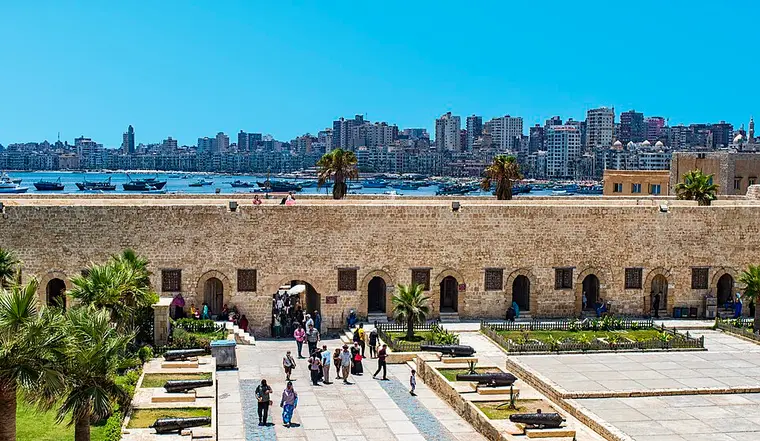

Sources for this chapter (254)Academic31Institution30Specialist book154Reputable web39
Academic(31)
- Strootman · The Hellenistic royal court · Mnemosyne · 2009
- Seele · Horus on the Crocodiles · Journal of Near Eastern Studies · 1947
- The Nile Police in the Ptolemaic Period", in: K. Buraselis – M. Stefanou – D.J. Thompson (Hg.), The Ptolemies, the Sea and the Nile. Studies in Waterborne Power, Cambridge 2013, 172–184. · Cambridge University Press · 2013
- Stephens · Writing.Alexandria.as.the.(Common)place · Princeton/Stanford.Working.Papers.in.Classics · 2012
- Tarn · Two Notes on Ptolemaic History · The Journal of Hellenic Studies · 1933
- Errington · Bias in Ptolemy's History of Alexander · The Classical Quarterly · 1969
- Roisman · Ptolemy and His Rivals in His History of Alexander · The Classical Quarterly · 1984
- Extreme climate after massive eruption of Alaska's Okmok volcano in 43 BCE and effects on the late Roman Republic and Ptolemaic Kingdom · Proceedings of the National Academy of Sciences · 2020
- Did volcano eruptions alter the trajectories of the Roman Republic and the Ptolemaic Kingdom? Moving beyond black-box determinism · Proceedings of the National Academy of Sciences · 2020
- Ursin · „The mother of chemical peeling" – Oder: Wie Kleopatra zum Bad in Eselsmilch kam · thersites. Journal for Transcultural Presences & Diachronic Identities from Antiquity to Date · 2021
- Sewell-Lasater · Becoming Kleopatra: Ptolemaic Royal Marriage, Incest, and the Path to Female Rule · University of Houston · 2020
- Tronson · Vergil, the Augustans, and the invention of Cleopatra's suicide—one asp or two? · The Vergilian Society · 1998
- Cleopatra V Tryphæna and the Genealogy of the Later Ptolemies · Ancient Society · 1997
- Curtius · Ikonographische Beitrage zum Porträt der Römischen Republik und der Julisch-Claudischen Familie: IV Kleopatra VII. Philopator · Mitteilungen des Deutschen Archäologischen Instituts, Römische Abteilung · 1933
- Newman · A Dialogue of Power in the Coinage of Antony and Octavian (44–30 B.C.) · American Journal of Numismatics · 1990
- Skeat · The Last Days of Cleopatra: A Chronological Problem · The Journal of Roman Studies · 1953
- Walker · Cleopatra in Pompeii? · Papers of the British School at Rome · 2008
- Diana · From Romance to Rhetoric: The Alexandrian Library in Classical and Islamic Traditions · The American Historical Review · 1992
- Rohmann · The Destruction of the Serapeum of Alexandria, Its Library, and the Immediate Reactions · Klio · 2022
- Survivor: The History of the Library · History Magazine · 2001
- Allen · The Predecessors of Champollion · Proceedings of the American Philosophical Society · 1960
- Aswan Granite and Granodiorite · Göttinger Miszellen · 1998
- Two Donation Stelae in the Brooklyn Museum · Journal of the American Research Center in Egypt · 1970
- The Geology of the Rosetta Stone · Journal of Egyptian Archaeology · 2003
- Evaluation of diastolic filling of left ventricle in health and disease: Doppler echocardiography is the clinician's Rosetta Stone · Journal of the American College of Cardiology · 1998
- Arabidopsis, the Rosetta Stone of Flowering Time? · Science · 2002
- White Singer · Octavia's Mediation at Tarentum · The Classical Journal · 1947
- The Battle of Actium: A reconsideration · Classical Quarterly · 2011
- Scientists find clue to mysterious 'dead water' effect that stops a ship · The Week · 2020
- Curtius · Ikonographische Beitrage zum Portrar der romischen Republik und der Julisch-Claudischen Familie · RM · 1933
- Zachos · The tropaeum of the sea-battle of Actium at Nikopolis: interim report · Journal of Roman Archaeology · 2003
Institution(30)
- Authors: Department of Ancient Near Eastern Art · The Achaemenid Persian Empire (550–330 B.C.) | Essay | The Metropolitan Museum of Art | Heilbrunn Timeline of Art History
- The Great Revolt of the Egyptians
- Thomas · Ptolemaic and Roman Faience Vessels
- Bronze statuette of Horus | Egyptian, Ptolemaic | Hellenistic | The Met
- Faience amulet of Mut with double crown | Egyptian, Ptolemaic | Hellenistic
- Marble head of a Ptolemaic queen | Greek | Hellenistic | The Met
- Statuette of Arsinoe II for her Posthumous Cult | Ptolemaic Period | The Met
- Fischer-Bovet · Army and Egyptian Temple Building Under the Ptolemies · 2007
- von Reden · Ancient Economies, Modern Methodologies · Edipuglia · 2006
- The Princeton Encyclopedia of Classical Sites, NAUKRATIS (Kom Giéif) Egypt.
- Lauren O'Connor · The Remains of Alexander the Great: The God, The King, The Symbol · Constructing the Past · 2008
- Manning · The Ptolemaic Economy · Stanford University · 2004
- Lorber · The Currency Reforms and Character of Ptolemy I Soter · OXBOW · 2018
- Online Scholarly Catalogues at the Art Institute of Chicago
- Cleopatra's Egypt: Age of the Ptolemies · Brooklyn Museum · 1988
- Weigall · The Life and Times of Cleopatra, Queen of Egypt · Blackwood · 1914
- Phillips · The Great Library of Alexandria? · University of Nebraska–Lincoln · 2010
- Afghanistan: Forging Civilizations Along the Silk Road · Metropolitan Museum of Art · 2012
- Andrews · The Rosetta Stone · British Museum Press · 1985
- The Hellenistic Period: historical sources in translation · Blackwell · 2004
- Bevan · The House of Ptolemy · Methuen · 1927
- Budge · The Rosetta Stone · British Museum · 1913
- Parkinson · The Rosetta Stone · British Museum Press · 2005
- The Dictionary of Ancient Egypt · The British Museum Press · 1995
- Simpson · The Rosetta Stone: translation of the demotic text · The British Museum
- Book of Egyptian Hieroglyphs · British Museum Press, Barnes & Noble · 2003
- Synopsis of the Contents of the British Museum · British Museum · 1847
- Cleopatra of Egypt · British Museum Press · 2001
- British Museum Object Database reference number: EA24
- The World of State · College of New Rochelle · 2017
Specialist book(154)
- R. C. C. Law · The Cambridge History of Africa, Vol. 2 · Cambridge University Press · 1979
- Stephens · Seeing double: intercultural poetics in Ptolemaic Alexandria · University of California Press · 2003
- Hölbl · A History of the Ptolemaic Empire · Psychology Press · 2001
- Nardo · Ancient Greece · Greenhaven Publishing LLC · 2009
- Rutherford · Greco-Egyptian Interactions: Literature, Translation, and Culture, 500 BCE-300 CE · Oxford University Press · 2016
- Robins · The Art of Ancient Egypt · Harvard University Press · 2008
- Bagnall · Egypt from Alexander to the Early Christians: An Archaeological and Historical Guide · Getty Publications · 2004
- Grainger · The Seleucid Empire of Antiochus III. 223–187 BC · Pen and Sword · 2020
- Wilkinson · The Rise and Fall of Ancient Egypt. The History of a Civilisation from 3000 BC to Cleopatra · Bloomsbury · 2011
- Veïsse · Cultures of Resistance in the Hellenistic East · Oxford University Press · 2022
- Török · Between Two Worlds: The Frontier Region Between Ancient Nubia and Egypt, 3700 BC-AD 500 · Brill · 2009
- Lloyd · The Oxford History of Ancient Egypt · Oxford Univ. Press · 2004
- Manning · The Historical Understanding of the Ptolemaic State · Princeton University Press · 2010
- Malek · Egyptian Art · Phaidon Press Limited · 1999
- Pomeroy · Women in Hellenistic Egypt: From Alexander to Cleopatra · Wayne State University Press · 1990
- Rosalie · Discovering Ancient Egyptology · 1993
- Török · Hellenizing art in ancient Nubia, 300 BC-AD 250, and its Egyptian models : a study in "acculturation" · Brill · 2011
- Bingen · Hellenistic Egypt: Monarchy, Society, Economy, Culture · University of California Press · 2007
- Fischer-Bovet · Oxford Handbook Topics in Classical Studies · 2015
- Judaea and Mediterranean Politics: 219 to 161 B.C.E. · BRILL · 1998
- The Ancient Egyptian economy, 3000–30 BCE · Cambridge University Press · 2016
- Army and Society in Ptolemaic Egypt · Cambridge University Press · 2014
- Aegean Interactions: Delos and Its Networks in the Third Century · Oxford University Press · 2017
- Berenike and the Ancient Maritime Spice Route · University of California Press · 2019
- Counting the People in Hellenistic Egypt: Volume 2, Historical Studies · Cambridge University Press · 2006
- Chauveau · Egypt in the age of Cleopatra : history and society under the Ptolemies · Cornell University Press · 2000
- Burstein · The Reign of Cleopatra · University of Oklahoma Press · 2007
- Grabbe · A History of the Jews and Judaism in the Second Temple Period. Volume 2 – The Coming of the Greeks: The Early Hellenistic Period (335 – 175 BC) · T&T Clark · 2008
- The Syrian Wars · Brill · 2010
- Peters · The Harvest of Hellenism · Simon & Schuster · 1970
- Rawles · Callimachus · Bloomsbury Academic · 2019
- Hellenistic Egypt: monarchy, society, economy, culture · University of California Press · 2007
- Bowman · Egypt After the Pharaohs, 332 BC–AD 642: From Alexander to the Arab Conquest · University of California Press · 1996
- Chauveau · Egypt in the age of Cleopatra: history and society under the Ptolemies · Cornell University Press · 2000
- Ellis · Graeco-Roman Egypt · Shire Publications · 1992
- Huß · Ägypten in hellenistischer Zeit 332–30 v. Chr. · Beck · 2001
- Huß · Die Verwaltung des ptolemaiischen Reichs · Beck · 2011
- Johannsen · Imperialer Wandel und ptolemäischer Imperialismus in Syrien: Konnektivität, Konkurrenz und Kooperation · Brill Schöningh · 2023
- Lampela · Rome and the Ptolemies of Egypt: the development of their political relations, 273–80 B.C · Societas Scientiarum Fennica · 1998
- Manning · The last pharaohs: Egypt under the Ptolemies, 305–30 BC · Princeton University Press · 2010
- Jones · Cleopatra: A Sourcebook · University of Oklahoma Press · 2006
- Carleton · Carleton's Condensed Classical Dictionary: Being Brief But Succinct Information Concerning the Prominent Names in Classical History and Mythology, Together with the Most Conspicuous Incidents Associated with Them · G. W. Carleton & Company · 1882
- Worthington · By the Spear: Philip II, Alexander the Great, and the Rise and Fall of the Macedonian Empire · Oxford University Press · 2014
- Alexandre le Grand · Librairie Droz · 1999
- Philip II and Alexander The Great: Father and Son, Lives and Afterlives · Oxford University Press · 2010
- Ogden · Alexander the Great: Myth, Genesis and Sexuality · University of Exeter Press · 2011
- Grimal · A History of Ancient Egypt · Librairie Arthéme Fayard · 1988
- Arrian · Anabasis Alexandri (The Campaigns of Alexander) · Penguin Books · 1976
- Silverman · Political Memory in and after Persian Empire · SBL Press · 2015
- Ritner · The literature of Ancient Egypt; Decree of Satrapa Ptolemy Lagides · Yale · 2003
- Polygamy Prostitutes and Death. The Hellenistic Dynasties · Gerald Duckworth & Co. Ltd. · 1999
- Berenice II and the Golden Age of Ptolemaic Egypt · Oxford University Press · 2014
- Hellenistic Queens · Ares Publishers · 1985
- Ptolemy II Philadelphus and his World · Brill · 2008
- Manning · Networks, Hierarchies, and Markets in the Ptolemaic Economy · Oxford Scholarship Online · 2011
- Strooman · The Ptolemaic Sea Empire · Utrecht University · 2019
- Sboronos · Ta Nomismata tou Kratous ton Ptolemaion · En Athnais Typois P. D. Sakellariou · 1904
- Lorber · Dating the Portrait Coinage of Ptolemy I · The American Numismatic Society · 2012
- Caneva · Ptolemy I: Politics, Religion and the Transition to Hellenistic Egypt · OXBOW
- Jacoby · Die Fragmente der griechischen Historiker, Teil 2, Zeitgeschichte. – B. Spezialgeschichten, Autobiographien und Memoiren, Zeittafeln [Nr. 106-261] · Weidmann · 1926
- Bosworth · From Arrian to Alexander: Studies in Historical Interpretation · Oxford University Press · 1988
- Robinson · The Story of Medicine · Kessinger Publishing · 2005
- Ptolemy I Soter: Themes and Issues · Bloomsbury Publishing · 2023
- Ptolemaios I. Soter: Herrscher zweier Kulturen · Badawi - Artes Afro Arabica · 2007
- Chugg · The Pharos Lighthouse In Alexandria: Second Sun and Seventh Wonder of Antiquity · Taylor & Francis · 2024
- Ptolemy of Egypt · Routledge · 1994
- Green · Alexander to Actium · University of California Press · 1990
- Leprohon · The Great Name: Ancient Egyptian Royal Titulary · Society of Biblical Literature · 2013
- Ptolemy I and the Transformation of Egypt, 404-282 BCE · Brill · 2018
- Waterfield, Robin · Dividing the Spoils – The War for Alexander the Great's Empire · Oxford University Press · 2011
- Antigonos the One-Eyed and the Creation of the Hellenistic State · University of California Press · 1990
- Cordry · A Dictionary of American English Pronunciation · Austin & Winfield · 1998
- Pascal · Pensées · P. F. Collier & Son · 1910
- Pfeiffer · Griechische und lateinische Inschriften zum Ptolemäerreich und zur römischen Provinz Aegyptus · Lit · 2015
- Pliny the Elder · Natural History · Teubner · 1906
- Prose · Cleopatra: Her History, Her Myth · Yale University Press · 2022
- Tyldesley · Cleopatra: Last Queen of Egypt · Profile Books · 2009
- Orientalism and the Reception of Powerful Women from the Ancient World · Bloomsbury · 2020
- When the Greeks Ruled Egypt: From Alexander the Great to Cleopatra · Princeton University Press · 2014
- Chauveau · Cleopatra: Beyond the Myth · Cornell University Press · 2004
- Daugherty · The Reception of Cleopatra in the Age of Mass Media · Bloomsbury · 2022
- Flamarion · Cleopatra: The Life and Death of a Pharaoh · Harry N. Abrams · 1997
- Foss · The Search for Cleopatra · Arcade · 1999
- Fraser · Ptolemaic Alexandria · Oxford University Press · 1985
- Hughes-Hallett · Cleopatra: Histories, Dreams and Distortions · HarperCollins · 1991
- Jones · Cleopatra: The Last Pharaoh · American University in Cairo Press · 2006
- Lindsay · Cleopatra · Coward-McCann · 1972
- Nardo · Cleopatra · Lucent · 1994
- Samson · Nefertiti & Cleopatra · Stacey International · 1990
- Southern · Cleopatra · Tempus · 2000
- Syme · The Roman Revolution · Oxford University Press · 1962
- Volkmann · Cleopatra: a Study in Politics and Propaganda · Sagamore · 1958
- Watterson · Cleopatra: Fact and Fiction · Amberley · 2020
- Murray · The Library: An Illustrated History · Skyhorse Publishing · 2009
- David C. Lindberg · Science in the Middle Ages · University of Chicago Press · 1980
- Cherf · What Happened to the Ancient Library of Alexandria? · Brill · 2008
- What Happened to the Ancient Library of Alexandria? · Brill · 2008
- The Library: An Illustrated History · Skyhorse Publishing · 2009
- Muslim Contributions to World Civilization · Biddles Ltd. · 2005
- Gibbon · The History of the Decline and Fall of the Roman Empire · 1776
- Gregorian · Islam: A Mosaic, Not a Monolith · Brookings Institution Press · 2003
- Books: A Living History · Getty Publications · 2011
- The Library of Alexandria · Houghton Mifflin Harcourt · 2003
- Webster · Early European Civilization · D.C. Heath and Co. · 1933
- Berti, Monica · La Biblioteca di Alessandria: storia di un paradiso perduto · Edizioni TORED · 2010
- Canfora · The Vanished Library · University of California Press · 1990
- El-Abbadi, Mostafa · Life and Fate of the Ancient Library of Alexandria · UNESCO · 1992
- Orosius, Paulus (trans. Roy J. Deferrari) · The Seven Books of History Against the Pagans · Catholic University of America · 1964
- Writing: Theory and History of the Technology of Civilization · John Wiley & Sons · 2009
- E. Agazzi · The Reality of the Unobservable: Observability, Unobservability and Their Impact on the Issue of Scientific Realism · Springer Science & Business Media · 2013
- Delhi: Pages From a Forgotten History · Hay House, Inc · 2015
- The Keys of Egypt: the obsession to decipher Egyptian hieroglyphs · HarperCollins · 2000
- The Mind of Egypt: history and meaning in the time of the Pharaohs · Harvard University Press · 2003
- Budge · The Mummy: chapters on Egyptian funereal archaeology · Cambridge University Press · 1894
- Budge · The Decrees of Memphis and Canopus · Kegan Paul · 1904
- Burleigh · Mirage: Napoleon's scientists and the unveiling of Egypt · HarperCollins · 2007
- The Eponymous Priests of Ptolemaic Egypt (P. L. Bat. 24): Chronological lists of the priests of Alexandria and Ptolemais with a study of the demotic transcriptions of their names · Brill · 1983
- Clayton · Chronicles of the Pharaohs: the reign-by-reign record of the rulers and dynasties of Ancient Egypt · Thames & Hudson · 2006
- Dewachter · Champollion: un scribe pour l'Égypte · Éditions Gallimard · 1990
- Downs · Discovery at Rosetta: the ancient stone that unlocked the mysteries of Ancient Egypt · Skyhorse Publishing · 2008
- El Daly · Egyptology: the missing millennium: Ancient Egypt in medieval Arabic writings · UCL Press · 2005
- Monuments of Egypt: the Napoleonic edition · Princeton University Press · 1987
- Iversen · The Myth of Egypt and Its Hieroglyphs in European Tradition · Princeton University Press · 1993
- Meyerson · The Linguist and the Emperor: Napoleon and Champollion's quest to decipher the Rosetta Stone · Ballantine Books · 2004
- Ptolémée Épiphane, Aristonikos et les prêtres d'Égypte. Le Décret de Memphis (182 a.C.): édition commentée des stèles Caire RT 2/3/25/7 et JE 44901 (CENiM 12) · Université Paul Valéry · 2015
- Ancient Egyptian Materials and Technology · Cambridge University Press · 2009
- Oxford English Dictionary. 2nd ed. · Oxford University Press · 1989
- Cracking Codes: the Rosetta Stone and decipherment · University of California Press · 1999
- The Rosetta Stone · Abrams · 1989
- Ray · The Rosetta Stone and the Rebirth of Ancient Egypt · Harvard University Press · 2007
- Lost Languages: the enigma of the world's undeciphered scripts · Thames & Hudson · 2009
- Shaw · The Oxford History of Ancient Egypt · OUP Oxford · 2003
- Simpson · Demotic Grammar in the Ptolemaic Sacerdotal Decrees · Griffith Institute · 1996
- The Rosetta Stone: the story of the decoding of hieroglyphics · Four Walls Eight Windows · 2002
- Chronicle of the Queens of Egypt · Thames & Hudson · 2006
- Wilson · History of the British Expedition to Egypt. 4th ed. · Military Library · 1803
- Davis · 100 decisive battles: From ancient times to the present · Oxford University Press · 1999
- Roller · Cleopatra: A Biography · Oxford University Press · 2010
- OCR Ancient History GCSE Component 2 : Rome · Bloomsbury Publishing · 2017
- Lippold · Die Skulpturen des Vaticanischen Museums · Walter de Gruyter & Co · 1936
- Lorenzo · Signs of Place: A Visual Interpretation of Landscape · Edition Topoi · 2019
- Carter · The Battle of Actium: The Rise & Triumph of Augustus Caesar · Hamilton · 1970
- A Biographical Dictionary of Ancient Egypt · Routledge · 2002
- The Age of Augustus · Blackwell Publishing · 2003
- Kebric · Roman People · McGraw-Hill · 2005
- Plutarch: Life of Antony · Cambridge University Press · 1988
- Octavian's Campsite Memorial for the Actian War · American Philosophical Society · 1989
- Potter · Rome in the Ancient World: From Romulus to Justinian · Thames & Hudson · 2009
- Scullard · From the Gracchi to Nero: A History of Rome 133 BC to AD 68 · Routledge · 2013
- Shuckburgh · A History of Rome to the Battle of Actium · Macmillan and Company · 1917
- Califf · Battle of Actium · Chelsea House Publishers · 2004
- Green · Alexander to Actium: The Historical Evolution of the Hellenistic Age · University of California Press · 1990
- Gurval · Actium and Augustus: The Politics and Emotions of Civil War · University of Michigan Press · 1995
- Sheppard · Actium 31 BC: Downfall of Antony and Cleopatra · Osprey Publishing · 2009
Reputable web(39)
- Steven Snape · Estimating Population in Ancient Egypt · 2019
- Ancient Egypt – Macedonian and Ptolemaic Egypt (332–30 bce)
- Egyptian Art During the Ptolemaic Period of Egyptian History
- Ptolemaic dynasty - Administration and economy | Britannica · 2025
- The Ptolemaic Dynasty
- King · The Economy of Ptolemaic Egypt · 2018
- Chrysopoulos · Naucratis: The First Ancient Greek Colony in Egypt · 2024
- Ptolemaic Dynasty -- Ptolemy I root
- Ptolemy an Argead – pothos.org
- Berenice I at Livius.org
- Ptolemaida Web Portal
- Radio 4 Programmes – A History of the World in 100 Objects, Empire Builders (300 BC – 1 AD), Rosetta Stone · BBC
- CoinArchives.com Search Results: drachmai
- Carey · It is possible that Mark Antony met the young Cleopatra when he served under the Roman general Gabinius in 55 BCE
- Fischer-Bovet · Cleopatra VII, 69–30 BCE · 2015
- Causation and Cleopatra's nose · Lexology · 2019
- Bianchi · Cleopatra VII · Oxford University Press · 2005
- Crawford · Who Was Cleopatra? Mythology, propaganda, Liz Taylor and the real Queen of the Nile · 2007
- Holland · Cleopatra: What Kind of a Woman Was She, Anyway? · 1997
- The Vanished Library by Bernard Lewis · 1990
- Lomholt · Bibliotheca Alexandrina Egypt: Egyptian Library Building · 2021
- About the BA · Bibliotheca Alexandrina
- Harvey · The Rosetta Stone: A decree carved in three different scripts is helping linguists decipher ancient texts | The Vintage News · 2017
- Philomathean Society
- Sarah El Shaarawi · Egypt's Own: Repatriation of Antiquities Proves to be a Mammoth Task · Newsweek – Middle East · 2016
- 'Return Rosetta Stone to Egypt' demands country's leading archaeologist Zahi Hawass · 2022
- Stickings · New push to bring Rosetta Stone back to Egypt amid 'awakening' on colonial loot · 2022
- Rosetta's Comet Target 'Releases' Plentiful Water
- Cooper · New Rosetta Stone for GRBs as supernovae · Astronomy Now Online · 2010
- Horwennefer · Egyptian Royal Genealogy
- Huttinger · Stolen Treasures: Zahi Hawass wants the Rosetta Stone back—among other things · Cairo Magazine · 2005
- International team accelerates investigation of immune-related genes · The National Institute of Allergy and Infectious Diseases · 2000
- How the Rosetta Stone works · Howstuffworks.com · 2007
- Lendering · Actium (31 BCE) · 2020
- Kellum · Representations and Re-presentations of the Battle of Actium · 2010
- Migiro · What Was the Battle of Actium? · 2017
- CNRS · Behind the dead-water phenomenon · 2020
- Suetonius, Divus Augustus, Chapter 18, Section 2
- Cassius Dio, Historiae Romanae, Book 51, chapter 1, section 2
Every ancient date is an estimate. Scholarly chronologies differ by decades, and by more the further back you go, which is why each figure carries a tilde. When a period is published we name the chronology its dates come from.