The Macedonian Conquest
~332 – ~305 BCE
9 chapters · 124 min read · 376 sources
~332 BCE
Introduction
1 min readThe Argead dynasty, also known as the Temenid dynasty (, Tēmenídai) was an ancient Macedonian royal house of Dorian Greek provenance. They were the founders and the ruling dynasty of the ancient kingdom of Macedon from…The Argead dynasty, also known as the Temenid dynasty (, Tēmenídai) was an ancient Macedonian royal house of Dorian Greek provenance. They were the founders and the ruling dynasty of the ancient kingdom of Macedon from about 700 to 310 BC.
Their tradition, as described in Greek historiography, traced their origins to Argos, in the Peloponnese region of Southern Greece. They were known as Argeads or Argives. Initially, the Argeadae were the rulers of the tribe of the same name, (Argead Macedonians) who prevailed in early Emathia, later Lower Macedonia, with their capital at Aigai. By the time of Philip II of Macedon, they had expanded their reign further, to include under the rule of Macedonia, now governed from Pella, all the Upper Macedonian states. The family's most celebrated members were Philip II of Macedon and his son Alexander the Great, under whose leadership the kingdom of Macedonia gradually gained predominance throughout Greece, established the Hellenic League, defeated the Achaemenid Empire and expanded as far as Egypt and India. The mythical founder of the Argead dynasty is King Caranus. The Argeads claimed descent from Heracles through his great-great-grandson Temenus, also king of Argos.
Origin
3 min readThe words Argead and Argive derive (via Latin Argīvus) from the Greek (Argeios meaning "of or from Argos"), which is first attested to in Homer where it was also used as a collective designation for the Greeks (, Argive…The words Argead and Argive derive (via Latin Argīvus) from the Greek (Argeios meaning "of or from Argos"), which is first attested to in Homer where it was also used as a collective designation for the Greeks (, Argive Danaans). The Argead dynasty claimed descent from the Temenids of Argos, in the Peloponnese, whose legendary ancestor was Temenus, the great-great-grandson of Heracles.
In the excavations of the royal Palace of Aigai, near modern Vergina in Greek Macedonia, Manolis Andronikos discovered in the "tholos" room (according to some scholars "tholos" was the throne room) a Greek inscription relating to that belief. This is testified by Herodotus, in The Histories, where he mentions that three brothers of the lineage of Temenus, Gauanes, Aeropus and Perdiccas, fled from Argos to the Illyrians and then to Upper Macedonia, to a town called Lebaea, where they served the king. The latter asked them to leave his territory, believing in an omen that something great would happen to Perdiccas. The boys went near the garden of Midas, above which mount Bermio stands. There they made their abode and slowly formed their own kingdom.
Herodotus also relates the incident of the participation of Alexander I of Macedon in the Olympic Games in 504 or 500 BC where the participation of the Macedonian king was contested by participants on the grounds that he was not Greek. The Hellanodikai, however, after examining his Argead claim confirmed that the Macedonian kings were Greeks and allowed him to participate. According to the Greek scholar M. Sakellariou, the common name of Temenids between the Macedonian dynasty and the Doric dynasty of Argos had its origin to the relation between the tribe of Makednoi, that later became the Makedones, and the Dorians.
Thucydides, in the History of the Peloponnesian War, the Argeads were originally Temenids from Argos, who descended from the highlands to Lower Macedonia, expelled the Pierians from Pieria and acquired in Paionia a narrow strip along the river Axios extending to Pella and the sea. They also added Mygdonia in their territory through the expulsion of the Edoni, Eordians, and Almopians.
Another theory supported by the Greek historian Miltiades Hatzopoulos, following the opinion of the ancient author Appian, is that the Argead dynasty actually came from Argos Orestikon. Miltiades Hatzopoulos has suggested that the Ancient Macedonian dialect of the 4th century BC, as attested in the Pella curse tablet, was a sort of Macedonian 'koine' resulting from the encounter of the idiom of the 'Aeolic'-speaking populations around Mount Olympus and the Pierian Mountains with the Northwest Greek-speaking Argead Makedones hailing from Argos Orestikon, who founded the kingdom of Lower Macedonia. However, according to Hatzopoulos, B. Helly expanded and improved his own earlier suggestion and presented the hypothesis of a (North-)'Achaean' substratum extending as far north as the head of the Thermaic Gulf, which had a continuous relation, in prehistoric times both in Thessaly and Macedonia, with the Northwest Greek-speaking populations living on the other side of the Pindus mountain range, and contacts became cohabitation when the Argead Makedones completed their wandering from Orestis to Lower Macedonia in the 7th c. BC. According to this hypothesis, Hatzopoulos concludes that the Ancient Macedonian Greek dialect of the historical period, which is attested in inscriptions, is a sort of koine resulting from the interaction and the influences of various elements, the most important of which are the North-Achaean substratum, the Northwest Greek dialect of the Argead Macedonians, and the Thracian and Phrygian adstrata. Borza has argued that "the 'highlanders' or Makedones of the mountainous regions of western Macedonia may have been derived from northwest Greek stock", and that "those who emerged into the lowlands were to be distinguished from the rest of the Makedones who remained in the mountain cantons by the name Argeadae".
History
1 min readThe death of the king almost invariably triggered dynastic disputes and often a war of succession between members of the Argead family, leading to political and economic instability. These included:Succession disputes
The death of the king almost invariably triggered dynastic disputes and often a war of succession between members of the Argead family, leading to political and economic instability. These included:
Additionally, long-established monarchs could still face a rebellion by a relative when the former's kingship was perceived to be weak. An example was Philip's rebellion against his older brother, king Perdiccas II, in the prelude to the Peloponnesian War (433–431 BCE).
List of rulers
Family tree
1 min readModern historians disagree on a number of details concerning the genealogy of the Argead dynasty. Robin Lane Fox, for example, refutes Nicholas Hammond's claim that Ptolemy of Aloros was Amyntas II's son, arguing that…Modern historians disagree on a number of details concerning the genealogy of the Argead dynasty. Robin Lane Fox, for example, refutes Nicholas Hammond's claim that Ptolemy of Aloros was Amyntas II's son, arguing that Ptolemy was neither his son nor an Argead. Consequently, the charts below do not account for every chronological, genealogical, and dynastic complexity. Instead, they represent one common reconstruction of the Argeads advanced by historians such as Hammond, Elizabeth Carney, and Joseph Roisman.
Alexander the Great
67 min readAlexander III of Macedon (; 20/21 July 356 BC – 10/11 June 323 BC), most commonly known as Alexander the Great, was king of the ancient Greek kingdom of Macedon from 336 BC until his death. He was the son of Philip II,…Alexander III of Macedon (; 20/21 July 356 BC – 10/11 June 323 BC), most commonly known as Alexander the Great, was king of the ancient Greek kingdom of Macedon from 336 BC until his death. He was the son of Philip II, born to him by his fourth wife, Olympias, and ascended to the throne at the age of 20 after Philip was assassinated. Alexander spent most of his reign conducting a lengthy military campaign throughout Asia and Egypt, and by the age of 30, he had created one of the largest empires in history, stretching from Greece to northwestern India. He was undefeated in battle and is widely considered to be one of history's greatest and most successful military commanders.
Born in Pella, Macedon, Alexander was tutored by the philosopher and polymath Aristotle until the age of 16. In 335 BC, shortly after assuming the throne of Macedon, he launched a campaign in the Balkans and reasserted control over Thrace and parts of Illyria before marching on the city of Thebes, which was subsequently destroyed. Alexander then assumed leadership of the League of Corinth, created by his father.
With this authority over all Greeks he launched a pan-Hellenic invasion of the Achaemenid Persian Empire in 334 BC, and with it began a series of campaigns which lasted for ten years. Following his conquest of Asia Minor and a series of decisive battles, particularly at Issus and Gaugamela, the power of the Achaemenid Empire was broken. He subsequently overthrew Darius III and conquered the Achaemenid Empire in its entirety. After the fall of Persia, the Macedonian Empire held a vast swath of territory between the Adriatic Sea and the Indus River. Alexander endeavored to reach the "ends of the world and the Great Outer Sea" and invaded India in 326 BC, achieving an important victory over Porus, an ancient Indian king of present-day Punjab, at the Battle of the Hydaspes. Facing mutiny from his troops, he was eventually forced to turn back at the Beas River, and later died in 323 BC in Babylon, Mesopotamia, the city which he had planned to make the capital of his empire, while on his return to Greece. Alexander's death put an end to his planned invasion of Arabia.
In the years following his death, a series of civil wars broke out across the Macedonian Empire, eventually leading to its disintegration at the hands of the Diadochi. Alexander's death marks the conventional beginning of the Hellenistic period. Through his conquests, he built a legacy that includes the cultural diffusion and syncretism, which gave rise to Greco-Buddhism and Hellenistic Judaism. He founded more than twenty cities, with the most prominent being the city of Alexandria in Egypt. Alexander's establishment of Greek colonies and the spreading of Greek culture led to Hellenistic civilization becoming a major force in the ancient world, influencing regions as far east as the Indian subcontinent. The Hellenistic period developed through the Roman Empire into modern Western culture; the Greek language became the lingua franca of the region and was the predominant language of the Byzantine Empire until its collapse in 1453 AD.
Alexander became a legendary hero similar to Achilles, featuring prominently in the historical and mythical traditions of both Greek and non-Greek cultures. His military achievements and successes in battle made him the touchstone against which many later military leaders would judge themselves. His tactics remain a significant subject of study in military academies worldwide. Legends of Alexander's exploits were coalesced into the 3rd century Alexander Romance which, in the premodern period, went through over one hundred recensions, translations, and derivations and was translated into almost every European vernacular and every language of the Islamic world. After the Bible, it was the most popular form of European literature.
Early life
Lineage and childhood
Alexander III was born in Pella, the capital of the Kingdom of Macedon, on the sixth day of the ancient Greek month of Hekatombaion, which probably corresponds to 20 July 356 BC (although the exact date is uncertain). He was the son of the king of Macedon, Philip II of the Argead dynasty, and his fourth wife, Olympias, daughter of King Neoptolemus I of Epirus. Although Philip had seven or eight wives, Olympias was his principal wife for some time, likely because she gave birth to Alexander.
Several legends surround Alexander's birth and childhood. According to the ancient Greek biographer Plutarch, on the eve of the consummation of her marriage to Philip, Olympias dreamed that her womb was struck by a thunderbolt that caused a flame to spread "far and wide" before dying away. Sometime after the wedding, Philip is said to have seen himself, in a dream, securing his wife's womb with a seal engraved with a lion's image. Plutarch offered a variety of interpretations for these dreams: that Olympias was pregnant before her marriage, indicated by the sealing of her womb; or that Alexander's father was Zeus. Ancient commentators were divided about whether the ambitious Olympias promulgated the story of Alexander's divine parentage, variously claiming that she had told Alexander, or that she dismissed the suggestion as impious. Despite this, Alexander could claim, by way of his father Phillip II, descendance from Temenus, a descendant of Heracles (thereby also making him a very distant relation to the hero Perseus), and descendance by way of his mother's family, the Aeacidae, to Neoptolemus, son of the warrior Achilles.
On the day Alexander was born, Philip was preparing a siege on the city of Potidea on the peninsula of Chalcidice. That same day, Philip received news that his general Parmenion had defeated the combined Illyrian and Paeonian armies and that his horses had won at the Olympic Games. It was also said that on this day, the Temple of Artemis in Ephesus, one of the Seven Wonders of the World, burnt down, with Hegesias of Magnesia claiming that it had burnt down because Artemis was away, attending the birth of Alexander. Such legends may have emerged when Alexander was king, and possibly at his instigation, to show that he was superhuman and destined for greatness from conception.
In his early years, Alexander was raised by a nurse, Lanike, sister of Alexander's future general Cleitus the Black. Later in his childhood, Alexander was tutored by the strict Leonidas, a relative of his mother, and by Lysimachus of Acarnania. Alexander was raised in the manner of noble Macedonian youths, learning to read, play the lyre, ride, fight, and hunt. When Alexander was ten years old, a trader from Thessaly brought Philip a horse, which he offered to sell for thirteen talents. The horse refused to be mounted, and Philip ordered it away. Alexander, however, detecting the horse's fear of its own shadow, asked to tame the horse, which he eventually managed. Plutarch stated that Philip, overjoyed at this display of courage and ambition, kissed his son tearfully, declaring: "My boy, you must find a kingdom big enough for your ambitions. Macedon is too small for you", and bought the horse for him. Alexander named it Bucephalas, meaning "ox-head". Bucephalas carried Alexander as far as modern-day India. When Bucephalas died (because of old age, according to Plutarch, at age 30), Alexander named a city after him, Bucephala.
Education
When Alexander was 13, Philip began to search for a tutor, and considered such academics as Isocrates and Speusippus, the latter offering to resign from his stewardship of the Academy to take up the post. In the end, Philip chose Aristotle and provided the Temple of the Nymphs at Mieza as a classroom. In return for teaching Alexander, Philip agreed to rebuild Aristotle's hometown of Stageira, which Philip had razed, and to repopulate it by buying and freeing the ex-citizens who were slaves, or pardoning those who were in exile.
Mieza was like a boarding school for Alexander and the children of Macedonian nobles, such as Ptolemy, Hephaestion, and Cassander. Many of these students would become his friends and future generals, and are often known as the "Companions". Aristotle taught Alexander and his companions about medicine, philosophy, morals, religion, logic, and art. Under Aristotle's tutelage, Alexander developed a passion for the works of Homer, and in particular the Iliad; Aristotle gave him an annotated copy, which Alexander later carried on his campaigns. Alexander was able to quote Euripides from memory.
In his youth, Alexander was also acquainted with Persian exiles at the Macedonian court, who received the protection of Philip II for several years as they opposed Artaxerxes III. Among them were Artabazos II and his daughter Barsine, possible future mistress of Alexander, who resided at the Macedonian court from 352 to 342 BC, as well as Amminapes, future satrap of Alexander, and a Persian nobleman named Sisines. This gave the Macedonian court a good knowledge of Persian issues, and may even have influenced some of the innovations in the management of the Macedonian state.
Suda writes that Anaximenes of Lampsacus was one of Alexander's teachers, and that Anaximenes also accompanied Alexander on his campaigns.
Heir of Philip II
Regency and ascent of Macedon
At the age of 16, Alexander's education under Aristotle ended. Philip II had waged war against the Thracians to the north, which left Alexander in charge as regent and heir apparent. During Philip's absence, the Thracian tribe of Maedi revolted against Macedonia. Alexander responded quickly and drove them from their territory. The territory was colonized, and a city, named Alexandropolis, was founded.
Upon Philip's return, Alexander was dispatched with a small force to subdue the revolts in southern Thrace. Campaigning against the Greek city of Perinthus, Alexander reportedly saved his father's life. Meanwhile, the city of Amphissa began to work lands that were sacred to Apollo near Delphi, a sacrilege that gave Philip the opportunity to further intervene in Greek affairs. While Philip was occupied in Thrace, Alexander was ordered to muster an army for a campaign in southern Greece. Concerned that other Greek states might intervene, Alexander made it look as though he was preparing to attack Illyria instead. During this turmoil, the Illyrians invaded Macedonia, only to be repelled by Alexander.
Philip and his army joined his son in 338 BC, and they marched south through Thermopylae, taking it after stubborn resistance from its Theban garrison. They went on to occupy the city of Elatea, only a few days' march from both Athens and Thebes. The Athenians, led by Demosthenes, voted to seek alliance with Thebes against Macedonia. Both Athens and Philip sent embassies to win Thebes's favour, but Athens won the contest. Philip marched on Amphissa (ostensibly acting on the request of the Amphictyonic League), capturing the mercenaries sent there by Demosthenes and accepting the city's surrender. Philip then returned to Elatea, sending a final offer of peace to Athens and Thebes, who both rejected it.
As Philip marched south, his opponents blocked him near Chaeronea, Boeotia. During the ensuing Battle of Chaeronea, Philip commanded the right wing and Alexander the left, accompanied by a group of Philip's trusted generals. According to the ancient sources, the two sides fought bitterly for some time. Philip deliberately commanded his troops to retreat, counting on the untested Athenian hoplites to follow, thus breaking their line. Alexander was the first to break the Theban lines, followed by Philip's generals. Having damaged the enemy's cohesion, Philip ordered his troops to press forward and quickly routed them. With the Athenians lost, the Thebans were surrounded. Left to fight alone, they were defeated.
Following their victory at Chaeronea, Philip and Alexander marched unopposed into the Peloponnese, devastating much of Laconia and ejecting the Spartans from various parts of it. At Corinth, Philip established a "Hellenic Alliance" (modelled on the old anti-Persian alliance of the Greco-Persian Wars), which included most Greek city-states except Sparta. Philip was then named Hegemon (often translated as "Supreme Commander") of this league (known by modern scholars as the League of Corinth), and announced his plans to attack the Persian Empire.
Exile and return
When Philip returned to Pella, he fell in love with and married Cleopatra Eurydice in 338 BC, the niece of his general Attalus. The marriage made Alexander's position as heir less secure, since any son of Cleopatra Eurydice would be a fully Macedonian heir, while Alexander was only half-Macedonian. During the wedding banquet, a drunken Attalus publicly prayed to the gods that the union would produce a legitimate heir.
In 337 BC, Alexander fled Macedon with his mother, dropping her off with her brother, King Alexander I of Epirus in Dodona, capital of the Molossians. He continued to Illyria where he sought refuge with one or more Illyrian kings, perhaps with Glaucias, and was treated as a guest, despite having defeated them in battle a few years before. However, it appears Philip never intended to disown his politically and militarily trained son. Accordingly, Alexander returned to Macedon after six months due to the efforts of a family friend, Demaratus, who mediated between the two parties.
In the following year, the Persian satrap (governor) of Caria, Pixodarus, offered his eldest daughter to Alexander's half-brother, Philip Arrhidaeus. Olympias and several of Alexander's friends suggested this showed Philip intended to make Arrhidaeus his heir. Alexander reacted by sending an actor, Thessalus of Corinth, to tell Pixodarus that he should not offer his daughter's hand to an illegitimate son, but instead to Alexander. When Philip heard of this, he stopped the negotiations and scolded Alexander for wishing to marry the daughter of a Carian, explaining that he wanted a better bride for him. Philip exiled four of Alexander's friends, Harpalus, Nearchus, Ptolemy and Erigyius, and had the Corinthians bring Thessalus to him in chains.
King of Macedon
Accession
In the 24th day of the Macedonian month Dios, which probably corresponds to 25 October 336 BC, while at Aigai (near modern Vergina) attending the wedding of his daughter Cleopatra to Olympias's brother, Alexander I of Epirus, Philip was assassinated by the captain of his bodyguards, Pausanias, who, according to Diodorus, was also his lover. As Pausanias tried to escape, he tripped over a vine and was killed by his pursuers, including two of Alexander's companions, Perdiccas and Leonnatus. Alexander was proclaimed king on the spot by the nobles and army at the age of 20.
Consolidation of power
Alexander began his reign by eliminating potential rivals to the throne. He had his cousin, the former Amyntas IV, executed and two Macedonian princes from the region of Lyncestis killed for having been involved in his father's assassination, but spared a third, Alexander Lyncestes. Olympias had Cleopatra Eurydice, and Europa, her daughter by Philip, burned alive, though this infuriated Alexander. Alexander also ordered the murder of Cleopatra's uncle Attalus, who was in command of the advance guard of the army in Asia Minor. Attalus was at that time corresponding with Demosthenes regarding the possibility of defecting to Athens, and had severely insulted Alexander. After his niece's murder, Alexander may have considered him too dangerous to be left alive. Alexander spared Arrhidaeus, who was by all accounts mentally disabled, possibly as a result of poisoning by Olympias.
News of Philip's death roused many states into revolt, including Thebes, Athens, Thessaly, and the Thracian tribes north of Macedon. When news of the revolts reached Alexander, he responded quickly. Though advised to use diplomacy, Alexander mustered 3,000 Macedonian cavalry and rode south towards Thessaly. He found the Thessalian army occupying the pass between Mount Olympus and Mount Ossa, and ordered his men to ride over Mount Ossa. When the Thessalians awoke the next day, they found Alexander in their rear and promptly surrendered, adding their cavalry to Alexander's force. He then continued south towards the Peloponnese.
Alexander stopped at Thermopylae where he was recognized as the leader of the Amphictyonic League before heading south to Corinth. Athens sued for peace and Alexander pardoned the rebels. The famous encounter between Alexander and Diogenes the Cynic occurred during Alexander's stay in Corinth. When Alexander asked Diogenes what he could do for him, the philosopher disdainfully asked Alexander to stand a little to the side, as he was blocking the sunlight. This reply apparently delighted Alexander who is reported to have said, "But verily, if I were not Alexander, I would like to be Diogenes." At Corinth, Alexander took the title of Hegemon ("leader") and, like Philip, was appointed commander for the coming war against Persia. He also received news of a Thracian uprising.
Balkan campaign
Before crossing to Asia, Alexander wanted to safeguard his northern borders. In the spring of 335 BC, he advanced to suppress several revolts. Starting from Amphipolis, he travelled east into the country of the "Independent Thracians", and at Mount Haemus, the Macedonian army attacked and defeated the Thracian forces manning the heights. The Macedonians marched into the country of the Triballi and defeated their army near the Lyginus river (a tributary of the Danube). Alexander then marched for three days to the Danube, encountering the Getae tribe on the opposite shore. Crossing the river at night, he surprised them and forced their army to retreat after the first cavalry skirmish.
News then reached Alexander that the Illyrian chieftain Cleitus and King Glaukias of the Taulantii were in open revolt against his authority. Marching west into Illyria, Alexander defeated each in turn, forcing the two rulers to flee with their troops. With these victories, he secured his northern frontier.
Destruction of Thebes
While Alexander campaigned north, the Thebans and Athenians rebelled once again. Alexander immediately headed south. While the other cities again hesitated, Thebes decided to fight. The Theban resistance was ineffective and Alexander razed the city and divided its territory between the other Boeotian cities. The end of Thebes cowed Athens, leaving all of Greece temporarily at peace. Alexander then set out on his Asian campaign, leaving Antipater as regent.
Conquest of the Persian Empire
Strategy
Alexander's invasion of Persia as a whole has been denoted as a supreme example of a "strategic line" of conducting war, a line formed by "the chain of logic that connects operations into a single whole." In his book Strategy, Soviet military officer and theorist Alexander Svechin delineates Alexander's strategic steps. After securing his Greek base and the Balkans by subjugating his political opponents, and securing his army's rear through the conquest of all the Afro-Asian coastline, where the Persian fleet was based and from which it was supplied, Alexander moved to confront directly the Persians. He thus resolved the eternal problem of an army conducting operations deep into enemy territory, Svechin states, in an "exemplary manner."
Asia Minor
After his victory at the Battle of Chaeronea, Philip II began the work of establishing himself as hēgemṓn of a league which according to Diodorus was to wage a campaign against the Persians for the sundry grievances Greece suffered in 480 BC and free the Greek cities of the western coast and islands from Achaemenid rule. In 336 he sent Parmenion, Amyntas, Andromenes, Attalus, and an army of 10,000 men into Anatolia to make preparations for an invasion. The Greek cities on the western coast of Anatolia revolted until the news arrived that Philip had been murdered and had been succeeded by his young son Alexander. The Macedonians were demoralized by Philip's death and were subsequently defeated near Magnesia by the Achaemenids under the command of the mercenary Memnon of Rhodes.
Taking over the invasion project of Philip II, Alexander's army crossed the Hellespont in 334 BC with approximately 48,100 soldiers, 6,100 cavalry, and 120 ships with crews numbering 38,000 drawn from Macedon and various Greek city states, mercenaries, and feudally raised soldiers from Thrace, Paionia, and Illyria. He showed his intent to conquer the entirety of the Persian Empire by throwing a spear into Asian soil and saying he accepted Asia as a gift from the gods. This also showed Alexander's eagerness to fight, in contrast to his father's preference for diplomacy.
After an initial victory against Persian forces at the Battle of the Granicus, Alexander accepted the surrender of the Persian provincial capital and treasury of Sardis; he then proceeded along the Ionian coast, granting autonomy and democracy to the cities. Miletus, held by Achaemenid forces, required a delicate siege operation, with Persian naval forces nearby. Further south, at Halicarnassus, in Caria, Alexander successfully waged his first large-scale siege, eventually forcing his opponents, the mercenary captain Memnon of Rhodes and the Persian satrap of Caria, Orontobates, to withdraw by sea. Alexander left the government of Caria to a member of the Hecatomnid dynasty, Ada, who adopted Alexander.
From Halicarnassus, Alexander proceeded into mountainous Lycia and the Pamphylian plain, asserting control over all coastal cities to deny the Persians naval bases. From Pamphylia onwards, the coast held no major ports and Alexander moved inland. At Termessos, Alexander humbled and did not storm the Pisidian city. At the ancient Phrygian capital of Gordium, Alexander "undid" the hitherto unsolvable Gordian Knot, a feat said to await the future "king of Asia". According to the story, Alexander proclaimed that it did not matter how the knot was undone, and hacked it apart with his sword.
The Levant and Syria
In spring 333 BC, Alexander crossed the Taurus into Cilicia. After a long pause due to an illness, he marched on towards Syria. Though outmanoeuvered by Darius's significantly larger army, he marched back to Cilicia, where he defeated Darius at Issus. Darius fled the battle, causing his army to collapse, and left behind his wife, his two daughters, his mother Sisygambis, and a fabulous treasure. He offered a peace treaty that included the lands he had lost, and a ransom of 10,000 talents for his family. Alexander replied that since he was now king of Asia, it was he alone who decided territorial divisions. Alexander proceeded to take possession of Syria, and most of the coast of the Levant. In the following year, 332 BC, he was forced to attack Tyre, which he captured after a long and difficult siege. The men of military age were massacred and the women and children sold into slavery.
Egypt
When Alexander destroyed Tyre, most of the towns on the route to Egypt quickly capitulated. However, Alexander was met with resistance at Gaza. The stronghold was heavily fortified and built on a hill, requiring a siege. When "his engineers pointed out to him that because of the height of the mound it would be impossible... this encouraged Alexander all the more to make the attempt". After three unsuccessful assaults, the stronghold fell, but not before Alexander had received a serious shoulder wound. As in Tyre, men of military age were put to the sword, and the women and children were sold into slavery.
Alexander advanced on Egypt in later 332 BC where he was regarded as a liberator. To legitimize taking power and be recognized as the descendant of the long line of pharaohs, Alexander made sacrifices to the gods at Memphis and went to consult the famous oracle of Amun-Ra at the Siwa Oasis in the Libyan desert, at which he was pronounced the son of the deity Amun. Henceforth, Alexander often referred to Zeus-Ammon as his true father, and after his death, currency depicted him adorned with horns, using the Horns of Ammon as a symbol of his divinity. The Greeks interpreted this message – one that the gods addressed to all pharaohs – as a prophecy.
Egypt was only one of a large number of territories taken by Alexander from the Persians. After his trip to Siwa, Alexander was crowned in the temple of Ptah at Memphis. It appears that the Egyptian people did not find it disturbing that he was a foreigner – nor that he was absent for virtually his entire reign. Alexander restored the temples neglected by the Persians and dedicated new monuments to the Egyptian gods. In the temple of Luxor, near Karnak, he built a chapel for the sacred barge. During his brief months in Egypt, he reformed the taxation system on the Greek models and organized the military occupation of the country, but in early 331 BC he left for Asia in pursuit of the Persians.
During his stay in Egypt, he founded Alexandria, which would become the prosperous capital of the Ptolemaic Kingdom after his death. Control of Egypt passed to Ptolemy I (son of Lagos), the founder of the Ptolemaic Dynasty (305–30 BC) after the death of Alexander.
Assyria and Babylonia
Leaving Egypt in 331 BC, Alexander marched eastward into Achaemenid Assyria in Upper Mesopotamia (now northern Iraq) and defeated Darius again at the Battle of Gaugamela. Darius once more fled the field, and Alexander chased him as far as Arbela. Gaugamela would be the final and decisive encounter between the two. Darius fled over the mountains to Ecbatana (modern Hamadan) while Alexander captured Babylon.
Babylonian astronomical diaries say that "the king of the world, Alexander" sent his scouts with a message to the people of Babylon before entering the city: "I shall not enter your houses".
Persia
From Babylon, Alexander went to Susa, one of the Achaemenid capitals, and captured its treasury. He sent the bulk of his army to the Persian ceremonial capital of Persepolis via the Persian Royal Road. Alexander himself took selected troops on the direct route to the city. He then stormed the pass of the Persian Gates (in the modern Zagros Mountains) which had been blocked by a Persian army under Ariobarzanes and then hurried to Persepolis before its garrison could loot the treasury.
On entering Persepolis, Alexander allowed his troops to loot the city for several days. Alexander stayed in Persepolis for five months. During his stay, a fire broke out in the eastern palace of Xerxes I and spread to the rest of the city. Possible causes include a drunken accident or deliberate revenge for the burning of the Acropolis of Athens during the Second Persian War by Xerxes; Plutarch and Diodorus allege that Alexander's companion, the hetaera Thaïs, instigated and started the fire. Even as he watched the city burn, Alexander immediately began to regret his decision. Plutarch claims that he ordered his men to put out the fires but the flames had already spread to most of the city. Curtius claims that Alexander did not regret his decision until the next morning. Plutarch recounts an anecdote in which Alexander pauses and talks to a fallen statue of Xerxes as if it were a live person:
Fall of the Persian Empire and the East
Alexander then chased Darius, first into Media, and then Parthia. The Persian king no longer controlled his own destiny, and was taken prisoner by Bessus, his Bactrian satrap and kinsman. As Alexander approached, Bessus had his men fatally stab the Great King and then declared himself Darius's successor as Artaxerxes V, before retreating into Central Asia to launch a guerrilla campaign against Alexander. Alexander buried Darius's remains next to his Achaemenid predecessors in a regal funeral. He claimed that, while dying, Darius had named him as his successor to the Achaemenid throne. The Achaemenid Empire is normally considered to have fallen with Darius. However, as basic forms of community life and the general structure of government were maintained and resuscitated by Alexander under his own rule, he, in the words of the Iranologist Pierre Briant "may therefore be considered to have acted in many ways as the last of the Achaemenids."
Alexander viewed Bessus as an usurper and set out to defeat him. This campaign, initially against Bessus, turned into a grand tour of central Asia. Alexander founded a series of new cities, all called Alexandria, including Alexandria Arachosia at modern Kandahar in Afghanistan, and Alexandria Eschate ("The Furthest") in modern Tajikistan. The campaign took Alexander through a number of satrapies in present-day Afghanistan and Central Asia, including Media, Parthia, Aria, Drangiana, Arachosia, Bactria, and Scythia.
In 329 BC, Spitamenes, who held an undefined position in the satrapy of Sogdiana, betrayed Bessus to Ptolemy, one of Alexander's trusted companions, and Bessus was executed. However, at some point later when Alexander was on the Jaxartes dealing with an incursion by a horse nomad army, Spitamenes raised Sogdiana in revolt. Alexander personally defeated the Scythians at the Battle of Jaxartes and immediately launched a campaign against Spitamenes, defeating him in the Battle of Gabai. After the defeat, Spitamenes was killed by his own men, who then sued for peace.
Problems and plots
During this time, Alexander adopted some elements of Persian dress and customs at his court, notably the custom of proskynesis, either a symbolic kissing of the hand, or prostration on the ground, that Persians showed to their social superiors. This was one aspect of Alexander's broad strategy aimed at securing the aid and support of the Iranian upper classes. The Greeks however regarded the gesture of proskynesis as the province of deities and believed that Alexander meant to deify himself by requiring it. This cost him the sympathies of many of his countrymen, and he eventually abandoned it.
During the long rule of the Achaemenids, the elite positions in many segments of the empire including the central government, the army, and the many satrapies were specifically reserved for Iranians and to a major degree, Persian noblemen. The latter were in many cases additionally connected through marriage alliances with the royal Achaemenid family. This created a problem for Alexander as to whether he had to make use of the various segments and people that had given the empire its solidity and unity for a lengthy period of time. Pierre Briant explains that Alexander realized that it was insufficient to merely exploit the internal contradictions within the imperial system as in Asia Minor, Babylonia or Egypt; he also had to (re)create a central government with or without the support of the Iranians. As early as 334 BC he demonstrated awareness of this, when he challenged incumbent King Darius III "by appropriating the main elements of the Achaemenid monarchy's ideology, particularly the theme of the king who protects the lands and the peasants". Alexander wrote a letter in 332 BC to Darius III, wherein he argued that he was worthier than Darius "to succeed to the Achaemenid throne". However, Alexander's eventual decision to burn the Achaemenid palace at Persepolis in conjunction with the major rejection and opposition of the "entire Persian people" made it impracticable for him to pose himself as Darius's legitimate successor. Against Bessus (Artaxerxes V) however, Briant adds, Alexander reasserted "his claim to legitimacy as the avenger of Darius III".
A plot against his life was revealed, and one of his officers, Philotas, was executed for failing to alert Alexander. The death of the son necessitated the death of the father, and thus Parmenion, who had been charged with guarding the treasury at Ecbatana, was assassinated at Alexander's command, to prevent attempts at vengeance. Most infamously, Alexander personally killed the man who had saved his life at Granicus, Cleitus the Black, during a violent drunken altercation at Maracanda (modern-day Samarkand in Uzbekistan), in which Cleitus accused Alexander of several judgmental mistakes and especially of having forgotten the Macedonian ways in favour of a corrupt oriental lifestyle.
Later, in the Central Asian campaign, a second plot against his life was revealed. This one was instigated by his own royal pages. His official historian, Callisthenes of Olynthus, was implicated in the plot, and in the Anabasis of Alexander, Arrian states that Callisthenes and the pages were then tortured on the rack as punishment, and likely died soon after. It remains unclear if Callisthenes was actually involved in the plot, for prior to his accusation he had fallen out of favour by leading the opposition to the attempt to introduce proskynesis.
Macedon in Alexander's absence
When Alexander set out for Asia, he left his general Antipater, an experienced military and political leader, and part of Philip II's "Old Guard", in charge of Macedon. Alexander's sacking of Thebes ensured that Greece remained quiet during his absence. The one exception was a call to arms by Spartan king Agis III in 331 BC, whom Antipater defeated and killed in the Battle of Megalopolis. Antipater referred the Spartans' punishment to the League of Corinth, which then deferred to Alexander, who chose to pardon them. There was also considerable friction between Antipater and Olympias, and each complained to Alexander about the other.
In general, Greece enjoyed a period of peace and prosperity during Alexander's campaign in Asia. Alexander sent back vast sums from his conquest, which stimulated the economy and increased trade across his empire. However, Alexander's constant demands for troops and the migration of Macedonians throughout his empire depleted Macedon's strength, greatly weakening it in the years after Alexander, and ultimately led to its subjugation by Rome after the Third Macedonian War (171–168 BC).
Coinage
The conquest by Philip II of Pangaeum, and then of the island of Thasos between 356 and 342 BC brought rich gold and silver mines under Macedonian control.
Alexander appears to have introduced a new coinage in Cilicia in Tarsus, after the Battle of Issus in 333 BC, which went on to become the main coinage of the empire. Alexander minted gold staters, silver tetradrachms and drachims, and various fractional bronze coins. The types of these coins remained constant in his empire. The gold series had the head of Athena on the obverse and a winged Nike (Victory) on the reverse. The silver coinage had a beardless head of Heracles wearing a lionskin headdress on the obverse and Zeus aetophoros ('eagle bearer') enthroned with a scepter in his left hand, on the reverse. There are both Greek and non-Greek aspects to this design. Heracles and Zeus were important deities for the Macedonians, with Heracles considered to be the ancestor of the Temenid dynasty and Zeus the patron of the main Macedonian sanctuary, Dium. The lion was also the symbolic animal of the Anatolian god Sandas, worshipped at Tarsus. The reverse design of Alexander's tetradrachms is closely modelled on the depiction of the god Baaltars (Baal of Tarsus), on the silver staters minted at Tarsus by the Persian satrap Mazaeus before Alexander's conquest.
Alexander did not attempt to impose uniform imperial coinage throughout his new conquests. Persian coins continued to circulate in all the satrapies of the empire.
Indian campaign
Forays into the Indian subcontinent
After the death of Spitamenes and his marriage to Roxana (Raoxshna in Old Iranian) to cement relations with his new satrapies, Alexander turned to the Indian subcontinent. He invited the chieftains of the former satrapy of Gandāra (in the present-day Peshawar Valley in Pakistan), to come to him and submit to his authority. Omphis (also known as Taxiles), the ruler of Taxila, whose kingdom extended from the Indus to the Hydaspes (Jhelum), complied, but the chieftains of some hill clans, including the Aspasioi and Assakenoi sections of the Kambojas (known in Indian texts also as Ashvayanas and Ashvakayanas), refused to submit.
In the winter of 327/326 BC, Alexander personally led Cophen campaign against the Aspasioi of the Kunar Valley, the Guraeans of the Panjkora Valley, and the Assakenoi of the Swat Valley. A fierce contest ensued with the Aspasioi in which Alexander was wounded in the shoulder by a dart, but eventually the Aspasioi lost. Alexander then faced the Assakenoi who fought against him from the strongholds of Massaga, Ora, and Aornos.
The fort of Massaga was reduced after days of bloody fighting in which Alexander was seriously wounded in the ankle. According to Curtius, "Not only did Alexander slaughter the entire population of Massaga, but also did he reduce its buildings to rubble." A similar massacre followed at Ora. In the aftermath of Massaga and Ora, numerous Assakenians fled to the fortress of Aornos. Alexander followed close behind and captured the strategic hill-fort after four bloody days. After the death of Assakenoi leader, his mother, queen Cleophis, submitted to Alexander.
After Aornos, Alexander crossed the Indus. Omphis hastened to relieve Alexander of his apprehension and met him with valuable presents, placing himself and all his forces at his disposal. Alexander not only returned Omphis his title and the gifts but he also presented him with a wardrobe of "Persian robes, gold and silver ornaments, 30 horses and 1,000 talents in gold". Alexander was emboldened to divide his forces, and Omphis assisted Hephaestion and Perdiccas in constructing a bridge over the Indus where it bends at Udabandha, supplied their troops with provisions, and he received Alexander and his whole army in his capital city of Taxila, with every demonstration of friendship and the most liberal hospitality.
On the subsequent advance of the Macedonian king, Omphis accompanied him with a force of 5,000 men and took part in the Battle of the Hydaspes against the King Porus, who ruled territory lying between the Hydaspes and the Acesines (Chenab) in the Punjab, in 326 BC. Alexander won an epic battle against Porus. Omphis was sent by Alexander in pursuit of Porus, to whom he was charged to offer favourable terms, but narrowly escaped losing his life at the hands of his old enemy. Subsequently, the two rivals were reconciled by the personal mediation of Alexander; Omphis contributed zealously to the equipment of the fleet on the Hydaspes and was entrusted by Alexander with the government of the whole territory between that river and the Indus. Alexander was also impressed by Porus's bravery and made him an ally. He appointed Porus as satrap, and added to Porus's territory land that he did not previously own, towards the south-east, up to the Hyphasis (Beas). Choosing local rulers helped him control these lands that were distant from Greece. A considerable accession of power was granted to Porus after the death of Philip, son of Machatas, and he was allowed to retain his authority at the death of Alexander himself (323 BC), as well as in the subsequent partition of the provinces at Triparadisus, 321 BC.
Alexander founded two cities on opposite sides of the Hydaspes river, naming one Bucephala, in honour of his horse, who died around this time. The other was Nicaea (Victory), believed to be located at the site of modern-day Mong. Philostratus the Elder in the Life of Apollonius of Tyana writes that in the army of Porus, there was an elephant who fought bravely against Alexander's army, and Alexander dedicated it to the Helios (Sun) and named it Ajax because he thought that such a great animal deserved a great name. The elephant had gold rings around its tusks and an inscription was on them written in Greek: "Alexander the son of Zeus dedicates Ajax to the Helios" (ΑΛΕΞΑΝΔΡΟΣ Ο ΔΙΟΣ ΤΟΝ ΑΙΑΝΤΑ ΤΩΙ ΗΛΙΩΙ).
Revolt of the Hellenic army
East of Porus's kingdom, near the Ganges River, was the Nanda Empire of Magadha, and further east, the Gangaridai Empire of Bengal region. Fearing the prospect of facing other large armies and exhausted by years of campaigning, Alexander's army mutinied at the Hyphasis River (Beas), refusing to march farther east. This river thus marks the easternmost extent of Alexander's conquests.
Alexander tried to persuade his soldiers to march farther, but his general Coenus pleaded with him to change his opinion and return; the men, he said, "longed to again see their parents, their wives and children, their homeland". Alexander eventually agreed and turned south, marching along the Indus. Along the way his army conquered the territory inhabited by the Mallians in the Mallian campaign; while besieging the Mallian citadel, Alexander suffered a near-fatal injury when an arrow penetrated his armor and entered his lung.
Alexander sent much of his army to Carmania (modern southern Iran) with general Craterus, and commissioned a fleet to explore the Persian Gulf shore under his admiral Nearchus, while he led the rest back to Persia through the more difficult southern route along the Gedrosian Desert and Makran. Alexander reached Susa in 324 BC, but not before losing many men to the harsh desert.
Last years in Persia
Discovering that many of his satraps and military governors had misbehaved in his absence, Alexander executed several of them as examples on his way to Susa. As a gesture of thanks, he paid off the debts of his soldiers, and announced he would send over-aged and disabled veterans back to Macedon, led by Craterus. His troops misunderstood his intention and mutinied at the town of Opis. They refused to be sent away and criticized his adoption of Persian customs and dress and the introduction of Persian officers and soldiers into Macedonian units.
After three days, unable to persuade his men to back down, Alexander gave Persians command posts in the army and conferred Macedonian military titles upon Persian units. The Macedonians quickly begged forgiveness, which Alexander accepted, and held a great banquet with several thousand of his men. In an attempt to craft a lasting harmony between his Macedonian and Persian subjects, Alexander held a mass marriage of his senior officers to Persian and other noblewomen at Susa, but few of those marriages seem to have lasted much beyond a year.Meanwhile, upon his return to Persia, Alexander learned that guards of the tomb of Cyrus the Great in Pasargadae had desecrated it, and swiftly executed them. Alexander admired Cyrus the Great, from an early age reading Xenophon's Cyropaedia, which described Cyrus's heroism in battle and governance as a king and legislator. During his visit to Pasargadae, Alexander ordered his architect Aristobulus to decorate the interior of the sepulchral chamber of Cyrus's tomb.
Afterwards, Alexander travelled to Ecbatana to retrieve the bulk of the Persian treasure. There, his closest friend, Hephaestion, died of illness or poisoning. Hephaestion's death devastated Alexander and he ordered the preparation of an expensive funeral pyre in Babylon along with a decree for public mourning. Back in Babylon, Alexander planned a series of new campaigns, beginning with an invasion of Arabia.
Death and succession
On either 10 or 11 June 323 BC, Alexander died in the palace of Nebuchadnezzar II, in Babylon, at age 32. There are two versions of Alexander's death, differing slightly in details. Plutarch's account is that roughly 14 days before his death, Alexander entertained admiral Nearchus and spent the night and next day drinking with Medius of Larissa. Alexander developed a fever, which worsened until he was unable to speak. The common soldiers, anxious about his health, were granted the right to file past him as he silently waved at them. In the second account, Diodorus recounts that Alexander was struck with pain after downing a large bowl of unmixed wine in honour of Heracles followed by 11 days of weakness; he did not develop a fever, instead dying after some agony. Arrian also mentioned this as an alternative, but Plutarch specifically denied this claim.
Given the propensity of the Macedonian aristocracy to assassination and Alexander's relatively young age, foul play featured in multiple accounts of his death. Diodorus, Plutarch, Arrian and Justin all mentioned the theory that Alexander was poisoned. Justin stated that Alexander was the victim of a poisoning conspiracy, Plutarch dismissed it as a fabrication, while both Diodorus and Arrian noted that they mentioned it only for the sake of completeness. The accounts were nevertheless fairly consistent in designating Antipater, recently removed as Macedonian viceroy, replaced by Craterus, as the head of the alleged plot. Perhaps taking his summons to Babylon as a death sentence and having seen the fate of Parmenion and Philotas, Antipater purportedly arranged for Alexander to be poisoned by his son Iollas, who was Alexander's wine-pourer. There was even a suggestion that Aristotle may have participated. The strongest argument against the poison theory is the fact that twelve days passed between the start of his illness and his death; such long-acting poisons were probably not available.
However, in a 2003 BBC documentary investigating the death of Alexander, Leo Schep from the New Zealand National Poisons Centre proposed that the plant white hellebore (Veratrum album), which was known in antiquity, may have been used to poison Alexander. In a 2014 paper in the journal Clinical Toxicology, Schep suggested Alexander's wine was spiked with Veratrum album, and that this would produce poisoning symptoms that match the course of events described in the Alexander Romance. Veratrum album poisoning can have a prolonged course and it was suggested that if Alexander was poisoned, Veratrum album offers the most plausible cause. Another poisoning explanation put forward in 2010 proposed that the circumstances of his death were compatible with poisoning by water of the river Styx (modern-day Mavroneri in Arcadia, Greece) that contained calicheamicin, a dangerous compound produced by bacteria.
Several natural causes (diseases) have been suggested, including malaria and typhoid fever. A 1998 article in the New England Journal of Medicine attributed Alexander's death to typhoid fever complicated by bowel perforation and ascending paralysis. A 2004 analysis suggested pyogenic (infectious) spondylitis or meningitis. Other illnesses fit the symptoms, including acute pancreatitis, West Nile virus, and Guillain-Barré syndrome. Natural-cause theories also tend to emphasize that Alexander's health may have been in general decline after years of heavy drinking and severe wounds. The anguish that Alexander felt after Hephaestion's death may also have contributed to his declining health.
Post-death events
Alexander's body was laid in a gold anthropoid sarcophagus that was filled with honey, which was in turn placed in a gold casket. According to Aelian, a seer called Aristander foretold that the land where Alexander was laid to rest "would be happy and unvanquishable forever". Perhaps more likely, the successors may have seen possession of the body as a symbol of legitimacy, since burying the prior king was a royal prerogative.
While Alexander's funeral cortege was on its way to Macedon, Ptolemy seized it and took it temporarily to Memphis. His successor, Ptolemy II Philadelphus, transferred the sarcophagus to Alexandria, where it remained until at least late antiquity. Ptolemy IX Lathyros, one of Ptolemy's final successors, replaced Alexander's sarcophagus with a glass one so he could convert the original to coinage. The 2014 discovery of an enormous tomb in northern Greece, at Amphipolis, dating from the time of Alexander the Great has given rise to speculation that it was originally intended to be the burial place of Alexander. This would fit with the intended destination of Alexander's funeral cortege. However, the memorial was found to be dedicated to the dearest friend of Alexander the Great, Hephaestion.
Pompey, Julius Caesar and Augustus all visited the tomb in Alexandria where Augustus, allegedly, accidentally knocked the nose of Alexander's mummified body off. Caligula was said to have taken Alexander's breastplate from the tomb for his own use. Around AD 200, Emperor Septimius Severus closed Alexander's tomb to the public. His son and successor, Caracalla, a great admirer, visited the tomb during his own reign. After this, details on the fate of the tomb are hazy.
The so-called "Alexander Sarcophagus", discovered near Sidon and now in the Istanbul Archaeology Museum, is so named not because it was thought to have contained Alexander's remains, but because its bas-reliefs depict Alexander and his companions fighting the Persians and hunting. It was originally thought to have been the sarcophagus of Abdalonymus (died 311 BC), the king of Sidon appointed by Alexander immediately following the Battle of Issus in 332. However, in 1969, it was suggested by Karl Schefold that it may date from earlier than Abdalonymus's death.
Demades likened the Macedonian army, after the death of Alexander, to the blinded Cyclops due to the many random and disorderly movements that it made. In addition, Leosthenes also likened the anarchy between the generals, after Alexander's death, to the blinded Cyclops "who after he had lost his eye went feeling and groping about with his hands before him, not knowing where to lay them".
Division of the Macedonian Empire
Alexander's death was so sudden that when reports of his death reached Greece, they were not immediately believed. Alexander had no obvious or legitimate heir, his son Alexander IV by Roxane being born after Alexander's death. According to Diodorus, Alexander's companions asked him on his deathbed to whom he bequeathed his kingdom; his laconic reply was "tôi kratistôi"—"to the strongest". Another theory is that his successors wilfully or erroneously misheard "tôi Kraterôi"—"to Craterus", the general leading his Macedonian troops home and newly entrusted with the regency of Macedonia. Arrian and Plutarch claimed that Alexander was speechless by this time, implying that this was an apocryphal story. Diodorus, Curtius, and Justin offered the more plausible story that Alexander passed his signet ring to Perdiccas, a bodyguard and leader of the companion cavalry, in front of witnesses, thereby nominating him.
Perdiccas initially did not claim power, instead suggesting that Roxane's baby would be king, if male, with himself, Craterus, Leonnatus, and Antipater as guardians. However, the infantry, under the command of Meleager, rejected this arrangement since they had been excluded from the discussion. Instead, they supported Alexander's half-brother Philip Arrhidaeus. Eventually, the two sides reconciled, and after the birth of Alexander IV, he and Philip III were appointed joint kings, albeit in name only. Dissension and rivalry soon affected the Macedonians. The satrapies handed out by Perdiccas at the Partition of Babylon became power bases each general used to bid for power. After the assassination of Perdiccas in 321 BC, Macedonian unity collapsed, and 40 years of war between "The Successors" (Diadochi) ensued before the Hellenistic world settled into three stable power blocs: Ptolemaic Egypt, Seleucid Syria and Persia, and Antigonid Macedonia. In the process, both Alexander IV and Philip III were murdered.
Last plans
Diodorus stated that Alexander had given detailed written instructions to Craterus some time before his death, which are known as Alexander's "last plans". Craterus started to carry out Alexander's commands, but the successors chose not to further implement them, on the grounds they were impractical and extravagant. Furthermore, Perdiccas had read the notebooks containing Alexander's last plans to the Macedonian troops in Babylon, who voted not to carry them out.
According to Diodorus, Alexander's last plans called for military expansion into the southern and western Mediterranean, monumental constructions, and the intermixing of Eastern and Western populations. It included:
The enormous scale of these plans has led many scholars to doubt their historicity. Ernst Badian argued that they were exaggerated by Perdiccas in order to ensure that the Macedonian troops voted not to carry them out. Other scholars have proposed that they were invented by later authors within the tradition of the Alexander Romance.
Character
Generalship
Alexander perhaps earned the epithet "the Great" due to his unparalleled success as a military commander; he never lost a battle, despite typically being outnumbered. This was due to use of terrain, phalanx and cavalry tactics, bold strategy, and the fierce loyalty of his troops. The Macedonian phalanx, armed with the sarissa, a spear long, had been developed and perfected by Philip II through rigorous training, and Alexander used its speed and manoeuvrability to great effect against larger but more disparate Persian forces. Alexander also recognized the potential for disunity among his diverse army, which employed various languages and weapons. He overcame this by being personally involved in battle, in the manner of a Macedonian king.
In his first battle in Asia, at Granicus, Alexander used only a small part of his forces, perhaps 13,000 infantry with 5,000 cavalry, against a much larger Persian force of 40,000. Alexander placed the phalanx at the center and cavalry and archers on the wings, so that his line matched the length of the Persian cavalry line, about. By contrast, the Persian infantry was stationed behind its cavalry. This ensured that Alexander would not be outflanked, while his phalanx, armed with long pikes, had a considerable advantage over the Persians' scimitars and javelins. Macedonian losses were negligible compared to those of the Persians.
At Issus in 333 BC, his first confrontation with Darius, he used the same deployment, and again the central phalanx pushed through. Alexander personally led the charge in the center, routing the opposing army. At the decisive encounter with Darius at Gaugamela, Darius equipped his chariots with scythes on the wheels to break up the phalanx and equipped his cavalry with pikes. Alexander arranged a double phalanx, with the center advancing at an angle, parting when the chariots bore down and then reforming. The advance was successful and broke Darius's center, causing the latter to flee once again.
When faced with opponents who used unfamiliar fighting techniques, such as in Central Asia and India, Alexander adapted his forces to his opponents' style. Thus, in Bactria and Sogdiana, Alexander successfully used his javelin throwers and archers to prevent outflanking movements, while massing his cavalry at the center. In India, confronted by Porus's elephant corps, the Macedonians opened their ranks to envelop the elephants and used their sarissas to strike upwards and dislodge the elephants' handlers.
Physical appearance
Historical sources frequently give conflicting accounts of Alexander's appearance, and the earliest sources are the most scant in their detail; for example, Arrian describes him simply as "very handsome". During his lifetime, Alexander carefully curated his image by commissioning works from famous and great artists of the time. This included commissioning sculptures by Lysippos, paintings by Apelles and gem engravings by Pyrgoteles. Ancient authors recorded that Alexander was so pleased with portraits of himself created by Lysippos that he forbade other sculptors from crafting his image; scholars today, however, find the claim dubious. Andrew Stewart highlights the fact that artistic portraits, not least because of who they are commissioned by, are always partisan, and that artistic portrayals of Alexander "seek to legitimize him (or, by extension, his Successors), to interpret him to their audiences, to answer their critiques, and to persuade them of his greatness", and thus should be considered within a framework of "praise and blame", in the same way sources such as praise poetry are. Nevertheless, though idealised, Lysippos's sculpture was thought to be the most faithful plastic representation.
Curtius Rufus, a Roman historian from the first century AD, who wrote the Histories of Alexander the Great, gives this account of Alexander sitting on the throne of Darius III:
Both Curtius and Diodorus report a story that when Darius III's mother, Sisygambis, first met Alexander and Hephaestion, she assumed that the latter was Alexander because he was the taller and more physically impressive of the two.
The Greek biographer Plutarch discusses the accuracy of his depictions:
Historians have understood the detail of the pleasant fragrance attributed to Alexander as stemming from a belief in ancient Greece that pleasant scents are characteristic of gods and heroes.
The Alexander Mosaic and contemporary coins portray Alexander with "a straight nose, a slightly protruding jaw, full lips and eyes deep set beneath a strongly pronounced forehead". He is also described as having a slight upward tilt of his head to the left.
The ancient historian Aelian ( – ), in his Varia Historia (12.14), describes Alexander's hair color as "ξανθὴν" (xanthen), which at the time, could mean blond, brown or auburn. It is sometimes claimed that Alexander had one blue and one brown eye, referring to the Alexander Romance, which is however a fictional account that also claims Alexander "had sharp teeth like fangs" and "did not look like Philip or Olympias". Reconstruction, based on remaining traces of paint of the original polychromy on the Alexander Sarcophagus from Sidon, indicates that he was depicted with brown eyes and chestnut brown hair. The Acropolis Museum suggests that trace amounts of red paint on a head statue of Alexander found in 1886 were most likely a base coat for golden hues to be painted over for his hair. The Pella mosaic of a lion hunt (late 4th century BC) depicts him as having blond hair, with empty spots where their eye stones (which would've been used with semi-precious gems) having been plucked out.
Personality
Both of Alexander's parents encouraged his ambitions. His father Philip was probably Alexander's most immediate and influential role model, as the young Alexander watched him campaign practically every year, winning victory after victory while ignoring severe wounds. Alexander's relationship with his father "forged" the competitive side of his personality; he had a need to outdo his father, illustrated by his reckless behavior in battle. While Alexander worried that his father would leave him "no great or brilliant achievement to be displayed to the world", he also downplayed his father's achievements to his companions. Alexander's mother Olympias similarly had huge ambitions, and encouraged her son to believe it was his destiny to conquer the Persian Empire. She instilled a sense of destiny in him, and Plutarch tells how his ambition "kept his spirit serious and lofty in advance of his years".
According to Plutarch, Alexander also had a violent temper and rash, impulsive nature, which could influence his decision making. Although Alexander was stubborn and did not respond well to orders from his father, he was open to reasoned debate. He had a calmer side—perceptive, logical, and calculating. He had a great desire for knowledge, a love for philosophy, and was an avid reader. This was no doubt in part due to Aristotle's tutelage; Alexander was intelligent and quick to learn. His intelligent and rational side was amply demonstrated by his ability and success as a general. He had great self-restraint in "pleasures of the body", in contrast with his lack of self-control with alcohol.
Alexander was erudite and patronized both arts and sciences. However, he had little interest in sports or the Olympic Games (unlike his father), seeking only the Homeric ideals of honour (timê) and glory (kudos). He had great charisma and force of personality, characteristics which made him a great leader. His unique abilities were further demonstrated by the inability of any of his generals to unite Macedonia and retain the Empire after his death—only Alexander had the ability to do so.During his final years, and especially after the death of Hephaestion, Alexander began to exhibit signs of megalomania and paranoia. His extraordinary achievements, coupled with his own ineffable sense of destiny and the flattery of his companions, may have combined to produce this effect. His delusions of grandeur are readily visible in his will and in his desire to conquer the world, in as much as he is by various sources described as having boundless ambition, an epithet, the meaning of which has descended into a historical cliché.
He appears to have believed himself a deity, or at least sought to deify himself. Olympias always insisted to him that he was the son of Zeus, an idea apparently confirmed to him by the oracle of Amun at Siwa. He began to identify himself as the son of Zeus-Ammon. Alexander adopted elements of Persian dress and customs at court, notably proskynesis, which was one aspect of Alexander's broad strategy aimed at securing the aid and support of the Iranian upper classes; however the practise of proskynesis was disapproved by the Macedonians, and they were unwilling to perform it. This behaviour cost him the sympathies of many of his countrymen. Alexander also was a pragmatic ruler who understood the difficulties of ruling culturally disparate peoples, many of whom lived in societies where the king was treated as divine. Thus, rather than megalomania, his behaviour may have been a practical attempt at strengthening his rule and keeping his empire together.
Personal relationships
Alexander married three times: Roxana, daughter of the Sogdian nobleman Oxyartes of Bactria, out of love; the Persian princesses Stateira and Parysatis, the former a daughter of Darius III and the latter a daughter of Artaxerxes III, for political reasons. Alexander apparently had two children by Roxana: a son, who was born in India and died in infancy in November 326 BC, and Alexander IV of Macedon, born after his father's death. Additionally Heracles of Macedon was claimed to be his illegitimate son born of mistress, Barsine.
Alexander also had a close relationship with his friend, general, and bodyguard Hephaestion, the son of a Macedonian noble. Hephaestion's death devastated Alexander. This event may have contributed to Alexander's failing health and detached mental state during his final months.
Sexuality
Alexander's sexuality has been the subject of speculation and controversy in modern times. The Roman era writer Athenaeus says, based on the scholar Dicaearchus, who was Alexander's contemporary, that the king "was quite excessively keen on boys", and that Alexander kissed the eunuch Bagoas in public. This episode is also told by Plutarch, probably based on the same source. Historian William Woodthorpe Tarn rejected the stories of Bagoas as fabricated in ancient times to defame Alexander, mainly referring to the Rufus's fairly fictionalized biography of Alexander that criticized the Macedonian's "degeneration" in embracing foreign Persian customs. However, in 1958 Badian countered Tarn's arguments, though his concern was the issue of the reliability of sources for Alexander rather than the figure of the eunuch himself. None of Alexander's contemporaries, however, are known to have explicitly described Alexander's relationship with Hephaestion as sexual, though the pair was often compared to Achilles and Patroclus, who are often interpreted as a couple. Aelian writes of Alexander's visit to Troy where "Alexander garlanded the tomb of Achilles, and Hephaestion that of Patroclus, the latter hinting that he was a beloved of Alexander, in just the same way as Patroclus was of Achilles." At the same time, ancient writers did not conclusively identify them as lovers. Some modern historians (e.g., Robin Lane Fox) believe not only that Alexander's youthful relationship with Hephaestion was sexual, but also that their sexual contacts may have continued into adulthood, which went against the social norms of at least some Greek cities, such as Athens. However, some modern researchers have tentatively proposed that Macedonia (or at least the Macedonian court) may have been more tolerant of homosexuality between adults.
Peter Green argues that there is little evidence in ancient sources that Alexander had much sexual interest in women; he did not produce an heir until the very end of his life. However, Ogden calculates that Alexander, who impregnated his partners three times in eight years, had fathered more children than his father at the same age. Two of these pregnancies—Stateira's and Barsine's—are of dubious legitimacy.
According to Diodorus Siculus, Alexander accumulated a harem in the style of Persian kings, but he used it rather sparingly, "not wishing to offend the Macedonians", showing great self-control in "pleasures of the body". Nevertheless, Plutarch described how Alexander was infatuated by Roxana while complimenting him on not forcing himself on her. Green suggested that, in the context of the period, Alexander formed quite strong friendships with women, including Ada of Caria, who adopted him, and even Darius's mother Sisygambis, who supposedly died from grief upon hearing of Alexander's death.
Legacy
Alexander's legacy extended beyond his military conquests, and his reign marked a turning point in European and Asian history. His campaigns greatly increased contacts and trade between East and West, and vast areas to the east were significantly exposed to Greek civilization and influence. Some of the cities he founded became major cultural centers, many surviving into the 21st century. His chroniclers recorded valuable information about the areas through which he marched, while the Greeks themselves got a sense of belonging to a world beyond the Mediterranean.
Hellenistic kingdoms
Alexander's most immediate legacy was the introduction of Macedonian rule to huge new swathes of Asia. At the time of his death, Alexander's empire covered some, and was the largest state of its time. Many of these areas remained in Macedonian hands or under Greek influence for the next 200–300 years. The successor states that emerged were, at least initially, dominant forces, and these 300 years are often referred to as the Hellenistic period.
The eastern borders of Alexander's empire began to collapse even during his lifetime. However, the power vacuum he left in the northwest of the Indian subcontinent directly gave rise to one of the most powerful Indian dynasties in history, the Maurya Empire. Taking advantage of this power vacuum, Chandragupta Maurya (referred to in Greek sources as "Sandrokottos"), of relatively humble origin, took control of the Punjab, and with that power base proceeded to conquer the Nanda Empire.
Founding of cities
Over the course of his conquests, Alexander founded many cities that bore his name, most of them east of the Tigris. The first, and greatest, was Alexandria in Egypt, which would become one of the leading Mediterranean cities. The cities' locations reflected trade routes as well as defensive positions. At first, the cities must have been inhospitable, little more than defensive garrisons. Following Alexander's death, many Greeks who had settled there tried to return to Greece. However, a century or so after Alexander's death, many of the Alexandrias were thriving, with elaborate public buildings and substantial populations that included both Greek and local peoples.
Funding of temples
In 334 BC, Alexander the Great donated funds for the completion of the new temple of Athena Polias in Priene, in modern-day western Turkey. An inscription from the temple, now housed in the British Museum, declares: "King Alexander dedicated [this temple] to Athena Polias." This inscription is one of the few independent archaeological discoveries confirming an episode from Alexander's life. The temple was designed by Pytheos, one of the architects of the Mausoleum at Halicarnassus.
Libanius wrote that Alexander founded the temple of Zeus Bottiaios, in the place where later the city of Antioch was built. Similarly Suda wrote that Alexander built a large temple to Sarapis.
In 2023, British Museum experts have suggested the possibility that a Greek temple at Girsu in Iraq, was founded by Alexander. According to the researchers, recent discoveries suggest that "this site honours Zeus and two divine sons. The sons are Heracles and Alexander."
Hellenization
The term Hellenization was coined by the German historian Johann Gustav Droysen to denote the spread of Greek language, culture, and population into the former Persian empire after Alexander's conquest. This process can be seen in such great Hellenistic cities as Alexandria, Antioch and Seleucia (south of modern Baghdad). Alexander sought to insert Greek elements into Persian culture and to hybridize Greek and Persian culture, homogenizing the populations of Asia and Europe. Although his successors explicitly rejected such policies, Hellenization occurred throughout the region, accompanied by a distinct and opposite 'Orientalization' of the successor states.
The core of the Hellenistic culture promulgated by the conquests was essentially Athenian. The close association of men from across Greece in Alexander's army directly led to the emergence of the largely Attic-based "koine", or "common" Greek dialect. Koine spread throughout the Hellenistic world, becoming the lingua franca of Hellenistic lands, and eventually the ancestor of modern Greek. Furthermore, town planning, education, local government, and art current in the Hellenistic period were all based on Classical Greek ideals, evolving into distinct new forms commonly grouped as Hellenistic. Also, the New Testament was written in the Koine Greek language. Aspects of Hellenistic culture were still evident in the traditions of the Byzantine Empire in the mid-15th century.
Hellenization in South and Central Asia
Some of the most pronounced effects of Hellenization can be seen in Afghanistan and India, in the region of the relatively late-rising Greco-Bactrian Kingdom (250–125 BC) (in modern Afghanistan, Pakistan, and Tajikistan) and the Indo-Greek Kingdom (180 BC – 10 AD) in modern Afghanistan, Pakistan and India. On the Silk Road trade routes, Hellenistic culture hybridized with Iranian and Buddhist cultures. The cosmopolitan art and mythology of Gandhara (a region spanning the upper confluence of the Indus, Swat and Kabul rivers in modern Pakistan) of the ~3rd century BC to the ~5th century AD are most evident of the direct contact between Hellenistic civilization and South Asia, as are the Edicts of Ashoka, which directly mention the Greeks within Ashoka's dominion as converting to Buddhism and the reception of Buddhist emissaries by Ashoka's contemporaries in the Hellenistic world. The resulting syncretism known as Greco-Buddhism influenced the development of Buddhism and created a culture of Greco-Buddhist art. These Greco-Buddhist kingdoms sent some of the first Buddhist missionaries to China, Sri Lanka and Hellenistic Asia and Europe (Greco-Buddhist monasticism).
Some of the first and most influential figurative portrayals of The Buddha appeared at this time, perhaps modelled on Greek statues of Apollo in the Greco-Buddhist style. Several Buddhist traditions may have been influenced by the ancient Greek religion: the concept of Boddhisatvas is reminiscent of Greek divine heroes, and some Mahayana ceremonial practices (burning incense, gifts of flowers, and food placed on altars) are similar to those practised by the ancient Greeks; however, similar practices were also observed amongst the native Indic culture. One Greek king, Menander I, probably became Buddhist, and was immortalized in Buddhist literature as 'Milinda'. The process of Hellenization also spurred trade between the east and west. For example, Greek astronomical instruments dating to the 3rd century BC were found in the Greco-Bactrian city of Ai Khanoum in modern-day Afghanistan, while the Greek concept of a spherical Earth surrounded by the spheres of planets eventually supplanted the long-standing Indian cosmological belief of a disc consisting of four continents grouped around a central mountain (Mount Meru) like the petals of a flower. The Yavanajataka and Paulisa Siddhanta texts depict the influence of Greek astronomical ideas on Indian astronomy.
Following the conquests of Alexander the Great in the east, Hellenistic influence on Indian art was far-reaching. In architecture, a few examples of the Ionic order can be found as far as Pakistan with the Jandial temple near Taxila. Several examples of capitals displaying Ionic influences can be seen as far as Patna, especially with the Pataliputra capital, dated to the 3rd century BC. The Corinthian order is also heavily represented in the art of Gandhara, especially through Indo-Corinthian capitals.
Influence on Rome
Alexander and his exploits were admired by many Romans, especially generals, who wanted to associate themselves with his achievements. Polybius began his Histories by reminding Romans of Alexander's achievements, and thereafter Roman leaders saw him as a role model. Pompey the Great adopted the epithet "Magnus" and even Alexander's anastole-type haircut, and searched the conquered lands of the east for Alexander's 260-year-old cloak, which he then wore as a sign of greatness. Julius Caesar dedicated a Lysippean equestrian bronze statue, but replaced Alexander's head with his own, while Octavian visited Alexander's tomb in Alexandria and temporarily changed his seal from a sphinx to Alexander's profile. The emperor Trajan also admired Alexander, as did Nero and Caracalla. The Macriani, a Roman family that in the person of Macrinus briefly ascended to the imperial throne, kept images of Alexander on their persons, either on jewellery or embroidered into their clothes.
On the other hand, some Roman writers, particularly Republican figures, used Alexander as a cautionary tale of how autocratic tendencies can be kept in check by the values of the Roman Republic. Alexander was used by these writers as an example of ruler values such as (friendship) and (clemency), but also (anger) and (over-desire for glory).
Emperor Julian in his satire called "The Caesars", describes a contest between the previous Roman emperors, with Alexander the Great called in as an extra contestant, in the presence of the assembled gods.
The Itinerarium Alexandri is a 4th-century Latin description of Alexander the Great's campaigns.
Julius Caesar went to serve his quaestorship in Hispania after his wife's funeral, in the spring or early summer of 69 BC. While there, he encountered a statue of Alexander the Great, and realised with dissatisfaction that he was now at an age when Alexander had the world at his feet, while he had achieved comparatively little.
Pompey posed as the "new Alexander" since he was his boyhood hero.
After Caracalla concluded his campaign against the Alamanni, it became evident that he was inordinately preoccupied with Alexander the Great. He began openly mimicking Alexander in his personal style. In planning his invasion of the Parthian Empire, Caracalla decided to arrange 16,000 of his men in Macedonian-style phalanxes, despite the Roman army having made the phalanx an obsolete tactical formation. The historian Christopher Matthew mentions that the term Phalangarii has two possible meanings, both with military connotations. The first refers merely to the Roman battle line and does not specifically mean that the men were armed with pikes, and the second bears similarity to the 'Marian Mules' of the late Roman Republic who carried their equipment suspended from a long pole, which were in use until at least the 2nd century AD. As a consequence, the Phalangarii of Legio II Parthica may not have been pikemen, but rather standard battle line troops or possibly Triarii.
Caracalla's mania for Alexander went so far that Caracalla visited Alexandria while preparing for his Persian invasion and persecuted philosophers of the Aristotelian school based on a legend that Aristotle had poisoned Alexander. This was a sign of Caracalla's increasingly erratic behaviour. But this mania for Alexander, strange as it was, was overshadowed by subsequent events in Alexandria.
In AD 39, Caligula performed a spectacular stunt by ordering a temporary floating bridge to be built using ships as pontoons, stretching for over two miles from the resort of Baiae to the neighbouring port of Puteoli. It was said that the bridge was to rival the Persian king Xerxes's pontoon bridge crossing of the Hellespont. Caligula, who could not swim, then proceeded to ride his favourite horse Incitatus across, wearing the breastplate of Alexander the Great. This act was in defiance of a prediction by Tiberius's soothsayer Thrasyllus of Mendes that Caligula had "no more chance of becoming emperor than of riding a horse across the Bay of Baiae".
The diffusion of Greek culture and language cemented by Alexander's conquests in West Asia and North Africa served as a "precondition" for the later Roman expansion into these territories and entire basis for the Byzantine Empire, according to Errington.
Letters
Alexander wrote and received numerous letters, but no originals survive. A few official letters addressed to the Greek cities survive in copies inscribed in stone and the content of others is sometimes reported in historical sources. These only occasionally quote the letters and it is an open question how reliable such quotations are. Several fictitious letters, some perhaps based on actual letters, made their way into the Romance tradition.
In legend
Many of the legends about Alexander derive from his own lifetime, probably encouraged by Alexander himself. His court historian Callisthenes portrayed the sea in Cilicia as drawing back from him in proskynesis. Writing shortly after Alexander's death, Onesicritus invented a tryst between Alexander and Thalestris, queen of the mythical Amazons. He reportedly read this passage to his patron King Lysimachus, who had been one of Alexander's generals and who quipped, "I wonder where I was at the time."
In the first centuries after Alexander's death, probably in Alexandria, a quantity of the legendary material coalesced into a text known as the Alexander Romance, later falsely ascribed to Callisthenes and therefore known as Pseudo-Callisthenes. This text underwent over one hundred recensions, translations, and derivations throughout the Islamic and European worlds in premodern times, containing many dubious stories, and was translated into twenty-five languages, for example Middle Persian, Syriac and Arabic.
In ancient and modern culture
Alexander the Great's accomplishments and legacy have been depicted in many cultures. Alexander has featured in both high and popular culture, beginning from his own era to the present day. The Alexander Romance, in particular, has had a significant impact on portrayals of Alexander in later cultures, from Persian to medieval European, to modern Greek.
Alexander features prominently in modern Greek folklore, more than any other ancient figure. The colloquial form of his name in modern Greek ("O Megalexandros") is a household name, and he is the only ancient hero to appear in the Karagiozis shadow play. One well-known fable among Greek seamen involves a solitary mermaid who would grasp a ship's prow during a storm and ask the captain, "Is King Alexander alive?" The answer should be "He is alive and well and rules the world!" causing the mermaid to vanish and the sea to calm. Any other answer would cause the mermaid to turn into a raging Gorgon who would drag the ship to the bottom of the sea, all hands aboard.
In pre-Islamic Middle Persian (Zoroastrian) literature, Alexander is referred to by the epithet gujastak, meaning "accursed", and is accused of destroying temples and burning the sacred texts of Zoroastrianism. In Islamic Persia, under the influence of the Alexander Romance (in Iskandarnameh), a more positive portrayal of Alexander emerges. Firdausi's Shahnameh ("The Book of Kings") includes Alexander in a line of legitimate Persian shahs, a mythical figure who explored the far reaches of the world in search of the Fountain of Youth. In the Shahnameh, Alexander's first journey is to Mecca to pray at the Kaaba. Alexander was depicted as performing a Hajj (pilgrimage to Mecca) many times in subsequent Islamic art and literature. Later Persian writers associate him with philosophy, portraying him at a symposium with figures such as Socrates, Plato and Aristotle, in search of immortality.
The figure of Dhu al-Qarnayn (Arabic: ذو القرنين; ) is believed by the majority of modern researchers of the Qur'an as well as Islamic commentators to be a reference to Alexander. The figure is also believed by scholars to be based on later legends of Alexander. In this tradition, he was a heroic figure who built a wall to defend against the nations of Gog and Magog. He also travelled the known world in search of the Water of Life and Immortality, eventually becoming a prophet.
The Syriac version of the Alexander Romance portrays him as an ideal Christian world conqueror who prayed to "the one true God". In Egypt, Alexander was portrayed as the son of Nectanebo II, the last pharaoh before the Persian conquest. His defeat of Darius was depicted as Egypt's salvation, "proving" Egypt was still ruled by an Egyptian.
According to Josephus, Alexander was shown the Book of Daniel when he entered Jerusalem, which described a mighty Greek king who would conquer the Persian Empire. This is cited as a reason for sparing Jerusalem.
In Hindi and Urdu, the name "Sikandar", derived from the Persian name for Alexander, denotes a rising young talent, and the Delhi Sultanate ruler Alauddin Khalji stylized himself as "Sikandar-i-Sani" (the Second Alexander the Great). In medieval India, Turkic and Afghan sovereigns from the Iranian-cultured region of Central Asia brought positive cultural connotations of Alexander to the Indian subcontinent, resulting in the efflorescence of Sikandernameh (Alexander Romances) written by Indo-Persian poets such as Amir Khusrau and the prominence of Alexander the Great as a popular subject in Mughal-era Persian miniatures. Alexander's legacy would also be evoked in Southeast Asia, with the rulers of the Malacca Sultanate claiming their descent all the way back to him as "Raja Iskander Zul-karnain" (Alexander of the Two Horns). The name "Iskander" has been used by multiple Southeast Asian sultans. In medieval Europe, Alexander the Great was revered as a member of the Nine Worthies; a group of heroes whose lives were believed to encapsulate all the ideal qualities of chivalry. During the first Italian campaign of the French Revolutionary Wars, in a question from Bourrienne, asking whether he gave his preference to Alexander or Caesar, Napoleon said that he places Alexander The Great in the first rank, the main reason being his campaign on Asia.
Historiography
Apart from a few inscriptions and fragments, texts written by people who actually knew Alexander or who gathered information from men who served with Alexander were all lost. Contemporaries who wrote accounts of his life included Alexander's campaign historian Callisthenes, Alexander's generals; Ptolemy and Nearchus, Aristobulus, a junior officer on the campaigns, and Onesicritus, Alexander's chief helmsman. Their works are lost, but later works based on these original sources have survived. The earliest of these is Diodorus Siculus (1st century BC), followed by Quintus Curtius Rufus (mid-to-late 1st century AD), Arrian (1st to 2nd century AD), the biographer Plutarch (1st to 2nd century AD), and finally Justin, whose work dated as late as the 4th century. Of these, Arrian is generally considered the most reliable, given that he used Ptolemy and Aristobulus as his sources, closely followed by Diodorus.
~331 BCE
Cleomenes of Naucratis
2 min readSome of the ancient writers say that Alexander made Cleomenes satrap of Egypt, but Arrian expressly states that the other nomarchs were independent of him, except that they had to pay to him the tributes of their…Life
Some of the ancient writers say that Alexander made Cleomenes satrap of Egypt, but Arrian expressly states that the other nomarchs were independent of him, except that they had to pay to him the tributes of their districts. It would, however, appear that he had no difficulty in extending his depredations over all Egypt, and it is possible that he would have taken the title of satrap. It is told that his rapacity knew no bounds, that he exercised his office solely for his own advantage.
When there was a scarcity of grain, which was less severe in Egypt than in the neighbouring countries, he at first forbade its export from Egypt. But when the nomarchs represented to him that this measure prevented them from raising the proper amount of tribute, he permitted the export of grain, but placed a heavy export duty on it. On another occasion, when the price of grain was ten drachmas, Cleomenes bought it up and sold it at 32 drachmas; and in other ways he interfered with the markets for his own gain.
Alexander had entrusted him to build the new city of Alexandria. Cleomenes informed the people of Canopus, then the chief emporium of Egypt, that he must move them to the new city. To avert such an evil they provided him with a large sum of money. But, as the building of Alexandria advanced, he again demanded that the people of Canopus pay him a large sum of money, which they could not pay. So this provided him with the excuse for removing them.
He also made money out of the superstitions of the people. After one of his boys had been killed by a crocodile, he ordered the crocodiles be destroyed. But, in return for all the money which the priests gathered to save their sacred animals, he revoked his order. On another occasion he sent for the priests, and informed them that the religious establishment was too expensive and must be reduced. So the priests handed over to him the treasures of their temples. So he then left them undisturbed.
Alexander was informed of Cleomenes' actions, but found it convenient to take no notice of them. But after his return to Babylon in 323 BC, he wrote to Cleomenes, commanding him to erect at Alexandria a splendid monument to Hephaestion, and promised that if this work was zealously performed, he would overlook his misconduct.
In the distribution of Alexander's empire after his death (323 BC), Cleomenes remained in Egypt as satrap under Ptolemy, who put him to death on the suspicion of his favouring Perdiccas. The effect, if not also a cause, of this act was that Ptolemy was then able to take possession of Cleomenes' accumulated wealth, which amounted to 8000 gold talents.
Alexandria
37 min readAlexandria is a major city in Egypt. Lying at the western edge of the Nile River Delta, it extends about along the country's northern coast. It is Egypt's principal seaport, the second largest city after Cairo, and the…Alexandria is a major city in Egypt. Lying at the western edge of the Nile River Delta, it extends about along the country's northern coast. It is Egypt's principal seaport, the second largest city after Cairo, and the largest city on the Mediterranean coast. Founded in 331 BC by Alexander the Great, Alexandria is one of the largest and most important cities of antiquity and a leading hub for science, culture, and scholarship.
Nicknamed the "Bride of the Mediterranean" and "Pearl of the Mediterranean Coast", the city is a popular tourist destination and a major industrial centre. It is the sixth-largest city in the Arab world, seventh-largest city in the Middle East, and the eleventh-largest city in Africa. The capital of the Alexandria Governorate, Alexandria is considered an industrial hub and is home to the Alexandria Shipyard. The city also has a large financial sector, and its ancient port Alexandria is one of the busiest ports in the country. Alexandria is the host city of the annual Alexandria Mediterranean Film Festival, held at the Bibliotheca Alexandrina. The city is also the home of the Alexandria Opera House, the Alexandria Museum of Fine Arts and the Alexandria National Museum. The city hosts many sporting events, and is the home of the association football club Al Ittihad. Alexandria extends beyond its administrative municipal city limits as well as its urban agglomeration, with a population of 6,100,000 in 2023 over an area of.
Alexandria was originally established near an ancient Egyptian settlement named Rhacotis, which later became its Egyptian quarter. The city was made the capital of the Ptolemaic Kingdom and became the foremost commercial, intellectual, and cultural centre for much of the Hellenistic age and late antiquity; at one time, it was the most populous city in the ancient world. Alexandria was best known for the Lighthouse of Alexandria (Pharos), one of the Seven Wonders of the Ancient World; its Great Library, the largest in the ancient world; and the Catacombs of Kom El Shoqafa, one of the Seven Wonders of the Middle Ages.
Alexandria retained its status as one of the leading cities of the Mediterranean world for almost a millennium, serving as the Egyptian capital until a new capital was founded at Fustat, now part of Cairo. The city was a major hub of early Christianity and hosted the Patriarchate of Alexandria, one of the leading Christian centers in the Eastern Roman Empire; the modern Coptic Orthodox Church and the Greek Orthodox Church of Alexandria both lay claim to this ancient heritage.
By the mid-seventh century, the city continued to serve as a trading hub and naval base. From the late 18th century, it was a major centre of the international shipping industry and one of the most important trading centers in the world, owing to the easy overland connection between the Mediterranean and Red Seas and the lucrative trade in Egyptian cotton. Alexandria's rebirth began in the early 19th century under Muhammad Ali, considered the founder of modern Egypt, who implemented infrastructure projects and modernisation efforts.
Name
Alexandria was located on the earlier Egyptian settlement, which was called Rhacotis, the Hellenised form of Egyptian r-ꜥ-qd(y)t. As one of many settlements founded by Alexander the Great, the city he founded on Rhacotis was called, which some sources translated as "Alexandria by Egypt", as the city was, at that time, in the periphery of Egypt proper (the area beside the Nile). Some of the Alexandrian and Greek populaces, e.g., Hypsicles, also referred to the city as (, "Alexandria near Egypt"). In the course of Roman rule in Egypt, the city's name was Latinised as. In Coptic, the city continued to be referred to by its earlier name (Rakoti), with only a few exceptions.
After the capture of Alexandria by the Rashiduns in AD 641, the name was Arabicised: initial Al- was re-analysed into the definite article; metathesis occurred on x, from to ; and the suffix -eia was assimilated into the feminine adjectival suffix -iyya, finally rendering the name al-ʔiskandariyya.
History
Ancient era
Radiocarbon dating of seashell fragments and lead contamination show human activity at the location during the period of the Old Kingdom (27th–21st centuries BC) and again in the period 1000–800 BC, followed by the absence of activity after that. From ancient sources it is known there existed a trading post at this location during the time of Rameses the Great for trade with Crete, but it had long been lost by the time of Alexander's arrival. A small Egyptian fishing village named Rhakotis (Egyptian:, 'That which is built up') existed since the 13th century BC in the vicinity and eventually grew into the Egyptian quarter of the city. Just east of Alexandria (where Abu Qir Bay is now), there were in ancient times marshland and several islands. As early as the 7th century BC, there existed important port cities of Canopus and Heracleion. The latter was recently rediscovered underwater. Alexandria was founded by Alexander the Great in April 331 BC as, as one of his many city foundations. After he captured the Egyptian Satrapy from the Persians, Alexander wanted to build a large Greek city on Egypt's coast that would bear his name. He chose the site of Alexandria, envisioning the building of a causeway to the nearby island of Pharos that would generate two great natural harbours. Alexandria was intended to supersede the older Greek colony of Naucratis as a Hellenistic center in Egypt and to be the link between Greece and the rich Nile valley. A few months after the foundation, Alexander left Egypt and never returned to the city during his life.
After Alexander's departure, his viceroy Cleomenes continued the expansion. The architect Dinocrates of Rhodes designed the city, using a Hippodamian grid plan. Following Alexander's death in 323 BC, his general Ptolemy Lagides took possession of Egypt and brought Alexander's body to Egypt with him. Ptolemy at first ruled from the old Egyptian capital of Memphis. In 322/321 BC he had Cleomenes executed. Finally, in 305 BC, Ptolemy declared himself Pharaoh as Ptolemy I Soter ("Savior") and moved his capital to Alexandria.
Although Cleomenes was mainly in charge of overseeing Alexandria's early development, the and the mainland quarters seem to have been primarily Ptolemaic work. Inheriting the trade of ruined Tyre and becoming the centre of the new commerce between Europe and the Arabian and Indian East, the city grew in less than a generation to be larger than Carthage. In one century, Alexandria had become the largest city in the world and, for some centuries more, was second only to Rome. It became Egypt's main Greek city, with Greek people from diverse backgrounds.
The Septuagint, a Greek version of the Tanakh, was produced there. The early Ptolemies kept the city in order and fostered the development of its museum into the leading Hellenistic centre of learning (Library of Alexandria, which faced destruction during Caesar's siege of Alexandria in 47 BC), but were careful to maintain the distinction of its population's three largest ethnicities: Greek, Egyptian and Jewish. By the time of Augustus, the city grid encompassed an area of, and the total population during the Roman principate was around 500,000–600,000, which would wax and wane in the course of the next four centuries under Roman rule.
According to Philo of Alexandria, in the year 38 AD, disturbances erupted between Jews and Greek citizens of Alexandria during a visit paid by King Agrippa I to Alexandria, principally over the respect paid by the Herodian nation to the Roman emperor, which quickly escalated to open affronts and violence between the two ethnic groups and the desecration of Alexandrian synagogues. This event has been called the Alexandrian pogroms. The violence was quelled after Caligula intervened and had the Roman governor, Flaccus, removed from the city.
In 115 AD, large parts of Alexandria were destroyed during the Diaspora revolt, which gave Hadrian and his architect, Decriannus, an opportunity to rebuild it. In 215 AD, the emperor Caracalla visited the city and, because of some insulting satires that the inhabitants had directed at him, abruptly commanded his troops to put to death all youths capable of bearing arms. On 21 July 365 AD, Alexandria was devastated by a tsunami (365 Crete earthquake), an event annually commemorated years later as a "day of horror".
Alexandria was an important city in the early history of Christianity, and played a key role in the development of Christian theology.
Islamic era
In 619, Alexandria fell to the Sassanid Persians. The city was mostly uninjured by the conquest and a new palace called Tarawus was erected in the eastern part of the city, later known as Qasr Faris, "fort of the Persians". Although the Byzantine emperor Heraclius recovered it in 629, in 641 the Arabs under the general 'Amr ibn al-'As invaded it during the Muslim conquest of Egypt, after a siege that lasted 14 months. The first Arab governor of Egypt recorded to have visited Alexandria was Utba ibn Abi Sufyan, who strengthened the Arab presence and built a governor's palace in the city in 664–665.
In reference to Alexandria, Ibn Battuta speaks of a number of Muslim saints that resided in the city. One such saint was Imam Borhan Oddin El Aaraj, who was said to perform miracles. Another notable figure was Yaqut al-'Arshi, a disciple of Abu Abbas El Mursi. Ibn Battuta also writes about Abu 'Abdallah al-Murshidi, a saint that lived in the Minyat of Ibn Murshed. Although al-Murshidi lived in seclusion, Ibn Battuta writes that he was regularly visited by crowds, high state officials, and even by the Sultan of Egypt at the time, al-Nasir Muhammad. Ibn Battuta also visited the Pharos lighthouse on two occasions: in 1326 he found it to be partly in ruins and in 1349 it had deteriorated to the point that it was no longer possible to enter.
Throughout the late medieval period, Alexandria re-emerged as a major metropolis and the most important commercial port in Egypt and one of the most important in the Mediterranean. The Jewish traveller Benjamin of Tudela even described it as "a trading market for all nations". Indeed, Alexandria was the outlet for all goods coming from Arabia, such as incense, and from India and South-East Asia, such as spices (pepper, cloves, cinnamon, etc.), precious stones, pearls and exotic woods like brazilwood. But it was also the outlet for goods from Africa, such as ivory and precious woods. These goods arrived in Alexandria after passing through Aden on their way to the Red Sea, then headed up the Red Sea to be unloaded in the port of Aydhab. From Aydhab, a caravan took the goods to the Nile, probably to the town of Qus. From there, the goods sailed to Alexandria. These goods then found their way to the Alexandria market alongside Egyptian products.
This route was the cheapest and fastest in comparison with the land routes that reached the Mediterranean from Syria or Constantinople. Latin merchants (Venetians, Genoese, Pisans, Catalans, Provençals, etc.) thus entered this market. As early as the 12th century, the major trading cities had funduqs and consuls in Alexandria. A funduq, in this context is an area, often fortified, within the city dedicated to the community of a trading nation under the authority of a consul. The consul was responsible for adjudicating disputes between merchants of his nation, and also when a subject of the sultan lodged a complaint against a merchant of their nation.The terms of this installation were often set out in treaties between the sultans and the consuls. These treaties were part of a policy pursued by the early Mamluk sultans, who encouraged the arrival of merchants from Europe in Alexandria, since this trade not only brought the sultan considerable revenue, but also enabled him to obtain supplies of wood and iron from Europe. Later, in the 14th century, the Latin trade in Alexandria was also important for the sultans, as it enabled them to obtain supplies of mameluks (slave-soldiers) often sold by Genoese merchants.
As this trade was very important to the sultans, they were keen to control the city's institutions. Indeed, in Alexandria, in addition to an Emir (governor), the sultan sent a customs inspector who answered directly to the nazir al-khas (person in charge of managing the sultan's patrimony). Customs was not only responsible for collecting customs duties, but also for the security of the port and its warehouses. Alexandria customs also played a role in commercial arbitration and was the preferred circuit for the sale of products brought in by the merchants, which took place at auction. These sales were set up to encourage the merchants to sell their products to or through the sultan, rather than selling them freely on the city's markets. Latin merchants also had jurisdictional privileges: in addition to being judged by their consul if a subject of the sultan lodged a complaint against them, Latin merchants could not be judged by the qadis (civil judges) but had to be judged by the mazalim (the sultan's courts).Alexandria lost much of its importance in international trade after Portuguese navigators discovered a new sea route to India in the late 15th century. This reduced the amount of goods that needed to be transported through the Alexandrian port, as well as the Mamluks' political power. After the Battle of Ridaniya in 1517, the city was conquered by the Ottoman Turks and remained under Ottoman rule until 1798. Alexandria lost much of its former importance to the Egyptian port city of Rosetta during the 9th to 18th centuries, and it only regained its former prominence with the construction of the Mahmoudiyah Canal in 1820.
Alexandria figured prominently in the military operations of Napoleon's expedition to Egypt in 1798. French troops stormed the city on 2 July 1798, and it remained in their hands until the arrival of a British expedition in 1801. The British won a considerable victory over the French at the Battle of Alexandria on 21 March 1801, following which they besieged the city, which fell to them on 2 September 1801. Muhammad Ali, the Ottoman governor of Egypt, began rebuilding and redevelopment around 1810 and, by 1850, Alexandria had returned to something akin to its former glory. Egypt turned to Europe in their effort to modernise the country. Greeks, followed by other Europeans and others, began moving to the city. In the early 20th century, the city became a home for novelists and poets.In July 1882, the city came under bombardment from British naval forces and was occupied.
In July 1954, the city was a target of an Israeli bombing campaign that later became known as the Lavon Affair. On 26 October 1954, Alexandria's Mansheya Square was the site of a failed assassination attempt on Gamal Abdel Nasser.
Europeans began leaving Alexandria following the 1956 Suez Crisis that led to an outburst of Arab nationalism. The nationalisation of property by Nasser, which reached its highest point in 1961, drove out nearly all the rest.
Geography
Alexandria is located in the country of Egypt, on the southern coast of the Mediterranean. It is in the Far West Nile delta area. The very large Lake Mariout was located directly south of Alexandria in ancient times.
Ancient Alexandria thus also possessed a long lake waterfront on its southern side. The ancient geographer Strabo praised this feature of Alexandria's geography because it opened Alexandria to the Nile delta and Egypt. A port city named Portus Mareoticus was located there. Due to the desiccation of Maryut Lake, this waterfront shifted away from the city in the 9th century CE. So Alexandria canal was then constructed to link the city to the Nile.
Alexandria is a densely populated city; its core areas belie its large administrative area. The city's geology consists of soil sediments, oolitic sand and clay, oolitic limestone (from the Middle Miocene), grey shelly dolomite, marly dolomite, oncolitic limestone and dolomite, and as well as shelly limestone.
Notes: 2020 CAPMAS projection based on 2017 revised census figures, may differ significantly from 2017 census preliminary tabulations. The 14 kisms were reported simply as Alexandria city by CAPMAS in 2006 but given explosive growth definitions, likely informal, may have changed or may be set to change. Same area with 12 kisms existed in 1996. Kisms are considered 'fully urbanised'
Climate
Alexandria has a borderline hot steppe and hot desert climate (Köppen climate classification: BSh/BWh). Like the rest of Egypt's northern coast, the prevailing north wind, blowing across the Mediterranean, gives the city a less severe climate than the desert hinterland. Rafah and Alexandria are the wettest places in Egypt; the other wettest places are Rosetta, Baltim, Kafr el-Dawwar, and Mersa Matruh. The city's climate is influenced by the Mediterranean Sea, moderating its temperatures, causing variable rainy winters and moderately hot and slightly prolonged summers that, at times, can be very humid; January and February are the coolest months, with daily maximum temperatures typically ranging from and minimum temperatures that could reach.
Alexandria experiences violent storms, rain and sometimes sleet and hail during the cooler months; these events, combined with a poor drainage system, have been responsible for occasional flooding in the city in the past though they rarely occur anymore. July and August are the hottest and driest months of the year, with an average daily maximum temperature of. The average annual rainfall is around but has been as high as
Port Said, Kosseir, Baltim, Damietta and Alexandria have the least temperature variation in Egypt.
The highest recorded temperature was on 30 May 1961, and the coldest recorded temperature was on 31 January 1994.
Climate change
A 2019 paper published in PLOS One estimated that under Representative Concentration Pathway 4.5, a "moderate" scenario of climate change where global warming reaches ~ by 2100, the climate of Alexandria in the year 2050 would most closely resemble the current climate of Gaza City. The annual temperature would increase by, and the temperature of the warmest and the coldest month by and. According to Climate Action Tracker, the current warming trajectory appears consistent with, which closely matches RCP 4.5.
Due to its location on a Nile river delta, Alexandria is one of the most vulnerable cities to sea level rise in the entire world. According to some estimates, hundreds of thousands of people in its low-lying areas may already have to be relocated before 2030. The 2022 IPCC Sixth Assessment Report estimates that by 2050, Alexandria and 11 other major African cities (Abidjan, Algiers, Cape Town, Casablanca, Dakar, Dar es Salaam, Durban, Lagos, Lomé, Luanda and Maputo) would collectively sustain cumulative damages of US$65 billion for the "moderate" climate change scenario RCP 4.5 and US$86.5 billion for the high-emission scenario RCP 8.5, while RCP 8.5 combined with the hypothetical impact from marine ice sheet instability at high levels of warming would involve up to US$137.5 billion in damages. Additional accounting for the "low-probability, high-damage events" may increase aggregate risks to US$187 billion for the "moderate" RCP4.5, US$206 billion for RCP8.5 and US$397 billion under the high-end ice sheet instability scenario. In every single estimate, Alexandria alone bears around half of these costs. Since sea level rise would continue for about 10,000 years under every scenario of climate change, future costs of sea level rise would only increase, especially without adaptation measures. Recent studies published in Earth's Future by the American Geophysical Union indicate that rising sea levels are causing increases in coastal aquifer levels, reaching building foundations and accelerating their corrosion and potential collapse. The study predicts that in 2025, more than 7000 buildings in Alexandria will be at risk of collapse due to these groundwater processes.
Ancient layout
Greek Alexandria was divided into three regions:
Two main streets, lined with colonnades and said to have been each about wide, intersected in the centre of the city, close to the point where the Sema (or Soma) of Alexander (his Mausoleum) rose. This point is very near the present mosque of Nebi Daniel; the line of the great East–West "Canopic" street is also present in modern-day Alexandria, having only slightly diverged from the line of the modern Boulevard de Rosette (now Sharae Fouad). Traces of its pavement and canal have been found near the Rosetta Gate, but remnants of streets and canals were exposed in 1899 by German excavators outside the east fortifications, which lie well within the area of the ancient city.Alexandria consisted originally of little more than the island of Pharos, which was joined to the mainland by a mole and called the ("seven stadia"—a stadium was a Greek unit of length measuring approximately ). The end of this abutted on the land at the head of the present Grand Square, where the "Moon Gate" rose. All that now lies between that point and the modern "Ras al-Tin" quarter is built on the silt which gradually widened and obliterated this mole. The Ras al-Tin quarter represents all that is left of the island of Pharos, the site of the actual lighthouse having been weathered away by the sea. On the east of the mole was the Great Harbour, now an open bay; on the west lay the port of Eunostos, with its inner basin Kibotos, now vastly enlarged to form the modern harbour.
In Strabo's time (latter half of the 1st century BC), the principal buildings were as follows, enumerated as they were to be seen from a ship entering the Great Harbour.
The names of a few other public buildings on the mainland are known, but there is little information as to their actual position. None, however, are as famous as the building that stood on the eastern point of Pharos island. There, The Great Lighthouse, one of the Seven Wonders of the World, reputed to be high, was situated. The first Ptolemy began the project, and the second Ptolemy (Ptolemy II Philadelphus) completed it, at a total cost of 800 talents. It took 12 years to complete and served as a prototype for all later lighthouses in the world. The light was produced by a furnace at the top and the tower was built mostly with solid blocks of limestone. The Pharos lighthouse was destroyed by an earthquake in the 14th century, making it the second longest surviving ancient wonder, after the Great Pyramid of Giza. A temple of Hephaestus also stood on Pharos at the head of the mole.
In the 1st century, the population of Alexandria contained over 180,000 adult male citizens, according to a census dated from 32 AD, in addition to a large number of freedmen, women, children and slaves. Estimates of the total population range from 216,000 to 500,000, making it one of the largest cities ever built before the Industrial Revolution and the largest pre-industrial city that was not an imperial capital.
Cityscape
Montaza Palace
Montaza Palace is a complex of royal palaces located on an area of 370 acres in the Montaza II district, east of the city of Alexandria. It includes two palaces: the Salamlek Palace, which was built by Khedive Abbas Hilmi II in 1892 to be his rest house, and the Haramlik Palace, which was built by King Fuad I in 1925 to be the summer residence of the royal family. It also includes several other tourist facilities and hotels.
Pompey's Pillar
"Pompey's Pillar, a Roman triumphal column, is one of the best-known ancient monuments still standing in Alexandria today. It is located on Alexandria's ancient acropolis—a modest hill located adjacent to the city's Arab cemetery—and was originally part of a temple colonnade. Including its pedestal, it is 30 m (99 ft) high; the shaft is of polished red granite, in diameter at the base, tapering to at the top. The shaft is high and made out of a single piece of granite. Its volume is and weight approximately 396 tons. Pompey's Pillar may have been erected using the same methods that were used to erect the ancient obelisks. Roger Hopkins and Mark Lehrner conducted several obelisk erecting experiments including a successful attempt to erect a 25-ton obelisk in 1999.
Catacombs of Kom El Shoqafa
Alexandria's catacombs, known as Kom El Shoqafa, are a short distance southwest of the pillar, consist of a multi-level labyrinth, reached via a large spiral staircase and featuring dozens of chambers adorned with sculpted pillars, statues, and other syncretic Romano-Egyptian religious symbols, burial niches, and sarcophagi. The catacombs were long forgotten by the citizens until they were discovered by accident in 1900.
Kom El Deka
The most extensive ancient excavation currently being conducted in Alexandria is known as Kom El Deka. It has revealed the ancient city's well-preserved theater, and the remains of its Roman-era baths.
Alexandria Naval Unknown Soldier Memorial
The Alexandria Naval Unknown Soldier Memorial is a prominent historical monument located in the Manshaya district along the corniche. Built in 1933 to honor Khedive Ismail, and a statue of him was erected at the top of the monument. It was later transformed into the Monument to the Unknown Soldier in 1965, and the statue of Khedive Ismail was removed. The monument is distinguished by its location overlooking the Mediterranean Sea, which has witnessed the glories and heroic deeds of the Egyptian Navy throughout history, and serves as a memorial to its martyrs.
Temple of Taposiris Magna
The temple was built in the Ptolemy era and dedicated to Osiris, which finished the construction of Alexandria. It is located in Abusir, the western suburb of Alexandria in Borg el Arab city. Only the outer wall and the pylons remain from the temple. There is evidence to prove that sacred animals were worshiped there. Archaeologists found an animal necropolis near the temple. Remains of a Christian church show that the temple was used as a church in later centuries. Also found in the same area are remains of public baths built by the emperor Justinian, a seawall, quays and a bridge. Near the beach side of the area, there are the remains of a tower built by Ptolemy II Philadelphus. The tower was an exact scale replica of the destroyed Alexandrine Pharos Lighthouse.
Citadel of Qaitbay
Citadel of Qaitbay is a defensive fortress located on the Mediterranean sea coast. It was established in 1477 AD (882 AH) by the Mamluk Sultan Al-Ashraf Sayf al-Din Qa'it Bay. The Citadel is located on the eastern side of the northern tip of Pharos Island at the mouth of the Eastern Harbour. It was erected on the exact site of the famous Lighthouse of Alexandria, which was one of the Seven Wonders of the Ancient World. It was built on an area of 17,550 square metres.
Excavation
Persistent efforts have been made to explore the antiquities of Alexandria. Encouragement and help have been given by the local Archaeological Society and by many individuals. Excavations were performed in the city by Greeks seeking the tomb of Alexander the Great without success. The past and present directors of the museum have been enabled from time to time to carry out systematic excavations whenever opportunity is offered; D. G. Hogarth made tentative researches on behalf of the Egypt Exploration Fund and the Society for the Promotion of Hellenic Studies in 1895; and a German expedition worked for two years (1898–1899). But two difficulties face the would-be excavator in Alexandria: lack of space for excavation and the underwater location of some areas of interest.
Since the great and growing modern city stands immediately over the ancient one, it is almost impossible to find any considerable space in which to dig, except at enormous cost. Cleopatra VII's royal quarters were inundated by earthquakes and tsunami, leading to gradual subsidence in the 4th century AD. This underwater section, containing many of the most interesting sections of the Hellenistic city, including the palace quarter, has been explored since 1992 and is still being extensively investigated by the French underwater archaeologist Franck Goddio and his team. It raised numerous artefacts, among them a noted head of Caesarion. The remains of a temple to Isis on the sunken island of Antirhodos in the eastern port of Alexandria have been gradually discovered, excavated and identified over a period of 30 years by Goddio's team and published by the Oxford Centre for Maritime Archaeology in 2025. Some parts of the city's port being opened up to tourists, to some controversy. The spaces that are most open are the low grounds to northeast and southwest, where it is practically impossible to get below the Roman strata.
The most important results were those achieved by Dr. G. Botti, late director of the museum, in the neighbourhood of "Pompey's Pillar", where there is a good deal of open ground. Here, substructures of a large building or group of buildings have been exposed, which are perhaps part of the Serapeum. Nearby, immense catacombs and columbaria have been opened which may have been appendages of the temple. These contain one very remarkable vault with curious painted reliefs, now artificially lit and open to visitors.
The objects found in these researches are in the museum, the most notable being a great basalt bull, probably once an object of cult in the Serapeum. Other catacombs and tombs have been opened in Kom El Shoqafa (Roman) and Ras El Tin (painted).
The German excavation team found remains of a Ptolemaic colonnade and streets in the north-east of the city, but little else. Hogarth explored part of an immense brick structure under the mound of Kom El Deka, which may have been part of the Paneum, the Mausolea, or a Roman fortress.
The making of the new foreshore led to the dredging up of remains of the Patriarchal Church; and the foundations of modern buildings are seldom laid without some objects of antiquity being discovered.
Education
Colleges and universities
Alexandria has a number of higher education institutions. Alexandria University is a public university that follows the Egyptian system of higher education. Many of its faculties are internationally renowned, most notably the Faculty of Medicine and the Faculty of Engineering. In addition, the Egypt-Japan University of Science and Technology in New Borg El Arab city is a research university set up in collaboration between the Japanese and Egyptian governments in 2010. The Arab Academy for Science, Technology & Maritime Transport is a semi-private educational institution that offers courses for high school, undergraduate level, and postgraduate students. It is considered the most reputable university in Egypt after the AUC American University in Cairo because of its worldwide recognition from board of engineers at UK & ABET in US. Université Senghor is a private French university that focuses on the teaching of humanities, politics and international relations, which mainly recruits students from the African continent. Other institutions of higher education in Alexandria include Alexandria Institute of Technology (AIT) and Pharos University in Alexandria.
In September 2023, The Greek University of Patras announced that it is opening a branch in Alexandria, in a first-of-its-kind move by a Greek higher education institution. The Greek university of Patras branch will operate two departments, one Greek-speaking and one English-speaking in the subjects of Greek culture, Greek language and Greek philosophy.
Schools
Alexandria has a long history of foreign educational institutions. The first foreign schools date to the early 19th century, when French missionaries began establishing French charitable schools to educate the Egyptians. Today, the most important French schools in Alexandria run by Catholic missionaries include Collège de la Mère de Dieu, Collège Notre Dame de Sion, Collège Saint Marc, Écoles des Soeurs Franciscaines (four different schools), École Girard, École Saint Gabriel, École Saint-Vincent de Paul, École Saint Joseph, École Sainte Catherine, and Institution Sainte Jeanne-Antide. As a reaction to the establishment of French religious institutions, a secular (laic) mission established Lycée el-Horreya, which initially followed a French system of education, but is currently run by the Egyptian government. The only school in Alexandria that completely follows the French educational system is Lycée Français d'Alexandrie (École Champollion). It is usually frequented by the children of French expatriates and diplomats in Alexandria. The Italian school is the Istituto "Don Bosco".
English-language schools in Alexandria are the most popular; those in the city include; Riada American School, Riada Language School, Forsan American School, Forsan International School, Alexandria Language School, Future Language School, Future International Schools (Future IGCSE, Future American School and Future German school), Alexandria American School, British School of Alexandria, Egyptian American School, Pioneers Language School, Egyptian English Language School, Princesses Girls' School, Sidi Gaber Language School, Zahran Language School, Taymour English School, Sacred Heart Girls' School, Schutz American School, Victoria College, El Manar Language School for Girls, Kawmeya Language School, El Nasr Boys' School (previously called British Boys' School), and El Nasr Girls' College (previously called English Girls' College).
There are also two German schools in Alexandria which are Deutsche Schule der Borromäerinnen (DSB of Saint Charles Borromé) and Neue Deutsche Schule Alexandria. The Montessori educational system was first introduced in Alexandria in 2009 at Alexandria Montessori.
Women
Around the 1890s, twice the percentage of women in Alexandria knew how to read compared to Cairo. As a result, specialist women's publications like al-Fatāh by Hind Nawal, the country's first women's journal, appeared.
Alexandria joined the UNESCO Global Network of Learning Cities in 2024.
Transport
Air
The city's principal airport is currently Alexandria International Airport, which is located about away from the city centre, which is now composed of 2 Terminals. Terminal 1 is the old terminal which was opened in February 2010 whereas Terminal 2 is the Brand New Terminal and was inaugurated in 2025.
Roads
Among the most important are three main roads that run parallel and connect the city center to its eastern parts: Alexandria Corniche (or El-Geish Road), which is approximately 17 km long and connects the Bahary area in the west to the Mandara area in the east; Al-Horreya Road (or Abu Qir Road), about 10 km long, linking the Shallalat area in the west to the Victoria area in the east; and Al-Mahmoudia Axis, which is 23 km long and connects the El Qabary area in the west to the Abis villages in the southeast. In addition to these, the city include other major roads such as Fouad Street, considered the oldest street in Alexandria, Suez Canal Street, El-Nabi Daniel Street, Port Said Street, Sultan Hussein Street, and the Ring Road. Alexandria also include several highways, such as the Cairo–Alexandria Desert Road, the Cairo–Alexandria Agricultural Road, and the International Coastal Road.
Port
Alexandria has four ports; namely the Western Port also known as Alexandria Port. Also the Dekhela Port is located in the west of the Alexandria Port. The Eastern Port which is mainly used as a yachting harbour, and Abu Qir Port at the northern east of the governorate. It is a commercial port for general cargo and phosphates.
Rail
Alexandria's intracity commuter rail system extends from Misr Station (Alexandria's primary intercity railway station) to Abu Qir, parallel to the tram line. The commuter line's locomotives operate on diesel, as opposed to the overhead-electric tram.
Alexandria plays hosts to two intercity railway stations; Misr Station and Sidi Gaber railway station (in the district of Sidi Gaber in the centre of the eastern expansion in which most Alexandrines reside), both of which also serve the commuter rail line. Intercity passenger service is operated by Egyptian National Railways.
Bus system
Alexandria also includes a public bus transport network operated by the Alexandria Passenger Transport Authority, in addition to other private companies. The number of bus routes belonging to the Alexandria Passenger Transport Authority in July 2023 was 103 routes, and they operate various types of medium, large, regular and air-conditioned buses, and are divided into four areas: sixteen routes for Moharam Bek buses, twenty routes for Central buses, twenty-nine routes for East buses, and thirty-eight routes for West buses, in addition to microbus routes and taxis distinguished by the colors yellow and black. Muharram Bek station is considered the main bus station that includes all means of transport that connect with neighboring cities and governorates.
Metro
Construction of the Alexandria Metro was due to begin in 2020 at a cost of $1.05 billion.
Trams
An extensive tramway network was built in 1860 and is the oldest in Africa. The network begins at the El Raml district in the west and ends in the Victoria district in the east.
Culture
Libraries
The Royal Library of Alexandria, in Alexandria, Egypt, was once the largest library in the world. It is generally thought to have been founded at the beginning of the 3rd century BC, during the reign of Ptolemy II of Egypt. It was likely created after his father had built what would become the first part of the library complex, the temple of the Muses—the Museion, Greek Μουσείον (from which the Modern English word museum is derived).
It has been reasonably established that the library, or parts of the collection, were destroyed by fire on a number of occasions (library fires were common and replacement of handwritten manuscripts was very difficult, expensive, and time-consuming). To this day, the details of the destruction (or destructions) remain a lively source of controversy.
The Bibliotheca Alexandrina was inaugurated in 2002, near the site of the old Library. The library hosts annually the Alexandria International Film Festival.
Museums
The Alexandria National Museum was inaugurated 31 December 2003. It is located in a restored Italian style palace in Tariq El Horreya Street (formerly Rue Fouad), near the centre of the city. It contains about 1,800 artifacts that narrate the story of Alexandria and Egypt. Most of these pieces came from other Egyptian museums. The museum is housed in the old Al-Saad Bassili Pasha Palace, who was one of the wealthiest wood merchants in Alexandria. Construction on the site was first undertaken in 1926.
The Graeco-Roman Museum was the city's main archeological museum, focused on artifacts from its Greco-Roman period. It was opened in 1892 and was closed in 2005 for extensive renovations and expansion. The museum re-opened to the public in October 2023.
The Alexandria Museum of Fine Arts is a museum for Egyptian and Middle-Eastern fine art situated in the Moharam Bek neighborhood of Alexandria, Egypt. The museum houses a collection of works by Egyptian artists and a selection of works from Baroque, Romanticism, Rococo and Orientalism. In addition, noteworthy examples of carving, printing and sculpture from Egyptian and European artists.
Other museums in the city include the Cavafy Museum, the Museum of Fine Arts, and the Royal Jewelry Museum.
Theaters
Alexandria Opera House hosts performances of classical music, Arabic music, ballet, and opera.
Poetry
During the Hellenistic period, poets evolving in the court of Ptolemy II Philadelphus (Philiscus of Corcyra, Lycophron, Alexander Aetolus, Sositheus,...) are currently known as the Alexandrian Pleiad.
In modern times, Constantine P. Cavafy, a major Greek poet who was born and lived in Alexandria used several themes associated with this city in his work: "Alexandrian Kings", "In Alexandria, 31 B.C.", "Myres: Alexandria 340 A.D", "Kaisarion" and "The God Abandons Antony".
Places of worship
Islam
The most famous mosque in Alexandria is Abu al-Abbas al-Mursi Mosque in Bahary. Other notable mosques in the city include Ali ibn Abi Talib mosque in Somouha, Bilal mosque, al-Gamaa al-Bahari in Mandara, Hatem mosque in Somouha, Hoda el-Islam mosque in Sidi Bishr, al-Mowasah mosque in Hadara, Sharq al-Madina mosque in Miami, al-Shohadaa mosque in Mostafa Kamel, Al Qa'ed Ibrahim Mosque, Yehia mosque in Zizinia, Sidi Gaber mosque in Sidi Gaber, Sidi Besher mosque, Rokay el-Islam mosque in Elessway, Elsadaka Mosque in Sidibesher Qebly, Elshatbi mosque and Sultan mosque.
Alexandria is the base of the Salafi movements in Egypt. Al-Nour Party, which is based in the city and overwhelmingly won most of the Salafi votes in the 2011–12 parliamentary election, supports the president Abdel Fattah el-Sisi.
Christianity
Alexandria was once considered the third-most important city in Christianity, after Rome and Constantinople. Until 430, the Patriarch of Alexandria was second only to the bishop of Rome. The Church of Alexandria had jurisdiction over most of the continent of Africa. After the Council of Chalcedon in AD 451, the Alexandrian Church split between the Miaphysites and the Melkites. The Miaphysites went on to constitute what is known today as the Coptic Orthodox Church. The Melkites went on to constitute what is known today as the Greek Orthodox Church of Alexandria. In the 19th century, Catholic and Protestant missionaries converted some of the adherents of the Orthodox churches to their respective faiths.
Today the Patriarchal seat of the Pope of the Coptic Orthodox Church is Saint Mark Cathedral (though in practice the Patriarch has long resided in Cairo). The most important Coptic Orthodox churches in Alexandria include Pope Cyril I Church in Cleopatra, Saint George's Church in Sporting, Saint Mark and Pope Peter I Church in Sidi Bishr, Saint Mary Church in Assafra, Saint Mary Church in Gianaclis, Saint Mina Church in Fleming, Saint Mina Church in Mandara and Saint Takla Haymanot's Church in Ibrahimeya.
The most important Eastern Orthodox churches in Alexandria are Agioi Anárgyroi Church, Church of the Annunciation, Saint Anthony Church, Archangels Gabriel and Michael Church, Taxiarchon Church, Saint Catherine Church, Cathedral of the Dormition in Mansheya, Church of the Dormition, Prophet Elijah Church, Saint George Church, Saint Joseph Church in Fleming, Saint Joseph of Arimathea Church, Saint Mark and Saint Nektarios Chapel in Ramleh, Saint Nicholas Church, Saint Paraskevi Church, Saint Sava Cathedral in Ramleh, Saint Theodore Chapel and the Russian church of Saint Alexander Nevsky in Alexandria, which serves the Russian speaking community in the city.
The Apostolic Vicariate of Alexandria in Egypt-Heliopolis-Port Said has jurisdiction over all Latin Catholics in Egypt. Member churches include Saint Catherine Church in Mansheya and Church of the Jesuits in Cleopatra. The city is also the nominal see of the Melkite Greek Catholic titular Patriarchate of Alexandria (generally vested in its leading Patriarch of Antioch) and the actual cathedral see of its Patriarchal territory of Egypt, Sudan and South Sudan, which uses the Byzantine Rite, and the nominal see of the Armenian Catholic Eparchy of Alexandria (for all Egypt and Sudan, whose actual cathedral is in Cairo), a suffragan of the Armenian Catholic Patriarch of Cilicia, using the Armenian Rite.
The Saint Mark Church in Shatby, founded as part of Collège Saint Marc, is multi-denominational and holds liturgies according to Latin Catholic, Coptic Catholic and Coptic Orthodox rites.
In antiquity Alexandria was a major centre of the cosmopolitan religious movement called Gnosticism (today mainly remembered as a Christian heresy).
Judaism
Alexandria's Jewish community declined rapidly following the 1948 Arab–Israeli War, after which negative reactions towards Zionism among Egyptians led to Jewish residents in the city, and elsewhere in Egypt, being perceived as Zionist collaborators. Most Jewish residents of Egypt moved to the newly settled Israel, France, Brazil and other countries in the 1950s and 1960s. The community once numbered 50,000 but is now estimated at below 50. The most important synagogue in Alexandria is the Eliyahu Hanavi Synagogue.
Sports
The main sport that interests Alexandrians is football, as is the case in the rest of Egypt and Africa. Alexandria Stadium is a multi-purpose stadium in Alexandria, Egypt. It is currently used mostly for football matches and was used for the 2006 African Cup of Nations. The stadium is the oldest stadium in Egypt, being built in 1929. The stadium holds 20,000 people. Alexandria was one of three cities that participated in hosting the African Cup of Nations in January 2006, which Egypt won. Sea sports such as surfing, jet-skiing and water polo are practiced on a lower scale. The Skateboarding culture in Egypt started in this city. The city is also home to the Alexandria Sporting Club (ASC), which is especially known for its basketball team, which traditionally provides the country's national team with key players. The city hosted the AfroBasket, the continent's most prestigious basketball tournament, on four occasions (1970, 1975, 1983, 2003).
Alexandria has four stadiums:
Other sports like tennis and squash are usually played in private social and sports clubs, like:
Alexandria is also known as the yearly starting point of Cross Egypt Challenge and a huge celebration is conducted the night before the rally starts after all the international participants arrive to the city. Cross Egypt Challenge is an international cross-country motorcycle and scooter rally conducted throughout the most difficult tracks and roads of Egypt.
~323 BCE
Philip III of Macedon
8 min readPhilip III Arrhidaeus (; BC – 317 BC) was king of the ancient Greek kingdom of Macedonia from 323 until his execution in 317 BC. He was a son of King Philip II of Macedon by Philinna of Larissa, and thus an elder…Philip III Arrhidaeus (; BC – 317 BC) was king of the ancient Greek kingdom of Macedonia from 323 until his execution in 317 BC. He was a son of King Philip II of Macedon by Philinna of Larissa, and thus an elder half-brother of Alexander the Great. Named Arrhidaeus at birth, he assumed the name Philip when he ascended to the throne.
The ancient sources describe Arrhidaeus as having some kind of intellectual impairment, although historians have noted that the Ancient Greeks viewed deafness and muteness as an intellectual disability, and therefore we cannot rule out that Arrhidaeus was not physically disabled. Plutarch was of the view that he became disabled by means of an attempt on his life by Philip II's wife, Queen Olympias, who wanted to eliminate a possible rival to her son, Alexander, through the employment of pharmaka (drugs/spells); however, most modern authorities doubt the truth of this claim.
Alexander was fond of Arrhidaeus and took him on his campaigns, both to protect his life and to prevent his use as a pawn in any prospective challenge for the throne. After Alexander's death in Babylon in 323 BC, the Macedonian army in Asia proclaimed Arrhidaeus as king; however, he served merely as a figurehead and as the pawn of a series of powerful generals.
Biography
Even though Arrhidaeus and Alexander were about the same age, Arrhidaeus appears never to have been a danger as an alternative choice for Alexander's succession to Philip II. Nevertheless, when the Persian satrap of Caria, Pixodarus, proposed his daughter in marriage to Alexander, the king declined, offering his son Arrhidaeus as husband instead, and Alexander thought it prudent to block the dynastic union (which might have produced a possible future heir to Philip's domain before Alexander himself did), resulting in considerable irritation on the part of his father (337 BC).
Arrhidaeus's whereabouts during the reign of his brother Alexander are unclear from the extant sources; what is certain is that no civil or military command was given to him in those thirteen years (336–323 BC).
Succession
Arrhidaeus was in Babylon at the time of Alexander's death on 10 June 323 BC. A succession crisis ensued. Arrhidaeus was the most obvious candidate, but he was mentally disabled and thus unfit to rule. A conflict then arose between Perdiccas, leader of the cavalry, and Meleager, who commanded the phalanx: the first wanted to wait to see if Roxana, Alexander's pregnant wife, would deliver a son while Meleager objected that Arrhidaeus should be chosen king. A compromise was engineered in which Arrhidaeus would become king with the name of Philip III, and would be joined by Roxana's yet-unborn child as co-sovereign should that child prove to be a male. This eventuality did indeed arise and resulted in Roxana's son, Alexander, becoming with his uncle Phillip co-sovereign on the throne of Macedon. It was immediately decided that Philip Arrhidaeus would reign, but not rule: this was to be the prerogative of the new regent, Perdiccas.
When news arrived in Macedonia that Arrhidaeus had been chosen as king, Cynane, a daughter of Philip II, developed a plan to travel to Asia and offer the new king her daughter Eurydice for his wife. This move was an obvious affront to the regent, whom Cynane had completely bypassed, and to prevent the marriage, Perdiccas sent his brother, Alcetas, to kill Cynane. The reaction among the troops generated by this murder was such that the regent had to give up his opposition to the proposed match and accept the marriage. From that moment on, Philip Arrhidaeus was to be under the sway of his bride, a proud and determined woman bent on substantiating her husband's power.
While most historians are of the view that Arrhidaeus was given no significant authority during his reign as King, historian Alexandra Morris proposes that the figure in charge of transporting Alexander's body to Egypt was in fact his half-brother Arrhidaeus. The histories only mention that a certain "Arrhidaeus" (who was noted to be a satrap) was in charge of the funerary car, and most historians have taken this to be a separate figure, although Morris points out that there is no evidence for this. However, this view has not gained significant support among historians.
Regents
Eurydice's chance to increase her husband's power came when the first war of the Diadochi sealed the fate of Perdiccas, making a new settlement necessary. An agreement was made at Triparadisus in Syria in 321 BC. Eurydice moved deftly enough to achieve the removal of the first two designated regents, Peithon and Arrhidaeus (a namesake of her husband), but was powerless to block the aspirations of Antipater, whose position proved too powerful, and the latter was made the new regent; Philip Arrhidaeus and Eurydice were forced to follow Antipater back to Macedonia.
The regent died of natural causes the following year, nominating as his successor not his son Cassander, but his friend and lieutenant, Polyperchon. Cassander's refusal to accept his father's decision sparked the Second War of the Diadochi, in which Eurydice saw once again a chance to free Philip from the control of the regent.
An opportunity presented itself in 317 BC when Cassander expelled Polyperchon from Macedonia. Eurydice immediately allied herself with Cassander and persuaded her husband to nominate him as the new regent. Cassander reciprocated by leaving her in full control of the country when he left to campaign in Greece.
Death
That same year (317 BC), Polyperchon and Olympias allied with her cousin, Aeacides, king of Epirus, and invaded Macedonia. The Macedonian troops refused to fight Olympias, the mother of Alexander. Philip and Eurydice had no choice but to escape, only to be captured at Amphipolis and thrown into prison.
It soon became clear that Philip was too dangerous to be left alive, as Olympias's many enemies saw him as a useful tool against her. She had him executed, while his wife was forced to commit suicide.
The lunar crater Ariadaeus was named after him.
Tomb
In 1977, excavations near Vergina in northern Greece led to the unearthing of three Macedonian tombs. Tomb II is a two-chambered royal tomb richly decorated with grave goods such as silver vessels, bronze weaponry and bath equipment, and a gold-and-ivory shield. The outer chamber of the tomb contained a golden box with the bones of a woman in her twenties, and the inner chamber contained a gold box with a golden crown and the bones of a man in his forties.
Professor Manolis Andronikos, the chief archaeologist at the site, along with a number of other archaeologists, decided that Tomb II contained the remains of Philip II and his final wife Cleopatra Eurydice due to the rich decoration of the tomb, the age of the skeletal remains, the damage on the male skeleton's right eye socket, and his thigh bone that had suffered trauma. Philip lost his right eye in battle and had been wounded in one leg. However, as the right eye socket was almost entirely missing, the damage could not be specified, and the wound was to the wrong leg. Athenian pottery found in the tomb dates between the last quarter of the fourth century to the early third century BC, while Philip II died in 336 BC. Architectural evidence regarding the vaulted roof and its similarity to Lycian tombs points to a later date, after Alexander the Great's invasion of Asia.
Due to forensic studies in 2015, it is now believed that Philip II was buried in Tomb I. As such, others have proposed Tomb II to contain the remains of Philip Arrhidaeus and his wife Eurydice, due to the time of their death in 317 BC and that Arrhidaeus was known to have received honors at burial.
In Tomb II, greaves that many archaeologists had argued belong to Philip II could also belong to Eurydice or Alexander the Great, according to Antonios Bartsiokas. Bartsiokas, one of the lead authors in the 2015 study identifying Philip as the occupant of Tomb I, explained that Eurydice was a warrior who fought in many battles and could have required greaves. It is also possible that some of Alexander the Great's armor could have been buried at the tomb, as Arrhidaeus wore Alexander's garments when he ascended to the throne in 323 BC, although he did not fight in battles himself. A hand-hammered iron helmet found in Tomb II matches Plutarch's description of Alexander's helmet.
Arrhidaeus in fiction
He appears as one of the main characters in the novel Funeral Games by Mary Renault. In Renault's version, the villainous Cassander slows down his advance on Macedonia to give Olympias enough time to kill Arrhidaeus and Eurydice.
Arrhidaeus is also a main character in Annabel Lyon's novel The Golden Mean. In it, the young Arrhidaeus is tutored by Aristotle while he also mentors his younger half-brother, the future Alexander the Great. Alexander, who is initially disgusted with his brother's inferior intellect, learns to love him before he sets out to conquer the world.
In the Japanese manga series Historié, he was shown as an intellectually disabled child, who became happy when Eumenes made him a toy chariot and became sad when Alexander the Great destroyed his toy. Eumenes later replaced it with a new one, telling him to bury the chariot.
Arrhidaeus is also portrayed in the Indian historical drama series Porus.
Phillip is a prominent character in the Eric Flint novel The Alexander Inheritance and its sequel The Macedonian Hazard. Phillip is portrayed as having an affectionate relationship with Eurydice that is marred by his inability to stand being touched. The appearance of a cruise ship of time travelers a few months after Alexander's death changes history, and prevents Phillip and Eurydice's deaths, although they spend a time as prisoners of Antigonus I Monophthalamus. He is portrayed as having a spectrum disorder, but a photographic memory and a talent for mental arithmetic. His condition improves after sessions from a therapist among the time travelers, along with medical marijuana and other drugs, and fathers a child with Eurydice in the second book.
Alexander IV of Macedon
4 min readAlexander IV (Greek: ; August 323 BC – Late summer 309 BC), sometimes called Aegus, was the younger son of Alexander the Great (Alexander III of Macedon) by his wife Roxana of Bactria, born after his father's death. As…Alexander IV (Greek: ; August 323 BC – Late summer 309 BC), sometimes called Aegus, was the younger son of Alexander the Great (Alexander III of Macedon) by his wife Roxana of Bactria, born after his father's death. As his father's only surviving legitimate child, Alexander IV inherited the throne of the Macedonian Empire after him; however, he was murdered in his early teens, never wielding actual power.
Birth
Alexander IV was the son of Alexander the Great (a Macedonian Greek) and Alexander's wife Roxana (a Sogdian). He had an older full brother who died in infancy in 326 BC, as well a half brother named Heracles who was the result of an informal relationship between Alexander the Great and Barsine. Heracles's illegitimacy made Alexander IV the primary successor of his father, despite the fact he was younger.
Because Roxana was pregnant when Alexander the Great died on 11 June 323 BC and the sex of the baby was unknown, there was dissension in the Macedonian army regarding the order of succession. While the infantry supported Alexander the Great's half-brother Philip III (who had some unknown cognitive disability present throughout his life), the chiliarch Perdiccas, commander of the elite Companion cavalry, persuaded them to wait in the hope that Roxana's child would be male. The factions compromised, deciding that Perdiccas would rule the Empire as regent while Philip would reign, but only as a figurehead with no real power. If the child was male, then he would be king. Alexander IV was born in late 323 BC.
Regents
After a severe regency, military failure in Egypt, and mutiny in the army, Perdiccas was assassinated by his senior officers in May or June 321 or 320 BC (problems with Diodorus's chronology have made the year uncertain), after which Antipater was named as the new regent at the Partition of Triparadisus. He brought with him Roxana and the two kings to Macedon and gave up the pretence of ruling Alexander's Empire, leaving former provinces in Egypt and Asia under the control of the satraps. When Antipater died in 319 BC he left Polyperchon, a Macedonian general who had served under Philip II and Alexander the Great, as his successor, passing over his own son, Cassander.
Civil war
Cassander allied himself with Ptolemy Soter, Antigonus and Eurydice, the ambitious wife of king Philip Arrhidaeus, and declared war upon the regency. Polyperchon was allied with Eumenes and Olympias.
Although Polyperchon was successful at first, taking control of the Greek cities, his fleet was destroyed by Antigonus in 318 BC. When, after the battle, Cassander assumed full control of Macedon, Polyperchon was forced to flee to Epirus, followed by Roxana and the young Alexander. A few months later, Olympias was able to persuade her relative Aeacides of Epirus to invade Macedon with Polyperchon. When Olympias took the field, Eurydice's army refused to fight against the mother of Alexander and defected to Olympias, after which Polyperchon and Aeacides retook Macedon. Philip and Eurydice were captured and executed on December 25, 317 BC, leaving Alexander IV king, and Olympias in effective control, as she was his regent.
Cassander returned in the following year (316 BC), conquering Macedon once again. Olympias was immediately executed, while the king and his mother were taken prisoner and held in the citadel of Amphipolis under the supervision of Glaucias. When the general peace between Cassander, Antigonus, Ptolemy, and Lysimachus put an end to the Third Diadoch War in 311 BC, the peace treaty recognized Alexander IV's rights and explicitly stated that when he came of age he would succeed Cassander as ruler.
Death
Following the treaty, defenders of the Argead dynasty began to declare that Alexander IV should now exercise full power and that a regent was no longer needed, since he had almost reached the significant age of 14, the age at which a Macedonian noble could become a court page. Cassander's response was definitive: to secure his rule, in 309 BC he commanded Glaucias to secretly assassinate the 14-year-old Alexander IV and his mother. These orders were carried out. There is controversy about the exact year of Alexander IV's death because of conflicting sources, but the consensus of ancient Macedonian scholars N.G.L. Hammond and F.W. Walbank in A History of Macedonia Vol. 3 was that Alexander was killed late in the summer of 309 BC, shortly after his alleged half-brother Heracles. However, classical historian Peter Green contends that Heracles was killed after Alexander IV's assassination.
One of the royal tombs discovered by the archaeologist Manolis Andronikos in the so-called "Great Tumulus" in Vergina in 1977/8 is believed to belong to Alexander IV.
From this period
Places, objects and deities these chapters name — each one on the site, with its picture.
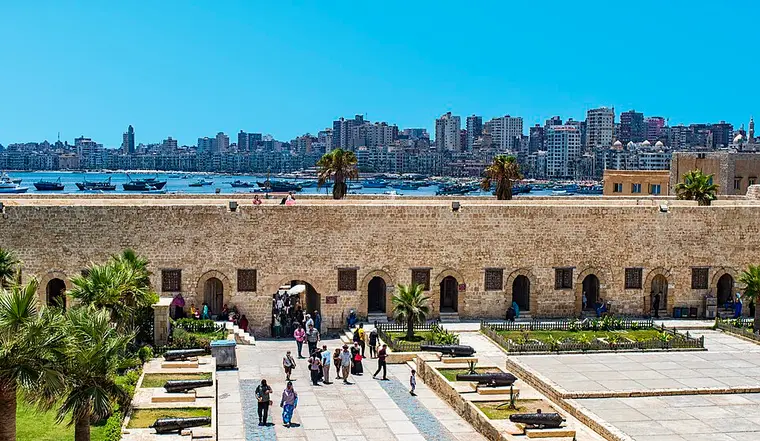
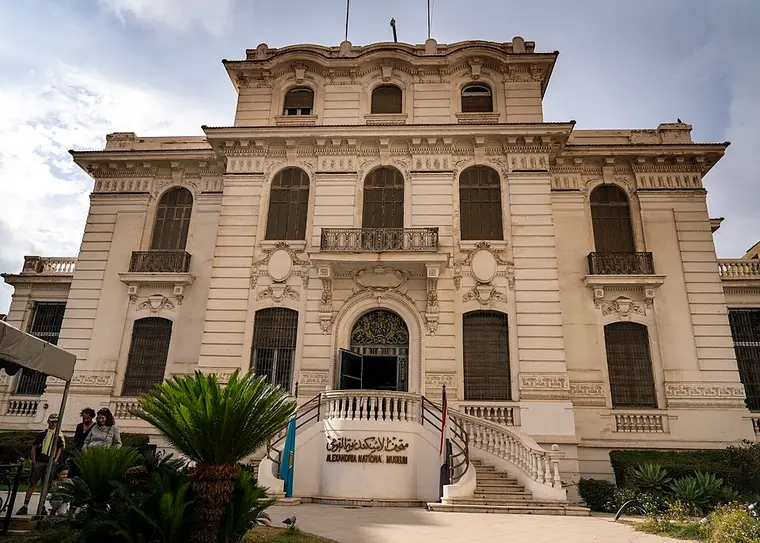
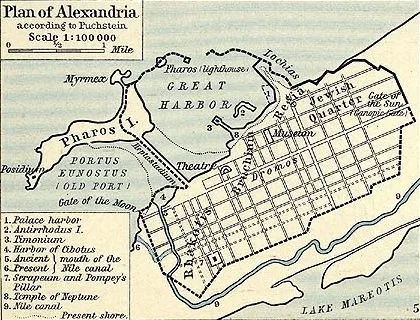
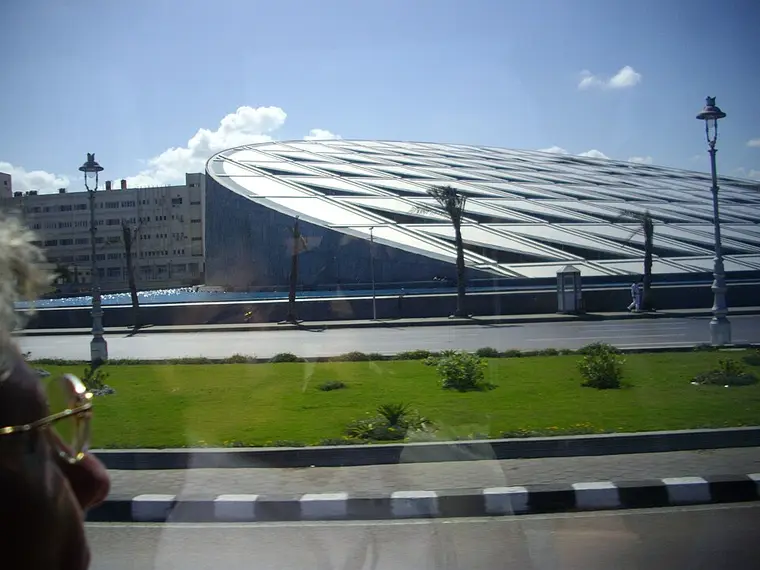
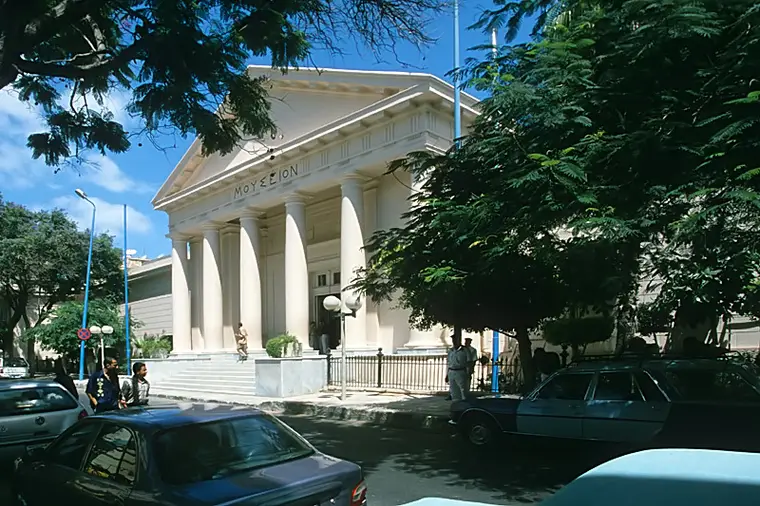
Sources for this chapter (376)Academic35Institution33Specialist book211Reputable web97
Academic(35)
- Psoma · Arepyros or A(u)re(lius) Pyros? · Zeitschrift für Papyrologie und Epigraphik · 2012
- Errington · The Nature of the Macedonian State under the Monarchy · Chiron · 1978
- Green · Alexander to Actium: The Historical Evolution of the Hellenistic Age (Hellenistic Culture and Society) · University of California Press · 1991
- Hammond · The Regnal Years of Philip and Alexander · Greek, Roman, and Byzantine Studies · 1992
- Hostile inaction? Antipater, Craterus and the Macedonian regency · The Classical Quarterly · 2017
- Bursztajn · Dead Men Talking · Harvard Medical Alumni Bulletin · 2005
- Was the death of Alexander the Great due to poisoning? Was it Veratrum album? · Clinical Toxicology · 2014
- Sbarounis · Did Alexander the Great die of acute pancreatitis? · J Clin Gastroenterol · 2007
- Bieber · The Portraits of Alexander · Greece & Rome · 1965
- Sismondo Ridgway · Review: Der Alexander-Sarkophag by Karl Schefold · American Journal of Archaeology · 1969
- A King's Notebooks · Harvard Studies in Classical Philology · 1968
- Alexander Sarcophagus · 2016
- Tougher · The Renault Bagoas: The Treatment of Alexander the Great's Eunuch in Mary Renault's The Persian Boy · New Voices in Classical Reception Studies · 2008
- Caligula's Bridge of Boats – AD 39 or 40? · Historia: Zeitschrift für Alte Geschichte · 2007
- The Diary and the Letters of Alexander the Great · Historia: Zeitschrift für Alte Geschichte · 1955
- Narratives of 'the Companions of the Cave,' Moses and His Servant, and Dhū 'l-Qarnayn in Sūrat al-Kahf: Late Antique Lore within the Purview of the Qurʾān · Journal of the International Qur'anic Studies Association · 2022
- Donde · The Mughal Sikander: Influence of the Romance of Alexander on Mughal Manuscript Painting · International Conference of Greek Studies: An Asian Perspective · 2014
- A mysterious death · N. Engl. J. Med. · 1998
- Ashrafian · The death of Alexander the Great – a spinal twist of fate · J Hist Neurosci · 2004
- Depuydt · The Time of Death of Alexander the Great: 11 June 323 B.C. (−322), ca. 4:00–5:00 PM · Die Welt des Orients · 1997
- Alexander the Great and West Nile Virus Encephalitis · Emerging Infectious Diseases · 2003
- Studniczka · Über die Grundlagen der geschichtlichen Erklärung der Sidonischen Sarkophage · 1894
- Badian · Alexander the Great and the Unity of Mankind · Historia: Zeitschrift für Alte Geschichte · 1958
- Pollutant lead reveals the pre-Hellenistic occupation and ancient growth of Alexandria, Egypt · Geophysical Research Letters · 2006
- Erskine · Greece & Rome, 2nd Ser. · Culture and Power in Ptolemaic Egypt: The Museum and Library of Alexandria · 1995
- Erskine · Culture and Power in Ptolemaic Egypt: the Museum and Library of Alexandria · Greece & Rome · 1995
- A systematic method for estimating the populations of Greek and Roman settlements · Journal of Roman Archaeology · 2017
- The Population of Roman Alexandria · Transactions of the American Philological Association · 1988
- Geoarchaeology of Portus Mareoticus: Ancient Alexandria's lake harbour (Nile Delta, Egypt) · Journal of Archaeological Science: Reports · 2017
- Understanding climate change from a global analysis of city analogues · PLOS ONE · 2019
- Soaring Building Collapses in Southern Mediterranean Coasts: Hydroclimatic Drivers & Adaptive Landscape Mitigations · Earth's Future · 2025
- Russell · Late Ancient and Medieval Population · Transactions of the American Philosophical Society · 1958
- The Alexandrian Age: Alexandrian Literature with Special Reference to Alexandrian Poetry · Studies in the History of Art · 1947
- The lameness of King Philip II and Royal Tomb I at Vergina, Macedonia · Proceedings of the National Academy of Sciences · 2015
- Anson · Diodorus and the Date of Triparadeisus · The Johns Hopkins University Press · 1986
Institution(33)
- SOL Search
- Philostratus the Athenian, Vita Apollonii, book 2, chapter 12
- Bayfront Byline Bug Walk · UCSD · 1996
- Plutarch, Galba, chapter 1, section 4
- Plutarch, Regum et imperatorum apophthegmata, Ἀλέξανδρος
- Plutarch, De Alexandri magni fortuna aut virtute, chapter 2, section 4
- Diodorus Siculus, 18.4
- Images of Authority II: The Greek Example · SUNY Oneonta · 2005
- Gods in Color: Painted Sculpture of Classical Antiquity · Arthur M. Sackler / Harvard University Art Museum · 2007
- Head of a statue of Alexander the Great | Acropolis Museum | Official website
- Plutarch · Moralia · University of Chicago · 1936
- Collection online · British Museum
- Burn · Hellenistic Art: From Alexander the Great to Augustus · The British Museum Press · 2004
- Priene Inscription · British Museum
- Suda, sigma, 117
- Seleucia on the Tigris, Iraq · The Kelsey Online · 1998
- Kennedy · Hajj: journey to the heart of Islam · The British Museum · 2012
- Webb · The Hajj: collected essays · The British Museum · 2013
- Александр Клейменов · Битва при Политимете: крупнейшее поражение армии Александра Македонского · Academia.edu · 2014
- Siculus · Library of History · Perseus Project · 1989
- Plutarch · Plutarch, Alexander · Perseus Project · 1919
- Plutarch · On the Fortune of Alexander · Loeb Classical Library · 1936
- Darvishi · The Alexander Romance · Negah-e Moaser · 2022
- Rufus · Quintus Curtius Rufus, History of Alexander the Great · U Chicago
- Bombardment of Alexandria
- The Portus Magnus of Alexandria: 25 years of underwater archaeological research, Franck Goddio, University of Oxford Podcast Series "Maritime Archaeology"
- Alexandria Portal
- Alexandria National Museum, Egypt
- Marie · Development works in Alexandria's Greco-Roman Museum almost complete · 2022
- Kampouris · Alexandria's "Graeco-Roman Museum" Set to Reopen After Years of Renovation · 2019
- Egypt Today: "After 18 years of restoration, Alexandria's Graeco-Roman Museum is finally re-opened." · EgyptToday · 2023
- Keely · Cavafy's Alexandria · Princeton University Press · 1995
- Royal Tombs: Vergina · Macedonian Heritage
Specialist book(211)
- Hatzopoulos · Studies in Ancient Greek Dialects: From Central Greece to the Black Sea · Walter de Gruyter · 2017
- Borza · In the Shadow of Olympus: The Emergence of Macedon · Princeton University Press · 1992
- Roisman · Brill's Companion to Alexander the Great · Brill · 2002
- Errington · A History of Macedonia · University of California Press · 1990
- Carney · Woman and Monarchy in Macedonia · University of Oklahoma Press · 2000
- Andronikos · Vergina: The Royal Tombs · Ekdotikē Athēnōn · 1994
- Cartledge · Ancient Greece: A Very Short Introduction · Oxford University Press · 2011
- Cosmopoulos · Macedonia: An Introduction to its Political History · Manitoba Studies in Classical Civilization · 1992
- Grant · The Rise of the Greeks · Charles Scribner's Sons · 1988
- Green · Alexander of Macedon, 356–323 B.C.: A Historical Biography · University of California Press · 2013
- Hammond · A History of Greece to 322 BC · Clarendon Press · 1986
- Hoover · Handbook of Coins of the Peloponnesos: Achaia, Phleiasia, Sikyonia, Elis, Triphylia, Messenia, Lakonia, Argolis, and Arkadia, Sixth to First Centuries BC (The Handbook of Greek Coinage Series, Volume 5) · Classical Numismatic Group · 2011
- Hoover · Handbook of Coins of Macedon and Its Neighbors. Part I: Macedon, Illyria, and Epeiros, Sixth to First Centuries BC (The Handbook of Greek Coinage Series, Volume 3) · Classical Numismatic Group · 2016
- The Oxford Companion to Classical Literature · Oxford University Press · 1989
- A Latin Dictionary · Clarendon Press · 1879
- A Greek-English Lexicon · Clarendon Press · 1940
- Rogers · Alexander: The Ambiguity of Greatness · Random House Publishing Group · 2004
- Anson · Alexander's Heirs: The Age of the Successors · Wiley-Blackwell · 2014
- Carney · Macedonian Legacies: Studies in Ancient Macedonian History and Culture in Honor of Eugene N. Borza · Regina · 2009
- Carney · Philip II and Alexander the Great: Father and Son, Lives and Afterlives · Oxford University Press · 2010
- Griffith · A History of Macedonia · Clarendon · 1979
- Hatzopoulos · Macedonian Institutions under the Kings (2 Volumes) · De Boccard · 1996
- King · A Companion to Ancient Macedonia · Wiley-Blackwell · 2010
- Ogden · A Companion to Families in the Greek and Roman Worlds · Blackwell-Wiley · 2011
- Grant · Commanders: History's Greatest Military Leaders · DK Publishing · 2011
- Beaton · The Greeks: A Global History · Basic Books · 2021
- The Shaping of Western Civilization: From Antiquity to the Enlightenment · University of Toronto Press · 2008
- Doufikar-Aerts · A Companion to World Literature · Wiley · 2020
- The visual legacy of Alexander the Great from the Renaissance to the age of revolution · Routledge, Taylor & Francis Group · 2024
- David George Hogarth · Philip and Alexander of Macedon: two essays in biography · Charles Scribner's Sons · 1897
- Alexander the Great · Penguin Group · 1986
- Brill's Companion to Insurgency and Terrorism in the Ancient Mediterranean · Brill · 2015
- Women and Monarchy in Macedonia · University of Oklahoma Press · 2000
- Greek Perspectives on the Achaemenid Empire: Persia Through the Looking Glass · Edinburgh University Press · 2016
- Alexander the Great and His Empire: A Short Introduction · Princeton University Press · 2012
- Barbarians in the Greek and Roman World · Hackett Publishing · 2018
- Sparta and Lakonia: A Regional History, 1300-362 B.C. · Routledge · 2002
- Parise · The book of calendars · Gorgias Press · 2002
- Svechin · Strategy · East View Information Services · 1991
- From Cyrus to Alexander: A History of the Persian Empire · Eisenbrauns · 2002
- Who's Who in the Age of Alexander the Great: Prosopography of Alexander's Empire · John Wiley & Sons · 2008
- Strudwick · The Encyclopedia of Ancient Egypt · Sterling Publishing Co., Inc. · 2006
- Hanson · Carnage and Culture: Landmark Battles in the Rise to Western Power · Knopf Doubleday Publishing Group · 2007
- O'Brien · Alexander the Great: The Invisible Enemy: A Biography · Psychology Press · 1994
- McCrindle · History of Punjab · Punjabi University · 1997
- Dodge · Alexander · Houghton Mifflin · 1890
- Ulrich Wilcken · Alexander the Great · W.W. Norton & Company · 1967
- Graham Shipley · The Greek World After Alexander 323–30 BC · Routledge · 2014
- Faces of Power: Alexander's Image and Hellenistic Politics Hellenistic Culture and Society · University of California Press · 1993
- Empire of Alexander the Great · Infobase Publishing · 2009
- Woodhouse · English–Greek Dictionary: A Vocabulary of the Attic Language · Routledge & Kegan Paul Limited · 1910
- Etymological Dictionary of Greek · Brill · 2010
- Green · Alexander the Great and the Hellenistic Age · Orion Publishing Co · 2008
- The Ages of Homer: A Tribute to Emily Townsend Vermeule · University of Texas Press · 2013
- Medieval French Alexander, the · State University of New York Press · 2012
- Carney · Women and Monarchy in Macedonia · University of Oklahoma Press · 2000
- Homosexuality in Greece and Rome: A Sourcebook of Basic Documents · University of California Press · 2003
- Marilyn Skinner · Sexuality in Greek and Roman Culture (Ancient Cultures) · Wiley-Blackwell · 2013
- Thomas Hubbard · A Companion to Greek and Roman Sexualities · Blackwell Publishing Ltd · 2014
- Mary Renault · The Nature of Alexander · Pantheon · 1979
- Ancient Antioch · Princeton University Press · 2015
- Proser · The Buddhist Heritage of Pakistan: Art of Gandhara · Asia Society · 2011
- Afghanistan, les trésors retrouvés: Collections du Musée national de Kaboul · Réunion des musées nationaux · 2006
- A Companion to Asian Art and Architecture · John Wiley & Sons · 2015
- Goldsworthy · How Rome Fell: death of a superpower · Yale University Press · 2009
- Brauer · The Decadent Emperors: Power and Depravity in Third-Century Rome · 1967
- Christopher · An Invincible Beast: Understanding the Hellenistic Pike Phalanx in Action · Casemate Publishers · 2015
- Andaya · A History of Malaysia · THE MACMILLAN PRESS · 1982
- Alexander the Great in the Middle Ages: Transcultural Perspectives · University of Toronto Press · 2016
- Diana Spencer · Oxford Research Encyclopedia of Classics · 2019
- Karen M. Kern · Imperial Citizen: Marriage and Citizenship in the Ottoman Frontier Provinces of Iraq · 2011
- Donald Presgrave Little · Essays on Islamic civilization presented to Niyazi Berkes · 1976
- Arrian · Anabasis Alexandri (The Campaigns of Alexander) · Penguin Books · 1976
- History of Alexander · Loeb Classical Library · 1946
- Barnett · Bonaparte · Wordsworth · 1997
- Baynes · Byzantium: An Introduction to East Roman Civilization · Baynes · 2007
- Berkley · Moses in the Hieroglyphs · Trafford · 2006
- Bose · Alexander the Great's Art of Strategy · Allen & Unwin · 2003
- Bosworth · Conquest and Empire: The Reign of Alexander the Great · Cambridge University Press · 1988
- Bryant · Moral Codes and Social Structure in Ancient Greece: A Sociology of Greek Ethics from Homer to the Epicureans and Stoics · State University of New York Press · 1996
- Cawkwell · Philip of Macedon · Faber and Faber · 1978
- Cawthorne · Alexander the Great · Haus · 2004
- Connerney · The upside-down tree: India's changing culture · Algora · 2009
- Forgotten empire: the world of ancient Persia · University of California Press · 2005
- Dahmen · The Legend of Alexander the Great on Greek and Roman Coins · Taylor & Francis · 2007
- Danforth · The Macedonian Conflict: Ethnic Nationalism in a Transnational World · Princeton University Press · 1997
- Dillon · Morality and custom in ancient Greece · Indiana University Press · 2004
- Durant · The Story of Civilization: The Life of Greece · Simon & Schuster · 1966
- Fine · The Ancient Greeks: A Critical History · Harvard University Press · 1983
- Fermor · Mani: Travels in the Southern Peloponnese · New York Book Review · 2006
- Fischer · Mute dreams, blind owls, and dispersed knowledges: Persian poesis in the transnational circuitry · Duke University Press · 2004
- Fletcher · Cleopatra the Great: The Woman Behind the Legend · Harper · 2008
- Foreman · Alexander the conqueror: the epic story of the warrior king · Da Capo Press · 2004
- Gabriel · The Great Armies of Antiquity · Greenwood Publishing Group · 2002
- The Brief Life and Towering Exploits of History's Greatest Conqueror as Told By His Original Biographers · Penguin · 2004
- La monnaie grecque · 2001
- Medieval Science, Technology, and Medicine: An Encyclopedia · Routledge · 2005
- Goldsworthy · The Fall of Carthage · Cassel · 2003
- The Classical Tradition · Harvard University Press · 2010
- Gunther · Alexander the Great · Sterling · 2007
- Hamilton · Alexander the Great · University of Pittsburgh Press · 1974
- Hammond · Sources for Alexander the Great · Cambridge University Press · 1983
- Hammond · A History of Greece to 323 BC · Cambridge University · 1986
- Hammond · Studies concerning Epirus and Macedonia before Alexander · Hakkert · 1993
- A History of Macedonia: 336–167 B.C. · Clarendon Press of the Oxford University Press · 2001
- Harrison · The language of the New Testament · Wm B Eerdmans · 1971
- Alexander the Great: A New History · Wiley-Blackwell · 2009
- Holland · Rubicon: Triumph and Tragedy in the Roman Republic · Abacus · 2003
- Holt · Alexander the Great and The Mystery of the Elephant Medallions · University of California Press · 2003
- Hornblower · Hellenisms: Culture, Identity and Ethnicity from Antiquity to Modernity · Ashgate · 2008
- A Companion to Ancient Macedonia · Wiley-Blackwell · 2010
- Joint Association of Classical Teachers · The World of Athens: An Introduction to Classical Athenian Culture · Cambridge University Press · 1984
- Jones · The Art of War in the Western World · University of Illinois Press · 2001
- Keay · India: A History · Grove Press · 2001
- Kosmin · The Land of the Elephant Kings: Space, Territory, and Ideology in Seleucid Empire · Harvard University Press · 2014
- Lane Fox · The Search for Alexander · Little Brown & Co · 1980
- Lane Fox · Alexander the Great · ePenguin · 2006
- Alexandre le Grand: Monnaie, finances et politique · PUF · 2003
- A Greek-English Lexicon on Perseus Digital Library · Clarendon Press · 1940
- Luniya · Life and Culture in Ancient India: From the Earliest Times to 1000 AD · Lakshmi Narain Agarwal · 1978
- McCarty · Alexander the Great · Penguin · 2004
- McKechnie · Outsiders in the Greek cities in the fourth century BC · Taylor & Francis · 1989
- Morkot · The Penguin Historical Atlas of Ancient Greece · Penguin · 1996
- Narain · Alexander the Great: Greece and Rome–12 · 1965
- Ogden · Alexander the Great: A New History · Wiley-Blackwell · 2009
- Osborne · Greek History · Routledge · 2004
- Perlman · Philip and Athens · Heffer · 1973
- Pingree · Dictionary of Scientific Biography · 1978
- Pratt · The Pilgrimage of Buddhism and a Buddhist Pilgrimage · Laurier Books · 1996
- La monnaie dans l'Antiquité · Picard · 1996
- Renault · The Nature of Alexander the Great · Penguin · 2001
- Renault · The Nature of Alexander · Open Road Media · 2013
- International dictionary of historic places · Fitzroy Dearborn, 1994–1996 · 1994
- The Cambridge History of Greek and Roman Warfare: Greece, the Hellenistic World and the Rise of Rome · Cambridge University Press · 2007
- Sacks · Encyclopedia of the Ancient Greek World · Constable & Co · 1995
- Starr · A History of the Ancient World · Oxford University Press · 1991
- Stoneman · Alexander the Great · Routledge · 2004
- Stoneman · The Novel in the Ancient World · Brill · 1996
- Tarn · Alexander the Great · University Press · 1979
- Tripathi · History of Ancient India · Motilal Banarsidass Publ. · 1999
- Toynbee · The Greeks and Their Heritages · Oxford University Press · 1981
- Wood · In the Footsteps of Alexander the Great: A Journey from Greece to Asia · University of California Press · 2001
- Worthington · Alexander the Great: A Reader · Routledge · 2003
- Worthington · Philip II of Macedonia · Yale University Press · 2008
- Yenne · Alexander the Great: Lessons From History's Undefeated General · Palgrave MacMillan · 2010
- Greek Sculpture and Painting · Cambridge University Press · 1966
- Bowra · The Greek Experience · Phoenix · 1994
- Boardman · Alexander the Great: From His Death to the Present Day · Princeton University Press · 2019
- Burn · Alexander the Great and the Hellenistic Empire · English Universities Press · 1951
- Cartledge · Alexander the Great · Overlook · 2004
- Doherty · The Death of Alexander the Great · Carroll & Graf · 2004
- Engels · Alexander the Great and the Logistics of the Macedonian Army · University of California Press · 1978
- How To Lose A Battle: Foolish Plans and Great Military Blunders · Harper · 2006
- Fuller · The Generalship of Alexander the Great · Eyre & Spottiswoode · 1989
- Goldsworthy · Philip and Alexander: Kings and Conquerors · Head of Zeus · 2020
- Green · Alexander of Macedon: 356–323 BC. A Historical Biography · University of California Press · 1992
- Greene · The 48 Laws of Power · Penguin · 2000
- Hammond · The Macedonian State: Origins, Institutions, and History · Oxford University Press · 1989
- Hammond · Alexander the Great: King, Commander, and Statesman · Bristol Classical Press · 1994
- Hammond · The Genius of Alexander the Great · University of North Carolina Press · 1997
- Mercer · The Way of Alexander the Great · American Heritage Inc. · 1962
- McCrindle · The Invasion of India by Alexander the Great as Described by Arrian, Q Curtius, Diodorus, Plutarch, and Justin · Archibald Constable & Co. · 1973
- Alexander the Great: letters: a selection · Liverpool University Press · 2023
- A Synoptic History of Classical Rhetoric · Lawrence Erlbaum Associates · 2003
- British Death March Under Asiatic Impulse: Epic of Anglo-Indian Tragedy in Afghanistan · Bharatiya Vidya Bhavan · 2003
- O'Brien · Alexander the Great: The Invisible Enemy · Routledge · 1992
- Ancient Greece: A Political, Social, and Cultural History · Oxford University Press · 1998
- Prevas · Envy of the Gods: Alexander the Great's Ill-Fated Journey Across Asia · Da Capo Press · 2004
- Alexander the Great: Ancient and Modern Perspectives · D.C. Heath and Company · 1995
- Rowson · The Young Alexander: The Making of Alexander the Great · William Collins · 2022
- Savill · Alexander the Great and His Time · Barrie & Rockliff · 1959
- Stewart · Faces of Power: Alexander's Image and Hellenistic Politics · University of California Press · 1993
- Stoneman · Alexander the Great: A Life in Legend · Yale University Press · 2008
- Wheeler · Alexander the Great: The merging of East and West in Universal History · G.P. Putnam's Sons · 1900
- Wilcken · Alexander the Great · W. W. Norton & Co. · 1997
- Worthington · Alexander the Great: Man and God · Pearson · 2004
- Stewart · African States and Rulers · McFarland · 2006
- Fideler · Alexandria 2 · Red Wheel/Weiser · 1993
- Justin Pollard · The Rise and Fall of Alexandria: Birthplace of the Modern World · Viking · 2007
- La géographie de l'Égypte à l'époque copte, p. 24 · Imprimerie Nationale · 1893
- The Pharos Lighthouse In Alexandria: Second Sun and Seventh Wonder of Antiquity · Taylor & Francis · 2024
- The Hellenistic Settlements in Europe, the Islands, and Asia Minor · University of California Press · 1995
- Wehr · A Dictionary of Modern Written Arabic, 4th edition · Spoken Language Services · 1979
- Butler · The Arab Conquest Of Egypt · Oxford At The Clarendon Press. · 1902
- Kennedy · Cambridge History of Egypt, Volume One: Islamic Egypt, 640–1517 · Cambridge University Press · 1998
- The Rise of a Capital: Al-Fusṭāṭ and Its Hinterland, 18-132/639-750 · Brill · 2018
- Ibn Batuta · The travels of Ibn Battuta in the Near East, Asia and Africa 1304–1377 · Cosimo · 2009
- McGregor · Sanctity and Mysticism in Medieval Egypt: The Wafāʼ Sufi Order and the Legacy of Ibn al-ʿArabī · State University of New York Press · 2004
- The Seven Wonders of the Ancient World · Routledge · 2013
- Heyd · Histoire du commerce du Levant au moyen âge · O. Harrassowitz
- The Routeledge handbook of maritime trade around Europe 1300-1600 · Routeledge · 2017
- Forster · Alexandria: A History and a Guide · WHITEHEAD MORRIS LIMITED · 1922
- Technical Summary. In: Climate Change 2021: The Physical Science Basis. Contribution of Working Group I to the Sixth Assessment Report of the Intergovernmental Panel on Climate Change · IPCC · 2021
- Rostovtzeff · The Social and Economic History of the Hellenistic World · Oxford University Press · 1941
- The Architecture of Alexandria and Egypt, C. 300 B.C. to A.D. 700 · Yale University Press · 2007
- Goddio · The Iseum of the Royal Island of Antirhodos · Oxford Centre for Maritime Archaeology, University of Oxford · 2025
- Lost Libraries: The Destruction of Great Book Collections Since Antiquity · Springer · 2004
- Liddell · Cavafy : a critical biography · Duckworth · 1974
- Haag · Alexandria: City of Memory · Yale University Press · 2005
- Sport in the Middle East: Power, Politics, Ideology and Religion · Routledge · 2017
- Islam Issa · Alexandria: The City That Changed the World · Pegasus Books · 2024
- Elizabeth Donnelly Carney · Olympias: mother of Alexander the Great · Taylor & Francis · 2006
- Siculus · Bibliotheca Historica, 18.2.1-4
- Plutarch · Alex.
- Hammond · A History of Macedonia: 336–167 B.C. · Clarendon Press · 1988
- Neer · Greek Art and Archaeology c. 2500-c.150 BCE Second Edition · Thames & Hudson · 2018
- Habicht · Ελληνιστική Αθήνα · Odysseas · 1998
- The great name: ancient Egyptian royal titulary · Society of Biblical Literature · 2013
- Lepsius · Denkmäler aus Ägypten und Äthiopien IV · 1849
- Chugg · The Quest for the Tomb of Alexander the Great · Lulu · 2007
- Hellēnistikē Athēna · Ekdoseis Odysseas · 1998
Reputable web(97)
- Argead Dynasty
- The birth of Alexander the Great · Livius
- The Project Gutenberg eBook of Anabasis of Alexander, by Arrian.
- A contemporary account of the battle of Gaugamela
- A Long List of Supplies Disbursed
- The end of Persia · Livius
- The Anabasis of Alexander; or, The history of the wars and conquests of Alexander the Great. Literally translated, with a commentary, from the Greek of Arrian, the Nicomedian · London, Hodder and Stoughton · 1884
- eAuction 430. KINGS of MACEDON. Alexander III 'the Great'. 336–323 BC. AR Tetradrachm (25mm, 17.15 g, 1h). Tarsos mint. Struck under Balakros or Menes, circa 333–327 BC.
- A contemporary account of the death of Alexander · Livius.org
- Owen Jarus · Why Alexander the Great May Have Been Declared Dead Prematurely (It's Pretty Gruesome) · 2019
- Archaeologist claims opulent grave in Greece honored Alexander the Great's best friend · 2015
- Arrian, Anabasis of Alexander 7.21
- Museernes Samlinger – Kulturarvsstyrelsen
- The 'Belle of Durrës' – a Hellenistic pebble mosaic
- Lion Hunt mosaic Pella – My Favourite Planet
- Alexander the Great's Achievements
- World map according to Eratosthenes (194 B.C.) · Henry Davis Consulting
- Alexander the Great: his towns · livius.org
- Capitains Nemo
- Greco-Buddhism: A Brief History · 2010
- Julian: Caesars – translation
- Alexander
- Kosmetatou · The Location of the Tomb: Facts and Speculation · Greece.org · 1998
- Kosmetatou · The Aftermath: The Burial of Alexander the Great · Greece.org · 1998
- Trogus · Epitome of the Philippic History · 1853
- Alexandria Governor
- Egypt: Governorates, Major Cities & Towns - Population Statistics, Maps, Charts, Weather and Web Information
- Major Agglomerations of the World - Population Statistics and Maps
- TelluBase—Egypt Fact Sheet (Tellusant Public Service Series) · Tellusant
- Alexandria · Collins Dictionary
- Travel in Egypt: Alexandria · 2016
- Egypt's 'bride of the Mediterranean' is a year-round destination for tourists | Marwa al-A'sar
- Egyptian Sea Ports | EgyMar
- The Lighthouse Dims · Foreign Policy · 2014
- Silk Roads Programme: Alexandria · UNESCO
- Alexandria: Modern
- Thornton · Nasser Assassination Attempt, October 26, 1954
- Anika · It is in the Nile delta area
- AL-ISKANDARIYAH
- Egypt Climate Index · Climate Charts
- Deadly flash floods hit Egypt's Alexandria · aljazeera.com
- Clima en Alexandria / Nouzha – Históricos el tiempo · Tutiempo.net
- Alexandria, Egypt · Voodoo Skies
- A wave of snow covers Alexandria, in Egypt · 2021
- VIDEO: Rare snowfall turns Egypt's Alexandria into Moscow · 2021
- Photos: In rare sight, snow falls across Alexandria · 2021
- In Photos: Rare 'Snowfall' in Egypt's Alexandria Marks End of 2021 | Egyptian Streets · 2021
- Alexandria Nouzha Normals 1991–2020 · National Oceanic and Atmospheric Administration
- Alexandria/Nouzha · National Oceanic and Atmospheric Administration
- Station Alexandrie · Meteo Climat
- WMO Climatological Standard Normals (1991–2020): Luxor International Airport (Station 62405) · National Oceanic and Atmospheric Administration
- Alexandria Climate and Weather Averages, Egypt · Weather2Travel
- Cities of the future: visualizing climate change to inspire action
- The CAT Thermometer
- Goddio · Sunken Civilizations: Alexandria
- Montazah Palace
- Mohamed · Royal Return: King Ahmed Fuad II's Historic Visit to Alexandria's Montaza Palace · 2024
- NOVA Online | Mysteries of the Nile | 27 August 1999: The Third Attempt · PBS · 1999
- Planet · Catacombs of Kom ash-Suqqafa – Lonely Planet · lonelyplanet.com
- Alexandria Naval Unknown Soldier Memorial
- New clues to the lost tomb of Alexander the Great discovered in Egypt · 2019
- The ancient Portus Magnus of Alexandria
- Colossal head of Caesarion
- 25 Best Universities in Alexandria - Top Ratings (2023 Fees)
- Kokkinidis · Greek University Opens Branch in Alexandria, Egypt · 2023
- UNESCO Global Network of Learning Cities - Alexandria, Egypt · UNESCO Institute for Lifelong Learning · 2024
- الهيئة العامة لنقل الركاب بمحافظة الأسكندرية | خطوط المسارات
- Pegasus · Alexandria Travel Guide
- Long · Oct. 16, 2002: Second Great Library Opens in Alexandria · 2009
- Alexandria International Film Festival
- Pleiad | Oxford Classical Dictionary
- Alexandrian Kings
- In Alexandria, 31 B.C.
- Myris: Alexandria, A.D. 340
- Kaisarion
- The God Abandons Antony
- Islamic gems of Alexandria
- The School of Alexandria
- Музыкальные инструменты мира» соберутся в Алматы · inAlmaty · 2018
- Baltimore Sister Cities · Baltimore Sister Cities, Inc.
- Partner (twin) towns of Bratislava
- Catania Amica Del Mondo, Ecco Tutti I Gemellaggi Della Città Etnea · Catania Up · 2019
- Cleveland's Sister Cities · City of Cleveland
- Orașe înfrățite · Constanța
- Sister Cities · eThekwini Municipality
- Sister Cities & Affiliated Cities · Incheon Metropolitan City
- Побратимени градове · Kazanlak
- Twinned Cities · Limassol
- Gradovi pobratimi: Potpisan sporazum o saradnji između Novog Sada i Aleksandrije · 2021
- Міста-побратими · Odesa
- Governor of Alexandria Meets Mayor of Paphos to Reinforce Cooperation Agreement Between the Two Sides and to Discuss Repercussions of Corona Virus Via Video Conference · Alexandria · 2020
- International links · City Council of Port Louis
- Международные и межрегиональные связи · Federal city of Saint Petersburg
- 市级友好城市 · Shanghai
- Twin Towns · Thessaloniki · 2018
- The Royal Macedonian Tombs at Vergina
- Was This Really the Tomb of Alexander the Great's Father? · 2015
Every ancient date is an estimate. Scholarly chronologies differ by decades, and by more the further back you go, which is why each figure carries a tilde. When a period is published we name the chronology its dates come from.